Showing posts with label southern literature. Show all posts

Tuesday, May 30, 2023

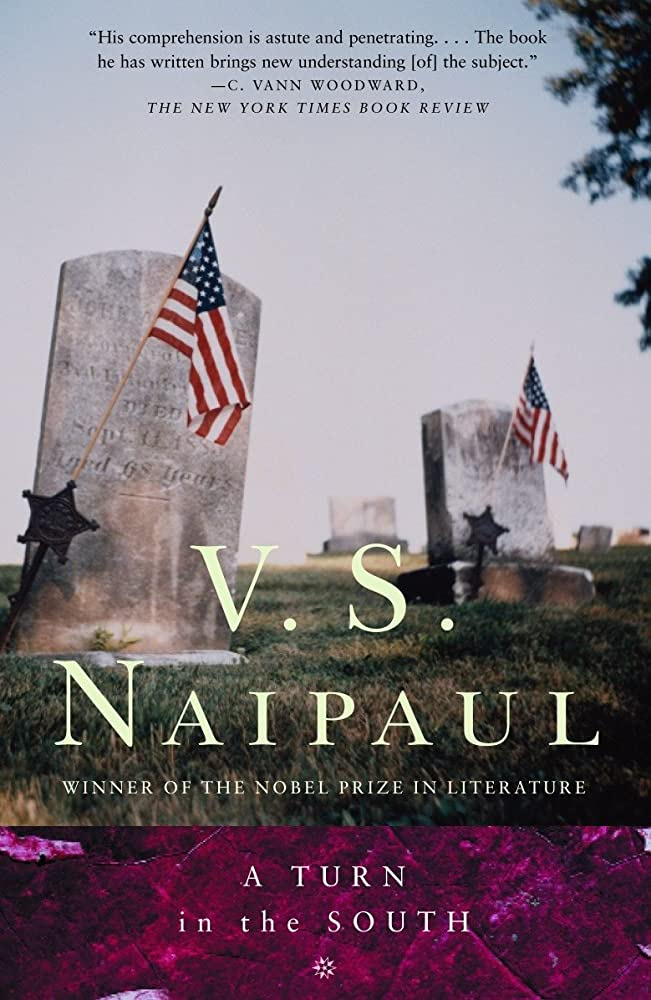
A Turn in the South by V. S. Naipaul

Satan and God fighting for Paula's soul, Paula herself not responsible for the movements of her passion, helpless, capable only of choosing salvation and asking God to reveal his will: a medieval idea of chaos, and the solitude and helplessness of men, and the necessity of salvation. But this was not set in a medieval world of plague and disease and deprivation, the arbitrariness of the sovereign and the humility of the poor. We were in a town of the Research Triangle; and the theme of this culture was abundance and choice, the paramountcy of the individual (if only as consumer), with the beauty and luxury and sensual satisfactions as imminent possibilities for all.

In 1985, fifteen years before he won the Nobel Prize but nearly as many since the publication of A House for Mr. Biswas, V. S. Naipaul traveled through the American South. Though Naipaul is best remembered for his fiction now, he spent nearly as much time writing travelogues, first of the West Indies, then India, and then among Islamic states in Among the Believers. But the South presented a special challenge for Naipaul, who wrote that America "cannot be alien in the simple way an African country is alien. It is too well known, too photographed, too written about; and, being more organized and less informal, it is not so open to casual inspection." And yet, casually inspect, Naipaul does: in metropolitan Atlanta, genteel Charleston, deep swamps and bottomland in Tallahassee and Jackson, and in the up-and-coming cities of the New South, Nashville and Raleigh.

A Turn in the South made me rethink a lot of things, not least among them Naipaul himself. For someone with a reputation as a crank and a bully, Naipaul comes off in A Turn in the South as remarkably open and empathetic. He lets people talk and talk, guiding conversation in only the subtlest of ways, and though perhaps it is only thanks to the writerly tactic of hiding his own questions in narrative voice while faithfully recording the responses of his interlocutors, the effect is of someone reserving judgments: a listener. Sometimes this is frustrating, as when Naipaul interviews an archconservative pastor in Elizabeth City, NC who calls himself a "Jesse-crat" after notorious senatorial douchebag Jesse Holmes, or any number of old white folks who perform paternalistic sadness at the degradation of Black life post-segregation. But it's a gift to get people to say what they probably know they ought not to say, and there's no doubt that in doing so Naipaul really does reveal something at the heart of Southern life. He gets more out of "ordinary people" than he does the black politicos of Atlanta, who are too cagey to stray from their talking points, or Eudora Welty, who is summoned for two paragraphs to talk about the long-gone fad for fur hats.

Naipaul really does empathize with white "rednecks"--a word that's more or less new to him--and with the Black Southerners he meets. Fascinatingly, that empathy seems to emerge from Naipaul's own Caribbean identity, which colors everything he sees in the South. Naipaul makes careful and articulate distinctions between the two regions of the New World, noting, among other things, the crucial lack of a white laborer class after the collapse of slavery and colonialism in Trinidad. "The possibilities" for a Black American, he writes, "were far greater than those of a West Indian. But there could be no easy movement forward for the mass; they had lived through too much; the irrationality of slavery and the years after slavery had made many irrational and self-destructive." And yet, when he writes that the culture of the South is defined by loss and by grief, one hears the echoes of his novels, in which colonial subjects struggle to forge an identity unchained by the weight of history: "The grief was special and was like religion; it would last beyond the decline of the nineteenth century empires, beyond the idea of empire itself." I think that, as a Caribbean, Naipaul is able to understand the South in a way that's difficult for an American Northerner, like Paul Theroux.

But it was the last section, titled "Smoke," which really hit home--literally--for me. The last stop on Naipaul's journey is in the "Research Triangle" of North Carolina, where I grew up, and I perhaps have never heard as insightful or as accurate a description of the place as Naipaul's:

...poor North Carolina pineland landscaped into the discreetest kind of industrial garden, many modern technological names represented by new buildings, long low lines of brick or concrete and glass, giving an impression of spaciousness and order and elegance, the land of rural poverty remade to suit its new function, the South seemingly abolished here, as it had been abolished at the space-research town of Huntsville in Alabama.

Durham poet Jim Applewhite, descendant of tobacco planters, takes Naipaul on a tour of the dying industry: the golden-leafed farms that scan still be found growing between the fresh new medical and research facilities, the meticulous handicraft of the curing barns and the packing process. "[I]t is close to the paradox of civilization itself," Applewhite tells Naipaul, "That this essentially poisonous substance formed the basis of a way of life that had so many attractive aspects--a formalized, seasonal cycle to it, which left the land combed into its even furrows after the stalks had been cut in the autumn." There can be no mourning the death of tobacco, if tobacco is dying, and yet the transition from the "folk art" and "nonutilitarian" practice of the small tobacco farm to the sleek anywhere technologies of biomedicine leave the land and its people bereft of something.

Tobacco, Naipaul notes, comes from the name of Tobago, Trinidad's junior island. Though tobacco planting was quickly abandoned there for the more lucrative sugarcane, Naipaul feels a kind of historical link between himself and the tobacco poet. And I felt it, too. Roughly ten months after Naipaul passed through the tobacco fields of the Research Triangle, I was born there. And it strange to read the great writer writing about the place that I would shortly be ushered into, and which I  have not quite always understood. I started A Turn in the South pleased to know a little more about Naipaul; I was unsettled at the end to find Naipaul looking back. But if that's the feeling I got from A Turn in the South, it's because, in Naipaul's own words, we share something way, way back--but not all that far back--in our histories.

Thursday, April 21, 2016

The Ballad of the Sad Cafe by Carson McCullers

And the confusing point is this: All useful things have a price, and are bought only with money, as that is the way the world is run. You know without having to reason about it the price of a bale of cotton, or a quart of molasses. But no value has been put on human life; it is given to us free and taken without being paid for. What is it worth? If you look around, at times the value may seem to be little or nothing at all. Often after you have sweated and tried and things are not better for you, there comes a feeling deep down in the soul that you are not worth much.

Carson McCullers really only has one subject, I think: unrequited love.  More than anyone, she understands what it means for love to be unrequited--only very rarely are people consciously spurned by the objects of their affection.  Rather, most love goes unspoken, unseen by the person it adores, and often unacknowledged even by the person who possesses it.  Sometimes it's a romantic love, but not always, or even often: The Heart is a Lonely Hunter is about the unrequited love of an entire town for the mute John Singer, and The Member of the Wedding is about Frankie's inability to share in the love of her brother and his fiancee.  The homosexual desire of the Captain in Reflections in a Golden Eye is buried so deep that even he doesn't even recognize it.

"The Ballad of the Sad Cafe," the central novella of this collection of McCullers' stories, examines unrequited love in its most teen-movie of forms: the love triangle.  Miss Amelia, a bitter and taciturn shop-owner, is suddenly softened by the arrival in town of a hunchbacked dwarf claiming to be her cousin.  Cousin Lymon and Amelia open the title cafe together, which brings a new life to the town that parallels their own heightened feelings for each other.  But when Amelia's ex-husband, an amoral lout named Marvin Macy, returns, she watches helplessly as Cousin Lymon develops a puerile attachment to him.  He lurks around the cafe, causing mild trouble, until Amelia and Marvin Macy finally come to blows--and Cousin Lymon, at the last second, attacks Miss Amelia from behind.  Marvin and Lymon destroy the cafe on their way out of town:

They unlocked the private cabinet of curios and took everything in it.

They broke the mechanical piano.

They carved terrible words on the cafe tables.

They found the watch that opened in the back to show a picture of a waterfall and took that also.

They poured a gallon of sorghum syrup all over the kitchen floor and smashed the jars of preserves.

They went out in the swamp and completely wrecked the still, ruining the big new condenser and the cooler, and setting fire to the shack itself.

They fixed a dish of Miss Amelia's favorite food, grits with sausage, seasoned it with enough poison to kill of the county, and placed this dish temptingly on the cafe counter.

They did everything ruinous they could think of without actually breaking into the office where Miss Amelia stayed the night.  Then they went off together, the two of them.

I especially love the "terrible words" they carved on the tables--McCullers is a virtuoso at adding the telling detail, but she's just as canny about leaving some things out.  I also loved when, in a story called "The Jockey," the diminutive title figure carefully takes out a cigarette and cuts it in half with a penknife so it's his own size.  (McCullers loves weirdos--jockeys, dwarves, etc.)

The other stories are shorter, more experimental.  "Sad Cafe" has so many of McCullers' hallmarks--the small southern town, the physical oddball, etc.--that it might be the work of a particularly good imitator.  The other stories see her treading unfamiliar ground.  There are stories set in Ohio, and in New York City, where McCullers lived most of her adult life, but which seem outside the realm of her interests.  But each of them has the same lyric quality, the same interest in human failures and frailties, and the same vast empathy.

Thursday, August 27, 2015

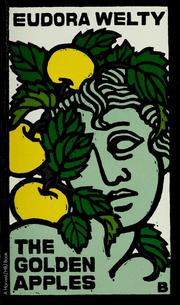
The Golden Apples by Eudora Welty

Again she thought of a pear--not the everyday gritty kind that hung on the tree in the backyard, but the fine kind sold on trains and at high prices, each pear with a paper cone wrapping it alone--beautiful, symmetrical, clean pears with thin skins, with snow-white flesh so juicy and tender that to eat one baptized the whole face, and so delicate that while you urgently ate the first half, the second half was already beginning to turn brown.  To all fruits, and especially to those fine pears, something happened--the process was so swift, you were never in time for them.  It's not the flowers that are fleeting, Nina thought, it's the fruits--it's the time when things are ready that they don't stay.

Eudora Welty is definitely a master of short fiction.  Her story "Why I Live at the P.O.," which is one of those stories you always see in collections of short stories, is like a hurricane trapped in a bottle: a comic masterpiece that might have been a novel like The Ponder Heart distilled into three or four explosive pages.  Her story "Where is the Voice Coming From?" is a different beast all together--a first-person imagining of the thought process of Medgar Evers' murderer, written even before Byron De La Beckwith was identified.  Those two stories are vastly different, but they each capture some critical voice of the American South--one we'd like to embrace and one we'd like banish, but each undeniably of its time and place.

The Golden Apples is a collection of stories about the South in a mythic, rather than comic or Gothic mode.  Its focus on a single mythical town, Morgana, Mississippi, puts it in a league with Sherwood Anderson's Winesburg, Ohio, or the more recent collection Olive Kitteridge.  In these stories, Welty captures another distinctly Southern voice, one which finds an affinity with Greek myth, as in the collection's title:

Was it so strange, the way things are flung out at us, like the apples of Atalanta perhaps, once we have begun a certain onrush?

Among the mythical figures of Morgana is King McLain, who abandons his wife Snowdie (so called because she is an albino) and his newborn twins, but who continues to float about the nearby towns and forests, to be spotted, every now and then, like a sasquatch.  The first story in the collection, "Shower of Gold," tells the story of King returning home, only to be surrounded at his own front door by his two twins, dressed in Halloween costumes and raising hell, and who have no idea who their father is.  King, of course, thinks better of coming home and runs away again.  At the end of the collection, in the story "The Wanderers"--in which which, like in The Optimist's Daughter, friends and family cast far and wide return for a funeral--King has returned, having shed his mythical qualities and proven, at the end of his life, to be a very normal old man.  In between, Welty provides a pair of stories that contrast the two lives of King's twins--the one who moved to San Francisco, and the one who stayed behind.

It seemed to me that The Golden Apples, unlike Delta Wedding or The Optimist's Daughter, struggles with its ensemble cast, perhaps burdened by the extra task of tracking the various characters over the course of many years.  The stories are checkered with numerous fascinating side characters--King, Snowdie, the quietly despairing piano teacher, Miss Eckhardt, and a mysterious Spanish guitarist.  But the young girls (later, young women) of Morgana who are typically the stories' protagonists and their emotional centers, are difficult to distinguish--something which Welty's frequent obscurism often exacerbates.  But Welty's sense of metaphor, and her careful observations about life, remain as terrific as ever:

Virgie never saw it differently, never doubted that all the opposites on earth were close together, love close to hate, living to dying; but of them all, hope and despair were the closest blood--unrecognizable one from the other sometimes, making moments double upon themselves, and in the doubling double again, amending but never taking back.
That's one of those things that seems undeniably true, but that I never could have put into words myself.  That's one of the most satisfying things about reading, and with Welty, it happens a lot.

Sunday, March 15, 2015

Delta Wedding by Eudora Welty

The window invited her to see--her window.  She got out of bed (her filmy dress like a sleeping moth clung to the chair) and the whole leafy structure of the outside seemed agitated and rustled, the shadows darted like birds.  The gigantic sky radiant as water ran over the earth and around it.  The old moon in the west and the planets of morning streamed their light.  She wondered if she would ever know... the constellations... the birds all slept.  (The mourning dove that cried the latest must sleep the deepest of all.)  What could she know now?  But she could see a single leaf on a willow tree as far as the bayou's edge, such clarity as there was in everything.  The cotton like the rolling breath of sleep overflowed the fields.  Out into it, if she were married, she would walk now--her bare foot touch at the night's hour, firmly too, a woman's serious foot.  She would walk on the clear night--angels, though, did that--tread it with love not this lonely, never this lonely, for under her foot would offer the roof, the chimney, the window of her husband, the solid house.  Draw me in, she whispered, draw me in--open the window like my window, I am still only looking in where it is dark.

Delta Wedding opens with a train called the Yellow Dog moving slowly through the Mississippi countryside, traveling from the city of Jackson through rolling green hills into the flat, wide cotton fields of the region called the Delta.  On the train is young Laura McRaven, whose mother has just died, going to visit her cousins the Fairchilds, who are busy preparing for their daughter Dabney's wedding.  The Fairchilds are many and wealthy, and their roots go back to the plantation days of the antebellum south--so tightly connected to the Delta are they that the nearest town to their land is actually called Fairchilds.

But Welty also depicts them as generous and kind, though self-possessed, a small universe unto themselves.  She packs the narrative with numerous uncles, aunts, daughters, sons, cousins, as well as black servants and preachers and various hangers-on, most of them Fairchilds, passing from one point of view to another among nearly thirty distinctly drawn characters.  It is difficult, we see, for outsiders, like Laura McRaven, or George Fairchild's wife Robbie, or Troy, the overseer, who is to marry Dabney, to enter into the hermetic Fairchild world.  Like many real tightly-knit families, they share common understandings and a common language that Welty depicts as both beautiful and vital, but also isolating.  Their frenetic banter is intoxicating, and bewildering, and extremely real--Welty does as good a job with "world-building" with this patrician Southern family as any science fiction author.

Laura is particularly enamored of her Uncle George, who is sensitive and taciturn:

Perhaps the heart always was made of different stuff and had a different life from the rest of the body.  She saw Uncle George lying on his arm on a picnic, smiling to hear what someone was telling, with a butterfly going across his gaze, a way to make her imagine all at once that in that moment he erected an entire, complicated house for the butterfly inside his sleepy body.  It was very strange, but she had felt it.  She had then known something he knew all along, it seemed then--that when you felt, touched, heard, looked at things in the world, and found their fragrances, they themselves made a sort of house within you, which filled with life to hold them, filled with knowledge all by itself, and all else, the other ways to know, seemed calculation and tyranny.

I love the subtlety of this moment.  It is easy to forget that Laura is only imagining her uncle's perspective in this moment, and that he, as he remains throughout the novel, is essentially a mystery--we never have access to his perspective in the way we do for Laura, or Dabney, or several of the other uncles and aunts.  But the truth she intuits from watching her uncle is profound, and so enraptured is she by what she imagines he is seeing that she fails to recognize that she is enacting this very "way of knowing," that she has "made a sort of house" in her own heart for George to inhabit.

Welty is rapidly becoming one of my favorite authors.  Her prose is astonishing, and manages to capture the small mysteries and miracles of domestic life like no other author I have ever read.  The depth and complexity of feeling in Delta Wedding is nearly overwhelming; it's no wonder that with a later novel like The Optimist's Daughter, she chose to narrow the focus to something still profound but, in a way, more manageable.  Delta Wedding was Welty's first novel, and while it seems to lack some of the humor that she developed in The Optimist's Daughter and The Ponder Heart, the strength of its voice is the work of a mature author.  I'm going to Mississippi for the first time in a couple weeks, and I'm excited to bring another of her books with me.

Monday, January 12, 2015

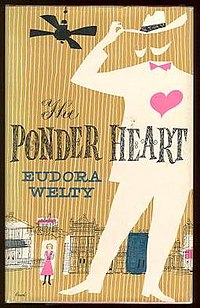
The Ponder Heart by Eudora Welty

The funeral was what you'd expect if you've ever seen Polk--crowded.  It was hot as fluzions in that little front room.  A lot of Jacob's-Ladder tops and althea blooms sewed on cardboard crosses, and a salvia wreath with a bee in it.  A lot of ferns hauled out of creek bottoms and drooping by the time they got ready for them.  People, people, people, flowers, flowers, flowers, and the shades hauled down and the electricity burning itself up, and two preachers both red-headed; but mainly I felt there were Peacocks.  Mrs. Peacock was big and fat as a row of pigs, and wore tennis shoes to her daughter's funeral--I guess she couldn't help it.  I saw right there at the funeral that Bonnie Dee had been the pick.

Do you ever notice how some authors, for whatever reason, obsessively repeat the same plot?  Edith Wharton loved having men fall in love with her wives' cousins.  Carson McCullers can't stop writing about pre-teen girls isolated by the process of getting older.  Eudora Welty, I guess, loves writing about older men who fall marry younger women.  These infant brides are never as good as their husbands, and they come with a boatload of unsavory family members to boot.  In the case of The Optimist's Daughter, the bride is a greedy harpy intent on snatching every bit of property she can away from her husband's family.  Bonnie Dee Peacock, who marries the titular Daniel Ponder of The Ponder Heart is merely a pretty dullard, who has "not a whit of human curiosity," like an overgrown kewpie doll.  The Optimist's Daughter mined this set-up for unexpected, lyric depth; The Ponder Heart is in full-on satirical mode.

And it's really funny.  The story is narrated by Edna Earle Ponder, whose duties consist in keeping her Uncle Daniel in check.  His childlike--not childish--need to be loved produces a runaway generosity, and Edna Earle has to keep him from giving away every single thing he and everybody else has.  I decided that I loved this book as soon as I read about Uncle Daniel leaving Edna Earle on a Ferris Wheel so he could pass out ice cream to the dancing girls at the fair:

He'd belted me into the Ferris Wheel, then vanished, instead of climbing into the next car.  And the first thing I made out from the middle of the air was Uncle Daniel's big round hat up on the platform of the Escapades side-show, right in the middle of those ostrich plumes.  There he was--passing down the line of those girls doing their come-on dance out front, and handing them out ice cream cones, right while they were shaking their heels to the music, not in very good time.  He'd got the cream from the Baptist ladies' tent--banana, and melting fast.  And I couldn't get off the Ferris Wheel till I'd been around my nine times, no matter how often I told them who I was.  When I finally got loose, I flew up to Uncle Daniel and he stood there and hardly knew me, licking away and beside himself with pride and joy.  And his sixty cents was gone, too.  Well, he would have followed the fair to Silver City when it left, if I'd turned around for good.

But Edna Earle can't stop Uncle Daniel from marrying Bonnie Dee Peacock (the names!), who does nothing of interest except when she runs away and when she comes home again.  When Bonnie Dee dies of fright during a storm, Uncle Daniel is charged with her murder by her backwoods family.  During the trial--a hilarious prototype of the kind of Southern courtroom scene that you see in To Kill a Mockingbird or Midnight in the Garden of Good and Evil or A Time to Kill or, obviously, My Cousin Vinny--the Peacocks talk over the lawyers, and get up for water every couple of minutes, and one of the boys spends the whole time playing the harmonica.  It's great.

Welty has an ear for the particular music of Southern language and life like no author I've ever read; including McCullers and Flannery O'Connor.  Maybe this book wouldn't strike the same chord with someone from another part of the country, but to me it was both hilariously strange and persuasively real.  I put it 7th on my top ten list this past year, but looking back at it now, that seems ridiculously low.

Saturday, July 4, 2009

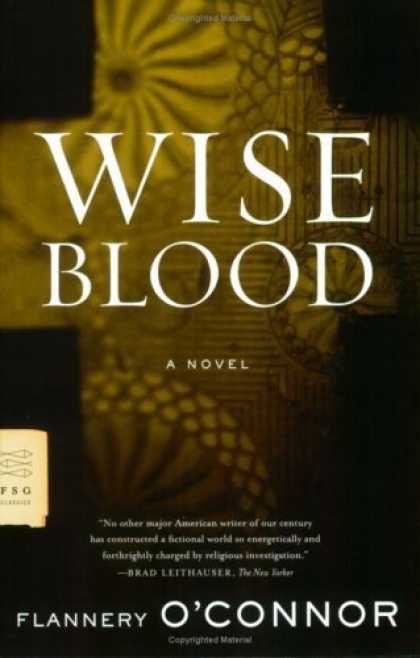
Wise Blood by Flannery O'Connor

The boy didn't need to hear it. There was already a deep and black wordless conviction in him that the way to avoid Jesus was to avoid sin. He knew by the time he was twelve years old that he was going to be a preacher. Later he saw Jesus move from tree to tree in the back of his mind, a wild ragged figure motioning him to turn around and come off into the dark where he was not sure of his footing, where he might be walking on the water and not know it and then suddenly know it and drown.

Hm. I love Flannery O'Connor. Along with Carver, I think she is probably the premiere short story author to come out of 20th Century America. Her stories are invariably dark and tinged with a peculiarly Catholic brand of guilt and tragedy, and distinctively Southern in outlook and style. So why doesn't Wise Blood work?

I think it is because of precisely what I said--O'Connor is a fantastic short story writer, but many great American short story writers, like Carver and Poe, never tried to write anything longer. Poe had a theory he called "the unity of effect" that dictated that a work of literature must be read, and be able to be read, in a single setting to have the maximum impact upon its reader. I don't agree with Poe (who does?) but if he were to return from the dead (Zombie Poe!) and try to defend himself, he might point to Wise Blood, which is stitched together of fascinating parts but somehow fails to come together.

The story follows Hazel Motes, a young man just out of the army heading to the Southern city of Tulkinham. Hazel has some pretty peculiar ideas about Jesus--he can do without him--and when he runs into a street preacher named Asa Hawks, he is determined to outdo him by become a street preacher himself, one who preaches The Church of God Without Christ. You might call that Judaism, or Islam, but to Hazel it's a kind of religious philosophy that rejects the need for salvation. To spite Hawks further, he intends to seduce his underage daughter Lily, but Lily isn't exactly making it difficult for him to seduce her, and Hawks is pretty happy to have the girl out of his household.

Complicating matters is a young man who ingratiates himself to Hazel named Enoch Emery. Enoch believes that he has "Wise Blood," a kind of sixth sense that predicts the future in vague terms. Enoch, wishing to aid Hazel, and driven by his Wise Blood, steals a mummified child from a local museum to serve as the Christ figure in the Church.

There is a scene I liked a lot in which Enoch--an adult who, it is suggested, may be a little bit on the slow side--waits in line with a bunch of children at a theater to see the "star" of a King Kong-like movie only to find out it's a man in an ape suit. Angered and betrayed, he sneaks into the man's van and steals the ape suit, strips off his clothes in the middle of the forest, and becomes, by putting on the suit, the pinnacle of his desires. That's really fascinating in a particularly O'Connoresque way, but the problem is that it is difficult to place that scene, and many others, in the context of the entire novel. The scene is almost exactly duplicated in a short story of O'Connor's, though I don't know which came first. The short story by itself is intriguing, in the context of Wise Blood it is confusing.

Very few novels stump me. Though a lot of ideas may elude me, I am usually able to reflect somewhat meaningfully on a book I've read. Wise Blood is one of the first times that I've felt as if I just don't get the book. There is something going on with Christ figures--the way that Hazel tries to avoid Christ completely, but is bombarded with Christ substitutes, whether they be Hawks, or himself, or the mummified child, or Enoch's ape suit. It is, I suppose, a statement on the way that Christ pervades all things and cannot simply be escaped, even by a nonbeliever.

But that seems only a partial explanation. Why does Hazel want to separate Christ from God? What is the purpose, thematic or otherwise, of Enoch's "Wise Blood," which informs the title but seems to be near-irrelevant? What is the connection between Enoch and Hazel? There are too many questions. The pieces of this novel hang separate from one another and refuse, to my mind, to come together in anything approaching coherence.

Note: They made a movie of this where Hazel was played by Brad Dourif (One Flew Over the Cuckoo's Nest, That Really Good X-Files Episode Where He Plays a Psychic Murderer Who Speaks to Scully'sDead Father). Brad Dourif was born to play this role.

Saturday, January 31, 2009

Girls In Trucks by Katie Crouch


I have been a little bit too busy/high strung lately to take on any kind of reading that does not accompany curling up with Ben and Jerry's well and so several days ago I made it home from the library with a stack of Claire Dane's movies and the novel Girls In Trucks. There's something about southern chick lit with quirky female protagonists that makes the world make sense again. Sometimes I think that studying English has sucked my love out of reading anything "important" or canonical or respectable. Or maybe I'm making excuses.

Spoilers, because I doubt this would appeal much to anyone else here:
Sarah Walters, our main character, is a debutante and a fourth generation Camellia society member brought up in Charleston by a prim and proper mother desperate to marry her daughter off to someone, anyone, but preferably a man from a certain kind of class that knows how to Fox Trot. (I can appreciate this after I have heard the speech about how college is the mall of America for future husbands a couple too many times.) Her older sister goes to Yale and leaves impossible expectations for Sarah to live up to, Sarah moves to New York to work in publishing and spends her time falling for a cruel and abusive man while her best friend from back home spends all of her time drinking and shooting heroin in their dingy living room, and that prim and proper mother of hers comes out of the closet with another Camellia Society member after her husband shoots himself. What I like about Sarah is that she's honest and she has all of those embarrassing, heartbreaking moments that we all more or less deal with--the day you find out that the one person who would always want you suddenly doesn't anymore, the day you try to be inconspicuous while you accidentally run into your ex-boyfriend's new love interest, the day you realize the person you've been seeing is already in a relationship, or worse, a marriage. When Sarah needed a good slap in the face was usually when I found myself rooting for her the most, though. Her struggle for grace and resilience in the worst of situations made her voice feel authentic to me and her strange and obviously faulty ways of trying to bounce back endearing.

The thing that I appreciated about the book was that it had a strange circle of female friends that didn't exactly make sense and weren't compatible except for being raised in the same area, which I think is true of most groups of women. The thing that I liked about them, as catty and self-involved as some of them were, was that regardless of distance in miles between them once they had gone their separate ways and regardless of ideological differences as they bloomed into different people out of watchful eye of the Camellia society, they held one another accountable for their shit. So many women have to walk on eggshells around one another and aren't ballsy enough to serve up brutal honesty when it's needed, but the characters in Crouch's novel weren't that way. I think that the reason I couldn't stop thinking about that throughout reading this book was that my friend is getting married to someone who everyone else (including myself) realizes is not good for her but how do you tell that to someone you love who is glowing when they bring you the news? That also might have a lot to do with the Claire Danes and the Ben and Jerry's.

I think the main reason I ended up reading Girls In Trucks is that it started out with Sarah's years in cotillion, which was something that I was fascinated by as a kid. I went to this middle school in Raleigh where most of the girls in my class were taking cotillion classes and becoming well versed in becoming a lady while I was still chasing my brothers friends around trying to convince them to let me play basketball. I never understood why they were whirling around learning how to do what seemed like outdated dances but ended up asking my mother if I could join in on that, not wanting to be out of the loop. Lucky for me she knew that there was no way that was something that would have been good for me and if I had been accepted at all I never would have fit in. Later on, some of those same girls ended up becoming debutantes, and they seemed like they were from another planet, one that had rules dictated by what side of the beltline you lived on and snobbery. I'm glad that I was never one of them but I guess it was nice to be able to infiltrate that world for a couple hours as a fly on the wall through the pages of this book.

You can see Crouch talk about the novel here.

Monday, January 19, 2009

The Mermaid Chair by Sue Monk Kidd


"Before and with God we live without God." -Protestant theologian Bonhoeffer

Warning: This is kind of sloppy and disjointed. It is 3 a.m. I'll fix it later.

While The Mermaid Chair is a novel about a restless woman in her forties struggling with restlessness due to her creativity and love for her husband having atrophied, Jessie's feelings of loss of self really resonated with me and made it hard for me to put the novel down. I wanted to watch her climb out her dormant state towards some kind of awakening. I wanted her to take me along for the ride.

Jessie ends up escaping her home in Atlanta and her husband Hugh when she is called to Egret Island to watch after her mother, who has just cut her finger off with a meat cleaver and won't tell anyone why. Since Jessie's father's death years upon years prior, her mother Nelle has always been a bit off--slaving endlessly away in the kitchen at the Benedictine monastery beside her home to avoid facing her own realities. The monastery is home to the Mermaid Chair, a relic that seems to cause Nelle endless suffering regardless of her fixation with the story that accompanies it. The myth around the chair is that a wild mermaid named Asenora who had tried to draw the monks away from their monastery was converted and decided to lead a Godly life inside the monastery. She shed her fish tail and the monks kept it hidden away under the Mermaid chair, but when she was tired of living the life of a saint she would steal her tail away to go back into the ocean until ready to face her other life again. Nelle's personal saint is Saint Senora, and when Jessie finds her on the island , Nelle is burying her severed finger under a statue of the saint.

While Jessie tries to coax her mother back towards sanity in the months that follow her own life starts to spin out of control. Next door at the monastery, a former lawyer turned monk dubbed Brother Thomas for his doubt struggles with the reasons he came to the monastery four years ago after his wife died and is questioning whether or not he should take his final vows and choose to remain there indefinitely. He knows he doesn't belong with the other monks but isn't sure he can "be spit back into that other life. Phil, Oprah, Sally. Madonna's fishnet hose. Revenge of the Nerds movies. Out there where normal people, even bank tellers, used the words 'totally aswesome' to describe the most banal things." Since Jessie and Brother Thomas are both waiting for something to bring about cataclysmic change that will carry them towards life changing revelations, it only follows that they meet one another. Jessie finds a kind of sexual awakening and artistic rebirth while her psychiatrist husband analyzes their failing marriage back in Atlanta and Brother Thomas experiences spiritual anguish. As Thomas puts it, what happens both saves and damns them all.

Just as Nelle seems to be getting better, she cuts off another finger with a meat cleaver. Eventually, we find out that this is an act of "white martyrdom"--in other words following the footsteps of a saint. In this case, Nelle was copying the actions of a fictional St. Eudora who had taken the verse about severing the hand that sins instead of letting your whole body be cast into Hell a little too far. The story escalates and gets a lot messier before anything is resolved, but assuming that you might be interested I won't ruin the ending for you.

The reason that I enjoyed the book so much was maybe not so much the actual plot as it was the questions that were brought up, most of them coming from the floundering Brother Thomas who had committed himself not to God but the search for God, "the one whose center is everywhere and circumference is nowhere." Another interesting character in the book was the quirky and slightly dissident Brother Dominic, who often referred to himself as a heretic despite his calling. The novel is littered with nods to various theologians both Protestant and Catholic and myths and stories of saints. I kept my notebook beside me while I read so I could scribble down different things to look up after I was finished reading. The abbey definitely created a kind of setting for both the characters and myself that led to a lot of thinking about those Big Questions beyond the ones that plagued Jessie about infidelity and marriage. While all of the characters were deeply flawed their earnest search for answers and the ways that they stumbled upon their own truths were what made them forgivable. Its strange how fiction often offers a more inviting way to work through your own spiritual frustrations than reading any kind of apologetic writing can. It's easier to feel like another average person bogged down with doubts in the the face of a fictional character than it is to feel like an inept heretic in the face of people who have already gone through hell and made it out with clarity to show for it that you can't yet begin to conceive. Or maybe that's just me. I've also always been kind of fascinated how certain Druid myths have been woven into different Catholic and Christian traditions, which is something Kidd also touches on, but I guess that's territory that I should stay away from.

Also, the novel really made me want to drop everything and plan a trip to one of the South Carolina islands that Egret Island was based off of, with its depictions of the rookery and the marsh and the remnants of the Gullah culture. Kidd really has a knack for drawing you into the world her characters inhabit and despite the tragedies that happened on her island, she still managed to make it a magical place.

Monday, May 19, 2008

The Moviegoer by Walker Percy

When I finished Walker Percy's The Moviegoer, I had the strange inkling to turn it to the cover and start over again, because I had the feeling that there was a lot to it that I had missed, a lot of insight that I failed to pick up on. Ultimately I decided to put some time between readings, but more than most books I have read I think that The Moviegoer promises to be a repeat read, a book that offers a new insight every time you read it.

It has only the barest bones of plot: It is the first-person narrative of Binx Bolling in the week leading up to Mardi Gras, as well as Binx' thirtieth birthday. He is a stockbroker in the suburbs of New Orleans, pleased with his lot but overcome with strange existential angst, finally waking up one morning and deciding that he must go on "the search"--but the search for what? Percy is never so unsubtle to supply the answer to this, though in many ways it seems that it is the sort of thing that Binx will only be able to identify when he finds it. It reminded me of Rabbit, Run, where Rabbit tells the Reverend Eccles that there must be a "thing behind things." Is it God? God, as much as He can be a member of any set, is a part of it, but pinning it down seems beyond even Percy's well-honed authorial grasp.

Binx calls himself a "moviegoer" because--well, obviously--he goes to a lot of movies, but the significance of this is that in some way films anchor and validate existence. Here is a passage in which Binx and his foil, a distant cousin named Kate whose angst is greater than Binx', go to see a film:

There is a scene which shows the very neighborhood of the theater. Kate gives me a look--it is understood that we do not speak during the movie.

Afterwards in the street, she looks around the neighborhood. "Yes, it is certified now."

She refers to a phenomenon of moviegoing which I have called certification. Nowadays when a person lives somewhere, in a neighborhood, the place is not certified for him. More than likely he will live there sadly and the emptiness which is inside of him will expand until it evacuates the entire neighborhood. But if he sees a movie which shows his very neighborhood, it becomes possible for him to live, for a time at least, as a person who is Somewhere and not Anywhere.


I think this insight is particularly cunning--who among well-traveled people hasn't thought that the experience of a film seems more real than their own experiences? My mental image of Piazza San Marco in Venice is constructed of as much--if not more--the numerous depictions of it in film as my own experience there. There is something validating, certifying about films that informs our own experience and soothes our own existential angst.

I made a casual agreement with an old teacher of mine; if he would read Lolita, I would read this book. I hadn't been looking forward to it, because I tried to read it once in high school and barely got past the first few pages (which I thought were mind-numbing) and I brought it back to the library. I think I lucked out to some extent; I don't know that I would have been able to sympathize with Binx Bolling in high school--that is to say, at least in my experience, the peculiar kind of despair that Binx possesses doesn't occur until the teenage years are coming to a close. I appreciate much more now than I would have then, and I highly recommend it.

Saturday, February 23, 2008

Clear Springs by Bobbie Ann Mason

An actual dialogue between myself and a friend:

Me: Holy crap, this book is boring.

Her: I like it. Doesn't it remind you of your childhood? You know, lightning bugs and milking cows and stuff?

Me: My childhood didn't have a damn thing to do with cows, thank you.

That pretty much sums up what I think about this book. Bobbie Ann Mason is a well-known author of "grit lit" from Kentucky whose work takes a very unadorned approach toward the minutiae of daily life. This is her memoir which recounts her time growing up in rural Clear Springs, Kentucky, through her career as a writer and academic and spends a lot of time detailing the personal lineage and history of her parents. It is well-written in a sort of unassuming way, and certain parts of it are interesting, but as a whole it is rather dull and I'm not sure why I should care, nor am I sure why exactly, out of the thousands upon thousands of novels and memoirs written by Southern authors, I should have to read this one.

That is all.

Monday, January 21, 2008

Tobacco Road by Erskine Caldwell

Tobacco Road takes place in sharecropper country in rural Georgia in the bleakest times of the Great Depression, centering around the Lester family, a bunch of idiotic, amoral, and generally unlikeable bunch living hand-to-mouth. Foremost is the patriarch of the family, Jeeter Lester, who refuses to move to the city and get a job in a mill to feed his family. His wife Ada is a shrew and his ancient mother putters around the house essentially ignored, feeding off crumbs and such to survive. Most of his seventeen children are gone, married off, except for two: Dude (these names read like an episode of Hee Haw) who marries a woman preacher with a disfigured nose named Sister Bessie because she buys a new automobile, and Ellie May, who is a fair enough girl except for a hideous hairlip that makes her unmarriageable. Ellie May does however receive some interest from local Lov Bensey, who just isn't getting enough out of his marriage to Jeeter's twelve-year old daughter Pearl.

These are probably some of the most reprehensible people I have ever read about. The book opens as Lov comes to seek Jeeter's help about how to get Pearl to sleep with him--to which Jeeter responds by stealing Lov's sack of turnips and running into the woods to devour them alone. Jeeter spends the entire novel wondering where his next dollar is going to come from, and the family is always just at the edge of starvation. At the end, Dude and Bessie run over and kill Mother Lester in their automobile without so much as turning back, and then Jeeter accidentally sets his house on fire killing everyone inside including himself. These are truly disgusting people.

But why? What's the point? I'm not one to point fingers at unfair representations in literature, I think that too often that's myopic and short-sighted, but Tobacco Road plays only as a cruel parody. Caldwell gives a whopping zero redeeming traits to his characters; their exploits afford no insight to anything but their own idiocy and moral shortcoming. There is no urgency to be felt in the Lester family's closeness to starvation. In fact, if anything, I rooted for these characters to die and in horrible fashion. If this book is a drama, it lacks honesty; if it is a satire, it lacks wit. Worst of all, it is boring. Not recommended.

Friday, December 21, 2007

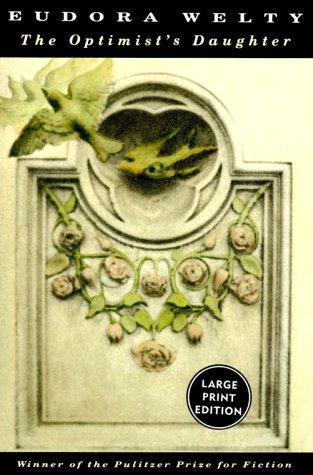
The Optimist's Daughter by Eudora Welty

Cast:
Judge McKelva - A kindly old judge whose surgury for a detatched retina goes wrong
Laural McKelva - The kindly judge's daughter, in town to support her sickly father
Wanda Fay - Judge McKelva's boorish second wife

This is pretty much the entire cast of The Optimist's Daughter. I purchased this book at a library book sale for a quarter, partly because I'd heard of Eudora Welty and partly because this book won the Pulitzer Prize.

Well, on one level, it's not too difficult to see why The Optimist's Daughter appealed to the Pulitzer committee: It's got both death and self-discovery, some regional humor and commentary, and a slow-moving plo that probably has a lot going on beneath the surface. The prose is prety without being overwrought, and the first part of the book, while Judge McKelva is recovering from surgury for a detatched retina, moves along at a nice clip, and fosters a fine sense of dread. The downside is that, once the Judge dies, the narrative movement in the book halts almost completely. Although the entire novel is only about 120 pages long, the last 60 pages moved at a crawl as either a) Fay does somehing cruel and thoughtless and Laural reacts to it by running off to be by herself or b) Laural has some personal revelation that never packs the power we sense it should.

I'll be honest, I may have gone into the book with the wrong expectations, but I read through waiting for a revelation that never happened, following characters I didn't care much about. There were a couple spots where the writing was powerful enough to make up for it, but for the most part, The Optimist's Daughter was too lethargically paced for me. It's not a bad book, but I don't think it's for me.

Thursday, December 13, 2007

As I Lay Dying by William Faulkner

As I Lay Dying currently holds the prize for the book I've started and put down the most times. I think I started it four times, got about 25% of the way through, and then realized I really didn't know what was going on. This last time I read it, I finally made it through, and now I'm not quite sure why it was so difficult.


As I Lay Dying tells the story of Addie Bundren, her death, and the subsequent trip to her hometown where she wanted to be buried. Each chapter is told from the point of view of a different person, and the book has quite a large cast. The sons: enigmatic Cash, borderline-empathic Darl, loner Jewel, youngest child Varadman; the daughter, confusingly named Dewey Dell; Anse, the selfish, uneducated father; and an extended cast of characters encountered along the way. Even Addie takes a single chapter to speak from beyond the grave.


Spoilers Follow.


Although the family's quest to bury Addie where she requested initially seems like a selfless act, some of the family members have ulterior motives for wanting to make the trip to the big(ger) city. Anse is already looking for a new wife and Dewey Dell is looking for a way to kill the baby no one knows she's carrying.


The tone of the entire book is pitch black and macabre, full of distasteful and distubring bits. Vardaman, drilling holes in the casket so his dead mother can “breathe”, drives a spike too far into the casket and into her face. Cash's leg is broken, so Anse encases it in cement, creating a makeshift oven in which it is eventually essentially baked alive. Dewey Dell is duped into a “Treatment” for her pregnancy that's essentially rape. Anse finds a new wife a day afer burying his old one. Not to mention that about halfway through the book, Addie Bundren's body begins to rot and smell so badly that the Bundren's are nearly arrested.


I read some analysis of this book after I finished it, and a lot of folks read it as a sort of black comedy. It's not an impossible viewpoint to adopt, but it requires a darker eye for humor than I have. I found the story mostly disturbing, but I also found that the initially confusing style added quite a lot to the narrative. We don't know if we can trust the narrators, and even if we could, their stories are delivered in a stream of conciousness style that is reinterpreted everytime a new character shares his viewpoint.


Overall, As I Lay Dying was a very good book, and I'm unsure if it made me want to read more of Faulkner's work or stay away from it. Faulkner reportedly wrote As I Lay Dying insix weeks and claims he didn't change a word. He is also quoted as saying that he wanted to write one book that his reputation could stand or fall upon. The book is a fish.


Edit: When I googled for this cover, the entire first page was the metalcore band As I Lay Dying. Lame. guys.

Tuesday, October 9, 2007

The Sound and the Fury by William Faulkner

This is the second time I've tried to make it through The Sound and the Fury; the first time I made it halfway through and just told everyone I finished it. Well, I didn't finish it. I'm sorry. I never meant to betray your trust. I've finished it now.

The Sound and the Fury is the story of a once proud Southern family, the Compsons, and their downfall. It is split into four parts: The first is narrated by Benjy, the family's youngest son and a mentally retarded person. His account jumps through time with little warning or help to figure out what's going on. The second is narrated by the neurotic son Quentin, who is sent off to Harvard and has trouble dealing with his childhood incestual feelings toward his sister Caddy. The third is narrated by Jason, who is an asshole and controls his mother and Caddy's daughter Quentin (confusing) with an iron fist. The fourth is a third person narrator. The plot itself is difficult to describe, but the central character seems to be Caddy, and how she's depicted throughout the book. She's presented as a tragic figure, who becomes sexually active at a young age and is ultimately the cause of her brother's suicide (guess which one), and is then kept from seeing her teenage daughter.

Faulkner, in fact, found the story so powerful that he said The Sound and the Fury caused him the most grief to write of all his books. But to me it seems that, like most Faulkner, The Sound and the Fury is best enjoyed at an intellectual level and not an emotional one. Faulkner is surely a genius, and the four-part narration (similar to As I Lay Dying) is an amazing thing to behold, but the book for me lacks emotional heft. The Benjy section in particular is too confusing to really be affecting, though Quentin's and Jason's sections fare a little better.

So, I've finished it. Between this and As I Lay Dying, I'll take the latter: it has a dude who can read minds.