Showing posts sorted by relevance for query Philip Roth. Sort by date Show all posts

Tuesday, February 24, 2009

Everyman by Philip Roth

'The pitiful middle-aged wife, embittered by rejection, consumed by rotten jealousy! Raging! Repugnant! Oh, I hate you for that more than anything. Go away, leave this house. I can't bear the sight of you with that satyr-on-his-good-behavior look on your face! You'll get no absolution from me--never! I will not be trifled with any longer! Go, please! Leave me alone!'"

Lest you think for a moment that I've mistyped the author's name, the preceding excerpt was indeed written by Philip Roth, not Tom Wolfe (pause for nervous book-nerd laughter). Everyman is the second book I've read by Roth, and, in addition to not being particularly compelling in general, it suffered especially following the very interesting The Counterlife.

Everyman, in spite of its inclusive title, is the story of one very specific man, the son of a Jewish jeweler from Newark. The protagonist, never given a name and heretofore referred to as Philip, has an generous and loving older brother whom he resents for his sterling health, a string of jilted wives and lovers, each one sacrificed upon the altar of youth and sexual desire, a daughter who is forgiving to a fault, and a laundry list of medical conditions and hospital visits that take up the bulk of Everyman's already slim 180 pages.

Roth is aging, and, since many of his protagonists are doppelgangers of himself, his avatars are aging as well. Roth's preoccupation with death and the capital-E End are the centerpieces of the work, the themes completely overpowering any overarching storyline. Instead, the story starts at Philip's funeral and then jumps back to his childhood, recounting a series of vignettes interspersed with the aforementioned hospital visits. The interesting thing about these glimpses into the past is that most of them don't do much to round out the character of Philip. In a book so tightly-focused, I expected a character study, some deep insight into the everyman of the story, but instead, Roth's chosen episodes don't do much more than illustrate Philip's selfish attitude and his willingness to betray and injure anyone or anything that would prevent his carnal pleasures.

In the closing pages, Philip calls friends he's known, each one sicker than the last, and talks to them about their lives, but he never achieves any sort of profundity. On the subject of religion, Roth deigns to say nothing more than that it is childish. Friends are disposable, there to talk to if situations grow too bleak, but can be used as stepping stones with no remorse. Women are challenges, puzzles that become nothing but yesterday's static image when completed. Philip regrets that he can no longer sleep with 25-year-old girls and that he will never match his brother's success. The lives he's wrecked, the things he's sacrificed, not a thought for them. That's the problem with Roth's everyman: He doesn't want to die, but, seeing his life in panorama, it's hard for me to care. Not all stories need a likable protagonist; everything is not a tale of redemption, but with Everyman, I can't help but wonder what Roth was shooting for. His themes are writ large: DEATH, OLD AGE, SICKNESS, but the themes are ends in themselves, and are barely explored in the narrative itself, which essentially concludes that death is to be avoided and old age sucks. Philip himself is nothing special either. His character fails to illustrate anything unique. In that sense, he is the everyman promised in the title. At the same time, he fails as a prototype because he's either a strawman made up of a repulsive stew of attributes no average man would exhibit, or a terrible person whose death doesn't seem terribly tragic to anyone but him.

In the end, when Philip goes in for his final operation, we are told:

He went under feeling far from felled, anything but doomed, eager yet again to be fulfilled, but nonetheless, he never woke up. Cardiac arrest. He was no more, freed from being, entering into nowhere without knowing it. Just as he'd feared from the start.

As a nihilist tract, Everyman succeeds admirably. As a piece of literature, I confess, the message eludes me.

Monday, February 23, 2009

The Counterlife by Philip Roth

Standing singly at the Wall, some rapidly swaying and rhythmically bobbing as they recited their prayers, others motionless but for the lightning flutter of their mouths, were seventeen of the world’s twelve million Jewish communing with the King of the Universe. To me it looked as though they were communing solely with the stones in whose crevices pigeons were roosting some twenty feet above their heads. I thought (as I am predisposed to think), “If there is a God who plays a role in our world, I will eat every hat in this town”

Nonetheless, I couldn’t help but be gripped by the sight of this rock-worship, exemplifying as it did to me the most awesomely retarded aspect of the human mind. Rock is just right, I thought: what on earth could be less responsive? Even the cloud drifting by overhead. . . appeared less indifferent to our encompassed and uncertain existence. I think that I would have felt less detached from seventeen Jews who openly admitted that they were talking to rock than from these seventeen who imagined themselves telexing the Creator directly; had I known for sure it was rock and rock alone that they knew they were addressing, I might even have joined in.

While reading The Counterlife, I was reminded of David Foster Wallace's overview of John Updike's career where he says, as Chris mentions in his review of Updike's The Centaur, that all of Updike's protagonists are just portraits of himself. While that may or may not be true (I haven't read any Updike yet, so I can't say), I think that criticism applies more fully to Philip Roth.

Anyone who is even passingly familiar with Roth's body of work knows that Nathan Zuckerman is Roth's avatar in his fictional universe. Roth has Portnoy's Complaint, Zuckerman, Carnovsky. Both make their living on Jewishness, dissecting and dwelling on it while at the same tie denying its effects on their lives. Both have trouble with marriage and family, both are obsessed with sex—it is fitting that The Counterlife showcases Roth and Zuckerman in equal measures.

Roth doesn't show up in person, as in some of hi other works. Rather, the author becomes a character through proxy as a result of the books semi-biographical content and its metafictional structure. Split up into five connected but non-sequential sections, The Counterlife is a literary puzzle disguised as a realistic novel, an experimental cipher with no ultimate solution. Roth himself becomes a character because, as the story goes on, it becomes clear that the author is the only character who truly exists. Characters die in one section and are resurrected in the next. In “Basel”, Henry Zuckerman, Nathan's younger brother, dies during a heart operation. In “Gloucestershire”, it's Nathan who's dead. In “Christendom”, Nathan is healthy and free; “Judea” and “Aloft” are the only two sections which seem to be chronologically connected, “Judea” ending with Nathan leaving Israel after visiting Henry who, now alive after dying in “Basel”, has become a radical Zionist, and ending with Nathan caught up in the middle of a hijacking.

If all this sounds confusing, it sometimes is, but only until the conceit becomes clear. When read as standalone variations of the same basic plot, the search for a “Counterlife”, an alternate path, the structure makes sense. How else to have the same characters make different decisions? It is impossible that Zuckerman (both Henry and Nathan) die and live, but the strength of fiction is that nothing is truly impossible, that if a decision leads to arrest on a jet, well, we can start over again, back in England, no worse for wear.

Roth's Jewish fixation takes center stage, exhibiting both as Henry's radical Zionism and Nathan's response to it in “Judea/Aloft”, as Nathan's previously untapped wells of racial sensitivity in “Christendom”, and in the idea that Nathan (and Roth himself) still feels a deep-seated compulsion to defend his Jewishness, to stay in touch with a deep Zionist urge that Roth indicates lies at the bottom of all Jewish conflict. The Counterlife sometimes seems like a Roth apologia, his explanation for why a secular Jew who considers religion childish would spend his writing career sifting through through the strata some Semetic identity he can believe in.

No conclusion could hope to be completely satisfying, but then, what conclusions does The Counterlife actually draw? Roth uses the multiple narrative structure as a way to pull the ground out from under the reader, never letting us know what is real and what is not. While reading, I decided “Gloucestershire” had the best chance of being true, since it didn't seem invalidated in other parts of the work. Knowing now, however, that Nathan has appeared in later novels by Roth (and also that Zuckerman himself may be a construction of another fictional author of Roth's, forming a Russian doll writer's bloc), it seems most likely that nothing in the book is true at all. On the other hand, Roth takes great pains, both in the narrative itself and in interviews discussing the work, to point out that The Counterlife is only a story, regardless of the parallels to his own life, and in a story, anything can be true. In a sense, The Counterlife forces us to do that same thing its inhabitants do: to make a choice, any choice, even if we aren't sure it's the right one.

Wednesday, June 1, 2016

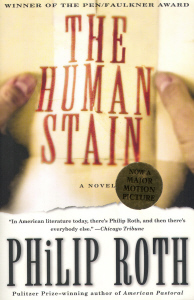
The Human Stain by Philip Roth

At Howard he'd discovered that he wasn't just a nigger to Washington, D.C.--as if that shock weren't strong enough, he discovered at Howard that he was a Negro as well.  A Howard Negro at that.  Overnight the raw I was part of a we with all of the we's overbearing solidity, and he didn't want anything to do with it or the next oppressive we that came along either.  You finally leave home, the Ur of we, and you find another we?  Another place that's just like that, the substitute for that?  Growing up in East Orange, he was of course a Negro, very much of their small community of five thousand or so, but boxing, running, studying, at everything he did concentrating and succeeding, roaming around on his own all over the Oranges and, with or without Doc Chizner, down across the Newark line, he was, without thinking about it, everything else as well.  He was Coleman, the greatest of the great pioneers of the I.

I took a disliking to Philip Roth's The Human Stain immediately.  I had been excited to read it; the synopsis sounded intriguing: a respected professor is hounded out of his job because he uses the word "spooks" to refer to two absent students he has never met, students who turn out to be black and take his wording as a slur.  Despite his public flaying, the professor, Coleman Silk, is secretly a black man passing as white.

What I didn't like was the way that Roth, writing in the 90's, began by situating Coleman's story in the context of the Clinton impeachment trial:

...in America the summer of an enormous piety binge, a purity binge, when terrorism--which had replaced communism as the prevailing threat to the country's security--was succeeded by cocksucking, and a virile, youthful middle-aged president and a brash, smitten twenty-one-year-old employee carrying on in the Oval Office like two teenage kids in a parking lot revived America's oldest communal passion, historically perhaps its most treacherous and subversive pleasure: the ecstasy of sanctimony.

Maybe it looked different then, but Roth's account of the impeachment seems tediously facile today--the same old smug line about Puritanism.  Coleman, too, becomes embroiled in a sex scandal, with an illiterate janitor named Faunia, which heaps more scandal upon him, though the affair is consensual and satisfying for both parties.  Ham-handedly, Roth wants us to draw a parallel between the Clinton-Lewinsky and Coleman-Faunia.  Furthermore, he wants to set the novel in the larger context of American shaming, with its bogeymen: nosy parkers and buttinskis, armed with pitchforks.  If that's the way you remember Bill Clinton, then The Human Stain is here to validate your feelings.

Luckily, it's not only that.  At its best, The Human Stain is a book about the difficult process of self-making in the public eye.  As a young man--Coleman tells his story to Nathan Zuckerman, Roth's erstwhile stand-in--Coleman is smart, athletic, and popular, but bristles under the yoke of blackness.  He doesn't reject being black, per se, but rather the claims that blackness lays on him; the adoption of a community and an identity in which he has no choice.  Passing as white is a way of liberating himself from these claims.  In some ways, it's successful; certainly being a white man allows him more freedom to create himself, even though it costs him his relationship with his family.  But in others, it's futile; all identities are a negotiation between an individual and the world at large, and the twin scandals Coleman faces late in life show that even he, "the great pioneer of the I," can't run from that kind of negotiation. 

When The Human Stain is that novel, it's terrific.  But Roth loves getting distracted by petty details and minor characters.  We get the story of Coleman's entire life, with all its minutiae, and the life stories of several other people to boot.  Its hard to shake the impression that Roth throws up all this indiscriminate detail to create the illusion of life, as if we won't buy Coleman or any of the other characters unless they're fleshed out as fully as possible.  But this seems like the most novelistic, and the least modernist, thing about Roth's books.  Among the bewildering detail there's some pretty bad writing, too--clunky sentences and bad cliches.  Roth devotes huge swaths to Faunia's violent, Vietnam-vet ex-husband, Lester, and when they're not useless or boring, they're ludicrious.  Here's how Roth ends one of Lester's flashbacks:

The fear intense, the anger intense, no helicopter willing to land and the terrible smell of Drago's blood there in his own fucking house.  He did not know how bad it could smell.  EVERYTHING SO INTENSE AND EVERYBODY FAR FROM HOME AND ANGRY ANGRY ANGRY ANGRY RAGE!

That is possibly the worst thing I have ever read.

But like I said, sometimes The Human Stain is terrific.  Coleman is magnetic, and the tortured relationship he has with his own background is compelling, rich, and infinitely more thoughtful than Roth's bad opinions about Bill Clinton or cartoonish ideas of Vietnam Veterans.

Wednesday, May 30, 2012

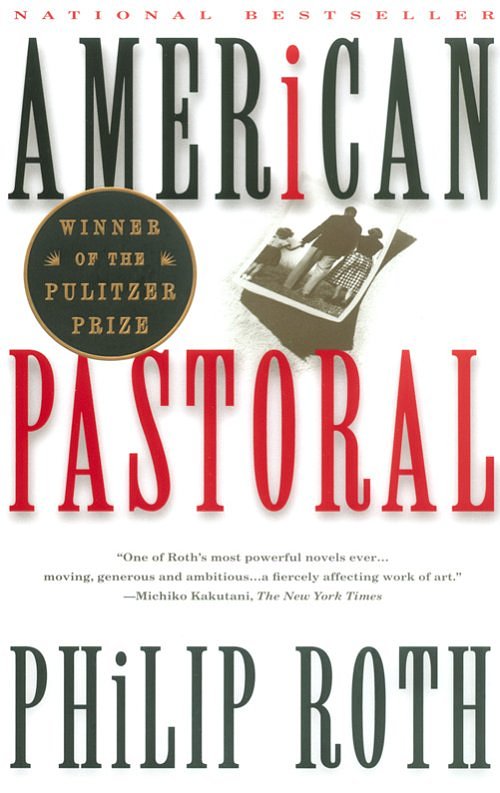
American Pastoral by Philip Roth


“You fight your superficiality, your shallowness, so as to try to come at people without unreal expectations, without an overload of bias or hope or arrogance, as untanklike as you can be, sans cannon and machine guns and steel plating half a foot thick; you come at them unmenacingly on your own ten toes instead of tearing up the turf with your caterpillar treads, take them on with an open mind, as equals, man to man, as we used to say, and yet you never fail to get them wrong. You might as well have the brain of a tank. You get them wrong before you meet them, while you're anticipating meeting them; you get them wrong while you're with them; and then you go home to tell somebody else about the meeting and you get them all wrong again. Since the same generally goes for them with you, the whole thing is really a dazzling illusion. ... The fact remains that getting people right is not what living is all about anyway. It's getting them wrong that is living, getting them wrong and wrong and wrong and then, on careful reconsideration, getting them wrong again. That's how we know we're alive: we're wrong. Maybe the best thing would be to forget being right or wrong about people and just go along for the ride. But if you can do that -- well, lucky you.”
 

A couple years ago, I went a Roth micro-binge and read The Counterlife and Everyman. I wasn’t extremely impressed, and, although I thought The Counterlife had some interesting ideas, I mostly wrote Roth off as an author who was clearly very talented, but maybe not for me. Fast forward a few years, and, married with a newborn daughter, I picked up American Pastoral to kill some time and  found myself completely sucked in.


The novel follows Seymour Levov, “The Swede”, a Jewish man who was once the godlike star of his high school. Handsome, athletic, friendly, the Swede was a hero to all he met, including Roth’s frequent stand-in, Zuckerman, who, at his request, agrees to write about the Swede’s father only days before the Swede dies of prostate cancer. At the meeting, Zuckerman is convinced that the Swede has led a charmed, unchallenging life, but finds that he is wrong when he learns (SPOILER) that Merry Levov, the Swede’s only child, bombed a post office as a teenager, and destroyed her family in the process.


I’m glad I waited until now to read American Pastoral, because it, like much of Roth’s later work, doesn’t really seem oriented toward the twenty-something crowd. It takes its time to get moving, spending the first third at a high school reunion after a short open paean to the Swede, and then following Zuckerman’s extrapolation of how the Swede’s life may have played out after high school. Interestingly, Roth never reveals what actually happened, never drops any hints as to the veracity of Zuckerman’s narrative, but it ultimately doesn’t matter: Zuckerman’s slow motion replay of the Swede’s life is a complete gut punch. At one point, I even did something I never do, skipping several pages detailing Merry’s debasement because it was too difficult to read in my situation. The entire second half of the novel is pretty heavy, as the Swede attempts to make sense of his daughter’s actions. His mental inventory of all his mistakes as a father bring him no closer to a sense of understanding or closure; indeed, Merry’s fate seems to have been set in motion before she was even born, pushing the nearly beatific Swede to the edge and just past.


Reading review of Pastoral is illuminating, because many readers took issue with the long digressions on glovemaking--the source of the Levov’s considerable wealth--or beauty pageants, but to me, these all served to underline the novel’s themes: no matter how hard you work or how good you are, your world is only one rash action from being turned to rubble. Or, as Roth puts it, “He had learned the worst lesson that life can teach - that it makes no sense.”  It’s easy to read the novel another way as well, with the Swede representing the 50s ideal and Merry and her friends as the whirlwind 60s, but in my mind, what really sticks out is not the fine prose or the clever parallels, but the truly terrifying portrait of a family falling to pieces, and the good man who can do nothing about it, and maybe never could.

Tuesday, August 14, 2012

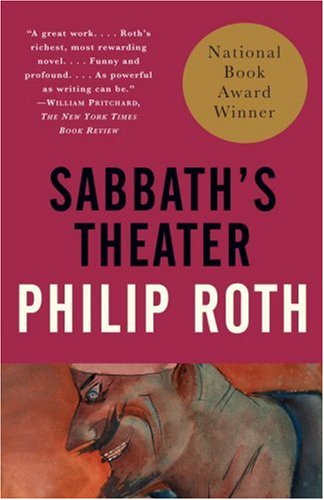
Sabbath's Theater by Philip Roth

This book is dirty.  It is, outside of freakishness-for-freakishness' sake books like Naked Lunch and Crash, the dirtiest book I have ever read.  My girlfriend gave it to me for my birthday, but I don't think she knew that at the time.

Mickey Sabbath is a retired puppeteer living in New England.  Although "retired" may be the wrong word for someone who was hounded into joblessness for "taking advantage" of a younger student.  Which is basically the story of his life--where Sabbath finds sex liberating, and wears his fetishes and licentiousness on his sleeve, few others share his openness, like the cop who arrested him for exposing a woman's breast (with her tacit consent) during an adult puppet show near Columbia University in the 60's.

But all that is mostly flashback.  When the novel opens, Sabbath is forced to deal with the sudden death by cancer of his longtime mistress Drenka, his most committed and adventurous sexual partner.  Drenka's death forces Sabbath to force his own mortality, but also to masturbate on her grave:

Even dead, Drenka gave him a hard-on; alive or dead, Drenka made him twenty again.  Even with temperatures below zero, he would grow hard whenever, from her coffin, she enticed him like this.  He had learned to stand with his back  to the north so that the icy wind did not blow directly on his dick but he still had to remove one of his gloves to jerk off successfully, and sometimes the gloveless hand would get so cold that he would have to put that glove back on and switch to the other hand.  He came on her grave many nights.


I wanted to read Sabbath's Theater because of a passage in James Wood's How Fiction Works where he talks about how successfully Philip Roth combines low registers ("cunt," "tits," etc.) with high registers ("even the toilet bowl cleaners appeared to have been designed by Brancusi"), which Wood considers the mark of sophisticated prose.  More than that, Roth's variegated style turns Sabbath into a proponent of the intellectual and moral joy of sexual transgression, rather than a simple hedonist.  (I was expecting someone like John Self from Money, but that's not Sabbath at all).  It's no surprise that Sabbath compares himself to Falstaff, who also justifies his appetites by rhetorical flourishes.

And yet part of Sabbath's reckoning with his past requires facing the harm his proclivities can cause; for every encounter with a puritanical cop there is a time in which he buys liquor for a girl in rehab in exchange for oral sex.  Sabbath wavers between extreme guilt and extreme defiance, unable to differentiate until the end, I think.  Throughout the book he describes the agony of his first wife's abrupt disappearance, and takes to telling people, "I killed my wife"--but is it an admission of wrongdoing, or just another farce, another puppet show?

I read Portnoy's Complaint years ago and didn't care for it, yet I really enjoyed Sabbath's Theater.  Portnoy, to the best of my recollection, was a chronicle of sexual repression and frustration; Sabbath's Theater represents something like a release from that, and I think it succeeds on that sheer, liberated audacity.

Wednesday, July 18, 2007

Portnoy's Complaint by Philip Roth

Jews and sex. Sex and Jews. Sexy Jews. Jewy Sex.

Thus can Philip Roth's book Portnoy's Complaint be described. In it, Alexander Portnoy, a successful thirty-something civil rights lawyer monologues to his shrink, Dr. Spielvogel, about the travails of his childhood and his many unsuccessful sexual affairs. Portnoy's problem (his "complaint") is that while he has a monstrous and somewhat deviant sexual appetite, his ethics will not let him engage in sexual diversion without much inner struggle. This is connected to his childhood and to his strict Jewish parents, who seem to be a lot like Fran Drescher's mom on The Nanny. When Portnoy isn't thinking about sex (at one point, he masturbates into a cored apple), he's thinking about Jews, and how as a self-described atheist he finds it difficult to relate to his family and surroundings, which are uber-Jewish.

This book is dark, funny, and extremely crude (it uses the word "cunt" more often than any book I have read, or any pornography I have seen), but for all that it's a little disappointing. Portnoy's monologue jumps around so considerably that it lacks any real narrative or forward structure, and it just doesn't have a lot of emotional heft. I have a feeling that this book may be enjoyed more by a Jewish person, but as a goy it left me sort of unimpressed. It certainly didn't leave me feeling that Roth is, as many have described him, the greatest living American author.

Monday, January 1, 2007

Brent's Books 2009

50. Libra
Don DeLillo

49. Gilead
Marilynne Robinson

48. The Way We Talk Now
Geoffrey Nunberg

47. Castle Mirage
Alice Brennan

46. V for Vendetta
Alan Moore and David Lloyd

45. A Supposedly Fun Thing I'll Never Do Again
David Foster Wallace

44. Dr. Fischer of Geneva or The Bomb Party
Graham Greene

43. Seymour: An Introduction
J. D. Salinger

42. Tarzan of the Apes
Edgar Rice Burroughs

41. Raise High the Roof Beam, Carpenter
J.D. Salinger

40. Franny and Zooey
J.D. Salinger

39. High Fidelity
Nick Hornby

38. Alice in Wonderland
Lewis Carroll

37. DC Archives: The Spectre
Jerry Seigel and Bernard McFadden

36. Sloth
Gilbert Hernandez

35. Little Scarlett
Walter Mosley

34. A Turn of the Screw
Henry James

33. Men of Tomorrow
Gerard Jones

32. Wonder Boys
Michael Chabon

31. Great Jones Street
Don DeLillo

30. Heart of Darkness
Joseph Conrad

29. Rabbit Run
John Updike

28. Infinite Jest
David Foster Wallace

27. Longitude
Dava Sobel

26. I Like It Better When You're Funny
Charles Grodin

25. Go Ask Alice
Anonymous

24. The Tale of Despereaux
Kate DeCamillo

23. A Movable Feast
Ernest Hemingway

22. Final Crisis
Grant Morrison

21. Blood Meridian
Cormac McCarthy

20. Ulysses
James Joyce

19. This Year You Write Your Novel
Walter Mosley

18. The Sound and the Fury
William Faulkner

17. The Woman in White
Wilkie Collins

16. From a Buick 8
Stephen King

15. The Confidence-Man
Herman Melville

14. Gun with Occasional Music
Jonathan Letham

13. A Walk in the Woods
Bill Bryson

12. Into Thin Air
Jon Krakauer

11. Watchmen
Alan Moore and Dave Gibbons

10. Red
Jack Ketchum

9. The Hound of the Baskervilles
Sir Arthur Conan Doyle

8. Everyman
Philip Roth

7. The Counterlife
Philip Roth

6. Neuromancer
William Gibson

5. Kilbrack
Jamie O'Neill

4. The Human Factor
Graham Greene

3. Miracleman
Alan Moore and Neil Gaiman

2. The Sun Also Rises
Ernest Hemingway

1. The Giver
Lois Lowry

Wednesday, January 4, 2006

Christopher's Books 2012

55. VALIS
by Philip K. Dick
54. Middlemarch
by George Eliot
53. Flesh of My Flesh
by Kaja Silverman
52. Titus Andronicus
by William Shakespeare
51. Timon of Athens
by William Shakespeare
50. A Midsummer Night's Dream
by William Shakespeare
49. Faust
by Johann Wolfgang von Goethe
48. Flight Behavior
by Barbara Kingsolver
47. The Merry Wives of Windsor
by William Shakespeare
46. The Last Temptation of Christ
by Nikos Kazantzakis
45. Henry VI, Part Two
by William Shakespeare
44. The Fifth Queen Crowned
by Ford Madox Ford
43. The Comedy of Errors
by William Shakespeare
42. Literary Theory: An Introduction
by Terry Eagleton
41. Do Androids Dream of Electric Sheep?
by Philip K. Dick
40. Introductory Lectures on Aesthetics
by Georg Wilhelm Friedrich Hegel
39. The Namesake
by Jhumpa Lahiri
38. The Century
by Alain Badiou
37. The Cockatoos
by Patrick White
36. Call it Sleep
by Henry Roth
35. The Birth of Tragedy
by Friedrich Nietzsche
34. Sabbath's Theater
by Philip Roth
33. The Theory of the Novel
by Georg Lukacs
32. The Lost Books of the Odyssey
by Zachary Mason
31. Offshore
by Penelope Fitzgerald
30. Measure for Measure
by William Shakespeare
29. Anna Karenina
by Leo Tolstoy
28. The Confessions of Nat Turner
by William Styron
27. The Crying of Lot 49
by Thomas Pynchon
26. Privy Seal
by Ford Madox Ford
25. Summer
by Edith Wharton
24. Troilus and Cressida
by William Shakespeare
23. The Shakespeare Wars
by Ron Rosenbaum
22. Northanger Abbey
by Jane Austen
21. Miss Lonelyhearts
by Nathanael West
20. Henry IV, Part Two
by William Shakespeare
19. Jude the Obscure
by Thomas Hardy
18. The Heart is a Lonely Hunter
by Carson McCullers
17. The Chosen
by Chaim Potok
16. Housekeeping
by Marilynne Robinson
15. Baudolino
by Umberto Eco
14. Never Let Me Go
by Kazuo Ishiguro
13. The Fifth Queen
by Ford Madox Ford
12. The Blue Flower
by Penelope Fitzgerald
11. Sister Carrie
by Theodore Dreiser
10. Their Eyes Were Watching God
by Zora Neale Hurston
9. Watership Down
by Richard Adams
8. Black Boy
by Richard Wright
7. Untimely Matter in the Time of Shakespeare
by Jonathan Gil Harris
6. Richard III
by William Shakespeare
5. Coriolanus
by William Shakespeare
4. Twelfth Night
by William Shakespeare
3. The Mandelbaum Gate
by Muriel Spark
2. Pride and Prejudice
by Jane Austen1. This Side of Paradise
by F. Scott Fitzgerald

Monday, December 31, 2012

Christopher's Top Ten of 2012

So you're telling me we've been doing this for six years?  That, my friend, is madness.  In those six years I've read 313 books, which is probably five or six times the number of books I'd read in my life up to that point.  At the end of the year, it's nice to look back and recognize at least one unqualified success, I think.

Here are the ten best books I read in 2012.  I still have some left to review, like Middlemarch, but I'll get around to it.  I'm not including books I re-read, or any of the Shakespeare plays because, well, that's just not very interesting.  He's been on enough lists.

10.) Baudolino by Umberto Eco - Brent commented on my review of Baudolino by saying, "So this is basically Life of Pi."  He was being snarky, but there's a lot of truth to that.  Both Baudolino and Life of Pi are about finding value in religion and myth while divesting them of the necessity to be exact truth, but while Life of Pi does it with a dishonest bit of sleight-of-hand, Baudolino puts the games it plays with truth front and center.  Baudolino, a courtier of the Holy Roman Emperor Frederick Barbarossa, creates elaborate lies about the mythical Eastern king Prester John as a way of legitimizing Barbarossa's power.  Then, preposterously, he sets out on a journey to find the king he's invented.  A lesser author would have Baudolino discover that the people and places he's imagined have come to life, but Eco provides stranger, more ambiguous discoveries. 

9.) The Crying of Lot 49 by Thomas Pynchon - What I liked best about The Crying of Lot 49 is that it was fun.  Though it shares the postmodern anxiety about the gulf between language and what it represents, it is neither bewildering nor unpleasant because it recognizes that that gulf opens language up to play.  The sheer ridiculousness of the novel's central conspiracy--that there exists a massive, ancient, and secret rebel postal service--suggests that if we really can't make sense of the world, we may as well have a laugh at its expense.

8.) Sabbath's Theater by Philip Roth - I think that Roth, too, is having a lot of fun in the sublimely filthy Sabbath's Theater, though it's a fun that is punctured by the demands of grief and the promise of death.  It is a novel about the limits of fun, about what the joys of sexual hedonism can and cannot do.  The aging pervert and puppeteer Mickey Sabbath finds himself unable to deal with the death of his longtime lover, which forces him to reflect on the life he's lived.  Honestly, that description sounds boring as hell, but Sabbath's Theater succeeds because it tempers its poignancy with sexual farce, like a novel-length expansion of that time Rabbit Angstrom asked some woman to pee on him.  More importantly, it deftly navigates sexual morality, neither forgiving Sabbath for the cruelty his libido sometimes produces nor slipping into prudishness.

7.) VALIS by Philip K. Dick - I was originally going to have Do Androids Dream of Electric Sheep? on this list, but I think it got just barely shoved off by VALIS, my final book of 2012.  It may be a record of Dick's growing mental instability, but it is honest about that instability, and I'm not sure I've ever read a book as forthcoming or as raw.

6.) The Mandelbaum Gate by Muriel Spark - I think that The Mandelbaum Gate is Spark working intentionally outside of her comfort range: the pace is slower, the characters more sympathetic, the violence toned down.  In my review I suggested that one reason for that might be that Spark viewed the book as being semi-autobiographical, in so far as it is about a Catholic convert with Jewish ancestry.  But even if that's not the case, it's a remarkably powerful book, fashioning the image of a divided city into a metaphor for divided histories and divided selves.  Throw in a light-hearted spy caper, and it might be the best Graham Greene book Greene never wrote.

5.) The Heart is a Lonely Hunter by Carson McCullers - Writers who are really sensitive to the nature of human existence have an ear for the way people talk past each other, too wrapped up in their own plans and needs to recognize the plans and needs of others.  The Heart is a Lonely Hunter is one of the greatest novels I have ever read in that regard.  It is the story of a handful of small town Southerners who strike up a friendship with a deaf-mute, each seeing in his inability to respond an imaginary sympathy to their own worries.  No book I've ever read captures just how it is that a world that is so full of people can be so damned lonely.

3.) (tie) Anna Karenina by Leo Tolstoy - I wanted to read Anna Karenina in anticipation of the Joe Wright film that was recently released.  And while that film (which I enjoyed) is so needless of its source material I might not have bothered, I'm glad I did, because it was really great to be immersed in Anna Karenina.  The story of Anna and her doomed love affair with Count Vronsky is an elegant tragedy, but there is something cold and insular about it that does not permit the reader to share in it.  It might have been a very off-putting book if not for the B-plot of the landowner Levin and his beloved Kitty, whose romance is something like the negative image of Anna's, and for the collection of vivid, fascinating characters that collect at the edges: Anna's stoic, suffering husband Karenin; the lecherous, sanguine Stepan Oblonsky; etc.

3.) (tie) Middlemarch by George Eliot - Something about placing these two novels in a tie just seemed right.  Tolstoy reportedly had an admiration for Eliot, and it's easy to see why: Middlemarch is a big brick of a book about an entire community of provincial Britishers, held up by two columnar romance narratives.  Give everyone Russian names and it might as well be Anna Karenina.  Or, rather, if you made a Venn diagram of Tolstoy and Jane Austen Middlemarch would be the vesica piscis in the middle.  When I can, I'm going to give it a proper review, but I want to do it justice.

2.) Housekeeping by Marilynne Robinson - Housekeeping is, along with The Blue Flower, one of the two books I've read this year I would call revelatory; that is, they exceeded my expectations and showed me something I hadn't seen before.  In Housekeeping, it is the ornate but immaculate prose, which gives voice to sentiments I've often had but had not had the words to describe.  It is the story of a young girl being cared for by her aunt in the Western town of Fingerbone, but more than that it is about the inherent sadness in the separation of things.  I find myself returning to one line of Robinson's again and again: "What are all these fragments for, if not to be knit up finally?"  I don't know what that might look like, the knitting up of the fragments of the world, but I know that it is something I have yearned for without knowing that I yearned for it.

1.) The Blue Flower by Penelope Fitzgerald - I don't know what to say about this novel.  I think it may be perfect.  Its conciseness, its humor, its baffling lightness--it captivated me in a way no other novel has this year.  It is the story of the German poet Novalis, who fell in love with a not very pretty and not very smart girl but loved her with immense passion and sensitivity.  Each moment, each character, is so carefully and distinctly wrought with only a handful of words.

For lack of anything else constructive to say about it, I'll note this: One of the trends of 2012 for me was an amplified interest in female writers: McCullers, Eliot, Robinson, Fitzgerald, and of course Spark, whom I've always loved.  I read a recent interview with V. S. Naipaul in which he said he's never read a female author who he thought was as good as he is.  Mr. Naipaul, if you're reading this, I'd like to say: 1.) You're kind of a crusty old misogynist fart, and 2.) You clearly haven't read this book, and you should.  (I also read Fitzgerald's Offshore, which might have made it on this list if there weren't a self-imposed one author rule.)


So there you have it--another year in the books.  If you read this blog and have enjoyed it, thanks.  If you want to join us in 2013--and we'd love for you to join us--send me an e-mail at misterchilton-at-gmail.com.  I'd like to welcome back Randy, who's rejoining us after a year's hiatus and assures me that he is going to review only books about Satan worship.  See you next year, folks!

Thursday, January 5, 2006

Christopher's Books 2016

50. Ancillary Justice
by Ann Leckie
49. The Summer Book
by Tove Jansson
48. The Dud Avocado
by Elaine Dundy
47. The Takeover
by Muriel Spark
46. Olive Kitteridge
by Elizabeth Strout
45. Invisible Cities
by Italo Calvino
44. The Floating Opera
by John Barth
43. The Three Christs of Ypsilanti
by Milton Rokeach
42. The Other
by Thomas Tryon
41. Lady Susan
by Jane Austen
40. All the Pretty Horses
by Cormac McCarthy
39. Flow My Tears, the Policeman Said
by Philip K. Dick
38. The Progress of Love
by Alice Munro
37. Appointment in Samarra
by John O'Hara
36. Losing Battles
by Eudora Welty
35. Tracks
by Louise Erdrich
34. The Death of the Heart
by Elizabeth Bowen
33. The Ballad of Peckham Rye
by Muriel Spark
32. A Severed Head
by Iris Murdoch
31. Heroes of the Frontier
by Dave Eggers
30. Chronicle of a Death Foretold
by Gabriel Garcia Marquez
29. The Golden Child
by Penelope Fitzgerald
28. Oranges Are Not the Only Fruit
by Jeanette Winterson
27. The Man Who Loved Children
by Christina Stead
26. The Slynx
by Tatyana Tolstaya
25. Speedboat
by Renata Adler
24. The Thanatos Syndrome
by Walker Percy
23. The Human Stain
by Philip Roth
22. Lives of Girls and Women
by Alice Munro
21. Tempest-Tost
by Robertson Davies
20. Anne of Green Gables
by Lucy Maud Montgomery
19. Reckless Eyeballing
by Ishmael Reed
18. The Ballad of the Sad Cafe
by Carson McCullers
17. Despair
by Vladimir Nabokov
16. Wide Sargasso Sea
by Jean Rhys
15. Kangaroo
by D. H. Lawrence
14. SPQR
by Mary Beard
13. The Napoleon of Notting Hill
by G. K. Chesterton
12. Sula
by Toni Morrison
11. The Three Stigmata of Palmer Eldritch
by Philip K. Dick
10. Krik? Krak!
by Edwidge Danticat
9. Argall
by William T. Vollmann
8. The Beginning of Spring
by Penelope Fitzgerald
7. Typee
by Herman Melville
6. The Moon and Sixpence
by W. Somerset Maugham
5. Interpreter of Maladies
by Jhumpa Lahiri
4. The Unicorn
by Iris Murdoch
3. Who's Afraid of Virginia Woolf?
by Edward Albee
2. Nostromo
by Joseph Conrad
1. The Givenness of Things
by Marilynne Robinson

Sunday, December 31, 2006

Christopher's Books

62. The Corrections
by Jonathan Franzen
61. The Bridge of San Luis Rey
by Thornton Wilder
60. Harry Potter and the Sorcerer's Stone
by J.K. Rowling
59. Beloved
by Toni Morrison
58. No Country for Old Men
by Cormac McCarthy
57. The Hobbit
by JRR Tolkien
56. Ship of Fools
by Katherine Porter
55. The World of Pooh
by A.A. Milne
54. Wind in the Willows
by Kenneth Grahame
53. Peter and Wendy
by J.M. Barrie
52. Five Children and It
by E. Nesbit
51. The Sound and the Fury
by William Faulkner
50. The Wonderful Wizard of Oz
by L. Frank Baum
49. The Adventures of Huckleberry Finn
by Mark Twain
48. Little Women
by Louisa May Alcott
47. Alice's Adventures in Wonderland and Through the Looking Glass
by Lewis Carroll
46. Tropic of Cancer
by Henry Miller
45. Crash
by J.G. Ballard
44. Atonement
by Ian McEwan
43. Falconer
by John Cheever
42. The Assistant
by Bernard Malamud
41. The Phantom Tollbooth
by Norton Juster
40. Naked Lunch
by William Burroughs
39. The Iron Dream
by Norman Spinrad
38. Ragtime
by E.L. Doctorow
37. The Last King of Scotland
by Giles Foden
36. Portnoy's Complaint
by Philip Roth
35. Return of the King
by JRR Tolkien
34. Lolita
by Vladimir Nabokov
33. The Two Towers
by JRR Tolkien
32. Absurdistan
by Gary Shteyngart
31. Fellowship of the Ring
by JRR Tolkien
30. The Children of Men
by PD James
29. Money
by Martin Amis
28. Those Who Blink
by William Mills
27. The Sheltering Sky
by Paul Bowles
26. A Scanner Darkly
by Philip K. Dick
25. The Big Sleep
by Raymond Chandler
24. At Swim-Two-Birds
by Flann O'Brien
23. Deliverance
by James Dickey
22. Vernon God Little
by DBC Pierre
21. On the Road
by Jack Kerouac
20. Never Let Me Go
by Kazuo Ishiguro
19. Fahrenheit 451
by Ray Bradbury
18. Catcher in the Rye
by J.D. Salinger
17. Lord of the Flies
by William Golding
16. The Road
by Cormac McCarthy
15. Midnight in the Garden of Good and Evil
by John Berendt
14. One Flew Over the Cuckoo's Nest
by Ken Kesey
13. The Line of Beauty
by Alan Hollinghurst
12. Oryx and Crake
by Margaret Atwood
11. The Island of Dr. Moreau
by H.G. Wells
10. The Power and the Glory
by Graham Greene
9. Last Orders
by Graham Swift
8. Disgrace
by J.M. Coetzee
7. Sexing the Cherry
by Jeanette Winterson
6. The Man Who Was Thursday
by G.K. Chesterton
5. The English Patient
by Michael Ondaatje
4. The People's Act of Love
by James Meek
3. Watership Down
by Richard Adams
2. A Canticle for Leibowitz
by Walter Miller
1. Cloud Atlas
by David Mitchell

Brent's Books 2013

50. The Scarlet Pimpernel
Baroness Emmuska Orczy

49. The Violent Bear It Away
Flannery O'Conner

48. Thoughts on Isolation
Thomas Merton

47. 7
Jen Haymaker

46. Murder in the Cathedral
T. S. Eliot

45. The Member of the Wedding
Carson McCullers

44. Captain America: The Winter Soldier
Ed Brubaker

43. Loving the Little Years
Beth Jankowski

42. Red Harvest
Dashiell Hammett

41. Ward 66
Anton Chekov
 
40. Speaker for the Dead
Orson Scott Card

39. The Tenth Man
Graham Greene

38. Thor: The God Butcher
Jason Aaron

37. The Balled of the Sad Cafe
Carson McCullers

36. Goodbye, Columbus
Philip Roth

35. The Castle of Otranto
Horace Walpole

34. Radical
David Platt

33. The Doors of Perception
Aldous Huxley

32. If on a winter's night a traveler
Italo Calvino

31. The Wonderful Story of Henry Sugar and Six More
Roald Dahl

30. Deliverance
James Dickey

29. The Cold War: A New History
John Lewis Gaddis

28. Telegraph Avenue
Michael Chabon

27. The Infinity Gauntlet
Various

26. ???

25. The Design of Everyday Things
Donald Norman

24. Simplicity Parenting
Kim John Payne, Lisa Ross

23.  The Sorrows of Young Werther
Goethe

22. The Book of Laughter and Forgetting
Milan Kundera

21. Flow My Tears, The Policeman Said
Philip K. Dick

20. The Panopticon
Jenni Fagen

19. The Rest Is Noise
Alex Ross

18. The Witches
Roald Dahl

17. The Executioner's Song
Norman Mailer

16. The Cement Garden
Ian McEwan

15. The Fifth Business
Robertson Davies

14. Doctor Who - Beautiful Chaos
 Gary Russell

13. ???

12. The Loved One
Evelyn Waugh

11. Half as Happy
Gregory Spatz

10. Pain, Parties, Work
Elizabeth Winder

9. Capital of the World
Charlene Mires

8. The Myth of Persecution
Candida Moss

7. Javascript Enlightenment
Cody Lindley

6. Not Less Than Everything
Catherine Wolff

5. The Bell Jar
Sylvia Plath

4. The Master and Margarita
Mikhail Bulgakov

3. The King James Bible After 400 Years
Various

2. The Sirens of Titan
Kurt Vonnegut

1. A Series of Unfortunate Events - The End
Lemony Snicket

Thursday, January 5, 2006

Brent's Books 2016

50. Oblivion
David Foster Wallace

49. Turtle Diary
Russell Hoban

48. The Doors of the Sea: Where Is God In the Tsunami?
David Bentley Hart

47. The True Deciever
Tove Jansson

46. The Summer Book
Tove Jansson

45. We Should All Be Feminists
Chimamanda Ngozi Adichie

44. Rescuing the Gospel: The Story and Significance of the Reformation
Irwin W. Lutzer

43. Benefit of the Doubt: Smashing the Idol of Certainty
Gregory Boyd

42. The Takeover
Muriel Spark

41. The White Tiger
Aravind Adiga

40. The New Asceticism: Sexuality, Gender, and the Quest for God
Sarah Coakley

39. Ant Colony
Michael DeForge

38. A Long Faithlessness: The Case for Christian Perseverance
Scot McKnight

37. Epistle to the Corinthians
Clement of Rome

36. Lady Susan
Jane Austen

35. The Bible Tells Me So: Why Defending Scripture Has Made Us Unable to Read It
Peter Enns

34. Day of the Triffids
John Wyndam

33. Hillbilly Elegy
J. D. Vance

32. Mouse Guard: Tales of the Guard
David Petersen

31. A Farewell to Mars
Brian Zahnd

30. Portnoy's Compaint
Philip Roth

29. The Death Ray
Daniel Clowes

28. The Men Who Stare at Goats
Jon Ronson

27. The Last Gentleman
Walker Percy

26. The Elephant in the Room
Jon Ronson

25. Surprised by Hope
N.T. Wright

24. Do Androids Dream of Electric Sheep?
Philip K. Dick

23. Antony and Cleapatro
William Shakespeare

22. Bloodchild and Other Stories
Octavia Butler

21. The Headmaster's Wife
Thomas Christopher Greene

20. A Kiss Before Dying
Ira Levin

19. Between the World and Me
Ta-Neishi Coates

18. Beloved
Toni Morrison

17. The Didache
The Twelve Apostles

16. Batman: The Black Mirror
Scott Snyder and Franco Francavilla

15. American Rose: A Nation Laid Bare, the Story of Gypsy Lee Rose
Karen Abbott

14. Water to Wine
Brian Zahnd

13. Tracks
Louise Erdrich

12. Northanger Abbey
Jane Austen

11. Winter of Our Discontent
John Steinbeck

10. Dear Life
Alice Munro

9. The Beggar
Naguib Mahfouz

8. The Twits
Roald Dahl

7. For Calvinism
Michael Horton

6. The Name of the Rose
Umberto Eco

5. The Fall
Albert Camus

4. Going Clear
Lawrence Right

3. Crossing to Safety
Wallace Stegner

2. Charlie and the Chocolate Factory
Roald Dahl

1. Silence
Shusako Endo

Sunday, December 31, 2017

Christopher's Top Ten 2017

It's top ten time, everyone!  Gather round the warmth of the fire and I shall regale with you with my top ten books of the year.

My resolution this year was to beat my personal best, which I set in the very first year of the blog's existence: 62 books.  Resolution achieved--I finished with 67.  In 2018 I'm going to beat my record again, and if I can, I'd like to read 75 books.  There are just too many books in the world, and too little time in a life.  So why not read as much as you can?

As a consequence, I feel like my list of favorite books this year is very deep.  I'm not sure I read anything that bowled me over like last year's Lives of Girls and Women or The Man Who Loved Children, but I think I may have really liked more of what I read than any other year.  Even some books I really enjoyed, like Molloy, Love in the Ruins, and The Radiance of the King, didn't crack the honorable mentions below.

Before the top ten, let me say, as I always do, we would love to have people join us in our yearly quest.  It was great to have John join us this year, and to enjoy a second year of Chloe.  If you'd like to try it out, send me an e-mail at misterchilton at gmail dot com.

Honorable Mentions 2017:

The Apprenticeship of Duddy Kravitz by Mordechai Richler
The Bingo Palace by Louise Erdrich
The Chess Garden by Brooks Hansen
The Crossing by Cormac McCarthy
Fifth Business by Robertson Davies
The Medusa Frequency by Russell Hoban
The Mosquito Coast by Paul Theroux
A Perfect Vacuum by Stanislaw Lem
The Sinking of Odradek Stadium by Harry Mathews
The Wreath by Sigrid Undset

Top Ten 2017:

10. Martian Time-Slip by Philip K. Dick - I realized in December that I hadn't read any of PKD's books all year--and since he wrote dozens, that meant I was going to fall behind if I wanted to read them all.  I picked this one more or less at random, and I was blown away by how good it was.  Its vision of a schizophrenic unmoored in time is terrifying, and its black cynicism toward the future of space colonization is some of the most trenchant of PKD's career.  Dick's talent for churning out books in the same style without getting repetitive or tired was truly something.

9. The Twyborn Affair by Patrick White - The Twyborn Affair is, like Nightwood, exceptional because of its vision of the life of a trans woman before we even had the language to really talk about such things.  We track the protagonist as a sensuous young woman, transitioning back into a man doing hard labor in the Australian Outback, to a madam in a London brothel.  It works because no one writes about the body, in its ugliness as well as its possibility, as well as White does, and because, uncharacteristically, it leaves some room for hope of acceptance, not just for Eadie, but for all those who feel estranged from their own bodies.

8. Breakfast at Tiffany's by Truman Capote - I've never seen this movie.  But I can't imagine it has the same kind of spare, slimmed-down confidence as Capote's novel, or as deep an understanding of its troubled heroine.  Like Gatsby--and a million or so other literary characters--Holly Golightly turns toward wealth, status, New York, and crime in order to escape from the burdens of the past.  But Holly Golightly's run from the pettiness of small town American life seems heartbreakingly real in a way that Gatsby's melodrama never does.

7. Mr. Fortune by Sylvia Townsend Warner - I love it when books seem like they're going to be one kind of book, and then they turn out to be another.  For a long time Mr. Fortune seems like a particularly sharp satire of colonialism and repressed sexuality, and then it takes a sudden turn, and becomes a touching meditation on the pain that comes from really loving someone.  It manages to be deeply, darkly funny, but never sacrifices empathy for its misbegotten missionary or the young Polynesian man who is the object of his affections.

6. I Served the King of England by Borumil Hrabal - I Served the King of England is a comedy about a man caught up in the great social upheavals of Eastern Europe in the 20th century: first Nazism, then Soviet Communism.  But it works so well because its protagonist, the hotel waiter Ditie, isn't a mere victim of historical circumstance, but a proud and ambitious man who keeps reaching for his dream of owning a beautiful hotel in the midst of war and farce.  It's the funniest book I read this year, but it also exhibits a deep Voltaire-like wisdom.

5. Loving by Henry Green - What's better than picking up a new author for the first time and saying, "Huh--I didn't know fiction could do that."  How can a book be so tightly written, so unadorned, yet demand such patience and care?  Loving is slow, slow, work, but tells a story worth the effort, about a group of bored servants waiting for their master to return at the height of World War II.  It's a book that knows how much pathos is to be found in the mundane, and it's written accordingly.

4. Augustus by John Williams - How can you humanize a character as immense as Augustus, a man who brought the whole world under his sway?  Much less one that existed at such a historical distance to ourselves.  Williams' strategy is to write an epistolary novel, one in which we are forced to manage the manifold versions of Augustus Caesar as reported by his friends, his family, his enemies, his subjects.  And only then do we get to see Augustus' own account of his actions, an account whose wisdom and acuity he knows to be irrelevant, because the voice of even such a famous man isn't enough to counteract that of history.

3. Runaway by Alice Munro - The story that's stuck with me the most of Munro's from this year has actually been "The Office," about a woman who literally can't get a Room of One's Own because her landlord is always pestering her.  That story's in The Dance of the Happy Shades, but it's Runaway that's the best collection.  Every story here is like a little novel in miniature, a self-contained masterpiece wrought with great care and ingenuity.  The title story, with its lost goat and its subversive ending, is as good as anything Munro ever wrote--so far as I know, at least.

2. Herzog by Saul Bellow - Bellow's style isn't really to what I might call my taste--it's overcrowded, throwing every possible detail at the reader, as if to see what sticks.  But Bellow's just so good at it that it can't help but win me over.  Word-for-word, he's one of the best writers I've ever read, and I'm amazed at his ability to keep it up for the space and length of a book like Herzog.  The neurotic, cuckolded title character might be an early (that is, good) Woody Allen character; he's the kind of character Philip Roth has been trying to create for decades, but Roth has never had Bellow's genius, or his vitality.  This book just explodes off the page.

1. Independent People by Halldor Laxness - Independent People is my favorite novel of the year.  It's a classic old Russian novel, filtered through the particular sensibility of Iceland, a small, cold, isolated place.  It's got a little James Joyce in it, and a little Thomas Hardy.  But mostly, like all good novels, it's a good depiction of character, and no character was affecting this year as Bjartur, the fiercely independent Icelandic farmer who must adhere to his own sense of dignity in the face of death, starvation, and the estrangement of his daughter.  "You can always call the air you breathe your own," he tells us.  Well it feels like Iceland outside right now, and I can see the air that I breathe, so I've been thinking about that advice quite a bit.

And now the list resets, and we get to start again.  Happy new year, everyone!

Sunday, November 28, 2010

The Golden Ass by Lucius Apuleius

Stupid people always dismiss as untrue anything that happens only seldom, or anything that their minds cannot readily grasp; yet when these things are carefully inquired into they are often found not only possible but probable.

The Golden Ass, or the Metamorphoses, by Apuleius is one of the earliest existing examples of what we would now think of as narrative literature. It’s not quite a novel; it’s more like a short story collection with a more-substantial-than-usual wraparound story. Divided into eleven short “books”, it follows the misadventures of a young man, Lucius, as he pursues his interests: magic, women, and living life.

Every section has at least one interstitial story, some longer and better than others. The most famous of these is Psyche and Cupid, appearing for the first time in Western literature. It’s a beautiful story well-told, and maybe the best part of the book. Other stories generally revolve around violent death or poorly hidden affairs; sometimes there’s magic.

Reading The Golden Ass is somewhat strange. It’s been around for such a long time, and has influenced everyone from Shakespeare, to Cervantes, to Augustine, that reading it sometimes brings on episodes of déjà vu. Its elements have been reappropriated so many times, particularly the central gimmick of the protagonist changing into an animal—in this case, the titular ass—that by all rights, The Golden Ass should be dull and predictable. However, it avoids this pitfall in two ways. First, like Don Quixote, it’s an example of a form in flux, and, as such has no qualms about incorporating poetry, folk tales, songs, author self-insertion in ways that feel almost postmodern—ridiculous, right? Secondly, The Golden Ass is quite a ribald piece of work—Philip Roth can’t hold a candle to the debauchery that takes place in these episodes.

In the last book, which is unfinished, the tone changes as Lucius, desperate for reprieve that seems forever out of his grasp, prays for deliverance from his donkey form or, barring that, death. It’s a beautifully written passage, serious where most of the book is silly, and powerful. I’m sure there’s infinitely more to it than I can cover here—the Latin original is supposedly full of wordplay—but The Golden Ass is still a must-read for anyone interested in the capital-C classics, whatever the language.

Wednesday, January 6, 2010

Top 10 of 2009 - Brent

Top 10 of 2009

I don't have much of an intro, but 2009 was a good year for reading. No trouble reaching 50 and I discovered a couple authors I loved, in addition to a couple to avoid. And who knows, maybe next year, I'll review them all too. So, without further fanfare:

10. Miracleman by Alan Moore and Neil Gaiman
I read quite a few comics this year, the majority of which were written by Alan Moore. Miracleman isn't actually the best--that would be Watchmen--but it functions as a deconstruction of the superhero mythos, a religious treatise, and a meditation on humanity. Plus, head-smashing.
Alternate title: What If God Were One of Us?

9. The Counterlife by Philip Roth
My second-longest review of the year belonged to one of the most perplexing books I read. The Counterlife tells four parallel stories of the same man in different circumstances, ties them together in the most pretentious way imaginable, and somehow makes it work.
Alternate Title: Paperback Writer

8. Blood Meridian by Cormac McCarthy
Blood Meridian is a cold, uninviting piece of literature. Dense with allegory, symbolism, and description, it was a tough read that tripped me up on my reviews simply because I didn't know what to say about it. The Old West will never look the same again.
Alternate Title: I Like Westerns

7. Rabbit, Run by John Updike
John Updike's reputation as a master prose stylist is well-justified by this, his most famous novel. Following perhaps the least sympathetic protagonist I read about this year, Updike manages to make the story of a misanthropic, washed-up small-town boy resonant and heartbreaking.
Alternate Title: Jack and Diane Redux

6. Libra by Don DeLillo
Digging into the psyche of Lee Harvey Oswald and the men in orbit around him, DeLillo turns one of America's villains into a pawn of forces beyond his control.
Alternate Title: Sympathy for the Devil

5. Kilbrack by Jamie O'Neill
Maybe the most enjoyable read of the year, Kilbrack's amnesiac author protagonist tours the tiny town of Kilbrack in search of his past, armed with only a memoir and some sort of mental disorder. Along the way he meets colorful characters and learns some lessons. But mostly, it's hilarious.
Alternate Title: That laughing version of Jingle Bells

4. Ulysses by James Joyce
Ulysses lives up to its reputation: dense, complicated, sometimes boring, but Joyce kept my interest with his writing and wordplay. I even enjoyed The Oxen of the Sun. Also notable: one of the best twists of all time in one of the most beautiful pieces of prose ever written.
Alternate Title: Baby, What a Big Surprise

3. The Sound and the Fury by William Faulkner
Nothing I read this year gave me same visceral thrill as the first section of The Sound and the Fury, where Benjy narrates without regard for time or place, for nearly 100 pages. A perfect example of how brilliant writing can carry even the most complex conceits.
Alternate Title: I Am a Man of Constant Sorrow

2. Raise High the Roof Beam, Carpenter by J. D. Salinger
Blurbing Raise High without the other Salingers I read this year seems strange. Just know that if you haven't read any Salinger besides Catcher in the Rye, you're missing out. Learn about Seymour, the real man without a country.
Alternate Title: I Guess I Just Wasn't Made for These Times

1. Infinite Jest by David Foster Wallace
I wrote plenty about this when I reviewed it, but this was one of the most hilarious, brilliant, touching books I've ever read. Don't let its size intimidate you. It's not a difficult read, and you'll like it, even you don't do drugs or like tennis.

Honorable Mentions:
The Woman in White - The gothic mystery novel, perfected.
Watchmen - The graphic novel, perfected.

Awful:
Neuromancer - Lots of ideas, terrible writing, and what plot?
Go Ask Alice - Drugs will make you stupid.

Saturday, July 14, 2018

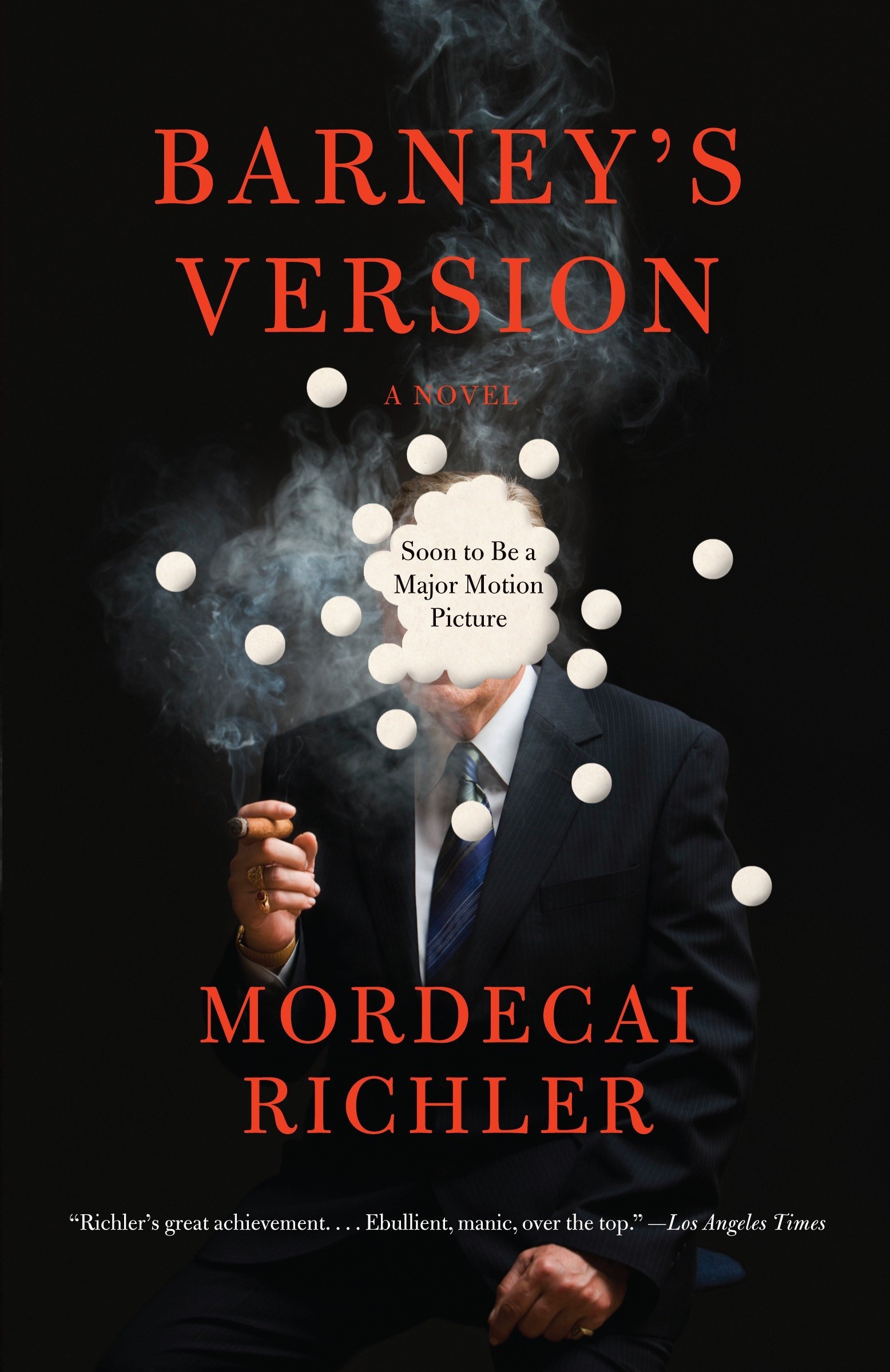
Barney's Version by Mordecai Richler

In a nutshell, I am not unaware of my failings.  Neither am I a stranger to irony.  I realize that I -- who took the Second Mrs. Panofsky's rambling conversation to be an abomination -- have consumed hundreds of pages, piling digression upon digression, to avoid getting to that seminal weekend in the Laurentians that all but destroyed my life, rendering unto me my reputation as a murderer, which is believed by some to this day.  Enter Sergeant-Detective Sean O'Hearne.  And I'm willing to swear that what follows is the truth.  I am innocent.  Honestly.  So help me God, as they say.

Okay, let's stick with the Canadians for a bit.

Barney's Version was the last novel of Montreal writer Mordecai Richler, and it reads like the novel a man writes as he faces down his own obsolescence.  Barney Panofsky, a successful television producer, wants to write and publish a firsthand account of his own life.  When he has been in the public eye, it's always been as part of someone else's sordid account: his first wife, Clara, who committed suicide before her poetry and art could make her a feminist icon; the memoir of Canadian novelist Terry McIver, who knew and despised Barney during their youth in Paris; and especially the lurid newspaper accounts of Barney's trial for killing his best friend Boogie after finding him in bed with his wife.  What Barney wants to do is not so much "set the record straight"--there's a lot of admitted culpability here--but to provide the human context that makes every story seem a little bit more deserving of empathy.  Barney's tendency to forget basic facts and details in his advanced age tends to complicate this project.

The novel is a riot, in many senses: it's extremely funny; it's propelled along by a kind of manic energy; it manages to capture the spirit of the political tension in Quebec in the latter half of the twentieth century.  At times it reads like a much funnier Philip Roth novel, preoccupied as it is with the place of the aging male in the world of sex.  The cast of characters is immense, and borrows from several of other Richler books, which make a kind of Montreal Cinematic Universe (MCU).  I was particularly happy to see Duddy Kravitz, all grown up and having finally struck it rich, needling a doctor for an underheralded disease he might become a patron of, admitting him at last into high-toned Westmount society:

"Crohn's disease."

"Never heard of it.  Is it big?"

"Maybe two hundred thousand Canadians suffer from it."

"Good.  Now you're talking.  So tell me about it."

"It's also known as ileitis or ulcerative colitis."

"Explain it to me in laymen's terms, please."

"It leads to gas, diarrhoea, rectal bleeding, fever, weight loss.  You suffer from it you could have fifteen bowel movements a day."

"Oh, great!  Wonderful!  I phone Wayne Gretzky, I say, how would you like to be a patron for a charity for farters?  Mr. Trudeau, this is D.K. speaking, and I've got just the thing to improve your image.  How would you like to join the board of a charity my wife is organizing for people who shit day and night?  Hey there, everybody, you are invited to my wife's annual Diarrhoea Ball."

Juxtaposed against colorful characters like Duddy, Barney himself pales a little.  That's by design, I think: part of Barney's deal is that he has always been adjacent to famous and outsized personalities, writers and artists, without ever becoming one himself.  Even Boogie, on the fateful day when Barney did or did not murder him, cruelly accuses Barney of being a kind of sponge on the more talented.  But Barney has his talents, including a razor sharp wit, amplified by a hot temper.  He spends much of his life writing and sending fake letters designed to get people in trouble, a bit I'm confident is borrowed at least in part from that other Canadian Jew, Saul Bellow.

One thing that troubled me a little about Barney's Version is its depiction of feminists and other liberal activists.  Barney's involvement, and supposed cruelty toward, his first wife Clara sends feminist writers his way, talking about "penis-power."  At times Barney's version seems to paint him as the victim of a kind of liberal orthodoxy that echoes a lot of modern right-wing meme culture.  These tensions are inextricably tied up with liberal support for Quebecois independence and French language laws, which Richler saw as inseparable from Francophone anti-Semitism.  But even when you think you have Richler's politics pegged, he comes into undercut them, as when Clara's father, a Canadian Jew who has recently been tossed off the board of his daughter's foundation by two black women, admits that "These women forced me to take a good look at myself."  It's a relatively minor moment in the book, but the novel's whole ethos demands that kind of criticism.  If Barney deserves his own account of his life, doesn't Clara, who never got to tell her own?  Who is it in this world whose stories aren't being told?

Barney's Version exists on shifting ground.  Barney's incipient Alzheimer's makes every detail suspect, and his account is supplemented by a series of corrective footnotes by his son, Michael.  The effect is to make Barney seem more or less trustworthy, but to inject the slightest doubt into his narrative, and to emphasize the subjectivity of our own versions of ourselves.  What do we do with a man who can remember "Velazquez's portrait of that royal family" but not that it's called Las Meninas?  Barney talks about the moment where his friend Boogie disappears as that "seminal weekend in the Laurentians that all but destroyed my life," but that's not true.  The trial succeeds in alienating Barney from his wife, whom he hates, and allowing him to marry the true love of his life, Miriam.  (In a nice comic touch, they meet for the first time on the night of Barney's wedding to the woman he calls only "The Second Mrs. Panofsky.")  It's a smaller, tawdrier moment, a night of drunken cheating, that separates him from Miriam thirty years later and really marks the ruin of his life.  It lacks the high drama of the murder charge, but it is enough to make you wonder how much Barney really understands about himself.

Richler's not really a postmodernist.  The mystery of what happened to Boogie is resolved in a way that's as satisfying as any Agatha Christie novel.  But he understands, with a comic realist's eye, just how much of what we tell ourselves about own lives is fiction, or at least fictionalized.  He understands, too, the idea that Barney's Alzheimer's, diagnosed at the very end of the narrative, represents the loss of that fiction, and it's tragic: the loss of "Barney's Version" of himself, no less meaningful because it's not entirely true.