Showing posts with label death. Show all posts

Sunday, July 12, 2020

Kitchen by Banana Yoshimoto

As we decided where to meet, I looked up at the window. The sky outside was a dull gray. Waves of clouds were being pushed around by the wind with amazing force. In this world there is no place for sadness. No place; not one.

Two years ago, at 11:00am, I got a phone call from my dad, telling me that my Aunt Rhonda and her husband, Ted, had been in a car crash and died instantly. I'll never forget that moment, but I often feel like I can't remember that day at all. How did I feel? Shocked. What did I do? Collapse into a chair and not move. What happened the next day? The next? How did I grieve? Slowly and awkwardly and in unexpected ways. In some ways, Banana Yoshimoto's Kitchen is about the long walk in the days and weeks after unexpected loss, the ambiguity of grief, the difficulty and desirability of moving on.

The novel is really made up of two novellas, the titular Kitchen and the shorter Moonlight Shadow. Both are told from the perspective of a young Japanese girl, both are in a (mostly) realist mode, and both are about death and the aftermath. These books aren't really plotty but I'm going to fully spoil them below.

In Kitchen, Mikage's grandmother has died, and she moves in with the Tanabes, son Yuichi and mother Eriko. Eriko is what we'd now call trans, I think, or at least non-binary:

After my real mother died, Eriko quit her job, gathered me up, and asked herself, ‘What do I want to do now?’ What she decided was, ‘Become a woman.’ She knew she’d never love anybody else. She says that before she became a woman she was very shy. Because she hates to do things halfway, she had everything ‘done,’ from her face to her whatever, and with the money she had left over she bought that nightclub. She raised me a woman alone, as it were.” He smiled.

She's a loving, kind presence in the household and when she's killed by a stalker at the nightclub where she works, Mikage is forced to deal with both her grandmother and surrogate mother's deaths. 

In Moonlight Shadow, Satsuki, a college-aged girl, is reeling after the death of her boyfriend Hitoshi, who died along with his brother Hiiragi's girlfriend, in, yeah, an automobile accident. She meets a mysterious woman named Uraru while staring out at the river, and at the end of the novella, has a vision of her boyfriend waving goodbye before he fades away.

The writing throughout is simple but moving. A couple excerpts I really loved:

I understood what she was trying to say, and I remember thinking, listlessly, is this what it means to be happy? But now I feel it in my gut. Why is it we have so little choice? We live like the lowliest worms. Always defeated—defeated we make dinner, we eat, we sleep. Everyone we love is dying. Still, to cease living is unacceptable.

And this, about greatness:

Truly great people emit a light that warms the hearts of those around them. When that light has been put out, a heavy shadow of despair descends. Perhaps Eriko’s was only a minor kind of greatness, but her light was sorely missed.

6 months ago, on the 18 month anniversary of my Aunt's death, I had a dream where I met her and told her how much I missed her. She got to say hello to my youngest, Samuel, who never had a chance to meet and I was hugging her and sobbing when I woke up. So many sections of Kitchen resonated so perfectly with my experience, I could hardly help but love it. As David Foster Wallace said, good fiction makes us feel less alone. Maybe experiencing death, sadness, and progression through the eyes of others is the only way we can really lay claim to our own lives.

For waving goodbye, I thank you.


Saturday, May 5, 2018

H is for Hawk by Helen Macdonald

With the plucking of the pigeon came more revelations, as if with its uncovering other things were uncovered.  I thought of the dreams I'd had that spring of the hawk slipping away into air.  I'd wanted to follow it, fly with it, and disappear.  I had thought for a long while that I was the hawk--one of those sulky goshawks able to vanish into another world, sitting high in the winter trees.  But I was not the hawk, no matter how much I pared myself away, no matter how many times I lost myself in blood and leaves and fields.  I was the figure standing underneath the tree at nightfall, collar upturned against the damp, waiting patiently for the hawk to return.

Helen Macdonald's father died suddenly, of a heart attack, along the Thames while taking photographs.  He was a photographer.  It was his job to photograph things, to notice and capture them; and it's a similar talent that Macdonald exhibits in this finely noticed account of grief and loss.  Macdonald is a Cambridge academic and an amateur falconer (are there professional ones?) and the way she copes, or attempts to cope, with her father's death is through the challenge of training a goshawk, a bird known to be notoriously bloodthirsty and difficult.

What does the hawk, named Mabel, have to do with the father?  That's not an easy question to answer, because H is for Hawk gives a picture of Helen in the process of figuring out her own motives and motivations.  She offers up several explanations for what she's trying to accomplish with Mabel, and rejects some and modifies others.  At the same time she presents a reading of T. H. White's The Goshawk, a book written about the closeted man's attempts to do the same thing while drastically underinformed and underprepared.  Her analysis of White is as lucid and thoughtful as you might expect from a literary critic, but it's hard to shake the feeling sometimes that White's presence in the text makes one dead man too many.

I say that not to criticize, but to ponder the way that H is for Hawk captures the essential messiness of grief, the alienation it provokes from one's own feelings and thoughts.  H is for Hawk can be all over the place, but that doesn't feel wrong, and it's kept together by the strong throughline of the narrative--woman trains hawk--and the unfussy beauty of the prose, evidence of Macdonald's other career is a poet.

Few other books capture the feeling of bereavement so well.  "The memories," she writes, "are like heavy blocks of glass.  I can put them down in different places but they don't make a story."  She says she's been crashing her father's car, scraping it against walls.  Is it because she's trying to punish her absent father?  No, she says--it's that she no longer understands the shape of the car.  She writes with a chill:

There is a time in life when you expect the world to be always full of new things.  And then comes a day when you realise that is not how it will be at all.  You see that life will become a thing made of holes.  Absences.  Losses.  Things that were there and are there no longer.  And you realise, too, that you have to grow around and between the gaps, though you can put your hand out to where things were and feel that tense, shining fullness of the space where the memories are.

In some respect, Mabel is something to throw herself into, a distraction.  In another, she's a familiar kind of figure: a female companion who helps the traumatized protagonist heal through her companionship.  (Reading the old 19th-century accounts of falconers who excoriated goshawks, she recognizes the male tropes of sulkiness and mysteriousness that get applied to women.)  In another, she's a metaphor, the father who is lost among the clouds, but who will return at the call of a whistle as trained.  And perhaps not least she is an escape, a running from the world of men and women into a closed society of woman and hawk that occludes healing as much as it fosters it:

"Nature in her green, tranquil woods heals and soothes all afflictions," wrote John Muir.  "Earth hath no sorrows that earth cannot heal."

Now I knew this for what it was: a beguiling but dangerous lie.  I was furious with myself and my own unconscious certainty that this was the cure I needed.  Hands are for other human hands to hold.  They should not be reserved exclusively as perches for hawks.  And the wild is not a panacea for the human soul; too much in the air can corrode it to nothing.

She likes that line so much--"hands are for other human hands to hold"--that she repeats it at least once.  It has the pithiness of an aphorism, or a bromide, but Macdonald has earned it.  The novel ends with Mabel placed in an aviary, where she will moult for the summer, and Helen distraught, a repetition on a smaller scale of the mechanics of loss.  But it's tempered by the suggestion that Helen will return to friendships and to human life.  It's a vision of healing that is honest, and never too pat or neat.

To be honest, I wasn't sure they wrote books like this anymore, much less turned them into bestsellers.  There's an Oxbridge fussiness to it, a Victorian solipsism borrowed from White and  other falconers that Macdonald reads about.  (And despite Macdonald's insistence that austringers, hawk-trainers, are thought of as a lower breed than genteel falconers, it's hard for this American to see the pastime as anything but tweedy.)  But its beauty and honesty make it a book out of its own time, and one I'm grateful to have read.

Friday, July 19, 2013

A Wizard of Earthsea by Ursula K. LeGuin

On the sea he wished to meet it, if meet it he must.  He was not sure why this was, yet he had a terror of meeting the thing again on dry land.  Out of the sea there rise storms and monsters, but no evil powers: evil is of earth.  and there is no sea, no running of river or spring, in the dark land where once Ged had gone.  Death is the dry place.

A young boy is sent to wizard school, where he learns to control his great natural skill at wizardry.  In time, he becomes known as the most gifted wizard of them all--which is good, because he'll need all his talents to defeat an evil, shadowy force connected intimately to him for mysterious reasons.

Sound familiar?  Yes, of course it does: It's Ursula K. LeGuin's A Wizard of Earthsea, which tells the story of Ged, who accidentally creates a rip between the land of the living and the dead, allowing a horrible "shadow creature" to enter the world.  (How great can this guy be if he's the one that caused the problem in the first place, though?)  The extent to which Ged's story of self-discovery mirrors another, later story reveals how well-worn some of these fantasy tropes are, I suppose.

What sets A Wizard of Earthsea apart?  Not much, if you ask me--I find most fantasy pretty underwhelming, and Earthsea felt very much limited by the confines of its genre.  A couple elements did stand out, though: First, the setting of Earthsea, a massive island chain, provided a unique bit of atmosphere.  Second, magic in Earthsea operates in a very interesting way.  To have power over something, a wizard must know its name in the original and natural "true language."  Every animal, thing, place, and person has a "true name," many of which are kept hidden.  What is so threatening about the shadow creature that Ged looses is that it lacks a name, and cannot be controlled or defended against, and so becomes a chilling image of the ineffability of death, which refuses to be sufficiently described in human language.

The last few chapters of Earthsea go far in elevating it above similar books.  In them, Ged chases the shadow to the limits of Earthsea, an unknown part of the ocean that slowly thickens into land.  The final meeting with the shadow creature is fairly cryptic for what is ostensibly a young adult book:

Aloud and clearly, breaking the old silence, Ged spoke the shadow's name and in the same moment the shadow spoke without lips or tongue, saying the same word: 'Ged."  And the two voices were one voice.

Ged reached out his hands, dropping his staff, and took hold of his shadow, of the black self that reached out to him.  Light and darkness met, and joined, and were one.

What's going on here?  Is this an illustration of the reality principle, the need for man to confront his own death and comes to terms with it?  Does LeGuin suggest that what we battle in our fear of death is not death itself, but us?  That's pretty heady stuff, and a lot more interesting than the wizard-school and dragon-fighting that make up most of the book.

Thursday, June 6, 2013

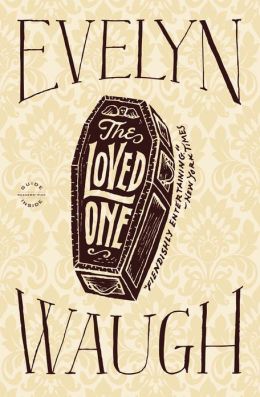
The Loved One by Evelyn Waugh

Dennis was a young man of sensibility rather than of sentiment.  He had lived his twenty-eight years at arm's length from violence, but he came of a generation which enjoys a vicarious intimacy with death.  Never, it so happened, had he seen a human corpse until that morning when, returning tired from night duty, he found his host strung to the rafters.  The spectacle had been rude and momentarily unnerving; but his reason accepted the event as part of the established order.  Others in gentler ages had had their lives changed by such a revelation; to Dennis it was the kind of thing to be expected in the world he knew and, as he drove to Whispering Glades, his conscious mind was pleasantly exhilarated and full of curiosity.

Aimee Thanatogenos is caught between two men: One is Mr. Joyboy, her boss at the Whispering Glades Crematorium.  Though slightly older, Joyboy is an expert mortician, specializing in composing the dead in just the attitude their family and friends desire, and Aimee idolizes him.  The other is Dennis, a louche Brit who works at the Happier Hunting Ground, a crematorium for pets that aspires to Whispering Glades' reputation:

There was a funeral with full honours that morning, the first for a month.  In the presecne of a dozen mourners the coffin of an Alsatian was lowered into the flower-lined tomb.  The Reverend Errol Bartholomew read the service.

'Dog that is born of bitch hath but a short time to live, and is full of misery.  He cometh up, and is cut down like a flower; he fleeth as it were a shadow, and never continueth in one way...'

That's the general style of Waugh's satire in The Loved One, wish is crueler and bolder than Brideshead Revisited, the only other book of Waugh's that I've read.  The exaggerated brashness of The Loved One reflects Waugh's ideas about its American setting, and I suspect that, since it's set in mid-century Los Angeles, Waugh is making some comment on a peculiarly Hollywood fixation on appearances and decadence, even to the point of death.

What Aimee ultimately discovers is that the choice she agonizes over is really no choice at all; both men are utter losers.  Dennis takes advantage of her ignorance by sending her classic poems with her name inserted, knowing that she won't recognize them.  Joyboy, so admired for his adroit handling of dead bodies, turns out to be little more than a middle-aged man who lives with his critical, neglectful mother and her ancient parrot.  She is the "loved one" of the title, but that's also what they call the corpses at Whispering Glades--which is pretty ominous.

I thought The Loved One was a collection of interesting satirical ideas that never really came together.  I might have liked it more if it hadn't been so clearly indebted to the books of Nathanael West--Waugh's LA looks a lot like the sunny hellscape of The Day of the Locust, and a plotline where Aimee seeks advice from a local newspaper advice columnist is cribbed straight from Miss Lonelyhearts.  Bringing those books to mind only makes The Loved One seem more limp by comparison, and underscores how little we are made to care about the fate of these characters.  Ultimately, The Loved One seems to me like an author trying unsuccessfully to be someone else.

Wednesday, February 27, 2013

Revealing Heaven by John W. Price

I enjoy reading things that I know I probably won't agree with. It is an important exercise, helping me to either strengthen, refine, or substantially rethink my opinions. So when I read the brief synopsis of Revealing Heaven, I thought to myself, "Well, this will be different and interesting."

I gave myself an extra day after finishing this book to collect my thoughts, and I'm still of two minds about it. On one hand, I appreciate and applaud what I see as one of Rev. Price's major arguments: God wants people to love one another. The main argument, the purpose even, of the book is that near-death experiences are real and should be embraced by Christians. In making this argument, Price continually claims that the primary object of a Christian should be to love his fellow man. This I like.

Ah, but on the other hand. Too often Price's main argument, regarding the veracity of near-death experiences, relies on conjecture, leaps of logic, and sometimes poor reasoning. Many of his conclusions feel unsubstantiated, or at least under-substantiated. The most common example of this is Price drawing conclusions from low amounts of data. One such instance comes from the chapter titled "Hellish Experiences". As you might imagine, this relatively small chapter was about those who have had near-death experiences that were unpleasant in some way. In the last page and half of this chapter, Price concludes that there are two types of negative experiences. However, Price began this chapter by stating, "Twelve people have related to me near-death experiences ranging from distressing to utterly hellish." Twelve people is a small group, and two sentences later, he shrinks that number even more, saying, "Nine of them were mean-spirited, cruel people. Drawing broad conclusions based on the experiences of such a small group people strikes me as ill-advised. A few chapters later, Price makes an argument based on the experiences of only two people.

On this same objecting hand lies critique of another of Price's arguments. He spends the better part of chapter talking about what he calls fear-based Christianity. Price is referring to "fire and brimstone" preachers, and even mentions Jonathan Edwards' sermon "Sinners in the Hands of an Angry God". His general argument is that people should not be scared into Christianity. But isn't this what Price is doing, at least in part, with this book. If not, then why spend a chapter talking about "Hellish Experiences"? Why make such thinly substantiated statements about these experiences. Granted, this chapter is just a small portion of the book, and Price could hardly be accused of anything worse than try to scare people into being more loving, hardly insidious.

So, I am essentially right where I was before I started this book. "Well, that was interesting." Persuasive? Not really. Thought-provoking? Yes.

Friday, January 4, 2013

Flesh of My Flesh by Kaja Silverman

Finitude is the most capacious and enabling of the attributes we share with others, because unlike the particular way in which each of us looks, thinks, walks, and speaks, that connects us to a few other beings, it connects us to every other being.  Since finitude marks the point where we end and others begin, spatially and temporally, it is also what makes room for them--and acknowledging these limits allows us to experience the expansiveness for which we yearn, because it gives us a powerful sense of our emplacement within a larger Whole.  Unfortunately, though, finitude is the most narcissistically injurious of all the qualities we share with others, and therefore the one we are most likely to see in them, and deny in ourselves.

One day you will die.  This is an astonishingly hard concept to accept.  Many, I imagine, never do, at least not until death intrudes upon them.  Death is always something that happens to somebody else, not to me--I've even rejected it in this very paragraph, by opening in the second person.  A more truthful beginning would be: One day I will die.

The thesis of Kaja Silverman's book is that the unwillingness or inability to see ourselves as mortal is the greatest cause of suffering, cruelty and violence in human history, and that if we recognize mortality (what she calls "finitude" above") as the essential similarity between all of us--we become capable of the very transcendent experience we seek by denying death.  She calls this "analogical thinking," and traces it through a series of works from Ovid, Leonardo, Rilke,  Freud, Terence Malick, and contemporary painter Gerhard Richter.  Silverman works mostly in a psychoanalytic vein, yet the breadth of the study makes it incredibly persuasive.

The fundamental story of this way of thinking, she argues, is the story of Orpheus, whose gaze at Eurydice banishes her back to a land of death from which he is excluded.  Boldly, Silverman argues that there is an "Orpheus inside every Oedipus," shoving Freud's quintessential human narrative aside to argue for another primal story.

I thought this book was incredible.  I think it ought to resonate with anyone who has felt the fear of death, and especially those of us who have found some comfort in the idea that if it is an inscrutable terror, it is an inscrutable terror that each of one us will face.  For Silverman (and every other atheist critic, to be sure) religion is an offshoot of man's fear of death.  The violence done in religion's name, then, is sadly consistent with its purpose, which is to say, "Death for thee, but not for me."  I'm not willing to go that far, but I think that Silverman's thinking can be accommodated by a believing psyche, as her brief thoughts on analogical thinking in Donne shows.

Perhaps most impressive: Flesh of My Flesh is a rigorous and thoughtful piece of academic criticism that is neither unintelligible nor pointless.  That's a rare breed.

Sunday, May 22, 2011

Dog Run by Arthur Nersesian


"Soon as I hung up, I suffered the acute and divine epiphany of being jobless. It was the modern equivalent to what medieval monks recorded after weeks and even months of starvation and sensory deprivation. I lay in bed and watched moments break into phenomenal particles of panic and could actually see the divine crack of God’s ass as he completely turned his back on me. I rose, dressed, grabbed doggy, and went to the ATM where I checked my balance. Doing some basic math, I realized that I had about three weeks before I would be in debt. I got a New York Times and a cup of coffee and brought the dog back home. Flipping through the classifieds, I looked for employment. I saw a couple of lousy-looking, tele-sale jobs and realized that this was going to be a real disaster. I cringed at the thought of having to start the whole job search again, updating my bogus resume, finding a costume that made me look responsible and professional, and then, worse of all, making calls and going for torturous interviews. Instead I turned on the TV and watched some white-trash sex nuts charging at each other on the Jerry Springer Show. For all the country’s political sensitivity and moral outrage, we secretly hungered for pornographic gladiator fights. Numb put her chin on my knee just like she used to do with Primo."


I can tell a book that’s been spat out from the fine folks at MTV Books a mile away because their jacket designs make me salivate even though I have to be automatically skeptical about them due to the company behind their imprint. To be fair, these are the same people that brought us the angsty gem Perks of Being a Wallflower. Dog Run by Arthur Nersesian beckoned to me while I was recovering from too much wine at Barnes and Nobles and I decided to see if I liked the inside as much as the cover. I won’t tell you it was as bad as I expected it to be, but it’s certainly no Perks.

On the back, a Jennifer Bell (who wrote a book I’ve never read) was quoted saying “Nersesian’s writing… is beautiful, especially when it is about women and love.” I’m pretty sure that I was misled by this, because while there was plenty about women and men and sex, there wasn’t a damn thing about love in this novel anywhere.


Our main character, Mary, is a 29 year old fuck-up that has been drifting from one temp job to the next without any real sense of purpose or direction. She’s got a book she’s been writing about shitty minimum wage franchises called The Book of Jobs and until maybe the third page, a live in boyfriend named Primo who she comes home at the opening to discover dead on her couch. Through a strange turn of events she finds out that everything she knows about the dead beau has been a lie and finds him infinitely more interesting dead than she did while he was alive. To put all of Primo’s puzzle pieces together, she hunts down (and sometimes stalks) all of his former lovers. Her detective work takes her to seedy strip clubs, art galleries, and a band audition where she ends up accidentally becoming the bassist for Crazy and Beautiful, whose singer is Primo’s ex wife and baby mama Sue Wotts. Sue has a reputation for being “that crazy Cambodian bitch” and even without Sue knowing what Mary’s connection to her is or her agenda, Mary still manages to rile Sue up incessantly throughout the novel.


I think most people have SOME degree of morbid curiosity about their partner’s former significant others, so it was interesting to see someone act out on that in ways that no one in my actual life (I hope) ever would. As long as it’s fictional, I enjoy a good train wreck.


While Mary tries to come to terms with Primo’s life and death, she also has to deal with recurring bouts of unemployment, manage a friendship with a histrionic husband-hunter that’s trying to find any decent remaining unattached Jewish men in New York after sleeping with the rest of the city of New York in its entirety, a string of dates with bizarre men, not pissing off Crazy and Beautiful, and being a decent dog mama to Primo’s overly needy canine Numb. Her relationship with the dog leads to a relationship with the local dog run (hence the book title), where she meets her new love interest, scatters Primo’s ashes, and bludgeons someone in the head and almost gets arrested. I found most of the subplots to be more interesting than the Primo fascination, which became tedious to read about a lot faster than I thought it would. The only subplot I could have done without involves Mary doing write ups on novel manuscripts sent into a publisher for a literary contest. The novels that she has to read all leave a lot to be desired, and Nersesian beats us over the head with that by making us endure three page stretches that describe their crummy plots, involving things like strange sex machines and self flagellating priests. I guess he’s trying to get us to feel sympathetic for Mary but I quickly became impatient with him, instead.


The book was entertaining enough over all, but there were quite a few boring stretches and bad sex scenes to work through before getting to the end, which was a landmine of back to back plot twists I never would have seen coming. I devoured the last quarter of the book right up until the last page, where Nersesian seemed to have forgotten that he made his main character neurotic and self involved and tied things up a little too nicely for them to be believable. The last page is not the right place for warm and fuzzy epiphanies.


I feel like I should follow this up with something more respectable and literary for my next review, but I probably won’t.

Wednesday, April 20, 2011

Obit by Robert Lowell

Our love will not come back on fortune's wheel—
in the end it gets us, though a man know what he'd have:
old cars, old money, old undebased pre-Lyndon
silver, no copper rubbing through... old wives;
I could live such a too long time with mine.
In the end, every hypochondriac is his own prophet.
Before the final coming to rest, comes the rest
of all transcendence in a mode of being, hushing
all becoming. I'm for and with myself in my otherness,
in the eternal return of earth's fairer children,
the lily, the rose, the sun on brick at dusk,
the loved, the lover, and their fear of life,
their unconquered flux, insensate oneness, painful "It was...."
After loving you so much, can I forget
you for eternity, and have no other choice?


"[I]n the end, it gets us"--well, what gets us? Well, death, for one, as in "obituary," and "obit," the Latin word that means "he dies." But "Obit" isn't so much about death as it is the Life-in-Death that precedes it:

Before the final coming to rest, comes the rest
of all transcendence in a mode of being, hushing
all becoming.


"Obit" gives us two models of passing time: A cyclical one, as in "the eternal return of earth's fairer children, / the lily, the rose, the sun on brisk at dusk," and the linear one in which things decay and do not return. "It," then, is the Second Law of Thermodynamics again, the inevitable entropy of things large and small. The "rest of all transcendence" may be the end of all life's transcendent moments, or the negative transcendence--that is, the moving past and away--of life all together. In either case, the pathos of "Obit" is that what is wished for (the return of "old cars, old money... old wives," etc.) is not what will be met. (Oh, and that word "obit" literally means "he meets"...) Love will never "come back on fortune's wheel."

Brent, who asked me to write about it, loves this sonnet of Lowell's for the last lines, the volta. They become somewhat unnerving when we come to find that this poem was not written on the death of a loved one, but on Lowell's divorce from his wife. That makes it sort of creepy, but it also emphasizes the deathlike pain of loss, which must be lived with.

Wednesday, April 13, 2011

Tetelestai by Conrad Aiken

How shall we praise the magnificence of the dead,
The great man humbled, the haughty brought to dust?
Is there a horn we should not blow as proudly
For the meanest of us all, who creeps his days,
Guarding his heart from blows, to die obscurely?
I am no king, have laid no kingdoms waste,
Taken no princes captive, led no triumphs
Of weeping women through long walls of trumpets;
Say rather I am no one, or an atom;
Say rather, two great gods in a vault of starlight
Play ponderingly at chess; and at the game's end
One of the pieces, shaken, falls to the floor
And runs to the darkest corner; and that piece
Forgotten there, left motionless, is I....
Say that I have no name, no gifts, no power,
Am only one of millions, mostly silent;
One who came with lips and hands and a heart,
Looked on beauty, and loved it, and then left it.
Say that the fates of time and space obscured me,
Led me a thousand ways to pain, bemused me,
Wrapped me in ugliness; and like great spiders
Dispatched me at their leisure.... Well, what then?
Should I not hear, as I lie down in dust,
The horns of glory blowing above my burial?


I have not, as Harold Bloom suggests any lover of poetry should do, memorized many poems. However, I felt compelled to memorize the incredible first stanza of Conrad Aiken's self-elegy "Tetelestai," the remainder of which you can read here. (Being both sound in mind and body, I did it while on the treadmill at the gym.)

I love "Tetelestai" because its strong affirmation of the value of life. Not as cheery as Whitman, yet it has the Whitmanian sense of value in the smallest things, the smallest lives especially:

Is there a horn we should not blow as proudly
For the meanest of us all, who creeps his days,
Guarding his heart from blows, to die obscurely?


Reading Whitman often makes me feel like all human life is puppy dogs and buttercups, but "Tetelestai" is truer to my own heart's feeling, that to be a human being is often times a wretched, miserable endeavor. Haven't you felt this way?:

Say that the fates of time and space obscured me,
Led me a thousand ways to pain, bemused me,
Wrapped me in ugliness; and like great spiders
Dispatched me at their leisure...


Elsewhere in the poem is a litany of human guilt and impotence:

...I who was tyrant to weaklings,
Striker of children; destroyer of women, corrupter
Of innocent dreamers, and laugher at beauty; I,
Too easily brought to tears and weakness by music,
Baffled and broken by love, the helpless beholder
Of the war in my heart of desire with desire, the struggle
Of hatred with love, terror with hunger; I
Who laughed without knowing the cause of my laughter, who grew
Without wishing to grow, a servant to my own body;
Loved without reason the laughter and flesh of a woman,
Enduring such torments to find her!


And yet, like the sonnet's volta, Aiken declares, "Should I not hear, as I lie down in dust, / The horns of glory blowing above my burial?" Life is mean; life is petty; those of you waiting for it to settle itself into a neat order that exhibits its purpose and its grandeur shall be disappointed in this lifetime. And yet for all that, Aiken tells us, each life is worthwhile, and deserves its own exit music. (And note the little neatness of the "I," which we find twice at the end, the death, of each line...)

The title "Tetelestai" links the speaker with Christ, who speaks these words in the book of John: "It is finished." In the latter stanzas, Aiken makes this comparison explicit, calling himself "[t]he weakling / Who cried his "forsaken!" like Christ on the darkening hilltop!" Unlike "Poem on His Birthday," "I Am," and, to a lesser, or perhaps weirder, extent, "Shadows," I do not think that "Tetelestai" shares a vision of a Christian afterlife. "Press down through the leaves of jasmine," he writes, "Dig through the interlaced roots--nevermore shall you find me; / I was no better than dust, yet you cannot replace me..." Here death is an eradication.

And yet, by linking himself Christ, Aiken asserts the value of his own life and of others. Whatever Christ may have been, so we are, and whatever his value ours is, too. "Tetelestai," it is finished--but what is finished? For Aiken, the answer is, "something worth celebrating."

Tuesday, April 12, 2011

Shadows by DH Lawrence

And if tonight my soul may find her peace
in sleep, and sink in good oblivion,
and in the morning wake like a new-opened flower
then I have been dipped again in God, and new-created.

And if, as weeks go round, in the dark of the moon
my spirit darkens and goes out, and soft strange gloom
pervades my movements and my thoughts and words
then I shall know that I am walking still
with God, we are close together now the moon’s in shadow.

And if, as autumn deepens and darkens
I feel the pain of falling leaves, and stems that break in storms
and trouble and dissolution and distress
and then the softness of deep shadows folding,
folding around my soul and spirit, around my lips
so sweet, like a swoon, or more like the drowse of a low, sad song
singing darker than the nightingale, on, on to the solstice
and the silence of short days, the silence of the year, the shadow,
then I shall know that my life is moving still
with the dark earth, and drenched
with the deep oblivion of earth’s lapse and renewal.

And if, in the changing phases of man’s life
I fall in sickness and in misery
my wrists seem broken and my heart seems dead
and strength is gone, and my life
is only the leavings of a life:

and still, among it all, snatches of lovely oblivion, and snatches
of renewal
odd, wintry flowers upon the withered stem, yet new, strange flowers
such as my life has not brought forth before, new blossoms of me

then I must know that still
I am in the hands of the unknown God,
he is breaking me down to his own oblivion
to send me forth on a new morning, a new man.


To my mind DH Lawrence's "Shadows" and Thomas' "Poem on His Birthday" are so alike in spirit and message that they seem companion poems. Lawrence preceded Thomas by some decades, of course, and his vision of afterlife is more idiosyncratic, but would you be surprised to read that wonderful line of Thomas', "Dark is a way and light is a place," in the clear, solemn stanzas of "Shadows?" Dark is the way:

And if, in the changing phases of a man's life
I fall in sickness and in misery
my wrists seem broken and my heart seems dead
and strength is gone, and my life
is only the leavings of a life...


"My wrists seem broken and my heart seems dead": I do not know what it is to be on one's deathbed, but that seems more accurate and more vivid than anything I might imagine. If you put an infinite number of emo bands in a room with typewriters, would they ever write a phrase so heart-rending?

But light, that place, greets us as the poem begins:

And if tonight my soul may find her peace
in sleep, and sink in good oblivion,
and in the morning wake like a new-opened flower
then I have been dipped again in God, and new-created.


Lawrence, like Thomas and Clare, yearns for communion with God, and yet here is much more: here is a resurrection in God, and a sort of transformation toward divinity. I love "Shadows" because it uses such simple autumn imagery to describe this process, a trope so well-worn it is beyond cliche. Echoes here, too, of Macbeth, who says, "My way of life has fallen into the sere, the yellow leaf..."

And yet the simplest images have the most power, when they are done so well. Thomas' poetry suffers from its labyrinthine qualities; at times it is as much a mystery as the "brambled void" itself. Lawrence's clarity is, by contrast, shattering. As Thomas writes of the souls like "blackberries in the woods," Lawrence too gives us images of plants, grown from the soil where dead things are, not fruit this time but flowers:

and still, among it all, snatches of lovely oblivion, and snatches of renewal
odd, wintry flowers upon the withered stem, yet new, strange flowers
such as my life has not brought forth before, new blossoms of me...

I love that. Oblivion is "lovely," lovely because it belongs to God, and is his medium for the creation of a new spirit. Oblivion is not oblivion; it is something Lawrence tells us that we must pass through to emerge, new, from the other side.

Monday, April 11, 2011

Poem on His Birthday by Dylan Thomas

...Terror will rage apart
Before chains break to a hammer flame
And love unbolts the dark

And freely he goes lost
In the unknown, famous light of great
And fabulous, dear God.
Dark is a way and light is a place,
Heaven that never was
Nor will be ever is always true,
And, in that brambled void,
Plenty as blackberries in the woods
The dead grow for His joy.

There he might wander bare
With the spirits of the horseshoe bay
Or the stars' seashore dead,
Marrow of eagles, the roots of whales
And wishbones of wild geese,
With blessed, unborn God and His Ghost,
And every soul His priest,
Gulled and chanter in young Heaven's gold
Be at cloud quaking peace,

But dark is a long way.
He, on the earth of the night, alone
With all the living, prays,
Who knows the rocketing wind will blow
The bones out of the hills,
And the scythed boulders bleed, and the last
Rage shattered waters kick
Masts and fishes to the still quick stars,
Faithlessly unto Him

Who is the light of old
And air shaped Heaven where souls grow wild
As horses in the foam...


Death, death, death. Is there a poem that I have discussed this month that doesn't meditate at least indirectly on death? (Maybe "Dream Song 14?") I do not think it is because I am morbid. I think, rather, that the greatest poems are about death because death--our ultimate unsolvable question--weighs heavier on our minds than anything else. I have saved a few poems for this stretch to be discussed together, because they each give me some hope for existence beyond death. I include yesterday's, from "Song of Myself," in this group and today I continue with a passage from Dylan Thomas' "Poem on His Birthday."

The basic concept is familiar to us through all those cheesy greeting cards with the Grim Reaper on them: each birthday is more bittersweet than the last because it means that we are a year closer to death; as Thomas puts it in part of the poem not quoted here, he "[t]oils toward the ambush of his wounds." (What a great way to put it!) What Thomas did not know when he wrote it is that he had only four years to live, collapsing at the age of 39 in New York City's White Horse Tavern. He wrote this poem in celebration of his own 35th birthday.

I love "Poem on His Birthday" for this line, more than anything else: "Dark is a way and light is a place." Whitman's assertion that death is "different" and "luckier" does little to assuage the anxiety of anyone who doesn't have that Whitmanian peace of mind; to Whitman is seems so easy, as if he has never been anxious about death. In one short line, Thomas acknowledges the bitterness, the suffering, the lonesomeness of death, and assures us that at the end of that journey is a permanence (a "place," not a "way") in the presence of God. The anxiety remains--you can see the specter of doubt in the idea that "Heaven that never was / Nor will be ever," yet it is somehow "always true"--but how wonderful seems the other side of it:

And, in that brambled void,
Plenty as blackberries in the woods
The dead grow for His joy.


Note the echo of Whitman, for whom the dead grow out as grass. It wouldn't surprise me if Thomas were conscious of that parallel, though his vision of life-beyond-death is as Christian as Whitman's is Transcendentalist, and not really of the same stripe.

Thomas' legacy is still controversial. At his worst he could be incoherent, but I don't know who can read "Poem on His Birthday" and not be awed. It's relatively short, unlike "Song of Myself," and though I have selected the best portion to reproduce here I encourage you to read the rest of it.

Sunday, March 20, 2011

The Hunger Games by Suzanne Collins

In the post-Harry Potter world, it seems we may be condemned to an endless cycle of Next Big Things from the Young Adult world. Twilight was there to console us when we realized there were no more Potter books coming, and The Hunger Games has followed in that book's wake into the public consciousness. The film is already in production, of course. The loser in this new world order is probably Dan Brown, who will probably have to write a book for teenagers if he's ever going to be popular again.

I am a fan of Harry Potter but I have refused to read Twilight, which seems unbearable. One of my students asked me to read The Hunger Games, which is better written and more imaginative than Twilight, but a poor substitute for Harry Potter. Firstly, it cribs shamelessly from a Japanese novel/manga called Battle Royale: both are about teenagers being selected by a despotic government to compete in a brutal competition where the last survivor wins. In both books, this is depicted as a means of controlling the population through fear; in The Hunger Games it is also a punishment for a long-ago populist insurrection.

The protagonist of The Hunger Games, Katniss Everdeen (ugh), volunteers to go in place of her little sister, who has been chosen by lottery. As each "district" must send two competitors, she is joined by Peeta Mellark (ugh), a local baker's son, and assisted by a former winner from her district whose alcoholism renders him less than helpful. For a competition in which the competitors are chosen at random, the representatives from the other eleven district seem to be have unusually advanced combat skills.

The Hunger Games is characterized by its inconsistency, but occasionally exhibits imaginative flair. It flirts with social commentary by turning the Games into a kind of televised spectacle. The audience can contribute money to "sponsor" competitors, who receive helpful gifts by parachute; competitors from the wealthier districts naturally have an advantage. Katniss, Peeta, and their mentor Haymitch operate according to a peculiar game plan: If they pretend that Peeta and Katniss are in love, then the popularity of their televised romance will provide them with sponsors. And maybe, just maybe--spoiler alert--the "Gamemakers" will change the rules of the game so that two competitors from the same district can win.

I have two issues with this. The first is that it is stupid. Not only does it lead to an awful lot of teenage makeouts on the killing field, assuming that your romance would provide the leverage to force the hand of the all-powerful regime in the Capitol is a horrible plan. Unsurprisingly, it works.

The second problem is more significant: It thematically undermines the book. The Capitol controls the population through propaganda, of which the Games are a central part, and we are meant to be appalled by how willing people are to tune in to teenagers being murdered on their TV. But the love scheme (to the extent that it is a scheme and not the precursor of a real romance) turns Peeta and Katniss into propagandists. This dystopia is characterized by an obsession with appearances and media, why then are Peeta and Katniss' "stylists" depicted as guardian angels, who sympathize with their plight and help them win? Katniss wants to rebel against the brutality of the system, but her success in the Games looks conspicuously like a validation of that system's efficacy.

I fear that these problems are impossible to fix because the book is by nature contradictory. Yes, the system is brutal and the population bloodthirsty and shallow, but the pleasure we get out of reading about teenagers speared or burned or bludgeoned to death is uncomfortably like the pleasure the Capitol provides its audiences. If Collins were a better writer, this might be tempered by some grave reflection on death--not unheard of in children's fiction--but what minor guilt Katniss shows is fleeting and thin. Death in The Hunger Games is popcorn stuff, and will probably look spectacular on the big screen, but looking spectacular may be all it can manage.


Other reviews:

Jim
Carlton
Brent

Saturday, November 27, 2010

Memento Mori by Muriel Spark

They were assembled once more in the dining-room where a fire sparkled weakly in the sunlight.

Henry Mortimer said: "If I had my life over again I should form the habit of nightly composing myself to thoughts of death. I would practise, as it were, the remembrance of death. There is no other practise which so intensifies life. Without an ever-present sense of death life is insipid. You might as well live on the whites of eggs."

Memento Mori, if it had not been for The Prime of Miss Jean Brodie, would probably be now remembered as Muriel Spark's most significant novel. It continues to make itself available to contrarians who would call it, contra Brodie, her masterpiece, and indeed it possesses a kind of fullness, or richness, that her non-Brodie books often seem to lack.

The cast is unwieldy, a panoply of eldlerly figures coming to terms with the end of their lives. All are curmudgeonly, and some downright senile:

"I have quite decided to be cremated when my time comes," said Godfrey. "It is the cleanest way. The cemeteries only pollute our water supplies. Cremation is best."

"I do so agree with you," said Charmian sleepily.

"No, you do not agree with me," he said. "R.C.'s are not allowed to be cremated."

"I mean, I'm sure you are right, Eric dear."

"I am not Eric," said Godfrey.


One by one, each of them begin to receive anonymous phone calls that tell them, "Remember that you must die." This is the memento mori of the title--an allusion to the lone figure that, when a Roman emperor or general would receive a triumph, or victory parade, through the heart of the city, would lag behind him whispering a humbling reminder of his mortality. In Rome it was a check against the ambitions of the powerful, but these characters have only delusions of power, and age and death--by means of spurious wills--threaten to bring masters on equal footing with their servants. No emperors can be found here.

Instead, these phone calls ought to be a warning against pettiness and unscrupulousness: Your last days are a time to make things right. But the old folks of Memento Mori are obstinate, and cling to old jealousies, ancient affairs, bizarre sexual perversions, and insidious blackmail. They obsess over the identity of the caller--who, it is suggested, may have supernatural origins--but only rarely do they ever stop and consider the implications of the caller's message.

Spark was 41 when she wrote Memento Mori, which you might call novelist-young. She persisted, according to Stannard's biography, quite crankily into her late eighties. One wonders, when faced especially with the character of Eric--the spoiled, untrustworthy son of Charmian, a once-successful novelist--whether the novel is something of a vision of Spark's own convalescence. As it is, Spark never mended her own broken relationship with her son Robin, and in the late stage of her life they came very much to resemble Eric and Charmian.

Is the title of the book, in Spark's case, advice unheeded? The characters that deal most positively with the anonymous calls are the ones who are most religious (like Charmian, when her senility wanes), and as such Memento Mori is presented as a defense of Spark's mid-life conversion. But if we can grant Spark some measure of clairvoyance--or perhaps, acknowledging her persistent obsession with control both in life and literature, a considerable measure of self-determinism--it comes also to a recognition of the difficulty of truly setting one's mind on last things.

Thursday, May 27, 2010

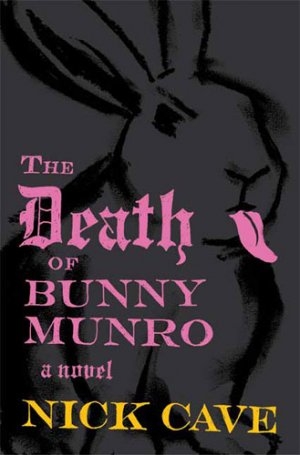
The Death of Bunny Munro by Nick Cave

Bunny gropes around on the bed until he finds the remote and, with a crack of static, the TV implodes into nothingness and he closes his eyes. A great wall of darkness moves toward him. He can see it coming, vast and imperious. It is unconsciousness and it is sleep. It moves like a great tidal wave but before it breaks over him and he is away, before he renders himself completely to that oblivious sleep, he thinks, with a sudden, terrible, bottomless dread, of Avril Lavigne's vagina.

Nick Cave has two personae. The one I was first familiar with was the brooding, Gothic piano player of As I Sat Sadly By Her Side, but that was a later invention. The original Cave was the frontman for an Australian band called The Birthday Party, and that Cave is loud, brash, and quite filthy. It's that persona that Cave would return to for his Grinderman side project, who recorded this:


The Death of Bunny Munro was written by this Cave. It is a junkyard clattering of death and sex, as bitter as it is squalid. The titular character is a middle-aged traveling salesman with a sex addiction that has irretrievably alienated him from his wife, and when she commits suicide he takes their son, Bunny Junior, and drags him on a whirlwind tour of the south of England as he tries to hawk his wares and chase poon at the same time.

Bunny is a horrendous man. His need for constant sexual fulfillment puts him through mental and physical hardship and distracts him from his son, a prepubescent egghead who absorbs himself in his comprehensive (but somehow, single-volume) encyclopedia. Bunny Junior idolizes his father, but doesn't truly understand him:

His mother bought the encyclopaedia for him, just because she loved him to bits, the boy likes to remember. Bunny Junior thinks it is an elegant-looking book with a jacket the exact colour of one of those citronella-impregnated mosquito candles. Merlin was the son of an incubus and a mortal woman, and the boy looks up 'incubus' and finds that an incubus is a malevolent spirit who has intercourse with women in their sleep, then he looks up 'intercourse' and thinks, Wow, imagine that, as he gradually intuits the presence of his father standing in the doorway.


Bunny, of course, is defined solely by "intercourse." In turn, Bunny doesn't care to even try to know his son, and instead spends most of his spare time thinking on Avril Lavigne's vagina. This is a frequent conceit, and Cave even apologizes to Avril at the end of the book, but the pointed realness of it reminds me of similar complaints I had about J. G. Ballard's sexualization of Elizabeth Taylor.

Cave dangles a couple more limbs from his Frankenstein's monster: First, there is the Horned Killer, a serial murderer in a red cape and horns making his way south through England while flaunting the media. The Horned Killer is a metaphor for the promised death of the title (which, you will notice, may refer to either Bunny or his son), winding its fated path to Brighton. Second, the ghost of Bunny's wife insists on haunting both Bunny and his son.

Add this to the noisy, ostentatious prose--you can almost see Cave sweating from the effort--and it's all too much. Beneath the clutter, The Death of Bunny Munro is a simple tale about a man, too sad to be vile, whose subservience to his addictions destroys his relationships. Despite his attempts at misdirection, Bunny ends up exactly where you expect. It isn't necessary for Bunny to be redeemed, but there is little enjoyment in watching a distasteful man fail distastefully.

Aristotle tells us that a tragic hero must be neither wholly good nor bad, so that we may see ourselves in him and feel both pity and fear, but when Bunny walks into a client's home and rapes a near-comatose girl because she looks like Avril Lavigne (seriously), following him to the end becomes a bitter chore.

This is Cave's second book, after The Ass Saw the Angel, separated by a twenty-year gap. Clearly, his schedule in the last twenty years has been fairly full (besides his solo work and Grinderman he has scored several movies), but with that kind of time, you would hope Cave's creative impulse would have produced something so sordidly mean.

Wednesday, February 17, 2010

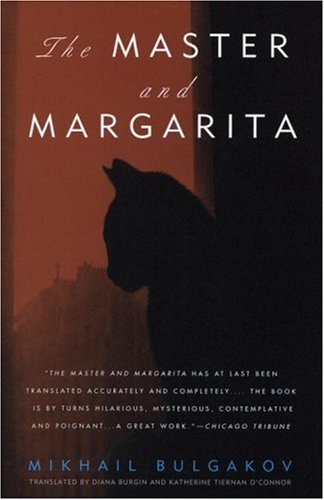
The Master and Margarita by Mikhail Bulgakov

Gods, my gods! How sad the earth is at eventide! How mysterious are the mists over the swamps. Anyone who has wandered in these mists, who has suffered a great deal before death, or flown above the earth, bearing a burden beyond his strength knows this. Someone who is exhausted knows this. And without regret he forsakes the mists of the earth, its swamps and rivers, and sinks into the arms of death with a light heart, knowing that death alone...


The Master and Margarita is one of those books whose fame comes partly from being discovered too late. Bulgakov was a famed playwright in Soviet Russia, and in the twelve years prior to his death he labored over this book, knowing completely that it wouldn't be published in his lifetime. It wasn't published until the 1960s, and today is one of the hallmarks of 20th century Russian literature.

The Master and Margarita is a rich, Faustian satire about the devil appearing in Moscow. He calls himself Woland, and begins by interrupting a conversation between an editor and a poet about the existence of Christ. After the conversation ends, the editor has been beheaded and the poet driven nearly into madness. This is just the first step--the book's first half chronicles the various and sundry ways that Woland causes havoc in Moscow, inducing death, madness, arson, and imprisonment, mostly in the city's literary and dramatic community. Most of these antics are performed by his retinue, which include a naked witch and a talking cat named Behemoth (which is totally what I'm going to name a cat, if I ever get one).

The titular characters don't appear until about halfway through the book: The Master, who has been arrested for writing a novel about Pontius Pilate, and Margarita, who desperately loves the Master. In exchange for returning the Master to her, Margarita agrees to become a witch and serve as the hostess for Satan's grand ball, which is as colorful as you might imagine. Interspersed are chapters of the Master's book about Pilate.

It's clear why the Soviet powers wouldn't have found The Master and Margarita acceptable. For one, religious subjects were taboo in atheistic Russia. Secondly, much of the havoc caused by Woland is a sly jab at the reigning policies of censorship and imprisonment. In this respect, Woland and his crew serve both as a symbol and its opposite. Though it is they who nearly destroy Moscow's literary elite, it is also Woland who saves the Master's manuscript about Pilate. The Master, regretting the trouble it has caused him, tries to burn it, but Woland reproduces it, quipping that "Manuscripts don't burn"--apparently now a rather well-known phrase in Russian. Here is the implication--the hope?--that authors survive in their works, something Bulgakov must have clung to in the face of a terminal disease. The book is largely comic, but also bittersweet, and the paragraph I've quoted above is one of the last that Bulgakov wrote. It expresses his exhaustion and frustration, and though he leaves the paragraph unfinished it is simple enough to imagine that the sentiment is "death alone can calm him." I don't know if death brought Bulgakov calm, but one hopes that he would have felt validated by The Master and Margarita's publication and subsequent popularity.

Thursday, January 28, 2010

J. D. Salinger Dies

“'Anyway, I keep picturing all these little kids playing some game in this big field of rye and all. Thousands of little kids, and nobody's around - nobody big, I mean - except me. And I'm standing on the edge of some crazy cliff. What I have to do, I have to catch everybody if they start to go over the cliff - I mean if they're running and they don't look where they're going I have to come out from somewhere and catch them. That's all I'd do all day. I'd just be the catcher in the rye and all.”

The literary world lost a great icon today. J. D. Salinger, author of Catcher in Rye and Nine Stories, died of natural causes today at the age of 91. You can read about him and his life here, or read our reviews of his work here.

R.I.P. Mr. Salinger.

Thursday, December 24, 2009

Dandelion Wine by Ray Bradbury

It was a quiet morning, the town covered over with darkness and at ease in bed. Summer gathered in the weather, the wind had the proper touch, the breathing of the world was long and warm and slow. You had only to rise, lean from your window, and know that this indeed was the first real time of freedom and living, this was the first morning of summer.

I am not sure that the dead of winter was the right time to read Dandelion Wine, as obsessed as it is with the magic of the summertime. The hero of the story is Douglas Spaulding, a twelve-year old boy in Green Town, Illinois (the same town in which Bradbury's much better Something Wicked This Way Comes takes place), who on the first day of summer, 1928, realizes for the first time that he is alive. This realization gives Douglas a new lease on life, and he begins to become aware of the significance of summer's mandatory rituals: the new pair of sneakers, the bottling of dandelion wine (which, honestly, sounds gross), etc., etc. The narrative jumps from Douglas to the other denizens of Green Town, but Douglas' hyper-awareness makes him the fulcrum around which the novel turns.

Though Bradbury is characteristically poignant here, his enthusiasm gauge is stuck squarely at eleven. Sometimes the "aw-shucks factor" is overwhelming:

"The reason why grownups and kids fight is because they belong to separate races. Look at them, different rom us. Look at us, different from them. Separate races, and 'never the twain shall meet.' Put that in your pipe and smoke it, Tom!"

"Doug, you hit it, you hit it! That's right! That's exactly why we don't get along with Mom or Dad. Trouble, trouble, from sunrise to supper! Boy, you're a genius!"


Oh boy, Davey! There's something slightly disingenuous about this, I think, and it's true for a lot of books about children. Children may be innocent, but it's not because they lack vices; it's because they don't know any better. In fact, children are typically vapid, selfish, cruel and prone to anger. Bradbury wants us to believe, as many do, that children occupy a purer state, but I'm not sure I buy into that, even in 1928. Not to mention my inherent distrust of the saccharine and overenthusiastic.

But Bradbury successfully tempers these tendencies with a grim streak: As in the beginning of the summer, Douglas realizes that he is truly alive, he later realizes that he, too, must die. This realization is brought on by the death of several elderly folks in Green Town, as well as the re-appearance of a serial strangler known as The Lonely One. At the book's climax, Douglas takes ill and nearly dies, saved finally by a traveling junkman with vials of exotic air. At his happiest, Bradbury is an above average prose stylist, but I think it's these darkest moments where he truly excels. When Douglas is lying prone in his bed, on death's door, Bradbury writes:

Inside redness, inside blindness, Douglas lay listening to the dim piston of his heart and the muddy ebb and flow of the blood in his arms and legs.

His lips were heavy and wouild not move. His thoughts were heavy and barely ticked like seed pellets falling in an hourglass slow one by falling one. Tick.


To Bradbury's credit, he seems to take death seriously but not morbidly; that Douglas' excitement at merely being alive and his awareness of death can coincide is the book's message and its triumph.

Tuesday, December 15, 2009

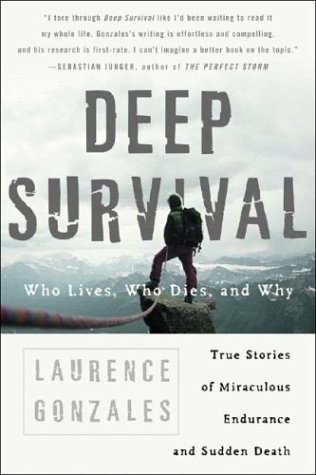
Deep Survival by Laurence Gonzales

After breaking his leg on a 20,000-foot peak in the Peru during a blizzard, Joe Simpson was given up for dead. Without food or water or a tent, he spent six days crawling off the mountain and back to camp. How did he do it?

As the skipper of a sunken yacht slipped over the side of his life raft into the Atlantic night, his four horrified crew members heard him calmly explain, "I'm going to get the car." Then they listened to his screams as he was eaten alive by sharks.

This book is pretty BAMF. You can tell just by looking at the cover - it has two subtitles in addition to the main one - "True Stories of Miraculous Endurance and Sudden Death" and "Who Lives, Who Dies, and Why." Too much much bad-ass-mother-fuckery for just one subtitle. If the two subtitles don't suck you in, the hook on the inside cover, excerpted above, certainly will. This book reminded me of paging through my grandmother's old Readers Digest magazines, looking for the story every month that featured lightning strikes or killer crocodiles. I used to eat those stories up. An entire book of those stories, compiled into one nifty volume for the pleasure of my vicarious excitement? Man eaten alive by sharks? Sign me up.

No matter that Laurence Gonzales writes like a high school newspaper reporter - replete with cursing, exclamation points, and useless adjectives like "stupid" to describe harrowing situations - the stories he tells make up for it. Mostly. There's the story of Joe Simpson described above, whose climbing partner actually cuts his belay rope and lets him fall off a mountain to save himself. And Simpson survived. There's the story of Steven Callahan, who set out to cross the Atlantic in his boat and was struck by a whale just a few days out. He spent 65 days adrift crossing the Atlantic on a life raft, catching fish and drinking 1/2 a pint of water per day until he ran into a Caribbean island on the other side. He lived too. And finally, there's the story of Gonzales' own father, who was shot down over German territory in 1944, survived having every limb broken and his nose cut off, and then survived being a POW for several months until liberation, losing over 50 pounds in the process. There are also stories about the people that didn't survive - people like the poor guy above, deluded by a sodium overload in his brain (caused by drinking seawater) into thinking he was back at the dock when he was really in the middle of the Atlantic.

Okay, Gonzales also has this rather annoying habit of inserting stories about himself into every other paragraph. Dude's done some crazy stuff. He flights plane acrobatics; he's been to Ranger school; he dives, he climbs, and he once sensed a major jet crash was imminent and got off the plane, Final Destination-style. I think he wrote this book partly as a vehicle to talk about the stuff he's already done and partly to have an excuse to do more stuff like go to Mountain Survival School and interview extreme alpinists.

The thesis of "Deep Survival" is that some people have it in them to survive and some do not. The question is largely mental, but can be affected by experience and emotional stability too. The book is broken into two parts: How Accidents Happen (systemic failures; accidents exist as a key part of any system and there is nothing to do to stop them - but you can make sure you are not involved when they happen) and Survival. The second half was definitely more engaging and interesting to me. It had all the stories I had been waiting for when I first read that glorious teaser on the inside book cover.

I'm really into disasters and survival stories, so I was willing to overlook this book's obvious flaws. If you are easily angered by overzealous writing, don't read this one.

Monday, July 6, 2009

Ubik by Philip K. Dick

Finally--I feel like I've been reading nothing but disappointing books for months. Ubik is like a big-budget sci-fi blockbuster condensed to 200 pages: Full of action, intrigue, and a lot of confusing twists. I will try, without giving anything away, to explain the plot:

Sometime in the future, portions of mankind have developed psychological powers. These people are called psis, and come in various flavors, the two most important of which are telepaths and precogs. Precogs--you may recall from the Dick adaptation Minority Report--can predict the future. In the future, the psis represent a significant threat to business interests, as a rival organization may plant telepaths in your organization or use precogs to see what you're going to do, so "prudence organizations" use the talents of antis, who block psis' powers, to protect themselves. Glen Runciter is the head of one of these organizations, which he manages with help from his dead wife who is kept in "half-life"--a cryogenic stasis where communication with the dead can be maintained, although the more you speak with them, the closer they get to true death.

Runciter and his team, including his right-hand man Joe Chip, accept a job on the moon where they believe many of the world's greatest psis have gone to cause havoc. The job turns out to be a trap, and Runciter is killed--or so Chip and the others think. When the team returns to Earth to bury Runciter, they find that somehow every thing is reverting to its earlier incarnation--for example, automated pay elevators (you have to pay for everything in the future, even doors) have become old-fashioned elevators with steel grates and elevator operators. Cars are reverting to 1920's era-Model T's, etc., etc. At the same time, they seem to be receiving, on the backs of matchbooks and in newspapers, strange, cryptic messages from the dead Runciter, advising them to find a mysterious substance called Ubik, which is the only thing that can protect them when members of the team start dying off one-by-one. Luckily, it is available in convenient spray-can form. Whew.

I loved Ubik because it's unbelievably fun and quickly paced, as well as deeply funny. But it doesn't come off as hollow entertainment; Dick manages to weave some very interesting thoughts about God and death in as well. Ubik itself seems to be an analogue for God--after all, it comes from the Latin word ubique, meaning "everywhere." It is a protective force, preventing decay and staving off entropy, preserving the forward motion of time when all else is tumbling backward. A series of epigrams that begin each chapter tout Ubik as a commercial product (Can't make the frug contest, Helen; stomach's upset. I'll fix you Ubik! It takes more than a bag to seal in food flavor; it takes Ubik plastic wrap, etc., etc.), perhaps going so far as suggesting the commodification of God in this future society, perhaps suggesting that order can be found in the universe in strange places.

In any case, I highly recommend Ubik. Safe when taken as directed.

Saturday, May 16, 2009

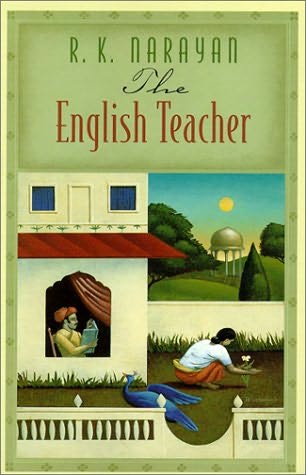
The English Teacher by RK Narayan

"Between thought and fulfilment there is no interval. Thought is fulfilment, motion and everything. That is the main difference between our physical state and yours. In your state a thought to be realized must always be followed by effort directed towards conquering obstructions and inertia--that is the nature of the material world. But in our condition no such obstruction exists. When I think of you or you me I am at your side. Music directly transports us. When I think of a garment, it is on me. In our world there is such a fine response for thought. When I come to you I prepare myself every time as befits the occasion. I come to meet my lord and I dress myself as befits the occasion. I think of the subtlest perfume and it already pervades my being; and I think of the garment that will most please you: the wedding saree, shimmering purple woven with gold, I have it on me at this very moment. You think you saw it in that trunk, how can it be here? What you have seen is its coutnerpart, the real part of the thing is that which is in thought, and it can never be lost or destroyed or put away."

Indian writer RK Narayan once sent the manuscript of his first novel, Swami and Friends, to a friend in England asking that, if he couldn't find a publisher for it, it would be thrown into the Thames, wrapped around a brick. His friend couldn't find one, but he also happened to have a friend in Graham Greene, who read the novel and determined to have it published. That was the 1930's, and Narayan and Greene maintained a long friendship by correspondence that lasted most of their very long lives--Greene died in (wow) 1991.


The eponymous teacher of The English Teacher is Krishna, a college instructor in a town called Malgudi who lives apart from his wife, Susila, and young daughter, Leela. He is not displeased by this, but when Susila decides to bring Leela to Malgudi that they might live as a family, he finds that the small details of marriage and fatherhood are infinitely more pleasing than his bachelor life. This first half of the book, in which Krishna comes to love his family, is unexceptional by design; teasing from the mundane intricacies of normal life a picture of largely untroubled domestic happiness.


And then Susila contracts typhoid, and dies. Supposedly this is based on the death of Narayan's own young wife, who also left a small child behind. Krishna is, of course, heartbroken, and returns quite bitterly to his normal routines as an English teacher until presented with a strange letter from a student, whose father has written to Krishna claiming that he has been contacted by Susila from the spirit world. Krishna visits this man, who conducts a sort of weekly seance between Krishna and Susila, until the time that Krishna learns to communicate with the world of the dead himself. In the passage I have quoted above, Susila tells Krishna how, in the spirit world, to think of a thing means to be with it, and accordingly, Krishna and Susila are never forced apart, even by death. It's simply done but arresting, and all the more touching knowing that such a book must have originated in Narayan's desire to be with his own wife again.


Graham Greene-o-Meter: Seven Greenes out of ten. Not very Greenesque, except maybe in the tightness and economy of the prose. Worth checking out.