Showing posts with label slavery. Show all posts

Saturday, June 2, 2018

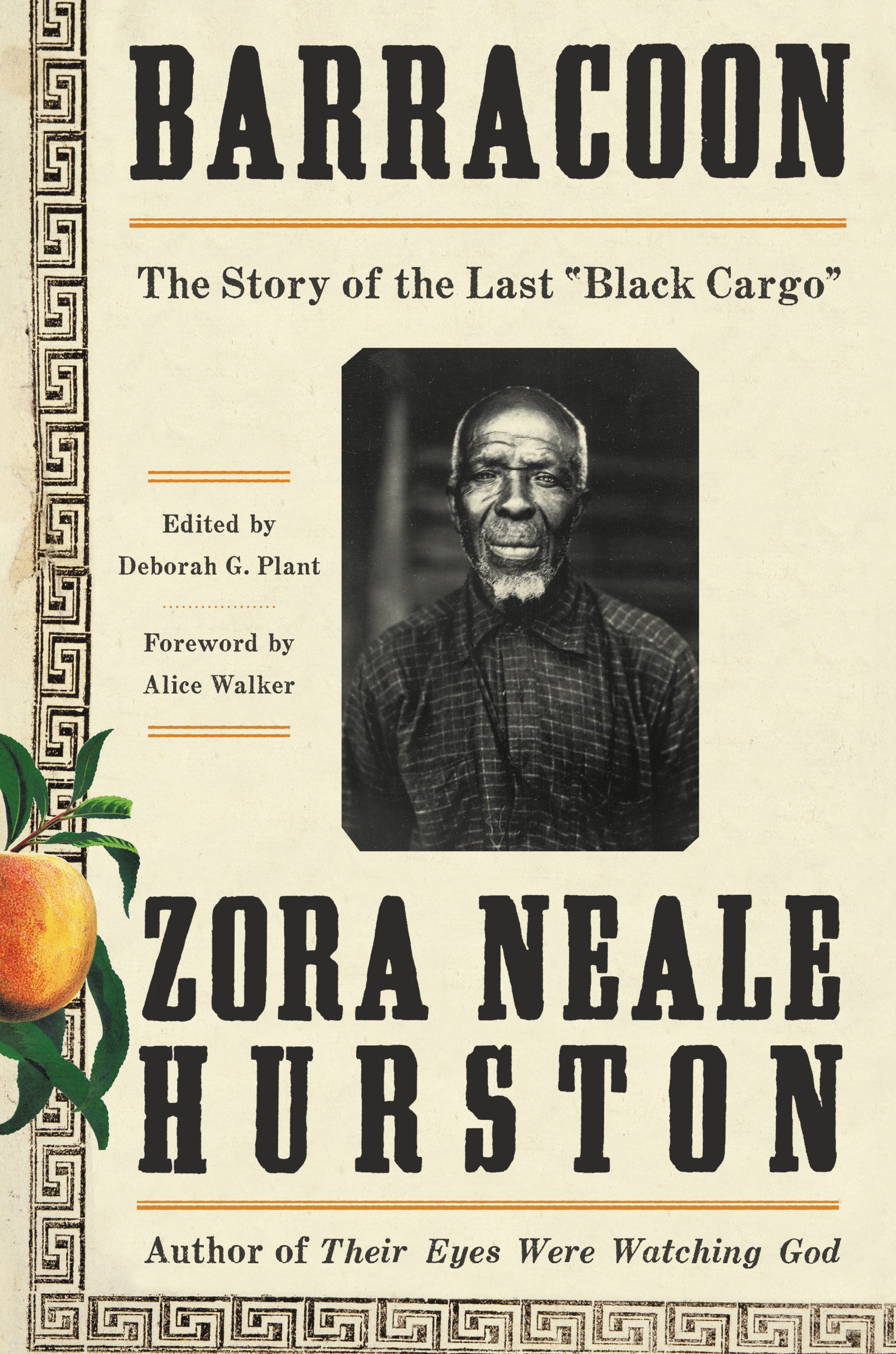
Barracoon by Zora Neale Hurston

I hailed him by his African name as I walked up the steps to his porch, and he looked up into my face as I stood in the door in surprise.  He was eating his breakfast from a round enameled pan with his hands, in the fashion of his fatherland.

The surprise of seeing me halted his hand between pan and face.  Then tears of joy welled up.

"Oh Lor', I know it you call my name.  Nobody don't callee me my name from cross de water but you.  You always callee me Kossula, jus' lak I in de Affica soil!"

What a wonderful thing, in the year 2018, to have a new book by Zora Neale Hurston.  It makes you wonder what they were thinking, all the people all those years ago, who declined to publish a book like Barracoon, Hurston's interview with the last survivor of the Mid-Atlantic slave trade.  Perhaps they didn't understand what a rare and lucky moment it was, to have such experience still alive in the heart of a man, or perhaps they underrated Hurston's gifts and importance as an ethnographer (way more impressive, in my opinion, than her work as a novelist).  There's some intimation in what I've read that people were squeamish about laying bare the role of African slavers in the Middle Passage, and quite rightly, since that stuff has always been fodder for right-wing trolls.  But whatever the case, it's quite something to have a book like this published at last.

In 1927 Hurston traveled to Alabama to interview a man named Oluale Kossula, who had gone by the Americanized name Cudjo Lewis for over sixty years.  As a teenager, Kossula's village in West Africa was decimated by the Kingdom of Dahomey, who were in the habit of massacring their enemies and selling whom they could to coastal slavers.  The title, Barracoon, refers to the kind of barracks where captured Africans waited to be bought by slavers.  One of the wonders of the book is that it gives a rare glimpse into what it was like on the African side of the slave trade.  Kossula's account of the Dahomey warriors--apparently, traditionally women--is one of the most haunting aspects of his story.

When Kossula was carried away by the Clotilde, it was in violation of  U.S. law, which had prevented new importing of slaves for over fifty years.  The Americans who put the voyage together did so because they could, and because they felt like they were entitled to it.  It was illegal, but no one, of course, got punished for it, except for Kossula.  He actually touches very little on his experience of slavery, focusing on the life he led after emancipation with his wife and children.  Like many former slaves, Kossula found himself needing to apply to his former masters for protection and employment:

"'Cap'n Tim, you brought us from our country where we had lan'.  You mad us slave.  Now dey make us free but we ain' got no country and we ain't got no lan'!  Why doan you give us a piece dis land so we kin buildee ourself a home?'

"Cap'n jump on his feet and say, 'Fool do you think I goin' give you property on top of property?  I tookee good keer my slaves in slavery and derefo' I doan owe dem nothin?  You doan belong to me now, why must I give you my lan'?"

Kossula, then, with a group of fellow Africans, saved for years to buy their own land and found a community called Africatown.  The community still exists in Mobile, and some of its residents still trace their heritage back to the Clotilde and the Dahomey raid.  It's a remarkable story of independence and will, told in Kossula's own voice and idiom.  Hurston deftly gets out of the way of Kossula's story, and records it with faithful care.  Interpolation is smartly minimized to let the power of the story, and the feeling that you are hearing a firsthand account, shine through.

Kossula's experiences after the end of the Civil War were full of hardship.  He talks about the way he and his family were looked on suspiciously by other black communities whose ancestors had come from Africa centuries ago.  He talks about the tragic death of his wife and many of his children, including a horrible story of one son's death at a railroad crossing:

"I go through the crowd and lookee.  I see de body of a man by de telegraph pole.  It ain' got no head.  Somebody tell me, 'Thass yo' boy, Uncle Cudjo.'  I say, 'No, it not my David.'   He lay dere by de cross ties.  One woman she face me and astee, 'Cudjo, which son of yours is dis?' and she pointee at de body.  I tell her, 'Dis none of my son.  My boy go in town and y'all tell me my boy dead.'

One Afficky man come and say, 'Cudjo dass' yo boy.'

I astee him, 'Is it?  If dat my boy, where his head?'  He show me de head.  It on de other side de track.  Den he lead me home.

When Hurston finds Kossula, he is more or less alone.  She does small errands for him and they share small joys, like crabs and a "huge watermelon" they "ate from heart to rind."  She paints a picture of a man slowly abandoned by family, left in a land that never quite felt familiar to him, and who longs to return to "Afficky soil" before he dies.  It's heartrending.  But there is a small consolation in the thought that finally, more than 150 years after Kossula's kidnapping and enslavement, and over ninety years from the time that Hurston recorded his testimony, that the story of this proud and lonely man is finally able to be told.

Thursday, January 18, 2018

The Color Purple by Alice Walker

I remember one time you said your life made you feel so ashamed you couldn’t even talk about it to God, you had to write it, bad as you thought your writing was. Well, now I know what you meant. And whether God will read letters or no, I know you will go on writing them; which is guidance enough for me.

Initially, I wasn't that impressed with The Color Purple. I reached the midpoint and was discussing it with Chris, and I mentioned that it seemed to be covering ground too similar to other books I'd read recently--Beloved and Homegoing--without catching me in the same way. He observed that I'd probably read many other books on the same topics without complaint, but was kind enough not say "try harder". However, I did, and ultimately came to appreciate The Color Purple on its own, somewhat unusal terms.

So, to kick things off, there are a few unusual things about the book that set it apart. It's in epistolary form, with about half the book being letters from the main character, Celie, to God and about half being from (minor spoiler) her younger sister, Nettie, who disappears early on but reappears later to pick up the other half of the narrative.

The story itself is broken into two pieces: the first half of the book is primarily letters by Celie, describing her life in the Jim Crow south; the second half is dominated, though not monopolized, by letters from Nettie, who has connected with a family of black missionaries headed to Africa under a white-owned missions organization.

Celie's letters are written in dialect, but never in a way which overwhelmed me--I'm not a huge fan of dialect--and it provides a nice ironiic syslistic distinction between Celie's tales, in which white people hardly appear, and Nettie's, in which the white missionaries make only token appearances but whose presence is felt even in the much more "proper" way Nettie learns to speak.

Nettie's story covers a lot of similar ground as Things Fall Apart, but from the perspective of the missionaries. It was interesting and at times quite sad--colonialism was a real bitch--but the emotional heft of the story belongs to Celie and her emotional, spiritual, and romantic awakening. But I did want to include this excerpt, which resonated with me regarding the way that our unconcious nationalism can easily breed resentment toward those who don't accept what we think they need to hear:

The Africans never asked us to come, you know. There’s no use blaming them if we feel unwelcome. It’s worse than unwelcome, said Samuel. The Africans don’t even see us. They don’t even recognize us as the brothers and sisters they sold. Oh, Samuel, I said. Don’t. But you know, he had started to cry. Oh Nettie, he said. That’s the heart of it, don’t you see. We love them. We try every way we can to show that love. But they reject us. They never even listen to how we’ve suffered. And if they listen they say stupid things. Why don’t you speak our language? they ask. Why can’t you remember the old ways? Why aren’t you happy in America, if everyone there drives motorcars?

Which brings me to the other thing I didn't know about this book: it is, in large part, a lesbian romance. Or rather, Celie seems to be a lesbian while her lover, Shug, is bisexual. Their friendship develops so naturally into a physical romance that it almost happens without notice. There's certainly no fanfare or any particular fuss made about it, in Celie's mind or by those around her.

Finally though, The Color Purple is a deeply spiritual book, although it takes pains to demonstrate that it's not a pamphlet of colonial Christianity. The libertine Shug turns out to be the novels spiritual center, in spite of Celie's letters to God. At one point, Celie is faced with a tragedy that undermines her faith:

What God do for me? I ast. She say, Celie! Like she shock. He gave you life, good health, and a good woman that love you to death. Yeah, I say, and he give me a lynched daddy, a crazy mama, a lowdown dog of a step pa and a sister I probably won’t ever see again. Anyhow, I say, the God I been praying and writing to is a man. And act just like all the other mens I know. Trifling, forgitful and lowdown. She say, Miss Celie, You better hush. God might hear you. Let ’im hear me, I say. If he ever listened to poor colored women the world would be a different place, I can tell you. She talk and she talk, trying to budge me way from blasphemy. But I blaspheme much as I want to.

But Shug is there to give this lovely speech:

I is a sinner, say Shug. Cause I was born. I don’t deny it. But once you find out what’s out there waiting for us, what else can you be? Sinners have more good times, I say. You know why? she ast. Cause you ain’t all the time worrying bout God, I say. Naw, that ain’t it, she say. Us worry bout God a lot. But once us feel loved by God, us do the best us can to please him with what us like. You telling me God love you, and you ain’t never done nothing for him? I mean, not go to church, sing in the choir, feed the preacher and all like that? But if God love me, Celie, I don’t have to do all that. Unless I want to. There’s a lot of other things I can do that I speck God likes.

I would like to write at more length about the treatment of God and spirituality in the book, but honestly, I don't feel qualified. Much of Walker's theology seems rooted in animism and pantheism, but she ties such a lovely bow on it that I'm not compelled to critique or dissect it. Celie's spiritual journey is something beautiful, as far as I can tell, and it doesn't need me whitemansplaining it.

So sometimes, I guess it's true that books require some extra work, not just on an intellectual level, but on a personal one as well. I feel as though recentering my focus on The Color Purple helped me root out some unconcious racist assumptions in myself--and if that's not a good takeaway from a book, I don't know what it. Also, the end made me cry.

Sunday, February 5, 2017

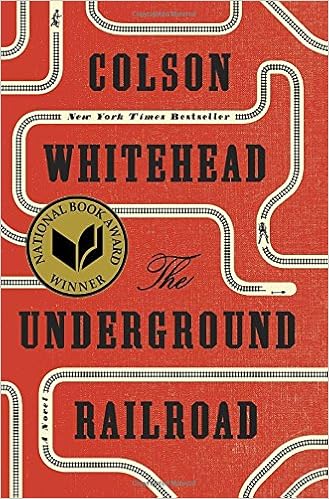
The Underground Railroad by Colson Whitehead

She discovered a rhythm, pumping her arms, throwing all of herself into movement.  Into northness.  Was she traveling through the tunnel or digging it?  Each time she brought her arms down on the lever, she drove a pickax into the rock, swung a sledge onto a railroad spike.  She never got Royal to tell her about the men and women who made the underground railroad.  The ones who excavated a million tons of rock and dirt, toiled in the belly of the earth for the deliverance of slaves like her.  Who stood with all those other souls who took runaways into their homes, fed them, carried them north on their backs, died for them.  The station masters and conductors and sympathizers.  Who are you after you finish something this magnificent--in constructing it you have also journeyed through it, to the other side.  On one end there was who you were before you went underground, and on the other end a new person steps out into the light.  The up-top world must be so ordinary compared to the miracle beneath, the miracle you made with your sweat and blood.  The secret triumph you keep in your heart.

What if the Underground Railroad really were an underground railroad?  That's the premise of Colson Whitehead's novel, which is a piece of what they used to call speculative fiction: not an extrapolation of contemporary politics onto the possibilities of the future, but a reimagining of the past in the service of contextualizing and reenergizing it.  By literalizing the railroad--and reimagining the slave societies of the South in such a way that turns their social realities into literal ones as well--Whitehead hopes to make the horrors of slavery seem new, and freshly horrible.

The heroine is Cora, a slave under the control of the sadistic Randall brothers in Georgia.  Her mother is the only slave to have ever escaped from the Randalls', and so when Cora escapes with a slave named Caesar, it raises the ire of the famous slavecatcher Ridgeway, whose failure to catch Cora's mother many years ago still haunts him.

Cora's path takes her through South Carolina, where what seems like a more enlightened society turns out to be stealthily designed to oppress slaves.  They don't seem like slaves anymore, and are granted limited freedoms, even healthcare, but Cora learns that medical studies are secretly carried out on them.  (Of course, this horrible invention is not an invention at all, but a literal description of the famous Tuskegee experiment, which infected black men with syphilis.)  Cora takes a job as a reenactor in a museum, depicting slave life in a way that makes it look anodyne and paternalistic.  (It reminded me of this Vox piece on what it's like to lead tours at a plantation.)  She escapes into North Carolina, where powerful whites have decided to eliminate the political anxiety slaves pose by simply getting rid of them--all of them--and hanging their bodies along a miles-long trail.  Tennessee is literally burning, an apocalyptic setting right out of The Road.

Ridgeway is the novel's most effective creation.  While the whites of Georgia, South Carolina, North Carolina, and Tennessee tie themselves in knots with moral justifications for the way they structure their societies, Ridgeway understands the cruelty of slavery, and simply doesn't care.  Which is more insidious: their rationalization, or his honesty?  Cora, by contrast, seems more like a bundle of heroic tropes: ignored, belittled, even among slaves, but intrepid, hopeful, headstrong.  It's an unfortunate result of the novel's construction, which requires Cora's virtue to contrast Ridgeway's evil, that makes her so dull.  Whitehead's attempts to complicate her psychology--her resentment toward her mother; her complicated guilt over killing a white boy in her escape--largely fall flat.

So does the novel as a whole, unfortunately.  For all its recontextualizing, it never seemed to me as if The Underground Railroad had something especially insightful or memorable to say about the practice of slavery or its effects.  Whitehead seems mostly to use his imaginative license to maximize slavery's depravity--but, unless you're one of those idiots asking the plantation tour guide if some slaves didn't have it real good, what kind of fresh understanding is that?  But the novel's biggest problem is that nothing in it is as imaginative, or out-there, as the railroad itself.  The Underground Railroad doesn't quite live up to the power of its premise.

Here's Chloe's review.

Saturday, January 14, 2017

Homegoing by Yaa Gyasi

I first heard of Homegoing when my eyes were drawn it's brightly cover on the front page of The AV Club, a pop culture site I frequent even though it mostly sucks now, and which rarely reviews any books I would consider reading. I skimmed the review, and then forgot about it, but the book kept popping up in my newsfeed and on endcaps at the bookstore. When I saw it on sale at the end of the year for 3.99, I couldn't resist, especially since it played into my goal, this year, of reading more lit by women and POC.

And it turns out Homegoing was a great choice for that particular initiative, since it covers men, women, racial minorities, and LGBT persons and it does so over the backdrop of 400 years of history, starting around 1600, I think (the book doesn't give dates and I'm terrible with them) and moving straight through till now, with the sections of the book each following some member of the family of a pair of half-sisters, Effia and Esi, whose stories begin in colonial Africa. As the book progresses, so does the timeline, with chapters alternating, roughly, between Effia's side of the family, whose stories largely take place in Africa, and Esi's, who is sold into slavery and taken to Europe and, eventually, America.

To go deep into all the different stories in Homegoing would take forever, and diminish one of the primary pleasures (and pains) of the book--seeing the clever ways Gyasi connects to family members to their different times, and how each deals with the dual impacts of racism and the destruction of their culture. And the impacts are really the part of the book that have stuck with me the most. The structure here, which gives the whole story an epic, almost mythological feeling at times, is constantly undercut by the brutal realities faced by these people, trials Gyasi wisely ties in with the unique traits of each protagonist. Instead of being the victim of generic "racism", we see Quey forced to travel to America when his father learns that he's gay. We see Willie faced with the powerlessness, in early 19th century America, of a woman who isn't light-skinned enough to pass. And there are many more (the genealogy in the front lists about 17 people who get their own stories here). The scope and Gyasi's willingness to make her characters bleed, as well as her canny ability to inject a ray of hope just when it all gets too depressing, drive the story.

I know I haven't spoken much here about the actual themes of slavery and oppression woven into the heart of Homegoing, but they are there, and they are impactful. Sometimes it was hard to even pick the book back up, because it seems (and, for some of the characters, it's true) that there is not, nor will there ever be, a way for them to transcend their blackness, but the last section--which ties everything up too neatly by half but also makes this important point--took me to task for these thoughts, rightly, because blackness is not a thing that should be transcended. Rather, it has always been the small-minded, small-hearted, wicked heart of man that needs elevation. And the kaleidoscope of people that populate Homegoing make the point beautifully.

Also, Gyasi is only 25 years old and this is her first novel. Really excited to see what she does next.

Thursday, July 5, 2012

The Confessions of Nat Turner by William Styron

Miss Sarah was a fat, silly, sweet woman with small intelligence but with an amplitude of good cheer that enabled her to disgorge without effort peals of jolly, senseless laughter.  She could read and write with some strain and had a little inherited money (it had been her funds, I later divined, which allowed Moore to purchase me), and there was about her a plump unmean simplicity of nature that caused her, alone among the household, to treat me at times with what might pass, fleetingly, as genuine affection: this took the form of sneaking me an extra piece of lean meat or finding me a castoff blanket in the winter and once she actually knitted me a pair of socks, and I do not wish easily to malign her by declaring that the affection she bore toward me resembled the warm impulsive tenderness which might be lavished carelessly upon a dog.  I even came to be fond of the woman in a distant way (but largely with attentive, houndlike awareness of her occasional favors) and I intend no sarcasm when I say that much later, when she became almost the very first victim of my retribution, I felt an honest wrench of regret at the sight of the blood gushing like a red sluiceway from her headless neck, and almost wished I had spared her such an ending.

In 1831 a slave named Nat Turner gathered a small army of fellow slaves who, over a couple of days, slaughtered more than sixty white people in the county of Southampton, Virginia.  It is, as far as I know, the only recorded instance of major premeditated violence by slaves toward their masters in the history of American slavery.  This is a remarkable fact--millions of people were systematically oppressed over a period of hundreds of years, and only once did they fight back in any significant way?  It serves as an illustration of how truly oppressive such a system was, and how completely it controlled those it subjugated, but it also invites fascination--who was Nat Turner, who stands so gruesomely alone in history?

Styron's afterword admits that, if we go by Turner's real confession and the scanty historical data we have, the answer is morally and artistically disappointing: Turner was a psychopath and a religious extremist, a statistical outlier like the rebellion he led.  In Styron's hands, he becomes a good and sympathetic man, marked by the dangerous combination of indignant rage and extensive learning, convinced that God has commanded him to slaughter all the whites in Southampton.

As slave lives go, the young Nat has it easy.  He is the son of a cook and a "house" slave, whose beneficent master recognizes in him a latent intelligence that he wishes to master.  Ironically, it is this beginning, that might have created a "toady" out of a man with less moral compunction, that sets Nat on his path to slaughter:


Suppose in the first place I had lived out my life at Turner's Mill.  Suppose then I had been considerably less avid in my thirst for knowledge, so that it would not have occurred to me to steal that book.  Or suppose, even more simply, that Samuel Turner--however decent and just an owner he might have remained anyway--had been less affected with that feverish and idealistic conviction that slaves were capable of intellectual enlightenment and enrichment of the spirit and had not, in his passion to prove this to himself and to all who would bear witness, fastened upon me as an "experiment."

...For the Preacher was right: He that increaseth knowledge increaseth sorrow.  And Samuel Turner (whom I shall call Marse Samuel from now on, for that is how he was known to me) could not have realized, in his innocence and decency, in his awesome goodness and softness of heart, what sorrow he was guilty of creating by feeding me that half-loaf of learning: far more bearable no loaf at all.


Styron's Turner is designed to answer the two questions I alluded to above: How is it that slave rebellions were so rare, and what made Turner so different?  The answer to the first can be seen in the way that Nat often responds with the most hatred toward those who treat him most kindly, because regarding him as half-human (and deserving of only "that half-loaf of learning") only underscores the great mental treason of a system which reduces a man to a commodity.  The cruelest slave masters inspire revulsion, as a senseless carrion animal might, but the initial decency of someone like Marse Samuel, who has taught Nat to read and write, only makes his eventual sale of Nat a greater moral breach.

To the second question, Styron responds by making Nat an educated and religious man.  The scenes in which Turner's daughter instruct him in memorizing Bible verses are chilling when we know what Nat has done with them.  The adult Nat, having become regarded as a preacher in his own right, has visions like these:


I started to cry out in terror, but at this moment the second black angel seemed to pour back into the clouds, faded, vanished, and in his place came still another angel--this angel white yet strangely faceless and resembling no living white being I had ever known.  Silent, in glittering silver armor, he smote the remaining black angel with his sword, yet as in a dream I saw the sword noiselessly shatter and break in two; now the black angel raised his shield to face down his white foe, and the two spirits were locked in celestial battle high above the forest.


(I will leave it to you to work out the symbolism of a white angel fighting a black one.)  Thankfully, Styron does not try to piece together whether Nat's visions are genuine or not; it's enough to know that Nat believes in them and that he is reluctant to follow what they portend, as Abraham instructed to kill Isaac.  Nat's struggle to follow a path he considers horrific but morally necessary provide the novel with its most compelling conflict and keep it from being a stale account of historical pontification.  More agonizing than the actual scenes of bloodshed, of which there are few, is the long first section in which Nat, already arrested for his crimes, wrestles with the value of his actions.  Though he has only done what, in his mind, God has asked, in his jail cell he feels bereft of God:


Beyond my maddest imaginings I had never known it possible to feel so removed from God--a separation which had nothing to do with faith or desire, for both of these I still possessed, but with a forsaken solitary apartness so beyond hope that I could not have felt more sundered rom the divine spirit had I been cast alive like some wriggling insect beneath the largest rock on earth, there to live in hideous, perpetual dark.


Though their actions are clearly incomparable, and Styron lacks Twain's guiding sense of irony, I hear echoes of Huck Finn's insistence that he'll go to hell to protect Jim, the runaway slave.  Both Huck and Nat struggle with the gulf between God and morality, both damn themselves by doing (what they see as good), and I don't think it's a coincidence that they occupy similar historical places--when inhumanity is codified into law, culture, and religion, as slavery was, the moral ambiguity forces good men into contradictions.  But you don't have to ponder that to be affected when Nat is forced to wonder whether his actions have only entrenched slavery and shamed God:


"Here's what it got you, Reverend, if you'll pardon the crudity.  It got you a pissy-assed record of total futility, the likes of which are hard to equal.  Threescore white people slain in random butchery, yet the white people still firmly holdin' the reins.  Seventeen niggers hung, including you and old Hark there, nevermore to see the light of day.  A dozen or more other nigger boys shipped out of an amiable way of life to Alabama, where you can bet your bottom dollar that in five years the whole pack of 'em will b e dead of work and fever.  I've seen them cotton plantations.  I've seen them rice layouts too, Reverend--niggers up to their necks in shit from day clean to first dark, with a big black driver to whip 'em, and mosquitoes the size of buzzards.  This is what you brung on them kids, Reverend, this is what Christianity brung on them boys.  I reckon you didn't figure on that back then, did you?"


These words, spoken by Thomas Gray, the historical lawyer who took down Turners' confession, have a little too much down-home cornponiness for me and are a good example of how stilted Styron's dialogue can be at points.  But they do a good job of expressing Nat's awful moral dilemma.  Nat must face the contradiction that it's he that has chased the presence of God away, that, as Gray says, "Nineteen hundred years of Christian teaching plus a black preacher is all it takes--Is all it takes to prove that God is a God durned lie!"

Styron comes close, toward the end, to giving Nat a Hollywoodesque moment of recant and redemption, but fortunately has enough restraint to limit Nat's sense of regret, which would undercut our unsettling notion that Nat is not entirely unjustified.  That unsettling ambiguity, after all, is what makes Nat Turner so powerful.

Wednesday, February 22, 2012

Midnight Rising by Tony Horwitz

"Harpers Ferry and Lincoln's assassination became bookends to the great national bloodletting over slavery."
Tony Horwitz, Midnight Rising

John Brown is one of those polarizing figures in American history. Some people see him as a hero, a martyr for a righteous cause. Other see him as a fanatic, who was deservedly hanged for his terroristic actions. I can sympathize with both sides, and am not altogether sure that both can't be correct.

As someone who studied history in college, I am no stranger to the use of sub- or extended titles. I had one professor who routinely referred to the title of a work as "the contract with the reader." While I didn't care for that professor, I did like this definition. Tony Horwitz does not breach his contract with Midnight Rising: John Brown and the Raid that Sparked the Civil War. In this book, Horwitz does two things: 1) he illuminates the often murky historical figure John Brown and 2) he makes the argument that John Brown's raid on Harpers Ferry pushed the United States into civil war.

I had read Horwitz's Confederates in the Attic a few years back, so I thought I knew what type of book I was getting into. In Confederates and other previous works of his, Horwitz weaved past and present, not all that dissimilar to Sarah Vowell's style. Midnight Rising, however, proved to be different. This book stays rooted in the 19th century, with occasion dips into the early 20th century in the final chapters.

Drawing from primary sources and building on the existing scholarship on John Brown, Horwitz fleshes out the boney figure of John Brown. He provides insights into Brown's childhood and life as a young adult, insights that hint at the man that is to come.

Horwitz directly connects Brown with leading figures of that time, including Herman Melville, Ralph Waldo Emerson, Frederick Douglass, Robert E. Lee, John Wilkes Booth, and many others. Establishing that John Brown was well known bolsters Horwitz argument that the Harpers Ferry Raid sparked the Civil War. The raid forced many abolitionist to make a choice: whether to publicly distance themselves from Brown and his men or to side with Brown and his violent defense of freedom for all.

Futhermore, Horwitz shows how the Harpers Ferry Raid quickly became an integral part to the national debate over slavery. The new congress, which had convened just three days after Brown's hanging, found itself starkly divided over slavery, with Harper Ferry getting mentioned often on the floor of the House and the Senate. Henry Wise, governor of Virginia during Brown's Raid, devised a secret plan to take Harpers Ferry for the Confederacy before Virginia had official seceded from the Union. Following his Emancipation Proclamation, Lincoln looked to Brown's attack as a model. He proposed organizing a band of black scouts "whose business should be somewhat after the original plan of John Brown."

I enjoyed learning more about the men who joined John Brown is his raid on Harpers Ferry, who came from all sorts of backgrounds and brought with them many different ideas for how to end the institution of slavery.

Horwitz has produced a well researched and exceptionally readable book about one of the more enigmatic figures in American history. Well worth the read.

Thursday, January 15, 2009

Deadhouse Gates by Steven Erikson

"I killed him," Squint moaned. "... Who took the man's life? A broken old soldier of the High Fist's arm-- Oh, Beru, have mercy on my soul..."

Duiker wrapped the old man in his arms and held him fiercely. The bow clattered on the platform's wooden slats. The historian felt the man crumpling against him as if his bones had turned to dust, as if centuries stole into him with each ragged breath.

Commander Blistig gripped the bowman bu the back of the collar and yanked him upright. "Before the day's through, you bastard," he hissed, "ten thousand soldiers will be voicing your name." The words shook. "Like a prayer, Squint, like a Hood-damned prayer."


Well, I'm officially a fan of Erikson's absurdly ambitious epic. The scene above is from the intense climax of one of the book's five main storylines. I can tell you that just retyping the passage gave me goosebumps. Erikson is brutal with the fates of his characters, and this scene was particularly heart-wrenching.

Deadhouse Gates' plot is a bit more simple to explain than Gardens of the Moon. The book takes place immediately after the events of Gardens, and follows five main archs that occasional interweave with one another. The storylines are as follows: Kalam is an assassin with plans to strike at the very heart of the Malazan Empire. Crokus, Fiddler, and Apsalar are on a journey to return the latter from wartorn Genabackis to her quiet fishing village. Icarium and Mappo are non-human companions of incredible power on an endless journey to escape their own pasts. Felisin, Heboric, and Baudin are escapees from an Imperial mining camp simply struggling to stay alive. Duiker is the Imperial Historian, following the Malazan Army's death march through the wastelands of the Seven Cities. All of these storylines take place amidst the backdrop of Dhryjhna, the Apocalypse. A whirlwind of rebellion, both figuratively and literally. And that's not even to mention the Path of Hands, a background storyline in which shape-shifting demigod's battle against one another in a misguided attempt to ascend to full Godhood.

I have a hard time picking which of the story archs I enjoyed the most. Icarium and Mappo's relationship is deeply complex and surprisingly compelling. The more you learn about the pasts of these two companions, the more attached to them you become, the more you want them to win out in the end. Which is bizarre, considering their secret is one of unimaginable violence, capable of wiping out entire civilizations. All in all, though, I think Duiker's arch is the most interesting. The Historian follows the Imperial Army's escort of tens of thousands of refugees escaping cities torn apart by revolution. Coltaine is the leader of this army, a man feared by enemies and revered by allies. His will to survive and move forward is staggering and in many ways, he alone is responsible for saving the the lives of the horde of refugees. Coltaine's eventual betrayal by his superiors and many of the refugees he delivered to safety is a tragedy of much greater depth than you might expect to find in a fantasy story such as this one.

Erikson continues to amaze me with his ability to create genuinely memorable characters. High Priest of Shadow Iskaral Pust, for example, is perhaps one of my all-time favorite minor literary characters. Pust is a mischievous little man, completely incapable of internal monologue. This failing is apparently unbeknownst to him, but knownst to us*, as he consistently and inadvertently describes his deepest, darkest motives to the very people he is trying to hoodwink. Even with his cast of hundreds, it's hard to think of even a single, insignificant character to which Erikson doesn't give some sort of depth and soul.

All in all, Deadhouse Gates surpasses Gardens of the Moon in just about every way, which is saying something. The characters are richly painted, the dialogue is fresh and believable, and once again, the mythology of this series continues to blow my mind. Magic (thankfully) plays a smaller role in this book than Gardens but Gods and demigods still play a very important role in the story. I compared the Malazan series to a Homeric epic in the way its Gods interfere with the lives of mortals and Deadhouse only further strengthens that comparison. One scene, in particular, involving a lonely demon, the God of Shadow, and the re-animation of the bodies of thirteen hundred horribly mutilated children was simultaneously grotesque and touching. I again recommend everyone goes out and reads Gardens of the Moon, if only so it will lead them to Deadhouse Gates. After you read Deadhouse, you won't need my recommendation to want to continue the series.

Highlights: The entire "Chain of Dogs" storyline, Gesler and his crew, Apt and "her" adopted son
Lowlights: The meaninglessness of death in this series, Felisin's bitchery, not enough Quick Ben

* A cookie to anyone who can tell me what this reference is from without using google.

Sunday, September 28, 2008

Copper Sun by Sharon M. Draper


"I got a bad feelin' 'bout this. We all gonna hang 'fore nightfall! Lawd, Lawd, Lawd. What we gonna do? We done fell out the trouble tree and hit every branch on the way down!"

Set in the 1730s, Copper Sun is a historical young adult fiction novel that follows our main character, Amari, from Africa to the Carolina Colony where she becomes the birthday present for a cruel slave master's even crueler sixteen-year-old son Clay. After seeing her family slaughtered and her village plundered, Amari struggles to keep her spirit alive while surviving the horrors of the slave ship, trying to maintain her dignity while being raped on a daily basis, and pushing on through countless other nightmarish atrocities. Once she gets to the plantation a quarter into the novel, she shares the narrative with Polly, an indentured servant that shares her quarters and her duties in the kitchen under Teenie, the plantation cook. Throughout the rest of the book, we see how the two girls struggle to assimilate to the culture around them and to maintain their identities as much as possible without getting themselves killed. During this time, Clay takes a special liking to Amari that goes beyond the physical relationship that he forces on her, sending her gifts and verbally professing affection. He treats her more the way that a free woman would be treated than like a slave would be treated--but given the time period women were not exactly seen as equals either, obviously. After a subplot dealing with the mistress of the house throws a killer plot twist into the novel at the climax, Polly, Amari, and Teenie's son are sent away from the plantation and they decide to make their escape. The last quarter of the novel deals with running and whether or not they make it to Fort Mose, Florida where there are supposidely streets of gold and people of every color living together as though slavery did not exist.

I appreciated this novel quite a bit. I remember reading novels like Heart of Darkness and Things Fall Apart in school when I was maybe a bit too young to wrap my head around them as well as would be necessary to take in everything those books were intended to convey. While I sometimes groaned about having too much history in my English classrooms, I could understand that it was important that it be there. Reading about slavery in a history textbook is one thing. You know names and dates and basic information. Reading historical fiction about slavery and what the Europeans did when they went into Africa to take slaves from their homeland really drives in how truely terrible those things were. I feel like Copper Sun could serve the same kind of purpose that those aforementioned books usually serve in a classroom and be more accessible to students. Beyond that, the main characters are both fifteen when the story begins putting them at the same age a sophomore in high school would be... making it a lot easier for students to potentially become more invested in and interested in the characters. I'm not saying that the classics aren't important, I just think that they should be introduced when it's appropriate.

Sharon Draper did an incredible job on the research that she put into writing Copper Sun. She traveled to Africa and went to the "slave castles" and crawled through the Door Of No Return as the slaves did. She saw the place on the beach where they were branded before being put on the ship to America. Then she spent ten years doing research. In the back of the book and on her website she has extensive lists of links for slave narratives and things of that nature as well as suggested texts. I could tell that she was trying in her writing to give dignity and respect to those people who had those things stripped from them and that is why I think so highly of this book as both an artistic endeavor and a scholastic undertaking on her part.

Monday, February 25, 2008

Strange New Land by Peter H. Wood

Peter Wood is a recently retired professor from Duke University. I met him at the beginning of this year. He was nice and surprisingly easy to talk to. I told him a little bit about 50 Books Project (in blatant disregard for the first rule of 50 Books Project). The next day he gave me a copy of this book as well as a copy of his newest book.

Wood makes some intriguing assertions about colonial America. Here are a few of them:
- Blacks were significantly present in the Americas mere years after Columbus's expedition.
- Originally slavery in America was not based on race.
- Specific state laws were passed in order to make race the controlling factor in slavery.

My favorite chapter was 'Building a Culture', in which Wood shows the ways that blacks, although oppressed, created a unique culture of their own, which had a dramatic impact on overall American society. Some of the vulgate languages that developed in these slave cultures made a lasting mark on American English. Wood also details the effects that blacks had on music and religion (namely Protestant Christianity) during the colonial period of our nation's history. I thought this sentence was amusing, "Europeans, startled by the extent of African drumming and fearful that this skill sometimes provided a secret means of communication, outlawed the use of drums by slaves in various colonies."

It is difficult to write interesting works of history. Often works such as this are informative, but require slogging through less than stellar writing to get the information. Wood's book does not suffer from this all too common problem. Wood has a way of teasing out interesting stories in the history that he writes, and he has a good writing style. For being an academic work of history, this book was fairly easy to read.

Thursday, November 29, 2007

Beloved by Toni Morrison

When eminent critic Harold Bloom says that there are only four great living American writers (McCarthy, DeLillo, Roth, and Pynchon), it is not difficult to cry sexism and racism at Toni Morrison's omission, and I say that as a person that does not bandy those terms around lightly. Yes, those four are truly great, but why not Morrison, who's style is as vivid, inspired, and tightly controlled as any of those four, and whose works speak to something truly American? In a recent poll, Beloved was voted the greatest work of literature in the past 25 years, just ahead of DeLillo's Underworld.

Beloved is the story of Sethe, an ex-slave who now lives inCincinnati with her daughter, Denver. Eighteen years prior to the main action of the story (which has a snaking, elliptical plotline), Sethe was a runaway slave living with her grandmother Baby Suggs, when suddenly she spied her old slaveowner walking into the backyard, and instead of allowing her to return to slavery, slit her baby daughter's (unnamed, not Denver) throat--and would also have done the same to Denver and her two sons, Howard and Buglar, if she had not been caught. After Sethe was released from prison and the Civil War over, she continues to be haunted by the ghost of the murdered baby until the spirit is chased out by Paul D, a fellow slave from Sethe's former plantation who comes to live with her in Cincinnati. But then the spirit takes the form of a young girl (the age the child would have been if it had lived) who emerges from the nearby lake and comes to live with Sethe, Denver, and Paul D. Lots of other crazy and magical shit happens, and all the while you learn the strange and sordid details of Sethe and Paul D's past lives as slaves. Morrison is particularly graphic about some of the details she feels have been lost in slave narratives, such as rampant slave murder and sexual abuse.

I do not think that Beloved speaks to me as it might to an African-American, and so I haven't formed an emotional connection with it like I did other books I've read this year, but it's clear reading it that it's a true monument of American fiction. It is complex, imaginative, and brilliantly but tightly conceived. Jonathan Demme made a movie about it starring Oprah, but I cannot believe that that movie is any good--partly because it doesn't seem like Beloved, which is frequently strange and obtuse, could translate to the screen, and partly because I'm not sure Oprah really has the chops to take on a character like Sethe, who is troubled, complex, and somewhat otherworldy, none of which describes Oprah.

Highly recommended.

Tuesday, April 10, 2007

Frontiers of Freedom by Nikki M. Taylor

The full title of this book is Frontiers of Freedom: Cincinnati's Black Community, 1802-1868. Any history book worth its salt will have a colon in its title...true. This book was written by a professor at the University of Cincinnati, which I currently attend. It may sound a little dry, and I'll admit that if you don't have some interest in Cincinnati, you may not find it that interesting. However, knowledge of or a connection to Cincinnati is not necessarily a prerequisite for enjoying this book.

During the time that the book covers, Cincinnati was a fairly unique place due to its location. The Northwest Ordinance prohibited slavery East of the Mississippi River and North of the Ohio River. This meant that the Ohio River was the only barrier between freedom and slavery for many African Americans. Because of its location, Cincinnati had an unusually active Underground Railroad.

Dr. Taylor's goal is to construct the history of Cincinnati's black community, paying special attention to the transition from small, disparate groups to a cohesive community that acted in its own interest.

I found the descriptions of Cincinnati's various race riots particularly interesting. The aggression of Cincinnati's white residents was usually at the heart of these incidents. Angry about the ever-increasing black population, job scarcity, or other social issues, whites would retaliate against the black community. This was the case in 1841. After hours of violence, white residents dragged a canon from the docks to a black neighborhood six blocks to the North. They filled it with scrap metal and began firing it at black residences and businesses.

Taylor does of good job off peppering the pages of her book with stories of fugitive slaves, stevedores, black school teachers, and successful black entrepreneurs. These stories help breathe a little life into this academic work.