Showing posts with label Zora Neale Hurston. Show all posts

Saturday, June 2, 2018

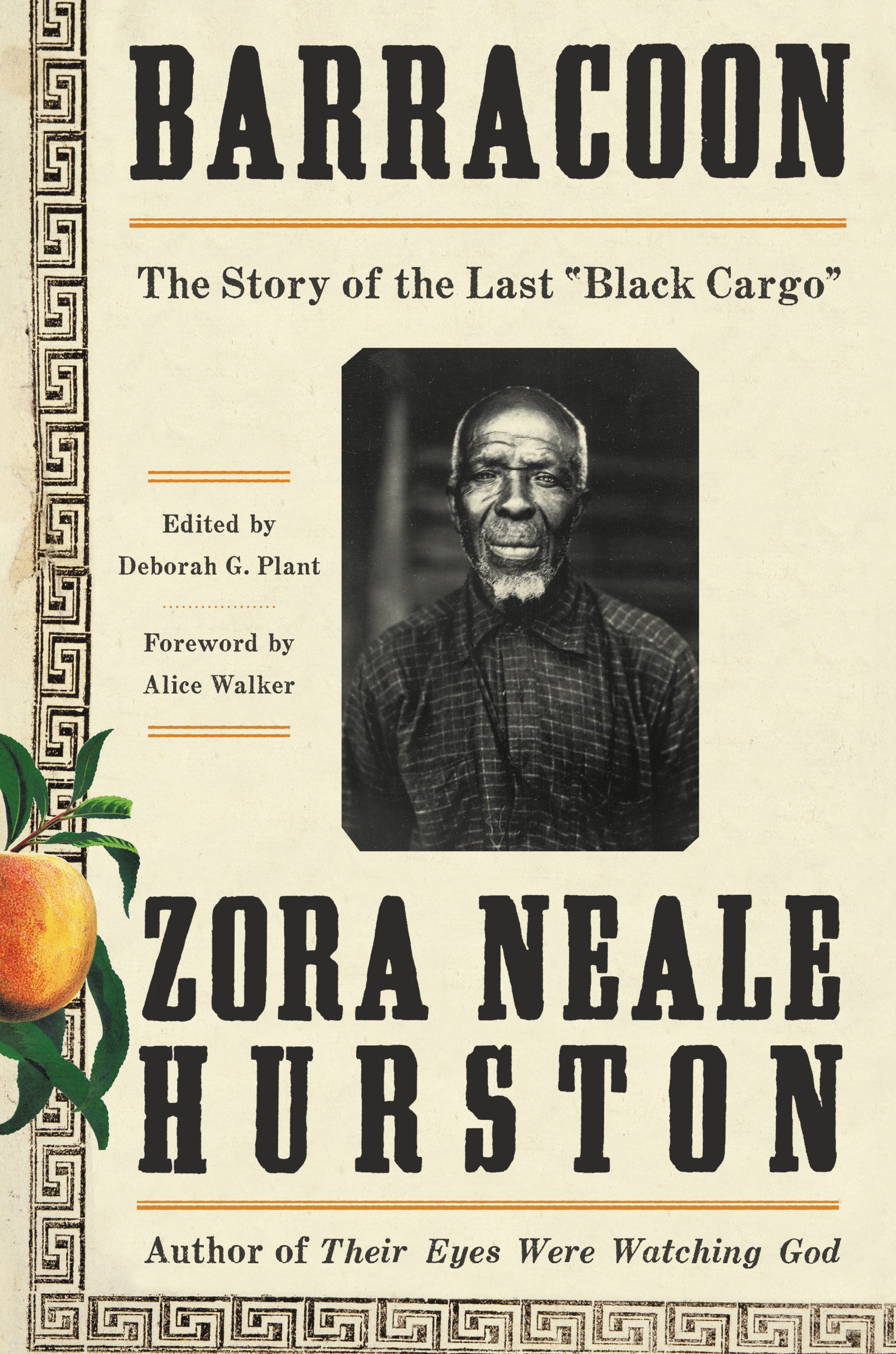
Barracoon by Zora Neale Hurston

I hailed him by his African name as I walked up the steps to his porch, and he looked up into my face as I stood in the door in surprise.  He was eating his breakfast from a round enameled pan with his hands, in the fashion of his fatherland.

The surprise of seeing me halted his hand between pan and face.  Then tears of joy welled up.

"Oh Lor', I know it you call my name.  Nobody don't callee me my name from cross de water but you.  You always callee me Kossula, jus' lak I in de Affica soil!"

What a wonderful thing, in the year 2018, to have a new book by Zora Neale Hurston.  It makes you wonder what they were thinking, all the people all those years ago, who declined to publish a book like Barracoon, Hurston's interview with the last survivor of the Mid-Atlantic slave trade.  Perhaps they didn't understand what a rare and lucky moment it was, to have such experience still alive in the heart of a man, or perhaps they underrated Hurston's gifts and importance as an ethnographer (way more impressive, in my opinion, than her work as a novelist).  There's some intimation in what I've read that people were squeamish about laying bare the role of African slavers in the Middle Passage, and quite rightly, since that stuff has always been fodder for right-wing trolls.  But whatever the case, it's quite something to have a book like this published at last.

In 1927 Hurston traveled to Alabama to interview a man named Oluale Kossula, who had gone by the Americanized name Cudjo Lewis for over sixty years.  As a teenager, Kossula's village in West Africa was decimated by the Kingdom of Dahomey, who were in the habit of massacring their enemies and selling whom they could to coastal slavers.  The title, Barracoon, refers to the kind of barracks where captured Africans waited to be bought by slavers.  One of the wonders of the book is that it gives a rare glimpse into what it was like on the African side of the slave trade.  Kossula's account of the Dahomey warriors--apparently, traditionally women--is one of the most haunting aspects of his story.

When Kossula was carried away by the Clotilde, it was in violation of  U.S. law, which had prevented new importing of slaves for over fifty years.  The Americans who put the voyage together did so because they could, and because they felt like they were entitled to it.  It was illegal, but no one, of course, got punished for it, except for Kossula.  He actually touches very little on his experience of slavery, focusing on the life he led after emancipation with his wife and children.  Like many former slaves, Kossula found himself needing to apply to his former masters for protection and employment:

"'Cap'n Tim, you brought us from our country where we had lan'.  You mad us slave.  Now dey make us free but we ain' got no country and we ain't got no lan'!  Why doan you give us a piece dis land so we kin buildee ourself a home?'

"Cap'n jump on his feet and say, 'Fool do you think I goin' give you property on top of property?  I tookee good keer my slaves in slavery and derefo' I doan owe dem nothin?  You doan belong to me now, why must I give you my lan'?"

Kossula, then, with a group of fellow Africans, saved for years to buy their own land and found a community called Africatown.  The community still exists in Mobile, and some of its residents still trace their heritage back to the Clotilde and the Dahomey raid.  It's a remarkable story of independence and will, told in Kossula's own voice and idiom.  Hurston deftly gets out of the way of Kossula's story, and records it with faithful care.  Interpolation is smartly minimized to let the power of the story, and the feeling that you are hearing a firsthand account, shine through.

Kossula's experiences after the end of the Civil War were full of hardship.  He talks about the way he and his family were looked on suspiciously by other black communities whose ancestors had come from Africa centuries ago.  He talks about the tragic death of his wife and many of his children, including a horrible story of one son's death at a railroad crossing:

"I go through the crowd and lookee.  I see de body of a man by de telegraph pole.  It ain' got no head.  Somebody tell me, 'Thass yo' boy, Uncle Cudjo.'  I say, 'No, it not my David.'   He lay dere by de cross ties.  One woman she face me and astee, 'Cudjo, which son of yours is dis?' and she pointee at de body.  I tell her, 'Dis none of my son.  My boy go in town and y'all tell me my boy dead.'

One Afficky man come and say, 'Cudjo dass' yo boy.'

I astee him, 'Is it?  If dat my boy, where his head?'  He show me de head.  It on de other side de track.  Den he lead me home.

When Hurston finds Kossula, he is more or less alone.  She does small errands for him and they share small joys, like crabs and a "huge watermelon" they "ate from heart to rind."  She paints a picture of a man slowly abandoned by family, left in a land that never quite felt familiar to him, and who longs to return to "Afficky soil" before he dies.  It's heartrending.  But there is a small consolation in the thought that finally, more than 150 years after Kossula's kidnapping and enslavement, and over ninety years from the time that Hurston recorded his testimony, that the story of this proud and lonely man is finally able to be told.

Wednesday, March 14, 2012

Their Eyes Were Watching God by Zora Neale Hurston

She pulled in her horizon like a great fish-net. Pulled it from around the waist of the world and draped it over her shoulder. So much of life in its meshes! She called in her soul to come and see.

Richard Wright hated Their Eyes Were Watching God, saying that it had no "basic idea or theme," and to some extent I sympathize with this observation. This novel, both despite and because of its verbal pyrotechnics, is a mess:

Janie starched and ironed her face and came set in the funeral behind her veil. It was like a wall of stone and steel. The funeral was going on outside. All things concerning death and burial were said and done. Finish. End. Nevermore. Darkness. Deep hole. Dissolution. Eternity. Weeping and wailing outside. Inside the expensive black folds were resurrection and life. She did not reach outside for anything, nor did the things of death reach inside to disturb her calm. She sent her face to Joe's funeral, and herself went rollicking with the springtime across the world.


For those of you keeping score at home, in this scenario, Janie's face is a piece of cloth behind a wall of indiscriminate matter that she sends to a funeral so she can go "rollicking with the springtime." The incongruity suggested by using a veil to cloak a face that is already falsified seems not to matter.

But then again, there is such exuberance to Hurston's prose--an exuberance that matches Janie's--that can beguile even a savvy reader and conceal its erraticness. In short excerpts, like the one above, that exuberance can provide a sense of energy and movement, but over the course of the novel it becomes burdensome, and one sees what Wright meant when he said that Hurston wrote with "facile sensuality."

On the other hand, Their Eyes Were Watching God comes from a fundamentally different place than Black Boy. For her part, Hurston criticized the notion that black culture was a reaction to white oppression, which is one of the fundamental aspects of southern life that Wright found so alienating. Growing up in Eatonville, Florida, the nation's first all-black community, Hurston was not well-disposed to this attitude.

The story of Eatonville is woven into the narrative of Their Eyes Were Watching God, Janie's second marriage is to Jody Starks, the mayor of Eatonville, a larger-than-life man with a knack for inspiring followers and organizing a community. In fact, Janie's abandonment of her first husband, a poor and narrow-minded farmer named Logan Killicks, mirrors the transition from the slave-like sharecropper economy to the self-sufficient black community, and from traditional family-oriented values to broader civic ones. Jody is kind, handsome, and well-dressed when he chances on Killicks' farm, and Janie follows him to Eatonville, where he becomes mayor by the sheer force of his personality. Installing streetlamps and building post offices, he is successful, but Janie's role in town life is limited:

"Thank yuh fuh yo' compliments, but mah wife don't know nothin' 'bout no speech-makin'. Ah never married her for nothin' lak dat. She's uh woman and her place is in de home."

Janie made her face laugh after a short pause, but it wasn't too easy. She had never thought of making a speech, and didn't know if she cared to make one at all. It must have been the way Joe spoke out without giving her a chance to say anything one way or another that took the bloom off of things. But anyway, she went down the road behind him that night feeling cold.


What Jody denies Janie is, for Hurston, the fundamental unit of community: the right to speak. In Eatonville she has more than she had on Killicks' farm, but because she cannot contribute to it, she cannot truly participate in it. Hurston was a Columbia-educated ethnographer who studied the folklore of Florida, and Their Eyes reflects what she knew about the power of the spoken word. It's for that reason that the dialect is so painstakingly rendered; without it, the building of Eatonville cannot be accurately rendered. Hurston's prose, too, though maddening to Richard Wright (and myself), seems to reflects the verbal ingenuity and looseness of the folk groups it represents. In this, Hurston exercises the right and ability that Janie cannot.

That is, until Jody dies and Janie takes up with a much younger man, Tea Cake, who is little more than a drifter. Tea Cake cannot provide Janie with wealth, but he can provide her with the conversation that Jody could not, and "they made a lot of laughter out of nothing." The two of them leave Eatonville to work in the Everglades as itinerant farmers, and the symbolic transition is complete: from near-slavery to civic triumph to personal triumph, engineered by the same basic verbal tools. In this way Janie is a vision of the black achievement that seemed impossible to Wright, not only the construction of a real black culture but true individual fulfillment. It's still a mess, but perhaps a well-justified mess.