It is this; however fashionable despair about the world and about people may be at present, and however powerful despair may become in the future, not everybody, or even most people, live fashionably; virtue and honour will not be banished from the world, however many popular moralists and panicky journalists say so. Sacrifice will not cease to be because psychiatrists have popularized the idea that there is often some concealed, self-serving element in it; theologians always knew that. Nor do I think love as a high condition of honour will be lost; it is a pattern in the spirit and people long to make the pattern reality in their lives, whatever means they take to do so. In short, Davey, God is not dead. And I can assure you God is not mocked.
Robertson Davies' Fifth Business ends with the death of Boy Staunton, the millionaire politician who set the novel's action in motion as a child years before by hitting a pregnant woman with a rock buried in a snowball. He dies, mysteriously and provocatively, by driving into that lake with that same rock held in his mouth. The sequel, The Manticore, is about the effect of Boy's death on his son David, described in Fifth Business as a weak and sullen child who grows up in the difficult shadow of his father. David, visiting a traveling magician--whom we know to be the other Deptford, Ontario native mixed up in the events of the first novel, and possibly Boy's killer--who claims to be able to answer any question. David calls out: "Who killed Boy Staunton?" but escapes before he can hear the cryptic answer, surprised at his own outburst, and submits himself to Jungian analysis in Switzerland.
The form of the novel is that very analysis, recorded in notebooks and conversations between David and his analyst, Dr. Johanna von Haller. She forces David to confront the complicated history of his lfie: his adulation for his father, who really was an asshole, coupled with his attempt to excel in a field (criminal law) separate and distinct from Boy. David is cold and repressed. He hasn't had sex in decades, and he's a thoroughgoing alcoholic. Dr. von Haller tells him that he is an excellent thinker, but he is severely deficient in the arena of feeling.
Even more than Fifth Business, The Manticore says something interesting about the relationship between Canada and the UK. David's real name, after all, is Edward David, after the Prince of Wales who Boy idolized and whose reign as king ended in abdication. (Spoiler alert, he was also a Nazi sympathizer, so there's that.) David recounts how he paid a genealogist to investigate his family's Canadian lineage, hoping to find a coat of arms, instead discovering that the Stauntons are most likely descended from a victimized servant who escaped her village with a child to form a new life in Canada. Boy suppresses this information, knowing it will affect his chances to become Lieutenant-General, the Queen's representative in Ontario. The irony, as Davies' genealogist hammers home for us (Davies doesn't really do subtlety), is that the heritage that well-to-do Canadians like Boy Staunton crave, marked by unbroken connection to English nobility, pales in comparison to the Canadian heritage of exploration and frontiersmanship, of the New World.
More than anything, The Manticore is a love letter to Jungian psychology. David's therapist gives a layman's education in its principle terms: the Shadow, the Anima, the Persona. These are aspects of David's own psyche, expressed in mythological terms, and he must venture inside himself to understand them. At the end of the novel, reunited with Ramsay (from Fifth Business) and Eisengrim (the magician), David is forced to crawl into and out of a harrowingly narrow cave, inside of which lie the remnants of ancient bear worship. It's not subtle, symbolically, but it is effective.
All this Jungian stuff is a little retrograde. It made me feel a little icky, because the contemporary person I associate most with Jungian archetypes is Jordan Peterson, the Canadian psychologist and provocateur who peddles a lot of anti-feminist garbage. I don't think Peterson himself describes what he does as Jungian, but his focus on broader mythological patterns certainly shares an ethos with Jung. David himself seems to be echoing Peterson when he tells von Haller, "That's the pattern, and we break patterns at our peril. After all, they became patterns because they conform to realities." But then again, it's hard to imagine Peterson endorsing something like what von Haller says to David about men and women, with regards to the feminine aspect of the psyche called the Anima: "Oh, men revenge themselves very thoroughly on women they think have enchanted them, when really these poor devils of women are merely destined to be pretty or sing nicely or laugh at the right time." For von Haller, the point of therapy is to interrogate the ways that the archetypes present in our own psyches stand in for the realities of other people, and to eliminate them. Only then can we see people as they really are. For a flimflam man like Peterson, the archetype is the reality; for Davies, it's a projection, and that's a worthy distinction.
The Manticore is fun, and I really enjoy the kind of antiquated, didactic mode that Davies uses. It's interesting to see the characters from Fifth Business from another angle. Like Ramsay, David's place in the mythopoetic battle between Boy and Eisengrim is on the sidelines, and like Ramsay, part of his lesson is to figure out how to accept not being a principal in the "big story." But it misses something of the grandeur and scope of Fifth Business. Like Jungian therapy itself, it feels a little deflated in shrinking the grand narratives of myth to the therapist's couch.
Monday, July 9, 2018
The Manticore by Robertson Davies
Labels:
canada,
Robertson Davies,
The Manticore
Saturday, July 7, 2018
Obasan by Joy Kogawa
Where do any of us come from in this cold country? Oh, Canada, whether it is admitted or not, we come from you we come from you. From the same soil, the slugs and slime and bogs and twigs and roots. We come from the country that plucks its people out like weeds and flings them into the roadside. We grow in ditches and sloughs, untended and spindly. We erupt in the valleys and mountainsides, in small towns and back alleys, sprouting upside down on the prairies, our hair as wild as spider's legs, our feet rooted nowhere. We grow where we are not seen, we flourish where we are not heard, the thick undergrowth of an unlikely planting. Where do we come from, Obasan? We come from cemeteries full of skeletons with wild roses in their grinning teeth. We come rom our untold tales that wait for their telling. We come from Canada, this land that is like every land, filled with the wise, the fearful, the compassionate, the corrupt.
Naomi Nakane is a schoolteacher in rural Alberta, where her Japanese ancestry makes her--well, not unique, exactly, but it provokes comments from her students, largely the children of white farmers. Naomi is prickly with her students, resentful toward their ignorance and prying. Behind the discomfort--behind the central fact of her life in Alberta--is a history that Naomi wants to move past, unlike her Aunt Emily, including her own childhood in Canada's Japanese internment camps and her own separation from her mother and father. When her great-uncle--Obasan's husband--dies suddenly, she's forced to confront the truth of her internment and the Japanese-Canadian experience as a whole.
Obasan's dive into Naomi's memories is often impressionistic, and though chronological, can be difficult to arrange into a coherent narrative that helps the reader understand exactly where the Japanese were sent and why. She relies on overheard conversations between adults to fill in the gaps, but the method makes sense--what can a child understand of the reasons that she has been taken from her mother and sent to the British Columbia mountains? Kogawa renders these scenes with an eye for strong detail, like the orange that Obasan, her aunt, presents to a destitute and desperate mother on the train toward internment, or the treasured doll that gets left behind. A deep dive through a set of documents provided by her Aunt Emily helps Naomi discover at last what happened to her mother, who returned to Japan instead of being sent to the camps, and Kogawa's description of the destruction by atomic bomb of Nagasaki is an unflinching portrait of pure and honest horror that few real horror books could ever match.
There are few books that are set in Alberta, where I recently went. At least half of Obasan actually takes place in British Columbia. But what I didn't expect was that Obasan would feel so relevant and fresh to my own place and time. It is, at its heart, a story of what happens when you separate families in the name of abstract notions of national security. What happens is you fuck them up forever. Naomi's separation from her family--even though much of Obasan is a story of perseverance and strength in the face of adversity--has provided her with nearly insoluble trauma. Facing it, as her aunt encourages, can bring her to a kind of detente with it, but it is ineradicable. And as Aunt Emily reminds us, about a different country but not less true: "What this country did to us, it did to itself." The trauma we inflict on those seeking asylum at our own southern border we inflict on ourselves, and sooner our later, it will come back around to us.
Labels:
Alberta,
British Columbia,
canada,
japanese internment,
Joy Kogawa,
Obasan
Wednesday, June 27, 2018
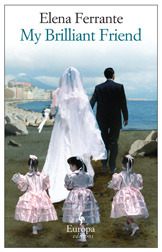
My Brilliant Friend by Elena Ferrante
I missed only Lila, Lila who didn't answer my letters. I was afraid of what was happening to her, good or bad, in my absence. It was an old fear, a fear that has never left me: the fear that, in losing pieces of her life, mine lost intensity and importance. And the fact that she didn't answer emphasized that preoccupation. However hard I tried in my letters to communicate the privilege of the days in Ischia, my river of words and her silence seemed to demonstrate that my life was splendid but uneventful, which left me time to write to her every day, while hers was dark but full.
The most surprising and satisfying moment in My Brilliant Friend, the first of Elena Ferrante's critically lauded "Neapolitan" novels, is when Lina Cerullo, the shoemaker's daughter, calls the narrator, Elena Greco, "my brilliant friend." It surprises because over the course of the novel, you assume that the "brilliant friend" of the title is not Elena but Lina: darkly beautiful, preternaturally confident, sharply intelligent, exceptional, detached, frightening. It's Lina who, as a child, forces Elena to face her greatest fears by dropping her doll down a sewer grate, or making her walk up to the apartment of the terrifying mafioso who runs their working-class Naples neighborhood:
When Lina proves to be the most intelligent student in the school, it's Elena's admiration for her that forces her to push herself in her studies. Eventually, Lina leaves school to work in her father's cobbler's shop, but Elena stays on. All of her success is, in a vague but meaningful way, attributable to Lina, either borrowed from her or achieved in competition with her, or perhaps both. Ferrante manages to take a very basic idea--jealousy toward an exceptional friend, and the way that it can be mixed with admiration and love--and build from it a detailed and convincing life. Elena's complex feelings toward Lina strike both positive and sour notes. It's clear that Lina drives Elena to be exceptional herself, but there is something tragic about Elena's obsessive comparison with her friend, and with others: she can't even bring herself to believe in the Trinity because she can't conceive that the three aspects of God wouldn't be hierarchically ordered. It's an obsession that manifests itself in the repeated, desperate accounting of how Elena compares to the other students in her school, and even well after Lina leaves school, it's Lina she's always comparing herself to.
Lina's exceptionalism drives Elena to imagine a world outside the poor Naples neighborhood in which they were born. But Lina, while exceptional, is unable to propel herself out of the orbit of the neighborhood. It's Lina who is drawn into the petty squabbles of local boys, and attracts the interest of the tinpot tyrants who basically run the community. The reversal of fortunes happens slowly but convincingly, so that when Lina calls Elena her "brilliant friend," it alerts you, for the first time, that it is Elena who has been able to resist the punishing effects of poverty.
Ferrante's novels--my understanding is that they really are a single novel split into four parts--are very much the "it" books of the moment. I usually react negatively to stuff like that, because I am a snob, and descriptions of the series didn't make them seem appealing. But there's a darker streak running through these novels that I didn't expect and that I love: a streak of poverty, and death, and intergenerational hatred, all of which is somehow incarnated in the figure of Lina. In many ways, too, reading My Brilliant Friend reproduces the feeling of sinking your teeth into a big fat Russian novel with a bunch of characters, or George Eliot at her best. The accolades are, in this case, well-deserved.
The most surprising and satisfying moment in My Brilliant Friend, the first of Elena Ferrante's critically lauded "Neapolitan" novels, is when Lina Cerullo, the shoemaker's daughter, calls the narrator, Elena Greco, "my brilliant friend." It surprises because over the course of the novel, you assume that the "brilliant friend" of the title is not Elena but Lina: darkly beautiful, preternaturally confident, sharply intelligent, exceptional, detached, frightening. It's Lina who, as a child, forces Elena to face her greatest fears by dropping her doll down a sewer grate, or making her walk up to the apartment of the terrifying mafioso who runs their working-class Naples neighborhood:
Not too long before--ten days, a month, who can say, we knew nothing about time, in those days--she had treacherously taken my doll and thrown her down into a cellar. Now we were climbing toward fear; then we had felt obliged to descend, quickly, into the unknown. Up or down, it seemed to us that we were always going toward something terrible that had existed before us yet had always going down toward something terrible that had existed before us yet had always been waiting for us, just for us.
When Lina proves to be the most intelligent student in the school, it's Elena's admiration for her that forces her to push herself in her studies. Eventually, Lina leaves school to work in her father's cobbler's shop, but Elena stays on. All of her success is, in a vague but meaningful way, attributable to Lina, either borrowed from her or achieved in competition with her, or perhaps both. Ferrante manages to take a very basic idea--jealousy toward an exceptional friend, and the way that it can be mixed with admiration and love--and build from it a detailed and convincing life. Elena's complex feelings toward Lina strike both positive and sour notes. It's clear that Lina drives Elena to be exceptional herself, but there is something tragic about Elena's obsessive comparison with her friend, and with others: she can't even bring herself to believe in the Trinity because she can't conceive that the three aspects of God wouldn't be hierarchically ordered. It's an obsession that manifests itself in the repeated, desperate accounting of how Elena compares to the other students in her school, and even well after Lina leaves school, it's Lina she's always comparing herself to.
Lina's exceptionalism drives Elena to imagine a world outside the poor Naples neighborhood in which they were born. But Lina, while exceptional, is unable to propel herself out of the orbit of the neighborhood. It's Lina who is drawn into the petty squabbles of local boys, and attracts the interest of the tinpot tyrants who basically run the community. The reversal of fortunes happens slowly but convincingly, so that when Lina calls Elena her "brilliant friend," it alerts you, for the first time, that it is Elena who has been able to resist the punishing effects of poverty.
Ferrante's novels--my understanding is that they really are a single novel split into four parts--are very much the "it" books of the moment. I usually react negatively to stuff like that, because I am a snob, and descriptions of the series didn't make them seem appealing. But there's a darker streak running through these novels that I didn't expect and that I love: a streak of poverty, and death, and intergenerational hatred, all of which is somehow incarnated in the figure of Lina. In many ways, too, reading My Brilliant Friend reproduces the feeling of sinking your teeth into a big fat Russian novel with a bunch of characters, or George Eliot at her best. The accolades are, in this case, well-deserved.
Labels:
Elena Ferrante,
Italy,
My Brilliant Friend,
Naples,
Neapolitan series
Sunday, June 24, 2018
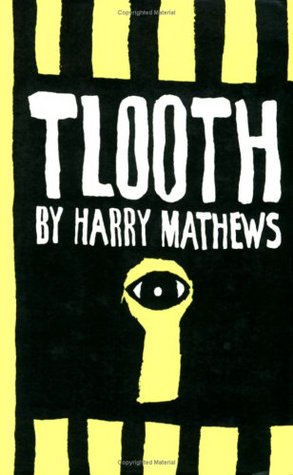
Tlooth by Harry Mathews
Sister Agnes: There is no inch in the world without God. I breathe him, the birds of heaven breathe him, fish breathe him in the deepest waters where air cannot be seen or felt, but where air is. Man walks and dies; he breathes and becomes breath--as if a dolphin flying skyward were snatched forever into a net of air.
It is the Mother Superior's turn to speak. Sipping a glass of water, she sighs, "Sister Agnes, show me your ass."
Harry Mathews' Tlooth begins in a Siberian prison camp, where the prisoners are split into "sects" based on their religious beliefs. The Defective Baptists are playing the Fideists in baseball. The narrator has secretly packed a baseball with dynamite, and is planning to use it to kill Evelyn Roak, the surgeon who accidentally, or perhaps maliciously, removed the narrator's middle two fingers, ruining a promising career as a violinist. The plan doesn't work, thanks to a wild pitch, but when Roak is released from prison, it sets off a long chase across several continents.
Like The Sinking of the Odradek Stadium, Tlooth is full of gratuitous wordplay and puzzles of all sorts. But it's not always easy to tell what is and what isn't a puzzle, something to be figured out. When the narrator's traveling band is accosted in the Eurasian steppes by a group of nomad kings who offer a kind of repetitive poem-song, is that a puzzle? Is there a solution lurking in there somewhere that makes the whole thing satisfying on a level beyond the exotic strangeness of the scene? Or is it all like the poem traced on the labyrinth of their animal-shaped derby racer (another tradition of the prison camp, like the baseball games), which leads to the same spot where it began? There's a Nabokov-like suggestion running throughout the book that the puzzles, whatever they are, are to no purpose, and that deciphering the wordplay is a kind of fool's game.
In Odradek, I didn't mind the wordplay because, even when it seemed self-referential or circuitous, it was grounded by the relationship between the two main characters, who have overcome their linguistic differences to fall in love, or so they think. The revenge narrative of Tlooth seems to offer something similar, but less successfully. Mostly, it seems to offer a set of open-ended questions. What am I supposed to make of the long digression in which the narrator pens a scene for a pornographic "blue movie?" (I did like the bit of dialogue I quoted up at top, though.) What's the point of giving most of the characters ambiguously gendered names, and only revealing that the narrator--and Roak--are female toward the very end of the novel? It certainly toys cleverly with my sense of character, and chastises me for coding the revenge plot as male. But I couldn't shake a feeling of boredom, a sense that the answer to these questions is that there is no answer. I admit that I didn't always "get" Tlooth, but neither am I sure what there is to get.
Along the way, at least, Tlooth offers up a bunch of fun little vignettes. The title comes from a moment when the protagonist sticks her foot in a prophetic bog, which tells her fortune in a gas bubble: "Tlooth." Her prison training as a dentist is what allows the protagonist to finally get her revenge. But it's a reference also to the "truth," something which the novel is not very forthcoming with, and when it does offer something like it, it's slightly off, put through the wringer of wordplay: Tlooth.
Labels:
Harry Mathews,
Tlooth
Wednesday, June 20, 2018
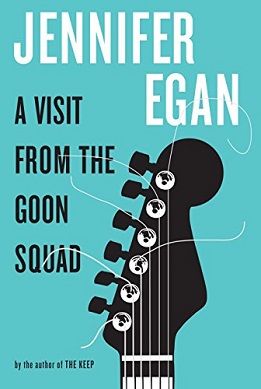
A Visit from the Goon Squad by Jennifer Egan
Driving to pick up his son, Bennie alternated between the Sleepers and the Dead Kennedys, San Francisco bands he'd grown up with. He listened for muddiness, the sense of actual musicians playing actual instruments in an actual room. Nowadays that quality (if it existed at all) was usually an effect of analogue signaling rather than bona fide tape--everything was an effect in the bloodless constructions Bennie and his peers were churning out. He worked tirelessly, feverishly, to get things right, stay on top, make songs that people would love and buy and download as ring tones (and steal, of course)--above all, to satisfy the multinational crude-oil extractors he'd sold his label to five yars ago. But Bennie knew that what he was bringing into the world was shit. Too clear, too clean. The problem was digitization, which sucked the life out of everything that got smeared through its microscopic mesh. Film, photography, music: dead. An aesthetic holocaust! Bennie knew better than to say this stuff aloud.
Writing about music in fiction is almost impossible. People usually fail at it. Carson McCullers could do it, but her milieu was classical music, and she was smart enough to eschew describing the music itself in favor of the feeling of it, the complicated torture and ecstasy of it. Writing about popular music is often dead on the page. It sounds like nothing, is reduced to a series of cultural signifiers that encode their own transitory nature. Jennifer Egan, in A Visit from the Goon Squad tackles this problem head-on, not only minimizing the descriptions of the music itself to a few quality moments, but also by setting her sights on that transitory quality. The Goon Squad of the title is time, which busts in on life, wrecks your body, drives you into the suburbs, kills your friends, and worst of all, replaces the music you loved with shit you don't understand--and turns your music into classic rock.
Egan chases these themes over a series of loosely related vignettes. She begins with Sasha, a high-level operative at a record label who battles kleptomania, and Bennie, an ex-punk who owns the label. These are the main characters, such as they are, though the narrative spins backwards and forwards through several generations. Some of these vignettes are more successful than others. I thought the middle section of the book, while full of plenty of good ideas--like the disgraced publicist who ends up working, out of desperation, with a brutal dictator--slipped too far from the musical heart of the novel. It's not until the narrative returns to Bennie and Sasha and pushes past the past and present into the future that the novel really felt of a piece to me. Along the way, there are several inspired moments and images, like the flakes of gold that Bennie takes for his impotence, or the fish that his down-and-out old bandmate Scott fishes out of the East River, to present like a gift from another world in Bennie's penthouse office.
My favorite chapter, actually, was the one that might seem most gimmicky: a vignette presented in the form of a Powerpoint presentation. It's from the perspective of Sasha's teen daughter Alison, and it details the life of her family: her mother's past in the music scene, her father's life as a surgeon who works on refugees, her younger brother obsessed with pauses in popular music, life in the desert as a result of climate change. There's a lot going on in this story, but the silly mode actually works to pull everything together. The antiquated nature of Alison's slidemaking hobby (it's the 2020's) echoes her mother's nostalgia for her life in the music scene, and the nostalgia of a United States before the ravages of climate change and war. Several blank slides emphasize the peculiar nature of her brother's obsession. As Sasha explains, through clenched teeth to her husband, "The pause makes you think the song will end. And then the song isn't really over, so you're relieved. But then the song does actually end, because every song ends, obviously, and THAT. TIME. THE. END. IS. FOR. REAL." In this detail is the hope of rebirth and recovery, accompanied by the sobering knowledge that time--the goon squad--moves on inexorably.
The novel ends with a bit of sci-fi weirdness, set in a not-so-distant future in which babies use their preverbal ability to point and buy music from ephemeral screens to control pop culture. (That's a satirical comment on the way that pop culture drifted in the 19th century to teenagers, and preteens, I guess.) In that strange and somewhat awful future, beset by the twin monsters of payola and the police state, Egan manages to find a way to give the old hope of punk rock a purpose and a future.
Labels:
A Visit from the Goon Squad,
Jennifer Egan
Tuesday, June 19, 2018
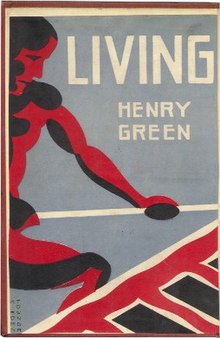
Living by Henry Green
What is a town then, how do I know? What did they do? They went by
lamps, lamps, lamps, each one with light and dark strung up on it each
with streets these were in. Houses made the streets, people made the
houses. People lived in them, thousands millions of lives. Each life
dully lived and the life next it, pitched together, walls between built,
dully these lives went out onto streets promenaded dullness thee. Ugly
clothes, people, houses. They went along through these, strangers to
it, she did not recognize her own form of ugliness in it.
Henry Green's Living tells the story of iron foundry workers in Birmingham, England. These men struggle, against dangerous and repressive work practices, and the monotony of everyday work, to "make a living." But the word, when used that way, seems reduced somehow, as if the manifold experience of life has been reduced to the pettiness of living by the tedious horror of industrial labor. Yet, they shape their lives around this experience, like the antiquated Craigan:
Craigan lives with his friends and coworkers Jim Dale and Joe Gates (try keeping which is which in your head without double-checking each time, I dare you). Gates' daughter Lily keeps the house, and Craigan sets his hopes on her marriage to Jim Dale, which will ensure the continued existence of this household in the face of the threat of financial instability. Of course, Lily has plans of her own, and falls in love with another iron worker, Bert Jones. Lily, too, has a kind of "living," as proscribed by the men in her life as the iron workers are by the demands of their class. Added to this are numerous other characters of the foundry, managers and manager's toadies and son of Mr. Dupret, the heir to the foundry who's sudden accession threatens the stability of the foundry's small ecosystem. The rich young Dupret is unhappy and bored in his wealth, and sees something to envy in the lives of the foundry workers:
And yet there's nothing humanitarian about Dupret; his desperate need to exert control over his father's company and wrench it away from the middle managers who treat him like a neophyte produces results both good and bad for the workers. Yes, he demands that they remove the guard who clocks the workers' bathroom time, but when the foundry comes up against financial straits, he's also the one who suggests sacking its most experienced workers, like Craigan, six months shy of their pension. Though he envies their ability to create (paging Marx), his life is too far removed from that of the foundry workers for it to affect his decision making (paging Elon Musk).
I struggle with helping my creative writing students find the right amount of exposition. Most amateur fiction is all exposition, elaborate setups that leave mere paragraphs or sentences for anything like conflict or action. Green's strategy is to do away with exposition entirely; there are no explanatory paragraphs explaining who any of the novel's many characters are. It's a bit like walking into a strange room and watching people interact and trying, and often failing, to piece together who they are and what they're about. Added to that is this novel's particular, difficult style, which often eliminates articles entirely. "Thousands came back from dinner along streets," the novel begins. I read that this reflects something about the Birmingham accent, but I'm not sure of that--it certainly gives the novel, a brusque, spiked tone.
Like Loving, which contrasted the lives of nobility with their servants, Living is an effective juxtaposition of classes that reveals hard truths about the nature of the working world. Reading it can feel a little like work, too. But for those that can stand it, it's a rewarding labor, full of sharp insight into the world of the working class.
Henry Green's Living tells the story of iron foundry workers in Birmingham, England. These men struggle, against dangerous and repressive work practices, and the monotony of everyday work, to "make a living." But the word, when used that way, seems reduced somehow, as if the manifold experience of life has been reduced to the pettiness of living by the tedious horror of industrial labor. Yet, they shape their lives around this experience, like the antiquated Craigan:
Mr Craigan had gone to work when he was nine and every day he had worked through most of daylight till now, when he was going to get old age pension. So you will hear men who have worked like this talk of monotony of their lives, but when they grow to be old they are more glad to have work and this monotony has grown so great that they have forgotten it. Like on a train which goes through night smoothly and at an even pace--so monotony of noise made by the wheels bumping over joints between the rails becomes rhythm--so the monotony of hours grows to be the habit and regulation on which we grow old.
Craigan lives with his friends and coworkers Jim Dale and Joe Gates (try keeping which is which in your head without double-checking each time, I dare you). Gates' daughter Lily keeps the house, and Craigan sets his hopes on her marriage to Jim Dale, which will ensure the continued existence of this household in the face of the threat of financial instability. Of course, Lily has plans of her own, and falls in love with another iron worker, Bert Jones. Lily, too, has a kind of "living," as proscribed by the men in her life as the iron workers are by the demands of their class. Added to this are numerous other characters of the foundry, managers and manager's toadies and son of Mr. Dupret, the heir to the foundry who's sudden accession threatens the stability of the foundry's small ecosystem. The rich young Dupret is unhappy and bored in his wealth, and sees something to envy in the lives of the foundry workers:
Standing in foundry shop son of Mr Dupret thought in mind and it seemed to him that these iron castings were beautiful and he reached out fingers to them, he touched them; he thought and only in machinery in seemed to him was savagery left now for in the country, in summer, trees were like sheep while here men created what you could touch, wild shapes, soft like silk, which would last and would be working in great factories, they made them with their hands. He felt more certain and he said to himself it was wild incidental beauty in these things where engineers had thought only of the use put to them, which you could touch; but when he was most sure he remembered, he remembered it had been said before and he said to himself, 'Ruskin built a road which went nowhere with the help of undergraduates and in doing so said the last word on that.' And then what had been so plain, stiff and bursting inside him like soda fountains, this died as a small wind goes out, and he felt embarrassed standing as he did in fine clothes.
And yet there's nothing humanitarian about Dupret; his desperate need to exert control over his father's company and wrench it away from the middle managers who treat him like a neophyte produces results both good and bad for the workers. Yes, he demands that they remove the guard who clocks the workers' bathroom time, but when the foundry comes up against financial straits, he's also the one who suggests sacking its most experienced workers, like Craigan, six months shy of their pension. Though he envies their ability to create (paging Marx), his life is too far removed from that of the foundry workers for it to affect his decision making (paging Elon Musk).
I struggle with helping my creative writing students find the right amount of exposition. Most amateur fiction is all exposition, elaborate setups that leave mere paragraphs or sentences for anything like conflict or action. Green's strategy is to do away with exposition entirely; there are no explanatory paragraphs explaining who any of the novel's many characters are. It's a bit like walking into a strange room and watching people interact and trying, and often failing, to piece together who they are and what they're about. Added to that is this novel's particular, difficult style, which often eliminates articles entirely. "Thousands came back from dinner along streets," the novel begins. I read that this reflects something about the Birmingham accent, but I'm not sure of that--it certainly gives the novel, a brusque, spiked tone.
Like Loving, which contrasted the lives of nobility with their servants, Living is an effective juxtaposition of classes that reveals hard truths about the nature of the working world. Reading it can feel a little like work, too. But for those that can stand it, it's a rewarding labor, full of sharp insight into the world of the working class.
Labels:
Birmingham,
Henry Green,
Living
Friday, June 8, 2018
The Hate U Give by Angie Thomas
When I was twelve, my parents had two talks with me.The title of Angie Thomas' YA novel is an homage to Tupac's acrostic interpretation of Thug Life (The Hate U Give Little Infants Fucks Everyone), and the book is a call to action against police brutality. In the opening pages, Starr, the heroine is in the car as her friend Khalil is shot to death by the police after a traffic stop. The book tracks her journey as she finds her voice and her place in a hostile, racist world.
One was the usual birds and bees. Well, I didn't really get the usual version. My mom, Lisa, is a registered nurse, and she told me what went where, and what didn't need to go here, there, or any damn where till I'm grown. Back then, I doubted anything was going anywhere anyway. While all the other girls sprouted breasts between sixth and seventh grade, my chest was as flat as my back.
The other talk was about what to do if a cop stopped me.
Momma fussed and told Daddy I was too young for that. He argued that I wasn't too young to get arrested or shot.
Starr is a compelling, thoughtful heroine. She exists in two worlds; her family lives in a neighborhood riddled with police shootings and gang violence, and she attends an elite, white private school 45 minutes away. Before Khalil's death, her need to be one person at home and another at school didn't bother her, but as she watches her two communities react, she begins to feel the strain of a split identity.
This is a thick tome of a YA novel, but I read it in two days. Thomas is an engaging writer and she is able to tackle a brutally depressing topic and make it accessible. It's not easy to read from a content perspective, but Starr is funny and empathetic, and having her as a guide makes it bearable. Thomas's reflections on what it means to be black in America are heart-wrenchingly but also beautifully laid out.
It shook me to realize how rare it is for me to read a book where the bulk of the characters are black, even as I work to read more authors of color. That's part of the point, I realize. Even as a person who engages with social justice and race regularly, this is still a new narrative for me, and it shouldn't be.
Thursday, June 7, 2018
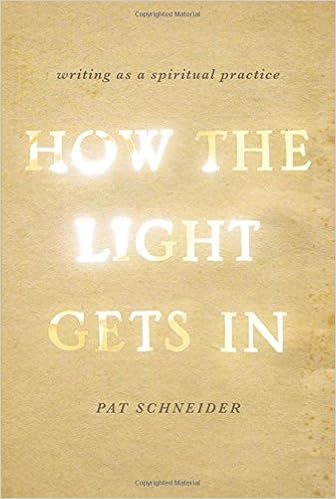
How the Light Gets In: Writing as a Spiritual Practice by Pat Schneider
When I achieve true waiting, true listening, something happens that I experience as a gift. Whether it comes from my own subconscious reservoir or from outside myself makes no difference to me. If I am a creature made in the image of God--and I do accept the teaching of ancient Hebrew prophets and poets that in fact I am so created, and the teaching of some theologians that all of creation, even the rock and the turnip, is an image of God--then the creature that I am partakes in the holiness of the creator. If I am made in the image of the creator, then I myself am a creator, and my acts of creating participate in mystery.
"This is not a 'How To' book," Pat Schneider writes in the notes to How the Light Gets In, "it is an invitation to a reader to look over my shoulder as I do the thing itself: write as a spiritual practice. In that way I hope it can act as a guide for individual writers, an example of using one's own life story to trace the presence of mystery and the outlines of grace." I had planned on reading her how-to book Writing Alone and with Others, in preparation for the fiction-writing class I'll be teaching high school seniors in the fall, but instead I was drawn to this book, which has fewer lessons (but not none) for teachers of creative writing.
At times it borders on straight memoir, actually, giving us a glimpse into the way Schneider uses writing as a way to understand her own past. The images she returns to in the practice she likens to prayer are all from her troubled upbringing: the peach tree under which she was "saved" into the church, the roaches in the sour bottles of milk in her tenement home in St. Louis, the bed in the orphanage. And we get to see the construction of some very wonderful poems out of these images in real time.
How the Light Gets In is less a book of instruction than a book of wisdom. It's separated into chapters that deal with broad experiential concepts--death, the body, freedom, joy--in which Schneider uses the writing process to explore these things and how they touch in her own life. (The poignancy of which is all amplified by her advanced age--though I am pleased to say she's still around and alive.) The content overlaps with the practice. For Schneider, writing itself is a kind of prayer in which she approaches what, having fallen out with her fundamentalist upbringing, calls only "the mystery." I was particularly struck by the chapter on "Strangeness":
What a brief and lucid defense of the entire idea of literature! I want to frame it and hang it on my classroom wall. It resonates with Marilynne Robinson's assertion that the universe keeps showing itself to be stranger than we ever imagined. And this chapter, I think, I hope, presented to me a solution to a problem I had been having with the ending of the novel I've been writing. When I put it on paper I will let you know.
There are a few key moments I know I'll want to share with my students. One is Schneider's simple "acid test for the health of any group, class, or workshop one might try: When I leave, do I feel more like writing, or less like writing?" Another is an exercise in which she encourages her students to begin by considering the language of their own upbringing, because "we must first learn to recognize and value the strengths and the beauty in our languages of origin, and in our ability to tell our own stories in our own voices." I think that's a beautiful idea, and a spiritual one, linked to the assertion of the God-image in every person, though that's not the language I would ever use in the classroom.
The lessons I take for my own writing are much more difficult, perhaps impossible, to articulate. They might begin with admiration for Schneider's bravery in writing about her own experience, and the double bravery of writing about the writing process, which for me is secret and often embarrassingly messy. They also contain a deep sympathy for the idea of writing as a form of prayer, a way of approaching that for which ordinary didactic language has no words. This is a book I know I'll return to.
"This is not a 'How To' book," Pat Schneider writes in the notes to How the Light Gets In, "it is an invitation to a reader to look over my shoulder as I do the thing itself: write as a spiritual practice. In that way I hope it can act as a guide for individual writers, an example of using one's own life story to trace the presence of mystery and the outlines of grace." I had planned on reading her how-to book Writing Alone and with Others, in preparation for the fiction-writing class I'll be teaching high school seniors in the fall, but instead I was drawn to this book, which has fewer lessons (but not none) for teachers of creative writing.
At times it borders on straight memoir, actually, giving us a glimpse into the way Schneider uses writing as a way to understand her own past. The images she returns to in the practice she likens to prayer are all from her troubled upbringing: the peach tree under which she was "saved" into the church, the roaches in the sour bottles of milk in her tenement home in St. Louis, the bed in the orphanage. And we get to see the construction of some very wonderful poems out of these images in real time.
How the Light Gets In is less a book of instruction than a book of wisdom. It's separated into chapters that deal with broad experiential concepts--death, the body, freedom, joy--in which Schneider uses the writing process to explore these things and how they touch in her own life. (The poignancy of which is all amplified by her advanced age--though I am pleased to say she's still around and alive.) The content overlaps with the practice. For Schneider, writing itself is a kind of prayer in which she approaches what, having fallen out with her fundamentalist upbringing, calls only "the mystery." I was particularly struck by the chapter on "Strangeness":
Writing about writing, I have been exploring what I think I already know. But writing about mystery, I have tried neither to teach nor preach. I have tried to constantly veer away from that which is familiar and known, toward that which is just beyond my grasp. In writing, this is most commonly done in story and in metaphor. I have met strangeness again and again as I have been writing this book. Trying to describe strangeness is--forgive me!--strange. It requires story. It requires metaphor.
What a brief and lucid defense of the entire idea of literature! I want to frame it and hang it on my classroom wall. It resonates with Marilynne Robinson's assertion that the universe keeps showing itself to be stranger than we ever imagined. And this chapter, I think, I hope, presented to me a solution to a problem I had been having with the ending of the novel I've been writing. When I put it on paper I will let you know.
There are a few key moments I know I'll want to share with my students. One is Schneider's simple "acid test for the health of any group, class, or workshop one might try: When I leave, do I feel more like writing, or less like writing?" Another is an exercise in which she encourages her students to begin by considering the language of their own upbringing, because "we must first learn to recognize and value the strengths and the beauty in our languages of origin, and in our ability to tell our own stories in our own voices." I think that's a beautiful idea, and a spiritual one, linked to the assertion of the God-image in every person, though that's not the language I would ever use in the classroom.
The lessons I take for my own writing are much more difficult, perhaps impossible, to articulate. They might begin with admiration for Schneider's bravery in writing about her own experience, and the double bravery of writing about the writing process, which for me is secret and often embarrassingly messy. They also contain a deep sympathy for the idea of writing as a form of prayer, a way of approaching that for which ordinary didactic language has no words. This is a book I know I'll return to.
Labels:
How the Light Gets In,
Pat Schneider,
writing
Sunday, June 3, 2018
Pet Sematary by Stephen King
Louis and Gage knew him; they had met him and faced him down in New England. He was waiting to choke you on a marble, to smother you with a dry-cleaning bag, to sizzle you in eternity with a fast and lethal boggie of electricity--Available at Your Nearest Switchplate or Vacant Light Socket Right Now. There was death in a quarter bag of peanuts, an aspirate piece of steak, the next pack of cigarettes. He was around all the time, he monitored all the checkpoints between the mortal and the eternal. Dirty needles, poison beetles, downed live wires, forest fires. Whirling roller skates that shot nurdy little kids into busy intersections.
(Spoiler alert, folks--if, like me, you've somehow avoided becoming familiar with King's books until now, you might want to turn back.)
The same painful image lies at the heart of Pet Sematary as Lincoln at the Bardo: a father lifting up the body of his deceased son, cradling it, unable to move past profound grief. For the spirits in Saunders' novel, it's a symbol of shocking compassion and intimacy, a physical embrace past the point where such things can reasonably be expected. In Pet Sematary, when the bereaved doctor Louis Creed steals his young son's body from the graveyard, the pathos runs the other way. It's so grotesque that it borders on squeamish black comedy:
Louis' plan is to bury his son in the titular pet cemetery, an ancient Micmac burial ground that has the power to bring things back to life. The scenes in the burial ground are effectively eerie, filled with fog and unidentifiable noises and the great black shape of the Wendigo moving through the mud. Early in the novel he does the same thing with his daughter's cat Church, guided by an old Mainer who knows the supernatural history of the place. Distraught folks have been burying their pets there for years--and maybe a few people, too. Church comes back all wrong: torpid, bloodthirsty, without any kind of feline grace, and with an indelible stench of death. Chances are Louis's son Gage, hit by a truck in their front yard, will come back changed, too. But all the rational deliberation in the world can't overcome the depth of Louis' grief, and he goes through with the macabre plan despite knowing that.
Pet Sematary is a about 500 pages of meditation on the way death intrudes upon the banality of life, and another fifty pages of blood-soaked freakout horror. King paints the life of Louis, his wife Rachel, and his children Ellie and Gage, in painstaking detail. At times, too much detail--I'm not sure why we need to know, for instance, that "Rachel developed a mild infatuation with the blond bag boy at the A&P in Brewer and rhapsodized to Louis at night about how packed his jeans looked." But death, like it does, breaks in on the Creeds' life again and again: in the form of a young man hit by a car on Louis' first day of work at the student clinic at the University of Maine, in the form of their elderly nextdoor neighbor, in memories about Rachel's sick and resentful sister, who died as a child. Gage gets sick again and again, teasing you, almost, with the possibility of his death many times before it really happens. As a doctor, Louis knows all about death, about the fragility of the body, but against grief such rationalism is powerless.
I was amazed by how painstakingly King builds up the life of this family, and then destroys it breezily and mercilessly. The end, in which--hey, I meant that spoiler alert above--the toddler Gage comes back possessed by the murderous Wendigo and dispatches his own mother with a scalpel, was a real shock to me. I guess I had underestimated how much ice runs in King's veins. The message, I guess, is this: you'd better make friends with death, because you're just going to make it worse if you don't. In a way, it's not so different from Lincoln in the Bardo, which also tells us that there is a danger in holding on to grief for too long, but with a gentler spirit.
(Spoiler alert, folks--if, like me, you've somehow avoided becoming familiar with King's books until now, you might want to turn back.)
The same painful image lies at the heart of Pet Sematary as Lincoln at the Bardo: a father lifting up the body of his deceased son, cradling it, unable to move past profound grief. For the spirits in Saunders' novel, it's a symbol of shocking compassion and intimacy, a physical embrace past the point where such things can reasonably be expected. In Pet Sematary, when the bereaved doctor Louis Creed steals his young son's body from the graveyard, the pathos runs the other way. It's so grotesque that it borders on squeamish black comedy:
Somehow, panting, his stomach spasming from the smell and from the boneless loose feel of his son's miserably smashed body, Louis wrestled the body out of the coffin. At last he sat on the verge of the grave with the body in his lap, his feet dangling in the hole, his face a horrible livid color, his eyes black holes, his mouth drawn down in a trembling bow of horror and pity and sorrow.
"Gage," he said and began to rock the boy in his arms. Gage's hair lay against Louis's wrist, as lifeless as wire. "Gage, it will be all right, I swear, Gage, it will be all right, this will end, this is just the night, please, Gage, I love you, Daddy loves you."
Louis rocked his son.
Louis' plan is to bury his son in the titular pet cemetery, an ancient Micmac burial ground that has the power to bring things back to life. The scenes in the burial ground are effectively eerie, filled with fog and unidentifiable noises and the great black shape of the Wendigo moving through the mud. Early in the novel he does the same thing with his daughter's cat Church, guided by an old Mainer who knows the supernatural history of the place. Distraught folks have been burying their pets there for years--and maybe a few people, too. Church comes back all wrong: torpid, bloodthirsty, without any kind of feline grace, and with an indelible stench of death. Chances are Louis's son Gage, hit by a truck in their front yard, will come back changed, too. But all the rational deliberation in the world can't overcome the depth of Louis' grief, and he goes through with the macabre plan despite knowing that.
Pet Sematary is a about 500 pages of meditation on the way death intrudes upon the banality of life, and another fifty pages of blood-soaked freakout horror. King paints the life of Louis, his wife Rachel, and his children Ellie and Gage, in painstaking detail. At times, too much detail--I'm not sure why we need to know, for instance, that "Rachel developed a mild infatuation with the blond bag boy at the A&P in Brewer and rhapsodized to Louis at night about how packed his jeans looked." But death, like it does, breaks in on the Creeds' life again and again: in the form of a young man hit by a car on Louis' first day of work at the student clinic at the University of Maine, in the form of their elderly nextdoor neighbor, in memories about Rachel's sick and resentful sister, who died as a child. Gage gets sick again and again, teasing you, almost, with the possibility of his death many times before it really happens. As a doctor, Louis knows all about death, about the fragility of the body, but against grief such rationalism is powerless.
I was amazed by how painstakingly King builds up the life of this family, and then destroys it breezily and mercilessly. The end, in which--hey, I meant that spoiler alert above--the toddler Gage comes back possessed by the murderous Wendigo and dispatches his own mother with a scalpel, was a real shock to me. I guess I had underestimated how much ice runs in King's veins. The message, I guess, is this: you'd better make friends with death, because you're just going to make it worse if you don't. In a way, it's not so different from Lincoln in the Bardo, which also tells us that there is a danger in holding on to grief for too long, but with a gentler spirit.
Labels:
cats,
horror,
Pet Sematary,
stephen king
Saturday, June 2, 2018
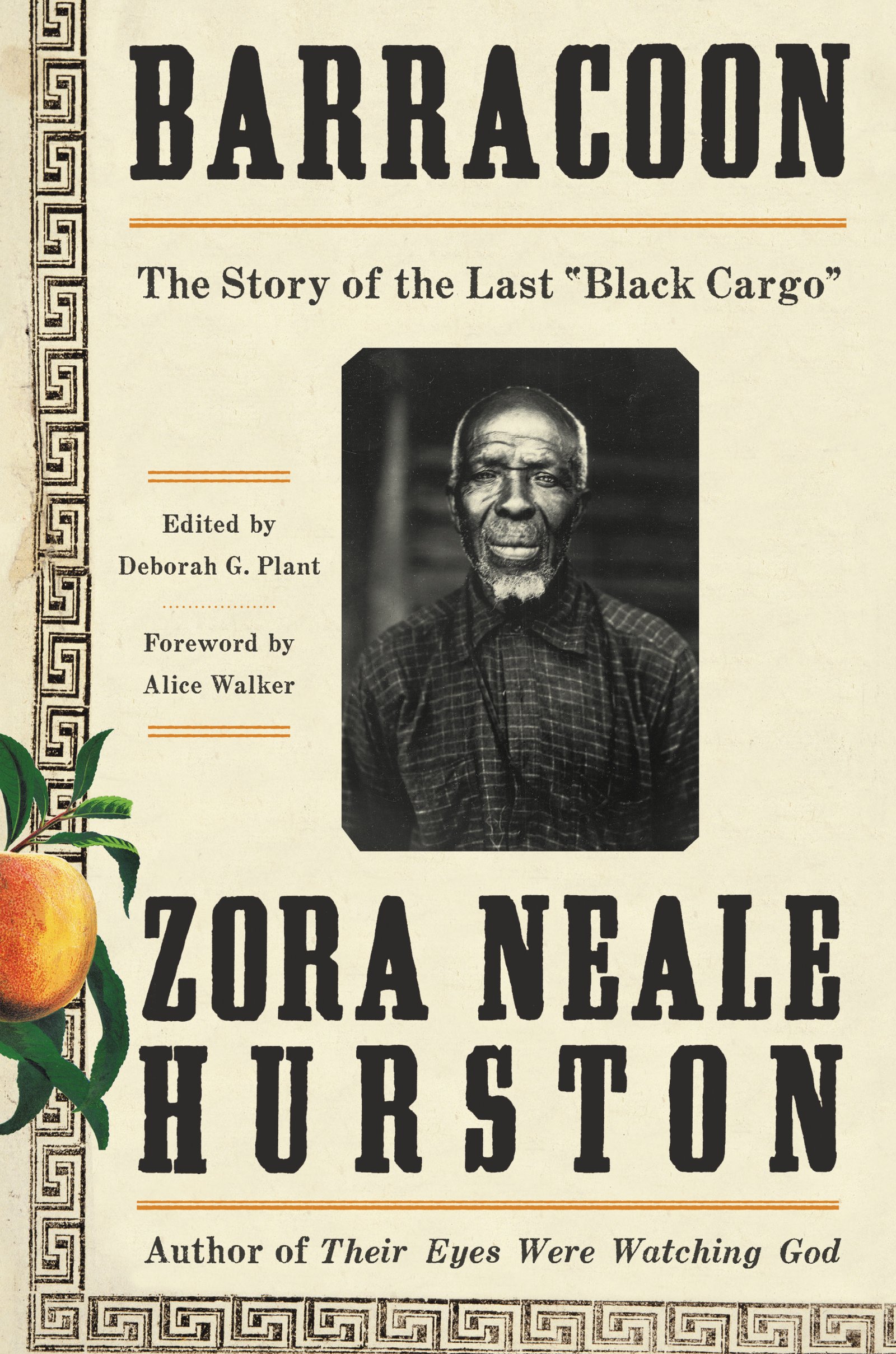
Barracoon by Zora Neale Hurston
I hailed him by his African name as I walked up the steps to his porch, and he looked up into my face as I stood in the door in surprise. He was eating his breakfast from a round enameled pan with his hands, in the fashion of his fatherland.
The surprise of seeing me halted his hand between pan and face. Then tears of joy welled up.
"Oh Lor', I know it you call my name. Nobody don't callee me my name from cross de water but you. You always callee me Kossula, jus' lak I in de Affica soil!"
What a wonderful thing, in the year 2018, to have a new book by Zora Neale Hurston. It makes you wonder what they were thinking, all the people all those years ago, who declined to publish a book like Barracoon, Hurston's interview with the last survivor of the Mid-Atlantic slave trade. Perhaps they didn't understand what a rare and lucky moment it was, to have such experience still alive in the heart of a man, or perhaps they underrated Hurston's gifts and importance as an ethnographer (way more impressive, in my opinion, than her work as a novelist). There's some intimation in what I've read that people were squeamish about laying bare the role of African slavers in the Middle Passage, and quite rightly, since that stuff has always been fodder for right-wing trolls. But whatever the case, it's quite something to have a book like this published at last.
In 1927 Hurston traveled to Alabama to interview a man named Oluale Kossula, who had gone by the Americanized name Cudjo Lewis for over sixty years. As a teenager, Kossula's village in West Africa was decimated by the Kingdom of Dahomey, who were in the habit of massacring their enemies and selling whom they could to coastal slavers. The title, Barracoon, refers to the kind of barracks where captured Africans waited to be bought by slavers. One of the wonders of the book is that it gives a rare glimpse into what it was like on the African side of the slave trade. Kossula's account of the Dahomey warriors--apparently, traditionally women--is one of the most haunting aspects of his story.
When Kossula was carried away by the Clotilde, it was in violation of U.S. law, which had prevented new importing of slaves for over fifty years. The Americans who put the voyage together did so because they could, and because they felt like they were entitled to it. It was illegal, but no one, of course, got punished for it, except for Kossula. He actually touches very little on his experience of slavery, focusing on the life he led after emancipation with his wife and children. Like many former slaves, Kossula found himself needing to apply to his former masters for protection and employment:
Kossula, then, with a group of fellow Africans, saved for years to buy their own land and found a community called Africatown. The community still exists in Mobile, and some of its residents still trace their heritage back to the Clotilde and the Dahomey raid. It's a remarkable story of independence and will, told in Kossula's own voice and idiom. Hurston deftly gets out of the way of Kossula's story, and records it with faithful care. Interpolation is smartly minimized to let the power of the story, and the feeling that you are hearing a firsthand account, shine through.
Kossula's experiences after the end of the Civil War were full of hardship. He talks about the way he and his family were looked on suspiciously by other black communities whose ancestors had come from Africa centuries ago. He talks about the tragic death of his wife and many of his children, including a horrible story of one son's death at a railroad crossing:
When Hurston finds Kossula, he is more or less alone. She does small errands for him and they share small joys, like crabs and a "huge watermelon" they "ate from heart to rind." She paints a picture of a man slowly abandoned by family, left in a land that never quite felt familiar to him, and who longs to return to "Afficky soil" before he dies. It's heartrending. But there is a small consolation in the thought that finally, more than 150 years after Kossula's kidnapping and enslavement, and over ninety years from the time that Hurston recorded his testimony, that the story of this proud and lonely man is finally able to be told.
The surprise of seeing me halted his hand between pan and face. Then tears of joy welled up.
"Oh Lor', I know it you call my name. Nobody don't callee me my name from cross de water but you. You always callee me Kossula, jus' lak I in de Affica soil!"
What a wonderful thing, in the year 2018, to have a new book by Zora Neale Hurston. It makes you wonder what they were thinking, all the people all those years ago, who declined to publish a book like Barracoon, Hurston's interview with the last survivor of the Mid-Atlantic slave trade. Perhaps they didn't understand what a rare and lucky moment it was, to have such experience still alive in the heart of a man, or perhaps they underrated Hurston's gifts and importance as an ethnographer (way more impressive, in my opinion, than her work as a novelist). There's some intimation in what I've read that people were squeamish about laying bare the role of African slavers in the Middle Passage, and quite rightly, since that stuff has always been fodder for right-wing trolls. But whatever the case, it's quite something to have a book like this published at last.
In 1927 Hurston traveled to Alabama to interview a man named Oluale Kossula, who had gone by the Americanized name Cudjo Lewis for over sixty years. As a teenager, Kossula's village in West Africa was decimated by the Kingdom of Dahomey, who were in the habit of massacring their enemies and selling whom they could to coastal slavers. The title, Barracoon, refers to the kind of barracks where captured Africans waited to be bought by slavers. One of the wonders of the book is that it gives a rare glimpse into what it was like on the African side of the slave trade. Kossula's account of the Dahomey warriors--apparently, traditionally women--is one of the most haunting aspects of his story.
When Kossula was carried away by the Clotilde, it was in violation of U.S. law, which had prevented new importing of slaves for over fifty years. The Americans who put the voyage together did so because they could, and because they felt like they were entitled to it. It was illegal, but no one, of course, got punished for it, except for Kossula. He actually touches very little on his experience of slavery, focusing on the life he led after emancipation with his wife and children. Like many former slaves, Kossula found himself needing to apply to his former masters for protection and employment:
"'Cap'n Tim, you brought us from our country where we had lan'. You mad us slave. Now dey make us free but we ain' got no country and we ain't got no lan'! Why doan you give us a piece dis land so we kin buildee ourself a home?'
"Cap'n jump on his feet and say, 'Fool do you think I goin' give you property on top of property? I tookee good keer my slaves in slavery and derefo' I doan owe dem nothin? You doan belong to me now, why must I give you my lan'?"
Kossula, then, with a group of fellow Africans, saved for years to buy their own land and found a community called Africatown. The community still exists in Mobile, and some of its residents still trace their heritage back to the Clotilde and the Dahomey raid. It's a remarkable story of independence and will, told in Kossula's own voice and idiom. Hurston deftly gets out of the way of Kossula's story, and records it with faithful care. Interpolation is smartly minimized to let the power of the story, and the feeling that you are hearing a firsthand account, shine through.
Kossula's experiences after the end of the Civil War were full of hardship. He talks about the way he and his family were looked on suspiciously by other black communities whose ancestors had come from Africa centuries ago. He talks about the tragic death of his wife and many of his children, including a horrible story of one son's death at a railroad crossing:
"I go through the crowd and lookee. I see de body of a man by de telegraph pole. It ain' got no head. Somebody tell me, 'Thass yo' boy, Uncle Cudjo.' I say, 'No, it not my David.' He lay dere by de cross ties. One woman she face me and astee, 'Cudjo, which son of yours is dis?' and she pointee at de body. I tell her, 'Dis none of my son. My boy go in town and y'all tell me my boy dead.'
One Afficky man come and say, 'Cudjo dass' yo boy.'
I astee him, 'Is it? If dat my boy, where his head?' He show me de head. It on de other side de track. Den he lead me home.
When Hurston finds Kossula, he is more or less alone. She does small errands for him and they share small joys, like crabs and a "huge watermelon" they "ate from heart to rind." She paints a picture of a man slowly abandoned by family, left in a land that never quite felt familiar to him, and who longs to return to "Afficky soil" before he dies. It's heartrending. But there is a small consolation in the thought that finally, more than 150 years after Kossula's kidnapping and enslavement, and over ninety years from the time that Hurston recorded his testimony, that the story of this proud and lonely man is finally able to be told.
Labels:
africa,
Alabama,
Barracoon,
non-fiction,
slavery,
Zora Neale Hurston
Subscribe to:
Posts (Atom)