Showing posts with label Italy. Show all posts

Sunday, August 16, 2026

G. by John Berger

I despise the dust of which I am composed: anyone can pursue and put an end to this dust. But I defy anybody to snatch from me what I have given myself, an independent life in the sky of the centuries.

G. is the illegitimate son of an American divorcee and an Italian candy manufacturer who grows up in England. That makes him, in some sense, both no one and everyone, an heir to the international turbulence of the late 19th century that, as we know and he does not yet, will blow up into the conflagration of World War I. Most of his life is marked not by politics, but sex, beginning with his seduction by his own aunt in that English country house and continuing on through a series of reckless affairs with everyone from chambermaids to Austrian noblewomen. But love for G. is represented by the face of a Roman woman who protected him when, as a child, he escaped a visit to his father and ended up in the barricades of a nationalist uprising. So perhaps sex and revolution are tied together from the very beginning, something that G. will have to relearn when, after years of tomcatting around, he casually accepts a reckless request to do a little light spycraft in the city of Trieste, where Serbian nationalists are beginning to become suspicious not only of their Austro-Hungarian overlords, but Italians like G.--if that's what he is--as well.

John Berger was better known as an art critic whose Ways of Seeing (which I have not read) has been overwhelmingly influential. From time to time, G. reads like a novel by an essayist, who frequently interrupts the narrative to expound on the various emotional and visual dynamics that occur between G. and his several lovers. (One of Berger's most enduring ideas is the male gaze, which says something like "men watch women while women watch themselves being watched," and that idea is all over G. as well.) Berger isn't hiding his hand; the "I" here is so strong that Berger will often compare the events of the novel to things that (presumably) happen in his own life, or baldly declare the struggles of composing the text: "I cannot continue this account of the eleven-year-old boy in Milan on 6 May 1898. From this point on everything I write will either converge upon a final full stop or else disperse so widely that it will become incoherent." The dryness of Berger's essayistic style contrast in an effective and interesting way with the heedlessness of G., who follows his passions at every turn. The reader identifies more strongly with that "I" than it does G., a man who we suspect would probably be incapable of thinking very articulately about what he's doing, or why, or how he fits into the larger context of European history as it passes from the age of revolution to the age of total war.

For all that, there is a novel here, and an interesting one. More or less, it can be split into three segments, the first being G.'s conception and childhood and the second being a long middle set in the town of Domodossola, where a friend and fellow pilot is attempting to be the first to cross the Alps in an airplane. In a way I won't overexplain he both succeeds and fails, and this perhaps sets the tone for the third part, with G. in Trieste. G. enlists a Bosnian peasant woman as his plus-one to a ball where he intends to seduce the aforementioned Austrian noblewoman, causing a terrific scandal. Is G.'s act political, or not? Is he acting merely out of lust for the Bosnian woman, or is he intending to indict the Austrians by shoving the political iniquities and instabilities of their rule in their faces? Are political and revolutionary deeds acts of will or are they something closer to lust, rising from someplace deeper within? These are the questions that make G., I thought, a strange and provocative work.

Saturday, May 9, 2026

The Flamethrowers by Rachel Kushner

The flamethrowers could have been from a different century, both brutal and ancient and at the same time horribly modern. The flame oil in the twin tanks they carried was five parts tar oil and one part crude, and they had a little canister of carbon dioxide and an automatic igniter and a belt pouch with spare igniters. The flamethrower was never, ever defensive. He was pure offense, overrunning enemy lines. He surged forth, a hulking creature with huge tanks on his back, a giant nozzle in his hand, hooked to the tanks. He was a harbinger of death. He looked like death, in his asbestos hood with the wide cowl, and he squirted liquid fire from a magnificent range--fifty meters--into the pillboxes and trenches of the enemy and they had no chance.

The narrator of The Flamethrowers is a young artist from Reno whose work revolves around speed: she takes photographs of landscapes through which she has passed, by foot, or ski, or, as is the case in the beginning of the novel, by motorcycle, having shown up to Utah's Bonneville Salt Flats where world speed records are being chased. One of the novel's most arresting scenes involves the narrator in a fiery crash, from which she emerges not seriously dinged up, and which results in her perversely being given the opportunity to ride a Valera company machine that will make her the fastest woman in recorded history. She may or may not be aware of the similarities between her own work on speed and that of the Italian Futurists, who embraced speed as an ideal at the same time they embraced Fascism. Among those futurists was a young soldier named Valera whose legacy includes the motorcycle company that produces both the narrator's bike and her boyfriend, Sandro Valera.

The bulk of The Flamethrowers centers on the New York art scene of (I think) the 1970's and 80's. Sandro is an artist himself, and introduces young Reno (as she's sometimes called) to a world of provocateurs and gallerists, some of whom make a more permanent impression on the narrative than others. Kushner treats this world as faintly ridiculous, as surely it was, but also deadly serious. Some of these artists have emerged from the world of radical politics where bombs and art are seen as equal tactics. Some of them are just poseurs, and it's hard to tell exactly which are which. As the scion of the Valera Motor Company, Sandro fits uneasily among them--Kushner makes sure to emphasize that the company's exploitative ways didn't end with Mussolini by including a section from the perspective of a Brazilian rubber worker. After a disastrous sojourn to Italy where she's scorned by his well-to-do family (and cheated on), Reno absconds with Sandro's groundskeeper, who turns out to be a member of a Communist cell whose clandestine activity will upend Sandro's life.

The Flamethrowers is hardly a perfect book; I'm not even sure it works on the whole, but it did make me wonder why Kushner's debut, Telex from Cuba, was so limp. Many of the same traits of that novel are on display here: the gratuitous POV shifts, the whiff of extensive research. But I thought this novel succeeded at doing something the other clearly attempts, and fails: it brings together several disparate-seeming subjects and themes in a way that connects them persuasively. At the heart of the novel is the way that us and them are enmeshed. Sandro's attempt to escape the distasteful elements of his family's legacy by entering into the art world fails because the art world is also enmeshed with the realities of capitalism and exploitation. The Italian rabblerousers whose provocations set off the novel's climax are like the flamethrowers of the Italian army that fascinated Sandro as a kid: a purgative force. To the extent that their nozzles are also pointed at themselves may not be foolishness but a kind of honesty and self-sacrifice.

That said, Kushner has a way of writing around things that leaves me feeling as if I've read about something, but not really read it. This is the third of her books I've read now, and in each case I find that there's something missing, for me, at the heart of them; I walk away wondering what it was that I really read about. I think it's actually easy to locate that missing center here: it's the protagonist, whose attraction to Sandro and artistic ambitions mask a kind of inner vacuity. She's our point-of-view character, who frames all our judgments of the "characters" we meet in the New York scene, but that invisible eyeball quality leaves her a little invisible. Her artistic project, for example, is so quickly abandoned it felt like something of a red herring. The best parts of the book are when Kushner breathes a little life into her: when she crashes her motorbike and when she runs away from Sandro. Still, Kushner has a real knack for detail and anecdote, and there are elements here--the Futurists, the Bonneville Salt Flat stuff, the movie Wanda--that I really love. So I enjoyed reading it.

Saturday, October 18, 2025

Zeno's Conscience by Italo Svevo

In this city, after the outbreak of the war, we are more bored than ever, and, as a substitute for psychoanalysis, I have returned to my beloved papers. For a year I hadn't written a word; in this, as in everything else, obeying the doctor, who commanded that during my therapy I was to reflect only when I was with him, because unsupervised reflection would reinforce the breaks that inhibited my sincerity, my relaxation. But now I find myself unbalanced and sicker than ever, and, through writing, I believe I will purge myself of the sickness more easily than through my therapy. At least I am sure that this is the true system for restoring importance to a past no longer painful, and the dispelling the dreary present more quickly.

Zeno Cosini, an aging businessman in postwar Italy, finds himself in the analyst's chair. He has a deep distrust of the analyst, and is determined to work through his "conscience" on his own, by writing the tome in our hands known as Zeno's Conscience. The story begins with the death of his father and moves through Zeno's association with the well-to-do Malfenti family, whose patriarch takes Zeno in as a kind of surrogate son. Malfenti has only daughters, and it's from these daughters that Zeno feels he must take his choice of a wife: he is deeply in love with the beautiful but cold Ada, and when she spurns him, he turns to the studious Alberta, then a third, Anna, but they spurn him, too, and he turns with despair to Augusta, the plainest of the four, who has nurtured a crush on Zeno for a long time. She understands that he does not love her, but she accepts, believing she will make a good wife--and she does. This picture of a "good marriage" makes Zeno's Conscience rather unique, even as Zeno undertakes a rather pathetic affair with an amateur opera singer.

I really enjoyed Zeno's Conscience, though I fear that I read it too slowly to have much interesting to say about it. It's interesting to see a book about Freudian analysis from 1923, when it was still in its relative infancy; the novel moves very naturalistically and has little of the qualities we might associate with fragmented modernism in a Freudian mode. I think what I liked best about it is how it captures Zeno as a character who acts from impulse and id even when he knows that his actions are wrong or unlikely to lead to happiness; Svevo captures the lengths we will go through to capture the attentions of a member of the opposite sex we know will never really want us in return, even in the face of evidence that we can see and understand clearly. I've heard Zeno called an "unreliable narrator," but I don't know that that phrase really captures what's going on; the later Zeno who is writing understands himself quite well, even as the Zeno of the time doesn't. We share that quality with the writing Zeno, looking back at foolish actions with the knowledge of better judgment.

Zeno strikes up a business relationship with Guido, the Argentinean whom Ada marries. His former love for Ada colors the relationship between Zeno, Guido, and the Malfentis, with many resulting misunderstandings, but Guido and Zeno actually become rather close friends. When Guido becomes a little too addicted to speculating on the stock market, the Malfentis turn to Zeno to help save him, and Zeno is cast suddenly in the position of being the responsible and soberly judging one. Guido is well-meaning and naive, and his speculation is the beginning of a horrible and tragic downfall. One thing that I got from his chapter is a sense that Guido is the one, more than Zeno, who might have benefitted from analysis, that Zeno may not always understand himself with clarity and precision, but that Guido is the true master of repression and foolish self-denial. The ending of Guido's story is, as the rest of the novel is, both deeply sad and somehow riotously funny, as when (spoiler alert) Zeno ends up missing Guido's funeral because he follows the wrong procession to the wrong cemetery.

Saturday, May 24, 2025

The Days of Abandonment by Elena Ferrante

Thanks to the side panels of the mirror, I saw the two halves of my face separately, far apart, and I was drawn first by my right profile, then the left. They were both completely unfamiliar to me, normally I didn't use the side panels, I recognized myself only in the image reflected by the big mirror. Now I tried to arrange the mirrors so that I could see from the side and from the front. There is no technical means of reproduction that, up to now, has managed to surpass the mirror and the dream. Look at me, I said to the glass in a whisper, a breath. The mirror was summing up my situation. If the frontal image reassured me, saying to me that I was Olga and that perhaps I would arrive at the end of the day successfully, my two profiles warned me that it was not so. They showed me my neck, the ugly living ears, the lightly arched nose that I had never liked, the chin, the high cheekbones and the taut skin of the cheeks, like a white page. I felt that there, over those two half portions, Olga had scant control, she was not very resistant, not very persistent. What did she have to do with those images.

One day, Olga's husband, Mario, announces that he no longer wants to be with her. She expects him to return--after all, they have two young children and a dog, and he's had similar episodes in the past--but the break seems to be a permanent one. Being abandoned throws her into a severe mental crisis: Who is she if she is not Mario's wife? She's haunted by the image of the poverella, the poor woman, a neighbor from her Neapolitan upbringing who was perfectly normal until, she, too, was abandoned, becoming a physical and mental ruin of her former self. This crisis reaches a head when, having had to replace the locks on her apartment door, Olga finds one day she's unable to turn the keys to get out. Her phone and computer are broken; her son and dog are critically sick. She tries to keep the mounting crisis from her young, resentful daughter, but she's beginning to see visions of the poverella sitting in her apartment; she's beginning to crack.

The Days of Abandonment is totally unlike the sweeping, Dickensian social vision of the Neapolitan novels. It begins from a very simple premise: what happens to a woman when she is abandoned? It's funny, by locking Olga in the apartment, the novel's central episode seems to refuse to let in the larger world at all. And yet, it's unmistakably Ferrante. Perhaps no one is better able to put onto the page the psychology of a woman in a world shaped by male cruelty. (For this reason the rumors you hear now and then about Ferrante being a pseudonym for a male writer to be ridiculous.) The revelations that Olga comes to her about her husband are almost banal in their familiarity: she was the one whose labor kept the household, and thus the relationship, operational, and yet he's the one whose freedom and agency permits him to abandon all that in favor of a younger woman. But these are familiar dynamics for a reason, and Ferrante imbues them with the specificity of a single psychology. No one cracks in exactly the same way, and the sight of Olga collapsing--all while still trying to be a caretaker to her family and to the poor German shepherd, Otto--is something I could barely tear myself away from. Throughout her ordeal, Olga tries to steady herself by leaning on the qualities of pragmatism and patience that she feels define her, and yet the very fabric of reality begins to slip around her.

The Days of Abandonment is a nasty novel. One of my friends told me she loathed it, and I imagine many people--even those who enjoyed the Neapolitan novels--must have picked it up expecting something different, and felt the same. It's filled with scenes of even physical revulsion: the son's vomit, the blood from the wound caused by the little girl stabbing Olga with a paper cutter--a task given to her by Olga, to prick her when she descends too far into her own tortured mind--the ants that invade the apartment, the secretive and secrete-ive failed sexual dalliance with the downstairs neighbor. I was surprised that it ends on a note of healing and reconciliation. The first time he left, the time that didn't take, Mario described his actions as a "brief absence of sense." Finally confronting one another (a violent attack by Olga on Mario in the street notwithstanding), Olga tells Mario that she, not he, knows what it's like to experience a brief absence of sense. The embrace that ends the book is surprisingly tender, and the paragraph it's in is such a bravura passage I'd love to quote it, but I don't want to spoil it. It may be that after all that, The Days of Abandonment is Ferrante's most hopeful novel.

Sunday, October 27, 2024

Family Lexicon by Natalia Ginzburg

My parents  had five children. We now live in different cities, some of us in foreign countries, and we don't write to each other often. When we do meet up we can be indifferent or distracted. But for us it takes just one word. It takes one word, one sentence, one of the old ones from our childhood, heard and repeated countless times. All it takes is for one of us to say 'We haven't come to Bergamo on a military campaign', or 'Sulphuric acid stinks of fart', and we immediately fall back into our old relationships, our childhood, our youth, all inextricably linked to those words and phrases. If my siblings and I were to find ourselves in a dark cave or among millions of people, just one of those phrases or words would allow us to recognise each other. Those phrases are our Latin, the dictionary of our past, they're like Egyptian or Assyro-Babylonian hieroglyphics, evidence of a vital core that has ceased to exist but that lives on in its texts, saved from the fury of the waters, the corrosion of time.

Natalia Ginzburg's Family Lexicon details the life of a middle-class family in northern Italy before, during, and after the advent of fascism. There's Natalia herself, of course, though she sort of disappears in the book, becoming the "invisible eyeball" of the text; her father, a chemist prone to outbursts of comic anger; her more diffident mother; her brothers, many of whom become mixed up to some degree in the resistance movement against Mussolini. It's a family that's unusual but not that unusual. You may not have a father who loves skiing to a fault, or who speaks in nothing but exclamation points, but you may recognize the rhythms of a family who are knit together by a series of phrases and quotations that emblemize, for each one, the experiences of growing up together. We may not have a mother who, as Ginzburg emphasizes, tells the same stories over and over again, but who among us does not recognize their parents by the little linguistic quirks that formed the environment in which we came of age? 

Family Lexicon has a strange relationship with the Mussolini years. Clearly they hit the family hard: many of them spent time in jail, and Ginzburg's brother was forced into exile in France; her own husband, Leone Ginzburg, died in one of Mussolini's prisons. But it's hard to shake the feeling that the advent of fascism is an unwelcome distraction from the true subject of the book, something that must be dealt with as an external force that saps the focus on the inner dynamics of the family and their various friends and hangers-on. Ginzburg's death is, at first at least, dashed off with a single line; only after reading several pages about the family's changing habits do we come to understand that the fascist government has ended; Mussolini has been hung from the Esso station somewhere out of the novel's sight. One result is that the book remains light and comic even in the face of the war, yet it never seems morally compromised, nor does the irony of the distance between style and setting become bitter or unpalatable.

It's hard to shake the feeling, too, that Ginzburg herself represents the same kind of problem for the novel. She manages to keep herself invisible for most of the novel, except by necessity: we learn much about the family friend Leone before Ginzburg lets it slip that they become married. In her preface, Ginzburg makes much of her fealty to the truth, saying that the thought of fictionalizing her family's story repels her. And yet, she writes herself out of the story in a way. We know so little of her desires or conflicts, and yet she manages to communicate powerfully the feeling of being swept away on the current of a powerful family environment.

Sunday, February 5, 2023

Happiness, as Such by Natalia Ginzburg

I don’t know how to explain why I feel more alone now. Maybe it was because we shared memories. Memories only he and I knew, even though we never spoke of them when we met. I realize now it didn’t matter that we didn’t talk about them. They were a presence in the hours we spent together at Cafe Canova, those oppressive, never ending hours. They weren’t happy memories because your father and I were never happy together. Even if we had been briefly and occasionally happy, everything got sullied, ripped up, and destroyed. But people don’t love each other only for happy memories. At a certain point in life, you realize that you just love the memories.

Like Waiting for Godot, Happiness as Such revolves around an absence, really a pair of absences--the physical absence of exiled son Michele and the metaphysical absence of the elusive happiness of the title. The main characters, like Michele’s mother Adriana in the excerpt above, try to articulate something about both absences, what they mean, what they look like, what it would mean if they were present. But the “as such” in the title is a guiding principle here--no one gets much closer than a facsimile of either, though sometimes it’s enough for them.

Michele, pursued by the authorities for his involvement in revolutionary activities, has left Italy, and in his wake his family--especially mother Adriana and sister Angelica--and his friends--maybe-baby-mama Mara and bestie-and-possibly-gay-lover Osvaldo--are working to clean up the mess he’s left behind. Much of the book is either epistolary, comprised of letters between those left in Italy and Michele, or dialogue. There’s no direct speech from Michele, but most of the other characters spend time conversing, often about where, exactly, Mara and her baby are going to stay, whether or not Osvaldo is gay and if he was Michele’s lover, and what, exactly, is going to be done with the property belonging to Adriana’s recently deceased husband, especially the unfinished tower that represents the ways the various relationships in the book have been left permanently unresolved by the father’s death and Michele’s absence.

Michele himself doesn’t come off so well, his political involvements facile and his actions directed only at what will bring him the most short-term happiness--that word again. He won’t come to his father’s funeral, won’t send more than cursory responses to his mother’s letters, won’t help Mara with the baby, won’t tell the family what to do with the tower which was actually bequeathed to him. Instead his letters are filled with excuses, evasions, grand statements of future plans that come to nothing, requests for pretentious books. He’s an infuriating character, made worse by the love that the closeted Osvaldo has for him, love that’s exploited so Michele’s every whim can be met.

In the end (SPOILER), Michele is killed during a protest in Bruges, cutting short all the stories being told here. The tower is sold, unfinished, to developers, and the people who’ve revolved around Michele find themselves unmoored, uncertain what to do next. But they talk, and talk, and talk. “You can get used to anything when there’s nothing else left.” Angelica says, and it’s easy to imagine these people moving on, recentering their lives on something besides the void that was Michelle.

Monday, May 9, 2022

The Lying Life of Adults by Elena Ferrante

How was it possible that my father and Costanza loved each other for so long--even before my birth--without either my mother or Mariano knowing? And how had my father fallen in love with the wife of his best friend not as the victim of a fleeting infatuation but--I said to myself--in a deliberate ways, to that his love still endured? And Costanza, so refined, so well brought up, so affectionate, a visitor in our house as long as I could remember, how had she been able to hold on to my mother's husband for fifteen years right before her eyes? And why had Mariano, who had known my mother forever, only in recent times squeezed her ankle between his under the table, and--as by now was clear, my mother swore to me over and over--without her consent? What happened, in other words, in the world of adults, in the heads of very reasonable people, in their bodies loaded with knowledge? What reduced them to the most untrustworthy animals, worse than reptiles?

"Lies, lies," writes Giovanna, the narrator of Elena Ferrante's The Lying Life of Adults, "adults forbid them and yet they tell so many." For Giovanna, her entrance in to the world of lies and adult intrigue begins with a shocking comment: she overhears her father tell her mother that she, Giovanna, looks like Vittoria, his estranged sister. For Giovanna, this is equivalent to hearing that her father thinks she is extraordinarily ugly, as Vittoria exists in the conversation of their family as a kind of hideous demonic figure who long ago separated Giovanna's father from the rest of their family. Giovanna, obsessing over her father's comment, decides she must get to know her aunt, and seeks her out in the lower class section of Naples her father has left behind. This is the first in a series of events that will not only disturb Giovanna's understanding of her parents--she quickly discovers that Vittoria has a point about her father's mendacity and pride--but her parents' marriage.

It's hard, coming off of Ferrante's blockbuster Neapolitan novels, not to wonder simply: Can she do it again? And at first blush, it seems that the wonder of The Lying Life of Adults lies in the way it takes the most compelling elements of the quartet and reconstitutes them with a few snips and stitches. Easy to see in Giovanna the tumultuous adolescence of Elena, haunted by the development of her body and obsessed with the belief in her own inadequacy. And larger-than-life Vittoria, with her brazen honesty and quick temper, might be seen as an aged-up Lila.

But both Giovanna and Vittoria have a vulgarity that is never quite admitted in the Neapolitan books. Though they, too, are about the anxiety of emerging from a lower-class neighborhood, Lying Life offers a more powerful sense of the sordidness that entails, and the way one's belief in their own rotten roots can lead them to do sordid things. I found Giovanna's growing antipathy toward herself genuinely upsetting, and I won't easily forget her description of the "toilet stink" of a neighborhood boy's penis when she fondles it in a back alley. Vittoria, too, has Lila's brazenness but none of her intelligence; her inability, actually, to understand why she angers and alienates people is deeply sad. Lying Life exposes the hypocrisy and fraudulence with which social climbers distance themselves from their roots, but it also--better, perhaps, than the Neapolitan books--portrays the frightening belief that the old neighborhood is something that lives in your genes, and waits, like an inherited tumor, to metastasize within you.

Eventually, Giovanna finds a way out of her depression when she meets Roberto, a pious and well-spoken man whose esteem she craves. The ambivalence of her feelings toward Roberto--both deliriously horny and fearful that such horniness would despoil that esteem--allow her to develop a sense of self apart from the mirror-images of her father, of her aunt Vittoria. Roberto's presence adds a texture to the novel, a final piece that allows it to move from a simple psychological drama to a complex one. As he introduces a new element in Giovanna's life that unsettles the cage outlined by those three elements, so he adds a new element to the book that gives it new shape.

Lying Life doesn't compare to the Neapolitan books, but honestly, I wonder if the only difference is one of scale; four books about Giovanna and Vittoria, each in their way as compelling as Elena and Lila, might feel just as monumental. I appreciated how much raunchier this book was, how much more morbidly sex-obsessed Giovanna is. In the Neapolitan novels, Elena describes a kind of crippling sex-obsession that comes upon her in waves (if I'm remembering correctly), but she remains sort of a goody two-shoes; Giovanna's sex obsession is ruder, darker. And Lying Life explores same-sex attraction in ways that the Neapolitan novels leave folded into the margins. It doesn't, and can't, imitate the Dickensian sweep of those books, but it reimagines them as something more purely psychological, and even more unsettling.

Sunday, June 20, 2021

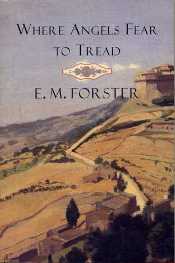
Where Angels Fear to Tread by E. M. Forster

She was silent. This cruel, vicious fellow knew of strange refinements. The horrible truth, that wicked people are capable of love, stood naked before her, and her moral being was abashed. It was her duty to rescue the baby, to save it from contagion, and she still meant to do her duty. But the comfortable sense of virtue left her. She was in the presence of something greater than right or wrong.

Lilia Herriton is sent on a trip to Italy by the family of her deceased husband, who hope that the exposure to culture might refine her sensibilities a little bit--and perhaps just get her out of their hair for a little while. But her rashness and poor judgment follow her to Italy, and word is cabled back to England that she has done the unthinkable: married an Italian, a passionate but indigent man who is the son of a dentist. Though the marriage is unhappy, it makes her more or less someone else's problem, until she commits another social faux pas--she dies--and her stepbrother Philip is compelled to travel to Italy to try to convince her widower to give up their infant son in exchange for money.

Where Angels Fear to Tread was Forster's first novel, and it's hard to recognize the author who would later write a book as mysterious and subtle as A Passage to India. The novel wears its influences much more on its sleeve, as first novels sometimes do, in this case the unmistakable whiff of Henry James pervades everything. The elements of culture clash between England and Italy are recognizable in A Room With a View, but Where Angels Fear to Tread lacks the sensitivity or moral urgency of that book. In fact, it sort of stinks. I found myself wondering the whole time if Forster wants us to really take seriously the motivations of Philip, his sister Harriet, and their accomplice Caroline Abbott, to steal away a baby for the simple reason that it couldn't possibly be appropriate to be brought up Italian.

In the end, I think the book spurns the provincial moralism I suspected it of having: Miss Abbott, then Philip, become convinced that their mission is mistaken as they get to know the father, Gino, better, and only the prudish Harriet cannot be budged. Harriet's intransigence leads to an ending I found outlandishly and disproportionately violent. But even still, the moral question at the book's heart--is it better for a baby to be brought up with civilization or love--seems so foreign to me to be almost incomprehensible, and makes the book seem ridiculous. But of course, other novels--like Henry James'--make the moral demands of Victorians seem compelling, if not sympathetic, so I think it's fair to say that Where Angels Fear to Tread simply doesn't work, and is the product of a writer who had yet to find his own real voice.

Tuesday, March 2, 2021

A Coin in Nine Hands by Marguerite Yourcenar

Well before Giulio, men had appropriated the labor of bees to offer the results to the gods; century after century, they had surrounded their holy relics with an honor guard of tiny flames, as they projected on their gods their own instinctive fear of the dark. Giulio's ancestors had needed rest, health, money, love: these unknown people had offered candles to the Virgin Mary in the same way that their ancestors, buried even deeper in the accumulations of time, had offered honey cakes to Venus' hot mouth. These flickerings had been consumed infinitely faster than brief human lives: some wishes had been denied; others, on the contrary, granted: the unfortunate thing is that, because wishes sometimes come true, the agony of hoping is perpetuated. Then, without asking for it, these people had obtained the only salvation that's certain, the dark gift that obliterates all others.

A single ten-lira coin, on a single day, in Italy in 1933, passes through the hands of nine people: A lovesick divorcee pays a prostitute; the prostitute, recently diagnosed with cancer, gives it to a pharmacist; the aged and weary pharmacist to the candle-seller at the church; the candle-seller uses it to buy hot coals from a woman planning to assassinate Mussolini; the would-be assassin gives it to her fascist ex-husband; her ex-husband buys flowers from an old street vendor; the vendor gives it to a visiting painter she believes to be a beggar; the painter gives it to a radical Russian caught up in the assassination plot; he chucks it into a fountain where it's found, at last, by a drunk.

The coin, which you might expect to have some symbolic quality it never really possesses, is more or less a gimmick that allows Yourcenar to sketch these many characters, their private desires and woes. More ties the characters together, in fact, than the coin itself, which provides a structural pattern rather than a thematic one: when the doctor Alessandro Sarte engages in a tryst with a woman in a dark theater, he cannot know that this is Angiola, the former wife of the divorcee and the sister of the candle-seller Rosalia. (He doesn't even know that Angiola is the same woman appearing on the screen of the movie, thinking only with contempt that she's a woman trying, with desperate makeup, to look like Angiola the actress.) The nine possessors of the coin are intimately connected with each other, but again and again they fail to recognize that connection. Connection, like the passing of the coin, is ephemeral; isolation is eternal.

Among other things, A Coin in Nine Hands is an effective snapshot of life in fascist Italy. The center of the novel--literally and metaphorically--is Marcella, the woman who has vowed to shoot Mussolini. The novel sketches both radicals and reactionaries, and both are haunted by the absence of a reformer named Carlo Stevo who is said to be near death on the prison island of Lipari. Marcella, a kind of lover-admirer of Stevo, knows that her attempt on Mussolini's life will mean the end of her own no matter what happens; there's something poignant in the way that the absent Stevo seems to loom larger in everyone's lives than the real people to and from whom the coin passes. I thought the most compelling sketch, though, was that of Mother Dida, the ordinary flower-vendor, who illustrates the way fascism is perpetuated. Politics pass only glancingly through the thoughts of Dida, who mulls over her failed marriages and estranged children, but who has convictions, both vague and strong, about Mussolini's reclamation of national strength.

The ten-cent lira is used to buy lots of things: sex, candles, flowers, coals, booze. At its end the novel feels curiously meager, as if nothing has really been purchased or obtained for all the coin's movement. Surely this is by design; a book of sketches like these is, at the end, a book of sketches, and though the lives of these nine figures overlap tightly the many lines between them create an emptiness, a loneliness, in them like the hole in the middle of a cat's cradle.

Monday, February 8, 2021

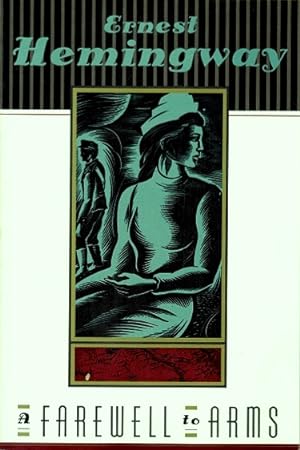
A Farewell to Arms by Ernest Hemingway

I was always embarrassed by the words sacred, glorious, and sacrifice and the expression in vain. We had heard them, sometimes standing in the rain almost out of earshot, so that only the shouted words came through, and had read them, on proclamations that were slapped up by billposters over other proclamations, now for a long time, and I had seen nothing sacred, and the things that were glorious and had no glory and the sacrifices were like the stockyards at Chicago if nothing was done with the meat except to bury it. There were many words that you could not stand to hear and finally only the names of places had dignity. Certain numbers were the same way and certain dates and these with the names of the places were all you could say and have them mean anything. Abstract words such as glory, honor, courage, or hallow were obscene beside the concrete names of villages, the numbers of roads, the names of rivers, the numbers of regiments and the dates.

Frederic Henry is, as Hemingway himself was, an ambulance driver in World War I. Henry is an American serving in the Italian army, seemingly for no other reason than he was bumming around in Italy at the time that the war began. In the novel's beginning, he falls in love with a British nurse named Catherine Barkley; when he's injured by a shell, Catherine is able to tend to him during his convalescence. Convalescence is itself a kind of idyll, a reprieve from the drudgery of war--even with the injury, Henry has not seen much that could be called horror--and Catherine ends up pregnant. When Henry recuperates and it cast back to the front to endure the bloody chaos of a long retreat, one in which the ashamed and defeated Italians have begun to shoot their own officers. It is a long and horrible road back to Catherine, and even once reconciled, they must hatch a plan to escape Italy.

Hemingway's writing seems so simplistic, and its character has become such a truism, that it's easy to forget how remarkable it is. No one has ever invented a better style than Hemingway's plain language for writing about war, an experience whose sheer awfulness cannot be emphasized, only concealed, by stylistic tricks. The wearying, interminable nature of Henry's journey from the alto piano back to Milan through the driving rain is reflected in that language, which at times seems like the writing of a man for whom all pretense has at last been stripped away. It belongs to the "proclamations" on billboards. And Henry/Hemingway cut through such pretense with horrible lucidity:

If people bring so much courage to this world the world has to kill them to break them, so of course it kills them. The world breaks every one and afterward many are strong at the broken places. But those that will not break it kills. It kills the very good and the very gentle and the very brave impartially. If you are none of these you can be sure it will kill you too but there will be no special hurry.

I'm no Hemingway expert, but I've often thought that his lit-Twitter critics often fail to understand him. He led a macho sort of life but his best works are often trenchant critiques of machismo, and A Farewell to Arms is one of the best critiques of the machismo that leads to war I've ever read. Its message is actually, at its heart, sort of simple: war is extremely stupid. Henry is absolutely unable to articulate to anyone why he participates in it, much less why he joined the army of a foreign country. Over and over again he is mistaken by Italians, who know no better, for something other than American: even a doctor at the hospital refuses to talk to him because he thinks he is an Austrian. By the end, it doesn't even matter; the alliances have broken down and the Italians, having failed to shoot the Austrians, simply settle for shooting other Italians.

I also thought Catherine was a marvelous character for an author who has a reputation for not writing well about women. I can see how others might disagree: she copes with war service by living inside of fantasies, and her relationship with Henry, while not a fantasy itself, becomes a vessel for these. When these fantasies break down we find behind them terrible presentiments of wreck: "I'm afraid of the rain," she tells Henry, "because sometimes I see me dead in it... And sometimes I see you dead in it." What's more, there's no doubt that what Henry and Catherine have is really love, the head-over-heels Hollywood kind.

I wasn't prepared for the ending of this book. I won't spoil it, even though I don't think you really ought to care too much about spoiling books that are a century old, because it hit me very hard. The world has seemed, to varying degrees, to be so heavy with death over the past year, and this past week has felt like this even moreso. I'm not sure I've ever read an ending that is so pitiless or without redemption. But that, too, is Hemingway's clear eye: war and death are pitiless and without redemption. There is no point to them, and when they come, there really isn't anything left to say.

Saturday, February 29, 2020

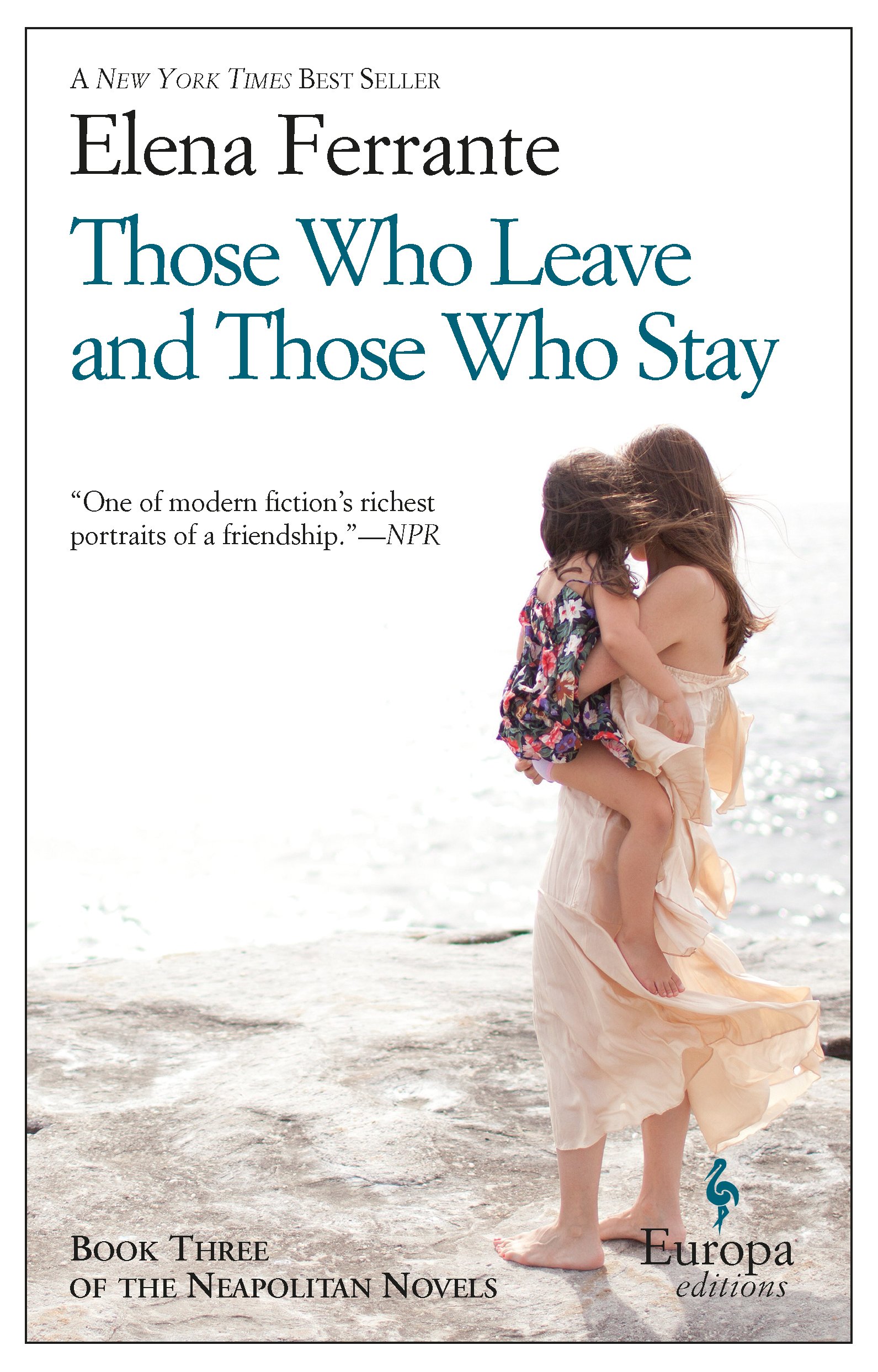
Those Who Leave and Those Who Stay by Elena Ferrante

Become.  It was a verb that had always obsessed me, but I realized it for the first time only in that situation.  I wanted to become, even though I had never known what.  And I had become, that was certain, but without an object, without a real passion, without a determined ambition.  I had wanted to become something--here was the point--only because I was afraid that Lila would become someone and I would stay behind.  My becoming was a becoming in her wake.  I had to start again to become, but for myself, as an adult, outside of her.

Those Who Leave and Those Who Stay picks up directly where its predecessor, The Story of a New Name, leaves off: the narrator, Elena, has just published a novel based on her experiences as a young girl living in Naples.  She has been catapulted to a kind of sudden fame, and she agonizes over every review, ping-ponged between elation, when they praise, and despair, when they condemn.  As it was in the second book, Elena's novel is a kind of funhouse mirror version of the Neapolitan novels themselves; it's hard not to read about the agony that being in the public eye brings Elena and and see a reflection of Ferrante, a pseudonym meant to get around exactly that kind of scrutiny.  Those critics who condemn the novel for being "risque" are condemning Elena's life itself, which has inspired it, and shaming young women's sexual development--it makes you wonder whether Ferrante's secretiveness is a way of keeping people like that at arm's length.

These books are so panoramic, so packed with event and detail, but when you take a step back, they're also so perfectly and neatly constructed.  The Story of a New Name ends with Elena triumphant and her friend Lila, in whose shadow Elena has lived, at her lowest, forced into a life of manual labor at a sausage factory.  Those Who Leave and Those Who Stay reverses the trendlines: ultimately, Lila becomes a respected expert in industrial computers, while Elena finds her literary success dwindling, and impossible to repeat.  Elena marries her boyfriend, Pietro, who turns out to be a pedant and a boor who expects Elena to care for house, home, and children so that he can focus on his academic work.  Elena has two daughters, and the life of a wife and mother squeezes the creative impulse out of her completely, producing a familiar despair.

Those Who Leave and Those Who Stay is the most political of the novels so far.  The sausage factory where Lila works becomes the focus of a battle between associated labor union-Socialist forces and anti-labor fascists.  The citizens of the "old neighborhood" fall on each side of the conflict, with Elena, Lila, Enzo, and the Communist agitator Pasquale on the left, and the sinister mafioso Solara brothers on the right.  Over and over again, Elena finds herself in the middle of internecine leftist squabbles.  The subject of these debates is always a little bit obscure, and you get the sense that Ferrante's not interested in advancing any theories of social change.

Instead, her subject is the way that all sides of these political battles--Camorrists, Socialists, petit bourgeois class traitors, students, whatever--treat women like trash.  Her old boyfriend Franco dismisses her novel as sentimental and irrelevant, not willing to understand that the lived experience of a woman at the bottom of the class hierarchy is exactly what revolution is about.  The bohemian Pasquale looks at Elena's bourgeois comfort and sees a class traitor, but he's not willing to see the way that patriarchy has diminished her.  Nino, the man whom Elena has loved secretly since the first book, leaves illegitimate children in his wake everywhere:

And so, in spite of his virtues, he was a frivolous, superficial man, an animal organism who dripped sweat and fluids and left behind, like the residue of a careless pleasure, living material conceived, nourished, shaped within female bellies.

And yet--spoiler alert--at the end of the book, Elena makes the rash choice to abandon her husband and children to be with Nino, who finally reciprocates her love.  It's a bad decision, probably a doomed one.  But who can blame her?  Will the results be worse than the slow crushing life of being Signora Airota?  The title takes on a double meaning: at first it seems to illuminate the difference between those, like Elena, who have left the old neighborhood for greener pastures, and those, like Lila, who have chosen to stay.  At the end it brings Elena and Lila back together, because they are those who left behind the suffocations and abuses of married life in the wild hope of freedom.  How that works out, I guess we'll see.

Monday, May 27, 2019

The Public Image by Muriel Spark

She responded then, and did it well, and was genuinely glad to cry; and then was driven home through intertwining dark-lit streets, under the high-flying white flags of washing that swayed from window to window of the old palaces.  The poisoner behind the black window-square, a man flattened against a wall with the daggers ready... she wondered how the film would end, and although she wanted to leave the cinema and go home, she wanted first to see the end.

Annabel Christopher is an up-and-coming actress.  She's more popular in Italy than in her native England, and her popularity depends on the careful cultivation of her public image.  In the Italian tabloids she's called "The Lady-Tiger," meaning someone who seems ladylike in public, but in private is passionate, demanding, strong-willed.  It isn't true, but it is funny: her public image has a public image of its own.

Her public image is also that of a married woman, part of a power couple in which she is the dominant figure.  Her husband Frederick, a not-very-talented screenwriter and small-time actor, seethes with jealousy at her popularity and acclaim.  He thinks that an "actor should be sincere in the part he play[s], and should emotionally experience whatever he was to portray, from the soul outward."  To him, Annabel is shallow and superficial, and people wouldn't think her acting was any good if they knew her like he did.  He's a hypocrite, of course, and his notions of public vs. private life are cartoonish.  Spark herself seems to agree with the director, Luigi Leopardi, who is "not at all concerned or cynical about the difference between her private life and her public image; he did not recognise that any discrepancy existed."

Spark relates the history of the Christophers' marriage from a birds-eye view, playing, perhaps, with the idea of superficiality itself.  That is, until Annabel learns that Frederick has thrown himself off a scaffolding at a church, killing himself inside a crypt of martyrs.  (The symbolism is as overwrought as Frederick himself, who sees himself as a martyr to Annabel's career, and who imagines that by this particular suicide he might penetrate into the reality of things, like falling into the crypt.)  His suicide is an elaborate attempt to undermine Annabel's public image: he has arranged for several guests to show up to a party at the time of his suicide, unbeknownst to Annabel, and has written several letters accusing her of throwing orgies.  His death is a bitter parody of Lise's death in The Driver's Seat, scrupulously planned and executed, an ironic attempt to control life through death.

The drama of The Public Image consists of Annabel's attempts to reassert control over her public image, and to fend off Frederick's jealous attack from the grave.  For the most part, it seems that she'll be successful: she collects the letters, denies that Frederick could ever have committed suicide, and tells the press that he was chased off the scaffolding by some number of lovesick fans.  Truth, of course, is never relevant, only the battle between two different narratives.  That's what's so hypocritical about Frederick's suicide: if he really wants people to see how Annabel really is, he fails utterly.

I found myself wishing the novel had unfolded in a more unexpected manner; after Frederick's suicide, The Public Image has few genuine surprises.  Annabel is able to control the narrative until the character who we always expected to betray her, does--another question of public versus private life.  Frederick's spectacular death stands at the center of the novel, comic and foolish, but making everything before and after it seem a little humdrum.

Sunday, May 26, 2019

Foucault's Pendulum by Umberto Eco

When we traded the results of our fantasies, it seemed to us--and rightly--that we had proceeded by unwarranted associations, by shortcuts so extraordinary that, if anyone had accused us of really believing them, we would have been ashamed.  We consoled ourselves with the realization--unspoke, now, respecting the etiquette of irony--that we were parodying the logic of our Diabolicals.  But during the long intervals in which each of us collected evidence to produce at the plenary meetings, and with the clear conscience of those who accumulate material for a medley of burlesques, our brains grew accustomed to connecting, connecting, connecting everything with everything else, until we did it automatically, out of habit.  I believe that you can reach the point where there is no longer any difference between developing the habit of pretending to believe and developing the habit of believing.

As a teacher, I get to hear about the Illuminati a lot.  Teenagers gravitate toward the idea of an all-powerful cabal of sinister folks, perhaps because they rarely find that they are able to exert control over their own lives, and it's easier to think that someone, somewhere is in charge.  But the truth is it's probably not a teenager thing; after all, you only have to spend a few minutes on Twitter to find folks who believe that an anonymous official called Q is leaving a trail of crumbs to a massive conspiracy to perpetuate child abuse at the highest levels of government, and the counter-conspiracy working to take it down.  That, too, is probably a response to a lack of agency, to the need to believe someone is really in charge.

Umberto Eco's novel Foucault's Pendulum is about that mindset, which has survived for thousands of years.  Eco places its origins in conspiracy theories surrounding the Knights Templar, a group of medieval crusaders who were forced to disband by a French king, and who some believe only disappeared underground.  The novel's protagonist, Casaubon, is an academic studying the Templars.  Eco's choice of name is pointed; like the Middlemarch reverend, this Casaubon is going to devote his life to a massive tome that connects all knowledge into a master theory.  With his associates Belbo and Diotallevi, who work at a vanity press, he composes a "Plan" which explains the links between the Templars and their later analogues: Rosicrucians, the Illuminati, Satanist, cabalists, Assassins, Mormons, Hitler.  They use the newfound power of computing to help them find unseen connections.  It's all in fun, for them, a way of mocking the kind of people who engage in such beliefs, and for whom nothing can ever be disproven because contradictory information is just a testament to how dangerous and hidden the knowledge really is.

The Plan says, in a nutshell, that the Templars knew of a secret power source related to the earth's magnetic field that could give those who wield it control over the entire earth.  They hid the information until it could be researched and harnessed properly, arranging over the course of nearly a thousand years to pass the knowledge to secret groups in several countries.  Somewhere along the way, the "handoff" was botched, leading to centuries of agitation and rivalry between neo-Templar groups.  But the actual nature of the Plan doesn't matter.  What does matter is that, while creating the Plan for laughs, the trio find themselves blurring the line between belief and disbelief, committing to the fantasy in ways they did not anticipate.  And then, when Belbo disappears, it seems that the Plan itself has come to life, or at least, those who genuinely believe in Templarite conspiracies have found them out and are hellbent on finding out what they know, even to the point of death.

All that drama happens in the last fifty pages of a 500-page book.  Most of the novel, although interspersed with convincing scenes of character history and drama (at one point, Casaubon moves to Brazil?) is devoted to the creation of the Plan, and even that doesn't really get named and explained until several hundred pages in.  What's impressive about the novel is that Eco doesn't make anything up that Casaubon doesn't also; the scraps of conspiracy theory and historical writings he uses to concoct the plan are all taken from historical sources.  The plot is secondary to Eco's attempt to create the conspiracy theory of all conspiracy theories, one which bridges thousands of years and hundreds upon hundreds of sources.  And while it doesn't make for gripping reading, exactly, it's breathtaking, and it makes Dan Brown look like a child scribbling on a placemat maze.

Casaubon's search for the missing Belbo leads him to the Foucault Pendulum at a Paris museum, a giant pendulum which, by its rotations, proves the rotation of the earth.  The pendulum rotates because, unlike the moving earth, it is hung from a truly fixed point, as immovable and fundamental as the name of God searched for by cabalists.  But even this is a kind of cheat:

"You see, Casaubon, even the Pendulum is a false prophet.  You look at it, you think it's the only fixed point in the cosmos, but if you detach it from the ceiling of the Conservatoire and hang it in a brothel, it works just the same.  And there are other pendulums: there's one in New York, in the UN building, there's one in the science museum in San Francisco, and God knows how many others.  Wherever you put it, the Foucault's Pendulum swings from a motionless point while the earth rotates beneath it.  Every point of the universe is a fixed point: all you have to do is hang the Pendulum from it."

"It promises the infinite," they go onto say, "but where to put the infinite is left to me."  What matters to Eco in Foucault's Pendulum is not the fixed point, but the need to fix a point at all, and the psychology that goes into choosing where to put it.

Monday, February 25, 2019

The Story of a New Name by Elena Ferrante

My friend tugged at her husband's arm with both hands.  She used all her strength, and I who knew her thoroughly felt that if she could she would have wrenched it from his body, crossed the room holding it high above her head, blood dripping in her train, and she would have used it as a club or a donkey's jawbone to crush Marcello's face with a solid blow.  Ah yes, she would have done it, and at the idea my heart pounded furiously, my throat become dry.  Then she would have dug out the eyes of both men, she would have torn the flesh from the bones of their faces, she would have bitten them.  Yes, yes, I felt I wanted that, I wanted it to happen.  An end of love and of that intolerable celebration, no embraces in a bed in Amalfi.  Immediately shatter everything and every person in the neighborhood, tear them to pieces, Lila and I, go and live far away, lightheartedly descending together all the steps of humiliation, alone, in unknown cities.

I'm just going to go head and lay a blanket spoiler warning here--I know how furious I would be if someone ruined these big honking bricks for me.  There's really nothing like a huge Tolstoyesque novel to suck you in, but so few books of this size really do; they rarely earn all that tree pulp.  I read 300 pages of this one in a car on Saturday on the way back from vacation.  At one point, the heroine, Elena Greco, writes a novel about her life to that point in a three-week fury of inspiration.  I'm pretty sure that's a little sly joke: at that point the two novels have run on for about seven hundred pages.  When does the older Elena lose her sense of economy?

My Brilliant Friend ends in the middle of the wedding of Lila (the titular friend) and Stefano Carracci, the local grocer.  The hated mafioso Marcello Solara walks in wearing the shoes that Lila designed and Stefano gave away, and it's there that the Carracci marriage effectively ends: Ferrante memorably calls Lila's wedding ring a "glittering zero."  But Lila's sudden loss of affection for her husband doesn't prevent Stefano from imposing the traditional demands of marriage: quarrels become beatings, sex becomes rape, children are demanded.  When children don't come, the neighborhood gossip holds that Lila has a kind of freakish power to psychically murder them in the womb.  More than anything, these novels are full of righteous rage about the ways that women are circumscribed by a male world.  Elena, noticing the masculinized features of Neapolitan women only a decade older, has a vision of men literally taking over women's bodies:

When did that transformation begin?  With housework?  With pregnancies?  With beatings?  Would Lila be misshapen like Nunzia?  Would Fernando leap from her delicate face, would her elegant walk become Rino's, legs wide, arms pushed out by his chest?  And would my body, too, one day be ruined by the emergence of not only my mother's body but my father's?

My Brilliant Friend is something like an exploration of how genius differs from talent; The Story of a New Name wants to show just how genius is stifled and exploded.  By the end of the novel, Lila is able to escape her marriage but at the cost of her comfort and safety.  She ends up stuffing sausages in a factory.  Meanwhile, Elena, perhaps lucky for having only talent and a more moderate beauty, ends up with something of the life she has dreamed: a university education beyond the walls of Naples, a successful novel.  And yet she cannot stop herself from wanting that flash of beauty and glamor that Lila possesses, even at her lowest.  It doesn't help that Lila embarks on an affair with the shrewd Nino, with whom Elena has been in love for years.  Is Elena's reluctance to stop the calamitous affair another sign of her own self-effacement before Lila or an accurate recognition that the couple's incendiary natures make a better match?

The novel moves almost effortlessly through time, dwelling for hundreds of pages on a single summer on the vacation island of Ischia and then gliding through years.  Ferrante punctuates the narrative with bursts of violence and shocking imagery.  Elena's boyfriend, terrified by fears of infidelity and military service, falls to the ground and begins stuffing dirt in his mouth.  In My Brilliant Friend, it's the shoes that bear all that symbolic weight; here it's a blown-up photo of Lila in her wedding dress that Stefano and the Solaras want to place in their glamorous new shoe store.  Lila asserts control over her image, her body, in the only way she knows how: by destroying it.  She insists on being allowed to amend the image if it's going to be hung, and obliterates it with modernist colors and shapes until only her eyes remain.  She self-destructs.

One of the most gratifying things about The Story of a New Name is that many of the characters from the first novel who blended together for me became much clearer.  There's dirt-eating Antonio, whose paranoia is only amplified by his time in the army.  There's the no-nonsense Enzo, whose love for Lila is sublimated into a kind of taciturn self-sacrifice.  Ada, the madwoman's daughter, craves Stefano for herself; Lila's sister-in-law Pinuccia lashes out at her husband because she can't admit she's fallen in love with someone else.  Like adults growing into themselves, these characters come alive and give the novel a Dickensian or Tolstoyan quality.  They're the main reason that the second novel might be even better than the first, although it's the troubling, neurotic, codependent relationship between Elena and Lila that anchors it.  It's amazing, in fact, that after 700+ pages, there's still enough complexity and uncertainty in this relationship to explore.

Tuesday, August 21, 2018

The Volcano Lover by Susan Sontag

But what could be more apt for this great collector of valuable objects than to have also been collecting the very principle of destruction, a volcano.  Collectors have a divided consciousness.  No one is more naturally allied with the forces in a society that preserve and conserve.  For the very excessiveness of the collecting passion makes a collector also a self-despiser.  Every collector-passion contains within it the fantasy of its own abolition.  Worn down by the disparity between the collector's need to idealize and all that is base, purely materialistic, in the soul of a lover of beautiful objects and trophies of the glorious past, he may long to be purged by a consuming fire.

William Hamilton is the British ambassador to the Kingdom of Two Sicilies, an Italian monarchy comprised of the island of Sicily and the lower part of the Italian peninsula.  He resides in an immense palace at Naples.  He is a collector; he collects paintings, sculptures, artifacts of historical or biological or geological importance.  He collects the volcano itself, in his way, building a huge windowed room backed with mirrors so that he might see it.  He makes pilgrimages to it, collects volcanic rock.  The volcano, of course, with its unpredictable nature and capacity for ruination, can't really be collected at all.  Experiences can be collected like lava rocks, but in the end the volcano will defy the attempt.  He knows all that, but then again, every collector knows that to really complete a collection is like a kind of death.  If you collect volcanoes, you'll never have that problem.

Hamilton--typically just called "The Cavaliere"--marries twice, once to a faithful woman who dies early, and again to a young and beautiful actress who captures his passion late in life.  His second wife, Emma, is renowned in Neapolitan society for her "attitudes"--a series of frozen tableaux in which she depicts, with uncanny likeness, the heroines of Greek myth.  She loves the Cavaliere, who's devoted to her, but the real love of her life is the British naval hero Horatio Nelson, who enters their life when Naples is threatened by French-style revolution and Napoleon in turn.  Nelson, "the hero," befriends the Cavaliere and falls in love with his wife.  The Cavaliere doesn't exactly like being the cuckolded husband, but as a life goes, it's not so bad.

The Volcano Lover is a meaty historical novel, which might seem like a strange production from someone like Sontag, who's better known as an essayist and a critic.  But much of it feels like an essay.  The historical Hamilton's passion spurs Sontag into a long meditation on collecting as an activity.  We find out that collecting: is a sport, it unites and isolates, is dissembling, is not about completeness, is both sociable and piratical, is menaced by the imponderables that can bring disaster, is lust, etc., etc.  A lot of these observations and digressions are fascinating.  But they are part of a narrative mode that keeps the characters at arms' length (they are the Cavaliere, the hero, the Cavaliere's wife, identifiable chiefly by their reputations) and divulges in a lot of intrusive anachronism (the destruction of Pompeii and Herculaneum are compared to the "twin urbanicide" of Hiroshima and Nagasaki).  I found it difficult to devote my entire attention to it.

Disaster comes for the Cavaliere not in the form of the volcano, but a human likeness of it: the French Revolution.  The French create a short-lived republic in Naples after driving the court, Hamilton included, to Palermo.  It lasts only a few months, but all three of the main characters become politically implicated in the bloody suppression of subversive elements after the city is recaptured.  Their reputations are shattered--except for Nelson's, never much more than his own legend, for whom Trafalgar is yet to come--and their recall to England is shameful and debilitating.  The Cavaliere's collections are lost when the French invade, and his wife lost to Nelson, but who could have foreseen that he'd lose even the volcano?

The novel ends with a series of first-person accounts: one by the Cavaliere and one by his wife.  These accounts, for me, signify a novel that might have been, one that lives up to the historical novel's promise of transport by dropping us into the consciousness of those who lived.  The Cavaliere is elegiac, his wife, resentful, and for good reason--she argues with some persuasiveness that, as is the fate of many women, she was never anything other than what people demanded her to be.  There's an account by her mother, which is especially tedious

 But the most interesting choice of the entire novel might be Sontag's decision to close it with a first-person account by Eleonora Fonseca Pimentel, an executed revolutionary who ran a newspaper for the Neapolitan republic.  We've just been wrenched into empathy for the Cavaliere and his wife, but Pimentel, on her way to the scaffold, wants us to cast a more suspicious eye.  "I had to forget that I was a woman to accomplish the best of which I was capable," she writes, as if jabbing a finger right into Emma Hamilton's eye, "Thus do all women including the author of this book."  She adds that she "cannot forgive those who did not care about more than their own glory or well-being.  They thought they were civilized.  They were despicable."  What is that but, volcano-like, an exploding of all the pretensions so carefully detailed over the 400 preceding pages?

Wednesday, June 27, 2018

My Brilliant Friend by Elena Ferrante

I missed only Lila, Lila who didn't answer my letters.  I was afraid of what was happening to her, good or bad, in my absence.  It was an old fear, a fear that has never left me: the fear that, in losing pieces of her life, mine lost intensity and importance.  And the fact that she didn't answer emphasized that preoccupation.  However hard I tried in my letters to communicate the privilege of the days in Ischia, my river of words and her silence seemed to demonstrate that my life was splendid but uneventful, which left me time to write to her every day, while hers was dark but full.

The most surprising and satisfying moment in My Brilliant Friend, the first of Elena Ferrante's critically lauded "Neapolitan" novels, is when Lina Cerullo, the shoemaker's daughter, calls the narrator, Elena Greco, "my brilliant friend."  It surprises because over the course of the novel, you assume that the "brilliant friend" of the title is not Elena but Lina: darkly beautiful, preternaturally confident, sharply intelligent, exceptional, detached, frightening.  It's Lina who, as a child, forces Elena to face her greatest fears by dropping her doll down a sewer grate, or making her walk up to the apartment of the terrifying mafioso who runs their working-class Naples neighborhood:

Not too long before--ten days, a month, who can say, we knew nothing about time, in those days--she had treacherously taken my doll and thrown her down into a cellar.  Now we were climbing toward fear; then we had felt obliged to descend, quickly, into the unknown.  Up or down, it seemed to us that we were always going toward something terrible that had existed before us yet had always going down toward something terrible that had existed before us yet had always been waiting for us, just for us.

When Lina proves to be the most intelligent student in the school, it's Elena's admiration for her that forces her to push herself in her studies.  Eventually, Lina leaves school to work in her father's cobbler's shop, but Elena stays on.  All of her success is, in a vague but meaningful way, attributable to Lina, either borrowed from her or achieved in competition with her, or perhaps both.  Ferrante manages to take a very basic idea--jealousy toward an exceptional friend, and the way that it can be mixed with admiration and love--and build from it a detailed and convincing life.  Elena's complex feelings toward Lina strike both positive and sour notes.  It's clear that Lina drives Elena to be exceptional herself, but there is something tragic about Elena's obsessive comparison with her friend, and with others: she can't even bring herself to believe in the Trinity because she can't conceive that the three aspects of God wouldn't be hierarchically ordered.  It's an obsession that manifests itself in the repeated, desperate accounting of how Elena compares to the other students in her school, and even well after Lina leaves school, it's Lina she's always comparing herself to.

Lina's exceptionalism drives Elena to imagine a world outside the poor Naples neighborhood in which they were born.  But Lina, while exceptional, is unable to propel herself out of the orbit of the neighborhood.  It's Lina who is drawn into the petty squabbles of local boys, and attracts the interest of the tinpot tyrants who basically run the community.  The reversal of fortunes happens slowly but convincingly, so that when Lina calls Elena her "brilliant friend," it alerts you, for the first time, that it is Elena who has been able to resist the punishing effects of poverty.

Ferrante's novels--my understanding is that they really are a single novel split into four parts--are very much the "it" books of the moment.  I usually react negatively to stuff like that, because I am a snob, and descriptions of the series didn't make them seem appealing.  But there's a darker streak running through these novels that I didn't expect and that I love: a streak of poverty, and death, and intergenerational hatred, all of which is somehow incarnated in the figure of Lina.  In many ways, too, reading My Brilliant Friend reproduces the feeling of sinking your teeth into a big fat Russian novel with a bunch of characters, or George Eliot at her best.  The accolades are, in this case, well-deserved.

Saturday, December 17, 2016

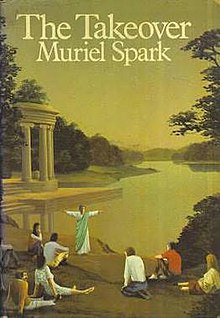
The Takeover by Muriel Spark

The two women were greeted occasionally by busy shoppers who passed and swept a glance, along with their smiles, at Agata's hard-done-by belly of shame, while the whole of eternal life carried on regardless, invisible, and implacable, this being what no skinny craving cat with its gleaming eyes by night had ever pounced upon, no tender mole of the earth in the hills above had ever discovered down there under the damp soil, no lucky spider had caught, nor the white flocks of little clouds could reveal hen they separated continually, eternal life untraceable and persistent, that not even the excavators, long-dead, who had dug up the fields of Diana's sanctuary had found; they had taken away the statues and the effigies, the votive offerings to the goddess of fertility, terracotta replicas of private parts and public parts, but eternal life had never been shipped off with the loot; and even the lizard on the cliff-rocks in its jerky fits had never been startled by the shadow or motion of that eternal life which remained, past all accounting, while Clara and Agata chattered on, tremendously blocking everyone's path although no one cared in the slightest that they did so.

Muriel Spark spent much of her life living in Italy with her companion Penelope Jardin; but even still her fiction tended to focus on the Scotland and the England of her relative youth.  The Takeover gives an image of what Spark might have been attracted to in Italy: one of its two protagonists, Hubert Mallindaine, lives on the secluded shores of Lake Nemi where he believes his ancestress, the goddess Diana, once roamed, and which is still redolent with the kind of nature she prized.  Hubert is in the midst of being thrown out by his old friend and landlady, Maggie Radcliffe, who wants to take possession of the house she has lent him; but Italian law makes this obscenely difficult.

Like most of Spark's books, that summary really doesn't get to the strange and complex things happening inside The Takeover.  It's a little longer than most of her novels, and Spark uses the extra space to people The Takeover with a rich caste of characters: the patriotic young noblewoman Letizia, the pansexual, perpetually aggrieved servant Lauro, Hubert's loyal but stupid secretary Pauline, even a couple of Jesuit priests who are strangely delighted when Hubert starts his own cult of Diana-worship at Nemi.  That's a Spark book for you: people never do what you expect them to; in fact, they do the opposite.  Just like the obscure lawyer who Maggie enlists to help her oust Hubert, only for him to abscond immediately to Hubert and offer him his two-timing services.  The effect is a book which can only be appropriately described as madcap.

The house which Maggie owns and Hubert inhabits turns out to have been built on the land of the servant Lauro's fiancee.  It is, according to Italian law, abusivo, illegal--it doesn't exist.  In the eyes of the law, it's pure fiction, and it doesn't really belong to anyone.  I think part of Spark's intention in The Takeover is to show just how deeply we are invested in things we feel are material, but really are not.  Maggie gives her fortune to be entrusted to a shady jetsetter with the excellent name of Coco de Renault; it disappears, spread among the balance sheets of hundreds of shady banks.  The connection Hubert feels to his home, and to Nemi, are pure imagination.  The wealthy set who make up the caste of The Takeover, Spark asks--what do they really own?  What do they look like when they are, in the words of King Lear, nothing but "unaccommodated man?"

It also has the benefit of being one of Spark's funniest books.  A late scene where Pauline interrupts one of Hubert's cult meetings, trying to ruin it by injecting a Bible verse, only for the whole thing to turn into a riot and an orgy, is especially satisfying.  And in her cynical, mordant way it can be quite insightful, as when she talks about Hubert's belief in his prayer to Diana:

...so ardently had he been preaching the efficacy of prayer that he now, without thinking, silently invoked the name of Diana for every desire that passed through his head, wildly believing that her will not only existed but would certainly come to pass.  Thus, like ministers of any other religion, he was estranged from reality in proportion as he mistook the nature of prayer, offering up words of praise, of gratitude, penitence, intercession and urgent petition in the satisfaction that his god would reply in kind, hear, smile, and wave a wand.  So that, merely because he had known in the past that the unforeseen stroke of luck can happen, and that events which are nothing short of a miracle can take place, Hubert had come secretly to take it with a superstitious literalness that the miraculous may happen in front of your eyes; speak the word, Diana, and my wish will be fulfilled.  Whereas, in reality, no farmer prays for rain unless the rain is long overdue; and if a miracle of good fortune occurs it is always at the moment of grace unthought-of and when everybody is looking the other way.

For a woman whose conversion to Catholicism is such a notable part of her biography, Spark always seems to look at religion with a jaundiced and pragmatic eye. 

I enjoyed The Takeover quite a bit.  I always worry that getting deep into an author's oeuvre will bear diminishing returns, that after you read the notable stuff you're just going to end up disabusing yourself of your admiration.  But The Takeover gave me hope that there's still some hidden gems in Spark's back-catalogue.

Tuesday, July 21, 2015

Territorial Rights by Muriel Spark

Tuesday afternoon.  Curran had spent the morning with his Italian lawyer who had been summoned overnight from Milan, and even with this old acquaintance Curran had seen the poison of Robert's missive working.  The man was plainly uncertain how much Curran had to hide.  If there were indeed two halves of a man's body in the garden of the Pensione Sofia, the lawyer pointed out, and should they be exhumed, it might be easy for Curran to deny knowledge of them, but certainly he would be involved in a scandal such as the newspapers of Europe would rejoice in for weeks on end.  Yes, said the lawyer, it was true, he was sure, that Curran had not murdered Pancev (imagine it!) but there was no doubt he had known Pancev well... Then, the question of drugs.  Boys and drugs.  Yes, the young man Leaver would eventually, of course, go to prison for calumny; that was, if he could be found, and if he could be proved to have written these accusations voluntarily.  But the publicity would be enormous.  On the other hand, if there were not two halves of a body...

'I'm afraid there are,' said Curran.

Robert Leaver is on a trip to Venice with his friend and, it is presumed, lover, the wealthy art dealer Curran, when he runs into his own father, who has skipped to Venice from their native England with his mistress.  Robert, disgusted, disappears, leaving behind both Curran and his girlfriend, the Bulgarian emigre Lina Pancev.  Soon, a series of incriminating letters find their way to Curran and others threatening to reveal Curran's involvement in the death of Lina's father, who--for reasons that are never clear--was cut in half and buried in the garden of the hotel Pensione Sofia decades ago.  Meanwhile, Robert's mother contracts a private investigation firm in England to find out what her husband and son are up to, but mostly sits at home reading trashy novels.

The cloak-and-dagger stuff is very much part of Spark's oeuvre, but here it is mostly toothless.  The death of Pancev is a red herring, a plot contrivance to keep Curran on edge and give the mysteriously omniscient Robert the air of a puppet-master, working from behind the curtain.  It does result in one memorable scene when Robert's letters persuade Lina, not knowing her father is buried beneath, to dance on the twin rose gardens of the back garden of the Pension Sofia.  But otherwise Robert's hijinks remain hijinks, scare tactics for the sake of scaring.  No money is moved; the only revelations occur to the reader, and they are slight ones at that.  In many ways Territorial Rights is a parody of a dime-store thriller novel, the kind old Mrs. Leaver reads because she is necessarily absent from the adventures of her husband and son.

Ultimately, this was one of the least compelling of Spark's novels.  The cast is too large, bogged down by characters both indistinct and unamusing.  Like her other works, the disparate parts barely seem to hang together, despite the novel's brevity, but unlike them, I don't really care to think about the ways they might be made to cohere thematically.  Venice as a setting is never vividly described or purposefully employed except as a blank space occupied by the moneyed classes, and might just have well been Ibiza or Stockholm or some other place.  Territorial Rights produces a few good moments--one is when Lina, having discovered that she has slept with a Jew, jumps despairingly into the canal--but that's about it.

Saturday, June 20, 2015

Innocence by Penelope Fitzgerald

Chiara and Salvatore quarrelled, but no successfully as they made love.  Chiara had no gift for quarrelling at all and could scarcely understand how it was done, nor, really, had Salvatore, since his argument was with himself and he was therefore bound to lose.  When they had torn up the grey dress together in the hotel they had hardly known whether they were for or against each other.  When Salvatore's temper rose Chiara become not frightened but reckless, as when driving through the city's traffic.  They knew each other, to be honest, so little, and had so few memories in common (the concert, the limonaia, the wedding) that they had to use them both for attack and defence.  They loved each other to the point of pain and could hardly bear to separate each morning.  The bed was on the narrow side so that it was impossible to lie for very long back to back or six inches of hostility apart.  This led to truces or reconciliations of a kind, rather too easily made...

Salvatore and Chiara never quarrelled twice on the same subject.  Each battle, as it closed, was recorded in their memories, as in an elementary history book.  In these books you usually get three or four causes of hostilities given, and afterwards three or four results, which have to be learned by heart.  It must have been eight weeks or more before there was any kid of dispute between them in public.

Chiara Ridolfi is the daughter of a Tuscan Count, whose noble family is not quite as wealthy as it once was.  Salvatore Rossi is a no-nonsense doctor, brought up in poverty in the south of Italy.  These two meet, only briefly, at a piano concert, but afterwards neither can stop thinking of the other.  After a strange and abortive courtship, which consists mostly of creepy stalking, they get married, only half understanding each other.  In another novel, this might be a recipe for disaster, or tragedy, but Fitzgerald is optimistic about human beings' abilities to reach out from the social bubbles in which they are born in live.

The novel opens with an account of the Ridolfi family, whose estate Ricordanza ("remembrance," appopriately) is still flanked by a pair of stone midgets that represent Chiara's little-person ancestors:

With great difficulty and many enquiries the Ridolfi followed up reported instances of midget families, so that by the time she was six their only child had a retinue suitable to her position, a tiny governess, a tiny doctor, a tiny notary, and so forth, all to size.  The child never went out, and was confident that the world consisted of people less than 1.3 metres high.  To amuse her, a dwarf (not a midget) was sent for from Valmarana, but without success.  She pitied him, because she thought that he must suffer knowing that, as a dwarf, he was different from anyone else at Ricordanza.  Then, in trying harder and harder to make her laugh, he fell and cracked his head, which made the little girl cry so bitterly that he had to be sent away.

Like the midget Contessa, both Chiara and Salvatore have difficulty engaging with those beyond their own small universes, but their infatuation for each other compels them to new worlds.  Chiara is young, unsure, and somewhat insulated by her class.  Salvatore is formed by the indignity of his childhood poverty, and the memory of his father's ardent Communism.  There is a great scene in which the young Salvatore visits the Italian Communist leader Gramsci, whom his father idolizes, during the last days of the dehabilitating illness that eventually killed Gramsci:

Salvatore knew by now the question he ought to put... He was quite well used to being told to put questions, as well as answering them, in the presence of a school inspector.  That was simply a matter of knowing what was wanted.  The more important these men were, the easier it was to reply.  ne of them had told the whole class to remains tanding and to answer the question in the first liens of the Fascist Chorus of Youth: "Duce, Duce, when the time comes, who will not know how to die for you?"  Impossible to go wrong there.  But Salvatore had also half-absorbed from the long droning evenings in the passage room, and form what they had earnestly tried to explain to him, the concerns of his father and Sannazzaro.  Suppose he tried: "Comrade Gramsci, sir, when the time comes, who will not want liberty?"

Courage.  But the words he had formed in his mind suddenly made themselves scarce, and still wanting and intending to say something quite different he asked loudly: "Why are you bleeding?"

Salvatore's experience seeing his father's idol disintegrate taught him to be beyond both sentiment and politics, and to cling to what is rational.  This is what makes him a great doctor, but also an irascible person, and unable to relate easily to other people:

"I've been told she has an aunt, an eccentric, possibly of unsound mind.  Don't you think that Chiara should be forcibly separated from her?"

"You can't expect me to have an opinion.  But if she has an aunt, I suppose it's natural that this young woman should be fond of her."

"Natural!  It's not natural, Nature is something quite else.  Do you think that a horse, or a pigeon, is fond of its aunt?  Could it recognise its aunt as such?"

"Perhaps not, but in ordinary human society..."

"So you're trying once again to distinguish us from the rest of animal creation," cried Salvatore in tones of angry satisfaction.  "You renounce behaviorism.  Is that what I'm to understand?"

Salvatore's a terrific, completely realized character, in a book full of them.  I'm consistently impressed by Fitzgerald's ability to draw vivid, human characters, even at the edges of the novel: Chiara's brash English friend Barney, her taciturn cousin Chiara, the servant, Bernardino, who is under the impression that he is the actual owner of the Ridolfi estate.  Fitzgerald is good at creating the impression that, rather than dictating the actions of her characters, she simply makes them and then lets them loose, and the plot results organically from their human interactions.

I realized after finishing this novel that there are only two novels by Fitzgerald, who didn't start writing fiction until she was in her sixties, that I haven't read.  That makes me deeply sad.  Every time I finish one of her books I want to find another, and read it immediately, but I think in this case I need to practice the virtue of delayed gratification.