Thursday, July 23, 2009

More mini-reviews + one that got a little out-of-hand

The Amazing Adventures of Kavalier & Clay by Michael Chabon
Kavalier & Clay tells the story of two Jewish cousins in 1940s Manhattan and their rise to the top of the Comic book industry. Joe Kavalier, a refugee from Nazi-occupied Pargue, is the artist while Sammy Clay provides the storylines. Kavalier & Clay won the Pulitzer Prize and I understand why. I thoroughly enjoyed this novel. The writing is sharp and witty and the story moves a long nicely. I'm not a comic book fan, myself, but you walk away from the story with an idea of how comics developed from glorified magazine advertising into the multi-million industry that Hollywood has taken such a shine to. Its a bit thick at 650 pages but I would recommend The Amazing Adventures of Kavalier & Clay to anyone.

The Summer of '49 by David Halberstram

To borrow some baseball terminology (as Halberstram did so often it became cheesy), this book was right in my wheelhouse. It's about three things that I really love: Is it about baseball? Check. Is it about the New York Yankees? Check. Is it about the New York Yankees beating the Boston Red Sawks? Check. Really as far as it goes for me... That's all I need from a book. If you're not a big baseball/Yankees/sawks fan than I don't know if I'd recommend this to you. The writing is a little corny. Actually it's a lot corny. But then I guess the 40s were kind of a corny time.

Air Force One is Haunted by Robert Sterling

Okay this book was just out of control remix. I found it in a bin of English language books in Paris for 2 Euro and I had to pick it up because I thought it was the best title I've ever seen (that KILLS Snakes on a Plane). As soon as I started reading it I decided to mark passages with ridiculous &%$@ and terrible writing. If I posted every one of those passages in here it'd be by far the longest post in this blog's history. The hits just kept coming. First off here's what's written on the back;

---AT HOME,---
the most devastating depression since the 30s has stricken the nation.
---ABROAD,---
the Soviets have signed a nonagression pact with China and now move toward the final showdown with America.
---IN SPACE,---
The United States has perfected the ultimate anti-missile defense system.

With a devastating first strike against Russia, President Jeremy Haines can end all his troubles... Or can he?

Aboard Air Force One, the President receives his answer - from the living apparation of another President, dead many years. Complete with his famous laugh and steel crutch. A man for all crises, especially depressions and world wars.

So essentially the President can wipe out the Russians but he has to decide if he wants to kill a bunch of innocents. So FDR's ghost starts visiting him on Air Force One for some reason. He's very helpful. The president sees a female psychiatrist. She's hot. They fall in love and eventually bang. This gross breach of doctor-patient decorum is addressed for like 3 lines and then never brought up again. Oh yeah, turns out the protagonist decides NOT to vaporize a couple million Rooskies and comes up with a clever ploy to secure peace. Also for some reason FDR tries to talk the President into melting Asia into a big piece of glass. No real explanation for that either. Love it.

As soon as I started the book I knew the first chapter was going to start with the President telling someone (turned out to be a shrink) that he was seeing a ghost. But they wouldn't name the ghost... Not just yet. And then the last line of the chapter would be something like... "What does the ghost looke like?" "You're not gonna believe this... But it's Franklin Delano Roosevelt,"

That's almost word for word what happened. This book has so many god-damned gems I don't even know where to start. But here's two or three that I can't help but post:

Washington observers, surprised at Collison's open insubordination, were stunned at the President's Milquetoast reaction. "Haines carried turning the other cheek too far," the Washington Post grieved. There is growing belief in world capitals, including America's, that Jeremy Haines has lost his ability and even his will to lead. If this is true, Franklin Delano Roosevelt must be turning over in his grave.

This one wasn't even in the book, it was in the prologue! We're only on page xv and it's already laughable! This next one is describing McNulty, the hard-nosed but loveable Secret Service agent, outside of the President's chambers after FDR's first visit.

...Or he was talking to someone else just before Cardella checked and didn't want to tell the pilot who it was. That had to be it... Excpt that his Irish intuition kept telling him something was wrong.

Irish intuition? Is that like Spidey-sense?

The Speaker chuckled, "I'll admit that most Congressman couldn't keep a secret longer than a nympho can hang onto her virginity, but that doesn't include yours truly...

Hahahahahahaha. Okay last one I promise (I'm sorry but I literally have over 50 passages like this marked and it's so hard to pick and choose).

'Good luck, and keep me informed,' Rafferty said. But for a long time after Duane Collison left, the Speaker of the House sat in his study, brooding. In the bowels of his conscience was a gnawing ulcer of doubt.

Yup. Final notes:

1) I don't think Robert Serling knows what ubiquitous means.
2) Wasn't TR the Roosevelt that said 'Bully?' Because FDRs ghost says it about 10 times in here and it'd be brilliant if Serling screwed the pooch on that one too.
3) If you can get your hands on this book, do it. I read it in like 3 hours and it was about as much fun as I've ever had with a book. It was like reading a Nicolas Cage film.

Sorry - I have to include this. This was on the page following the novel's wonderous finish:

NOW THAT YOU'VE ENJOYED THIS BOOK, DISCOVER OTHER EXCITING PAPERBACKS FROM ST. MARTIN'S PRESS:
- Must reading for all fans of the star of Deliverance and Smokey and the Bandit -
BURT REYNOLDS: An Unauthorized Biography by Sylvia Safran Resnick
"No respectable Burt Reynolds fan should miss it" - Asbury Park Press
"A lot of goodies that manage to show some insight of the man behind the hunk." - Fresno Bee

:)

Monday, July 20, 2009

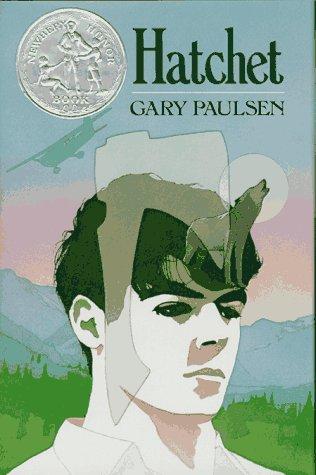
Hatchet by Gary Paulsen

Destroyed.

The word came. I would have been destroyed and torn and smashed. Driven into the rocks and destroyed.

Luck, he thought. I have luck, I had good luck there. But he knew that he was wrong. If he had had good luck his parents wouldn't have divorced because of the Secret and he wouldn't have been flying with a pilot who had a heart attack and he wouldn't be here where he had to have good luck to keep from being destroyed.

If you keep walking back from good luck, he thought, you'll come to bad luck.


I wanted to read Hatchet because I was a big fan of Dogsong, which I thought stood out as one of the best pieces of YA fiction I'd ever read. Hatchet is cut much from the same cloth: it is essentially about a boy having to survive in the wilderness, and through that survival he comes to what I suppose you could call manhood, or at least a greater understanding of himself and his world.

In Dogsong, the main character was trying to recover a way of life lost to his Eskimo kin; here in Hatchet, survival is an unwelcome necessity: Brian Robeson is on his way to visit his father in the Canadian oil fields when the pilot of the single-engine plane carrying him has a heart attack and Brian is forced to land the plane in a lake. All Brian has with him is a hatchet, with his mother--quite fortuitously, I might add--gave to him for his birthday. He also carries with him, in the metaphorical sense, a Terrible Secret that actually turns out to be a Pretty Banal Secret: He saw his mom kissing another man, which he knows (but his father does not) is the reason for his parents' impending divorce.

That causes him some added discomfort at the lake, but soon it fades into the background as Brian is forced to learn how to survive on his own--he quickly figures out how to forage for berries, and through a long, painstaking, incremental process figures out how to use the hatchet to build shelter, start a fire, catch and cook food. By the end of his ordeal, which lasts for a couple of months, Brian is a tanned, fit survival expert. It's like Survivor Man for the tween set.

There was a mystical element to Dogsong that helped it transcend its genre; Hatchet could have used something similar. What Paulsen accomplishes--a gripping YA book almost completely without dialogue--is arresting enough, but it seems awfully plain in the other novel's shadow. Its most glaring flaw is the awful subplot about Brian's parents and their divorce, which is completely useless, wisely dropped early on, and never resolved--only briefly referenced in the postscript. Still, it has a pretty solid pedigree as a YA book; but as I told Brent, don't waste your time if you haven't read Dogsong, which is its superior in every way.

Sunday, July 19, 2009

The Associate by John Grisham

“Duquesne University. Five years ago. Drunk frat boys and a girl.”
Kyle’s body and mind had different reactions. His body conceded— a quick slump of the shoulders, a slight gasp, a noticeable jerk in the legs. But his mind fought back instantly. “That’s bullshit!” he said, then spat on the sidewalk. “I’ve already been through this. Nothing happened and you know it.”
There was a long pause as Ginyard continued to stare down the street while Plant watched their subject’s every move. Kyle’s mind was spinning. Why was the FBI involved in an alleged state crime? In second-year Criminal Procedure they had studied the new laws regarding FBI interrogation. It was now an indictable offense to simply lie to an agent in this very situation. Should he shut up? Should he call his father? No, under no circumstances would he call his father.
Ginyard turned, took three steps closer, clenched his jaw like a bad actor, and tried to hiss his tough- guy words. “Let’s cut to the chase, Mr. McAvoy, because I’m freezing. There’s an indictment out of Pittsburgh, okay. Rape. If you want to play the hard-ass smart-ass brilliant law student and run get a lawyer, or even call your old man, then the indictment comes down tomorrow and the life you have planned is pretty much shot to shit. However, if you give us ten minutes of your valuable time, right now, in the sandwich shop around the corner, then the indictment will be put on hold, if not forgotten altogether.”

This weekend, while visiting with family in Charlottesville, I picked up local author John Grisham's latest legal thriller off my grandma's shelf. Three-and-a-half hours later, I was done with my first ever Grisham novel. It was short and exciting, pretty much all I was expecting.

In The Associate, Kyle is a brilliant law student headed for a public-interest job when a secretive fellow named Bennie approaches him with a threat. Take a job at Scully, a prestigious firm defending a defense contracter in a top-secret case or face having a video leaked that connects Kyle to a possible rape that occurred five years ago. Kyle takes the job and becomes an associate at the largest law firm in the world, the fictional Scully, something and something. He is introduced to the world of Document Review and billable hours immediately, and also the world of billing a client for black cars, $2400 dinners, and 2500 hours a year (that's 50/week not counting non-billable time spent in the office and vacations). The young associates are told that the divorce rate for their "class" is 70% and that only ten percent will ever make partner. The rest would burn out way earlier or be asked to leave the firm.

In between sticking it to corporate clients and hating life, Kyle also has super fun biweekly meetings with Bennie in which the latter threatens Kyle with the video unless he ratchets up the sketchiness and starts getting B what he wants: top-secret shit. Meanwhile, Kyle's phone, car and home are all wire-tapped so he has to go out of his way to meet with old fraternity brothers also implicated in the video. One of them, fresh off rehab, feels so guilty about the issue that he tells Kyle he's going to apologize to the girl (who has a lawyer and is amping for a criminal or civil case) - only to wind up shot to death in an interstate restroom, victim of Bennie's associates who want him to be quiet (or their deal with Kyle is up).

Kyle, realizing how serious the situation is -blackmail, extortion, murder - contacts an attorney of his own, who hears his story and decides to involve the FBI to catch Bennie et. al. They set up an elaborate sting that involves Kyle going along with the plans to steal corporate secrets, and offering the girl from the video a hefty sum to drop the matter. With his incentive to work for Bennie gone, Kyle cooperates with the FBI to catch Bennie...but the plan fails and B escapes. The books ends when Kyle has quit the big firm and declined a position in the federal witness protection program, instead choosing to open a small-town law firm with his dad. Aw.

This book has been billed as a return to formula for John Grisham, the sort of tight legal thriller that made him famous (interesting tidbit: my grandma has lived in Charlottesville since forever and says of the Grishams, who moved there in the 1990s: "I have never heard anybody say anything ugly about that family. They are good people." So there's that too.) I have to say, I can definitely see why the formula works: this book was a great, quick summer read that had just enough substance to keep me interested.

Raise High the Roof Beam, Carpenters and Seymour: An Introduction by JD Salinger

The first night, just this last week, that I felt quite hale and bullish enough to go back to work on this Introduction, I found that I'd lost not my afflatus but but my wherewithal to continue to write about Seymour. He'd grown too much while I was away. It was hardly credible. From the manageable giant he had been before I got sick, he had shot up, in nine short weeks, into the most familiar human being of my life, the one person who was always much, much too large to fit on ordinary typewriter paper--any typewriter paper of mine, anyway.

Leave it to Salinger to put these two works together--works that, like Franny and Zooey, form two halves of something much more cohesive--and leave the one called "Introduction" for last. There is a great irony to that title, not only because this is the last book-length piece Salinger published, but by the time the narrator of Seymour: An Introduction sits down and begins to write, Seymour has already been deceased for decades.

Both of these novellas are about Seymour from the perspective of his brother, Buddy, and both are marked by Seymour's absence. In Raise High the Roof Beam, Carpenters, Buddy recalls taking leave from the army to attend Seymour's wedding in New York, but Seymour never arrives and somehow Buddy gets trapped in a car with the Matron of Honor and other members of the bride's wedding party, most of whom have a very poor opinion of the absent Seymour. Seymour: An Introduction is a more comprehensive treatise on Seymour, covering only the early parts of his life and written well after Seymour's suicide.

In a manner of speaking, Seymour's presence and absence define much of Salinger's works about the Glass family: He appears in two works, "A Perfect Day for Bananafish," which recounts his suicide, and "Hapworth 16, 1924," a late Salinger novella written from a young Seymour's perspective. And yet, he is the subject of these two novellas, and casts a long shadow in death over the events of Franny and Zooey; in Introduction, it is suggested that Buddy is the author of Catcher in the Rye, which casts the relationship between Holden Caulfield and his dead brother Allie in a new light.

These two novellas make it clear that Buddy is somewhat in awe of his brother. Though all the Glass siblings are invariably intelligent--one recurring references in the books is to a radio roundtable show, "It's a Wise Child," in which they all took part as children--Seymour occupies a singular place. Buddy describes him as a poet, sometimes literally, but often simply possessing of a poet's soul, deeply wise in the manner of Zen Buddhists. The title of the first novella comes from a line in Sappho, which Buddy's sister Boo Boo leaves in a note for Seymour on his wedding day:

Raise high the roof beam, carpenters. Like Ares comes the bridegroom, taller far than a tall man.


Taller than a tall man--this describes Seymour perfectly, not just on his wedding day, but as the figure which towers over all of the other Glass siblings as the pinnacle of wisdom, kindness, and self-sacrifice. In Introduction Buddy is continuously apologizing for his efforts, as a writer, to place himself in the same spotlight, as his brother, but there are conflicting desires here: One, to step out of the way and let the world see Seymour for the genius that Buddy believes he is, and two, to be recognized in the same way. Buddy reprints a letter Seymour wrote to him in which Seymour affirms their connectedness:

The membrane is so thin between us. Is it so important for us to keep in mind which is whose? That time two summers ago when I was out so long, I was able to trace that you and Z[ooey] and I have been brothers for no fewer than four incarnations, maybe more. Is there no beauty in that? For us, doesn't each of our individualities begin right at the point where we own up to our extremely close connections and accept the inevitability of borrowing one another's jokes, talents, idiocies? You notice I don't include neckties. I think Buddy's neckties are Buddy's neckties, but they are a pleasure to borrow without permission.


There is a valid temptation here, I think, to see Seymour and Buddy as facets of Salinger himself--on one side, the transcendent philosopher, and on the other, the very human writer. Perhaps there is a Buddhist-like attempt here to separate the lofty from the ordinary, and throw the ordinary away, but the very nature of these novellas affirms that the two are inextricably connected. The question that remains is why Seymour, whom Salinger paints as brimming over with joy, wisdom, and kindness, chose to commit suicide. I often think that the answer to that question, if we could find it, might provide some sort of answer to the question of why Salinger has silenced himself for the past fifty years.

In any case, I think that Seymour: An Introduction might be the best thing that Salinger ever put out. It's written in a sort of stream-of-consciousness fashion, not like Joyce, but as close to stream-of-consciousness as a writer as mannered and minimalist as Salinger could achieve. I recommend it highly.

Saturday, July 18, 2009

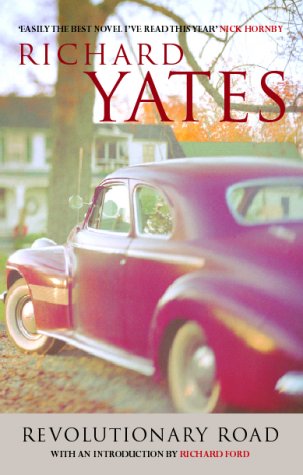
Revolutionary Road by Richard Yates

Could a man ride home in the rear smoker, primly adjusting his pants at the knees to protect their crease and rattling his evening paper into a narrow panel to give his neighbor elbow room? Could a man sit meekly massaging his headache and allowing himself to be surrounded by the chatter of beaten, amiable husks of men who sat and swayed and played bridge in a stagnant smell of newsprint and tobacco and bad breath and overheated radiators?

Hell, no. The way for a man to ride was erect and out in the open, out in the loud iron passageway where the wind whipped his necktie, standing with his feet set wide apart on the shuddering, clangoring floor-plates, taking deep pulls from a pinched cigarette until its burning end was a needle of fire and quivering paper ash and then snapping it straight as a bullet into the roaring speed of the roadbed, while the suburban towns wheeled slowly along the pink and gray dust of seven o'clock. And when he came to his own station the way for a man to alight was to swing down the iron steps and leap before the train had stopped, to land running and slow down to an easy, athletic stride as he made for his parked automobile.

Revolutionary Road
is a desperately sad book, and sadder for its realism: Here is the story of Frank and April Wheeler, a young, good-looking couple with small children living a plain life in the Connecticut suburbs outside of New York City. Frank and April are bright and well-educated, and both yearn for something more than a life as excruciatingly ordinary as the one they have, and rightfully so: Yates' depiction of the suburbs is almost paralyzing in its dullness. And yet at the same time, Frank and April are so cavalier and spiteful about their surroundings, even when trying not to be, they come across childish, and their aspirations lead them to quarrel and ultimately into tragedy.

What is horrifying about Revolutionary Road is that Frank and April are more everyman and everywoman than they suspect; or at the very least everyman-or-woman-who-might-pick-up-this-novel. Their suspicions of suburban life walk a narrow line between legitimacy and egoism, falling alternately into one realm or the other and exposing how similar the two can be. To indict Frank and April is to indict anyone who has entertained, as Frank and April do, the notion of pulling up stakes and moving to Europe (and admit it--haven't you?).

Frank and April decide to do exactly that, jobs and children be damned, and we must wonder whether they would have gone through with it if not for a single event that complicates things mightily (and which I shall not reveal). The scuttling of this plan leads to the widening of the already apparent rift between the two, to the escapism of adultery, and finally serves to cast a light on the futility, emptiness, and frustration that characterize suburban life. The final act is unbearably gruesome, but grimly appropriate.

I didn't love Revolutionary Road; it was too bleak for me. I can handle a book like The Road, which is horrifying and grotesque but takes place in a world that seems far removed from our own, but the world which we do inhabit has only become more like Revolutionary Road in the past fifty years. Yikes.

N.B.: Christopher Hitchens' recent review for the Atlantic Monthly is excellent.

Thursday, July 16, 2009

This Year You Write Your Novel by Walter Mosley

The first thing you must know about writing is that it is something you must do every day-- every morning or every night, whatever time it is you have. Ideally, the time you decide on is also the time you do your best work.


This Year Write Your Novel was a wedding gift to me from Carlton, who was under the impression that this was a new, more abstract Easy Rawlins novel. After reading the book once and being completely confused about the plot, I tried again and realized that it works best as an instructional book rather than a traditional narrative.


The book exists in some writing netherworld between The Elements of Style and something like Bird by Bird, but is probably closer to the former then the latter. The bulk of the book, such as it is, is mostly concerned with fairly basic ideas, like “write every day” and “write honestly.” The instruction is clearly written and enjoyable to read, and Mosley has a distinctive voice even in this setting, coming across as a gruff, grandfatherly figure who's been around the block a few times.


There are pros and cons to Mosley's approach. On the one hand, the book is slim and quite readable, and it inspired me to begin a couple writing projects I've been putting off. On the other, there isn't much here that anyone who's read a couple other good writing books doesn't already know. Ultimately, This Year is most suited for brand new writers who have no idea where to start, or experienced writers who just need a kick in the pants. I'm the latter, so it was worth it for me.

Monday, July 13, 2009

The Sound and the Fury by William Faulkner

"I give it to you not that you may remember time, but that you might forget it now and then for a moment and not spend all your breath trying to conquer it. Because no battle is ever won he said. They are not even fought. The field only reveals to man his own folly and despair, and victory is an illusion of philosophers and fools.”


Last year, after several aborted attempts, I finally made it through Faulkner's As I Lay Dying. It took some doing, but by the time I finished it, I was really enjoying Faulkner's mastery of the stream-of-consciousness style and especially his lyrical writing. I intended to follow up with The Sound and the Fury, but then I read Chris's review and, since it sounded approximately 10x more difficult than As I Lay Dying, I wussed out... until now.


The Sound and the Fury may be Faulkner's best known and most critically acclaimed work, and also his most complex, although this is coming before I've read Absolom Absolom. It follows one family, the Compsons, over about a decade. The actual storyline is a dark southern Gothic tale of family, betrayal, incest, and a mentally retarded manchild. So it's basically Anne of Green Gables.


The actual narrative is tough to summarize, and at some points, even to follow--I found out upon reading chapter summaries that I'd completely missed a major event; the book is really more about the characters and the way thy see and interact with one another than a storyline. Each section of the book is narrated by a different character, except the last which has an omniscient third-person narrator. The first section is narrated by Benjy, the aforementioned manchild who has no sense of time or place and whose narration skips from the past to the future without warning. The second is narrated by Quentin Compson, the neurotic, intelligent younger brother, and the third by Jason Compson, the cruel, cynical eldest child who takes an iron fist control over the family after the death of the father. Tying all these disparate narrators together is the enigmatic figure of Caddie Compson. Even with three different perspectives on her, we never get a firm grasp on what she actually is. To Quentin, she represents his repressed incestuous thoughts, but also his need for security and to protect. To Benjy, she is his only steady link to the real, linear world. To Jason, she is a thankless whore whose only contribution to the family was Quentin II, her illegitimate child and the bane of Jason's existence.


The Sound and the Fury is a tough book, both narratively and thematically. The Compson family and their neuroses are fully explored and the story itself is both intense and moving, but the actual heft of the book eludes me. At a base level, it seems to be about family and what constitutes it. Benjy, for example, is a much better brother to Caddie than Jason, and Dilsey, the Compsons' slave, is more of a mother to all the children than their own biological mother. I can't help but feel there's a lot that I'm missing here. Unlike Chris, I did feel myself connected to this band of misfits, but much like Benjy, I can't quite tie it all together.


I'm not sure my review makes it clear how much I enjoyed this book, but I thought it was great, and even enjoyed the Benjy section, which a lot of readers find offputting. Faulkner is a master stylist, and it was worth reading just for that, even if I can't quite figure it all out.

Saturday, July 11, 2009

The Woman in White by Wilkie Collins

My first glance round me, as the man opened the door, disclosed a well-furnished breakfast-table, standing in the middle of a long room, with many windows in it. I looked from the table to the window farthest from me, and saw a lady standing at it, with her back turned towards me. The instant my eyes rested on her, I was struck by the rare beauty of her form, and by the unaffected grace of her attitude. Her figure was tall, yet not too tall; comely and well-developed, yet not fat; her head set on her shoulders with an easy, pliant firmness; her waist, perfection in the eyes of a man, for it occupied its natural place, it filled out its natural circle, it was visibly and delightfully undeformed by stays. She had not heard my entrance into the room; and I allowed myself the luxury of admiring her for a few moments, before I moved one of the chairs near me, as the least embarrassing means of attracting her attention. She turned towards me immediately. The easy elegance of every movement of her limbs and body as soon as she began to advance from the far end of the room, set me in a flutter of expectation to see her face clearly. She left the window—and I said to myself, The lady is dark. She moved forward a few steps—and I said to myself, The lady is young. She approached nearer—and I said to myself (with a sense of surprise which words fail me to express), The lady is ugly!

The hardest types of books to write reviews for are not the complex, thematically deep ones where the biggest problem is how to reduce the book into 500 words and do it justice. Nor are they the godawful disappointments, which at least lend themselves to kvetching, always a treat for the vitriolic reviewer. No, the most difficult is the excellent book damned with the faint praise of "Good for what is is"; the well-charactered, well-plotted page turner, worthy of ink and praise but doesn't lend itself to much analysis. For me, The Woman in White was exactly that sort of book.


Mild Spoilers Follow.


The story, told in a bastardized epistolatory format by way of the diaries, letters, etc. of several different narrators, is complex and intricately plotted. Walter Hartright, a young art teacher, is commissioned to teach two sisters, Marian and Laura Halcombe, on the secluded Cumberland estate. On his way to the estate, he unwittingly aids the titular Woman, Anne Cathrick, who has recently escaped a mental institution. Upon finally arriving at Cumberland, he falls in love with Laura, and becomes close friends with Marian, her older and less attractive older sister. He leaves the position and the estate after learning that Laura is engaged to the clearly skeevy landowner, Sir Percival Glide. Laura is married and then the real story begins, as Glide and his mysterious friend Count Fosco set into motion a complicated plan to steal Laura's money and end the threat posed to them by the enigmatic Anne Catherick.


Spoilers End Here.


From my opening paragraph and the plot summary, I don't want to give the idea that The Woman in White isn't a good book. It is, in fact, one of the best mystery/suspense novels I have ever read. James Patterson could learn something about crafting complex, believable plots, and almost anyone could benefit from Collins' tight, frequently witty prose. The characters are also well-formed, two in particular. Marian Halcombe may be one of the earliest feminist characters in literature, consistently besting the men in the story in both emotional control and logical thinking. Count Fosco is also very well drawn, a gentleman control-freak who seems to know everything that happens around him and has an almost romantic attachment to Marian.


Like I said, I don't really know what to say about this book. There's not a lot of food for thought her besides trying to suss out the expertly-paced twists and turns, and it' probably not goig to change your life. But it's enjoyable, it tells a good story, and I'm glad I read it. Sometimes, that's more than enough.

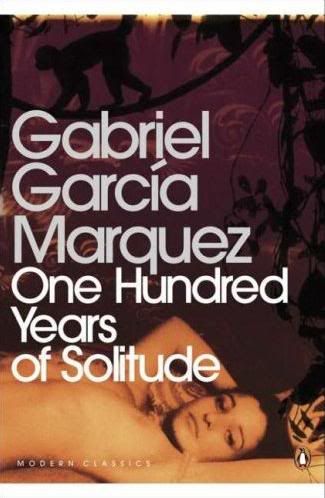
A Hundred Years of Solitude by Gabriel Garcia Marquez


The first of the line is tied to a tree and the last is being eaten by the ants.


---

I have mixed feelings on One Hundred Years of Solitude in the sense that if I'd never have heard about this book before reading it, I would have completely loved it. And thats not to say I didn't love it, but after hearing tons of people tell me it's the best book written in the past 50 years and how it changed their lives and how it 'should be required reading for the entire human race' I felt a little underwhelmed. Its a good novel. Excellently written with an interesting story... But what's so earth-shattering about it? It just struck me as a good read with very little message behind it.

I'll start off with what I enjoyed about the book. I loved a lot of the characters: Ursula, Jose Arcadio, Aureliano (first iterations all) especially. I specifically remember one beautiful passage about Ursula losing her eyesight but learning to interact with the world in other ways. Marquez's writing style is very readable. In a lot of ways, the structure and writing of One Hundred Years... reminded me of McCarthy's Blood Meridian. Long run-on sentences where the most surreal and surprising events unfold in the most mundane language. Its one of those books where you'll be reading a description of an old faded mural, and then in one of the sentences mid-paragraph a main character gets eviscerated and you do a sort of double-take and have to go back and make sure what happened really just happened. I also liked the cyclical nature of the story. You follow 7 generations of Buendias over the course of a century and yet you find the same little vignettes playing themselves out over and over.

That sort of leads me to one of the main problems I have with the novel. Marquez insists on beating you over the head with explicit explication of his themes instead of just allowing the reader to recognize them organically. I dont need the narrator to tell me that the Buendia family is living life in a circle. I'll recognize that after the 4th Aureliano succumbs to the same fate as his great-grandfather. I guess I have the same problem with Spanish films like Pan's Labyrinth or The Orphanage where the director/writer feels the need to jam this absurd, out-of-place happy ending down our throat after 100 minutes of nearly perfect film-making. I mean, give the reader/viewer some credit. Most of us are intelligent enough, we can hash this stuff out on our own. Me and Chris always argue about that, but then Chris is a putz.

Highlights: Gorgeous imagery, deep characterization, nearly hypnotic writing.
Lowlights: If I had to read the line 'Years later, as (insert character name) faced the firing squad...' I was going to throw the book out the window.

PS - Writing this review from a cyber cafe in Paris. Be jealous. Also forgive any spelling mistakes as the french keyboard is all ass-backwards.

Wednesday, July 8, 2009

From a Buick 8 by Stephen King

I don't have a whole lot to say about From a Buick 8. The book opens in the present day, but the story really begins years earlier, when a Buick is abandoned at a little gas station in the middle of nowhere, owing to the driver going to the bathroom and never coming back. It looks, in most ways, like a normal car, but there are a few things off about it. One side has more windows than the other, and somehow it's completely spotless. It doesn't even appear to have an engine. The police, including Ennis Rafferty who narrates most of the book, tow the car back to the station and put it in storage. Strange things start happening almost immediately: eerie midday lightshows, unidentifiable objects and creatures emerging from the trunk, and so on. Eventually, it becomes evident that the Buick isn't really a car at all, but some sort of dimensional gateway.


Eventually people start dying, of course, but that's where Buick gets interesting. Although Rafferty implies most of the officers believe that the various tragedies visited on the station are because of the car, the story never ties things up so neatly. Nothing really occurs, besides possibly the final scene, that couldn't have happened in the exact same way minus the car. An officer disappears, one is hit and killed by a semi, one's marriage begins dissolving. In the heat of things, it seems reasonable to assume that these things came with the title of the “car”, but it's also defensible that the car serves as a MacGuffin, a plot device to allow King to tell the story he really wants to, one about people. People with misplaced priorities, people who can't live in the present, people who make bad decisions. The various narrators mostly sound like people who've been through life and learned nothing from it. They take turns blaming the car for every bad thing that's happened in the last twenty years, none them considering that the real problem might lie not with the car, but with them.


In that sense, Buick actually has more in common with King's non-supernatural stories like The Body than with Christine. Human wickedness is all we conclusively see. The supernatural evil, such as it is, is never explained. No one ever steps through to the other dimension and confronts the makers of the Buick. There are no otherworldly messengers warning of imminent doom. Even the climax is understated, with victory arriving more by the passage of time than by any particular move on the part of the officers. That said, Buick is interesting and thought-provoking without being particularly good. If you like King, especially late-era rambly King, you'll probably like this. If you're not a fan or you've never read anything of his, start somewhere else.