Showing posts with label Israel. Show all posts

Saturday, March 28, 2026

The Lord by Soraya Antonius

But the countryside informers, who regularly sent in reports of all events, ordianry or not, mentioned that he was a most remarkable conjuror. Instead of pulling silk block-stamped scarves out of his sleeves and giving one of them to the girl who was due to be married during the feast and later selling the rest, or eggs out of his nostrils, or baby quails out his ears, he walked through walls of houses, "where there's no door," added a report painstakingly. Some brushwood blaze got out of hand in one village and threatened the mounds of unthreshed and as yet unallotted wheat: he had put it out in a flash, from a long way away, without buckets of water. He had told it to go out.

A journalist in Israel makes the acquaintance of an old British emigre named Miss Alice, who has been in the country since it was known as Mandatory Palestine. Miss Alice has a story that is of interest to the journalist, one of time before the creation of the state of Israel, when tensions between Jews, Arabs, and their British overlords ran particularly high. This story concerns a man named Tareq, who once was a pupil of Miss Alice's, a charming but mediocre student who disappears and reemerges as a traveling conjuror--the equivalent of a children's magician. As a magician, Tareq is without equal, able to do more than simple parlor tricks, changing water into wine and British homburgs into highly symbolic keffiyehs. Tareq's act catches the attention of a British police chief named Challis, who suspects the magician of sedition, and who, on top of everything else, has a pure personal dislike of him. Challis makes the capture and execution of Tareq his obsession, bordering on mania.

Many questions surround the circumstances described in Soraya Antonius' The Lord. One is: what kind of magician is Tareq, really? Is he simply a very talented charlatan, or is he actually capable of a kind of sorcery? When one of the book's secondary characters, a British journalist named Egerton, is injured in the middle of the wilderness on a trip through Galilee, Tareq's sudden appearance is mystical and startling enough that we are ready to believe that he is the real deal. Other questions branch off of this one: how subversive is Tareq's act, really? There is a certain slyness to it, certainly, but there's a big difference between the symbolism of the transforming accessories and stoking the Arab resistance to British rule, as Challis suspects Tareq is doing. If Tareq is only a magician, Challis' enmity is another open question--why does he hate the guy so much? Antonius' narrator-journalist, interpolating Miss Alice's story, even suggests at one point that latent same-sex attraction (in this case, "buggery") is at the root of some British officials' enmity toward Arab men. But the irony of Challis' persecution of Tareq is that, if Tareq isn't a rebel leader, Challis seems intent on turning him into one, and the more he pursues him, the more Arab communities are caught in the crossfires of the man's mania, breeding resentment and rebellion.

I thought this was pretty good. There are parts of the book I couldn't quite follow: Tareq is brought within Challis' web by a convoluted chain of events that begins with Berthaina, a woman married to a much older widower who turns to Tareq's magic to help her have a child after a series of miscarriages, and for whom Tareq falls quietly. Berthaina's involvement with Tareq results in her house being destroyed, part of a British zeal for razing Palestinian houses, and roping in Tareq's mother, whose resentment at being forced to care for the now homeless woman ends up driving her into the arms of the British mandate. Or something like that. And I thought the B-story of a young Miss Alice's flirtation with a genteel British officer fell pretty flat.

But I also thought that The Lord captured in rich and fascinating detail a moment in history that has been obscured by succeeding events. Tareq's Palestine is a powderkeg waiting to blow, a very old and diverse country that is run indifferently by the British, whose priggishness and sense of birthright keeps them from understanding the people whose stewards they claim to be. As far as I can tell there are no named Jewish characters in The Lord, but it shows how the folly of empire sets up the Nakba to come, and how the British were using the destruction of homes as a means to suppress the Arab population long before the success of the Zionist movement and the creation of the state of Israel. It's all the British Empire's fault, basically. But beyond this it's a gripping story of intrigue and resolve, and of people who refuse to give up their vitality and dignity to the powers who demand it as sacrifice.

Tuesday, September 12, 2023

A Journey to the End of the Millennium by A. B. Yehoshua

Seventy days and upward had passed since the ancient guardship had set sail from Tangier to ride the wild ocean waves so bravely toward a distant town named Paris, yet amid all the hardships that had visited the expedition, by sea and by land, Ben Attar had not known a single moment when he stood so alone, without rabbi or fellow worshipers, without business partner or nephew, without servant or sea captain, without horses or congregation, without even a house of prayer. Placed under a ban in the heart of an alien land, with his cargo-laden ship far away, pent up in the harbor of Paris. And all this a few hours before the start of the Day of Atonement, behind a little church built of grayish timbers, staring brokenheartedly at the wife of his youth wrestling with a fire like a servant while his second wife lay in pain in the house of an apostate physician. Although he wished with all his being that he could blame himself for what was befalling them all, because of his obstinate urge to demonstrate to the world the depth of his love not only for his two wives but for his nephew, he felt that he did not have the right, whether in defeat or in victory, to detract from the force of the destiny that had guided him, for good or for ill, since the day of his birth.

Ben Attar, a Jewish merchant living in North Africa, sets sail for Paris. Until now, he has done his business by sailing to Spain, where he would meet his nephew Abulafia. But Abulafia has recently married, and the new wife, a beautiful widow named Mistress Esther-Minna, has declared a repudiation--which, though I'm not totally sure what it is, carries a legal and religious force--on Ben Attar for having two wives. Incensed and eager to reestablish his business, Ben Attar intends to confront Abulafia's new wife, and has brought along both of his wives, along with a learned Spanish rabbi whose arguments will persuade her to drop the repudiation, the rabbi's young son, his Muslim business partner Abu Lufti, and an enslaved black boy--and a couple of camels.

All this happens against the backdrop of the coming millennium: not the millennium for Ben Attar, for whom it's the year four thousand-and-something, but for the Christians of Europe, who have been worked up into a fever in the anticipation of Christ's return. The Europe that Ben Attar moves through is a strange and foreign place, where he has trouble communicating even with the Jews, and where many of his former coreligionists have converted for fear of being slaughtered at the coming of the millennium. Israeli writer A. B. Yehoshua treats this background with a light touch; it's never really at the forefront of the story, and yet it hangs menacingly over the merchant's journey. When his younger wife sickens, Ben Attar stops at the house of a converted physician in Verdun, and when he asks whether she'll survive, the physician says, She will live, but them--referring to a gathering of German Jews who have gathered to make a minyan for Rosh Hashanah prayers--they will not live.

There's much to admire about A Journey to the End of the Millennium: For one, I loved a glimpse of a a wide medieval world separate from the courtly hall or monasteries that you might expect to find in a book set in the Middle Ages. Yehoshua depicts a medieval Europe characterized by diversity and free movement; how fascinating to see Ben Attar work contentedly alongside his Muslim partner, at the same time he feuds with the northern Jews he cannot understand. In Ben Attar's slave child there are intimations of modern atrocity, but toward the book's end, we learn that Abu Lufti has restocked the cargo hold with blond, blue-eyed slaves from Eastern Europe, and we are reminded that this world is not one we can take for granted as familiar. I was also struck by the prose, with its long sentences and concentrically nestled clauses, which, if not medieval in style, seem charmingly antiquated. It's remarkably engaging for having a kind of intended stodginess, even more remarkably for containing, when rounding down, zero dialogue.

But more than this I was touched by the novel's picture of human desire and grief. Ben Attar is shrewd and businesslike, but deep down he loves both of his wives intensely, and the repudiation of his nephew has wounded him sharply. Abulafia, in turn, has married Esther-Minna in the wake of the suicide of his own wife, who has left behind their mute and troubled daughter. The uncle and nephew share both intense love and intense grief, and these qualities simultaneously drive them toward each other and keep them from being able to reconcile. Even Esther-Minna, whose repudiation is driven by the fear that her husband will leave her--for business, perhaps, or by taking on a second wife, like his uncle--is touchingly recognizable. While the Christians of Europe wait for the grand drama of the apocalypse to unfold, the North African merchant and his compatriots live smaller lives, more sweet and more painful because they are lived on a human scale.

Final note: with the addition of Israel, my "countries read" list is up to 82!

Saturday, November 27, 2021

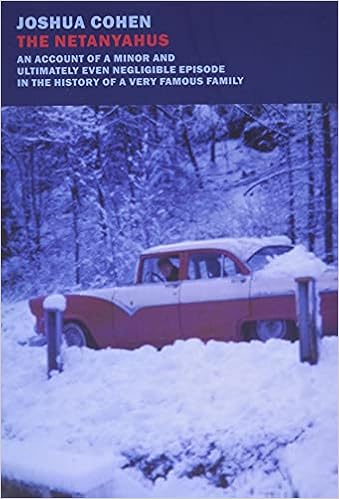
The Netanyahus by Joshua Cohen

You, Ruben Blum, are out of history; you're over and finished; in only a generation or two the memory of who your people were will be dead, and America won't give your unrecognized descendants anything real with which to replace the sense of peplehood it took from them; the boredom of your wife--who's tearing your program up into little white paper pills she'd like to swallow like Percodan--isn't merely boredom with you or her work or with the insufficiency of options for educated women in this country; it's more like a sense of having not lived fully in a consequential time; and the craziness of your daughter isn't just the craziness of an adolescent abducted from the city to the country and put under too much pressure to achieve and succeed; it's more like a raging resentment that nothing she can find to do in her life holds any meaning for her and every challenge that's been thrust at her--from what college to choose to what career to have--is small, compared to the challenges that my boys, for example--whom she's been condemned to babysit--will one day have to deal with, such as how to make a new people in a new land forge a living history. Your life here is rich in possessions but poor in spirit, petty and forgettable, with your frigidaires and color TVs, in front of which you can munch your instant supper, laugh at a joke, and choke, realizing that you have traded your birthright away for a bowl of plastic lentils...

Ruben Blum is the only Jewish faculty member at Corbin University, a small liberal arts college in the vast icefields between Albany and Buffalo, and the only Jewish person--excepting his wife and daughter--in the town of Corbindale. He's treated well, though condescendingly, though no one else seems satisfied with this role: not his wife, Edith, shouldered into menial work at the college library, not Edith's cosmopolitan parents, who look at Corbindale as a site of rural horrors, not his own parents, who believe he has forsaken the Bronx community of Jews that raised him. And certainly not his daughter Judy, who--in one of the novel's most, but not only, shocking scenes, plants her face in front of a doorknob so that her noticeably Jewish nose will at last be broken and repaired. Into this ripe pit of dissatisfaction a group of strangers enters: the family of Ben-Zion Netanyahu, an Israeli historian interviewing for a position at Corbin, and whom Ruben has been asked to shepherd around campus.

The Netanyahus is based on a real anecdote told to Cohen by the late Harold Bloom, another Jewish scholar who left the Bronx behind for the cold wilds of Northeastern academia. Bloom really was asked to host Ben-Zion Netanyahu, whose middle son Benjamin would later become the longest-serving prime minister of Israel. Bibi plays a surprisingly small role in the novel: he and his brothers enter the Blum household like three tiny tornados, fighting among each other and breaking television sets. It's Ben-Zion who really threatens to upend the fragile balance of Ruben Blum's existence. He's irascible, self-absorbed, contemptuous of the job offer and the school, and of the life that Blum leads willfully in America (while presenting himself as a kind of exile). Ben-Zion's scholarship focuses on the Jews of Medieval Iberia, but this description is too narrow: because the Jews have been caught in cycles of expulsion and reabsorption, he argues, they have truly been outside of history. Only the creation of the state of Israel brings to the Jews the possibility of living within history:

The world is full of real events, real things, which have been lost in their destruction and are only remembered as having existed in written history. But Zion, because it was remembered not as written history, but interpretable story, was able to exist again in actuality, with the founding of the modern state of Israel. With the establishment of Israel, the poetic was returned to the practical. This is the first example ever in human civilization in which this has happened--in which a story became real; it became a real country with a real army, real essential services, real treaties and real trade pacts, real supply chains and real sewage. Now that Israel exists, however, the days of the Bible tales are finished and the true history of my people can begin and if any Jewish Question still remains to be answered it's whether my people have the ability or appetite to tell the difference.

A careful letter from a concerned Israeli scholar describes Ben-Zion as a zealot, a dangerous man, and when at last he arrives in Corbindale, this assessment is hard to doubt. The way "the Yahus"--Ben-Zion, wife Tzila, children Jonathan, Benjamin, and Iddo--thoughtlessly take over the Blum household provides the novel with a manic energy punctuated by tremendous comedy. But Blum is unsettled, too, by what Ben-Zion says. It is true that the faculty chose Blum to babysit the Netanyahus because he's Jewish; though he is a scholar of American history his Jewishness can be abrogated or activated by his superiors at will. Certainly there is something frightening in the way his daughter Judy wishes to erase the very Jewishness of her face. Is Dr. Netanyahu's zealous Zionism the only alternative to expulsion or erasure? Would anyone in Corbindale say to Blum, as Ben-Zion does--though they clearly dislike each other--"And if the situation were reversed and your feet were in my shoes and you came to Israel, I'm not positive I could get you a job, but I'd do absolutely everything to find you a good apartment, and in a war, I'd die for you?"

I would leave it to a Jewish reader to say whether The Netanyahus resonates with the dilemmas of Jewish identity in the 20th century, but for me it seemed like a plausible and powerful presentation of the question, "How should a Jewish person be?" It's funny how a book set in upstate New York manages to outline so deftly the way the project of Israel intersects and makes demands on questions of Jewish identity, ones that might seem--to us goyim--as simplistic or strange. The Netanyahus is on Blum's side, not Ben-Zion's, whatever that might mean, but it captures what is so urgent in that worldview.

Tuesday, May 12, 2020

The Secret Chord by Geraldine Brooks

I had seen myself as a man in the hand of the Name--serving the king chosen to lead his people in this Land. But what kind of god could will this baseness, this treachery? What kind of nation could rise under such a leader? If David was a man after this god's own heart, as my inner voice had told me often and again, what kind of black-hearted deity held me in his grip?

King David is one of the Biblical era's most interesting characters. As Geraldine Brooks notes in her afterword to The Secret Chord, her novel of David's life, he's the first person in history for whom we have a recorded life from birth to death. Speaking from my own Christian perspective, David is remembered as the Psalmist--the composer of the beautiful songs that make up the book of Psalms. The other side of David--the warrior king, the rebel against Saul, the rebelled-against by his own son Absalom, the seducer of Bathsheba and killer of her husband Uriah--I remember mostly from Sunday School stories that never seemed as important or worth remembering as an adult.

But Brooks, whose reputation is one of the premier modern fiction writers of Jewish themes, brings back that complicated picture of David. Her David is not only complex, most of the time he just seems like a big piece of shit. The novel is told by the prophet Natan (an un-Anglicized version, as most of the names here are, of "Nathan"), one of David's closest advisors and the mouthpiece of the Jewish God, or "the Name," who has put David on the throne, and whom David has tasked with writing his autobiography. As Nathan tells it, David begins as a Jewish hero (the slayer of the Plishtim Goliath) beloved, then suspected, by King Shaul, who chases him into the desert and forces bloody conflict. David becomes a hero and a king by defeating Shaul, but the choices needed to bring the tribes of Israel together are bloody ones.

It seems like an old story: what is the barrier between our desire for power and our desire to use power for justice? How far is too far in the service of what we call a greater good? These are, if you'll allow me to say so, Game of Thrones questions, and if you squint, a lot of the head-rolling and sword-stabbing of The Secret Chord recalls those books. But David's iniquities don't stop with the necessary, as symbolized by his actions toward Batsheva, whom he lusts for after seeing her bathing on her roof, and her husband Uriah, whom David sends to his death to cover up his misdeed. There is no greater good in this scenario, only David's lust, weakness, and cruelty. This horrible act is repeated among David's sons, like Amnon, who rapes his own sister Tamar, and Avshalom, who rebels against David through his own desire for power--gruesome sins that serve only the most base human instincts.

OK, that's a little Game of Thrones-y too. But the interesting thing here is that, while David is punished sorely by the Name for what he does to Batsheva, God never removes his anointing, or his favor, from David. There's a familiarity to this for me; I had always heard the story of David and Bathsheba as an illustration of how God uses flawed people. But David isn't just flawed; Brooks' account reminds us that David can actually be monstrous, and yet the Name works through him even still, with the result that David's wise son Shlomo (Solomon) becomes the King of Israel.

One thing I liked about The Secret Chord is that much of its focus is on the women whose voices are largely absent in the Bible's account of David's life. Batsheva is one of these, who tells Natan pointedly that what David did to her was a rape. But in writing David's biography, Natan uncovers woman after woman who has been misused not just by David, but by the patriarchal demands of the Jewish political state. There's David's first wife Mikahl, forgotten, remarried, and then reclaimed from her loving husband to wither and suffer in a remote room of the palace. There's Tamar, raped and disfigured by Amnon. Even when not subject to physical abuse, women here find themselves little more than pawns in bloody male games. Combined with the novel's insistence on David's anointing, there's a forebidding and difficult tension here.

A shallow reading might be something like, yes, abuse is bad, but we must ignore it so that our political ends are met. (You can come to your own conclusions about whether that's an ideology on the table in this, the Year of Our Lord 2020.) A better reading might say something about the reality of sin and its violent consequences, and to force us to recognize what a radical thing we say when we say that God forgives, or absolves, or that God has a "plan for us."

Saturday, June 15, 2019

Eternal Life by Dara Horn

She had done well, she thought, in this version.  "Version" was the word she used when thinking of it--nusach, the liturgical term, like a melodic variation on a theme.  That's what they were, these different versions: different tones, different moods, melancholic, joyful, anxious, calm, hectic, fast, slow.  This version was one of the best, the happiest, which was why she hadn't wanted to leave.  But she couldn't stay forever.

Rachel is pushing eighty.  Her life is quite happy: she runs a gem business, and she has several children and grandchildren.  Most are quite successful.  Her granddaughter Hannah, for example, is researching telomeres, the little caps on the end of our chromosomes that may hold the secret to extending human life.  Her son Rocky, however, gives her trouble; he's one of those people that just can't seem to get their life together.  Recently he's been getting into that trendy business among such folks: mining Bitcoin.  But Rachel has a secret of her own--thanks to a vow she made to save the life of her son two millennia ago, she's actually immortal.  Every few generations, she regenerates by burning, and must leave the family she's created behind.  Through all these lives she is stalked by an old lover, her first child's father, who sees their immortal lives as an opportunity to really be together forever, and to whom she is equally, dangerously, drawn.

There's a lot to like about Dara Horn's Eternal Life.  I'm a sucker for fictional representations of historical folks, and although I am not incredibly familiar with the Jewish history of the destruction on the Second Temple, this is an especially clever one.  Rachel's first son Yochanan, the one she saves by her vow, is the Jewish scholar Yochanan ben Zakkai, who, according to legend, is smuggled out of the besieged city of Jerusalem to beg with the Romans to spare, not the temple or the city, but the Torah.  This act, the preservation of the word of God, finds its analog in Rocky and the blockchain record that makes crypto mining possible.

This is a very clever connection, or an extremely goofy one, depending on your perspective.  Much in the novel is goofier--like Rachel's ancient lover Elazar getting into Twitter fights about the value of immortality, where he claims to have been flayed by the Inquisition, punctuated by the words "epic fail!"  But its cleverness is a weakness as much as a strength.  (What are the odds that Rachel's granddaughter would be one of the world's leading anti-death researchers?)  The conclusion especially falls into place a little too neatly

 But the novel's biggest weakness, I thought, was its lack of breadth.  It's not that it's too short, necessarily, but that it feels pared down in a way that doesn't work for a story of eternal life.  (Think about Orlando--a novel that isn't very long, but somehow manages to convince you that Orlando has lived a very long time.)  Rachel alludes to her many children--her sixtieth son, her forty-second daughter--and claims that watching them die, over and over, is the great trauma of her eternal life.  But for the novel's purposes there are really only two time periods: Rachel's first life in the era of the Second Temple and the present day.  The intervening years, while not a mystery, fail to establish a sense of reality.  Nor did the prose, which struck me as relatively blond, seem matched to the subject.  I didn't really think that Eternal Life really lived up to the promise of its first page:

If her father had described it--it was his job to write, or at least to copy, though he liked to add his own details--he might have written: These are the generations of Rachel, keeper of vows, who bargained with God and lived.  If her son had written it--her first son, the wise one, the reason for everything that followed--he would have put it differently.  If all the heavens were parchment, and all the seas ink, such would not suffice to record the days of Rachel, whose years are no more than an eyeblink to the Master of the World.  If her twentieth son had written it--he was a panderer, a bootlicker, but that had been worth something then--he would have sprinkled it with rose petals til it reeked.  O mother of thousands, she who escaped the sword; most loved, most honored, most blessed of the lord!  Or something equally trite.

This suggests to me a novel that might have been, a novel that was really interested in recording those multiplicity of voices, and showing how Rachel has become a product of each nusach that she's lived.  But for all its inventiveness, and some very moving meditations on life and God and the problem of death, it all felt a little too of the moment for me.

Thursday, June 13, 2019

St. Urbain's Horseman by Mordecai Richler

Sitting with the Hershes, day and night, a bottle of Remy parked between his feet, such was Jake's astonishment, commingled with pleasure, in their responses, that he could not properly mourn for his father.  He felt cradled, not deprived.  He also felt like Rip Van Winkle returned to an innocent and ordered world he had mistakenly believed long extinct.  Where God watched over all, doing His sums.  Where everything fit.  Even the holocaust, which, after all, had yielded the state of Israel.  Where to say, "Gentleman, the Queen," was to offer an obligatory toast to Elizabeth II at an affair, not to begin a discussion on Andy Warhol.  Where smack was not habit-forming, but what a disrespectful child deserved; pot was what you simmered the chicken soup in; and camp was where you sent the boys for the summer.  It was astounding, Jake was incredulous, that after so many years and fevers, after Dachau, after Hiroshima, revolution, rockets in space, DNA, bestiality in the streets, assassinations in and out of season, there were still brides with shining faces who married in white gowns, posing in the Star social pages with their prizes, pear-shaped boys in evening clothes.  There were aunts who sold raffles and uncles who swore by the Reader's Digest.  French Canadians, like overflying airplanes distorting the TV picture, were only tolerated.  DO NOT ADJUST YOUR SET, THE TROUBLE IS TEMPORARY... They were ignorant of the arts, they were overdressed, they were overstuffed, and their taste was appallingly bad.  But within their self-contained world, there was order.  It worked.

Jake Hersh is a successful television director living in London.  He's an outsider twice over, as a Canadian and a Jew, both a colonial and a stranger, but despite that, he's risen to wealth and comfort.  He has a tony house, a beautiful shiksa wife, several children.  In fact, if he hasn't achieved more, it's because he has an irritable streak and a chip on his shoulder, and often looks at his comfortable life with a kind of suspicion.  That is, until he finds himself accused of raping a young woman while his wife is out of town.  His co-defendant in the case is Harry Stein, an accountant from London's lower classes, who is like Jake's shoulder-chip personified, and mirrored by Mother England.  He's crass and perverse; he makes prank calls to starlets because he seethes with incel-ish anger that they reject, or would reject, him.  What attracts Jake to Harry may be that familiar resentment, write comically large, or perhaps there's something sobering about the way that Harry looks with jealous rage at Jake's life.  Either way, Richler implies that it's this attraction that has caused Jake's legal and marital troubles.

Harry's not the only foil that Jake has in the novel.  Jake spends much of his spare time trying to track down his cousin Joey, a charismatic ne'er-do-well who disappeared from Montreal's St. Urbain Street Jake was very young.  In Jake's memory, Joey is the only one who stood up to the escalating racial hatred of the French Canadians who boxed them in.  In his search, he's always narrowly missing him, in Israel, in Germany.  Reports of Joey differ--is he a gambler and a criminal, or the avenger of Jake's memory?  Jake believes he's tracked him to the jungles of Paraguay, where he believes that Joey--St. Urbain's horseman, tracking through the banks of the Parana River--is searching for the Nazi doctor Josef Mengele in order to exact revenge on behalf of the Jews of the world.  Like Harry, the Horseman is a foil for Jake: he is the thing Jake wishes he could be, the alternative to his pampered life of ordinary compromises.  He is another manifestation of resentment, channeled into righteous anger--the opposite of Harry's bootless pranks.

St. Urbain's Horseman has something sophisticated to say about the position of Jewish folks in the 20th century.  Clearly they have a lot to be resentful about, but is there a way to channel that resentment and make it useful?  If it is to be released, how is that done?  When a person from an oppressed group achieves success, or even bourgeois satisfaction, should they feel joy?  Guilt?  Is his father right to rage about his marriage to the gentile Nancy?  Jake has difficulty with these questions: he largely separates himself from his Jewish Canadian family, and invents another kind of family--the Horseman--in his head.

On the other hand, I cringed a little reading about the trumped-up accusations against Jake.  The "victim," a would-be starlet named Ingrid, is a character vacuum, briefly seen through a drunken haze and then sequestered behind the dais of a courtroom.  In the novel, it works, but I always feel squeamish about the way false rape narratives bolster, in even small ways, real-world suspicions about rape.  Put it alongside the joky anti-feminism of Barney's Version, and the Borscht Belt-comedian schtick of Richler's novels begins to seem hoary.

That said, St. Urbain's Horseman is very funny.  It is the most frenetic of the three Richler novels I have read, to the point of dizziness.  I was amazed by the relentlessness of the satire; I feel like most "funny" novels get credit for getting around to a joke every few pages, but in St. Urbain's Horseman, every paragraph has some incisive cutting remark or character beat.  (One of my favorite characters is a recurring cousin who's in the toilet business, and spends his whole visit to London examining, and praising, the commodes at places like Harrod's.)  I didn't think it had quite the same human element as Duddy Kravitz or Barney's Version, possibly because at heart those novels are tragedies, and St. Urbain's Horseman is about the ways in which a good tragedy can end up spoiled.  In the end, Jake gets off, his marriage a little dented, but his happy home intact--and that's something he'll have to learn to live with.

Tuesday, January 17, 2012

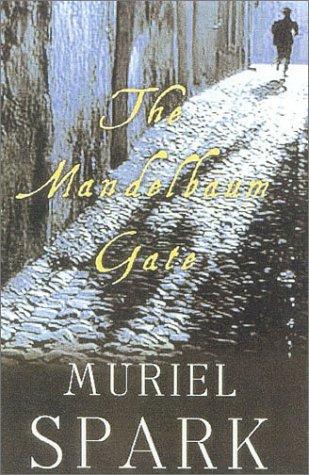
The Mandelbaum Gate by Muriel Spark

Arabs lived in the shelter of the eighteenth-century ruined fortresses, and even now in the years of the establishment of Israel, burning with its mixture of religion, hygiene, and applied sociology, the poor Arabs still hung their washing on the battlements, so that it fluttered all along the antique sea-front, innocent of the offence it was committing in the eyes of the seekers of beautiful sights and spiritual sensations, who had come all the way from the twentieth century, due west of Acre. Indeed, the washing draped out on the historic walls was a sign or progress, enlightenment, and industry, as it had been from time immemorial; it betokened a settlement and a society with a sense of tomorrow, even if it was only tomorrow's clean shirt, as against the shifty tent-dwelling communities of the wilderness; and however murky the cave-like homes along the shore, nad however indolent the occupants, they were one up on the Bedouin, at least in their own eyes if not in the sight of the tourist cameras which photographed the Bedouin shepherds continually but deplored the hung-out washing at Acre.

The Mandelbaum Gate is Muriel Spark's longest book (at a whopping 320+ pages), and bears few of her trademarks. It is surprisingly compassionate toward its protagonists, short on death and tragedy, though the subject matter might have easily invoked Spark's more violent tendencies, and at times borders on florid (the above passage is two sentences!).

But then again, its protagonist, Barbara Vaughan, is the most like Spark of all heroines, so perhaps it's unsurprising that Spark felt kindly disposed toward her, and her attention captured for longer. Like Spark, Vaughan is a half-Jewish, half-Protestant convert to Catholicism. The setting is Jerusalem, 1961, a city separated into an Arab and a Jewish half by the title gate, which is closely guarded and travel restricted. Barbara's fiance, an archaeologist, is working on the Arab side of the border, and Barbara undertakes to pass through, knowing that her Jewish blood puts her at danger even though she is a British citizen.

Such a premise threatens to devolve into a very Graham Greene-like spy caper, but Spark slyly buries the most espionage-like elements into b-plots and isolated moments. Instead, Barbara lingers at the Christian shrines in Jordan, disguised as an Arab woman, catches scarlet fever, and lingers in a sick bed--in short, there is simply too much lingering for The Mandelbaum Gate to qualify as a caper of any kind.

Instead, what Spark delivers is an uncharacteristically deft exploration of the multifarious perspectives on the Holy Land. One of my favorite passages is the one above, which describes the way that the residents of Acre struggle to maintain a present existence against the expectation of tourists and pilgrims, whose in their faith paradoxically seek to deaden and ossify the shrines they visit. In another passage, a collection of friars at the Church of the Holy Sepulchre look on in horror as a visiting priest cautions his congregation against trusting the claims of every shrine:

The three friars gazed at the priest as with one gaze. They had known it. The incipient defroque was undermining the Holy Land, as he went on to enumerate for practical purposes the shrines which his pilgrimage might well skip and the dubiety of their origins, their thoughts went to their brethren, the custodians of the Holy Land to whom these places were their whole heart and life; tears came to the eyes of the eldest friar as he thought of the venerable Franciscan, well past ninety, who kept the house where Our Lady was conceived by St. Joachim and St. Anne, and who had wanted nothing for himself all his life but to show it to the pilgrims and pray with them as they came, and collect alms for the poor of the place, and die there on that spot.


Again we are faced with the essential oxymoron created when the word Holy collides with Land; without a doubt the priest is the more literally correct, but his neatly ordered faith leaves no room for the lives of those that still live in Israel--or, as the Arabs in the book call it, Occupied Palestine.

In a broad sense, the Mandelbaum Gate itself provides a symbol of this conundrum, illustrating the difficulty of moving from one's own perspective into another's:

He followed the ancient walls of the city and Temple, past the gates of historic meaning, sealed and barred against Israel--the Zion Gate, Dung Gate, Jaffa Gate, New Gate. Then St. Stephen's Gate opened within the Old City to another medieval maze of streets--Damascus Gate, that gate of the Lord's triumphal entry into Jerusalem on Palm Sunday, and HErod's Gate. He walked round the city until at last, fumbling in his pocket for his diplomatic pass, he came to the Mandelbaum Gate, hardly a gate at all, but a piece of street between Jerusalem and Jerusalem, flanked by two huts, and called by that name because a house at the other end once belonged to a Mr. Mandelbaum.


But then again, the Mandelbaum Gate carries a different symbolic charge for each character. For the Arab Abdul Ramdez, the gate is the division of his family, as it separates him from his beloved sister, Suzi. For the normally staid English diplomat, Freddy Hamilton, who helps Barbara pass through into Jordan against his character, it is the inaccessible wall that prevents him from recovering his memories of the pilgrimage, through which he seems to inhabit some sort of fugue state. For Barbara, it is the artificial barrier between her Jewish self and Gentile self, that if only it were opened, may provide a total sense of identity:

She had thought then, but who am I?
I am who I am.
Yes, but who am I?


Spark is both canny and blasphemous enough to note the echo of Jehovah's words in Exodus, "I am that I am." If Barbara, made in God's image, cannot get a picture of herself, what then of God? The Holy Land is fractured, Spark maintains, because our view of God is fractured. Just as uncharacteristically, Spark ends the book optimistically, in the passage just above, as Freddy wanders through Jerusalem looking at the gates. Most are shuttered, but the Mandelbaum remains--the only entry way from one side of Jerusalem to the other--and it seems very small and mean, "flanked by two huts," and perhaps even comic. Can such a barrier really be insuperable?

Wednesday, October 22, 2008

Real Time by Pnina Moed Kass


Spoilers, kind of.

In our post-911 world, it is sometimes hard to remember that terrorists are humans just as we are. This novel was difficult to read because we got to know the terrorists, Omar and Sameh, as well as we get to know their victims. Both boys are sixteen-year-old Palestinians living on the outskirts of Jerusalem. As Sameh tells us, "All over the world sixteen is paradise, opportunity, girls, cars, everything. I watch television in Omar's house and see sixteen... Here sixteen is the magic age of death... A sixteen-year-old is a walking grave. Why give a job to someone about to die? Kids who explode themselves and kill Israelis have no future, so don't give them a future" (22). His family is living in poverty and so Sameh has found work illegally with a Jewish man willing to pay him under the table so that Sameh can provide for his mother and siblings. When Omar tells him that if he becomes a shaheed, a suicide bomber, his family will be provided for forever, Sameh decides to sign on for the task and blow up a bus at a popular stop where there are often a large number of soldiers. When the time comes, Sameh sees that there is a mother with a newborn and cannot go through with the bombing. Unfortunately, Omar is on a van trailing the bus and goes through with detonating the bomb.

The other characters that we get to know are all living on a Kibbutz that they have escaped to for their various reasons. Lidia had to flee from her home in Argentina. Baruch Ben Tov, an elderly Holocaust survivor, finds comfort in his work as the Kibbutz' head gardener. Vera moved to the Kibbutz because her lover had killed himself and she needed to find something that would give her own life meaning after she was left behind. Thomas is a teenager whose Grandfather was a Nazi in WWII that is traveling to the Kibbutz at the beginning of the novel to find out what his grandfather did and to do something positive for the Jewish community as means of some kind of apology he feels that he owes for his predecessors. Vera picks Thomas up at the airport to take him to the Kibbutz but on the way back they both end up on the bus that is Omar and Sameh's target.

Real Time is written so that the perspective is constantly jumping from one character to another so that you get everyone's back stories in bits and pieces and you experience all of their grief and shock in a personal way. Reading the book made me extremely emotional because it was believable and written in a way that the reader could easily become invested in the characters--even the characters that weren't easy to like or understand. What I found to be the most touching was the interaction between Baruch Ben Tov and Thomas. At the beginning of the novel, Baruch is understandably apprehensive about working with a young German boy but still carefully lays out his visitors' room so that he will feel welcome. When Thomas is wounded and in the hospital, Baruch is the one that visits with him and takes care of him, speaking in Thomas' own language to bring the boy comfort despite feeling that the language and everything that went with it has been a harsh intrusion into his own life.

The climax is the bombing of course, but the most significant part of the book is what comes after when the characters are all trying to heal and work their way through what has happened. At the end of the book, a new voice is brought in, and another attack is being planned to illustrate the cycle is never ending. It wasn't the way that I wanted the book to end but given that the world we live in is such a dangerous place it is probably the only way the book could end realistically.

I think that this is a very important text. We often try to protect young adults from the realities of the world that we live in but I don't know that that's what is best for them. I think that exposing them to truth, even if it is through a fictional work such as this, is the best way to help them so that the world doesn't seem as shocking when they have to accept it as it is all at once later on.