Tuesday, November 20, 2012

Because You Have To: A Writing Life by Joan Frank

I wish I’d read Because You Have To with a highlighter in hand.

Where most books on writing seem to be written by fairly well-known authors or teachers, Joan Frank’s new collection of essays on the writing life comes from a different place, the pen of a writer who has learned, in her own words, “there may not be any breakthrough.” This is a woman who has published five works of fiction, been reviewed in the New York Times, but has come to accept that she may never be a household name, never able to answer the question, which she addresses in an essay, “Have you written anything I’ve heard of?” in the affirmative.

And yet, she continues to write, and write well, because, well, because she has to. Reading her essays felt more relatable to me, a wannabe writer who has published one story and a couple poems, than, say, Stephen King’s On Writing--although it’s good too. There is a compulsion in everyone who calls themselves a writer to create, to put the words down on paper and make them real, and Frank expresses that feeling more eloquently than most. She understands, and communicates, that writing is not about fame, or money, or notoriety. It’s about desire, about an insatiable need to get what’s inside outside. Every writer, famous or not, can relate to that.

Because You Have To isn’t a book on craft, for the most part. It’s more similar to Anne LaMott’s Bird by Bird or Ray Bradbury’s Zen and the Art of Writing. It’s full of advice--or sometimes just empathy--about the mundane things in a writer’s life: rejection letters, finding--or making--a place to write, and feeling as though you must “steal” time from the real world in order to get it down on paper.

Ultimately, what a reader gets from this sort of collection probably depends on what they brought into it. If they don’t write, have no desire to write, they won’t come away with a real understanding of the madness; but anyone who’s felt like they would burst if they didn’t tell their story, well, this one’s for you.

Thursday, November 15, 2012

The Merry Wives of Windsor by William Shakespeare

MISTRESS FORD: I shall think the worse of fat men as long as I have an eye to make difference of men's liking.  And yet he would not swear, praised women's modesty, and gave such orderly and well-behaved reproof to all uncomeliness that I would have sworn his disposition would have gone to the truth of his words.  But they do no more than adhere and keep place together than the hundred and fifty psalms to the tune of 'Greensleeves.'  What tempest, I trow, threw this whale, with so many tuns of oil in his belly, ashore at Windsor?  How shall I be revenged on him?  I think the best way were to entertain him with hope, till the wicked fire of lust have melted him in his own grease.

Merry Wives of Windsor occupies an uncomfortable place in Shakespeare's works.  It doesn't seem "Shakespearean," whatever that means, even though one of its principal characters is Falstaff.  It should be set in the time of Henry IV and Henry V, about 200 years before Shakespeare lived, but its atmosphere is decidedly Elizabethan, and instead of focusing on the lives of great men and women, it's about a pair of contemporary middle class families.

Bloom calls the Falstaff of Merry Wives an "impostor," and while I don't necessarily want to support that turn of phrase, I think he's right: Falstaff here is hardly the same guy as in Henry IV and Henry V.  His cleverness, his endless humor, are replaced with broad venality and gullibility.  Seeking money, he writes identical letters to the Mistresses Ford and Page declaring his love for them, but they discover his duplicity and punish him by leading him on only to engineer a series of mild humiliations.

Unfortunately, they're not very funny.  In the first, Mistress Ford convinces Falstaff to hide in a laundry basket from her husband, which she then has a servant dump in a laundry basket.  In the second, she convinces him to hide by dressing up as her aunt, whom her husband hates, so he gets the crap beaten out of him.  Finally they get a bunch of children to dress as fairies and pinch him in the forest.  I suspect that on stage each of those moments might play extremely well, but on the page they fell, for me, very flat.  Much of the other humor is derived from the humorous accents of some of the minor characters.  I did, however, enjoy the Latin lesson given by the Welsh parson and teacher Evans to his student William, which the ignorant Mistress Quickly keeps interrupting:

EVANS: What is your genitive case plural, William?

WILLIAM: Genitive case?

EVANS: Ay.

WILLIAM: Genitivo: 'horum, harum, horum.'

QUICKLY: Vengeance of Jenny's case!  Fie on her!  Never name her child, if she be a whore.

EVANS: For shame, 'oman!

But I suspect even that plays a lot better to an audience who has had a rigorous classical education.

I read this a few weeks back, for class.  I'm sure I would have had something better to say about had I blogged about it immediately, but clearly I found this one of Shakespeare's most forgettable plays.

Wednesday, November 14, 2012

Flight Behavior by Barbara Kingsolver

Ovid was keeping track as the temperatures crept to freezing, miserably watching the downward march.  After decades of chasing monarchs and their beautiful mysteries, he would now be with them at the end, for reasons he had never in his whole life foreseen.  She wished he could explain this to the kids who'd been in her yard.  Some deep and terrible trouble had sent the monarchs to the wrong address, like the protesters themselves.  The butterflies had no choice but to trust in their world of signs, the sun's angle set against a turn of the seasons, and something inside all that had betrayed them.

One day Dellarobia Turnbow climbs the side of her mountain on her family's property in eastern Tennessee, intending on an illicit rendezvous with a man who is not her husband, but something stops her first: the mountain is on fire.  Or, at least, that's the way it seems.  Later she discovers that what she's seen is not fire but an enormous cluster of monarch butterflies who have settled on the mountain, diverted somehow from their traditional wintering home in Mexico.

The monarchs intrude upon Dellarobia's life: They contemplate her family's plan to cut down the mountain's trees for money.  Tourists come, and she becomes a minor celebrity.  Scientists come, living on the Turnbow property to study this unusual event.  Some changes are good and some are bad; most lie somewhere in between.  And even though Kingsolver is careful to keep her representatives of science cautious in their claims, her metaphors make it clear--such upheavals can only be the result of global warming.  What Dellarobia undergoes is, quite literally, a sea change.

Kingsolver seems to have two goals here: One, to illustrate the way climate change can affect an individual human life, to rescue it from abstraction.   Two, to bridge the gap between the academic and the regular Joe, and illustrate the possibility of common ground between them.  I'm not sure she succeeds in this second goal; while Kingsolver clearly writes out of great affection for the salt-of-the-earth types that make up Dellarobia's community, she doesn't wholly avoid the temptation to skewer them as rubes.  For instance, Dellarobia convinces her husband and father-in-law (Cub and Bear, respectively) to take one last look at the land before signing the logging contract, without telling them about the butterflies, which leads to an absurd plot point in which Cub announces at church that Dellarobia foresaw them in a vision.  This ensues:

Dellarobia felt the doubtful stares.  She'd been sitting it out every week in the cafe, drinking coffee and making her grocery list, in no way deserving of a miracle.  And yet a small shatter of applause broke out, like a handful of gravel on a tin shed.  Someone very close to them shouted: "Heaven be praised, Sister Turnbow has seen the wonders!"  It was the man who'd come in late, with the sporty sunglasses on his head.


The sunglasses, the out-of-place folksiness of "Sister Turnbow" and "seen the wonders," which are somehow incongruent with the casualness of the church and its cafe, and the sheer stupidity everyone in this scene seems to share--they add up to something that isn't the friendly ribbing that I think Kingsolver is aiming at.  Contrast the character of the scientist, Ovid Byron, who is described as "Tall, dark, and handsome, but extra tall, extra dark.  Okay, extra all three."

Is it a surprise when Dellarobia falls in love?  Kingsolver chooses to make Byron an immigrant from the US Virgin Islands, who Dellarobia thinks sounds like a "reggae singer."  In other words, she amplifies his otherness, emphasizing his status as an outsider--while fetishizing his exoticness, something which Kingsolver seems to share with Dellarobia.  There are good narrative reasons to do this, as there are good reasons to satirize casual fundamentalists in sporty sunglasses, but when you do them both the novel is thrown off balance.  In other words, I don't think Flight Behavior represents both sides as equally as it thinks it does.

But I do like the point that Dellarobia makes about the impossible divide between these two camps when she theorizes to Byron that the problem is essentially social, that the reason her community does not believe in global warming has less to do with stupidity or cowardice than the human tendency to divide itself in two.  "The environment," as she says, "got assigned to the other team."  She goes on:

"These positions get assigned to people," she said.  "If you've been called the bad girl all your life, you figure you're already paying the price, you should go on and use the tickets.  If I'm the redneck in the pickup, fine, let me just go burn up the some gas."


The enmity between the believers and the skeptics, that is, precedes even the belief itself.  Yet, is Kingsolver aware of the ways in which the novel unconsciously preserves that divide, instead of breaking it down?

Flight Behavior is strongest, I think, when it focuses on the first goal: creating a vivid depiction of an individual life who comes to see the upheaval of her life as part of a larger, global phenomenon.  The butterflies are a powerful metaphor that dominates the work.  Like Dellarobia, they are lost, confused, struggling to survive against impersonal forces that are much stronger.  We want the butterflies to make it because of their beauty and mystery, and because if they do perhaps that implies that Dellarobia too can make it, that she too can "[fly] out to a new earth."

Wednesday, October 31, 2012

The Last Temptation of Christ by Nikos Kazantzakis

But man, without God, born as he is unarmed, would have been obliterated by hunger, fear and cold; and if he survived these, he would have crawled like a slug midway between the lions and the lice; and if with incessant struggle he managed to stand on his hind legs, he would never have been able to escape the tight, warm, tender embrace of his mother the monkey... Reflecting on this, Jesus felt more deeply than he had ever felt before that God and man could become one.

I have never seen Martin Scorcese's Last Temptation of Christ, but I know the controversy: Willem Dafoe's Christ experiences a sort of dream sequence as he is crucified that tempts him with the life he might have lived as an ordinary man, married to Mary Magdalene, for whom he has long held romantic and sexual feelings.  That may depart fairly radically from the Gospels, but there is something appealing in the idea of a more human Jesus who suffers greatly under the yoke of his task and yearns for the simple pleasures of human life.  The modern, evangelical conception of Jesus seems to me to render the scenes of his temptation in the desert inexplicable.  How could Satan hope to penetrate such a bulwark of mildness?

I thought Kazantzakis' original novel might be a picture of that more human, more palpable Jesus.  I was pretty wrong.  I was hoping that it would put Jesus in a historical context, against a realistic backdrop of Roman Israel, but Kazantzakis' Temptation seeks to outdo the Bible itself in visions, signs, and wonders.  Here's one I picked at random from about two hundred:

Suddenly he uttered a cry.  He felt a horrible pain in his hands and feet, as though he had been pierced by nails.  He collapsed onto a rock, the sweat pouring over him in cold granules.  For a moment his head swam.  The earth sank away from under his feet and a fierce dark ocean spread itself out before him.  It was deserted but for a tiny red skiff which sailed bravely along, its sails puffed out, ready to burst... Jesus looked and looked, then smiled.  "It is my heart," he murmured, "it is my heart..."


That's fairly effective, isn't it?  The vision of Jesus' heart as a small red boat in a great dark ocean is very powerful.  But there is no ground to the novel, these visions come so frequently that there is no non-visionary mode to provide contrast.  By the end of the novel, I grew extremely weary of them.  Kazantzakis, I think, is trying to recreate some of the inherent wonder and mystery of the Gospels (and probably even moreso books like Daniel and Revalation).  But what is the point of replicating the style of those texts, which, let's be honest, succeed pretty well on their own?

And yet, I did like some of the ways that Kazantzakis manipulates the fundamental Gospel story: He makes Jesus not just a carpenter but a crossmaker, reviled by his community.  He makes Judas into a brother-rival figure that personifies a more militant, revolutionary vision of the Messiah as a Jewish warrior-hero.  Judas remains fiercely loyal to Jesus, though there is immense philosophical tension between them, and ultimately Judas' betrayal is depicted by Kazantzakis as a planned event.  (This is, I think, the basic idea represented in the recently discovered "Gospel of Judas," too.)  And yet, I would have enjoyed the tension of that relationship much more if I had felt that Jesus and Judas approached any reasonable human likeness.  In a book of symbols, they remain symbols, and get lost in the crowd.

Tuesday, October 30, 2012

And Now We Shall Do Manly Things by Craig J. Heimbuch

Craig Heimbuch could almost be me. We were both born in the Midwest, to families and cultures that were more outdoorsy than us. We both have an unnatural, borderline prejudicial fear of rednecks. We‘ve both fought insecurities about financial stability, fatherhood, our relative manliess. The difference between us is essentially this: To combat his insecurities, Heimbuch took up hunting. I decided to read 50 books a year, which isn’t as memoir-ready.

And Now We Shall Do Manly Things is essentially summarized above, the through-line being Heimbuch’s journey from freelance writer to freelance writer with a gun. As with most “I did this” memoirs, the tone is light, but there’s a real pathos to the early sections, where Heimbuch reflects on his own history, from marriage through childbirth, and a poignancy to his description of his parents and extended family—outdoorsmen all— people he clearly loves but feels disconnected from in some essential way. Everyone has felt it, the sense of otherness, and Heimbuch, at his best, captures the feeling wonderfully. At his worst, he attempts to inject humor that just doesn’t work—most of the fictional conversations played out like vaudeville routines with no punchlines—but for the most part, I laughed where I was supposed to, and the book read amazingly fast.

The big question I had, coming into the book, was this: would it change my mind about hunting? I’ve always thought hunting for sport was kind of stupid at best, and kind of barbaric at worst—though I’m sympathetic to the idea that, if left unhunted, deer would overrun the world like so many graceful vermin—and I was genuinely hoping to have my perspective enlarged. To an extent, it was: Heimbuch’s discussion with various hunters made sense, especially the oft-repeated bromide that “if you’re willing to eat meat, you should be willing to kill it”, and, by the end of the book, I was rooting for him to finally get his elusive pheasant. On the other hand, the descriptions of field-dressing turned my stomach and I’m not planning to start hunting myself anytime soon, so, I don’t know... maybe I should be vegan?

I’m glad I read And Now We Shall Do Manly Things. It’s likely not a book I would have sought out myself (I received a free review copy), and it’s helped me understand a mentality I’ve been around but have never really understood. If I were feeling hyperbolic, I might even say it’s caused me to reconsider my own life and what it means, to me, to be a man. Maybe I’ll write a book about it.

Henry VI Part II by William Shakespeare

I have been very busy, and although I've been reading, I haven't been able to post like I've wanted to.  I'm taking a class on Shakespeare now, and as such I've been reading these plays at a pretty fast clip--faster than I'm able to post on them--and I know that our readers aren't as interested in them probably, but I've committed to posting about each book, and I'm gonna do that, dammit.

Henry VI Part II reflects my mental state perfectly: it's a hot mess.  It's hectic; it's disjointed; it's scatterbrained.  It's probably a lot more fun if you're familiar with the history of Henry VI, who apparently was not fondly remembered by Shakespeare's age.  Otherwise it's hard to keep track of the various subplots: There's the Duchess Eleanor, caught summoning demons to foretell her husband's political future.  There's the Queen Margaret, carrying on an affair the Duke of Suffolk.  There's Richard of York, scheming for the throne.  There's a popular insurrection, led by the charismatic rebel Jakc Cade.  And there's Henry himself, impotent as all this revolves around him, preferring to pray in his room than try to control his state.

If there's an overarching narrative to be found, it's that: The realm is going bonkers because Henry is an ineffective king.  Each weird mini-plot is in some way a response to the void in power that Henry represents; Eleanor, Margaret, Suffolk, York, Cade--each asserts their own power because they perceive that the king cannot or will not assert his own.

The most entertaining of all of these is Cade, and I enjoyed the play most when he is in it.  Cade is York's plant, suborned to destabilized the country's political situation, but Cade himself often approaches a compelling anarchist vision of political and economic freedom:

CADE: I think you good people!--there shall be no money.  All shall eat and drink on my score, and I will apparel them all in one livery that they may agree like brothers, and worship me their lord.

BUTCHER: The first thing we do let's kill all the lawyers.

CADE: Nay, that I mean to do.  Is not this a lamentable thing that of the skin of an innocent lamb should be made parchment?  That parchment, being scribbled o'er, should undo a man?


Cade and his followers condemn and kill for the crime of merely knowing how to read.  Shakespeare intends this to be satirical, of course, but there is sense in the satire:

CADE: ...Though has most traitorously corrupted the youth of the realm in erecting a grammar school; and whereas before, our forefathers had no other books but the score and the tally, thou hast caused printing to be used and, contrary to the King his crown and dignity, thou hast built a paper-mill.  It will be proved to thy face that thou hast men about thee that usually talk of a noun and a verb and such abominable words as no Christian ear can endure to hear.  Thou hast appointed justices of peace to call poor men before them about matters they were not able to answer.  Moreover, thou hast put them in prison, and, because they could not read, thou hast hanged them when indeed only for that cause they have been most worthy to live.


Here an ironic silliness (I love that "noun and a verb and such abominable words as no Christian ear can endure to hear...") is transformed unexpectedly to a very pointed criticism of a political system which is stacked against the poor and uneducated.  Cade is engaging because he is the center of the play's ambiguity.  Like the noble characters of the play, Cade shallowly seeks his own self-interests, and yet he manages also to give voice to a number of unsettling moral issues.

The rest of the play, I'm afraid, is something of a slog.  I could never keep the Suffolks and the Somersets straight, nevermind the Beauforts and the Buckinghams, much less the two characters named Clifford.  Seeing it on stage is probably good fun, but even then I suspect that Cade usually steals the show.

Monday, October 15, 2012

The Fifth Queen Crowned by Ford Madox Ford

'But to make the King,' Cranmer uttered, as if he were aghast and amazed, 'to make the King--this King who knoweth that his wife hath done no wrong--who knoweth it so well as to-night he hath proven--to make him, him, to put her away... why, the tiger is not so fall, nor the Egyptian worm preyeth not on its kind.  This is an imagination so horrible--'

'Please it be your Grace,' Lascelles said softly, 'what beast or brute hath your Grace ever seen to betray its kind as man will betray brother, son, father, or consort?'

The last book in Ford Madox Ford's Katharine Howard series (1 2), as the name suggests, opens on a scene of victory: Katharine is crowned Henry's queen, and the return of her cherished Catholicism is nigh.  How you read this development hinges probably on your religious affiliation; for me there is something unseemly about Henry's playful needling of the Archbishop Cranmer early in the book about the church's return, especially now that Thomas Cromwell, the Protestant villain of the first two books, has been put to death.  I read in the second book a more ambivalent stance than I was able to find in this one.  What are we to make of a Henry VIII who is only good to the extent that he is Catholic?

Katharine remains the series' moral center, which bodes poorly for Henry's soul, since we know that by the series' end she must be executed.  (Spoiler alert.)  I found the machinations by which Katharine is brought down to be pretty disappointing, although the intrigue was the best part of the first two books.  The death of Cromwell leaves a pretty immense gap that the ambitious knight Lascelles, a pale Cromwell substitute, fails to fill.  In The Fifth Queen Crowned, subterfuge gives way to slander: The courtiers, peeved by the Queen's power and at Lascelles' urging, gin up a lie about Katharine's infidelity with her cousin Culpepper and force Henry's hand.  In the end, she gets a pretty nice speech at the King's expense:

If I have wounded you with these my words, I do ask your pardon... I would have you wounded by the things as they are, and by what conscience you have, in your passions and your prides.  And this, I will add, that I die a Queen, but I would rather have died the wife of my cousin Culpepper or of any other simple lout that loved me as he did, without regard, without thought, and without falter.  He sold farms to buy me bread.  You would not imperil a little alliance with a little  King o' Scots to save my life.


But the book as a whole was neither as fun or nuanced as the previous two.  In the end, I stand by my judgment of the first book: that The Fifth Queen books are Ford still struggling with both what he wanted to say and how.

Wednesday, October 10, 2012

The Good Pope by Greg Tobin

The Good Pope is the story of the life of Angelo Giuseppe Roncalli, a man born to peasant-farmers in rural Italy, who became one of the most influential popes in modern history. Greg Tobin constructs the life of Roncalli--Pope John XXIII--using a wide variety of sources, describing a humble man, full of passion for other people.

Tobin does a great job of making what could have been a boring recitation of facts about a good man's life into an interesting story. One of the ways in which he accomplishes this is by showing Roncalli's humorous side. At the pen of Tobin, Roncalli is a man who carried his sense of humor with him as he traveled to his various posts, including the Papacy. One of my favorite examples of this was when Roncalli was asked how many people worked inside the Vatican City State. He replied, "Oh about half of them."

Roncalli entered the clergy at a time when the Catholic Church was involving itself in social change. The Industrial Revolution was leaving many people cold and hungry in its wake. The Church set up soup kitchens and shelters to combat this social ill. Roncalli was secretary to Bishop Radini-Tedeschi, who was a vocal proponent of these social programs. Many of the sweeping changes that were a part of Vatican II had their roots in this period of Roncalli's life.

Tobin assumes very little advanced knowledge on the part of his readers, taking time to describe what may seem to some as common knowledge about the Catholic Church. As Brent alluded to in his review, Roncalli--at least as Tobin describes him--was nearly devoid of character flaws. Whether this is due to the editorial choices of Tobin or simply reflective of Roncalli's life is open for debate. But there are numerous points throughout the book where Tobin shows restraint and caution in his reliance on sources. It appears that Roncalli was a man with a deep faith in the Catholic Church and a deep love for humanity.

Wednesday, October 3, 2012

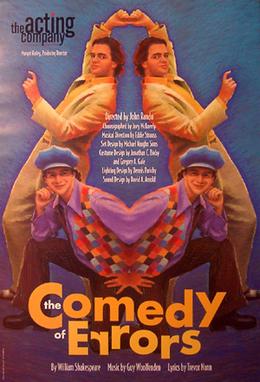
The Comedy of Errors by William Shakespeare

Never have I had less to say about a Shakespeare play than I do about Comedy of Errors.  Not that it isn't great--it is, but its charms lie mostly on the surface.  It's probably a lot more fun to see than read, and it's probably even less fun to read someone else talking about it.

It's the classic mistaken-identity sitcom episode, more or less.  Two brothers, separated as children, both named Antipholus (I just missed the other kid so much, I named the one I kept Antipholus too, says the bereaved father) end up in Ephesus, where one lives.  In case that's not absurd enough for you, they each have a manservant named Dromio.  When Antipholus of Syracuse comes to Ephesus, well... you can probably imagine what kind of hijinks ensue.

Comedy of Errors is true to its name, delivering up a series of pretty funny set pieces that involve the Antipholuses and Dromios confusing one another.  The best moment, I think, comes when Dromio of Syracuse encounters the wife of Dromio of Ephesus, whom he describes this way:

DROMIO OF SYRACUSE: ...She is spherical, like a globe.  I could find out countries in her.

ANTIPHOLUS OF SYRACUSE: In what part of her body stands Ireland?

DROMIO: Marry, sir, in her buttocks.  I found it out by the bogs.

ANTIPHOLUS: Where Scotland?

DROMIO: I found it by the barrenness, hard in the palm of her hand.

ANTIPHOLUS: Where France?

DROMIO: In her forehead, armed and reverted, making war against her heir.

ANTIPHOLUS: Where England?

DROMIO: I looked for the chalky cliffs, but I could find no whiteness in them.  But I guess it stood in her chin, by the salt rheum that ran between France and it.

ANTIPHOLUS: Where Spain?

DROMIO: Faith, I saw it not, but I felt it hot in her breath.

ANTIPHOLUS: Where America, the Indies?

DROMIO: O, sir, upon her nose, all o'er embellished with rubies, carbuncles, sapphires, declining their rich aspect to the hot breath of Spain, who sent whole armadas of carracks to be ballast at her nose.

ANTIPHOLUS: Where stood Belgia, the Netherlands?

DROMIO: O, sir, I did not look so low.

If ever Shakespeare needed a rimshot, it's here.  If there is any real depth to the play, it comes from the theme of losing one's identity, which is what worries the Syracusan Antipholus:

He that commends me to mine own content
Commends me to the thing thing I cannot get.
I to the world am like a drop of water
That in the ocean seeks another drop,
Who, falling forth there to find his fellow forth,
Unseen, inquisitive, confounds himself.

Antipholus sets up a paradox in which he searches for his brother to individuate himself, to become again a whole drop of water, even though to do so he must confront his own sameness by finding him.  The water-drop motif is repeated unintentionally by Adriana, the wife of Ephesian Antipholus, whose worry about her husband's disinterest is only exacerbated by the fact that he no longer seems to recognize her:

Ah, do not tear thyself away from me;
For know, my love, as easy mayst thou fall
A drop of water in the breaking gulf,
And take unmingled thence that drop again
Without addition or diminishing,
As take from me thyself, and not me too.

The bittersweetness of these lines is not like anything else in the play, and stands out in sharp relief.  By contrast the Ephesian Antipholus, in whom the identities of his wife and brother are so intimately tangled, walks through the play caddishly unconcerned with anyone else.  Perhaps, if you want to look past the slapstick, the message here is that real human relationships imply the risk of losing one's own identity--but the alternative is just being a selfish jackass.

Saturday, September 29, 2012

Reinventing Comics by Scott McCloud

I haven’t read the entirety of Scott McCloud’s career-making graphic nonfiction book, Understanding Comics, to which Reinventing Comics is a partial sequel. Fortunately for me, Reinventing Comics covers mostly different ground; unfortunately for me, it was mixed bag, due partially to its datedness at points--it was published in 2000--and its sometimes dry subject matter.

But first, the good: McCloud is a remarkably versatile artist who clearly loves the medium and is adept at communicating fairly dense information in an intuitive way. I’m not sure the information in this book could have presented any better without changing its format completely. The entire book, aside from the appendices, is written in comic book form which sometimes works great, such as when demonstrating various distribution models, and sometimes doesn’t add much, as during his discussion of diversity in comics.

The downside is that a lot of the material here just isn’t that novel or interesting. One only has to walk into a comic book store, or even look at recent comic book movies, to see that the landscape is dominated by superheroes, mostly straight, male and white. McCloud’s solution to this problem--that more women, minorities, and gays be promoted in the comics world--is sensible, but doesn’t bring anything new to the table. His discussion of genre is similarly circular.

The back half of the book mostly discusses the pros and cons of creating and distributing comics on computers. Since the book was written in a largely pre-broadband time, many of McCloud’s suggestions seem quite prescient--online distribution, microtransactions, experimental layouts and formatting--but they too suffer from a little bit of been-there-done-that in 2012 (although it is notable that DC and Marvel both adopted same-day-as-print digital releases this year). McCloud’s once-exciting predictions about everything being available everywhere have been tamped down by both real-world issues, such as the complex legal weaseling necessary to move “everything” online, and by the fact that the future he talks about is largely here and doesn’t seem to have increased mainstream acceptance of comics much. Online, there are comics about everything under the sun, instantly available, but if no one new is reading them, what does it matter?

I don’t mean to be hard on Understanding Comics. It’s very well put together and I enjoyed reading it, but I’d recommend Understanding Comics or McCloud’s Zot omnibus as an introduction--Reinventing Comics is a little depressing.