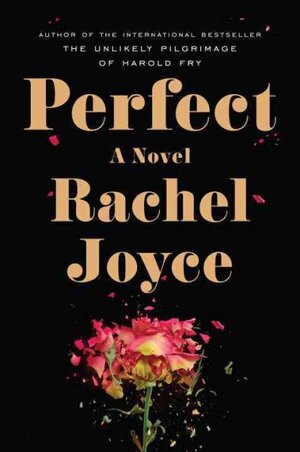
It’s a lot easier to find good old books than good new ones. Old books have the benefit of hindsight--go back 50 years and the dross has mostly disappeared. Pick up a new release and you can’t be sure if you’re picking up the new David Foster Wallace or the new Dan Brown. So when I get a book like Perfect, which is moving, emotionally and structurally complex but easy to read, and is just that GOOD, it’s such a treat that I can’t wait to share it.
Perfect is only Joyce’s second novel, but it’s made me think I should seek out her first. Hinging on an insignificant event--two seconds added to the year in the 70s by the UK government--it is told with in split perspective, with chapters in the past, featuring Byron, an unusually sensitive child for whom the two seconds are a terrifying prospect, and chapters in the present, featuring a man named Jim who seems to be suffering from some extreme OCD disorder and is struggling to maintain both his job and his fragile grip on reality. However, there’s really no way to discuss Jim’s section without delving pretty deeply into spoiler territory, so I’ll focus on Byron here.
Byron is one of those protagonists who is simultaneously relatable and a little offputting. A grade schooler who’s frightened of everything, Byron’s security is built on two things: his relationship with his best friend, James, and his saintly mother, Diana. Something happens early in the novel that upends Byron’s world and he spends the rest of the novel trying to make sense of it. There’s no way to complete this review without the spoilers below, which occur within the first 30 or so pages of the book, so stop reading now if you want to go in blind like I did.
SPOILERS BELOW
On the way to school, in the fog, driving through a bad part of town, Diana hits a little girl on a bicycle and doesn’t notice due to the weather. Byron sees it happen but is afraid to say anything, to his mother or anyone else. This event sets into motion a slow motion trainwreck as Byron and James try to stop something that might be unstoppable.
Because this book has been out maybe a week, I don’t want to spoil any more of it. I will say, though, that Perfect is an unusually rewarding book. I read a lot of novels, and while I can appreciate the low-key epiphany of an ending, there’s something gratifying about a novel that manages such a strong emotional payoff while still leaving open some ambiguity. Some late novel twists and turns could have easily come off gimmicky, but Joyce’s attention to detail and sustained atmosphere of a slightly off-kilter fable keep the whole thing on the rails to the very end. She manages to communicate real tragedy without ever succumbing to miserablism, and, in the end, Perfect even manages to be uplifting in its own unique way.
Showing posts with label TLC Book Tours. Show all posts
Monday, January 27, 2014
Perfect by Rachel Joyce
Labels:
coming of age,
England,
rachel joyce,
TLC Book Tours
Thursday, May 2, 2013
Half as Happy by Gregory Spatz
Half as Happy, the newest short story collection from Gregory Spatz, is about choices. Oh, it’s about a lot of other things too, which I’ll get to shortly, but mostly, it’s about people faced with decisions, some voluntary, some not, that impact their lives in ways they don’t foresee. The characters that populate these eight tales often don’t know much more than the reader, and their moments of epiphany, when they occur, are often obscured--we’re left to discern them ourselves.
As with most short story collections, Half as Happy defies easy summation. There’s a pair of identical twins, in love with the same woman; a big game hunter who’s having some marriage trouble; a bowmaker. and plenty of sex and death. In Spatz’s world, sex and death are ever-present spectres, the former to bring together, the latter to pull irreconcilably apart.
And everyone is always disappearing. Some people die. Some retreat so far into themselves that they disappear. One character diets until she almost literally plucks herself from existence. And yet, this world of incorporeal humans, prone to vanish at the slightest touch, is still populated by fully-formed, believable people, people who have a choice to make, a choice that, unbeknownst to them, decides their existence or lack of it.
I realize this review is a little more abstract than usual, but the themes Spatz wrestles with resonate with me. The world of Half as Happy, in spite of its often sad circumstances, is not a deterministic one--the characters often make the wrong decision, but the decision is theirs to make. And the melancholy collection ends--and this may be a very minor spoiler--on a happy note just in case the reader had gotten the idea that bad choices are always the end.
As with most short story collections, Half as Happy defies easy summation. There’s a pair of identical twins, in love with the same woman; a big game hunter who’s having some marriage trouble; a bowmaker. and plenty of sex and death. In Spatz’s world, sex and death are ever-present spectres, the former to bring together, the latter to pull irreconcilably apart.
And everyone is always disappearing. Some people die. Some retreat so far into themselves that they disappear. One character diets until she almost literally plucks herself from existence. And yet, this world of incorporeal humans, prone to vanish at the slightest touch, is still populated by fully-formed, believable people, people who have a choice to make, a choice that, unbeknownst to them, decides their existence or lack of it.
I realize this review is a little more abstract than usual, but the themes Spatz wrestles with resonate with me. The world of Half as Happy, in spite of its often sad circumstances, is not a deterministic one--the characters often make the wrong decision, but the decision is theirs to make. And the melancholy collection ends--and this may be a very minor spoiler--on a happy note just in case the reader had gotten the idea that bad choices are always the end.
Labels:
gregory spatz,
half as happy,
short stories,
TLC Book Tours
Thursday, March 14, 2013
The Myth of Persecution by Candida Moss
Let’s start with my biases. In some ways, I might not be the target audience
for this book. I’m a pretty conservative Christian and believe that the
Bible is what it says it is. I don’t put a lot of stock in biblical
textual criticism that appeals to things like “Q”, and I think a lot of
liberal theology is a joke. On the other hand, maybe I’m exactly who
it’s for: a believer who wants to know the truth even if it’s difficult
or different. Unfortunately, The Myth of Persecution was
disappointing--not only did I disagree with Moss’ conclusions in many
instances, but I also didn’t find many of her arguments rigorous enough
to be worthy of serious consideration.
But first, the good. Moss is a good writer, and the book moves along at a nice clip, covering a lot of material that could have been dull in a quick, enjoyable way. I also really appreciated her attitude throughout, and her desire for open dialog and honest examination of even the most sacred of Christian cows. When she discussed Christians and their modern day martyr complex, I found myself agreeing with her that positing an “us-vs.-them” approach to life ultimately stifles dialog and and prevents open communication and fellowship from taking place. I’ll even go a step further and say that, when Moss draws conclusions at the close of each section, I often agreed with her big picture points, even while i disagreed with the manner in which she reached them.
I don’t want to go through the issues I had point by point, but here’s a summary, followed by a couple examples. Primarily, Moss seems to operate from the perspective that Christian writers can’t be trusted. In virtually every instance where a Christian document disagreed with a non-Christian document--or, in some cases, was simply not corroborated by a secular one--the Christian document is treated as though it were clearly incorrect. Christian writers are repeatedly referred to as “shrill” and Moss clearly views them as uncredible. There are a lot of semantic games as well, one in particular that I’ll touch on below, and data that seems to contradict the thesis of the book--that Christians never experienced sustained persecution--is frequently glossed over lightly.
For example, when discussing Saul, who later became the Apostle Paul, and his persecution of believers, she allows that this may, indeed be an example of actual persecution; however, she then reframes it thusly:
This isn’t the only instance of such pedantry either. Moss develops much of her thesis by carefully delineating between persecution and prosecution. Persecution, in the sense Moss uses it, covers only instances of violence targeted toward a specific group. Therefore, when Decius passed a law forbidding Christians from defending themselves in a court of law, this is not “persecution” but “prosecution”. She draws this same distinction between governmental “persecution” and personal “prosecution”. This seems ridiculous on its face: would anyone seriously argue that the Jews were not persecuted when they were ghettoized in Germany? Did their persecution begin only when violence against them was systematized?
Throughout the book, Moss relies on specious constructions like these, as well as examples that end with “We simply can’t know for sure” but carry the strong implication that her conclusions are correct. She takes traditional stories of martyrs, picks apart the embellishments, and then, frequently, dismisses the story altogether. She even does this with the story of Christ himself, whose death she unconvincingly compares to Socrates, after which she states,
A positive review of the book, from an atheist perspective
But first, the good. Moss is a good writer, and the book moves along at a nice clip, covering a lot of material that could have been dull in a quick, enjoyable way. I also really appreciated her attitude throughout, and her desire for open dialog and honest examination of even the most sacred of Christian cows. When she discussed Christians and their modern day martyr complex, I found myself agreeing with her that positing an “us-vs.-them” approach to life ultimately stifles dialog and and prevents open communication and fellowship from taking place. I’ll even go a step further and say that, when Moss draws conclusions at the close of each section, I often agreed with her big picture points, even while i disagreed with the manner in which she reached them.
I don’t want to go through the issues I had point by point, but here’s a summary, followed by a couple examples. Primarily, Moss seems to operate from the perspective that Christian writers can’t be trusted. In virtually every instance where a Christian document disagreed with a non-Christian document--or, in some cases, was simply not corroborated by a secular one--the Christian document is treated as though it were clearly incorrect. Christian writers are repeatedly referred to as “shrill” and Moss clearly views them as uncredible. There are a lot of semantic games as well, one in particular that I’ll touch on below, and data that seems to contradict the thesis of the book--that Christians never experienced sustained persecution--is frequently glossed over lightly.
For example, when discussing Saul, who later became the Apostle Paul, and his persecution of believers, she allows that this may, indeed be an example of actual persecution; however, she then reframes it thusly:
“It wasn’t until the end of the first century that Jesus followers began to refer to themselves as “Christians”. The historical period when Stephen died and Paul was writing cannot be considered a period in which Jews persecuted Christians, because Christians did not yet exist.”This is semantic hair-splitting of the worst kind. “Christian” literally means “little Christ” and the obvious implication is that a Christian is simply a Christ-follower. By Moss’ logic, Christ-followers who call themselves something besides “Christian” cannot be broadly thought of as persecuted Christians even if they are identical in all but name.
This isn’t the only instance of such pedantry either. Moss develops much of her thesis by carefully delineating between persecution and prosecution. Persecution, in the sense Moss uses it, covers only instances of violence targeted toward a specific group. Therefore, when Decius passed a law forbidding Christians from defending themselves in a court of law, this is not “persecution” but “prosecution”. She draws this same distinction between governmental “persecution” and personal “prosecution”. This seems ridiculous on its face: would anyone seriously argue that the Jews were not persecuted when they were ghettoized in Germany? Did their persecution begin only when violence against them was systematized?
Throughout the book, Moss relies on specious constructions like these, as well as examples that end with “We simply can’t know for sure” but carry the strong implication that her conclusions are correct. She takes traditional stories of martyrs, picks apart the embellishments, and then, frequently, dismisses the story altogether. She even does this with the story of Christ himself, whose death she unconvincingly compares to Socrates, after which she states,
“Every time someone is referred to or described as dying like Christ they are actually dying like Socrates and the Maccabees”Moss is a scholar of martyrdom, and to some extent, I’m willing to believe that her more scholarly works--this is her first for a general audience--are more substantially argued. The history she covers is fascinating, and her advocacy for historical skepticism is valuable. Her ultimate point--that a martyr complex inhibits, rather than enhances, the Christian life, is strong, and one that many Christians I know could stand to learn. Unfortunately, Moss’ biases and over-reliance on semantics severely undercut her arguments and the book as a whole.
A positive review of the book, from an atheist perspective
Labels:
candida moss,
christianity,
martyrdom,
nonfiction,
TLC Book Tours
Friday, February 22, 2013
Not Less Than Everything, edited by Catherine Wolff
The concept of discipleship is helpful here: obedience to external commands is never enough. Our behavior, our motivation, our identity should reflect the teachings and the example of the one we are following.
Heresy is a tricky thing. Do it right, and you end up Martin Luther, lionized for throwing off the shackles of a legalistic and ungodly institution. Do it wrong, and you end up ostracized, forgotten or, worse, mocked by history, a cautionary tale.
The original blurb for Not Less Than Everything was something along the lines of, “Catholic writers write about their favorite heretics,” and, of course, how could I pass that up? Having read the book, I don’t think the description does it justice, but it was helpful in keeping me in the right mindset--namely that striking out, passively or actively, against the Catholic Church was a big deal. As a Protestant, I can just find a new church. A devout Catholic may believe, like the Whiskey Priest in The Power and the Glory, that excommunicated from the church he's damned. It adds weight to the decisions faced by the various “saints” in the book, not all of which have been--or, in the case of a few, ever will be--beatified. What they have in common, however, is their willingness to put their fate in God’s hands, trusting that following Christ’s example takes precedence over strict adherence to every papal edict.
As in most essay collections, the quality of the writing in Not Less Than Everything varies a fair amount. Some of the essays, such as the one on Max Scheler, are a bit esoteric; others, such as the scintillatingly titled, “A Pastoral, Person-Oriented Theology Worthy of Vatican II”, are just dry. Most, however, take an interesting approach to their subjects without lapsing into hagiography or strict biography. The best essays, in fact, tend to be the ones that treat their subjects as a jumping-off point, like Tom Beaudoin’s essay on Ignatius of Loyola, which he uses to make a larger point about the unstable relationship between critically thinking about one’s religion and blindly accepting it, and Ann Patchett’s The Worthless Servant, which tells a simple but powerful story of a priest who goes out to the highways and byways, giving cold glasses of water in Jesus’ name.
My favorite essay in the collection is the most different. “I Pray I May Be Ready With My Witness” tells of the conversion and struggles of troubled poet John Berryman. Berryman is one of my favorites, and reading about his childhood, his conversion, and his eventual suicide was heartbreaking. It is written by Paul Mariani, who I’d never heard of, and I’d like to close the review with an excerpt:
Heresy is a tricky thing. Do it right, and you end up Martin Luther, lionized for throwing off the shackles of a legalistic and ungodly institution. Do it wrong, and you end up ostracized, forgotten or, worse, mocked by history, a cautionary tale.
The original blurb for Not Less Than Everything was something along the lines of, “Catholic writers write about their favorite heretics,” and, of course, how could I pass that up? Having read the book, I don’t think the description does it justice, but it was helpful in keeping me in the right mindset--namely that striking out, passively or actively, against the Catholic Church was a big deal. As a Protestant, I can just find a new church. A devout Catholic may believe, like the Whiskey Priest in The Power and the Glory, that excommunicated from the church he's damned. It adds weight to the decisions faced by the various “saints” in the book, not all of which have been--or, in the case of a few, ever will be--beatified. What they have in common, however, is their willingness to put their fate in God’s hands, trusting that following Christ’s example takes precedence over strict adherence to every papal edict.
As in most essay collections, the quality of the writing in Not Less Than Everything varies a fair amount. Some of the essays, such as the one on Max Scheler, are a bit esoteric; others, such as the scintillatingly titled, “A Pastoral, Person-Oriented Theology Worthy of Vatican II”, are just dry. Most, however, take an interesting approach to their subjects without lapsing into hagiography or strict biography. The best essays, in fact, tend to be the ones that treat their subjects as a jumping-off point, like Tom Beaudoin’s essay on Ignatius of Loyola, which he uses to make a larger point about the unstable relationship between critically thinking about one’s religion and blindly accepting it, and Ann Patchett’s The Worthless Servant, which tells a simple but powerful story of a priest who goes out to the highways and byways, giving cold glasses of water in Jesus’ name.
My favorite essay in the collection is the most different. “I Pray I May Be Ready With My Witness” tells of the conversion and struggles of troubled poet John Berryman. Berryman is one of my favorites, and reading about his childhood, his conversion, and his eventual suicide was heartbreaking. It is written by Paul Mariani, who I’d never heard of, and I’d like to close the review with an excerpt:
Protesters were being tried, imprisoned and fined, while others--college students--were being gunned down for refusing to participate any longer in the madness of Vietnam. The homeless were still homeless and the hungry went on being hungry. And, yes, his own body was failing and, yes, he had made mistakes and, yes, he was a human wreck, but he would bear witness in a terrible time as best he could. He hoped and prayed the heretic Origen was right after all and that Hell was “empty / Or will be at apocatastasis,” that is, at the end of time. Human failure--sin--seemed inevitable, given who and what we were. And, yes, no doubt we would suffer for it “now & later / but not forever, dear friends & brothers!”
I like to think of John Berryman as the patron saint of purgatory, shoulders hunched, still climbing on all fours the steep inclines of those mountains toward that distant summit shimmering in light, relieved to know he can sin no more.
Labels:
Catherine Wolff,
Catholicism,
christianity,
essays,
religion,
TLC Book Tours
Monday, December 17, 2012
Flight Behavior by Barbara Kingsolver
I’ve
struggled a little with how to review Flight Behavior because my
feelings about it are conflicted. I was extremely excited to receive an
advance copy for review, and, at first, it met my expectations. The
prose was good, the main character, Dellarobia, was well-drawn, and the
plot was intriguing: Dellarobia climbs the mountain behind her house,
planning to cheat on her husband, only to have her mind changed when the
side of the mountain appears to be on fire. Upon closer inspection, it
turns out the “fire” is actually a massive migration of butterflies
whose migratory patterns have been messed up by climate change.
There are other characters, the primary one being Ovid Byron, a scientist--entomologist, probably--who arrives on Dellarobia’s farm to study the butterflies. He’s the most developed character outside of Dellarobia herself, and when the two of them share a scene, things work pretty well. Kingsolver’s prose is excellent--her language is evocative and warm without being overblown, and it’s well-suited for describing the ethereal beauty of the butterflies.
However, after getting about midway through the book, I began to have misgivings. First, it was the speechifying. Look, I’m not a climate change denialist, and I largely sympathize with Ovid’s (and Kingsolvers) concerns about the environment. That said, there are numerous multi-page conversations that do little to advance the plot, but instead serve as a way to soapbox global warming. Kingsolver is a good writer--surely there must have been a better way to embed the information than exposition dumps disguised as dialog. Some of it is interesting, but no one likes to feel like their novel is preaching to them.
The other issue I had with the book involves its treatment of the non-Dellarobia characters in her hometown. They are, at the beginning, presented in the broadest way possible. Her husband, nicknamed Cub, is a redneck, as his father, nicknamed Bear. His mother, Hester, is overbearing and controlling, and mostly unkind. They’re all deeply religious, and believe that the butterflies are a sign for God. They’re also vehement climate change denialists, at least at the beginning, although their views do change minimally throughout the novel. Overall, though, the book gives them the short shrift. We are told repeatedly what a good man Cub is, even if he isn’t quite the good man for Dellarobia, but we’re never really shown, so my ultimate impression of him was that he was a man-child who never even tried to be an adult. Bear gets even less characterization. Hester is a legitimately complex character, but she disappears for long stretches of the book, and a revelation about her near the end never really resolves. I felt no love in Flight Behavior for any of the tertiary characters, save maybe Dellarobia’s rambunctious friend Dovey, and though the book seems to be presenting some sort of faith-vs-reason dichotomy, it lands so firmly on the side of reason that it sometimes feels more like a satire than a realistic novel.
Finally, there’s the issue of the ending, which I will be partially spoiling below. If you haven’t read the book and don’t want to know the ending, stop reading now.
ENDING SPOILERS
The novel ends with Dellarobia deciding that, yes, she has married the wrong man, so she decides to get a divorce, move out of town, and go back to school. She breaks this to her son by a) telling him she has some exciting news b) sharing said news i.e. that she’s moving away and going back to school but he’ll still be able to see her c) justifying her decision by comparing it to crapping the bed, and d) withholding what is essentially her going away gift, an iPhone, until her young son admits that things will never be the same. Lest this sounds like an exaggeration, here’s the passage:
There are other characters, the primary one being Ovid Byron, a scientist--entomologist, probably--who arrives on Dellarobia’s farm to study the butterflies. He’s the most developed character outside of Dellarobia herself, and when the two of them share a scene, things work pretty well. Kingsolver’s prose is excellent--her language is evocative and warm without being overblown, and it’s well-suited for describing the ethereal beauty of the butterflies.
However, after getting about midway through the book, I began to have misgivings. First, it was the speechifying. Look, I’m not a climate change denialist, and I largely sympathize with Ovid’s (and Kingsolvers) concerns about the environment. That said, there are numerous multi-page conversations that do little to advance the plot, but instead serve as a way to soapbox global warming. Kingsolver is a good writer--surely there must have been a better way to embed the information than exposition dumps disguised as dialog. Some of it is interesting, but no one likes to feel like their novel is preaching to them.
The other issue I had with the book involves its treatment of the non-Dellarobia characters in her hometown. They are, at the beginning, presented in the broadest way possible. Her husband, nicknamed Cub, is a redneck, as his father, nicknamed Bear. His mother, Hester, is overbearing and controlling, and mostly unkind. They’re all deeply religious, and believe that the butterflies are a sign for God. They’re also vehement climate change denialists, at least at the beginning, although their views do change minimally throughout the novel. Overall, though, the book gives them the short shrift. We are told repeatedly what a good man Cub is, even if he isn’t quite the good man for Dellarobia, but we’re never really shown, so my ultimate impression of him was that he was a man-child who never even tried to be an adult. Bear gets even less characterization. Hester is a legitimately complex character, but she disappears for long stretches of the book, and a revelation about her near the end never really resolves. I felt no love in Flight Behavior for any of the tertiary characters, save maybe Dellarobia’s rambunctious friend Dovey, and though the book seems to be presenting some sort of faith-vs-reason dichotomy, it lands so firmly on the side of reason that it sometimes feels more like a satire than a realistic novel.
Finally, there’s the issue of the ending, which I will be partially spoiling below. If you haven’t read the book and don’t want to know the ending, stop reading now.
ENDING SPOILERS
The novel ends with Dellarobia deciding that, yes, she has married the wrong man, so she decides to get a divorce, move out of town, and go back to school. She breaks this to her son by a) telling him she has some exciting news b) sharing said news i.e. that she’s moving away and going back to school but he’ll still be able to see her c) justifying her decision by comparing it to crapping the bed, and d) withholding what is essentially her going away gift, an iPhone, until her young son admits that things will never be the same. Lest this sounds like an exaggeration, here’s the passage:
“What if I want everything to stay how it is?” he asked.The high-school language ("Oh, man", "I'm not even kidding") seems wildly inappropriate for breaking world-shattering news to your child. This section so impacted my view of Dellarobia that it retroactively tainted the rest of the book. The story begins with her about to make a selfish mistake, and ends with her selfishly upending everyone’s lives and forcing them to accept it whether they like it or not. The very end comes out of nowhere, and feels like a cosmic attempt to validate Dellarobia’s choice, but her treatment of her child and husband had already wrecked her character for me by then. Maybe this is just a personal bias, I don’t know. All I can say is that, while it has its strong points, I ultimately didn’t enjoy Flight Behavior that much, even though I really wanted to.
“Oh, man, that’s the bite. Grown-ups want that too. Honestly! That’s what makes them crap the bed and stay in it, I’m not even kidding.”
His eyes scooted away from hers, avoiding the verdict.
“It won’t ever go back to the way it was, Preston. You have to say that right now, okay? Just say it and I’ll give you the pod-thing.”
He glanced over at her, making sure, and said it. “It won’t ever go back to how it was.”
“Okay” She handed it over. “You’re the man.”
Tuesday, November 20, 2012
Because You Have To: A Writing Life by Joan Frank
I wish I’d read Because You Have To with a highlighter in hand.
Where most books on writing seem to be written by fairly well-known authors or teachers, Joan Frank’s new collection of essays on the writing life comes from a different place, the pen of a writer who has learned, in her own words, “there may not be any breakthrough.” This is a woman who has published five works of fiction, been reviewed in the New York Times, but has come to accept that she may never be a household name, never able to answer the question, which she addresses in an essay, “Have you written anything I’ve heard of?” in the affirmative.
And yet, she continues to write, and write well, because, well, because she has to. Reading her essays felt more relatable to me, a wannabe writer who has published one story and a couple poems, than, say, Stephen King’s On Writing--although it’s good too. There is a compulsion in everyone who calls themselves a writer to create, to put the words down on paper and make them real, and Frank expresses that feeling more eloquently than most. She understands, and communicates, that writing is not about fame, or money, or notoriety. It’s about desire, about an insatiable need to get what’s inside outside. Every writer, famous or not, can relate to that.
Because You Have To isn’t a book on craft, for the most part. It’s more similar to Anne LaMott’s Bird by Bird or Ray Bradbury’s Zen and the Art of Writing. It’s full of advice--or sometimes just empathy--about the mundane things in a writer’s life: rejection letters, finding--or making--a place to write, and feeling as though you must “steal” time from the real world in order to get it down on paper.
Ultimately, what a reader gets from this sort of collection probably depends on what they brought into it. If they don’t write, have no desire to write, they won’t come away with a real understanding of the madness; but anyone who’s felt like they would burst if they didn’t tell their story, well, this one’s for you.
Where most books on writing seem to be written by fairly well-known authors or teachers, Joan Frank’s new collection of essays on the writing life comes from a different place, the pen of a writer who has learned, in her own words, “there may not be any breakthrough.” This is a woman who has published five works of fiction, been reviewed in the New York Times, but has come to accept that she may never be a household name, never able to answer the question, which she addresses in an essay, “Have you written anything I’ve heard of?” in the affirmative.
And yet, she continues to write, and write well, because, well, because she has to. Reading her essays felt more relatable to me, a wannabe writer who has published one story and a couple poems, than, say, Stephen King’s On Writing--although it’s good too. There is a compulsion in everyone who calls themselves a writer to create, to put the words down on paper and make them real, and Frank expresses that feeling more eloquently than most. She understands, and communicates, that writing is not about fame, or money, or notoriety. It’s about desire, about an insatiable need to get what’s inside outside. Every writer, famous or not, can relate to that.
Because You Have To isn’t a book on craft, for the most part. It’s more similar to Anne LaMott’s Bird by Bird or Ray Bradbury’s Zen and the Art of Writing. It’s full of advice--or sometimes just empathy--about the mundane things in a writer’s life: rejection letters, finding--or making--a place to write, and feeling as though you must “steal” time from the real world in order to get it down on paper.
Ultimately, what a reader gets from this sort of collection probably depends on what they brought into it. If they don’t write, have no desire to write, they won’t come away with a real understanding of the madness; but anyone who’s felt like they would burst if they didn’t tell their story, well, this one’s for you.
Labels:
essays,
Joan Franks,
nonfiction,
TLC Book Tours,
writing
Wednesday, November 14, 2012
Flight Behavior by Barbara Kingsolver
Ovid was keeping track as the temperatures crept to freezing, miserably watching the downward march. After decades of chasing monarchs and their beautiful mysteries, he would now be with them at the end, for reasons he had never in his whole life foreseen. She wished he could explain this to the kids who'd been in her yard. Some deep and terrible trouble had sent the monarchs to the wrong address, like the protesters themselves. The butterflies had no choice but to trust in their world of signs, the sun's angle set against a turn of the seasons, and something inside all that had betrayed them.
One day Dellarobia Turnbow climbs the side of her mountain on her family's property in eastern Tennessee, intending on an illicit rendezvous with a man who is not her husband, but something stops her first: the mountain is on fire. Or, at least, that's the way it seems. Later she discovers that what she's seen is not fire but an enormous cluster of monarch butterflies who have settled on the mountain, diverted somehow from their traditional wintering home in Mexico.
The monarchs intrude upon Dellarobia's life: They contemplate her family's plan to cut down the mountain's trees for money. Tourists come, and she becomes a minor celebrity. Scientists come, living on the Turnbow property to study this unusual event. Some changes are good and some are bad; most lie somewhere in between. And even though Kingsolver is careful to keep her representatives of science cautious in their claims, her metaphors make it clear--such upheavals can only be the result of global warming. What Dellarobia undergoes is, quite literally, a sea change.
Kingsolver seems to have two goals here: One, to illustrate the way climate change can affect an individual human life, to rescue it from abstraction. Two, to bridge the gap between the academic and the regular Joe, and illustrate the possibility of common ground between them. I'm not sure she succeeds in this second goal; while Kingsolver clearly writes out of great affection for the salt-of-the-earth types that make up Dellarobia's community, she doesn't wholly avoid the temptation to skewer them as rubes. For instance, Dellarobia convinces her husband and father-in-law (Cub and Bear, respectively) to take one last look at the land before signing the logging contract, without telling them about the butterflies, which leads to an absurd plot point in which Cub announces at church that Dellarobia foresaw them in a vision. This ensues:
The sunglasses, the out-of-place folksiness of "Sister Turnbow" and "seen the wonders," which are somehow incongruent with the casualness of the church and its cafe, and the sheer stupidity everyone in this scene seems to share--they add up to something that isn't the friendly ribbing that I think Kingsolver is aiming at. Contrast the character of the scientist, Ovid Byron, who is described as "Tall, dark, and handsome, but extra tall, extra dark. Okay, extra all three."
Is it a surprise when Dellarobia falls in love? Kingsolver chooses to make Byron an immigrant from the US Virgin Islands, who Dellarobia thinks sounds like a "reggae singer." In other words, she amplifies his otherness, emphasizing his status as an outsider--while fetishizing his exoticness, something which Kingsolver seems to share with Dellarobia. There are good narrative reasons to do this, as there are good reasons to satirize casual fundamentalists in sporty sunglasses, but when you do them both the novel is thrown off balance. In other words, I don't think Flight Behavior represents both sides as equally as it thinks it does.
But I do like the point that Dellarobia makes about the impossible divide between these two camps when she theorizes to Byron that the problem is essentially social, that the reason her community does not believe in global warming has less to do with stupidity or cowardice than the human tendency to divide itself in two. "The environment," as she says, "got assigned to the other team." She goes on:
The enmity between the believers and the skeptics, that is, precedes even the belief itself. Yet, is Kingsolver aware of the ways in which the novel unconsciously preserves that divide, instead of breaking it down?
Flight Behavior is strongest, I think, when it focuses on the first goal: creating a vivid depiction of an individual life who comes to see the upheaval of her life as part of a larger, global phenomenon. The butterflies are a powerful metaphor that dominates the work. Like Dellarobia, they are lost, confused, struggling to survive against impersonal forces that are much stronger. We want the butterflies to make it because of their beauty and mystery, and because if they do perhaps that implies that Dellarobia too can make it, that she too can "[fly] out to a new earth."
One day Dellarobia Turnbow climbs the side of her mountain on her family's property in eastern Tennessee, intending on an illicit rendezvous with a man who is not her husband, but something stops her first: the mountain is on fire. Or, at least, that's the way it seems. Later she discovers that what she's seen is not fire but an enormous cluster of monarch butterflies who have settled on the mountain, diverted somehow from their traditional wintering home in Mexico.
The monarchs intrude upon Dellarobia's life: They contemplate her family's plan to cut down the mountain's trees for money. Tourists come, and she becomes a minor celebrity. Scientists come, living on the Turnbow property to study this unusual event. Some changes are good and some are bad; most lie somewhere in between. And even though Kingsolver is careful to keep her representatives of science cautious in their claims, her metaphors make it clear--such upheavals can only be the result of global warming. What Dellarobia undergoes is, quite literally, a sea change.
Kingsolver seems to have two goals here: One, to illustrate the way climate change can affect an individual human life, to rescue it from abstraction. Two, to bridge the gap between the academic and the regular Joe, and illustrate the possibility of common ground between them. I'm not sure she succeeds in this second goal; while Kingsolver clearly writes out of great affection for the salt-of-the-earth types that make up Dellarobia's community, she doesn't wholly avoid the temptation to skewer them as rubes. For instance, Dellarobia convinces her husband and father-in-law (Cub and Bear, respectively) to take one last look at the land before signing the logging contract, without telling them about the butterflies, which leads to an absurd plot point in which Cub announces at church that Dellarobia foresaw them in a vision. This ensues:
Dellarobia felt the doubtful stares. She'd been sitting it out every week in the cafe, drinking coffee and making her grocery list, in no way deserving of a miracle. And yet a small shatter of applause broke out, like a handful of gravel on a tin shed. Someone very close to them shouted: "Heaven be praised, Sister Turnbow has seen the wonders!" It was the man who'd come in late, with the sporty sunglasses on his head.
The sunglasses, the out-of-place folksiness of "Sister Turnbow" and "seen the wonders," which are somehow incongruent with the casualness of the church and its cafe, and the sheer stupidity everyone in this scene seems to share--they add up to something that isn't the friendly ribbing that I think Kingsolver is aiming at. Contrast the character of the scientist, Ovid Byron, who is described as "Tall, dark, and handsome, but extra tall, extra dark. Okay, extra all three."
Is it a surprise when Dellarobia falls in love? Kingsolver chooses to make Byron an immigrant from the US Virgin Islands, who Dellarobia thinks sounds like a "reggae singer." In other words, she amplifies his otherness, emphasizing his status as an outsider--while fetishizing his exoticness, something which Kingsolver seems to share with Dellarobia. There are good narrative reasons to do this, as there are good reasons to satirize casual fundamentalists in sporty sunglasses, but when you do them both the novel is thrown off balance. In other words, I don't think Flight Behavior represents both sides as equally as it thinks it does.
But I do like the point that Dellarobia makes about the impossible divide between these two camps when she theorizes to Byron that the problem is essentially social, that the reason her community does not believe in global warming has less to do with stupidity or cowardice than the human tendency to divide itself in two. "The environment," as she says, "got assigned to the other team." She goes on:
"These positions get assigned to people," she said. "If you've been called the bad girl all your life, you figure you're already paying the price, you should go on and use the tickets. If I'm the redneck in the pickup, fine, let me just go burn up the some gas."
The enmity between the believers and the skeptics, that is, precedes even the belief itself. Yet, is Kingsolver aware of the ways in which the novel unconsciously preserves that divide, instead of breaking it down?
Flight Behavior is strongest, I think, when it focuses on the first goal: creating a vivid depiction of an individual life who comes to see the upheaval of her life as part of a larger, global phenomenon. The butterflies are a powerful metaphor that dominates the work. Like Dellarobia, they are lost, confused, struggling to survive against impersonal forces that are much stronger. We want the butterflies to make it because of their beauty and mystery, and because if they do perhaps that implies that Dellarobia too can make it, that she too can "[fly] out to a new earth."
Labels:
Barbara Kingsolver,
butterflies,
TLC Book Tours
Subscribe to:
Posts (Atom)


