Sunday, January 6, 2019

Folktales of Okinawa

When Agaripatoruma opened his eyes, he found himself inside his castle. The woman on the horse was now a dead mosquito, He carefully put the mosquito in his hand and went to the room where his wife's body lay. He placed the mosquito under her nose and soon her cheeks were pink and she began to breathe like she was sleeping. He waited and finally Fumukaji opened here eyes and looked upon him.

About four years ago I became motivated to read more about Okinawa. I bought a collection of modern fiction, a history of written in English, and this collection of folktales. I finished the fiction three years ago. I never finished the history, and I mostly ignore it on my nightstand. The folktales, however, I've been picking up on and off whenever the mood strikes me. A couple days ago, I finially finished them off.

The collection is remarkable. Professor Shoji Endo, of the Okinawa International University, moved to Okinawa in the early 1970s and began conducting a field survey of these stories. At the time that the book was published in 1995, he had 55,000 collected. (This collection includes a mere twenty-eight.).

And then, apparently, the Bank of the Ryukyus International Foundation thought it'd be a good idea to publish the book, with alternating English and Japanese translations. I remembered seeing this book because my mother borrowed a copy from her friend and showed it to me when I was home from college, maybe fifteen years ago. I always wanted to read it, so I found a used copy online.

I'm glad I did. I'm not going to say the folktales here are better or worse than other folktales; I don't feel comfortable having an opinion in that regard. They were, however, fun to read. The greedy characters always got their comeuppance; the good characters always suffered some tragedy, but were ultimately rewarded for their steadfast reliance on whichever virtue the folktale happened to be extolling.

As an example, in Agaripatoruma and Fumukaji, excerpted above: Agaripatoruma and Fumukaji are happily married, but Agaripatoruma must go off to war; to comfort his worried wife, he leaves a dish of water, instructing her that as long as the water remains clear, he is safe and healthy. But then he gets injured and the water turns red; Fumukaji, fearing the worst and knowing that she can't live on without him, commits suicide.

This leads Agaripatoruma on a quest to bring his wife back from the dead. After consulting a shrine maiden, licking pus from a leper (this sounds gross, but it was cool, trust me), riding between two bulls, kidnapping a woman from the godly realm, transforming the kidnappee into a mosquito, and then, finally, using that mosquito to resuscitate his wife.

A fun read, and I'd recommend it to anyone who wants a low-key way to learn about Okinawan culture.

Saturday, January 5, 2019

Not All Dead White Men by Donna Zuckerberg

The men of the Red Pill use and abuse classical antiquity in a variety of ways.  They have found ample material from ancient Greece and Rome to support their ideology, from Stoic self-help manuals to Ovidian seduction advice to ancient models of patriarchal marriage.  Although their analyses of ancient sources rarely display much understanding of context and nuance, Red Pill writers nevertheless are adept at manipulating ancient sources to make them speak meaningfully to contemporary concerns.  They have appropriate the tests and history of ancient Greece and Rome to bolster their most abhorrent ideas: that all women are deceitful and degenerate; that white men are by nature more rational than (and therefore superior to) everyone else; that women's sexual boundaries exist to be manipulated and crossed; and finally, that society as a whole would benefit if men were given the responsibility for making all decisions for women, particularly over their sexual and reproductive choices.

Why are right-wing nutjobs obsessed with the classical world?  In the New Yorker, Margaret Talbot explains that Greek and Roman statuary were painted, not white, but that the myth of their whiteness is seized on by the extreme right so they might project their ideas of race and racial threat onto them.  What Talbot does (it's a fascinating article, go read it) for race, Donna Zuckerberg does for gender in her book Not All Dead White Men: she traces the way that the alt-right (what she calls the "Red Pill community") uses ancient literature to support their ideas about gender politics.

The book comprises three brief essays.  The first describes how men use the philosophy of Stoicism to bolster claims of male intellectual superiority.  While Zuckerberg claims not to be interested in "debunking" the right's readings of classical literature, she does suggest that they misread, or at least selectively read, Stoic philosophers, ignoring their assertion that women are as capable of virtue as men.  She even suggests that Stoicism, used correctly, could be a valuable philosophical outlook for men who feel dispossessed and estranged.  But in practice, she explains, Stoicism is a way for the right to indulge in anger-based rhetoric while denying that they are angry, claim emotionlessness while projecting heated emotions onto their opponents.

The second essay is about the pick-up community.  (Does anyone remember when Mystery, one of the original pick-up artists, had his own reality show where he taught men how to pick up women?  That certainly seems misbegotten now.)  For pick-up artists, the classic text is Ovid's Ars Amatoria, a mock didactic poem about how to seduce women.  Zuckerberg concedes that Ovid's notion of women's sexual boundaries is pretty permeable, and often Ovid advocates what we would consider rape, even if it's tongue-in-cheek.  But whether pick-up artists read Ovid rightly or wrongly, their use of Ovid is meant to suggest a continuity between the past and the present that validates their own ideas and actions: because Ovid sees women as little more than machines of conditioning, universally receptive to the right stimuli, pick-up artists can claim that all women are "that way" and have always been, to the chagrin of modern feminism.

Zuckerberg emphasizes this point in the final essay, in which she reads modern rape culture through the lens of the myth of Hippolytus and Phaedra.  Phaedra accuses Hippolytus of rape when she spurns his advances, leading to disaster for them both.  While Zuckerberg doesn't find this myth discussed much by Red Pillers, she claims that it illustrates the kind of world in which they want to live: one in which women's sexual boundaries are controlled and mediated by fathers and husbands, like Phaedra's are by Theseus.  Again, the rhetorical claim is one of continuity: Red Pill activists want to return to a system of male coverture like the Roman paterfamilias or Greek kyrios, because its ancientness gives it, and them, legitimacy.  Red Pillers want to position themselves as the inheritors of an old tradition from which modern mores have deviated, rather than the reactionaries they are.

Reading this book meant wading through a lot of really disgusting horseshit.  I imagine it was tough for Zuckerberg, having to read through all the "rape is good" blogs and the "women aren't intelligent enough to make decisions" blogs and distill all of that.  It makes you long for the pre-Elliot Rodger, pre-incel, pre-2016 feeling that all of these folks were fringe crazies with no real purchase in the world.  Zuckerberg's style is pretty academic and dry, and I wish there were a little more righteous fire in it, as there is in the conclusion when she talks about the way that her work in this area has made her the target of sexualized and anti-Semitic threats.  She also spares a last minute zing toward reformers on the left who want to reject and replace classical literature in the university canon for their tacit agreement with Red Pill folks who think that Ovid and Marcus Aurelius and Euripides belong to them.  That'd be a book I'd like to read, the one that shows, in love and detail, how that cultural inheritance is for everybody, not just the fedora-topped rape apologists of the modern internet.

Friday, January 4, 2019

Chloe's Top 6.4 of 2018

Welp. As stated earlier, this was not my most successful year of reading; I had a kid, got a new job, started biking to work (and lost my subway commute/primary reading time), and generally destroyed any spare time/brain hormones/energy I had left. I made it to 32 right at the buzzer, and, despite that being the fewest books I've read in years (and probably one of my least intellectual line-ups), I'm pretty impressed that I made it that far. I'm hoping 2019 leaves me with a little more time (haha) or at least a little more ability to read in bed for more than a page at a time, but I'm not hugely optimistic. I may just pad my stats with kid books and start flooding this blog à la Chris with reviews of Sandra Boynton masterpieces. I definitely read more than 75 Sandra Boynton books this year. Watch out, buddy. I'm coming for you.

As is the fashion these days, I tried to read more women writers (I briefly tried for exclusively women, but I succeeded in well over half) and more writers of color (I did less well on that), and also tried to borrow as many as possible from the library (which somewhat dictated what I read when, but was also a surprisingly pleasant experience). I will say that, despite how much more difficult it was to find time to write these reviews, I appreciate them even more than I used to because I genuinely don't think I would have remembered reading any of this if I hadn't taken the time to jot down my ramblings. (Although I accidentally also reviewed the same book twice, so who knows how much I actually remember of anything at this point...)

Top 10/32 is hardly an endorsement, so I give you my top 6.4 in chronological order:

1. The Power by Naomi Alderman-This has stuck with me all year and floats back through my mind constantly. It was haunting and creepy and totally badass.
2. The Idiot by Elif Batuman-I love everything Elif Batuman does, and am glad I got this one in before the baby came and destroyed my brain and ability to process literature.
3. The Gardner and the Carpenter by Alison Gopnik-I've been enjoying Gopnik's takes on parenting and child development as Nathan gets bigger and seems more and more susceptible to being totally destroyed by my poor parenting choices. I may read this again next year just to remind myself that Science says I'm doing okay.
4. Angels in America by Tony Kushner-This made me want to read more plays (which, come to think of it, happens with most plays I read), and was sad and funny and immeasurably complex. I loved it.
5. Unsheltered by Barbara Kingsolver-Kingsolver might be my sweet spot of plot-driven and thought provoking big picture thematic right now. Her stuff is usually pretty divorced from current events, but this was topical in interesting and scary ways.
6. Becoming by Michelle Obama- This was a total guilty pleasure, but I just loved immersing myself in Obama nostalgia. This was way better written than I expected and gave me all the feels.
.4. Fifteen Animals by Sandra Boynton- Great counting practice, relatable content, and strong, unexpected twist at the end. 10/10 will probably read again tomorrow.


Thursday, January 3, 2019

Brent's Top 10 of 2018

Another year, another 50+ books, another embarassing review shortage--but what a great year of reading! I think 2018 might be the most exciting set of books I've tackled yet, and I attribute a lot of that to my decision at the end of last year to read at least half books by women. I also made a concious effort to read less mainstream "classics", and branched a little--into biography, economics, politics, history. But, as usual, the most illuminating works were fiction. So without further ado, the 10 best books I read this year, in no particular order.

Middlemarch - George Eliot
I've read a lot of the classic  doorstops, but Middlemarch sits right at the top of the list  alongside The Brothers Karamazov and Don Quixote. A wonderfully written pastoral with plenty of drama, humor, and fantastic characters, Middlemarch is really in this spot because it was the warmest, most human book I read this year. In spite of its scope, the action takes place on the ground, in kitchens, libraries, chilly estates, taverns, and the people--Dorothea, Casuabon, Lydgate, Rosamund--whose lives revolve around these seemingly mundane things.

The Man Who Loved Children - Christina Stead
If Middlemarch was the warmest book I read this year, The Man Who Loved Children was probably the second chilliest (Anna Kavan's excellent but inscrutable Ice was the first). In addition to the incredibly dysfunctional family at its center, Stead's dialog is both prevalent and cryptic--the book teaches you how to read it but it never goes down smooth. I don't even know if I entirely liked it. But it's so singular and so true somehow, so cruel and unsettling, it deserves to read.

The Death of Ivan Illych and Other Stories - Leo Tolstoy, trans. Pevear/Volkhonsky
My wife Liz read Anna Karenina this year, and it inspired me to pick up this collection fo Tolstoy's short stories and novellas. And boy, were they (mostly) bleak. This collection was laregly composed in the twilight of Tolstoy's life, and, having read War and Peace (an optimistic, early work) and Anna Karenina (a later, mixed bag on the optimism front), I felt I could see Tolstoy's faith in humanity dying. But almost every story ends with a burst of something ineffable, and those bursts--and Tolstoy's unfailing sense of how people act--make everything he wrote worthwhile.

Lives of Girls and Women - Alice Munro
This is, I believe, the fourth collection I've read of Munro's, and it might be the best overall. It's certainly the most consistent. It's basically a novel where every chapter can be read as a standalone. The average Munro story already feels like a novel waiting to happen--it was nice to read a collection where it did.

The Odyssey - Homer, trans. Emily Wilson
This was a bucket list book for me, and I'm so glad I read it first in Wilson's incredibly readable (but still very elegant) translation. It's much less of a pure hero story than I expected--Odysseus might be the first antihero. But the journey's fantastical and encompasses SO MUCH Greek mythology. It's really a lot of fun. Even if you've read The Odyssey before, it's worth picking up Wilson's translation for her great introduction, where she discusses the challenges of translating such a well-known work.

Death Comes for the Archbishop - Willa Cather
I don't love reading about landscapes but I DO love reading about priests. And I actually did love reading Cather's landscapes which, like McCarthy's, capture the feeling of the western US like most can't. The most impressive thing about this slim novel though is the way its loose structure comes together at the end to present a beautiful picture of a life well-lived and a death that feels like bliss instead of terror.

Lincoln in the Bardo - George Saunders
And speaking of death, George Saunders' fictionalization of the death of Abraham Lincoln's son was probably the most moving thing I read this year. I lost an aunt I was very close to unexpectedly in a car accident and the chapter near the end where Willie finally finds peace for himself and the other wandering souls in the Bardo graveyard has come to mind many times. And of course, Saunders is in contention for greatest livign American writer so the prose is inventive and wonderful.

My Brilliant Friend - Elena Ferrante
This book is everywhere and they just made an HBO series about it. But it's still good, a brilliant (see what I did there?) realistic novel about two girls in Italy and their complicated relationship in a time of political and social turmoil in Italy. Really looking forward to reading the other 3 volumes, and Ferrante's other work.

The Autobiography of Malcolm X - Malcom X and Alex Haley
What can I say about this? Certainly one of the most influential autobiographies of the 20th century, Malcolm's rags-to-riches story is given extra dramatic weight due to Haley's decision not to allow Malcolm to rewrite the earlier sections of the book after his acrimonious break from his spiritual mentor Elijah Muhammad, and the result is an autobiography with the dramatic structure of a novel. Malcolm touches on everything--religion, race, class, civil rights, Muhammad Ali--and the final chapter, which Haley wrote after Malcom's death, hits like a brick.

Warlock - Oakley Hall
I love a good western. And Warlock is a very good western. I actually reviewed this one so I won't say much about it here, except that it's really a joy to read about cowboys, outlaws, blood feuds, and all the rest, and still find space to be surprised.

And that's a wrap. I could include almost every other book I read this year in my honorable mentions, but instead, I want to mention Current Affairs, the great online magazine that I spent about half my time this year reading on my journey out of American Capitalism. So on that note, please join us for 2019! It's going to be a good year.


Wednesday, January 2, 2019

Tree of Smoke by Denis Johnson

...Kathy reflected, certainly not for the first time, that the war hadn't been only and exclusively terrible.  It had delivered a sense, at first dreadful, eventually intoxicating, that something wild, magical, stunning might come from the next moment, death itself might erupt from the fabric of this very breath, unmasked as a friend...

Why did the U.S. bother itself in Vietnam?  Tens of thousands of Americans dead, ten times as many Vietnamese, the great waste of life and money and time, for what?  To say that it was to stem the tide of Communism sounds right in a high school history sort of way, and the protagonist of Tree of Smoke, CIA op William "Skip" Sands, sure seems keen on beating Communism.  But the line between the ideology and the great material fact of war seems to have a gap in it somewhere, not at all like the great war of the previous generation.  Tree of Smoke is a novel that presents the Vietnam War as a kind of immense fever dream, not just in the confusion of the jungle, but in the bungled ethos of the war itself.

At first, Tree of Smoke seems like a loving homage to Graham Greene.  Kathy Jones, a Canadian missionary, makes the allusion explicit by comparing Skip, masquerading in the Philippines as a corporate stooge for Del Monte, to the Quiet American.  Skip bristles at the comparison, his motives are not so rigid and his methods, he'd like to think, not so brash.  Skip is part of CIA's Psy Ops--psychological operations, that is--under the tutelage of his uncle, Colonel F. X. Sands.

The Colonel is a living legend, a former POW and war hero who has developed unconventional ideas about how to wage war.  "War is ninety percent myth anyway, isn't it?" he says.  "In order to prosecute our own wars we raise them to the level of human sacrifice, don't we, and we constantly invoke our God.  It's got to be about something bigger than dying, or we'd all turn deserter."  The Colonel advocates complete immersion into local culture and turning myth, "the other fellow's gods," into a psychological tool.  He also advocates a philosophical separation from the CIA chain of command, with predictably problematic results.  For the Colonel, myth and mystery, enemies of clarity, are the only way to wage war:

He woke from an hour's nap and went to the veranda to drink hot, strong coffee less reviving than his thrilling vertigo before the vista of his mistakes, all the wrongness he'd wandered into on the tails of his uncle, the aboriginal Man of Action.  Neanderthal, had been Rick Voss's term.  Mr. Tho came out with a burning mosquito coil in a dish and set it on the arm of the opposite chair, and there you are, simplicity itself, the ember of the foul-smelling incense bead, orange bead tunneling along its spiral path toward extinction and nonentity.  He felt surrounded, assailed, inhabited by such serpentine imagery--the tunnels, Project Labyrinth, the curling catacombs of the human ear... But over all loomed the central and quite different image: the Tree of Smoke.  Yes, his uncle meant to unfold himself like a dark wraith and take on the whole Intelligence service, the very way of it, subvert its unturnable tides.  Or assault it on the handball court.

The Greene pastiche halts early on; the whiskey priest-figure, a Catholic gun-runner for the Communists, is murdered by a blowgun.  If Skip is assigned to keep tabs on the priest, who kills him and why?  Another faction of the CIA?  The Filipinos?  Like Greene, Johnson's warriors are self-defeating, but it's not at all clear that what happens is a mistake rather than a grand mystery.  Johnson's language, with its touches of Beatnik mysticism and high prophecy, are far from Greene's deflating realism.

All of that is prologue.  When the action moves to Vietnam, things get worse and worse.  The project that the Colonel has Sands working on--cultivating a double agent to infiltrate the North Vietnamese--never really gets off the ground, which is impressive in a book that stretches to 700 pages.  It blows up, the Colonel dies under mysterious circumstances, but becomes a kind of myth himself, rumored to have let himself be captured in order to promulgate false info to the Viet Cong.  What info?  Does it matter?  As one character says, "I'd venture the truth is in the legend."  In a different book, that would be a platitude.

Tree of Smoke fills out its considerable bulk with several minor characters.  Besides the Colonel, Skip, and Kathy Jones, there's Bill and James Houston, a pair of down-and-out Arizona brothers who bring the desolation of their lives to the jungle and then bring the madness of the jungle back to Arizona.  Both are petty criminals, frightened children, irresponsible addicts, and while Tree of Smoke doesn't argue that Vietnam ruined them--they were pretty fucked up in the first place--it does want us to see that the war provides no better way.  Johnson, with his loving attention toward junkies and lowlifes, refuses to give us a Vietnam novel without the grunts.  Their connection to the main narrative is tenuous, but they remind us that the Colonel's spooky mythologizing engenders true violence.  But neither does Johnson ignore the Vietnamese: several locals, all of whom are mixed up with the Colonel's double agent scheme, get their turn in the narrative.  And while not all of these are worthwhile (I didn't need to linger so long with the mysterious German assassin, who returns to muse about his Nazi father), the scope of the novel mimics the way the war grows and spins out of control.

I can't tell you what I'd give to be able to write like Johnson.  He's one of those rare writers whose every word seems perfectly considered.  Every now and then, out of the morass of war, a perfect phrase emerges: A bowling ball "traveling away like a son, beyond hope of influence."  James' fear that a man caught by an exploding grenade would "splash around him like paint."  A corpse is described--horribly, but memorably--with its "rag of brain."  And the dialogue zips, right at the edge of sense, as really good dialogue often does.  It's hard to find a book of this immensity where the writing seems so precise and sharp, especially one whose big theme is confusion and mystery.

Tuesday, January 1, 2019

Randy's Top 5 for 2018

Last year I bemoaned my miserable performance (17 books!), which I winnowed down to six books after excluding the lit reviews, business self-help, and re-reads.*

I did much better this years. Though my raw total (21), was only four more than last year's raw total, my modified total was much higher: applying the same exclusions as last year, I read fifteen qualifying books. I also felt like I read much more this year. This was not reflected in my book reviewing (ahem, sorry, Christopher). I violated my solemn oath to review every volume of The Familiar; the only book I did review this year was a re-read. This, I am sad about. Hopefully 2019 is better.

Still, the best-of list is an important (and fun) way for me to engage with my reading for the year, so, reviews notwithstanding, I'm doing a list. For my twenty-one books, a top five feels right.

(5) The Particular Sadness of Lemon Cake by Aimee Bender

"a Dorito asks nothing of you, which is its greatest gift. It only asks that you are not there."

This is one of Brittany's all-time favorite novels. It's been on my to-do list for as long as we've been dating (Admittedly, it's a little shameful that I did not read it sooner). Brittany's love for this novel is justified: the magical realism was perfect, and the plot had good timing.. Highly recommend.

(4) Thinking Fast and Slow by Daniel Kahneman

"It is the consistency of the information that matters for a good story, not its completeness."

This is another book that has been on my to-do list for a long time. Legal writing gurus refer to it with great regularity. The general idea is that our brains have two systems: (1) a quick one that makes a lot of mistakes, but is necessary for general processing of information and (2) a slow one that is deliberate and critical, but also harder to keep going. Legal writing scholars like it for the general proposition that lawyers need to think about this in their writing. Though reading the book was not exactly fun, it has affected how I think about lawyering in a big way.

(3) Alexander Hamilton by Ron Chernow

"In a shockingly brief span, the two men had moved to the brink of a duel and were ready to lay down their lives over an adjective."

Biography written as it should be: engaging, fun but not superficial, contextual without being too in the weeds. I had already been listening the soundtrack for a long time, so I had a sense of what I was getting into. I did not appreciate, however, how well Chernow writes. The biography is not interesting only because Hamilton led an interesting life--Chernow brings him to life, and writes character into everyone else the reader encounters.

(2) The Familiar, Volume 5: Redwood

"Darkness braved ceases to be darkness."

Of all the reviews I did not write this year, I have the most regret about Volumes 4 & 5 of The Familiar. This is doubly so, because the series has been discontinued, indefinitely. The cancellation was, perhaps, predictable. If Danielewski could not convince, for example, the readers of this blog to read The Familiar, who was reading it? I really don't know. I'm the only person I know who has read any of them (which is not my way of self-congratulating--I know how much of an ask it is to read these books).

The lack of interest in the series is particularly sad in light of how good Volume 4 was, but especially in light of how good Volume 5 was. In Volume 5 we finally got to see Danielewski's vision coming into being. It was beautiful the way House of Leaves was beautiful. I pray someone will pick up the series to continue publishing them.

(1) Americanah by Chimamanda Ngozi Adichie

"He took her hand in his, both clasped on the table, and between them silence grew, an ancient silence that they both knew. She was inside this silence and she was safe."

Another book that has long been on my to-do list. (And another favorite of Brittany's). I knew from the first sentence that I was going to love it: "Princeton, in the summer, smelled of nothing, and although Ifemelu liked the tranquil greenness of the many trees, the clean streets and stately homes, the delicately overpriced shops, and the quiet abiding air of earned grace, it was this, the lack of a smell, that most appealed to her, perhaps because the other American cities she knew well had all smelled distinctly." She does that throughout the whole novel (write perfect sentences).

Honorable Mention

My list needs a giant asterisk, which I'm fitting into my lone honorable mention of the year. I was doing really well on my raw total for 2018 until I ran headfirst into a wall: Edward Said's Orientalism (insert Great Wall joke here). I have been wanting to read Orientalism for years, but after Isle of Dogs, I decided to make it a goal for 2018. I started in July. I did not finish.

Nonetheless, it kicked off a still-in-progress journey. Orientalism piqued my interest in my own identity as an Asian American and had me asking questions about representations and treatment of Asians and Asian Americans in Western culture. (E.g., What's up with the random references to Chinatowns in film noir? What's up with oriental flavored ramen?). Crazy Rich Asians came out, which led me to a rabbit-hole of Asian American critical theorists. (E.g., here and here). 

Unfortunately, Orientalism is dense 1970s academic prose. Needing respite, I picked up Yellow: Race in America Beyond Black and White, and then couldn't put it down (shout-out to the coworker who lent it to me). Yellow is my only honorable mention of the year. It served as my introduction to Asian American identity issues (I somehow had not heard of perpetual foreigner syndrome until reading this book, despite the fact that it explained a number of otherwise puzzling incidents from my childhood). A coworker then recommended Ronald Takaki's Strangers from a Different Shore: A History of Asian Americans. I then spent the rest of the year bouncing between Orientalism and Strangers from a Different Shore; and not finishing either.

Which all a long and roundabout way of saying: after I started reading Orientalism in July, my reading took a hit. And, because I didn't finish Orientalism or Strangers from a Different Shore, my best-of list does not, I feel, show the most important development in my 2018 reading: my newfound interest in Asian American studies. (Watch out, 2019!).

Cheers to the new year, cheers to Fifty Books (or however many). Maybe I'll review more than one book this year.

Sunday, December 30, 2018

ALL THE BOOKS

So it turns out that baby plus new full-time job plus life means no time for reviewing books. Who knew? As 2018 draws to a close, here is my frantic attempt to finish reviewing the (not even close to 50) books I haven't gotten around to reviewing yet. Maybe I'll get around to a top 10 by the time Nathan turns 1 in February. Maybe.


An American Marriage by Tayari Jones
This novel tracks the unraveling of a marriage after the husband is wrongfully convicted of a crime and sent to prison. It was well paced and exciting while still asking some big, juicy questions about marriage and commitment. I was pleasantly surprised with the depth Jones is able to achieve while writing what amounts to a romantic thriller.


The Book of Essie by Meghan Maclean Weir
I have an unhealthy obsession with ultra-conservative religions in America, and this book delivered a deliciously engrossing look into the inner-workings of both a fire and brimstone Christian family and a creepily orchestrated reality TV show. The Hicks family has been the focus of a reality TV show for Essie's entire life, and when she becomes pregnant (gasp!), her parents and the show's producers scramble to fit her into the narrative of their squeaky clean ethos. This was a very fun, very immersive read that took me only a few hours. It didn't hold any earth-shattering revelations about mankind or religion or our love of reality TV, but it had some good, fairly unexpected twists and was accessible enough for my currently addled brain.

Rising Strong by Brene Brown
This was my first foray into the cult of Brene Brown, and I was impressed with how genuine and not self-helpy the whole process felt. The central idea of Rising Strong is that by confronting our failures and shortcomings and examining the ways in which we tell ourselves stories about ourselves and our realities, we can emerge stronger and better able to face the world. Brown relies heavily on her own experience as well as extensive interview-based human data, but she weaves in a massive range of other sources from pop lyrics to Dostoevsky, and I was won over by her willingness to make herself vulnerable paired with an unusually sharp understanding of humans and how they tick. This never felt condescending or trite (which is the tone I get from most books that preach some kind of life-altering hot take on the human condition), and I was left willing to read more Brene Brown if I ever have time again.

The Female Persuasion by Meg Wolitzer
Wolitzer is really good at building interesting, multi-dimensional, only partially likable characters, and this was no exception. The novel tracks Greer Kadetsky (great name!) from her fumbling first sexual experience in high school, through college (at her safety school because her parents wouldn't file the financial aid paperwork), and into adulthood as she falls into a career with a feminist superstar. There is a lot of good here, but most interesting was Wolitzer's portrayal of Faith Frank, a Gloria Steinham-esque icon on the decline.

Unsheltered by Barbara Kingsolver
I unabashedly love Barbara Kingsolver and will read basically anything she writes, but it helps that she seems to be getting better with age. Unsheltered shifts between a Trump-era middle-class family slowly circling the financial drain and struggling to hold it all together and a 19th-century family facing many of the same struggles, 200 years earlier. The centuries-wide split between narratives can often be jarring, but Kingsolver weaves the stories together well, and I found myself totally engrossed.


The Hate U Give by Angie Thomas
This was my YA guilty pleasure read this summer, and I loved it. It's a YA spin on the Black Lives Matter movement, but it's well written and the narrator, Starr, is thoughtful and incisive without being overly precocious. Thomas has her heroine straddling two worlds: the largely black, lower-income neighborhood she calls home and the largely white, expensive private school she attends. The book is centered around a shooting that Starr witnesses in the opening pages, and there is a ton of social commentary woven throughout. Thomas has written a book that is accessible while still being brutally honest and open.

Becoming by Michelle Obama
I cried four separate times reading this book, all in public, and all totally uncontrollably. The autobiography tracks Obama's life from her start on Chicago's South Side all the way to her last days in the White House, and was totally gripping. She (and, I assume, her team of very talented ghost writers), writes beautifully and evocatively about race and education and poverty, but I was most struck by her reflections on motherhood and partnership: the heart-wrenching challenges of being a working mother, the sacrifices and compromises that came with agreeing to let Barack run for office, and the overwhelming strain that being in the public eye put on both of those roles and her sense of self and identity. I didn't it was possible for me to miss the Obamas more than I already did, but apparently, there was room for more.


...and one more for the road
Come with Me by Helen Schulman
I got this one in at the buzzer and was very pleasantly surprised. Come with Me takes place in Silicon Valley and tracks a crumbling marriage as it explores the limits of VR. It takes place in Palo Alto and weaves in the horrors of life in modern day Silicon Valley. Schulman crafts a startup, manned largely by insufferable Stanford undergrads, where the CEO's side project is a VR experience where one can explore all the "what ifs" in life: what if you never broke up with that first boyfriend, took one job over another, never lost that pregnancy? In what could have felt like a trite device, the main character Amy is thrust down these alternate paths throughout the novel, and it's surprisingly engaging.

Saturday, December 29, 2018

Christopher's Top Ten of 2018

Is it possible?  Is it top ten time already?

I had two resolutions this year: I wanted to read 75 books in total, and for half of those to be by women.  (I stole this second resolution from Brent.)  The 75 turned out not to be so hard--making the commitment is half the effort, I think, and it certainly helps that I don't have any kids.  In fact, I had enough time left over at the end of the year to read that great big brick of English-language lit, Ulysses.

Making half of those women turned out to be even harder.  I would say more of my favorite authors are women than men--Muriel Spark, Alice Munro, Penelope Fitzgerald, and Marilynne Robinson are probably all in my top five--but like most people I end up reading more books by men than women.  My strategy was to alternate, to the best of my ability, women and men, but what I found was that I depleted my shelf of women long before I depleted it of men.  I ended up at the Strand many times this year because I had run out of books by women, while I still had a big stack of men's books left to go.

But in the end the resolution turned out to be worth it.  Without making myself do it, who knows if I would have read Jean Stafford's The Mountain Lion, or Rachel Kushner's The Mars Room, or Mavis Gallant's terrific collection of stories?  I'm completely sure I never would have read the first of those Neapolitan novels by Elena Ferrante, which I had been avoiding.  My reading life was much richer this year for having done it, and not just because it exposed to me to a wider variety of voices: I think women are better writers, on average.

That sounds like a performatively woke thing to say, I know.  I don't say it to burnish my feminist ally cred.  But I think it's true: it's quite easy to hear, as a man, nothing but male voices.  It's why men have such trouble writing convincing portraits of women.  But women must be more awake to the multiplicity of voices in the world, because they have to be fluent in their own private voice as well as the voice of the male world.  That's pretty reductive, I think, but I think you can see evidence of it in The Mars Room, A Visit From the Goon Squad, The Mountain Lion, and in Gallant's stories: all stories which weave multiple voices and perspectives together, male and female, with skill.

Anyway, I'm claiming victory on this one: If you count Emily Wilson's translation of Homers's Odyssey as half written by a man and half written by a woman, I read 37.5 books by each.  I think it's a good habit to have, and I'm going to try to keep it going.  Here's my top ten, with some honorable mentions, from a year of reading.

Honorable Mentions 2018:

The Aunt's Story by Patrick White
Barney's Version by Mordecai Richler
The Comforters by Muriel Spark
The End of the World by Mavis Gallant
A High Wind in Jamaica by Richard Hughes
How the Light Gets In by Pat Schneider
July's People by Nadine Gordimer
Kiss of the Spider Woman by Manuel Puig
Miguel Street by V. S. Naipaul
Ulysses by James Joyce

Top Ten 2018:

10. Warlock by Oakley Hall - Up until like 30 seconds ago, I put Ulysses in this spot.  But it's hard for me to tell if I'm responding to Ulysses the book or the idea of Ulysses, with all its cultural baggage and heft.  I'm not sure how to balance out the parts of it that seemed astoundingly brilliant with the parts that seemed tedious.  So I switched it for Oakley Hall's Warlock, a book of narrow ambitions that does what it does with perfection.  All the pieces of Warlock are recognizable from other Westerns--the conflicted sheriff, the sympathetic rustler, the challenge of establishing law in the lawless West--but few combine them in such a gripping and compelling way.

9. Something I've Been Meaning to Tell You by Alice Munro - Munro's The Beggar Maid, with its overarching narrative, closer resembles her best work, The Lives of Girls and Women.  But I liked this collection, which contains some of Munro's stranger, more experimental work even better.  Published in 1974, its big theme is the disorienting feeling of generational change--these stories are obsessed with "hippies"--but they're structurally novel and layered with modernist tricks that make them sneakily avant-garde.  Munro gets knocked for her domesticity, but deep down she's got a radical heart, both artistically and socially, as the standout story "Material" suggests.

8. My Brilliant Friend by Elena Ferrante - Of course, Munro's not the only woman whose work is much darker and nastier than they're given credit for. Who knew that Ferrante's uberpopular novel was so savage?  It's a testament to female friendships, yes, but those are darker and nastier than they're given credit for too.  My Brilliant Friend is really about psychological trauma, violence, and the way they are produced by poverty and social unrest.  It does an especially good job of capturing the fear and anxiety of childhood, and while I'm excited to read the rest of these, I'll miss that aspect of the book as Elena and Lina grow up.

7. Cassandra at the Wedding by Dorothy Baker - What's it like to be an identical twin?  According to Baker, who had identical twin children, it does strange and violent things to your own sense of self.  The weird, knotty Cassandra at the Wedding is about a woman whose identical twin's impending marriage leaves her feeling as if she's lost a part of herself.  Baker's account of Cassandra's attempted suicide is one of those bravura passages of writing that is going to stay with me for years and years.

6. The Last Gentleman by Walker Percy - Walker Percy is like Patrick White in that sometimes I can't decide if his writing his brilliant or terrible.  It sure is audacious, and strange, even as it seems to be invested in some of the most banal banalities of Southern life: college football, golf, cheerleading, etc., etc.  The hero of The Last Gentleman, Will Barrett, returns to his home in the South from New York by way of his attachment to a family seeking treatment for their critically ill son, before launching him out into New Mexico.  Percy's heroes always have the South in their bones, even as they became increasingly estranged from it.  Georg Lukacs calls that feeling "transcendental homelessness," and few authors talk about it as well as Percy.

5. H is for Hawk by Helen Macdonald - The synopsis of H is for Hawk--a woman turns to falconry to help her process the sudden death of her father--doesn't capture the complexity of this memoir, which is by turns urbane, witty, and desperate.  Macdonald weaves a whole history of falconry in literature and history with her own experiences training a goshawk named Mabel, and never once does it feel anything but honest and sincere.  It's rare to see someone write about themselves so nakedly as Macdonald does here, buoyed by her skill as a poet.

4. Jesus' Son by Denis Johnson - I asked the seniors in my fiction writing elective to read Denis Johnson's story "Out on Bail" for next week.  I hope they like it.  Like all the stories in this collection, it's written from the perspective of a junkie identified only as "Fuckhead," and it's as empathetic as it is filthy, fractured, and bizarre.  For Johnson, capturing the off-kilter understanding of an addict is an act of radical understanding, and these stories continue to light off fireworks in my head for months after reading them.  There's always a book that starts toward the bottom of my top ten list and works its way up in retrospect; this year it's this book.

3. Lincoln in the Bardo by George Saunders - I'm such a snob when it comes to contemporary literature; I hardly read anything new.  I don't trust it.  But I'm grateful to know that books like this are still being written.  Lincoln in the Bardo is stylistically innovative and brutally honest about its big subject, death.  Saunders' version of the afterlife, a limbo-like place filled with comically exaggerated spirits, reminds me of both Beetlejuice and The Good Place in its creativity and scope of vision, but with a powerful sense of the reality of grief and loss.

2. The Rifles by William T. Vollmann - Here's another book that feels like it should just not work, in which Vollmann, working from his own harebrained experiences visiting Inuit communities and isolated nowheres in the Canadian Arctic, fashions himself into a character known only as Captain Subzero, who is also somehow the same character as the ill-fated Arctic explorer John Franklin.  Vollmann's work is always a weird mix of fact, sometimes too much fact, and fiction, but here I think it works tremendously.  The story of the Inuit woman Subzero gets involved with, Reepah, is heart-crushingly sad.  Novels by white writers about indigenous people are always a dicey proposition, but I think Vollmann's writing works because he doesn't absolve himself of guilt or shame.  It's a weird balance, but somehow it works.

1. The Mountain Lion by Jean Stafford - I love books that really get how weird it is to be a kid.  The Mountain Lion is one of the best.  It's got something of the grotesquerie and horror of The Man Who Loved Children.  In a nutshell, it's about two kids, Ralph and Molly, who grow apart as Ralph grows closer to his uncle, a rancher in Colorado.  Like his uncle, Ralph wants to hunt and kill a mountain lion that prowls through their property as a way of affirming his manhood, his adulthood.  Molly, trapped in the weird solipsism of adolescence, burns with resentment toward Ralph.  The end of The Mountain Lion is so shocking I had to to close the cover and take a deep breath.  What a tremendous book.

There it is!  Another year "in the books!"  As always, we'd love to have more people join us on this weird wild quest, so if you'd like to join us, shoot me an e-mail at misterchilton at gmail dot com.  Happy new year, everyone!

Wednesday, December 26, 2018

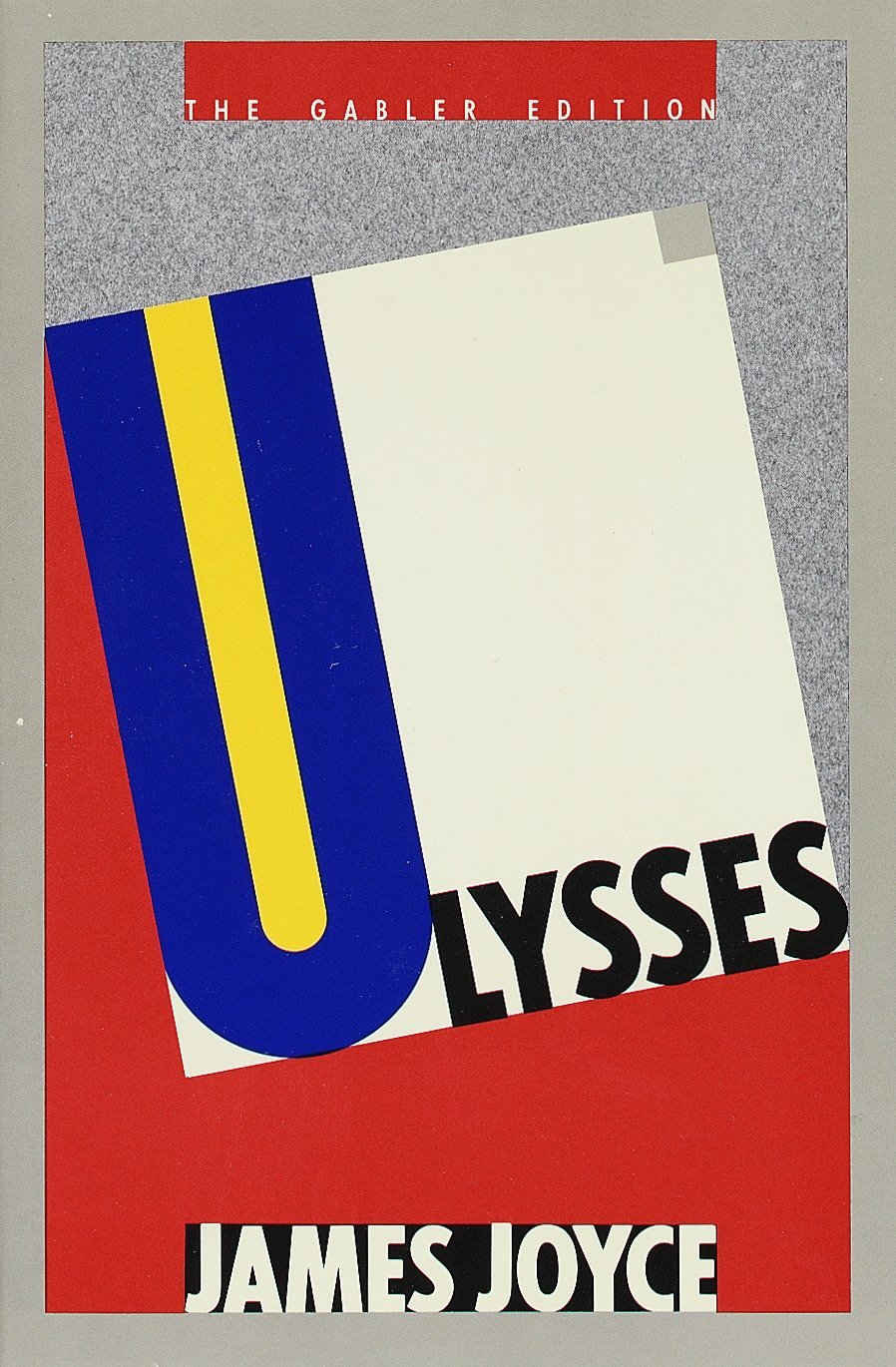
Ulysses by James Joyce

What past consecutive causes, before rising preapprehended, of accumulated fatigue did Bloom, before rising, silently recapitulate?

The preparation of breakfast (burnt offering): intestinal congestion and premeditative defecation (holy of holies): the bath (rite of John): the funeral (the Rite of Samuel): the advertisement of Alexander Keyes (Urim and Thummim): the unsubstantial lunch (rite of Melchisedek): the bookhunt along Bedford Row, Merchants' Arch, Wellington Quay (Simchath Torah): the music in the Ormond Hotel (Shira Shirim): the altercation with a truculent troglodyte in Bernard Kiernan's premises (holocaust): a blank period of time including a cardrive, a visit to a house of mourning, a leavetaking (wilderness): the eroticism produced by feminine exhibitionism (rite of Onan): the prolonged delivery of Mrs Mina Purefoy (heave offering): the visit to the disorderly house of Mrs Bella Cohen, 82 Tyrone street, lower, and subsequent brawl and chance medley in Beaver street (Armageddon): nocturnal perambulation to and from the cabman's shelter, Butt Bridge (atonement).

I did it.  I read Ulysses.  I carried it on the train, where I read from it, impressing many.  I understood, on the level of mere plot-and-character understanding, perhaps half of it.  I was in delighted, frustrated, amused, and bored, in about equal measure.  Now I will try to review it, which is probably only a little bit less sensible than having written it in the first place.

First: Actually having read The Odyssey helps immensely.  Joyce takes the pattern of the epic quite seriously, but applies it with clever humor: the cyclops becomes a bigot who throws, not a giant boulder, but a biscuit tin; Nausicaa, the beautiful young maiden Odysseus flirts with and cannot have, is a woman on the sea shore who provides the pretext for Leopold Bloom's afternoon masturbation session.  (Like Nausicaa, Gerty has "white arms," which is especially ironic because Bloom fails to notice her legs, which are "lame.")   The suitors are, alternately, one college asshole who wants to crash at Stephen Dedalus' place, and a series of adulterous lovers that Bloom knows his wife is having.  The pattern is used to elevate the tawdriness, the ordinariness, of everyday life, to collapse the difference between high myth and the life of normal people.  It's inseparable from the stream-of-consciousness methods that track the inner lives of Stephen, Bloom, and most famously, Bloom's wife Molly.  Life is in your head, Joyce says, and that's as meaningful as any grand narrative that's ever existed.

Like The Odyssey, Ulysses is a story about anxious relationships between parents and children.  Telemachus is unable to become a man until his father returns to Ithaca and validates his power.  Stephen Dedalus' relationship to Bloom, a kind of would-be paternal surrogate, is an ironic version of this.  Unlike Telemachus, Stephen is pretty ambivalent about being "adopted" by Bloom, though they spend an evening drinking and carousing together, and their relationship doesn't seem to provide meaning, power, legitimacy, anything.  Both part with their own anxieties about their parenthood intact: Stephen's depressed by the recent loss of his mother; Bloom has never gotten over his father's suicide or his young son's death.  Stephen, in a speech at the National Library, calls the entire idea of fatherhood into question:

Fatherhood, in the sense of conscious begetting, is unknown to man.  It is a mythical estate, an apostolic succession, from only begetter to begotten.  On that mystery and not on the madonna which the cunning Italian intellect flung to the mob of Europe the church is founded and and founded irremovably because founded, like the world, macro and microcosm, upon the void.  Upon incertitude, upon unlikelihood.  Amor matris, subjective and objective genitive, may be the only true thing in life.  Paternity may be a legal fiction.  Who is the father of any son that any son should love him or he any son?

Fathers, Stephen says, don't have the same relationship to their children that mothers do.  You once had a physical connection to your mother, quite literally, but what is the real nature of your relationship to your father?  It is "a mythical estate, an apostolic sucession"; it's nothing at all.  It's this thought that makes his mother's death especially painful.  It also connects to the old themes of sex and adultery.  What does Bloom lose, exactly, when Blazes Boylan sneaks into Molly's bed in the middle of the day (as he well knows)?  What is it exactly he desires when he masturbates to the vision of Gerty on the strand?  What's lost in what Joyce calls the "Rite of Onan?"  One of the thing that undermines Ulysses' claims to universality is its singular obsession with the male sex drive and masturbation, though Molly famously gets her own account of her sex drive in the final chapter.  But all of it, Joyce contends, is "founded... on the void," and the way we connect sex and generational succession is really a con that distracts us from the meaninglessness of our own sexual desires.  I don't think Ulysses is actually very pessimistic, but I do think, for Joyce, the pattern of myth supplies something that traditional marriage, sex, and family, fails to supply.

Okay, but is it any good?  There's that old joke about the local weather, that gets told everywhere but San Diego: If you don't like it, wait ten minutes.  Ulysses is a little like that.  Each of its eighteen chapters is stylistically discrete and distinct, presenting some different gimmick or satire.  And while the story itself is unwieldy, the chapters break it down helpfully.  Some of my favorites are: chapter three, "Proteus," in which Stephen expounds his theories on Hamlet (and fatherhood) to some friends at the National Library; "Cyclops," the mock-heroic that tells the story of Bloom's encounter with the anti-Semitic bigot and the biscuit tin through the language of world myth; and "Circe," which is formatted like a play.  "Circe" especially seems like the missing link between Faust and Beckett; it's an extended drunken vision where Bloom is accosted by the mental images of his dead father, is put on trial, becomes a woman.  A bar of soap reads a little poem.  ("We're a capital couple are Bloom and I. / He polishes the earth.  I brighten the sky.")  You know, stuff like that.  "Ithaca" takes the form of a traditional question-and-answer catechism, "Penelope" is the famous single sentence stream-of-consciousness inside Molly Bloom's head as she drifts off to sleep.  (Who knew that would be one of the easiest chapters to read!)

But I didn't love all of it.  I was particularly frustrated by the chapter "Eumaeus," which was evidently Joyce's attempt at bad, circuitous, ponderous writing.  "Aeolus," done in the language of the contemporary news, is too far from my conception of that style to really make much sense.  And while I enjoyed sussing out the different parodies in "Oxen of the Sun," which I'm told is meant to mimic the development of the entire English language, I couldn't tell you what happened in it.  I think someone had a baby.

Is Ulysses the best book ever written?  Well, it certainly is the most book ever written.  Not that it's the longest, though it might feel that way, but that it has a totality to it, a breadth that nothing else can touch.  As much as it meets its reputation for stylistic difficulty, it's beauty is in the sheer capaciousness it has for language, and the way it contains multitudes.  I never want to read it again.

Saturday, December 22, 2018

Kristin Lavransdatter II: The Mistress of Husaby by Sigrid Undset

It seemed to her that when her weary body at last was rotting under a tombstone, her restless spirit would still be doomed to wander about somewhere near by, as an unhappy ghost wanders lamenting round the tumble-down houses of a ruined farm.  For in her soul sin still had its being, as the root tissue of the weeds is inwoven in the soil.  It flowered and flamed and scented the air no long, but 'twas still there in the soil, bleached, but strong and full of life.  In despite of all the tenderness that welled up in her heart when she saw her husband's despair, she had not will or strength to stifle the voice in her that cried out, in bitterness and anger: Can you speak thus to me?  Have you forgotten the time when I was your dearest love?  And yet she knew that as long as this voice questioned thus within her, so long would she speak to him as though she had forgotten.

The Mistress of Husaby, the sequel to The Wreath, the first book in Sigrid Undset's series about the medieval Norsewoman Kristin Lavransdatter, picks up as Kristin moves into her husband Erlend's ancestral home, Husaby.  Husaby is a wreck: it's filthy, poorly managed, largely neglected.  Kristin makes it her mission to whip the house and its servants into shape, and to turn it into a home as noble and warm as the one she's left behind.  (It's a fascinating glimpse into the strange domestic habits of the medieval Norse household, arranged, Beowulf-style, around a great hall, and where everyone sleeps together on benches for some reason.)  For Kristin, the remaking of Husaby offers a chance to make things right, to forge respect and harmony out of a tumultuous courtship and marriage.  Soon, the house is completed by the addition of six--six!--young boys that Kristin bears.

But Kristin has trouble leaving the past behind.  She continues to be haunted by the way she and Erlend got together: the initial affair, the loss of virginity, and the ultimate suicide of Erlend's first wife.  The marriage is largely an unhappy one, complicated by Erlend's recklessness and diffidence, but Kristin makes things worse by keeping the original sin of their marriage polished and ready, like a dagger, to wound both Erlend and herself.  Her brother-in-law, a priest named Gunnulf, chides her:  "Kristin... dare you think in your wicked pride that sin of yours can be so great that God's loving-kindness is not greater?"  While The Wreath seemed to me an honest and empathetic depiction of the complexity of living out a life of honest faith, Kristin's obsession with her sin in The Mistress of Husaby can be tedious and dour.  The Wreath showed that reconciliation and forgiveness are possible; The Mistress of Husaby suggests that they're never quite complete enough, and that moving past our own failures takes an almost impossible strength.

The political subtext of The Wreath gets amplified in Husaby.  It's easy to forget that these characters, whose lives seem so close to the earth compared to our own, are really a kind of nobility.  I hadn't remembered that Erlend is related to the queen regent, Ingebjorg.  He spends a lot of this novel away from Husaby, serving as a Warden on a distant island.  Symbolically, Erlend continues to spend a lot of time with men--his integration into his own home never quite seems complete.  But he's also embroiled in a lot of political intrigue that happens almost completely out of narrative vision, which is focused narrowly on Husaby.  The distance emphasizes how the political world pressures the domestic sphere without being totally seen or understood; Kristin is a victim of political turmoil she cannot see.  Erlend, apparently, gets implicated in a scheme to usurp the throne and redivide Norway and Sweden (a political crisis I never totally understood) and spends the last third of the book in prison, on trial for his life.

The possibility that Erlend will die seems very real.  It would be a fitting subversion of the fairytale narrative in which love overcomes everything: family, religion, and politics.  But it's family that saves the day, in the form of Simon Darre, the man once betrothed to Kristin and who has since married her sister Ramborg.  Darre puts his own life and reputation at risk to defend Erlend, a man he despises.  Just like The Wreath's last chapters are overtaken by the point-of-view of Kristin's parents, the last chapters of Husaby belong, surprisingly, to Simon Darre, his complex goodness, his feelings of obligation and revulsion.  These chapters are a glimpse into the life that Kristin might have had, and a reminder that there are more good things in the world than passion.  And like The Wreath, the addition of Simon's voice to a larger multitude of voices emphasizes the complex social fabric that Undset explores so well.  She doesn't let you forget that Kristin's life is not lived in a vacuum, that as tedious as her obsession with her sin can be, it reflects meaningful obligations to her family and her community.

In the end, Erlend is saved, but not changed.  The last thing he does is make a reckless joke about how, if he had died, Simon could swoop in and marry Kristin.  It's maddening: Erlend forgets that Simon is married to Ramborg; he misunderstands Simon's motivations; because he had become resigned to the prospect of losing his life he underestimates the pain and effort others have taken on his behalf.  It's an unsettling place to end the story, but there's a kind of steely-eyed realism to it.  Erlend won't change, and Simon is a better man, but the love between Erlend and Kristin is not nothing, and neither is Simon's effort on Erlend wasted.  It's enough, all of it, because it has to be.