Showing posts with label Ulysses. Show all posts

Wednesday, December 26, 2018

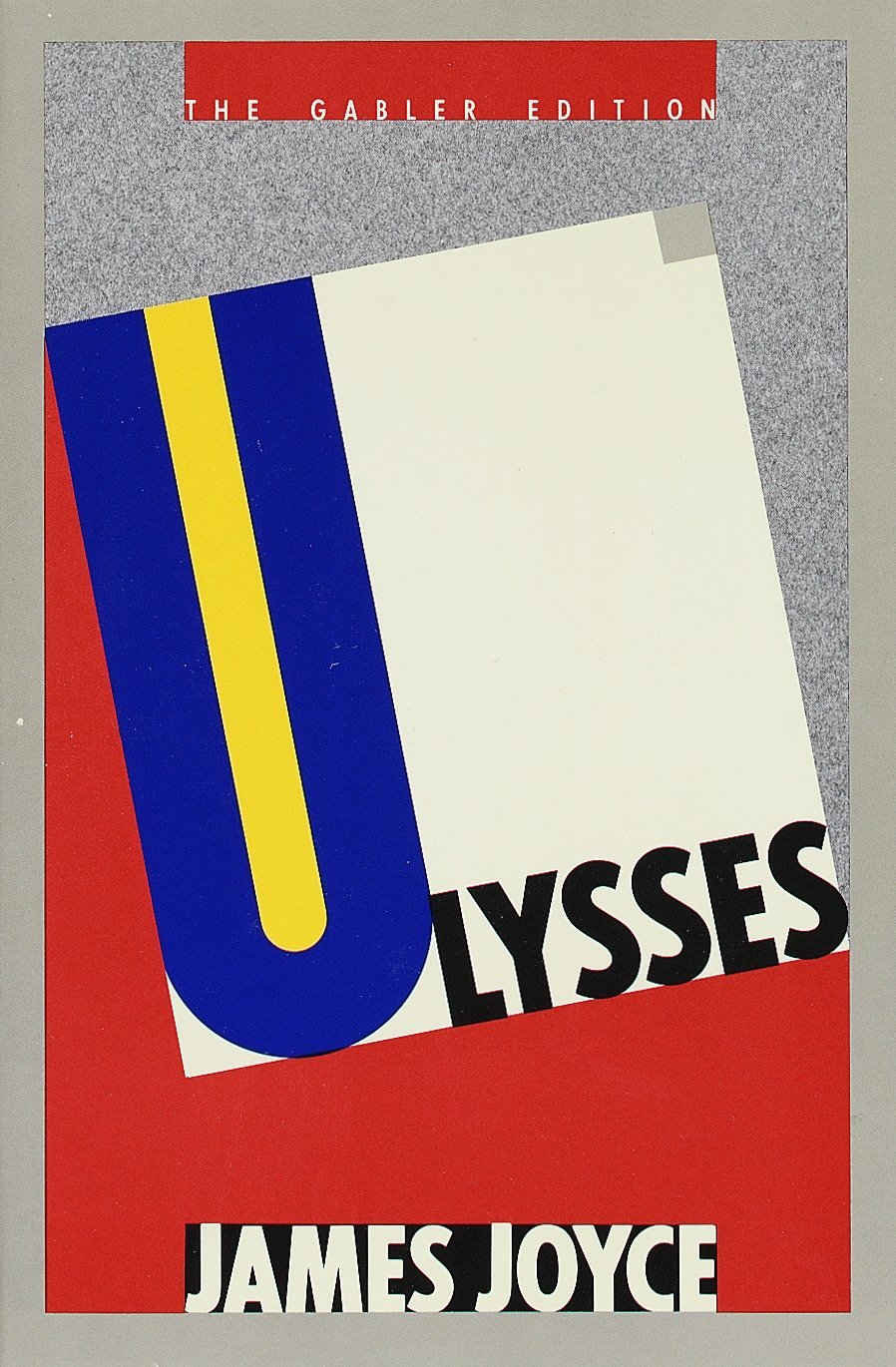
Ulysses by James Joyce

What past consecutive causes, before rising preapprehended, of accumulated fatigue did Bloom, before rising, silently recapitulate?

The preparation of breakfast (burnt offering): intestinal congestion and premeditative defecation (holy of holies): the bath (rite of John): the funeral (the Rite of Samuel): the advertisement of Alexander Keyes (Urim and Thummim): the unsubstantial lunch (rite of Melchisedek): the bookhunt along Bedford Row, Merchants' Arch, Wellington Quay (Simchath Torah): the music in the Ormond Hotel (Shira Shirim): the altercation with a truculent troglodyte in Bernard Kiernan's premises (holocaust): a blank period of time including a cardrive, a visit to a house of mourning, a leavetaking (wilderness): the eroticism produced by feminine exhibitionism (rite of Onan): the prolonged delivery of Mrs Mina Purefoy (heave offering): the visit to the disorderly house of Mrs Bella Cohen, 82 Tyrone street, lower, and subsequent brawl and chance medley in Beaver street (Armageddon): nocturnal perambulation to and from the cabman's shelter, Butt Bridge (atonement).

I did it.  I read Ulysses.  I carried it on the train, where I read from it, impressing many.  I understood, on the level of mere plot-and-character understanding, perhaps half of it.  I was in delighted, frustrated, amused, and bored, in about equal measure.  Now I will try to review it, which is probably only a little bit less sensible than having written it in the first place.

First: Actually having read The Odyssey helps immensely.  Joyce takes the pattern of the epic quite seriously, but applies it with clever humor: the cyclops becomes a bigot who throws, not a giant boulder, but a biscuit tin; Nausicaa, the beautiful young maiden Odysseus flirts with and cannot have, is a woman on the sea shore who provides the pretext for Leopold Bloom's afternoon masturbation session.  (Like Nausicaa, Gerty has "white arms," which is especially ironic because Bloom fails to notice her legs, which are "lame.")   The suitors are, alternately, one college asshole who wants to crash at Stephen Dedalus' place, and a series of adulterous lovers that Bloom knows his wife is having.  The pattern is used to elevate the tawdriness, the ordinariness, of everyday life, to collapse the difference between high myth and the life of normal people.  It's inseparable from the stream-of-consciousness methods that track the inner lives of Stephen, Bloom, and most famously, Bloom's wife Molly.  Life is in your head, Joyce says, and that's as meaningful as any grand narrative that's ever existed.

Like The Odyssey, Ulysses is a story about anxious relationships between parents and children.  Telemachus is unable to become a man until his father returns to Ithaca and validates his power.  Stephen Dedalus' relationship to Bloom, a kind of would-be paternal surrogate, is an ironic version of this.  Unlike Telemachus, Stephen is pretty ambivalent about being "adopted" by Bloom, though they spend an evening drinking and carousing together, and their relationship doesn't seem to provide meaning, power, legitimacy, anything.  Both part with their own anxieties about their parenthood intact: Stephen's depressed by the recent loss of his mother; Bloom has never gotten over his father's suicide or his young son's death.  Stephen, in a speech at the National Library, calls the entire idea of fatherhood into question:

Fatherhood, in the sense of conscious begetting, is unknown to man.  It is a mythical estate, an apostolic succession, from only begetter to begotten.  On that mystery and not on the madonna which the cunning Italian intellect flung to the mob of Europe the church is founded and and founded irremovably because founded, like the world, macro and microcosm, upon the void.  Upon incertitude, upon unlikelihood.  Amor matris, subjective and objective genitive, may be the only true thing in life.  Paternity may be a legal fiction.  Who is the father of any son that any son should love him or he any son?

Fathers, Stephen says, don't have the same relationship to their children that mothers do.  You once had a physical connection to your mother, quite literally, but what is the real nature of your relationship to your father?  It is "a mythical estate, an apostolic sucession"; it's nothing at all.  It's this thought that makes his mother's death especially painful.  It also connects to the old themes of sex and adultery.  What does Bloom lose, exactly, when Blazes Boylan sneaks into Molly's bed in the middle of the day (as he well knows)?  What is it exactly he desires when he masturbates to the vision of Gerty on the strand?  What's lost in what Joyce calls the "Rite of Onan?"  One of the thing that undermines Ulysses' claims to universality is its singular obsession with the male sex drive and masturbation, though Molly famously gets her own account of her sex drive in the final chapter.  But all of it, Joyce contends, is "founded... on the void," and the way we connect sex and generational succession is really a con that distracts us from the meaninglessness of our own sexual desires.  I don't think Ulysses is actually very pessimistic, but I do think, for Joyce, the pattern of myth supplies something that traditional marriage, sex, and family, fails to supply.

Okay, but is it any good?  There's that old joke about the local weather, that gets told everywhere but San Diego: If you don't like it, wait ten minutes.  Ulysses is a little like that.  Each of its eighteen chapters is stylistically discrete and distinct, presenting some different gimmick or satire.  And while the story itself is unwieldy, the chapters break it down helpfully.  Some of my favorites are: chapter three, "Proteus," in which Stephen expounds his theories on Hamlet (and fatherhood) to some friends at the National Library; "Cyclops," the mock-heroic that tells the story of Bloom's encounter with the anti-Semitic bigot and the biscuit tin through the language of world myth; and "Circe," which is formatted like a play.  "Circe" especially seems like the missing link between Faust and Beckett; it's an extended drunken vision where Bloom is accosted by the mental images of his dead father, is put on trial, becomes a woman.  A bar of soap reads a little poem.  ("We're a capital couple are Bloom and I. / He polishes the earth.  I brighten the sky.")  You know, stuff like that.  "Ithaca" takes the form of a traditional question-and-answer catechism, "Penelope" is the famous single sentence stream-of-consciousness inside Molly Bloom's head as she drifts off to sleep.  (Who knew that would be one of the easiest chapters to read!)

But I didn't love all of it.  I was particularly frustrated by the chapter "Eumaeus," which was evidently Joyce's attempt at bad, circuitous, ponderous writing.  "Aeolus," done in the language of the contemporary news, is too far from my conception of that style to really make much sense.  And while I enjoyed sussing out the different parodies in "Oxen of the Sun," which I'm told is meant to mimic the development of the entire English language, I couldn't tell you what happened in it.  I think someone had a baby.

Is Ulysses the best book ever written?  Well, it certainly is the most book ever written.  Not that it's the longest, though it might feel that way, but that it has a totality to it, a breadth that nothing else can touch.  As much as it meets its reputation for stylistic difficulty, it's beauty is in the sheer capaciousness it has for language, and the way it contains multitudes.  I never want to read it again.

Wednesday, August 1, 2012

The Lost Books of the Odyssey by Zachary Mason

Odysseus comes back to Ithaca in a little boat on a clear day.  The familiarity of the east face of the island seems absurd--bemused, he runs a tricky rip current he has not thought about in fifty years and lands by the mouth of a creek where he swam as a boy.  All his impatience leaves him and he sits under an oak he remembers whose branches overhang the water, good for diving.  Twenty years have gone by, he reflects, what are a few more minutes.  An hour passes in silence and it occurs to him that he is tired and might as well go home, so he picks up his sword and walks toward his house, sure that whatever obstacles await will be minor compared to what he has been through.

Zachary Mason's The Lost Books of the Odyssey should be awesome.  Presenting itself as a new translation of recently discovered variations on The Odyssey, it comprises 44 fragments reimagining the story of Odysseus.  This is enticing because there's always been something fragmentary about Odysseus himself, almost as if his predilection for trickery and disguise has made it impossible for us to get a total picture of him.  Is he this Odysseus?  How about this one?  Or this one?

But then again, there's a rule that I'm thinking of naming after myself: If you're going to crib from one of the world's greatest works of literature, you better have a damn good idea of what you're doing.  The Lost Books of the Odyssey doesn't work because it doesn't seem to me to have a real will or capacity to respond to The Odyssey, instead using it as a mere template to engage in some slack flash-fiction experimentation.

There are some intriguing passages: One I particularly liked involved Odysseus' determination to kill Scylla, the many-headed monster that lies on the other side of the whirlpool Charybdis.  Baiting her with a bull carcass secretly hooked to his ship, he pulls her toward her death, at which point she looks up and says:

"You are the fate that has been haunting me since I was born.  I huddled in my high cave for fear of you, starving and wretched, venturing out only to snatch a little food when I could.  I thought of hiding in a deep cavern or on a high mountain but I was too afraid to leave home.  Mine has been a miserable life and now it is ending and I wish I had never heard the name Odysseus."


I like that because it takes an idea that The Odyssey toys with--that Odysseus, whose very name means "Man of Pain," is destructive, and brings suffering not only to himself but those around him--and builds on it through a familiar story.  A similarly successful passage is written from the perspective of the cyclops Polyphemus.  But too often The Lost Books of the Odyssey lacks the balance between inventiveness and faithfulness that this requires.  Instead, it teeters between the extremes of banality and irrelevance.  At the first extreme, there's the idea that Odysseus himself wrote The Odyssey.  At the second, there's a fragment imagining Odysseus in a Hell that takes the form of a high wire with an abyss below and the inverted world above.  That's a trippy image, I suppose, but what's it got to do with Odysseus?

And it's the intriguing conceit of the "translation" that falls flattest of all, since the fragments don't sound in any sense like an ancient epic.  (The first person bits really give it away.)  An attempt to make it seem like something really ancient might have made it more interesting, but it also would have made it a different book.  Of course, it's not fair to indict Mason for failing to live up to the strange grandeur of the Odyssey or The Iliad, which it takes from equally.  But it's hard to read and not wish you were just reading those works instead.

Friday, April 1, 2011

Ulysses by Alfred Lord Tennyson

So, as Brent mentioned in his introductory post, we at the Fifty Books Project love poetry, when it is in books especially, and since April is National Poetry Month it is my goal to blog one poem a day--that is, reproduce it here, for you, and explain a little bit about why I love it. I have no set list of poems in mind; it well may be that my own cluttered set of personal favorites numbers far below thirty-one and if so then I look forward to seeking out new ones. For the first installment I thought I'd talk about what may be my favorite poem ever (though I reserve the right to use this phrase again in the future), Alfred Lord Tennyson's "Ulysses":

It little profits that an idle king,
By this still hearth, among these barren crags,
Match'd with an aged wife, I mete and dole
Unequal laws unto a savage race,
That hoard, and sleep, and feed, and know not me.

I cannot rest from travel: I will drink
Life to the lees: all times I have enjoyed
Greatly, have suffered greatly, both with those
That loved me, and alone; on shore, and when
Through scudding drifts the rainy Hyades
Vexed the dim sea: I am become a name;
For always roaming with a hungry heart
Much have I seen and known; cities of men
And manners, climates, councils, governments,
Myself not least, but honoured of them all;
And drunk delight of battle with my peers;
Far on the ringing plains of windy Troy.
I am a part of all that I have met;
Yet all experience is an arch wherethrough
Gleams that untravelled world, whose margin fades
For ever and for ever when I move.
How dull it is to pause, to make an end,
To rust unburnished, not to shine in use!
As though to breathe were life. Life piled on life
Were all too little, and of one to me
Little remains: but every hour is saved
From that eternal silence, something more,
A bringer of new things; and vile it were
For some three suns to store and hoard myself,
And this grey spirit yearning in desire
To follow knowledge like a sinking star,
Beyond the utmost bound of human thought.

This is my son, mine own Telemachus,
To whom I leave the sceptre and the isle —
Well-loved of me, discerning to fulfil
This labour, by slow prudence to make mild
A rugged people, and through soft degrees
Subdue them to the useful and the good.
Most blameless is he, centred in the sphere
Of common duties, decent not to fail
In offices of tenderness, and pay
Meet adoration to my household gods,
When I am gone. He works his work, I mine.

There lies the port; the vessel puffs her sail:
There gloom the dark broad seas. My mariners,
Souls that have toil'd, and wrought, and thought with me —
That ever with a frolic welcome took
The thunder and the sunshine, and opposed
Free hearts, free foreheads — you and I are old;
Old age hath yet his honour and his toil;
Death closes all: but something ere the end,
Some work of noble note, may yet be done,
Not unbecoming men that strove with Gods.
The lights begin to twinkle from the rocks:
The long day wanes: the slow moon climbs: the deep
Moans round with many voices. Come, my friends,
'Tis not too late to seek a newer world.
Push off, and sitting well in order smite
The sounding furrows; for my purpose holds
To sail beyond the sunset, and the baths
Of all the western stars, until I die.
It may be that the gulfs will wash us down:
It may be we shall touch the Happy Isles,
And see the great Achilles, whom we knew

Tho' much is taken, much abides; and though
We are not now that strength which in old days
Moved earth and heaven; that which we are, we are;
One equal temper of heroic hearts,
Made weak by time and fate, but strong in will
To strive, to seek, to find, and not to yield.


Part of what I love about "Ulysses" is the flame kindled by my Classics background, but it's a remarkable poem no matter how you feel about The Odyssey. In it there are a couple handfuls of striking lines that become rooted in the mind, from the simple claim to glory, "I am become a name," to the four dogged verbs of the poems last lines.

The poem is a monologue by Ulysses, the crafty commander of the Trojan War who endeavors in The Odyssey to return home to Ithaka and his wife Penelope over the course of decades. Here Ulysses is ravaged by the desire to return to the sea and continue his adventures, and at the end sets sail "to follow knowledge like a sinking star."

The poem brims with the language of resoluteness and determination, but I would argue that Ulysses' mind is far from made up--see how he starts off with the savage denunciations of the home and wife he worked so hard to rediscover:

Match'd with an aged wife, I mete and dole
Unequal laws unto a savage race,
That hoard, and sleep, and feed, and know not me.

The "aged wife" comes off as particularly vicious, as Penelope in The Odyssey has a saint's patience waiting for her husband return, but Ulysses who "has become a name" retains a youthfulness in his "hungry heart" that the domestic Penelope cannot imagine. But Ulysses returns to thoughts of home, and specifically to his son, only after letting his mind wander to the sea and adventure in the second stanza, the poem's very structure suggesting a man wandering between two possibilities.

Yet, though he has his doubts, it never seems possible that Ulysses will decide anything but to leave again; time is running out. "Ulysses" is fraught with death, and for him who "Life piled on life / were all too little," the only response is to live, once again, with great fullness:

...you and I are old;
Old age hath yet his honour and his toil;
Death closes all: but something ere the end,
Some work of noble note, may yet be done,
Not unbecoming men that strove with Gods.

I love "Ulysses" because it teaches us that there is always time enough to live, that mere seconds are valuable if they are lived wisely. Fear of death can make us frantic, but Ulysses' words are calm and measured, and when I have thought that time passed more quickly than my liking I have tried to remember them: "Tho' much is taken, much abides."

Ulysses' foil in all of this is his own son, who has none of his father's wandering spirit, but will make a better king for it:

Most blameless is he, centred in the sphere
Of common duties, decent not to fail
In offices of tenderness, and pay
Meet adoration to my household gods,
When I am gone. He works his work, I mine.

I have heard some observe that Ulysses is all selfishness in this poem, and that it is Telemachus who gains stature by contrast, submerging himself in duty and denying his own spirit for the social fabric. But Tennyson's Telemachus has no spirit to deny; his soul is utilitarian and his greatest achievement is to "subdue" the wild races of Ithaka to the "useful and the good." What is this compared to the "equal temper of heroic hearts?" Who among us would really choose to be Telemachus over Ulysses?

Instead, I see "Ulysses" as one of the greatest affirmations of the individual spirit that we have. The poet is great because his greatness is unlike the greatness of others, and Ulysses' path is solitary, driving him from family and from home, but it bears the hope of beating back death for a short time; Telemachus' path is a sort of death-in-life.

There surely is some need for Telemachuses in our world, but their poetry is probably quite bad. Certainly no Telemachus could ever pen Ulysses' last words, his four-part mission, that bring me some measure of life when my spirit flags:

To strive, to seek, to find, and not to yield.