Showing posts with label James Joyce. Show all posts

Wednesday, December 26, 2018

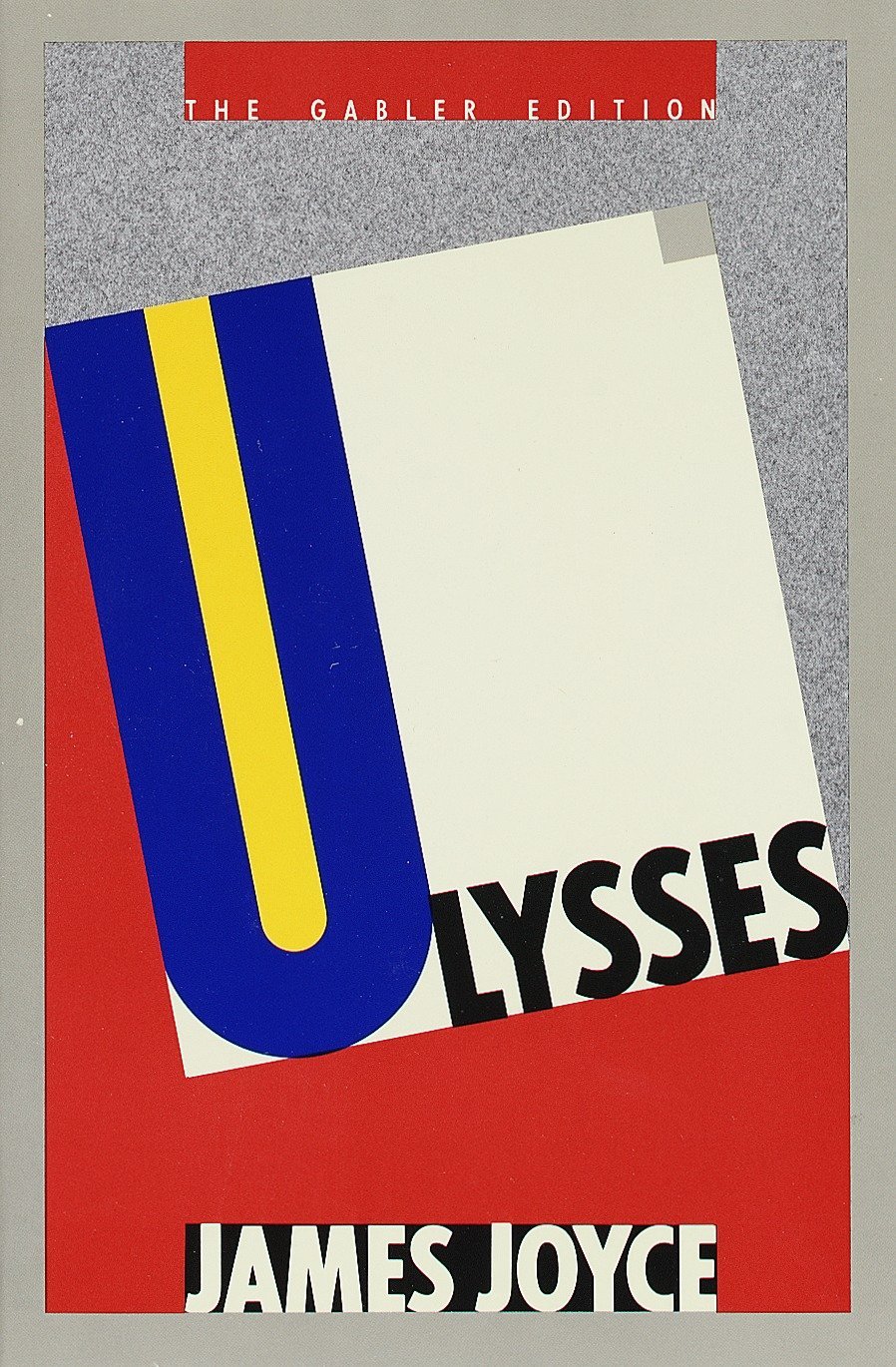
Ulysses by James Joyce

What past consecutive causes, before rising preapprehended, of accumulated fatigue did Bloom, before rising, silently recapitulate?

The preparation of breakfast (burnt offering): intestinal congestion and premeditative defecation (holy of holies): the bath (rite of John): the funeral (the Rite of Samuel): the advertisement of Alexander Keyes (Urim and Thummim): the unsubstantial lunch (rite of Melchisedek): the bookhunt along Bedford Row, Merchants' Arch, Wellington Quay (Simchath Torah): the music in the Ormond Hotel (Shira Shirim): the altercation with a truculent troglodyte in Bernard Kiernan's premises (holocaust): a blank period of time including a cardrive, a visit to a house of mourning, a leavetaking (wilderness): the eroticism produced by feminine exhibitionism (rite of Onan): the prolonged delivery of Mrs Mina Purefoy (heave offering): the visit to the disorderly house of Mrs Bella Cohen, 82 Tyrone street, lower, and subsequent brawl and chance medley in Beaver street (Armageddon): nocturnal perambulation to and from the cabman's shelter, Butt Bridge (atonement).

I did it.  I read Ulysses.  I carried it on the train, where I read from it, impressing many.  I understood, on the level of mere plot-and-character understanding, perhaps half of it.  I was in delighted, frustrated, amused, and bored, in about equal measure.  Now I will try to review it, which is probably only a little bit less sensible than having written it in the first place.

First: Actually having read The Odyssey helps immensely.  Joyce takes the pattern of the epic quite seriously, but applies it with clever humor: the cyclops becomes a bigot who throws, not a giant boulder, but a biscuit tin; Nausicaa, the beautiful young maiden Odysseus flirts with and cannot have, is a woman on the sea shore who provides the pretext for Leopold Bloom's afternoon masturbation session.  (Like Nausicaa, Gerty has "white arms," which is especially ironic because Bloom fails to notice her legs, which are "lame.")   The suitors are, alternately, one college asshole who wants to crash at Stephen Dedalus' place, and a series of adulterous lovers that Bloom knows his wife is having.  The pattern is used to elevate the tawdriness, the ordinariness, of everyday life, to collapse the difference between high myth and the life of normal people.  It's inseparable from the stream-of-consciousness methods that track the inner lives of Stephen, Bloom, and most famously, Bloom's wife Molly.  Life is in your head, Joyce says, and that's as meaningful as any grand narrative that's ever existed.

Like The Odyssey, Ulysses is a story about anxious relationships between parents and children.  Telemachus is unable to become a man until his father returns to Ithaca and validates his power.  Stephen Dedalus' relationship to Bloom, a kind of would-be paternal surrogate, is an ironic version of this.  Unlike Telemachus, Stephen is pretty ambivalent about being "adopted" by Bloom, though they spend an evening drinking and carousing together, and their relationship doesn't seem to provide meaning, power, legitimacy, anything.  Both part with their own anxieties about their parenthood intact: Stephen's depressed by the recent loss of his mother; Bloom has never gotten over his father's suicide or his young son's death.  Stephen, in a speech at the National Library, calls the entire idea of fatherhood into question:

Fatherhood, in the sense of conscious begetting, is unknown to man.  It is a mythical estate, an apostolic succession, from only begetter to begotten.  On that mystery and not on the madonna which the cunning Italian intellect flung to the mob of Europe the church is founded and and founded irremovably because founded, like the world, macro and microcosm, upon the void.  Upon incertitude, upon unlikelihood.  Amor matris, subjective and objective genitive, may be the only true thing in life.  Paternity may be a legal fiction.  Who is the father of any son that any son should love him or he any son?

Fathers, Stephen says, don't have the same relationship to their children that mothers do.  You once had a physical connection to your mother, quite literally, but what is the real nature of your relationship to your father?  It is "a mythical estate, an apostolic sucession"; it's nothing at all.  It's this thought that makes his mother's death especially painful.  It also connects to the old themes of sex and adultery.  What does Bloom lose, exactly, when Blazes Boylan sneaks into Molly's bed in the middle of the day (as he well knows)?  What is it exactly he desires when he masturbates to the vision of Gerty on the strand?  What's lost in what Joyce calls the "Rite of Onan?"  One of the thing that undermines Ulysses' claims to universality is its singular obsession with the male sex drive and masturbation, though Molly famously gets her own account of her sex drive in the final chapter.  But all of it, Joyce contends, is "founded... on the void," and the way we connect sex and generational succession is really a con that distracts us from the meaninglessness of our own sexual desires.  I don't think Ulysses is actually very pessimistic, but I do think, for Joyce, the pattern of myth supplies something that traditional marriage, sex, and family, fails to supply.

Okay, but is it any good?  There's that old joke about the local weather, that gets told everywhere but San Diego: If you don't like it, wait ten minutes.  Ulysses is a little like that.  Each of its eighteen chapters is stylistically discrete and distinct, presenting some different gimmick or satire.  And while the story itself is unwieldy, the chapters break it down helpfully.  Some of my favorites are: chapter three, "Proteus," in which Stephen expounds his theories on Hamlet (and fatherhood) to some friends at the National Library; "Cyclops," the mock-heroic that tells the story of Bloom's encounter with the anti-Semitic bigot and the biscuit tin through the language of world myth; and "Circe," which is formatted like a play.  "Circe" especially seems like the missing link between Faust and Beckett; it's an extended drunken vision where Bloom is accosted by the mental images of his dead father, is put on trial, becomes a woman.  A bar of soap reads a little poem.  ("We're a capital couple are Bloom and I. / He polishes the earth.  I brighten the sky.")  You know, stuff like that.  "Ithaca" takes the form of a traditional question-and-answer catechism, "Penelope" is the famous single sentence stream-of-consciousness inside Molly Bloom's head as she drifts off to sleep.  (Who knew that would be one of the easiest chapters to read!)

But I didn't love all of it.  I was particularly frustrated by the chapter "Eumaeus," which was evidently Joyce's attempt at bad, circuitous, ponderous writing.  "Aeolus," done in the language of the contemporary news, is too far from my conception of that style to really make much sense.  And while I enjoyed sussing out the different parodies in "Oxen of the Sun," which I'm told is meant to mimic the development of the entire English language, I couldn't tell you what happened in it.  I think someone had a baby.

Is Ulysses the best book ever written?  Well, it certainly is the most book ever written.  Not that it's the longest, though it might feel that way, but that it has a totality to it, a breadth that nothing else can touch.  As much as it meets its reputation for stylistic difficulty, it's beauty is in the sheer capaciousness it has for language, and the way it contains multitudes.  I never want to read it again.

Tuesday, January 4, 2011

The Things That Matter by Edward Mendelson

In the process of applying to graduate school, I have been seized by a fear--perhaps one I should not detail too thoroughly in this, a public forum--a fear that I am entering into a world of obscurism and arcana, the kind of universe that inspired the late Dennis Dutton's yearly bad writing contest. For this reason I have gravitated toward critics like Harold Bloom, James Wood, and Edward Mendelson, a Columbia professor of English who in The Things That Matter writes:

[Novels]were not written to be read objectively or dispassionately, as if by some nonhuman intelligence, and they can be understood most fully if they are interpreted and understood from a personal point of view, not only from historical, thematic, or analytical perspectives. A reader who identifies with the characters in a novel is not reacting in a naive way that ought to be outgrown or transcended, but is performing one of the central acts of literary understanding.


Mendelson divides The Things That Matter into seven parts, each corresponding to the Seven Ages of Man. Each age is embodied by a book; for Mendelson, Frankenstein becomes a novel about birth, Wuthering Heights about childhood, Jane Eyre, adolescence; Middlemarch, marriage. Love, parenthood, and "the future" are given to three novels of Virginia Woolf's: Mrs. Dalloway, To the Lighthouse, and Between the Acts, respectively.

This works better than it probably should. Mendelson is a thoughtful and--if this is a thing that can be said--a creative reader, seeing in novels what I had not imagined. He has the kind of wisdom that sees wisdom, and I found myself moved by several thoughts. Who would have thought that Frankenstein--which I disliked--had such subtleties as this, in an explanation of Victor's fascination with alchemy:

Magic is different from modern science in two crucial ways. First, magic promises results that are spectacularly vast in comparison with the amount of effort that goes into them, and, second, only exceptional individuals can wield magical powers. The words of a magical spell can be spoken as easily as any ordinary words, but when spoken by the right person, they cause earthquakes and thunders... Part of the appeal of the alchemist's magic is that it claims to give you something for nothing, provided that you are special enough to deserve it. (A similar fantasy of getting something for nothing seems to be behind the idea of "magic" in the realm of human relations: the husband or wife who complains that "the magic has gone out of my marriage" is perhaps disappointed at no longer being given something for nothing.)


Or this, about Jane Eyre and Mr. Rochester:

Jane Eyre and Edward Rochester have each endured loneliness and solitude in order to arrive at this point, because in the world perceived by Charlotte Bronte all roads to the gardens of intimacy lead through deserts of solitude, and no one can attain intimacy who has not accepted loneliness.


I certainly do not agree with everything that Mendelson says. He makes a bold claim in his introduction that our foremost novelist of the past two centuries is Virginia Woolf, and that our sacred cows--specifically, Eliot, Yeats, and Joyce--are exalted by the assumption that pattern and myth are superior to human emotion and psychology. It is easy to appreciate the underlying sentiment, which appeals to the non-professional reader and forsakes the academic, but understates the ways in which pattern and myth anchor and organize human spirits and personalities. Nor does Mendelson quite believe it, I think, as he spends quite a bit of the section on Mrs. Dalloway explaining how it is patterned after Ulysses--itself patterned after The Odyssey.

But The Things That Matter rekindles my excitement for graduate work. Writers like Mendelson (and Bloom, and Wood) maintain, like the keeper of the vestal flame, the vitality of literature, and leave good maps for those who might follow them.

Tuesday, September 14, 2010

A Portrait of the Artist as a Young Man by James Joyce

Stephen, following his own thought, was silent for an instant.

-The soul is born, he said vaguely, first in those moments I told you of. It has a slow and dark birth, more mysterious than the birth of the body. When the soul of a man is born in this country there are nets flung at it to hold it back from flight. You talk to me of nationality, language, religion. I shall try to fly by those nets.

Brent once called me the only student of Modernism to have never read Portrait or Ulysses. I thought of not ever reading them just to stick it to that smarmy jerk, but I think instead I'll just refuse to link to his review.

I will be honest and say that at times it was tough going. The length of Portrait--as opposed to the stories of Dubliners, my only previous experience with Joyce--gives the author ample space to show his versatility, but while the very first chapters recount Stephen Dedalus' childhood in the breezy, chopped style that seems germane to the very young, the adult chapters are written in an elongated prose that forces the reader to slow down and follow the snaky paths of Joyce's language. To appreciate it you must get up close, like tracing subtle patterns in design of great size, when trying to behold its entirety your eyes glaze over.

Despite that, the story is simple: Dedalus, Joyce's stand-in, is born into a family of Catholic Irish Nationalists. He briefly flirts with a religious career before deciding that to follow his impulse toward being an artist he must shed the burden of his family, country, and religion. Randy and Brent have both observed that this process is very difficult to appreciate, and I'll concur. I think the problem with Dedalus is that he is so clearly Joyce that there is no larger claim; it is impossible to imagine oneself as Dedalus because the author and character form a closed loop we cannot enter: Dedalus is Joyce is Dedalus and so on.

There is a self-referentiality in this that proves why Joyce is considered the cornerstone of Modernism. Joyce has nothing to say that is not about himself, and Portrait is about Portrait. Dedalus admits as much during a long conversation about the nature of art with a friend:

Is a chair finely made tragic or comic? Is the portrait of Mona Lisa good if I desire to see it? Is the bust of Sir Philip Crampton lyrical, epical or dramatic? Can excrement or a child or a louse be a work of art? If not, why not?


I marked this passage before returning to Randy's review and realizing that he also had chosen it, not because I think that he is fond of it. I'd like to unpack it a little, in response to some of Randy's criticisms.

There is a sublime humor to that first question. Comedy and tragedy were, for Aristotle, the two principle modes of literature and here Dedalus presumes that a chair is, if not literary, then artistic. A chair, like a novel or a play, is something that man creates and so is creative; Dedalus carries this thought to absurdity by wondering if you can say the same thing about poop, children, and lice, all of which are also man's creations. (Supposing, along medieval lines, that lice are products of spontaneous generation.) The unpopular bust of Crampton gets sandwiched between them to suggest bad art veers much closer to the excrement side of things than it does to classic works.

Earlier in the discussion Dedalus says that a thing of beauty has the quality that makes it "that thing which it is and no other thing." He calls it its quidditas, or whatness, but perhaps not intentionally I think this is the wrong word. Quidditas is the quality of a thing that makes it of a type, what you might say to the question "what is it?" The quidditas of a book is something that it shares with other books, by virtue of being books. What he should say, I think, is haecceitas, or thisness, that quality that makes it only itself. Haecceitas is a godly word, and suggests the way that each thing functions according to the design of God. The haecceitas of the finely made chair is that it, as its craftsman intended, it provides the perfect seat. But there is no perfect chair, because the craftsman is not God, and there is no perfect novel because the novelist isn't either. For that matter, what is the haecceitas of a novel?

So the question isn't about the chair, but about the book itself. One reason Dedalus may seem trite to Randy is that for someone who claims to possess inspiration he produces no art besides one thoroughly mediocre poem. This is frustrating, but we're meant to understand that Portrait is in some way the story of its own creation, the product of that inspiration that Joyce calls "pure as the purest water, sweet as dew, moving as music." To buy into Dedalus' sense of inspiration you must buy into the novel, and to do that you must return to Dedalus' sense of inspiration. No wonder then, that for Randy the whole enterprise falls flat--Portrait's greatness is predicated on an assumption of its greatness!

This is essentially what we have been doing in literature for the past century. You might uncharitably call it navel-gazing. The term Dedalus prefers is "lyrical"--"the form wherein the artist presents his image in immediate relation to himself." Randy says that Dedalus' discourse on art offers no new insight and he's right, but what it offers is the peculiarity of a novel talking about itself.

Dedalus must be selfish, because this is literary selfishness. He yearns to express his innermost self, his haecceitas, but he must abandon the quidditas of nationality and religion. I have always found religious comfort in novels, and Portrait makes me uneasy because Dedalus expresses a near encyclopedic knowledge of Catholic history and theology but rejects it anyway. I question how fully he is able to do this, because Portrait, with its long middle section recalling Dedalus' religious frenzy, stands as a testament to how much of his Catholic upbringing he has absorbed.

In my mind one of Modernism's abiding principles is the embrace of traditional forms as a defense against the crippling emptiness of the modern world, expressed perfectly in the novel's last lines:

Old father, old artificer, stand me now and ever in good stead.


The "old artificer" is his namesake, Daedalus, the mythical craftsman who fashioned both the wings of Icarus and the labyrinth of the Minotaur. (And how did both of those stories end?) The line between ancient myth and Catholicism is not straight, but I choose to think of this ending as an affirmation that the old forms are difficult to kill. I know that this line is also a particular favorite of Nathan's, and I'd like to hear his perspective on it.

I am saddened by our collective distaste for this book--not just Randy's virulent kind, but the milder version shared by Brent and myself. It seems that it is the kind of book you could live in, and consider at serious length, but I do not know that it is inviting enough for that.

Saturday, June 26, 2010

A Portrait of the Artist as a Young Man by James Joyce

His sins trickled from his lips, one by one, trickled in shameful drops from his soul festering and oozing like a sore, a squalid stream of vice. The last sins oozed forth, sluggish, filthy.

A month or so ago, Randy posted a scathing review of A Portrait of the Artist as a Young Man, and he and I (and Christopher) had a short discussion about it. You can read it in the comments for the post, but it boiled down, I think, to this: Randy felt like nothing that happened in the book was particularly interesting or significant. He felt like the events were interesting only to the extent the reader was invested in the character of Stephen Dedalus, the titular artist. I responded out of ignorance, not having read Portrait, but now, having finished it, I have to say, while I disagree with many of Randy’s conclusions, I do agree with one thing: Stephen is a difficult protagonist to really like.

The extent to which a character must be likable to be successful is variable; Ignatius Riley is an ignoble beast, but since A Confederacy of Dunces spends time pointing out his follies, he’s paradoxically easier to forgive. Stephen, on the other hand, seems to be presented as exactly the artist he believes himself to be. Reading Portrait, it’s difficult to determine the extent to which the reader is meant to like Stephen. On the one hand, it’s easy to cheer for his progression from mousy, guilt-ridden child to independent young artist; on the other, Stephen’s attitude changes from subservient and weak-kneed to almost unbearably arrogant and self-important.

Ok, so a quick summary for those who didn’t read the review linked above: Stephen Dedalus, a young man growing up in Dublin, Ireland around the turn of the 18th century, grows up in a factitious family, headed by a once great father who now lives mostly in a whiskey-clouded past and a mother whose only identifiable characteristic is her passive love for her son. He attends Catholic school, hears a lengthy sermon about Hell, turns devout, gets cold feet when approached with the idea of the priesthood, turns agnostic, seeks to find his purpose in art rather than Catholicism, and finds it. The end.

The novel is structured around two Joycean epiphanies, mentioned above: first, Stephen’s venture into devout Catholicism, and second, his change of direction into the world of art. Portrait seems to present the second of these as the more legitimate, ending with a blissful, purposeful Stephen out to face the world with his newfound philosophy. Is Stephen a successful character? Well, that depends. Had I only read Portrait, I think I would feel that the story was unfinished and that Stephen, as a character, was a bit simple. However, having read Ulysses last year, my feelings about Artist are significantly more positive. Spoilers for Ulysses follow, such as they are.

While Ulysses doesn’t spend most of its time on Stephen, he does appear as the most important secondary character in the novel, and what we see of him shows us where his path will eventually lead. Education and art, far from being the void-filling purpose Stephen believed them to be in Portrait, have proven just as stifling as his pursuit of religion, leaving him a depressed, empty intellectual who garners little respect and still lingers in the shadow of his father. This, to me, seems rather in keeping with Stephen’s character: every epiphany satisfies, but only for a little while. There is, in Joyce’s world, no one solution to the human problem, and so there is none for Stephen’s either. End Ulysses Spoilers.

If I may leave Portrait behind for a moment, I’d like to say that, brilliant as his novels are, Joyce’s books make me feel sad. It’s sad to imagine that such a brilliant man spent his entire life trying to create art that would satisfy him, and, though he went blind and died nearly friendless in the pursuit, he, like Stephen, never achieved it. It’s hard to read Stephen as anything but a surrogate for Joyce, the artist as an old man who ended up exactly like I imagine Stephen will.

So, to return to the point: Is Stephen, and by association, Portrait, successful on its own terms? Stephen, with all of his ambiguities, is successful in portraying the sort of man he is. If the novel seems a bit empty to me, it’s only because, ultimately, it is, but in the best possible—and I think, intentional—way.

Read Nathan's much more coherent review

Monday, March 9, 2009

Dubliners by James Joyce

I first read this back in high school when I was too lazy to appreciate it, or read it. I read A Portrait of the Artist as a Young Man two years ago, and it slowly became one of my favorites, resonating with me on a very personal level. But that's the thing about Joyce: only a few passages strike me as beautiful or profound as I'm reading them, I typically only appreciate the book as a whole, in retrospect. He isn't very given to lyricism, but when he does put flourish into his words, it shows, as in this passage from "The Dead".


The horse was whipped up and the cab rattled off along the quay amid a chorus of laughter and adieus.
Gabriel had not gone to the door with the others. He was in a dark part of the hall gazing up the staircase. A woman was standing near the top of the first flight, in the shadow also. He could not see her face but he could see the terra-cotta and salmon-pink panels of her skirt which the shadow made appear black and white. It was his wife. She was leaning on the banisters, listening to something. Gabriel was surprised at her stillness and strained his ear to listen also. But he could hear little save the noise of laughter and dispute on the front steps, a few chords struck on the piano and a few notes of a man's voice singing.
He stood still in the gloom of the hall, trying to catch the air that the voice was singing and gazing up at his wife. There was grace and mystery in her attitude as if she were a symbol of something. He asked himself what is a woman standing on the stairs in the shadow, listening to distant music, a symbol of. If he were a painter he would paint her in that attitude. Her blue felt hat would show off the bronze of her hair against the darkness and the dark panels of her skirt would show off the light ones. Distant Music he would call the picture if he were a painter.


This collection of short stories is a perfect example of his work functioning only as a whole. I don't think he meant this as a set of standalone works, but rather a piecemeal portrait of dirty old Dublin: here are its drunks, here its aristocracy, here the lonely scholar. Each character is given a brutally honest once over before the next is introduced, and when all the plights and dramas of various Dubliners are stacked up, you've got a very human, bleeding, shitting city. Its citizens face the same crises as we do. A young boy is confronted with death for the first time, a woman's fear of leaving her country, dreary as it is, costs her a bright future.
 
Evelyn and A Painful Case stood out when I was reading. But, without contest, The Dead is the crown jewel, appropriately saved for last. Gabriel's inner conflict in The Dead is painfully familiar, as is his slow revelation of the fleeting nature of life, a breathtaking passage that I wanted to reproduce here, but won't for fear of taking away some of its kick. Those three are the only that I'd say could be rightly enjoyed outside the book, but you can't see Joyce's whole, conflicted portrayal of Dublin if you do. He's trying to create an Irish identity without romanticizing his people or his country, and has a hard time of it. He puts so much sorrow and so much of his own wanderlust in his characters, the overriding sense of Dublin is of a city that butts up against sorrow regularly, and covers it up and pushes on.

If you take it on, I highly recommended reading it aloud with a thick Irish accent.

Wednesday, May 2, 2007

A Portrait of the Artist as a Young Man by James Joyce

This book is largely autobiographical, and Joyce invents Stephen Dedalus, whose name I love, to play the role of himself. The name comes from the Catholic Saint Stephen and the pagan legend Dedalus. This juxtaposition perfectly characterizes, and foreshadows, a lot of the internal struggle that Dedalus goes through in the novel. He alternatively devotes himself to and draws away from what he ultimately comes to view as the narrow-mindedness of Irish-Catholicism. Though it isn’t stream of consciousness, like I’d been told, the novel mostly follows Stephen’s internal musings (in the third person), and the occasional dialogue with another, very minor, character. Stephen is the only character that really gets any room to grow in the book, and others come and go without fanfare whenever they prove useful to some point in his development.

The story follows Dedalus from birth to age 22, usually skipping a few years between each episode. He grows up, over about 300 pages, from a schoolboy in rural Ireland to a university student in Dublin. I can relate completely to the narrative of his personal growth: he grows up Catholic, slowly rejects his beliefs, has a brief, dramatic reunion with the church, and then, once again, lets his beliefs slide away and educates himself through what he calls the snares of this world. I know what it’s like to have an estranged relationship with family over the same issues he does. I could even relate to the embarrassing pseudo-intellectualism, the secular humanism and the wanderlust that he passes through between ages 16 and 22. At some points of the book his sense of superiority and literary name-dropping turned him into a less likeable character, but he always redeemed himself with some epiphany as to the futility of whatever he was involved in. At one point he wanders along the oceanfront all night, inspired, by way of an epiphany, to re-create himself through dwelling on his namesake:

What did it mean? Was it a quaint device opening a page of some medieval book of prophecies and symbols, a hawk-like man flying sunward above the sea, a prophecy of the end he had been born to serve and had been following through the mists of childhood and boyhood, a symbol of the artist forging anew in his workshop out of the sluggish matter of the earth a new soaring impalpable imperishable being?

Dedalus struggles against Irish culture at a time when Irish nationalism was gaining popularity. He’s initially embarrassed by his people’s history, their language and their religion, which is another thing that he slowly comes to terms with. Joyce left a lot of pieces of the story to be filled in by the reader; a lot of important events in Stephen’s life are only vaguely alluded to in the narration of his train of thought. Also the reader is subjected to a miserable thirty pages of fire and brimstone sermon, and, later, another equally miserable thirty pages of philosophical discourse on the aesthetic. There’s a lot to dig through, but there’s also a lot to say about personal growth, and “finding yourself.” I’ll bet it spoke volumes to the Irish in the early 1900’s. I, unfortunately, cannot identify myself as such, but thoroughly enjoyed the book.

Note: I’d recommend this version (pictured at the top of this review), published by Penguin, with a black cover and a picture of Joyce, for its great introduction and tremendously helpful notes in the back. I, regrettably, bought the shittier version, and had to borrow a friend’s to find out what doing something “for a cod” meant (it does not mean doing something in order to get a fish, as I had previously assumed).