Tuesday, October 30, 2012

Henry VI Part II by William Shakespeare

I have been very busy, and although I've been reading, I haven't been able to post like I've wanted to.  I'm taking a class on Shakespeare now, and as such I've been reading these plays at a pretty fast clip--faster than I'm able to post on them--and I know that our readers aren't as interested in them probably, but I've committed to posting about each book, and I'm gonna do that, dammit.

Henry VI Part II reflects my mental state perfectly: it's a hot mess.  It's hectic; it's disjointed; it's scatterbrained.  It's probably a lot more fun if you're familiar with the history of Henry VI, who apparently was not fondly remembered by Shakespeare's age.  Otherwise it's hard to keep track of the various subplots: There's the Duchess Eleanor, caught summoning demons to foretell her husband's political future.  There's the Queen Margaret, carrying on an affair the Duke of Suffolk.  There's Richard of York, scheming for the throne.  There's a popular insurrection, led by the charismatic rebel Jakc Cade.  And there's Henry himself, impotent as all this revolves around him, preferring to pray in his room than try to control his state.

If there's an overarching narrative to be found, it's that: The realm is going bonkers because Henry is an ineffective king.  Each weird mini-plot is in some way a response to the void in power that Henry represents; Eleanor, Margaret, Suffolk, York, Cade--each asserts their own power because they perceive that the king cannot or will not assert his own.

The most entertaining of all of these is Cade, and I enjoyed the play most when he is in it.  Cade is York's plant, suborned to destabilized the country's political situation, but Cade himself often approaches a compelling anarchist vision of political and economic freedom:

CADE: I think you good people!--there shall be no money.  All shall eat and drink on my score, and I will apparel them all in one livery that they may agree like brothers, and worship me their lord.

BUTCHER: The first thing we do let's kill all the lawyers.

CADE: Nay, that I mean to do.  Is not this a lamentable thing that of the skin of an innocent lamb should be made parchment?  That parchment, being scribbled o'er, should undo a man?


Cade and his followers condemn and kill for the crime of merely knowing how to read.  Shakespeare intends this to be satirical, of course, but there is sense in the satire:

CADE: ...Though has most traitorously corrupted the youth of the realm in erecting a grammar school; and whereas before, our forefathers had no other books but the score and the tally, thou hast caused printing to be used and, contrary to the King his crown and dignity, thou hast built a paper-mill.  It will be proved to thy face that thou hast men about thee that usually talk of a noun and a verb and such abominable words as no Christian ear can endure to hear.  Thou hast appointed justices of peace to call poor men before them about matters they were not able to answer.  Moreover, thou hast put them in prison, and, because they could not read, thou hast hanged them when indeed only for that cause they have been most worthy to live.


Here an ironic silliness (I love that "noun and a verb and such abominable words as no Christian ear can endure to hear...") is transformed unexpectedly to a very pointed criticism of a political system which is stacked against the poor and uneducated.  Cade is engaging because he is the center of the play's ambiguity.  Like the noble characters of the play, Cade shallowly seeks his own self-interests, and yet he manages also to give voice to a number of unsettling moral issues.

The rest of the play, I'm afraid, is something of a slog.  I could never keep the Suffolks and the Somersets straight, nevermind the Beauforts and the Buckinghams, much less the two characters named Clifford.  Seeing it on stage is probably good fun, but even then I suspect that Cade usually steals the show.

Monday, October 15, 2012

The Fifth Queen Crowned by Ford Madox Ford

'But to make the King,' Cranmer uttered, as if he were aghast and amazed, 'to make the King--this King who knoweth that his wife hath done no wrong--who knoweth it so well as to-night he hath proven--to make him, him, to put her away... why, the tiger is not so fall, nor the Egyptian worm preyeth not on its kind.  This is an imagination so horrible--'

'Please it be your Grace,' Lascelles said softly, 'what beast or brute hath your Grace ever seen to betray its kind as man will betray brother, son, father, or consort?'

The last book in Ford Madox Ford's Katharine Howard series (1 2), as the name suggests, opens on a scene of victory: Katharine is crowned Henry's queen, and the return of her cherished Catholicism is nigh.  How you read this development hinges probably on your religious affiliation; for me there is something unseemly about Henry's playful needling of the Archbishop Cranmer early in the book about the church's return, especially now that Thomas Cromwell, the Protestant villain of the first two books, has been put to death.  I read in the second book a more ambivalent stance than I was able to find in this one.  What are we to make of a Henry VIII who is only good to the extent that he is Catholic?

Katharine remains the series' moral center, which bodes poorly for Henry's soul, since we know that by the series' end she must be executed.  (Spoiler alert.)  I found the machinations by which Katharine is brought down to be pretty disappointing, although the intrigue was the best part of the first two books.  The death of Cromwell leaves a pretty immense gap that the ambitious knight Lascelles, a pale Cromwell substitute, fails to fill.  In The Fifth Queen Crowned, subterfuge gives way to slander: The courtiers, peeved by the Queen's power and at Lascelles' urging, gin up a lie about Katharine's infidelity with her cousin Culpepper and force Henry's hand.  In the end, she gets a pretty nice speech at the King's expense:

If I have wounded you with these my words, I do ask your pardon... I would have you wounded by the things as they are, and by what conscience you have, in your passions and your prides.  And this, I will add, that I die a Queen, but I would rather have died the wife of my cousin Culpepper or of any other simple lout that loved me as he did, without regard, without thought, and without falter.  He sold farms to buy me bread.  You would not imperil a little alliance with a little  King o' Scots to save my life.


But the book as a whole was neither as fun or nuanced as the previous two.  In the end, I stand by my judgment of the first book: that The Fifth Queen books are Ford still struggling with both what he wanted to say and how.

Wednesday, October 10, 2012

The Good Pope by Greg Tobin

The Good Pope is the story of the life of Angelo Giuseppe Roncalli, a man born to peasant-farmers in rural Italy, who became one of the most influential popes in modern history. Greg Tobin constructs the life of Roncalli--Pope John XXIII--using a wide variety of sources, describing a humble man, full of passion for other people.

Tobin does a great job of making what could have been a boring recitation of facts about a good man's life into an interesting story. One of the ways in which he accomplishes this is by showing Roncalli's humorous side. At the pen of Tobin, Roncalli is a man who carried his sense of humor with him as he traveled to his various posts, including the Papacy. One of my favorite examples of this was when Roncalli was asked how many people worked inside the Vatican City State. He replied, "Oh about half of them."

Roncalli entered the clergy at a time when the Catholic Church was involving itself in social change. The Industrial Revolution was leaving many people cold and hungry in its wake. The Church set up soup kitchens and shelters to combat this social ill. Roncalli was secretary to Bishop Radini-Tedeschi, who was a vocal proponent of these social programs. Many of the sweeping changes that were a part of Vatican II had their roots in this period of Roncalli's life.

Tobin assumes very little advanced knowledge on the part of his readers, taking time to describe what may seem to some as common knowledge about the Catholic Church. As Brent alluded to in his review, Roncalli--at least as Tobin describes him--was nearly devoid of character flaws. Whether this is due to the editorial choices of Tobin or simply reflective of Roncalli's life is open for debate. But there are numerous points throughout the book where Tobin shows restraint and caution in his reliance on sources. It appears that Roncalli was a man with a deep faith in the Catholic Church and a deep love for humanity.

Wednesday, October 3, 2012

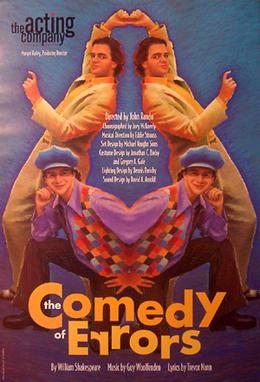
The Comedy of Errors by William Shakespeare

Never have I had less to say about a Shakespeare play than I do about Comedy of Errors.  Not that it isn't great--it is, but its charms lie mostly on the surface.  It's probably a lot more fun to see than read, and it's probably even less fun to read someone else talking about it.

It's the classic mistaken-identity sitcom episode, more or less.  Two brothers, separated as children, both named Antipholus (I just missed the other kid so much, I named the one I kept Antipholus too, says the bereaved father) end up in Ephesus, where one lives.  In case that's not absurd enough for you, they each have a manservant named Dromio.  When Antipholus of Syracuse comes to Ephesus, well... you can probably imagine what kind of hijinks ensue.

Comedy of Errors is true to its name, delivering up a series of pretty funny set pieces that involve the Antipholuses and Dromios confusing one another.  The best moment, I think, comes when Dromio of Syracuse encounters the wife of Dromio of Ephesus, whom he describes this way:

DROMIO OF SYRACUSE: ...She is spherical, like a globe.  I could find out countries in her.

ANTIPHOLUS OF SYRACUSE: In what part of her body stands Ireland?

DROMIO: Marry, sir, in her buttocks.  I found it out by the bogs.

ANTIPHOLUS: Where Scotland?

DROMIO: I found it by the barrenness, hard in the palm of her hand.

ANTIPHOLUS: Where France?

DROMIO: In her forehead, armed and reverted, making war against her heir.

ANTIPHOLUS: Where England?

DROMIO: I looked for the chalky cliffs, but I could find no whiteness in them.  But I guess it stood in her chin, by the salt rheum that ran between France and it.

ANTIPHOLUS: Where Spain?

DROMIO: Faith, I saw it not, but I felt it hot in her breath.

ANTIPHOLUS: Where America, the Indies?

DROMIO: O, sir, upon her nose, all o'er embellished with rubies, carbuncles, sapphires, declining their rich aspect to the hot breath of Spain, who sent whole armadas of carracks to be ballast at her nose.

ANTIPHOLUS: Where stood Belgia, the Netherlands?

DROMIO: O, sir, I did not look so low.

If ever Shakespeare needed a rimshot, it's here.  If there is any real depth to the play, it comes from the theme of losing one's identity, which is what worries the Syracusan Antipholus:

He that commends me to mine own content
Commends me to the thing thing I cannot get.
I to the world am like a drop of water
That in the ocean seeks another drop,
Who, falling forth there to find his fellow forth,
Unseen, inquisitive, confounds himself.

Antipholus sets up a paradox in which he searches for his brother to individuate himself, to become again a whole drop of water, even though to do so he must confront his own sameness by finding him.  The water-drop motif is repeated unintentionally by Adriana, the wife of Ephesian Antipholus, whose worry about her husband's disinterest is only exacerbated by the fact that he no longer seems to recognize her:

Ah, do not tear thyself away from me;
For know, my love, as easy mayst thou fall
A drop of water in the breaking gulf,
And take unmingled thence that drop again
Without addition or diminishing,
As take from me thyself, and not me too.

The bittersweetness of these lines is not like anything else in the play, and stands out in sharp relief.  By contrast the Ephesian Antipholus, in whom the identities of his wife and brother are so intimately tangled, walks through the play caddishly unconcerned with anyone else.  Perhaps, if you want to look past the slapstick, the message here is that real human relationships imply the risk of losing one's own identity--but the alternative is just being a selfish jackass.

Saturday, September 29, 2012

Reinventing Comics by Scott McCloud

I haven’t read the entirety of Scott McCloud’s career-making graphic nonfiction book, Understanding Comics, to which Reinventing Comics is a partial sequel. Fortunately for me, Reinventing Comics covers mostly different ground; unfortunately for me, it was mixed bag, due partially to its datedness at points--it was published in 2000--and its sometimes dry subject matter.

But first, the good: McCloud is a remarkably versatile artist who clearly loves the medium and is adept at communicating fairly dense information in an intuitive way. I’m not sure the information in this book could have presented any better without changing its format completely. The entire book, aside from the appendices, is written in comic book form which sometimes works great, such as when demonstrating various distribution models, and sometimes doesn’t add much, as during his discussion of diversity in comics.

The downside is that a lot of the material here just isn’t that novel or interesting. One only has to walk into a comic book store, or even look at recent comic book movies, to see that the landscape is dominated by superheroes, mostly straight, male and white. McCloud’s solution to this problem--that more women, minorities, and gays be promoted in the comics world--is sensible, but doesn’t bring anything new to the table. His discussion of genre is similarly circular.

The back half of the book mostly discusses the pros and cons of creating and distributing comics on computers. Since the book was written in a largely pre-broadband time, many of McCloud’s suggestions seem quite prescient--online distribution, microtransactions, experimental layouts and formatting--but they too suffer from a little bit of been-there-done-that in 2012 (although it is notable that DC and Marvel both adopted same-day-as-print digital releases this year). McCloud’s once-exciting predictions about everything being available everywhere have been tamped down by both real-world issues, such as the complex legal weaseling necessary to move “everything” online, and by the fact that the future he talks about is largely here and doesn’t seem to have increased mainstream acceptance of comics much. Online, there are comics about everything under the sun, instantly available, but if no one new is reading them, what does it matter?

I don’t mean to be hard on Understanding Comics. It’s very well put together and I enjoyed reading it, but I’d recommend Understanding Comics or McCloud’s Zot omnibus as an introduction--Reinventing Comics is a little depressing.

Sunday, September 23, 2012

The Good Pope by Greg Tobin


Giuseppe Roncalli. Pope John XXIII. Il Buono Papa. Whatever name he is called by, he is an emblem of the modern Catholic church, the initiator of Vatican II, which brought about massive and controversial changes to the Catholic church. I knew nothing about John XXIII when I received this book, and I was impressed reading his story.

Unlike many popes throughout church history, John XXIII didn’t come from an aristocratic or high church background. He was the son of a poor farmer who rose to prominence on, essentially, his good reputation and seemingly inexhaustible compassion and willingness to work for the poor. This led to his promotion through the Catholic ranks and his eventual election—by electors who probably expected him to be a placeholder pope—to the highest office in the Catholic church.

I am not Catholic or exceptionally well-versed in Catholic history, so I can’t speak for the accuracy of Tobin’s book. Based on the material presented here, John XXII comes off extremely well—devout without being a scold, committed to his work without neglecting his friends and family, able to lead without being haughty. My favorite anecdote in the book concerns Paul XXIII’s modifications to the papal gardens: he had a sprinkler installed with a remote control so he could soak cardinals as they walked through the garden. It’s a funny story, but also serves as a fitting metaphor for John’s entire papacy, as he attempted to puncture some of the unnecessary pretentions of the church, such as the Latin mass, without losing what he saw as truly important. Tobin does a good job through this short biography of making John XXIII an interesting character in spite of the fact that he seems to have very few dramatic flaws. The Good Pope is, then, primarily the story of a good man who does great things within his sphere of influence. There’s very little in the way of scandalous secrets or backroom dealings—with Rocalli, according to Tobin, what you see is what you get. 

Although I’m not Catholic, I am a Christian and found portions of John XXIII’s life inspiring. I wonder, however, how interesting a non-religious person would find this bio. I found the political aspects surrounding Vatican II extremely interesting, but John XXIII’s spiritual journey is undeniably the core of the book (Vatican II has hardly begun when John passes away). I suppose that, religious or not, we can all find something inspiring in a man who put feet to his beliefs so effectively and consistently. I’ll be interested to see what Carlton has to say about the book when he reviews it later this month.

Literary Theory: An Introduction by Terry Eagleton

Any attempt to define literary theory in terms of a distinctive method is doomed to failure.  Literary theory is supposed to reflect on the nature of literature and literary criticism.  But just think of how many methods are involved in literary criticism.  You can discuss the poet's asthmatic childhood, or examine her peculiar use of syntax; you can detect the rustling of silk in the hissing of the s's, explore the phenomenology of reading, relate the literary work to the state of the class-struggle or find out how many copies it sold.  These methods have nothing whatsoever of significance in common.  In fact, they have more in common with other 'disciplines'--linguistics, history, sociology, and so on--than they have with each other.  Methodologically speaking, literary criticism is a  non-subject.  If literary theory is a kind of 'metacriticism,' a critical reflection on  criticism, then it follows that it too is a non-subject.

Terry Eagleton's primer on literary theory pretty quickly establishes the impossibility of identifying "literature" as a definable category, and continues its own self-dismantling by establishing that literary theory, too, is meaningless, less a discipline in itself than a wholesale borrowing from other university departments.  Well, for those of us who find the specter of "Theory" to be intimidating, that's something of a relief: if it doesn't exist then we don't have to deal with it.

I'm half-joking.  In one sense, Literary Theory: An Introduction does a really excellent job of demystifying the practice of literary criticism, partly by exploding the idea of it, and partly by just giving a really clear historical account of it.  Eagleton goes through the major schools of literary thought of the 20th Century, one by one, illuminating both their strengths and their weaknesses: phenomenology, structuralism, post-structuralism, psychoanalysis.

For Eagleton, most of these approaches come up short, especially those that in his view are divorced from any examination of the real world and its structures of power.  Yet it's possible to come away from Literary Theory wanting to dive more into one of the methodologies Eagleton dislikes; such is his clarity and even-handedness, though perhaps he would consider that faint praise.  Eagleton wants to guide us to a political (that is, Marxist or feminist) approach to literature, an approach he emphasizes is not a methodology but a reappraisal of what it is we want to get out of literature.  And while he has me convinced that any approach that fails to deal with the connection between the text and real social implications is wanting, I don't think I can endorse his ultimate conclusions that we ought to study literature to become better people.  Especially when he claims that "there is a point in studying literature, and that this point is not itself, in the end, a literary one."  Beyond the fact that somehow this political focus on literature always ends up supporting the same kind of politics, that strikes me as a viewpoint that ultimately devalues literature by considering it not a integral part of the social fabric, but as a means of understanding that might be replaced by an anthropological dig or a demographic study.  When Eagleton begins to argue that the proper place for literary theory to go is championing workers' revolutions in Eastern Europe, I've already hopped off his train of thought.

But at the same time, if you're interested in the current state of argument about how we ought to look at literature, I highly recommend it.  Nothing for me has been as clear or comprehensive on the subject.

Thursday, September 20, 2012

Do Androids Dream of Electric Sheep? by Philip K. Dick

He thought, too, about his need for a real animal; within him an actual hatred once more manifested itself toward the electric sheep, which he had to tend, had to care about, as if it lived.  The tyranny of an object, he thought.  It doesn't know I exist.  Like the androids, it had no ability to appreciate the existence of another.

Do Androids Dream of Electric Sheep? is what I would call a pro-life novel.  Not that it has anything to say about abortion politics, but rather it cares deeply about "life" as a concept.  In the post-apocalyptic world of the novel, it's in short supply--nuclear war has decimated the globe, forcing most humans to relocate to Mars.  The Mars colonies thrive on the slave labor of androids, who are sophisticated enough to resent this fact and so escape back to earth, where their undocumented presence is illegal.  The protagonist of Electric Sheep, Rick Deckard, is a bounty hunter assigned to "retiring" rogue androids on Earth.

What is it about the androids that Earth society finds so repugnant?  Dick never makes it exactly clear, but the androids seem to represent a kind of anti-life, a non-life masquerading as life and devaluing it.  The common religion on Earth, called Mercerism, promotes above all things empathy, the identification with other people and living things, and this is what androids do not possess.  Though we expect Dick to undermine our assumptions about the morality of Deckard's occupation, and whether the androids deserve a nominal humanity--which he does--their inability to feel empathy is constantly jarring.  Witness this scene in which a group of androids cut off the legs of a spider in front of a human being:

"I've never seen a spider," Pris said.  She cupped the medicine bottle in her palms, surveying the creature within.  "All those legs.  Why's it need so many legs, J.R.?"

"That's the way spiders are," Isidore said, his heart pounding; he had difficulty breathing.  "Eight legs."

Rising to her feet, Pris said, "You know what I think, J.R.?  I think it doesn't need all of those legs."

"Eight?" Irmgard Baty said.  "Why couldn't it get by on four?  Cut four off and see."  Impulsively opening her purse, she produced a pair of clean, sharp cuticle scissors, which she passed to Pris.

A weird terror struck J.R. Isidore.


Cutting off a spider's legs may not seem so awful, but to the human Isidore it is an essential act of inhumanity.  In this world, you see, animals are highly valued, as symbols and embodiments of life.  To own an animal is a mark of status, and Deckard hunts androids for the bounty which might allow him to own one, too, instead of his lousy electric sheep.  This pet shop moment was a favorite of mine:

"The thing about rabbits, sir, is that everybody has one.  I'd like to see you step up to the goat-class where I feel you belong.  Frankly you look more like a goat man to me."

"What are the advantages to goats?"

The animal salesman said, "The distinct advantage of a goat is that it can be taught to head butt anyone who tries to steal it."


It's a testament to Dick's ability to build strange worlds that we find the mutilation of the spider so horrifying; we buy into this battered society's animal obsession without even knowing it.  Of course, this turns the microscope back on us--when was the last time you crushed such a rare creature under your shoe?

I am happy to say that the twist everyone sees coming--that Deckard, the android bounty hunter, turns out to be an android--never happens.  Deckard is never anything less than human, and the androids never really rise to that designation.  But during a marathon day of android-murder, Deckard begins to feel empathy for "those poor andys," as his wife calls them, who are so empathy-less.  Can we feel empathy for the inanimate?  We can be attached to them, we can feel affection for them, we can even, as Deckard learns, have sexual intercourse with them.

In a very bizarre scene in which Deckard encounters Mercer, the salvific figure of Mercerism accessible through an "empathy box" (it's a complex religion), who offers him a solution to his ethical quandary, or a non-solution:

The old man said, "You will be required to do wrong no matter where you go.  It is the basic condition of life, to be required to violate your own identity.  At some time, every creature which lives must do so.  It is the ultimate shadow, the defeat of creation; this is the curse at work, the curse that feeds on all life.  Everywhere in the universe."


Here more than anywhere else in Electric Sheep Dick distinguishes himself from even the most accomplished genre writers science fiction can offer.  What do we do with the moral imperative of immorality?  Is it like Huck Finn's "All right, then, I'll go to Hell?"  If the "condition of life" is to "violate your own identity," is our very nature predicated on its negation; can we only become ourselves by being not ourselves?  Can we only be human by being inhuman?  What, then, does that say about the android?

Thursday, September 13, 2012

Introductory Lectures on Aesthetics by Georg Wilhelm Friedrich Hegel

For the beauty of art is the beauty that is born--born again, that is--of the mind...

As old as Hegel's Introductory Lectures on Aesthetics is, and as outdated as it may seem, it remains relevant because it seeks to answer a question that few have tried to answer: What makes art beautiful?  Or, if the word "beautiful" is too laden with modern connotations, what makes good art?

The modern response, of course, is that the question is rigged, and that art is too subjective a phenomenon to submit its value to objective inquiry.  Hegel, too, recognizes that the question is inextricably bound with the question what is art, but is unencumbered by our anxiety about he very nature of art.

Hegel's model is roughly this: Art draws from the sensuous (that is, perceivable by sight and sound) world, but also "liberates man from his sensuous condition."  A painting of an apple, for example, relies on our sensual perception of an apple, but it cannot be eaten, only contemplated.  Such contemplation actually leads away from mere sensing and consuming and toward the "absolute," the grand meaning of all things.  In doing this, man also contemplates himself, who is a manifestation of this "absolute."  The trippiest part is that Hegel, since he describes man as a part of this absolute, actually brings the absolute to a fuller consciousness of itself--that is, brings God to a fuller consciousness of himself.

Okay, maybe that didn't make too much sense, but there's a lot of nuance involved and it's not really an argument that can be encapsulated.  I only half understand it myself.

Though Hegel is extremely influential, no one probably believes this now.  Most of us simply don't have the capacity to believe in an "absolute," or at least one that operates that way.  But there are parts of this model that strike me as being perceptive and true, especially the idea that in looking at a painting (or reading a poem, or listening to a song) we are really looking at ourselves.

Sunday, September 9, 2012

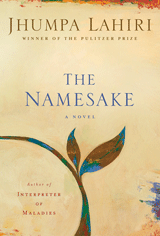
The Namesake by Jhumpa Lahiri

As a young boy Gogol doesn't mind his name.  He recognizes pieces of himself in road signs: GO LEFT, GO RIGHT, GO SLOW.  For birthdays his mother orders a cake on which his name is piped across the white frosted surface in a bright blue sugary script.  It all seems perfectly normal.  It doesn't bother him that his name is never an option on key chains or metal pins or refrigerator magnets.  He has been told that he was named after a famous Russian author, born in a previous century.  That the author's name, and therefore his, is known throughout the world and will live forever.

I remembered a couple days before school started, thankfully, that my upcoming seniors had been assigned Jhumpa Lahiri's novel The Namesake as summer reading.  And though I sped through it, it's clear to me that they're likely to identify with the book, which is about a first-generation Bengali Indian, Gogol, and his experience navigating the dual cultures in which he lives.  Like my students, who often choose substitute Anglicized names to replace or subsume their Indian ones, Gogol's identity crisis centers around his name.  Gogol's father names him after the Russian author Nikolai Gogol--whose work he once used to flag down aid after a cataclysmic train wreck--but to Gogol it becomes a mark of otherness, alienness, and he changes it to "Nikhil."

How do these names help us traverse the cultural map in which we live, asks The Namesake.  What is the cultural inheritance of Gogol vs. Nikhil?  How about that of "Nick," as he's so often called?  These are rich, powerful questions that open up more questions of culture and identity, but The Namesake never really treats them anything more than superficially.  Here's a paragraph:

Plenty of people changed their names: actors, writers, revolutionaries, transvestites.  In history  class, Gogol has learned that European immigrants had their names changed at Ellis Island, that slaves renamed themselves once they were emancipated.  Though Gogol doesn't know it, even Nikolai Gogol renamed himself, simplifying his surname at the age of twenty-two from Gogol-Yanovsky to Gogol upon publication in the Literary Gazette.  (He had also published under the name Yanov, and once signed his work "OOOO" in honor of the four o's in his full name.)


This starts out well, collapsing the universe of those who have changed their names, suggesting a commonality between "revolutionaries" and "transvestites" that captures the ambivalence of Gogol's wish to change his name.  But all this business about Gogol the author strikes a really discordant note for me, for several reasons: First, it shows how reluctant Lahiri is to really enter into Gogol's consciousness and contemplate his anguish and confusion.  It's a rough jolt from what presents itself as Gogol's mental process of justification ("Plenty of people changed their names...") to the meddling presence of the author.

Secondly, as reluctant to explore the consciousness of Gogol Ganguli as Lahiri is, she's just as reluctant to explore the consciousness of Nikolai Gogol.  This passage serves as an interesting companion to an earlier passage in which Gogol is embarrassed by his high school English teacher's rundown of the salacious details of Nikolai Gogol's life, but these biographical details stubbornly refuse to deal with the author's work in any way.  Gogol Ganguli's father, who professes to love Russian literature, repeats Dostoyevsky's old canard that "We all came out of Gogol's Overcoat," but never deigns to explain what that actually means.  Gogol's works have powerful overtones of alienation that would be powerful counterpoints to the narrative of The Namesake, but Lahiri only wants to use him as a biographical parallel or a cultural signifier, as informative as the brand of cigarette Gogol smokes or the name of the department store where his girlfriend shops.

It seems unfair to tear apart an isolated passage like that, but I think it's indicative of the problems I have with The Namesake as a whole: it substitutes surface qualities for psychological depth.  I criticized The Time Traveler's Wife for something similar: a hyper-specific realism that's choked with details about food, clothing, music, architecture, etc., mostly in the service of establishing a pleasingly upper-class atmosphere.  The Namesake does the same thing--especially in the long section in which Gogol/Nikhil dates a wealthy woman who lives with her parents in Chelsea--but to a lesser degree.  Mostly, I think Lahiri simply mistakes a profusion of detail for the vibrantness of reality.  Is this the direction where fiction is headed?  A fiction of objects?

More intriguing, for me, are the lives of Gogol's parents, Ashoke and Ashima, who move to the United States from India.  Their struggle with effective exile is infinitely more interesting than Gogol's fretting over hi name, which can be kind of whiny, or the petty problems of his bourgeois life.  Late in the book, Ashima says of her divorced son and his Bengali ex-wife, "They were not willing to accept, to adjust, to settle for something less than their ideal of happiness.  That pressure has given way, in the case of the subsequent generation, to American common sense."  Does that not make it clear that it's Ashima whose need to navigate the pressures of culture and identity is more pressing, more vital, more difficult?  I'd rather have read that book.