Showing posts with label noir. Show all posts

Tuesday, July 7, 2009

Gun With Ocassional Music by Jonathan Letham

I knew all at once I didn't care about the woman who'd left me like this, that I didn't want her back and I didn't want revenge, and I didn't want Celeste or any other woman besides the one with me right now. I wanted Catherine, I wanted her with everything I had—except I didn't have it anymore. What I had to offer, what I should have had to offer, was missing... I wanted Catherine, but I wanted to take her with a different self, a self that wasn't available. The thing I wanted wasn't lost in the past at all, and never had been. It was lost in the future. A self I should have been, but wasn't. A thread I'd let go of in myself, thinking I could live without it, not seeing what it meant.


It seems appropriate that I'm posting this review right after Chris posts his review of Ubik, because Gun With Occasional Music is essentially a noir in the Dick-ensian setting. The style is hard-boiled, the plot labyrinthine, the ladies beautiful and cold and the men strong and solitary. And, of course, there are the babyheads, infants with adult intellects; anthropomorphic animals including a kangaroo assassin, an array of government-sponsored drugs with names like Forgetorall.


Conrad Metcalf, a tough-guy private investigator, is living a fairly comfortable life when his services are requisitioned by a man, Orton Angwine, who is accused of a murder he didn't commit. Metcalf reluctantly takes the case and, of course, finds that its roots go much deeper than he originally anticipated. I'm giving the plot the short shrift here--there's quite a bit more of it—but I'd rather focus on the world and themes in the book because a) someone might want to read this book, and b) it's just more interesting.


There's a lot going on in Metcalf's world, much of it related to the theme of identity. On the surface, there are the obvious connections: who is framing Ortwine, who is behind it all, and so on, but Gun takes these questions and digs deeper. Metcalf himself is something of a male-female hybrid, left without the ability to feel sexual pleasure after a transplant gone wrong, and he struggles with his place in relation to the women he meets throughout the story, most notably with Catherine in the included excerpt. Further, the concept of identity is further confused by the government's encouragement to citizens to use drugs of various sorts, drugs which make them forget, sleep, and enjoy themselves. This aspect reminded me quite a bit of Brave New World. Another interesting aspect is Letham's invention of Karma, not the Buddhist idea but a concept more closely tied to the colloquialism “Good Karma”. Karma in Gun's world functions as sort of a universal currency that controls not a person's ability to buy and sell but their ability to enter places of business, get jobs, or even form relationships. In short, a person's ability to live is governed by Karma which is regulated by the government based on behavior ultimately leading to a lack of autonomy among the populace. Even asking innocuous questions is considered unbelievably rude. This leads to a lack of individualism and, of course, governmental corruption and societal manipulation by those with the money and/or Karma to do whatever they want.


One issue I often have with science fiction is that, given its nearly limitless narrative potential, it rarely spends time examining the deeper questions of humanity. That's something I love to find in my reading, even my genre reading, and something Letham delivers. But fear not, sci-fi fans: there's also a kangaroo assassin.

Saturday, January 24, 2009

Motherless Brooklyn by Jonathan Lethem

"Ziggedy zendoodah," I said aloud. My erection dimmed, energy venting elsewhere. "Pierogi Monster Zen master zealous neighbor. Zazen zaftig Zsa Zsa go-bare." I rapped the scalp of the sitter in front of me. "Zippity go figure."

The roomful of gurus and acolytes came to agitated life but not one of them spoke a word, so my burst of verbiage sang in the silence. The lecturing monk glared at me and shook his head. Another of his posse rose from his cushion and lifted a wooden paddle I hadn't previously notice from a hook in the wall...

"Pierogi kumquat sushiphone! Domestic marshmallow ghost! Insatiable Mallomar!
Smothered pierogiphone!" The flood came with such force, I twisted my neck and nearly barked the words.


Lionel Essrog is an orphan, raised practically from youth by a low-level mobster named Frank Minna in the Cobble Hill/Carroll Gardens neighborhoods of Brooklyn, and along with three other orphans forms the nucleus of Minna's detective-service-cum-crime-operation-cum-fake-car-service. As you can see from the passage above, he also has Tourette's.

Which, when your line of work revolves around subtly discovering and keeping information, can be quite the drawback. Lionel is a sort of anti-Philip Marlowe, a detective who exudes anything but cool and goes undercover very poorly. But in the opening chapters of the novel Minna is murdered, and since one of the other orphans is incarcerated and the other two locked in a battle for supremacy of Minna's mini-empire, the lot of finding Minna's killer falls to Lionel.

The mystery here is slight--it involves Minna's long lost brother and a cadre of Zen Buddhist monks operating out of the Upper East Side. The revelations that aren't telegraphed to the reader early on remain murky at the story's end, and the whole goofiness barely elevates the novel above the level of a Monk episode.

But Lionel is an intriguing character to follow; a captive of his own tics who doesn't seem capable of connecting with any other human being except his dead boss. The Zen angle seems inspired by a lot of silly prime-time detective dramas, but at the same time it provides an interesting balance to Lionel's troubled psyche--the Zen monks have what Lionel can only dream of possessing: control over the tumultous waters of the spirit. In fact, Lionel--endlessly complicated, and tangled up within his own mind--matches the mystery genre a lot better than the orderly, logic-driven detectives that seem to dominate it.

As an aside, I have to say I enjoyed this a lot more than The Brooklyn Follies--among other things, The Brooklyn Follies seemed to have a big hard-on for the Park Slope life but never really provides the reader with local color to sink his or her teeth into. It could have been any reasonably sized blue city. But Motherless Brooklyn's Court Street is unmistakable, and to my delight includes a few locales well-known to me. It even makes a stop in my neighborhood, Greenpoint, where Minna is murdered and stuffed in a dumpster. I feel certified.

P.S: I think that Brent, Carlton, Nathan and Jim would all enjoy this--plus, Edward Norton is supposed to be directing/starring in a film adaptation released next year.

Friday, October 17, 2008

The Yiddish Policemen's Union by Michael Chabon

I recall that once my favorite English teacher from high school noticed that I was reading Tom Wolfe's A Man in Full, a book he admitted to having read but didn't seem to care for. "Well," he said, "I'll say this--the man knows how to spin a good yarn." It wasn't really a compliment, but I think that his sarcasm betrayed a certain notion that plot is somehow subordinate to Big Ideas. Is that notion misguided or justified? I'm not certain--but surely to dismiss Wolfe's plot-making ability as little more than quality weaving is to slight a literary skill too rare in modern literature.

Such is the recorded opinion of Michael Chabon, who admits to missing the "ripping yarns" of the genre fiction of yore. It's in that vein that he delivers The Yiddish Policemen's Union, a hulking Frankenstein's monster cobbled from bits of alternative history, Philip Marlowe novels, and Rothian postmodernism. Though YPU provides enough material philosophical and spiritual for the reader to ruminate upon, it is first and foremost a novel of things happening, meant to be marveled at. Though it may be a fruitless task, I will attempt to synopsize:

The divergence point of Chabon's alt-history is the 1948 death by car crash of Anthony Dimond, representative of the territory of Alaska to Washington. Apparently in our world it was Dimond who squashed Harold Ickes' proposal to create a protected Federal district for the temporary residence of Jews in Sitka, Alaska. In Chabon's world, the proposal passes with Dimond out of the way, and soon millions of Jews are seeking refuge in the Sitka District: The "Frozen Chosen."

Fast forward to 2008, the 60-year anniversary of the settlement, and the expiration date of the agreement, which means that "Reversion" is imminent for the Jewish district and soon most of Alaska's three million Jews will be refugees once again. If that wasn't story enough for you, Chabon layers on top of this the story of Meyer Landsman, a detective investigating a gunshot homicide perpetrated in his own building that seems to have ties to the Verbovers, a powerful and mafia-like Orthodox sect of Jews that live on a nearby island.

If that isn't enough for you, wait! I haven't even mentioned that Landsman's partner is also his cousin and half Tlingit Indian, or that his father was a chess prodigy and his uncle a former police chief disgraced by accusations of embezzlement, or that Landsman left his ex-wife because he couldn't bear dealing with the pain of having convinced her to have an abortion, or that the homicide victim is reputed to have been the Tzaddik Ha-Dor, the once-in-a-generation would-be Messiah, or that the victim's death is somehow related to Landsman's sister's death in a plane crash, or that all of this seems to be tied into a shadowy conspiracy cooked up between Alaskan Hasidim and the evangelical United States president to return Israel to Jewish control. Whew. Breathe.

Clearly, The Big Sleep, this is not--Raymond Chandler's tight and careful plotting produced books under 200 pages; Chabon doubles that but stuffs in enough that it would have felt more comfortable at twice that again. But while Chabon hasn't quite got the noir genre's laconicness down pat, he does a good job with Landsman, into whom he funnels as much of Philip Marlowe's personality as is possible. The genius of this lies in the dialogue--I had never made the connection between the kind of rapid-fire quips that characterize noir and the brusque recursiveness of Jewish humor, but there it is. I am reminded of Mastrionotti and Deutsch* from the Coen Brothers' Barton Fink; it is no surprise that it is the Coens who are slated to begin filming YPU early next year.

But back to the book. Reading it feels like traveling through the legendary and labyrinthine Warsaw tunnels which run beneath Sitka, but when you emerge on the other side, what are you left with? For one, you are left with a mess. It's hard not to feel that YPU has a few ideas too many, and some of them could have been left on the cutting-room floor. For another, you are left with the unfortunate conclusion that while you weep for the fate of the Jews, for whom the Disapora comes with a countdown this time around, it is much more difficult to feel pity for the individual characters of this novel, who are drawn a little too broadly and rely a little too heavily on their archetypes.

Thirdly, you may be left with the opinion of Richard Johnson of the New York Post, who titles his Page Six piece "Novelist's Ugly Views of Jews." This is, of course, the Post, which could sensationalize a ham sandwich, but I wish to briefly unpack the criticism here: Mainly Johnson takes issue with the fact that YPU "depicts Jews as constantly in conflict with one another, and its villains are a ruthless, ultra-Orthodox sect that resembles the Lubavitchers." What exactly is Johnson's understanding of Judaism today, that its various sects are friendly in a way that the splinter denominations of Islam and Christianity have failed to be since their inception? In fact, I think that Chabon's depiction of internecine conflict among the Sitka Jews is one of the novel's great successes; in a population of three million Jews with no Palestinians to brush against (though the native Indians serve this position to some extent), isn't it natural that such issues would arise along sectarian and secular lines? Johnson's criticism is pure silliness, and I have not seen it repeated by any respectable source.

And yet, let me bring up something that Johnson does not: One of the most poisonous and absurd claims made about Jews today is that they have extensive control over world institutions like the media and the United States Government. This idea is particularly pervasive in Islamic communities and the controversial specter of it taints even serious academic work, like Mearsheimer and Walt's claims about the undue influence of the Israel Lobby. By presenting a "ripping yarn" in which a cabal of Orthodox Jews plot to undermine the stability of world events, isn't Chabon playing into the hands of such absurdity? And even if the Post is too dim to pick up on it, doesn't that in a way back up their claims that YPU reinforces an ugly stereotype?

That question is more rhetorical than it sounds; I bring up the issue only to bring it up and would probably argue against it in the end. But I do think that it contributes to one aspect that did leave a bad taste in my mouth: YPU, for all its concern with religious issues, seems at times to have a rather uncomplex attitude toward religion in general. Though we might argue about the significance of it, the villains of the novel are conspiratorial Jews--and its heroes are humorous, self-effacing, Woody Allen-like ones--and what's more, they're aided by an amoral and evangelical president who wants to bring on the End Times. Though I understand this is the perception many have of our sitting president, it seems to me to evidence a certain lack of nuance on Chabon's part. There is no worth, I believe, in fiction that does not subvert our expectations, and while Chabon distracts us with the aurora borealis of conceit and plot, the cast lacks the capability to surprise us.

Don't think that I'm not recommending the book, I am--sometimes a good story is good enough. Let us not forget that one of the most powerful people in Jewish Sitka is Itzak Zimbalist, the boundary maven. It is against Jewish law to carry anything across boundaries on the Sabbath, a law circumvented by creating makeshift boundaries with rope, cable or wire around entire communities, and it is the boundary maven who is in charge of keeping this border, the eruv, intact. So do not doubt the power of string, the effectiveness of a "good yarn."

Saturday, February 23, 2008

The Big Over Easy by Jasper Fforde

The Big Over Easy delivered what I was expecting from the terrible Basket Case, namely a Discworld-like parody of the detective genre. Rather than parodying the genre by attempting to make a run of the mill muder case comical, TBOE (as it will henceforth be known) satirizes classic noir literature by setting the case in a fictional world where literary characters live lives that are both similar and dissimilar to their famous fictional ones.

The synopsis of TBOE is as follows: Jack Spratt (who still eats no fat) is head of the struggling Nursury Crime Division of the Reading Police Department. The NCD is struggling because, in Reading, departments must not only solve cases but also solve them in such a way that they'll make good reading in the various detective periodicals. Enter Mary Mary, the repetitively-monikered writer assigned to the NCD to record Spratt's cases. As soon as she is assigned to the division, Humpty Dumpty dies under suspicious circumstances, and the rest of the book follows Spratt as he works his way through the labyrinthine plot against Humpty.

There was a lot to like about TBOE. It was clever, and several bits made me laugh out loud, especially the bits at the beginning of each chapter from various fictional papers, with headlines such as "Identical Twin Plot Device Outlawed" and "Butler Did Do it Shocker!" The characters have habit fitting with their famed situations (Humpty Dumpty enjoys sitting on walls), and also attributes that are intentionally ludicrous (Humpty was also quite a ladies man, and had an affair with Rapunzel). The plot itself was clever and satirized the twisting narrative of much pulp noir very well, and Jack Spratt was a very likable character.

On the other hand, the writing was sometimes a little sloppy, probably because this is a rewrite of Fforde's first unpublished novel, and the exact setup of the literary universe is a little confusing. What is Prometheus doing in the same story as the three little pigs, for instance? it's also explained that the nursery characters don't really what they are, and, although Jack is aware that his cases are based on nursery rhyme, he seems unaware that he and Mary Mary are also part of that world.

Overall, however, I enjoyed this book and found it pretty funny and a quick read. I'd recommend it to anyone who likes Discworld or Douglas Adams, although the concensus seems to be that it's Forde's weakest book. I guess we'll see. I'm planning on reading The Eyre Affair later this year.

Wednesday, May 23, 2007

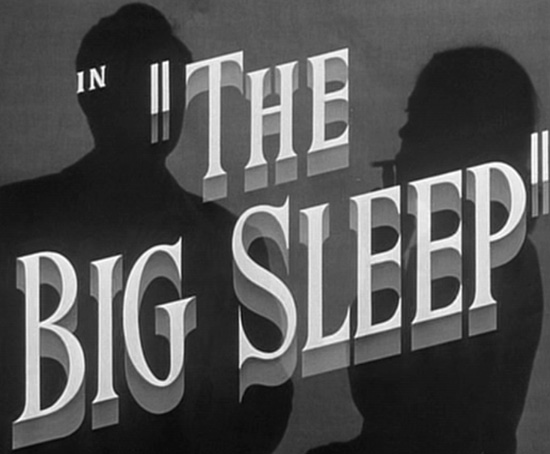
The Big Sleep by Raymond Chandler

Here I am, halfway through the Fifty Books Project. I rule over all of your asses. Consider yourself pwned.

Raymond Chandler's The Big Sleep is pretty much the prototype for hard-boiled detective fiction, taking elements from earlier crime and detective novels and combining them into a genre that seems as common as whitebread to us today. As a result, this, his most famous novel, can seem a bit uninspired at times; if an author wrote this today he would be deservedly accused of writing a very narrow and unimaginative novel. But The Big Sleep was written almost seventy years ago. While some of the tropes have become familiar to us--the uncertainty of who is on whose side, the frank depiction of violence and organized (and disorganized) crime, candid sex--this novel is pretty much where they began.

What The Big Sleep does have is Philip Marlowe, who is as definitive for his kind of character as The Big Sleep is for its genre. In it, Marlowe, a private investigator, is hired to investigate a fairly unspectacular blackmailing scheme for a retired general that ends up uncovering the connections between the general's daughters and a number of seedy underworld characters including casino-owner and extortion magnate Eddie Mars. Marlowe's approach is more about attitude than fantastic sleuthing and Chandler goes to great lengths to do away with the idea of a private investigator outsmarting the police at every turn. His cynical, acerbic, wisecracking personality has often been copied (cf. every detective show ever) but never reproduced.

All in all, unless you're superaware of The Big Sleep's literary/historical value, it comes across as enlightening as a beach read, for the most part. Bonus trivia: The Coen Brothers' Big Lebowski is loosely based on this novel--but only very, very, very, very loosely.