Showing posts with label Satan. Show all posts

Tuesday, September 1, 2020

The Origin of Satan by Elaine Pagels

At first glance these stories of Satan may seem to have little in common. Yet they all agree on one thing: that this greatest and most dangerous enemy did not originate, as one might expect, as an outside, an alien, or a stranger. Satan is not the distant enemy but the intimate enemy--one's trusted colleague, close associate, brother. He is the kind of person on whose loyalty and good will the well-being of family and society depend--but one who turns unexpectedly jealous and hostile. Whichever version of his origin one chooses, then, and there are many, all depict Satan as an intimate enemy--the attribute that qualifies him so well to express conflict among Jewish groups. Those who asked, "How could God's own angel become his enemy?" were thus asking, in effect, "How could one of us become one of them?"

Elaine Pagels' thoughtful and comprehensive The Origin of Satan is a great companion to another book I read this year, Miguel de la Torre and Albert Hernandez's The Quest for the Historical Satan: De la Torre and Hernandez trace the conception of Satan from the early church up to the present, but here Pagels (with some overlap) lays out the roots of the idea of Satan, first in the Hebrew Bible and then in the Gospels. Like De la Torre and Hernandez, she makes clear something I think would surprise a lot of Christians: the idea of Satan as a literal character with his own agency and designs on the Earth is not a fundamental part of the Hebrew Bible, and comes from the later Christian tradition, and even the Gospels are not unanimous in promoting the idea.

So where does the idea of Satan come from? Both Pagels and the authors of The Quest for the Historical Satan start with what I imagine is intuitive for anyone who doesn't believe in a literalized Satan: Satan is the image of the other, used to characterize Christians' political, cultural, and religious enemies. Pagels' most significant contribution to this intuition, I think, is her observation that in both testaments the figure of Satan is most often associated not with foreign enemies like Babylon or Rome, but what she calls the intimate enemy: a competing faction within one's own in-group.

For the writers of the Old Testament, that means accommodationist Jews who favor cooperation with Rome over the Seleucids; for the writers of the New Testament, it's the Pharisees who oppose the Jesus movement within Judaism. (I'm oversimplifying; Pagels does an expert job of outlining the different viewpoints of each Gospel author and showing how each of them associates his own particular factional enemy with the Satan figure, and it's not always the Pharisees.) It's no wonder, then, that the idea of a literalized Satan comes into full bloom among the early fathers who are interested in formalizing church doctrine and defining orthodoxy against heresy. (Here Pagels' expertise in the Gnostic gospels of Nag Hammadi is invaluable.)

I've been reading these books because I'm writing a novel set during the Satanic Panic of the late 80's and early 90's. What was most useful about The Origin of Satan, for me, is that it answers a question I've had: if Satan is an image of the Other, why is it that the Satanic Panic focused primarily on white scapegoats? Why didn't it manifest more often as a fear of, say, immigrant religious practices? But like the authors of both the Old and New Testament, the purveyors of the Satanic Panic reserved their greatest fear for the enemy within: the mother, the daycare worker, the teenage son. The Panic spread the fear of the Satanist down the street, the person who looks normal but engages in ritual sacrifice behind closed doors. Suddenly this aspect of the Panic makes more sense in light of Pagels' observation that Satan is the intimate enemy, the fallen angel.

Thursday, March 5, 2020

The Quest for the Historical Satan by Miguel A. De La Torre and Albert Hernandez

In a very real way, the search for the historical Satan is an attempt to justify God's grace while legitimizing the reality and presence of evil in human history.  At least this seems to be what was occurring with the birth and development of Satan in the legends of pre-Christian mythology and across the pages of the Jewish, Christian, and Islamic sacred texts and Scriptures.  It appears that the development of Satan was, to a certain extent, trying to save God form appearing as the source of evil that is so much a part of the reality of human suffering and death.  The Scriptures attempt to convince us that God is still worthy of our worship despite the presence of evil, even though the most troubling conclusion derived from the Judeo-Christian biblical text is the discovery of a God who is the cause and author of all that is good--and all that is evil.

For Miguel De La Torre and Albert Hernandez, the authors of The Quest for the Historical Satan, the nature of Satan is inextricably tied up with the biggest question about God: if God is both omnipotent and perfectly good, why does evil exist?  Pre-Christian Jewish texts seem to have no problem casting God in a dubious light, as when he encourages Abraham to kill Isaac.  A "Satan" appears in the book of Job, of course, but his relationship to God is awfully ambiguous; is he an agent of God or an adversary?  And if he's an adversary, why is God so willing to do what he suggests and torture poor Job?

In The Quest for Historical Satan, De La Torre and Hernandez trace the growth of the Satan figure over centuries.  When Christian thought begins to demand God's perfect goodness, they argue, conceptions of Satan change.  The story of Lucifer, the fallen angel, gets assimilated into the story of Satan because it allows us to understand how evil comes about, not from God himself, but from a rebellious angel who works to undo God's beneficence and grace.  And yet, this understanding of Satan is troublesome, too.  If Satan is so powerful, a kind of foil to God himself, doesn't Christianity stretch the definition of monotheism?

The authors' history of Satan through the years is as predictable as it is bleak.  Time after time, this version of Satan, with slight ideological and theological emendations, is used as a representation of the political and cultural other.  It begins with the Church Fathers, claiming their opponents are not just heretics but inspired literally by the devil.  In the hands of medieval Christians, Satan becomes a Jew, then a Muslim; in the hands of explorers, the rites of Native Americans become Satanic.  There's a whole thing about witches in Puritan Massachusetts you might have heard about.  Throughout it all, De La Torre and Hernandez stress the continuing development of an ideology that associates Satan with "pure evil," an observation that seems somehow too commonplace and dreary to fully appreciate its implications.

The most interesting part of The Quest for the Historical Satan comes after the authors are done questing: they offer, in place of the popular conception of Satan as an antagonist of God who represents pure evil, an understanding of Satan as a kind of trickster figure, like Coyote or Br'er Rabbit.  Like those legendary figures, Satan uses deception to spur the complacent to reassess their own beliefs and habits--look what happens to Job when Satan convinces God to trick him, after all.  This reimagining of Satan comes from the context of a liberation theology, and fashions a Satan that serves as a goad for powerful and self-righteous people.  I'm not sure I buy it, but it sure is interesting and bold--and a hell of a lot better than the way we think about Satan now, and have been for centuries.

Friday, August 23, 2019

Satan's Silence by Debbie Nathan and Michael Snedeker

Now, determined to unmask the cabal that was victimizing the South Bay's children, Currie quit working and devoted himself full-time to sleuthing.  He began combing woods and beaches for satanic artifacts.  Once he found a dead frog that was missing its intestines.  Convinced it was the remnant of a demonic rite, Currie brought it home and displayed it in his dining room, in full view of his frightened children.  Another father called a DA's investigator late one night and reported that someone from the "conspiracy" had placed a stake into his lawn.  When the sun rose the next morning, the stake turned out to be a newly bloomed gladiola bulb.

We use the phrase "witch hunt" all the time.  We use it to mean any unfounded accusation, typically with the insinuation that there are ulterior motives at hand, and a willful disregard for evidence or proof.  The president is certainly fond of using it to describe the investigations into Russian interference in the 2016 election, but he's not alone.  It's a dead phrase, shorn of the impact of the history it references, and I think we have mostly accepted that it's a dead phrase because we believe we are wiser than the generation that executed nineteen people in Salem, Massachusetts at the end of the 18th century.  But, as Debbie Nathan and Michael Snedeker show in their book Satan's Silence, history repeats, and the traits that made the Salem witch trials so uniquely horrifying--the mass hysteria, marked not by bad faith but utter sincerity; the targeting of women, people of color, and other marginalized people; the unexamined accusations of literally Satanic behavior; the fear of being perceived as siding with the accused rather than the accuser; the immense human cost--are all shared with the Satanic ritual abuse cases that rocked the United States in the late 1980's and early 1990's.

In 1983, a mentally ill mother in Manhattan Beach, California, became obsessed with the state of her preschool-aged son's genitals and anus.  After relentlessly questioning him, she got him to admit that a worker at the preschool, Ray Buckey, had "taken his temperature," and became convinced that the "thermometer" Buckey used was not a thermometer at all.  A year later, police and researchers would be claiming that 360 children had been sexually abused at the McMartin Day Care, not just by Buckey but his mother and grandmother.  The accusations included claims, made by the children, that they witnessed witches riding on broomsticks, that they were abused in hot air balloons, and that they were abused by Chuck Norris.  The entire school was leveled to search for the hidden tunnels where abuse purportedly took place, and of course, none were found.  The trial, which ended up lasting seven years, was the longest and most expensive in American history.  It ended in acquittal for all parties, but by then Ray Buckey had spent five years in jail, and this and similar California cases spawned a wave of ritual abuse prosecutions throughout the country, in which the accused were not so lucky.  Many accused went to jail for decades.

The narratives of these cases, according to Nathan and Snedeker, defied belief.  They required you to believe that Satanic rings, comprising hundreds of otherwise ordinary people, were abusing children in day care centers at rates so unbelievable that they could hardly escape detection from other adults.  The authors of Satan's Silence describe a perfect storm of cultural, political, and legal forces that perpetuated the moral panic: Feminists and child abuse advocates overcorrected for a widely held belief up through the 1960's that children could not be trusted as witnesses.  Child abuse "experts" and investigators insisted that children did not lie about being abused, and confirmed these beliefs by interviewing frightened kids with leading questions.  Child abuse was seen as a slam-dunk issue for ambitious prosecutors--the authors even suggest that Janet Reno, whose prosecution of Frank Fuster in Miami helped launch her to the office of Attorney General, was similarly preoccupied with child abuse by the Branch Davidians in Waco, and the same dynamics led to the firefight that killed 76 people.  Unscrupulous medical researchers claimed to be able to recognize signs of sexual abuse in children, bolstered by unscientific and frankly sexist understandings of what "normal" genitalia, especially young female genitalia, look like.

This book was hard to read.  The accounts of the accusations themselves, even though they recount abuse that never occurred, are grueling.  Faced with the prospect of such horrible things happening to your child, hysteria seems understandable.  But it was also hard to read because it shows how dozens of innocent people, most of whom dedicated their lives to the not-lucrative profession of child caretaking, had their lives ruined.  One element of the panic I hadn't known about was that the accusers often came from powerful or wealthy families, even families of police and prosecutors, while the accused were often poorer, women, immigrants.  The children, too, who were prodded and coerced into accusing their caretakers and sometimes even their own parents, were put through intense trauma.

I picked this book up because I've been thinking about write a novel about the Satanic Panic of the late 80's and early 90's.  I was hoping Satan's Silence could give me a better sense of the cultural theology involved, of what people believed about Satan and Satanists, but the book sheds less light on that aspect of the time period.  That makes sense: because the imagined Satanists were secretive, shadowy, the nature and structure of their rituals was sketchy.  Books like Michelle Remembers and the Wicca Letters apparently provide some sense of who these Satanists were supposed to be, but in the cases themselves, whatever a kid could be prodded to imagine was seized on.  But one thing I'd really like to hear more about is the way that these cases fit into larger patterns of Satanic fears, of records being played backwards, and of distinct travesties like the West Memphis Three, three high schoolers accused of killing three boys in 1993.

Satan's Silence is a reminder that we are not past the kind of social dynamics that produce a real witch hunt.  Though many of the accused in these cases have been released, most weren't until after this book was published, in the mid-2000's.  And you don't have to look far to see history repeating itself yet again: In 2016 Edgar Welch walked into Comet Ping Pong Pizza in Washington, D.C. with an AR-15, looking to take down Satanist child molesters.  Like the McMartin Day Care, Comet Ping Pong has a phantom basement where abuse goes on.  Edgar Welch couldn't find it, but there are thousands of online warriors convinced he just wasn't looking hard enough.

Thursday, January 25, 2018

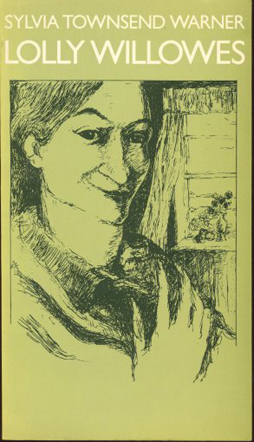
Lolly Willowes by Sylvia Townsend Warner

There remaineth a rest for the people of God (somehow the thought of the Devil always propelled her mind to the Holy Scriptures), and for the other people, the people of Satan, there remained a rest also.  Held fast in that strong memory no wild thing could be shaken, no secret covert destroyed, no haunt of shadow and silence laid open.  The good yards at Paddington, for instance--a savage place! as holy and enchanted as ever it had been.  Not one of the monuments and tinkerings of man could impose on the satanic mind.  The Vatican and the Crystal Palace, and all the neat human nest-boxes in rows, Balham and Fulham and the Cromwell Road--he saw through them, they went flop like cardhouses, the bricks were earth again, and the steel girders burrowed shrieking into the veins of earth, and the dead timber was restored to the ghostly groves.  Wolves howled through the streets of Paris, the foxes played in the throneroom of Schonbrunn, and in the basement at Apsley Terrace the mammoth slowly revolved, trampling out its lair.

Sylvia Townsend Warner's Lolly Willowes moves in the same way as her novel Mr. Fortune's MaggotIt begins as a black comedy, a satire of conventional mores, this time a needling portrait of a woman who becomes a spinster.  Then it becomes something else entirely, something more interesting and profound.  In this case, it does that when the spinster becomes a witch.

Lolly--Laura--doesn't exactly chafe against the mores of society, but she is slightly estranged from them.  After the death of her beloved father she moves in with her brother and his wife because no one has enough imagination--not Lolly, not her brother Henry, not her sister-in-law Caroline--to think she might do anything else.  Lolly goes along, not marrying, submitting to the dead dullness of the everyday life of a woman at the turn of the century, until one day a realization comes upon her: she doesn't actually have to do any of that.  She chooses a place in the English countryside, a town called Great Mop, out a guidebook, and moves there.

Lolly's choice to become a servant of the Devil seems hilariously sudden.  After all, the book seems to operate in another mode entirely.  But it's not totally out of the blue.  After all, Warner tells us that Lolly's sense of alienation takes the form of an attraction to darkness and ruin:

Her mind was groping after something that eluded her experience, a something that was shadowy and menacing, and yet in some way congenial; a something that lurked in waste places, that was hinted at by the sound of water gurgling through deep channels and by the voices of birds of ill-omen.

The best part of the novel is its depiction of Satan, who Warner describes as a kind of genial huntsman, traveling through the English countryside looking for souls to snatch.  In this way he's sort of an inversion of the image of Christ as "fisher of men," and Warner imbues her Satan with a kind of aloof fatherliness that seems to borrow from depictions of God.  But Satan, unlike God, is uncoupled from the intricate network of oppressive conventionality that Lolly has run from: "Society, the Law, the Church, the History of Europe, the Old Testament, great-great aunt Salome and her prayer-book, the Bank of England, Prostitution, the Architect of Apsley Terrace, and half a dozen other useful props of civilization."

God and St. Paul, for Lolly, are "men's things, like politics, or mathematics."  Warner, like many after her (and probably some before?) reclaims the archetype of the witch as a symbol of feminism.  "When I think of witches," she tells Satan, "I seem to see all over England, all over Europe, women living and growing old, as common as blackberries, and as unregarded."  Satan kindly reminds her that there are warlocks, too, but for Lolly and for Warner the decision to follow Satan has a special valence for women, because it represents a rejection of the everyday burden conventionality places on them.  The radical gender politics of Lolly Willowes are cut by a mildness, a light satirical touch, that make it seem less radical than I suspect it really is.

In that way, the novel itself is a little like its depiction of Satan.  The conversation between him and Lolly that forms the climax of the novel is its best part, and it's hard not to feel like he's introduced too late and rushed off too quickly.  But as Lolly notes, Satan, unlike God, is pretty much done with a soul once he's gathered it.  In "his satisfied but profoundly indifferent ownership" he won't bother her, making her servanthood look more than a little like true independence.

Wednesday, August 17, 2016

The Ballad of Peckham Rye by Muriel Spark

'I know where you got all these disgusting ideas from.  You got them from Dougal Douglas.  Well, I'm glad he's gone and there won't be him at the wedding to worry about in case he starts showing off the lumps on his head or something.'

'I liked Dougal,' Humphrey said.

Here they were, kneeling at the altar.  The vicar was reading from the prayer book.  Dixie took a lacy handkerchief from her sleeve and gently patted her nose.  Humphrey noticed the whiff of scent which came from the handkerchief.

The vicar said to Humphrey, 'Wilt thou have this woman to be thy wedded wife?'

'No,' Humphrey said, 'to be quite frank I won't.'

They say there's only two stories: a fish out of water and a stranger comes to town.  Muriel Spark's The Ballad of Peckham Rye is a quintessential example of the second type.  It's all about what happens when the hermetic nature of a community is interrupted by an outsider, who, in this case is not only destabilizing, but outright destructive.

The stranger in this case is a Scotsman named Dougal Douglas, who is hired as an "Arts man" (whatever that means) at a textile manufacturer in the working-class London neighborhood of Peckham.  Dougal's task seems to be to improve the lives of the menial laborers at Meadows, Meade & Grimley, a job which he insists will require extensive research into the town, the factory, and its workers, but which consists mostly of not working.  When he does talk to his co-workers about work, it's usually to encourage them to take unasked-for days off.  Otherwise, he spends his time not showing up, befriending the locals, and working a subtle wedge into the many relationships which precede him in Peckham.  He gets a job at a rival company, and doesn't show up to that one, either.  Sometimes, he asks people to feel the lumps on his head, which he insists are the vestiges of two horns, sawed off his head at birth.

It's strange to think of Spark as subtle, but she's remarkably reticent when it comes to the deeper themes of her works.  Like Nabokov, half the time she seems to be playing games with the reader, baiting them into looking for deeper meanings that may not be there at all.  Unlike Nabokov, it's the sparseness of the novels and their bare-bones plots which can make such investigations futile; like looking for messages in spiderwebs.

But if there's something more profound going on in The Ballad of Peckham Rye than the mere joy of destruction, I think it's this: Dougal presents himself as a kind of Satan-figure, and his arrival in town really does end in disaster.  His friend Humphrey, who likes Dougal, answers "no" at the altar when he's about to marry Dixie, who doesn't.  His boss, Mr. Druce, commits a brutal murder out of jealousy toward Dougal.  But Dougal doesn't kill anyone; his worst sins, really, are skipping out on work, encouraging absenteeism, and ardent flirting.  In Dougal, Spark blurs the line between social and moral transgressions.  We laugh at the kind of banal corporate moralizing that we see in modern society all the time--I'm thinking of the boss in Office Space, droning on about cover sheets--but what if professionalism really were a bulwark between good and evil?  Or politeness?

The frightening thing about Dougal is that he seems to revel in the destruction he causes, then skips town.  He's not so different from Spark in that way, who clearly loves to be gruesome and doesn't care to linger on the repercussions.  I'd like to think that Spark, herself a Scottish transplant in London (and who, according to her biography, rather enjoyed stirring up trouble), saw the devilish Dougal as a representation of herself.

Wednesday, February 17, 2010

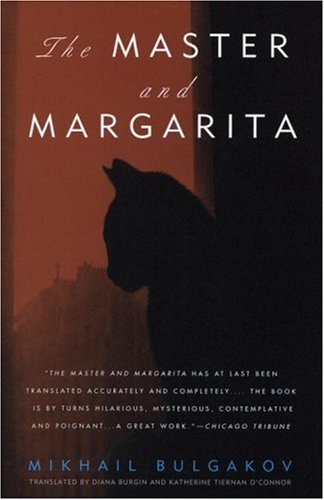
The Master and Margarita by Mikhail Bulgakov

Gods, my gods! How sad the earth is at eventide! How mysterious are the mists over the swamps. Anyone who has wandered in these mists, who has suffered a great deal before death, or flown above the earth, bearing a burden beyond his strength knows this. Someone who is exhausted knows this. And without regret he forsakes the mists of the earth, its swamps and rivers, and sinks into the arms of death with a light heart, knowing that death alone...


The Master and Margarita is one of those books whose fame comes partly from being discovered too late. Bulgakov was a famed playwright in Soviet Russia, and in the twelve years prior to his death he labored over this book, knowing completely that it wouldn't be published in his lifetime. It wasn't published until the 1960s, and today is one of the hallmarks of 20th century Russian literature.

The Master and Margarita is a rich, Faustian satire about the devil appearing in Moscow. He calls himself Woland, and begins by interrupting a conversation between an editor and a poet about the existence of Christ. After the conversation ends, the editor has been beheaded and the poet driven nearly into madness. This is just the first step--the book's first half chronicles the various and sundry ways that Woland causes havoc in Moscow, inducing death, madness, arson, and imprisonment, mostly in the city's literary and dramatic community. Most of these antics are performed by his retinue, which include a naked witch and a talking cat named Behemoth (which is totally what I'm going to name a cat, if I ever get one).

The titular characters don't appear until about halfway through the book: The Master, who has been arrested for writing a novel about Pontius Pilate, and Margarita, who desperately loves the Master. In exchange for returning the Master to her, Margarita agrees to become a witch and serve as the hostess for Satan's grand ball, which is as colorful as you might imagine. Interspersed are chapters of the Master's book about Pilate.

It's clear why the Soviet powers wouldn't have found The Master and Margarita acceptable. For one, religious subjects were taboo in atheistic Russia. Secondly, much of the havoc caused by Woland is a sly jab at the reigning policies of censorship and imprisonment. In this respect, Woland and his crew serve both as a symbol and its opposite. Though it is they who nearly destroy Moscow's literary elite, it is also Woland who saves the Master's manuscript about Pilate. The Master, regretting the trouble it has caused him, tries to burn it, but Woland reproduces it, quipping that "Manuscripts don't burn"--apparently now a rather well-known phrase in Russian. Here is the implication--the hope?--that authors survive in their works, something Bulgakov must have clung to in the face of a terminal disease. The book is largely comic, but also bittersweet, and the paragraph I've quoted above is one of the last that Bulgakov wrote. It expresses his exhaustion and frustration, and though he leaves the paragraph unfinished it is simple enough to imagine that the sentiment is "death alone can calm him." I don't know if death brought Bulgakov calm, but one hopes that he would have felt validated by The Master and Margarita's publication and subsequent popularity.