Showing posts with label Sylvia Townsend Warner. Show all posts

Saturday, May 31, 2025

After the Death of Don Juan by Sylvia Townsend Warner

The wheel went round. The thread snapped, but was re-knit again. In hell the limbs of sinners are broken and mended, broken and mended. Men and women lie pell-mell together, naked as in the marriage-bed .There is a promise of water, but no water. There is no light and yet they see new torments approaching, and the stony looks of devils standing by. The tears dried on her cheeks as she sat spinning, and thinking of hell. In hell, too, as in heaven, the tears are dried. For all the anguish, for all the despair, no tears can break out over the burning eye-balls. Now Don Juan had come back from damnation to tell of it.

The story goes: the lecher Don Juan, caught in flagrante delicto with Doña Ana, kills Ana's father, the Commander. Later, he visits the Commander's tomb, where the statue of the man invites him to a fine dinner. Instead of a fine dinner, Don Juan receives his just desserts: the earth opens up and demons drag him down to hell. It's a difficult story to believe, but that's what Don Juan's servant, Leporello, insists, and so Doña Ana goes with her reluctant new husband, Don Ottavio, to Don Juan's village, Tenorio Viejo, to inform the lecher's family that he has died. She discovers few friends of Don Juan among the villagers there; even his father, Don Saturno, seems to understand that his son was a rather nasty piece of work. And yet the death--if indeed he really has died--of the don only promises to throw the village into turmoil.

After the Death of Don Juan is, like Townsend Warner's The Corner That Held Them, more interested in capturing a wide view of a place than it is an individual character. We may think, briefly, that it is Doña Ana's book, or perhaps Don Ottavio's, but when the nobleman and noblewoman arrive at Tenorio, the novel's perspective expands to take in all of the villagers who have long battled for safety and dignity under the rule of Don Saturno and his family: the miller, the sacristan, the seamstress, the many olive farmers. The villagers immediately set to discourse, first over whether they truly believe that Don Juan is dead, and then over what it means. They talk themselves into believing that the death of the don means that the money that went to support his drinking and whoring will be returned to the village, and that now they will be able to implement a scheme of irrigation that will increase the yield of their olive trees.

The back of my copy of After the Death of Don Juan describes the book as Townsend Warner's response to the Spanish Civil War. I wondered about that; obviously, it's set in Spain, but I couldn't easily make out any particular analogs of various people or factions, as far as I know them. And yet, it's a book that captures something interesting about class, and class warfare. The villagers find that Don Saturno, an intellectual and dilettante, is as enthusiastic about the irrigation plan as they are, and already has plans drawn up. But this detente between the feudal lord and his subjects is interrupted by the return of--spoiler, you guessed it--Don Juan, who, as it turns out, has not been dragged to hell at all. Talking with his estranged son, Don Saturno finds that all his noblesse oblige will amount to nothing; when he inherits the estate, Don Juan intends to cancel the leases and trap the villagers in cruel bondage. There's something here, I think, about the way that class interests win out over personal kindness; Don Juan understands that his position as lord is an essentially cruel one and has no delusions about whether it is possible for the lord and his workers to be on friendly terms. The villagers only dimly sense this, but they understand that Don Juan's return means them no good, and the novel ends with a bloody and doomed assault by the villagers on the castle.

Though it's set in 18th century Spain, After the Death of Don Juan struck me as Sylvia Townsend Warner at her most Dickensian--the large cast of characters, the broad (and funny) humor, the attempt at circumscribing the whole social relations that define the town. In this way it's very different than the books that made me fall in love with her as a writer, like Mr. Fortune. Yet, I love how she, as a writer, can commit that eloquent, sardonic voice to such different places and times: colonial Polynesia, a 14th century convent, Victorian England. In each instance, she captures something both funny and dark about human nature, and After the Death of Don Juan is no exception.

Saturday, January 8, 2022

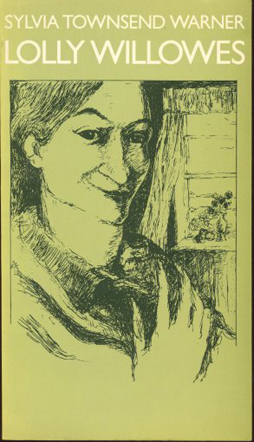
Lolly Willowes by Sylvia Townsend Warner

Laura had not listened to the stock-dove; she had not seen the haze thickening overhead. She walked up and down in despair and rebellion. She walked slowly, for she felt the weight of her chains. Once more they had been fastened upon her. She had worn them for many years, acquiescently, scarcely feeling their weight. Now she felt it. And, with their weight, she felt their familiarity, and the familiarity was worst of all: Titus had seen her starting out. He had cried: “Where are you off to, Aunt Lolly? Wait a minute, and I’ll come too.” She had feigned not to hear him and had walked on. She had not turned her head until she was out of the village, she expected at every moment to hear him come bounding up behind her. Had he done so, she thought she would have turned round and snarled at him. For she wanted, oh! how much she wanted, to be left alone for once.

The story of Laura Willowes begins, as most stories do, with a bunch of men. In fact, much more time is spent in the early going talking about family history, her brothers' marriages, her father's illness and death, and her subsequent shuttling off to live with her brother Henry, than about Laura herself. Aside from her love of her father and her love of nature, Laura does very little: she is passively acted upon and her feelings about the things that are happening are opaque to us. The biggest development in the first half of the book is right there in the title: Laura becomes Aunt Lolly.

Her role is circumscribed by the expectations placed on a single woman with no family around the turn of the century. She assists her sister-in-law around the house, takes care of the newborns, most notably a boy named Titus, and is occupied from dawn to dusk with responsibilities that are pushed upon her, though she hardly seems to realize it.

But the structure is such that the reader is barely aware of what is going on; Warner strings us along in such a traditional realist narrative that none of this seems out of the ordinary--after all, that's how most of these stories go, regardless of mode--Agnes Grey, Emma, etc. And then, at almost exactly the midpoint, Lolly decides to move to Great Mop and start her own life. Her brother, Henry, greatly objects, first because she's, well, a single woman, and secondly because he's gambled away her trust in what I can only assume is the Dogecoin of 1926. He sister-in-law passive aggressively wonders how she'll carry on without Lolly. Only Titus, now in his late teens, supports her schemes, although once he realizes she's serious his ardour cools as well--but the next section picks up in Great Mop, with Lolly alone, at least for a while.

Lolly starts coming into her own, forming some loose community with the inhabitants of Great Mop, and even feints at the idea of a romance, but this is not that sort of book, and just as Lolly is asserting herself, who should show up but Titus. At first happy to see him, Lolly soon finds herself being fed back into the same sorts of rut she left to escape--she's mending clothes, making food, handling social events and worst of all, she's once again never alone. So one day, while out walking, Lolly makes a deal with Satan--he can have her soul, and he'll give her back her agency.

So, this happens about 50pp from the end of the book, and after Titus is attacked by bees, rapidly engaged, and leaves within 48 hours, Lolly is all in--but it's not as if she goes all in with cauldrons and newt's eggs. She's content only to have her solitude back. The final setpiece in the book is a conversation with Satan, which is where most of what I've spelled out thematically comes together--indepenedence is so desirable, so necessary, for women that they make easy prey for Satan. But Satan doesn't appear to prey on them, per se. It's about the thrill of the chase--once they're caught he has no interest, contra the patriarchal God of Henry, in a relationship. He's a deistic sort, gentlemanly, cagey about the whole "eternal hell" thing, and he leaves Lolly, on the last page, feeling unsettled and simultaneously at peace. Better to recline in Hell than serve in Heaven.

Wednesday, May 26, 2021

The Corner That Held Them by Sylvia Townsend Warner

A good convent should have no history. Its life is hid with Christ who is above. History is of the world, costly and deadly, and the events it records are usually deplorable: the year when the roof caught fire, the year of the summer flood which swept away the haystacks and drowned the bailiff, the year when the cattle were stolen, the year when the king laid the great impost for the Scotch wars and timber for five years had to be felled to pay it, the year of the pestilence, the year when Dame Dionysia had a baby by the bishop's clerk. Yet the events of history carry a certain exhilaration with them. Decisions are made, money is spent, strangers arrive, familiar characters appear in a new light, transfigured with unexpected goodness or badness. Few calamities fall on a religious house which are not at some time or other looked back upon with wistful regret.

There is nothing much remarkable about the convent of Oby. Tucked away in a corner of the English fens, the nuns of Oby toil at their psalters and their embroidery. The convent is sometimes rich and sometimes poor, sometimes smiled upon by the overseeing Bishop and sometimes deplored; the nuns are respected and treasured by many of their neighbors and hated by others, sometimes the nuns themselves live harmoniously and sometimes the rule is resentment. A passerby might not even know it's there, at least until its spire is built at last, a project that takes decades and heaps of money, foiled once by a complete and deadly collapse. (If you ask me, Sylvia Townsend Warner's account of the raising of a spire is much more convincing and engaging than William Golding's novel The Spire, substituting as it does a kind of clear-eyed realism for Golding's high-pitched Freudian drama.)

The Corner That Held Them describes thirty years in the life of the Oby convent, beginning in the 1350's with the outbreak of the Black Death. As nuns come and go, so do the characters of the novel: entering as novices or dying, or simply appearing or vanishing in the way that real people sometimes do in the life of an institution. By 1380, the cast of characters has turned over almost completely, with the exception of Sir Ralph, the convent's resident priest, who keeps for many decades a horrible secret: he isn't really a priest. Nuns drift in and out of the novel's focus: tedious Dame Johanna, kindly Dame Isabel, melancholy Dame Lilias, shrewd Dame Lovisa, simple Dame Adela. Their individual stories are touching or heartbreaking, and well-crafted, but together they complete an image in the life of a community. As one of several prioresses thinks to herself:

And here am I, she thought, fixed in the religious life like a candle on a spike. I consume, I burn away, always lighting the same corner, always beleaguered by the same shadows; and in the end I shall burn out and another candle will be fixed in my stead.

Though well-steeped in both Biblical knowledge and the religious life of the 14th century, The Corner That Held Them is not very interested in matters of the spirit. It is money, rather, that is at the heart of he novel: how it is made, how it is kept, how it is spent. How can the convent collect the tithes of the parsonages that fall under its purview? How pay for the materials to build a spire, or mend clothes, or plant vegetables? As the Black Death fades from view, another threat emerges: violent Lollards who resent the church's hoarding of wealth. At one point the nuns, fearing an invasion, have their gold and silver buried by their bailiff--who is killed before he can tell them where he's buried it. And though individual nuns have their consciences pricked time and time again--Lilias dreams of becoming an anchoress, Adela steals the embroidery to sell for the poor--the convent as a whole moves on stolidly, too caught up in economic contingencies to tend to something as poor as souls.

I'm impressed by the wonderful range of Townsend Warner's novels; the convent of Oby seems--and is--miles and years away from the Polynesian missionary of Mr. Fortune. Even that novel's thematic focus on the nature of belief seems foreign to The Corner That Held Them, a novel in which belief seems secondary to the price of potatoes. Yet both novels share an interest in how strong ties are made and broken between people: "There can hardly be intimacy in the cloister," the prioress thinks, "before intimacy can be engendered there must be freedom, the option to approach or move away."

Sunday, March 22, 2020

The True Heart by Sylvia Townsend Warner

What she wanted to say was:

'Save me!  You must save me, for I am in despair and only you can rescue me.  I am alone, I am in love, I am terrified out of my wits.  Everything is in a conspiracy against me, everything menaces me, everything is new and unknown and terrifying, for love has changed it, and changed me too, so that I can do nothing to save myself, I can only whirl to and fro among my fears.  Oh, save me, you ought to save me, for I am yours, I have given myself to you, I am not my own any longer.  And yet I don't feel as thought you had got me.  I am like a ghost, I don't know myself any longer.  I am like a dream.  The sight of my own hand is enough to startle me, it seems strange and not mine.  I am like your dream, and you may wake up and forget me, and I shall never be able to find my way to you any more.'

Orphan Sukey Bond is placed as a servant with a family on a small farm in the marshes of England.  By the members of the family there she is either ignored or condescended to, with one exception: a mysterious young man named Eric, who the brothers of the family insist is not their relation at all.  One day, Eric leads Sukey to a secret and abandoned orchard full of fruit, where he kisses her for the first time.  Eric is pure and good-hearted--perhaps, you might suspect, a little too pure, as when he suggests they climb through the window of an empty church and get married.  Later, he has a convulsive fit when Sukey is compelled to slaughter a chicken for dinner.  Eric, the family explains, is "an idiot"--and soon his haughty and ashamed mother has spirited him away from the house where she has hidden him away, leaving Sukey alone.

The True Heart is the story of Sukey's long quest to find Eric and bring their promise of marriage to each other to fruition.  Townsend Warner gives the impression that Sukey, too, doesn't quite have full possession of her faculties: entreating Eric's mother, she confesses an unshakable belief that she is pregnant, though all the pair has done is smooch in an orchard.  But Sukey's naivete is not permanent, but the product of youth and inexperience, which finds in Eric a kind of familiar companion.  The True Heart believes that there is a wonder in the simplicity of childhood and its imaginative power, which is lost in the process of aging.  See how, by contrast, a slightly older Sukey veers toward cynicism and despair:

One day, in the midst of stilling the outcries of little Louise, who had stuffed her nostrils with soap, it flashed upon her with an extraordinary unreality that she had once believed herself to be pregnant.  It seemed the delusion of a child.  Just so, in the old days at Notting Dale, she had awoken one morning firmly convinced that she could fly, and had launched herself down a flight of stairs, to roll bewildered and howling into a clothes-basket.  Perhaps her very love had been a delusion too.  It had seemed like love, but so had it seemed to her that she would bear a child.  One was untrue, so might the other be.  For what did she know about love?  Nothing.  A farm-servant, very young, very ignorant, who had been kissed by a boy who was not quite in his right mind.

But Eric acts like a lifeline for Sukey's youthfulness, keeping it alive even in his absence.  It's this youthful imagination that gives Sukey the boldness to abandon three different placements to renew her search for Eric, and to traipse around the English countryside, relying on the kindness of tramps and madams.  She develops a ridiculous notion that if she can procure a signed Bible from Queen Victoria and present it to Eric's mother, she will see the light and permit the marriage.  It seems impossible, but Sukey's firm belief makes it possible, and in the end, she really does meet the Queen, she really does get the Bible.  Things don't quite work as she expects, but that doesn't seem to matter; what matters is that Sukey believes in the dream of her youth at all costs.

The True Heart is very charming; it's the kind of heartwarming and optimistic--but not shallow or didactic--book that I needed at this difficult moment.  As in Lolly Willowes and Mr. Fortune, Townsend Warner creates characters that are appealing and convincing, sympathetic even in their follies and mistakes. 

Thursday, January 25, 2018

Lolly Willowes by Sylvia Townsend Warner

There remaineth a rest for the people of God (somehow the thought of the Devil always propelled her mind to the Holy Scriptures), and for the other people, the people of Satan, there remained a rest also.  Held fast in that strong memory no wild thing could be shaken, no secret covert destroyed, no haunt of shadow and silence laid open.  The good yards at Paddington, for instance--a savage place! as holy and enchanted as ever it had been.  Not one of the monuments and tinkerings of man could impose on the satanic mind.  The Vatican and the Crystal Palace, and all the neat human nest-boxes in rows, Balham and Fulham and the Cromwell Road--he saw through them, they went flop like cardhouses, the bricks were earth again, and the steel girders burrowed shrieking into the veins of earth, and the dead timber was restored to the ghostly groves.  Wolves howled through the streets of Paris, the foxes played in the throneroom of Schonbrunn, and in the basement at Apsley Terrace the mammoth slowly revolved, trampling out its lair.

Sylvia Townsend Warner's Lolly Willowes moves in the same way as her novel Mr. Fortune's MaggotIt begins as a black comedy, a satire of conventional mores, this time a needling portrait of a woman who becomes a spinster.  Then it becomes something else entirely, something more interesting and profound.  In this case, it does that when the spinster becomes a witch.

Lolly--Laura--doesn't exactly chafe against the mores of society, but she is slightly estranged from them.  After the death of her beloved father she moves in with her brother and his wife because no one has enough imagination--not Lolly, not her brother Henry, not her sister-in-law Caroline--to think she might do anything else.  Lolly goes along, not marrying, submitting to the dead dullness of the everyday life of a woman at the turn of the century, until one day a realization comes upon her: she doesn't actually have to do any of that.  She chooses a place in the English countryside, a town called Great Mop, out a guidebook, and moves there.

Lolly's choice to become a servant of the Devil seems hilariously sudden.  After all, the book seems to operate in another mode entirely.  But it's not totally out of the blue.  After all, Warner tells us that Lolly's sense of alienation takes the form of an attraction to darkness and ruin:

Her mind was groping after something that eluded her experience, a something that was shadowy and menacing, and yet in some way congenial; a something that lurked in waste places, that was hinted at by the sound of water gurgling through deep channels and by the voices of birds of ill-omen.

The best part of the novel is its depiction of Satan, who Warner describes as a kind of genial huntsman, traveling through the English countryside looking for souls to snatch.  In this way he's sort of an inversion of the image of Christ as "fisher of men," and Warner imbues her Satan with a kind of aloof fatherliness that seems to borrow from depictions of God.  But Satan, unlike God, is uncoupled from the intricate network of oppressive conventionality that Lolly has run from: "Society, the Law, the Church, the History of Europe, the Old Testament, great-great aunt Salome and her prayer-book, the Bank of England, Prostitution, the Architect of Apsley Terrace, and half a dozen other useful props of civilization."

God and St. Paul, for Lolly, are "men's things, like politics, or mathematics."  Warner, like many after her (and probably some before?) reclaims the archetype of the witch as a symbol of feminism.  "When I think of witches," she tells Satan, "I seem to see all over England, all over Europe, women living and growing old, as common as blackberries, and as unregarded."  Satan kindly reminds her that there are warlocks, too, but for Lolly and for Warner the decision to follow Satan has a special valence for women, because it represents a rejection of the everyday burden conventionality places on them.  The radical gender politics of Lolly Willowes are cut by a mildness, a light satirical touch, that make it seem less radical than I suspect it really is.

In that way, the novel itself is a little like its depiction of Satan.  The conversation between him and Lolly that forms the climax of the novel is its best part, and it's hard not to feel like he's introduced too late and rushed off too quickly.  But as Lolly notes, Satan, unlike God, is pretty much done with a soul once he's gathered it.  In "his satisfied but profoundly indifferent ownership" he won't bother her, making her servanthood look more than a little like true independence.

Thursday, November 16, 2017

Mr. Fortune by Sylvia Townsend Warner

He should say something like: "Your god, Lueli, was only made of wood, perishable and subject to accidents, like man who is made of flesh.  He is now burnt, and his ashes are lost among the other ashes.  Now will you not see that my God is a better God than yours, and turn to Him?  For my God is from everlasting, even though the earth shake He cannot be moved."

Yes, that was the sort of thing to say, but he felt a deep reluctance to saying it.  It seemed ungentlemanly to have such a superior invulnerable God, part of that European conspiracy which opposes gun-boats to canoes and rifles to bows and arrows, which showers death from the mountains upon Indian villages, which rounds up the negro into an empire and tricks him of his patrimony.

Timothy Fortune is an Anglican missionary who sets out to convert the Polynesian island of Fanua.  The islanders welcome him with open arms; they are charmed by his quirky ways: his apprehension around the scantily-clad women, the strange music he plays on his harmonium.  But even though he stays many years, he gains only one convert, a youth named Lueli, and Lueli's soul is constantly a source of anxiety for Mr. Fortune.  When he discovers Lueli's god--a small wooden idol that is "his" god in the way that all the islanders have their own hand-carved gods--at an altar in the forest, he despairs for his failure to convert Lueli properly.

Mr. Fortune--actually, Mr. Fortune's Maggot, the first of two slim novels collected in this edition--begins as a particularly sharp parody of European colonialism.  Mr. Fortune bumbles around the island, as unaware of his own priggishness as only a condescending white missionary can be.  He notes that Polynesians, even Lueli, have trouble conceiving of Jesus because they are "not sorrowful enough," without, of course, thinking through the logic of that statement.  And yet Lueli, his young protege, is attached to Mr. Fortune with great ardor and intimacy and accepts his teaching with great equanimity, even when the subject is a particularly bungled lesson in geometry.  What I expected, having heard a little about this book from Brent, was a barely sublimated gay romance, a love which Mr. Fortune represses through his own staunch religion.  And it's not exactly not that.  But while Mr. Fortune's blindness is played for laughs, the intimacy between him and Lueli never is.

About two-thirds of the way through, the novel changes in a way that is both obvious and subtle.  A volcano tremor destroys Mr. Fortune's house, crushing everything inside, including the idol that he had demanded Lueli burn.  Lueli's spirit dies with his own god, and he becomes despondent.  But remarkably, Mr. Fortune's faith dies also, and in the passing of a heartbeat he gives up his Anglican mission for good.  What follows is a meditation on love that took my breath away, a long-formulating realization that Mr. Fortune must leave the island to preserve Lueli, whom he loves above all things:

"I loved him," he thought.  "From the moment I set eyes on him I loved him.  Not with what is accounted a criminal love, for though I set my desire on him it was a spiritual desire.  I did not even love him as a father loves a son, for that is a familiar love, and at the times when Lueli most entranced me it was as a being remote, intact, and incalculable.  I waited to see what his next movement would be, if he would speak or no--it was the not knowing what he would do that made him dear.  Yes, that was how I loved him best, those were my happiest moments; when I was just aware of him, and sat with my sense awaiting him, not wishing to speak, not wishing to make him notice me until he did so of his own accord because no other way would it be perfect, would it be by him.  And how often, I wonder, have I let it be just like that?  Perhaps a dozen times, perhaps twenty times all told, perhaps, when all is put together, for an hour out of the three years I had with him.  For man's will is a demon that will not let him be.  It leads him to the edge of a clear pool; and while he sits admiring it, with his soul suspended over it like a green branch and dwelling in its own reflection, will stretches out his hand and closes his fingers upon a stone--a stone to throw into it."

Guh. I'd give my hands to have written a paragraph as perfect as that one.  It reveals something shockingly true about love: when it is real it comes out of a recognition of difference, seeing someone as a discrete person outside of yourself, and yet a difference that affirms its essential similarity.  How crazy it is to encounter another being as full of spirit as yourself, yet so alien.  And the same feeling produces a revulsion, a kind of anger.  Like Oscar Wilde says, "Each man kills the thing he loves."  But Wilde's pithiness is no match for Warner's lyrical elaboration, I think.

Warner felt so attached to Mr. Fortune that she revisited him years later in a smaller standalone novella called "The House of the Salutation."  Mr. Fortune, having left Fanua, travels miserably around the world until he comes upon a widow living with a handful of servants in an old rundown mansion in the Argentine Pampas.  The widow seizes upon Mr. Fortune's appearance with a love that is more recognizably romantic than the one he had with Lueli, but no less strange or reverent.  This angers the widow's young heir, who suspects Mr. Fortune as having designs on the estate.  "The heart is like a dog," she says.  "It barks, and lies down again."  The novella is strange and dense, without the touch of irony that lightens Mr. Fortune's Maggot, but touching, because Warner apparently could not forsake her apostate priest and was compelled to provide him, at last, with love.