Showing posts with label Long Island. Show all posts

Sunday, March 15, 2026

The Price of Their Toys by John P. Loonam

The red dress is still spread out on her side of the bed, and I reach down, run a hand along its empty length once again. I take off my pajamas, pick up the dress and, raising my arms above my head, slide it down, twist my shoulders through and tug the silky sheath past my belly. As the hem flutters against my thighs, I feel the dress fill up with flesh again and turn toward the mirror, looking for Anna's native grace to come alive in my own awkward pose, but see only my hairy chest and shoulders pushing out around those spaghetti straps, my belly stretching the fabric out of shape. From the window, a loud, raucous car horn gives an extended beep, followed by a voice, shouting the one word, "Pervert," loud and clear. I fall to my hands and knees, hiding behind the bed.

I'm really pleased to be able to write this review of The Price of Their Toys, a collection of stories by my friend and workshop partner John Loonam. Several of these stories I have seen in earlier drafts, and I enjoyed being reminded of several I had forgotten about. I had forgotten how much I enjoy John's story "Make the Man," in particular, about a man who is pushed, before he's ready, to get rid of his late wife's dresses, and begins to wear them instead. His private grieving is complicated by the increasing dementia of a neighbor across the street who has been showing up in his yard without clothes of any kind, and when these two collide of an emergency--man in dress meeting man without pants--the story reaches a kind of comic fervor that belies the deftness with which it deals with the difficulties of aging and loss. I think it's one of the best stories in the collection.

John's stories often take place in the Long Island suburbs, in bedroom communities where the Catholic Church continues to circumscribe the emotional and cultural range of what is possible. The stories really evoke an era of suburban life in the 60's and 70's that is, if not gone, surely drastically changed, and the stories show, to my mind, why such an existence might have been as fragile as it is narrow. I really liked one story I hadn't read, titled "Trump" (no relation) about a young gay Catholic school student who befriends the school's new and only Black student. The relationship becomes complicated by the attentions of a Father who is deeply unpopular among the student body, and the protagonist, Frankie, ends up choosing a difficult and violent betrayal to keep his precarious place in the school's ecosystem.

Another that I liked and hadn't read moves the action to Manhattan, where a young and disillusioned legal assistant becomes obsessed with Richard Nixon, who after the end of his presidency has moved his law office into a nearby building. The protagonist, for reasons that are unclear even to him, keeps demanding to be given access to the former president--who, in the end, shows up in the public plaza to give him a bit of dubious advice. This story, I thought, has only a tenuous relationship to the politics that are the invisible backdrop of so much of the book, but the parallels it draws between the failed president and the directionless protagonist, are really powerful.

It was a real honor and pleasure to see some of these stories being crafted, but the best part of The Price of Their Toys was, for me, getting to read the ones that were totally new to me. If you're interested, you can by John's book here.

Wednesday, February 23, 2022

On Lighthouses by Jazmina Barrera

Almost all general histories of the lighthouse begin with Alexandria, or before--from the times of the beacons of the Celts--passing through the Tower of Hercules and the earliest medieval lighthouses in France, England, Italy, Spain, and China to the proliferation of lighthouses brought about by Fresnel in nineteenth-century France, and then the most modern ones of the twentieth century. In a few years, this history might include references to the last lighthouses, when GPS and computers have put an end to the need for them. I wonder if one day they will all be decommissioned, and if they will then return to being temples of fire dedicated to the sea, fetishes of the superstitious and seekers of esoteric knowledge, who will keep alive the legends of shipwrecks, lighthouse keepers, and the ghosts that surround them. Or if they will be (as seems their destiny) turned into hotels, museums, relics, for the amusement of millionaires, retired folk, archaeologists, historians, and the curious. Divested of their function, they are collectible objects. They now also have that attractive quality of ruins and decay. For melancholics, they are all the more beautiful.

When will the last boat arrive safely to port thanks to the beams of a lighthouse? Who will be the last lighthouse keeper in the world? Or could it be that the relationship between humans and the sea is so primordial that there will always be someone to switch on--using a button or some other future technology--a light for ships in distress or fishermen? Or perhaps they will shine out as temples or memorials to the thousands of people who lie at the bottom of the sea.

What does it mean to "collect" lighthouses? "Obsession," Mexican writer Jazmina Barrera writes, "is a form of mental collection." Traveling around to see lighthouses, and add them to one's mental collection, is "an attempt to satisfy the vain desire to possess with an immaterial, intangible form of possession, not unlike what one might feel toward a loved one." For Barrera, the attractions of lighthouses are many: they are stolid, impregnable, unchanging when compared with the changeable sea; they represent a kind of immutability of emotion or identity that is, for an anxious or adrift person, something to aspire to. Visiting the Blackwell Light on Manhattan's Roosevelt Island, Barrera imagines that she is "slowly transforming into a sealed tower." "I feel so sane," she writes, "that I must be losing my sanity."

On Lighthouses is arranged as a series of vignettes, each titled for a different lighthouse Barrera has visited: Yaquina Light in Oregon, Tapia Lighthouse in Spain, Goury Lighthouse in Normandy, Jeffrey's Hook--otherwise known as the Little Red Lighthouse--and Blackwell Light in Manhattan, Montauk Point at the end of Long Island. Each vignette mixes memoir, history, literature, and reflection in a way that reminded me of Helen Macdonald's H is for Hawk, though that book has the careful organization of an academic, and of someone who's come through the existential crisis explored in the book with a kind of resolution. On Lighthouses, by contrast, offers little change, much less resolution: whatever it is that Barrera grapples with, the limits are endemic to her methods--she writes eloquently, for example, about coming to terms with the many lighthouses she'll never "collect."

This book struck a chord with me because I'm a lighthouse-collector, too. I'm writing this from Ocracoke Island in North Carolina's Outer Banks, a short bike ride from a 200-year old lighthouse, a squat brick tower painted bright white, that is the second oldest in operation in the country. When I drive back to New York later this week, several other lighthouses will mark the stations of the journey: the barber-pole light at Cape Hatteras, the country's tallest, the striped light on Bodie Island, the distant tip of Cape Henry across Chesapeake Bay. Barrera's exploration of why she travels to these lighthouses seems right to me: they are discrete and countable, but inexhaustible; their verticality and commanding presence makes them visibly striking, even comforting; and their age makes one feel connected to history, to others. In reading about the New York-area lights, I felt the comforting presence of a fellow traveler, though what Barrera writes about the isolation of lighthouses, and the separation from the world one achieves by identification with them, struck me, too. (I can only assume that Barrera has yet to visit the lighthouses of the Outer Banks, and that once she makes the road trip a second volume is forthcoming.)

"When I visit lighthouses," Barrera writes, "when I read or write about lighthouses, I leave myself behind." This hardly seems true; it isn't true, only an expression of an attempted self-negation. But it's also true, I think, in the sense that the lighthouses, as with many places of great historical importance, invite us to enter into another understanding of time and place, one less shackled by the here and now. It leads Barrera to communion with Robert Louis Stevenson, whose grandfather built the first lighthouses along the dangerous Scottish coast, to Poe, Meville, Verne, and obviously Woolf, and to the lives of the many keepers who sacrificed their selves and sanity to protect the coasts. Even to the first lighthouse-builders, who kept towers of fire to propitiate the gods. As technology progresses and the need for lighthouses diminish, these layers of history become ever more important. Lighthouses become less utilitarian but more meaningful, landmarks on a geography of time and spirit.

Tuesday, January 4, 2022

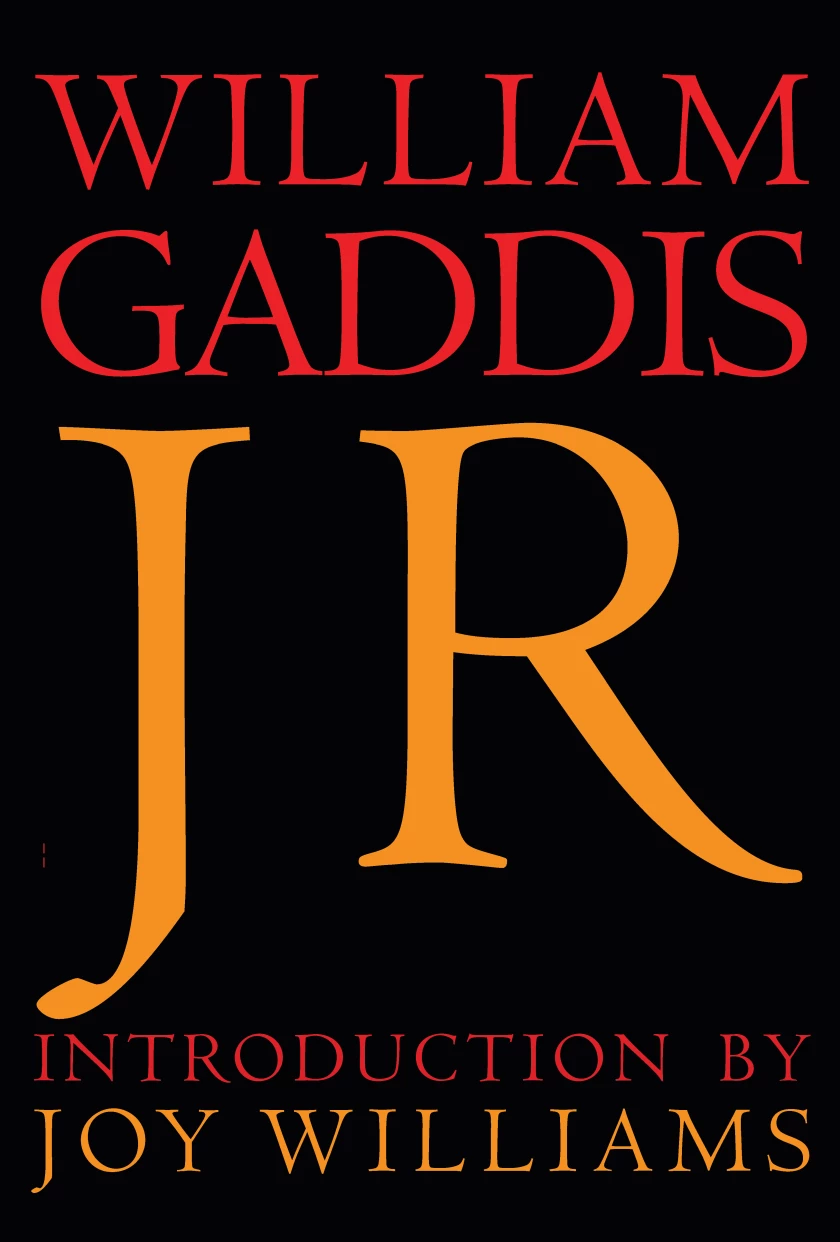
J R by William Gaddis

--No this other little boy I meant, J R he's so, he always looks as though he lives in a home without, I don't know. Without grownups I suppose, like he simply lives in those clothes of his.

--Probably does, have you ever seen him when he wasn't scratching himself somewhere?

--Oh I know yes, I have felt he doesn't bathe often but, no there's something, something else, when you talk to him he doesn't look at you but it's not as though, not like he's hiding something. He looks like he's trying to fit what you're saying into something utterly different, some world you don't know anything about he's such an eager little boy but, there's something quite desolate, like a hunger...

J R Vansant is an eleven-year old from Massapequa, on New York's Long Island. He has an obsession with sending away for things, the free periodicals you get from people who are trying to sell you something. His sixth-grade class buys, as a collective project, a single share of a company called Diamond Cable during a field trip to Wall Street. It's this single share, in J R's possession, that will become, over the course of 800 pages, an upstart corporation that controls shipping companies, toilet paper companies, companies that make matchbooks and wallpaper, factories, a brewery, a film studio, and acres of land that belong to a First Nations tribe in Alberta, among dozens of others.

How does he do it? I could barely tell you. J R has a reputation as a "difficult" novel, but that's as descriptive as saying it's a novel made out of words: what makes J R difficult is that it boasts some thirty-odd principal characters and 99% of it is in pure, unattributed dialogue. "French scenes" blend seamlessly from one to the next, leaping over days and miles, and there are no chapter or scene breaks of any kind. Much of that dialogue is a dizzying kind of businessese that Gaddis learned from his day job, either in J R's voice or the many plutocrats and apparatchiks that get sucked into the orbit of the J R Family of Companies--none of whom know their boss or business rival is in the sixth grade. I'd honestly love to hear someone knowledgeable unpack the actual business moves that J R uses to build his empire. It starts with a shareholder suit J R pursues with his class' single share of Diamond Cable, I know that much, but when that's spun off into a tangle of debentures, mining rights, leasebacks, and liens, I could barely make heads or tails of it. And yet the novel has no interest in being understood, not in that way; what it's interested in is the sheer music of an indefatigable American idiom. What's most amazing about the novel, maybe, is that it manages to make the dreariest American jargon, Wall Street jargon, something of a thrilling circus ride.

J R is not a genius. He's a fairly ordinary eleven-year old; his dirty clothes and torn sneakers suggest that he is thoroughly neglected by absent parents. He thinks that the Inuit models in the American Museum of Natural History are stuffed, and when he instructs the company lawyer to incorporate in Jamaica, he believes it's the one in Queens. But neither is he purely lucky, like the Horatio Alger heroes the story cribs from. His superpower is a relentless philistinism, a child's inability to see past an obsession--in this case, an obsession that the country works tirelessly to inculcate in him. Twice during the novel, adults implore J R to look away from taxes, bonds, and securities and pay attention to something intangible. His class teacher, Amy Joubert, begs him to look at the moon: "Is there a millionaire for that?" she asks. Another teacher, the composer Edward Bast, who becomes J R's unwilling sidekick in the venture and is actually much closer to what one might call a "main character," tries to get him to listen to a tape of Bach. (J R thinks the German opera singer is singing "up yours.") But J R, a good American in training, simply cannot understand that there is such a thing as an "intangible asset."

I might give the impression that J R is a constant presence in the novel, but actually, the title character--though the engine that drives the events of the book--disappears for hundreds of pages at a time. Other characters fill in the space: teachers, businessmen, generals, senators, writers, painters. The heart of the novel might actually be a trio of failed artists--Bast and two writers, Gibbs and Eigen--who rent a small apartment on East 96th St. to work in. It's this apartment that becomes the headquarters of the J R Family of Companies, and which quickly fills up with unstoppable shipments and stacks of mail. J R's business has a way of sucking people in; in this apartment, it literally crowds them out. J R's "big idea" might be put very simply: money is the death of art. Bast, who dreams of being a great composer like his father (J R tells a magazine profiler he was a "famous conductor on the Long Island Rail Road) dreams of writing an opera, and over stages his dream shrinks: an opera, then a cantata, and finally, at the novel's end, a "piece for unaccompanied cello."

What do Bast and the others receive for the death of their artistic dreams? Nearly nothing; Bast spends half a time trying to chase down a salary from J R, who ties his employee's compensation up in unsellable stock options. But there's nothing to gain, because the J R Family of Companies is a paper tiger, collection of acquisitions that are spun into acquisitions, mostly in the hopes of being written off for tax purposes. The scheme never seems to generate any income for anyone, but it leaves a lot of destruction in its wake, squashing pension funds, defrauding indigenous nations, and even igniting sectarian war in a small African nation. No other novel captures so perfectly, or humorously, the great gaping hole at the center of American capitalism. I found myself wondering as I read what Gaddis would say about cryptocurrency or NFTs, those newfangled instruments that seem so transparently empty to everyone except those whose mania drives their "value" up. Some people may get rich, but mostly the people who are already rich; the rest of us, like J R and his associates, will get caught up in a flurry of empty noise and false promises.

Saturday, July 10, 2021

A Children's Bible by Lydia Millet

Before the storm we'd caught sight of the parents' screens sometimes, snagged their devices when we needed a quick fix. Gotten flashes of TV through a doorway. But these days we mostly had what was in front of us, the cottage and the barn and long grass in the fields. Long and short, tussocks and bare patches. Topography. We had the wood of the walls and fences, the metal of the parked cars with their near-empty gas tanks.

We had the corners of buildings and the slope of the hills, the line of the treetops. The more time passed, the more any flat image began to seem odd and less than real. Uncanny delicate surfaces. Had we always had them?

We'd had so many pictures. Pictures just everywhere, every hour, minute, or second.

But now they were foreign. Now we saw everything in three dimensions.

A group of teens and near-teens have gathered with their parents at a beach house on Long Island. They exist aloof from their parents, who embarrass them with their drinking and drug use, their sexual neediness and general carelessness. They are so detached from them that the teens play a game: who will be the last of them to have their parents "identified" by the others, and thus claimed by them? (How, I wonder, do you end up with a group of adult friends whose teenage kids don't know whose parents are whose?) Meanwhile, a storm is coming, a monster created by climate change that promises to unleash an apocalypse on the country. The teens, fed up with their parents' cluelessness, escape to safety on their own, fleeing to an abandoned farmhouse in Westchester County.

There's a powerful dynamic at the heart of A Children's Bible: the affective gap between generations, created by climate change. The increasing precarity of the world has sundered the trust that children ought to have in their parents, and while it's nothing new for each generation to distrust their elders, a hippie-like confidence in the future is no longer possible. Millet's choice to make the teens sober cynics and the parents hedonists--an inversion of our usual expectations for stories about generational clashes--captures something true and sad about the world in the climate change era. The teens, and the book, are a little too smug about this difference sometimes, but it works.

I'm sorry to say I didn't like almost every other thing in this book. I didn't buy the voice of the protagonist Evie or her friends, which often felt false to me, like an old person trying to talk like a young one. ("True dat.") I didn't like that the book became a kind of thriller movie, when a roving militia kidnaps the teens and the helpful adults who have gathered at the farm in search of food, and I didn't understand the bizarre deus ex machina that resolves the siege. And I especially didn't like the character of Evie's little brother Jack, who is inspired by his Children's Bible--hence the title of the book--to save two of each animal, Noah-like, and who becomes convinced that he has "cracked the code" of the Bible: God is Nature and Jesus is science. If we only put our trust in science/Jesus, we will be saved, Jack insists. Now, he's nine, but it's clear we're supposed to see him as one of those babes out of whose mouths truth emerges. I don't think "science is Jesus" is an idea that reflects well on science or Jesus.

We're going to have to figure out what the new world we have created demands of us, artistically. (Art, Evie concludes, is the "holy spirit" in the Trinity that includes Nature and Science. Blech.) We're going to stumble into that new world, and stumble into the new art. A Children's Bible offers one very good, very chilling contribution: a powerful symbolic representation of the way we have betrayed our future and our children, unable to pull ourselves away from the party.

Tuesday, July 6, 2021

Parakeet by Marie-Helene Bertino

One week before my wedding day, upon returning to my hotel room with a tube of borrowed toothpaste, I find a small bird waiting inside the area called the antechamber and know within moments it is my grandmother. I recognize the glittering, hematite eyes, the expression of cunning disapproval. The odor of a gym at close of day encircles her.

A woman about to be married discovers that a parakeet has gotten into her hotel room, and the parakeet is her grandmother. The parakeet-grandmother is not all that excited about the impending wedding--she shits on the wedding dress--but neither is the Bride, to be honest, who moves through the various arrangements that lead to a wedding with disassociated trepidation. The parakeet-grandmother tasks her with finding her brother, warning her, however, You will not find him. In a sense this turns out to be true: her brother Tom has become a woman named Simone.

Parakeet is a novel about strange transformations. A grandmother becomes a parakeet; Tom becomes Simone. Of course, Simone is the person who Tom has always been, and as Simone she and the Bride may be able to have the kind of relationship they have never before had. Parakeet holds out the possibility of transformation as a discovering wholeness, a way of becoming oneself. But a wedding, too, is a kind of transformation, from a single woman into a wife, but perhaps not all transformations are welcome ones. In one brief chapter, the Bride finds herself transformed into her own mother. While unwelcome, occupying her mother's body allows the Bride to learn things she never knew about her mother: that she's consumed by lust, and also prone to uncomfortable bouts of farting. If this episode is an exercise in empathy, it's discarded by the end of the novel, when the Bride's mother viciously rejects Simone, who shows up to the wedding at last--becoming her own mother only gives the Bride permission, perhaps, to hate her more.

This is all a lot. Parakeet struck me as a novel that has a few too many good ideas, a few too many transformations. It has a kitchen-sink quality that crowds out the Bride's sense of listlessness and woundedness; it's overstuffed and gaudy. It takes patience, I think, to unravel the themes as they emerge: for example, we learn late in the book that the Bride associates her grandmother with parakeets because they, too, are immigrants from another climate to New York. (I'm very familiar with the monk parakeets who live in and around Green-Wood Cemetery in Brooklyn, but Bertino is taking some license when she describes them as having striking "indigo foreheads"--their foreheads are the same gray color as their breasts.) This observation unlocks, it seems, the connection between her grandmother and the traumatic attack the Bride keeps alluding to, when an anti-immigrant gunman stabbed her at a coffee shop where she was working after shooting to death two customers and her Asian-American coworker. There is an undercurrent of racial animus in her marriage--the grandmother-parakeet observes, disapprovingly, that her fiance is white--but otherwise this theme manifests mostly as a conspicuous attention to the Bride's brown skin that seems oddly bereft of any real cultural or ethnic implications.

The big theme, though, is trauma. The Bride has become a bride because she thinks it is the "normal" thing to do, and while she has craved normalcy in the aftermath of her stabbing, she has come in this last week to doubt whether such normalcy is really the solution to, or opposite of, that trauma. Though Parakeet is much more thoughtful and clever than Migrations, another book about trauma and birds, it struck me as presenting a similar ethos. Both books layer their traumas over one another, laying at the center, like the proverbial pea in the princess sheets', the Big Trauma. Layered over the stabbing, though not necessarily in a chronological way, are the Bride's distant mother and rocky childhood, her sister's absence, Simone's insistence on staging a play about her stabbing, Simone's own wedding, which ended in a heroin overdose, etc., etc. But for me, these layers fail to illuminate each other; they only make render them murky and illegible.

Friday, August 22, 2014

The Great Gatsby by F. Scott Fitzgerald

He took out a pile of shirts and began throwing them, one by one, before us, shirts of sheer linen and thick silk and fine flannel, which lost their folds as they fell and covered the table in many-colored disarray.  While we admired he brought more and the soft rich heap mounted higher--shirts with stripes and scrolls and plaids in coral and apple-green and lavender and faint orange, with monograms of Indian blue.  Suddenly, with a strained sound, Daisy bent her head into the shirts and began to cry stormily.

"They're such beautiful shirts," she sobbed, her voice muffled in the thick folds.  "It makes me sad because I've never seen such--such beautiful shirts before."

Listen, you want to know how to incorporate symbolism into your work?  You couldn't do much better than the scene above, one of my favorites from The Great Gatsby (and one of the better scenes in the Baz Luhrmann film, I'd say).  There's the most superficial symbolism, that of Gatsby throwing his newfound wealth in Daisy's face, piling it up beyond taste or reason in the same way that he has been piling up wealth for years, all in the name of getting back into Daisy's graces.  But there's also the strange intimacy of it, the many shirts giving the reader the impression that Gatsby is actually disrobing, revealing himself--but there's no end to the shirts, because Daisy isn't actually capable of seeing Gatsby as he truly is.  The one person who is capable of it--or thinks he is--is Nick Carraway, the peeping tom they won't let get away, present during Gatsby and Daisy's liaisons for no very sensible reason.  And then why is Daisy crying?  Is it because the shirts represent an entire life that Gatsby's built up that she's had no share of, and the deep, unspeakably knowledge that she can't really share in his life now, after all of these years?

What a great, layered scene.  It seems crazy to say it, but I was surprised, re-reading it, how good The Great Gatsby is--I hadn't read it in years, and remembered it as being a little over-written, and my last experience with Fitzgerald was decidedly underwhelming.  I also remembered being a little put off by the immense man-crush that Nick has for Gatsby, and that much at least is true:

He smiled understandingly--much more than understandingly.  It was one of those rare smiles with a quality of eternal reassurance in it, that you may come across four or five times in life.  It faced--or seem to face--the whole external world for an instant, and then concentrated on you with an irresistible prejudice in your favor.  It understood you just as far as you wanted to be understood, believed in you as you would like to believe in yourself, and assured you that it had precisely the impression of you that, at your best, you hoped to convey.

Jeez, Nick.  But not only is the writing almost perfect--and the book is short enough that it doesn't overstay its welcome with floweriness, as it otherwise might--I was really surprised on this reading at how well drawn the characters are.  Gatsby does in fact "believe in you as you would like to believe in yourself," with Nick and Daisy at least, but that's part of the problem: Gatsby's endless devotion to Daisy and unflagging hope for their reunion cannot see how awful Daisy is.  He cannot see what Nick sees, that she and her husband Tom are "careless people... they smashed up things and creatures and then retreated back into their money or their vast carelessness, or whatever it was that kept them together, and let other people clean up the mess they made."  He's so smart, but so foolish, and his dedication to the impossible is both his tragic error and the very thing that Nick wants us to admire so much about him.

But Daisy's the better character, in a literary sense.  I really enjoyed her disaffected sarcasm, and her aimless wealth--something about it rang truer than anything else in the book.  She tells Nick that she always waits for the longest day of the year and then misses it--so perfectly the statement of someone so utterly bored with their own existence, but somehow also too busy with money and dinners and polo matches and whatnot.  When she says she wishes her daughter will turn out to be a "perfect little fool," what is she getting at?  Is it sarcasm, reflecting on her foolishness for marrying Tom?  Or a sincere, perhaps half-sincere, admission that she has foolishly stumbled into a situation she tells herself is what she wants?  She doesn't seem to mean half the things she says--though perhaps when she's with Gatsby she means three-fourths.

If anything strikes me as off, it's the giant glasses of T. J. Eckleburg that are watching in the Valley of Ashes when Daisy, driving Gatsby's car, mows down Tom's mistress, Myrtle.  (I haven't really bothered to outline the plot--hope you'll forgive me.)  Apparently they were written in when Fitzgerald saw what is now the book's iconic cover, and loved the image.  But the symbolism--the eyes of God--is too heavy-handed when compared to everyone else.  Besides, we already know Gatsby's being watched; it's Nick that really has the eyes of God in this novel.

Is it the "Great American Novel?"  If so, it has a particularly jaundiced view, I'd wager, of America, and of the "American dream"--which I'm sure will be thrown around about a kajillion times when I teach this book later this year.  If for no other reason, it's about a bunch of people who are wildly wealthy, and are deeply, deeply miserable.  Gatsby's quest for wealth is perhaps something nobler, imbued with the hope Nick pushes on us, and tinted with his love for Daisy, but it destroys him in the end.

Sunday, April 22, 2012

Sag Harbor by Colson Whitehead


The entire time I was reading Sag Harbor, I waited for a reason for Benji’s constant judgments. Why was I enduring such a lackluster bildungsroman? Which is what I have to call this book, a coming of age novel, because it tries so hard to be one. For as much as the narrator describes one summer that “changed” his life, not much could be observed as improvement until he gets his braces off 50 pages before the end.
Benji’s family is middle class and black. There are some wonderful references to the accomplishments of black Americans early in the story, “Booker T. came out to Sag Harbor once.” But much of that is forgotten by the time Benji and his 9 month younger brother decide to stop riding their bikes around town; the first day back in Sag Harbor Long Island. 
The premise: middle class black families with summer homes on the north shore. I could step up to my soapbox and wax racial for a minute, but this book doesn’t really deserve a long-winded review. It’s rambling enough. There are redeeming moments of realization: Benji finds a note his mother wrote itemizing the shortcomings of her husband, but these flickers of intrigue are never flushed out. It’s all about Benji trying to figure out his identity. Maybe I don’t get it because I don’t know who I am, or maybe I don’t get it because I’m white.