Showing posts with label Henry VIII. Show all posts

Monday, October 20, 2025

Henry VIII by William Shakespeare

WOLSEY

This is the state of man. Today he puts forth
The tender leaves of hopes; tomorrow blossoms,
And bears his blushing honours thick upon him;
The third day comes a frost, a killing frost,
And when he thinks, good easy man, full surely
His greatness is a-ripening, nips his root,
And then he falls, I do. I have ventured,
Like little wanton boys that swim on bladders,
This many summers in a sea of glory,
But far beyond my depth.

So let's start by saying that Henry VIII is not very good. It really has two claims to fame among Shakespeare's play: one, it has more stage directions than any other. These are mostly descriptions of kingly processions and pomp, and not the fun kind about being chased by bears. Two, it was long controversially argued, and now widely accepted, that Henry VIII is a collaboration between Shakespeare and his contemporary John Fletcher. This composite composition helps to explain why the play is often seen as a kind of incoherent mash of parts, even by contemporary-ish observers like Samuel Pepys.

I actually found Henry VIII to be fairly coherent and unified as a play. It read to me as being about the way that the elite are locked into a cycle of rise and fall, from Henry's scheming cardinal Wolsey to Queen Katherine (of Aragon), at one moment on top of the world, and the next exiled or sentenced to death. The king himself is depicted as being rather weak and fickle, led by Wolsey as much as he is his lust for the woman called here "Anne Bullen." Wolsey engineers the downfall of the Duke of Buckingham, and later sits in judgment of Katherine, who has been suspicious of his influence, but later on, Wolsey himself--caught writing to the Pope in opposition to the king's marriage to Anne--is the meteor who falls.

As a result, the best parts of Henry VIII seemed to me to be those moments where a character speaks elegiacally about their own downfall and doom. I liked Katherine's incensed rejoinders to Wolsey:

Sir,
I am about to weep; but, thinking that
We are queen, or long have dreamed so, certain
The daughter of a king, my drops of tears
I'll turn to sparks of fire.


And even Wolsey's sudden realization that his life of glory is over:

I have touched the highest point of all my greatness,
And from that full meridian of my glory
I haste now to my setting. I shall fall
Like a bright exhalation in the evening,
And no man see more.

Anne speaks wisely to her maid when she says, ignorant of the heights to which she is about to be raised, that "'tis better to be lowly born / And range with humble livers in content / Than to be perked up in a glistering grief / And wear a golden sorrow." I expect that those lines resonated quite loudly with Shakespeare's audience, who were not all that far removed from Anne's execution. And yet, the play must hedge a little on the wisdom of Henry and Anne's union, because it produced the legendary Elizabeth (who had died and been succeeded by James I by the time of Henry VIII's performance), who gets held up and prophesied over in a bit that felt like pure propaganda. One can only imagine what James' court thought, though, of these depictions of great people doomed to fall.

Friday, November 26, 2021

Divorced, Beheaded, Survived by Karen Lindsey

Perhaps this is the reason Ann holds us in her spell even today. Pursued by a king whose advances she at first resisted, she turned the lust from which she could not escape into a means of achieving power for herself: captured, she became herself the captor. Even in defeat, she was never fully Henry's. Like the falcon she chose as her emblem, she was a wild creature used, curtailed, but never truly tamed; she was a sexual woman whose vitality belonged only to herself. For years Henry tried vainly to control that vitality; finally, unable to mold it to his purposes, he killed her.

If you know anything about Henry VIII, you know he had six wives. If you know two things, you know that his divorce from one, unrecognized by the pope, led to a schism with the Catholic Church and the formation of the Church of England, which pushed the Protestant Reformation into hyperdrive. For Henry, as with all his European royal contemporaries, marriage could not be separated from geopolitics, which meant it could not be separated from religion. But at the center of Henry's political and religious turmoil were six women, drafted into Henry's life with various levels of willingness and with various stratagems for keeping their own safety and autonomy. Karen Lindsey's Divorced, Beheaded, Survived tells the story of these six women through a "feminist" lens, meaning, perhaps, it tries to cut through some of the more aggressive propagandizing that surrounded Henry's wives and find the truth of the women beneath, who were constrained by the standards of their time, as well as their husband's monstrous ego and greed.

Catherine of Aragon, as Lindsey depicts her, was a loyal and shrewd woman who was in many ways a perfect wife for Henry: she loved him deeply, and was a capable politician and even military leader. She held her own while Henry tried for years to rid himself of her, never accepting the idea that she was anything less than the queen of England. (One thing I didn't know is that Henry married Anne Boleyn well before his marriage with Catherine was officially over.) For her part, Lindsey depicts Anne as a woman who did her best to repel Henry's lust for her, then, when she finally realized he could not be kept at bay, turned it to her own advantage. Lindsey doesn't claim that Henry's wives were without flaw: Anne has none of Catherine's stolidity, and becomes hysterical as her attempts to bear Henry a son unravel; Katherine Howard is exceptionally foolish. But for the most part, Lindsey makes it clear that part of the project of the book is to see these women in the best possible light, constructing inner lives that reveal their best personal qualities. The wives who come off best, perhaps, are Anne of Cleves and Katherine Parr, two practical and modest women who did not have the challenge of being primarily objects of Henry's lust.

Henry is the other side of the coin: to make the wives sympathetic, Lindsey constructs a description of Henry as an absolute monster, a cruel, fickle man who used religion to justify his immense lusts and obsessions. There's a real limitation to this method, I think. It's almost certainly entirely true; you don't have two of your wives beheaded because you're a good person. I'm less convinced that the portraits of the wives are always accurate, though they are very plausible. Lindsey's description of Jane Seymour, for example, founders against this personal touch, because we know so little about her: she was briefly married to Henry, gave him the son he wanted, and died. At times, Lindsey seems to reduce the story of Henry VIII's wives to one of powerful personalities in conflict. This method gives it a kind of pulpy readability, but it lacks any kind of larger analysis of the role of women in early modern society, or in the Protestant Reformation. A "feminist reinterpretation" ought to demand more than heroic women and a vile man, shouldn't it? Still, it had the effect of bringing these very remote figures into convincing reality, which I enjoyed.

Sunday, November 17, 2013

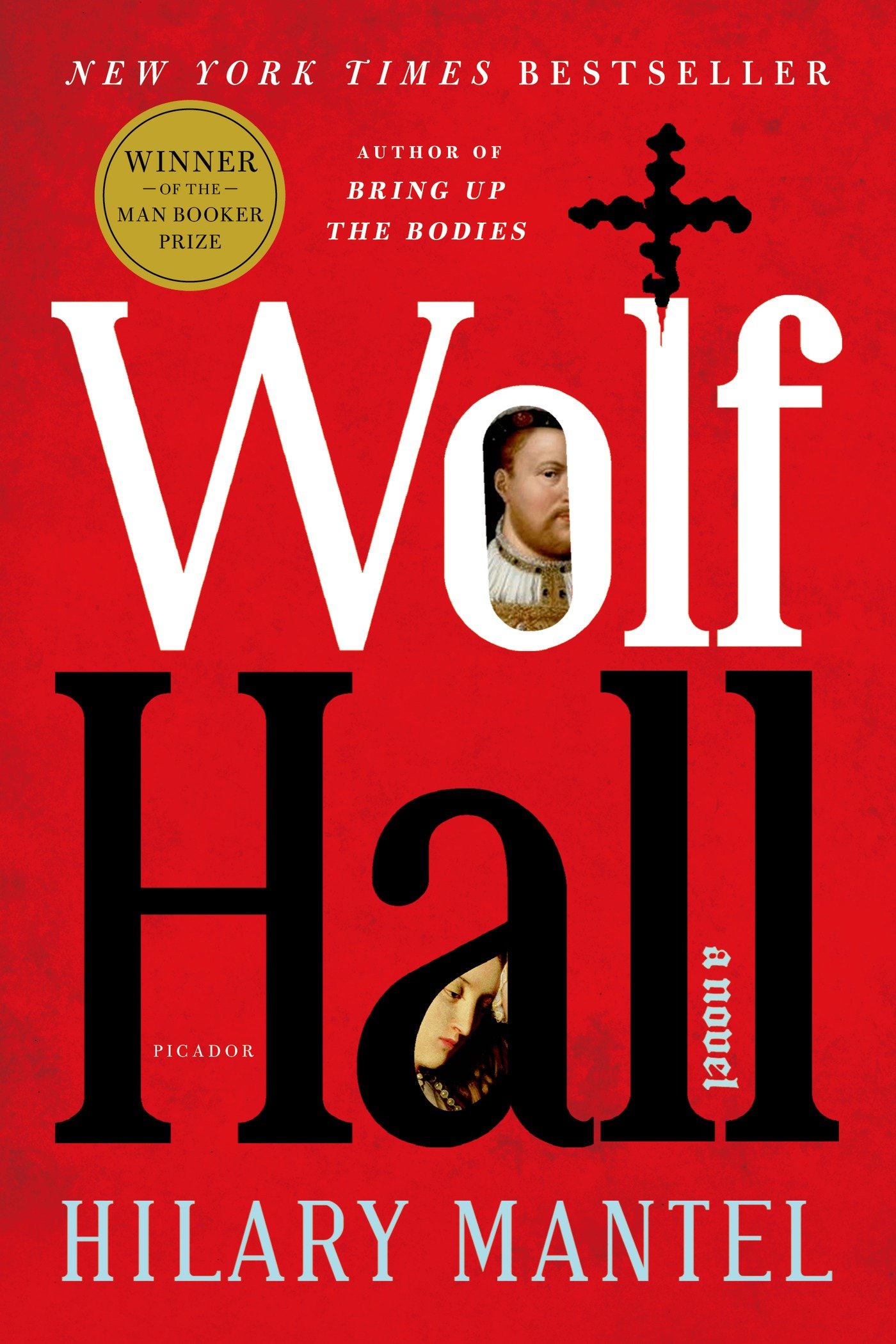
Wolf Hall by Hilary Mantel

And beneath Cornwall, beyond and beneath this whole realm of England, beneath the sodden marches of Wales and the rough territory of the Scots border, there is another landscape; there is a buried empire, where he fears his commissioners cannot reach.  Who will swear the hobs and bogarts who lie in the hedges and in hollow trees, and the wild men who hide in the woods?  Who will swear the saints in their niches, and the spirits that cluster at holy wells rustling like fallen leaves, and the miscarried infants dug into unconsecrated ground: all those unseen dead who hover in winter around forges and village hearths, trying to warm their bare bones?  For they too are his countrymen: the generations of the uncounted dead, breathing through the living, stealing their light from them, the bloodless ghosts of lord and knave, nun and whore, the ghosts of priest and friar who feed on living England, and suck the substance from the future.

In Ford Madox Ford's The Fifth Queen, Thomas Cromwell, Henry VIII's chief advisor, is a shrewd, conniving man who works tirelessly to discredit and destroy Catholics in England.  In Hilary Mantel’s Wolf Hall, Cromwell is equally shrewd and cunning, but with a golden heart to boot.  Ford’s Cromwell is a self-serving Machiavel; Mantel’s grieves for his dead wife and children, serves his king out of loyalty and perhaps love, and feels remorse for Thomas More’s public execution.

Unfortunately, Mantel’s Cromwell is also pretty dull.  She works hard to rehabilitate his image, but why?  Why, for instance, does Mantel feel the need to provide for Cromwell no fewer than four different “son” characters to act out his fatherly wisdom on?  Why do we need to know that he had an abusive father?  Ford’s vision of Cromwell makes sense in light of his Catholic dogmatism, but what is it that Mantel wants to say about the Reformation, or God, or human beings?  Maybe there are answers to these questions, but the book is such a muddle that it hardly seems worth trying to pry them out.  (The passage I quoted above is, I think, one really nice exception to that muddle-ness.)

Part of what makes Wolf Hall such a difficult experience is its insistence on historical completeness.  The bare bones of Cromwell’s story are pretty fascinating: His intimacy with his predecessor, Cardinal Wolsey, hounded out of office by Henry for failure to procure a divorce from Catherine of Aragon.  His role in the break from Rome and the establishment of Anne Boleyn as queen.  His struggle with More over the Oath of Succession, and the hand he has in his execution.  But these moments get lost in a torrent of historical minutiae and a superflux of historical characters.  The cast is so enormous that Mantel provides a reference table in the front in case you forget who is Thomas Wolsey and who is Thomas Wriothesley and who is Thomas Audley.  (Also, cracking jokes about how the world seems to be made up of people named Thomas doesn’t make it any clearer.)  I understand the rationale behind being faithful to history, but this is a novel, and not a textbook; so many of these people occupy such similar niches that deciphering the plot can be maddening.  Mantel’s writing is accomplished, but trying to differentiate all these characters through voice and description is a task only Shakespeare or Dickens could tackle.

So there’s six hundred pages of that, and then you realize: There are two sequels.  This story’s only a third of the way done!  Who, outside of the most devoted early modernist, has the energy to pick up the next novel, Bringing Up the Bodies, after making it through Wolf Hall?  Not I.  Which is a shame, because like a lot of people, I think the story of Henry VIII’s life is fascinating.  Maybe I’ll just start watching The Tudors instead.

Tuesday, June 26, 2012

Privy Seal by Ford Madox Ford

"Why, you do love him," the Queen said.   "I have no cause so to do."

Katharine caught at one of her hands.

"Your grace," she said, "Queen and high potentate, this realm calleth out that some one person do lead the king aright.  Before God, I think I do not seek powers or temporal crowns.  Maybe it is sweet to sit in a painted gallery and be queen, but I have very little considered it; only, here is a King that crieth for the peace of God, a people that clamoureth aloud to be led back to the ways of God, a land parched for rain, swept by gales of wind and pestilences, bewailing the lost favour of God, and the Holy Church devastated that standeth between God and the realm."

I enjoyed Privy Seal more than The Fifth Queen, the first book in Ford's Katharine Howard trilogy, though it's not very different.  Probably it was simply easier to read, its characters familiar and not needing to be established, its central conflict--between the Catholic Kat and Thomas Cromwell, Lord of the Privy Seal and Protestant scion--being reproduced wholesale from the first novel.

But I think that I was looking at the entire series with unjust expectations.  I was hoping for a serious account of the Catholic-Protestant divide, which Ford delivers in The Good Soldier, but the Fifth Queen books have more modest aims.  Privy Seal, like The Fifth Queen, is primarily an adventure-and-espionage tale, pulp intrigue pasted over a 16th-Century map.  Sitting down to write a review, I even had trouble remembering--as one does with a "beach read"--what plotline was.

As best I can recall, Privy Seal opens on an England where the King's affection for Kat is an open secret.  Cromwell's worst nightmare is the dissolution of the pact between the King and the Protestant Duchy of Cleves in the Holy Roman Empire.  If the Duchy decides to throw its lot back in with the Emperor, the King's rocky marriage to Anne of Cleves becomes politically useless, and he may divorce her and marry the fiercely Catholic Kat.  Cromwell schemes to have Kat's cousin Thomas Culpepper returned from France, knowing that the impetuous Culpepper would be too stupid to conceal his amorous feelings for Kat at court, exposing her to accusations of carnal immorality.  At the same time, Kat's allies, like the double agent Throckmorton and the lusty professor Udal, scheme to keep Culpepper in France and feed misinformation about Cleves to Cromwell

For her part, Kat tries earnestly, and only partially successfully, to stay out of the fray.  She refuses to take part in the lies, and instead chooses to be straightforward with Cromwell, saying to his face, "Sir, my lord, your servants go up and down this land; sir, my lord, they ride rich men with boots of steel and do strangle the poor with gloves of iron."  And yet at times, Kat's righteousness seems like unflexibility, and perhaps an ingratitude for those that, through their subterfuge, help keep her honor intact and her head on her shoulder.  The question asked by Privy Seal and The Fifth Queen, I think, it not any thorny religious one, but purely political: Is Kat's idealism a form of wisdom, or foolishness?  These novels cannot be praised for their historical accuracy, but those of us who know what ended up happening to Kat Howard may be more clued in to the answer.

Kat's righteousness leads her to visit the Queen, Anne of Cleves, sequestered in her lonesome palace, so that Anne might relinquish her marital rights over Henry.  Ford's Anne--lonely, trapped in a foreign land, hated by an entire nation without knowing why--is the most striking in an otherwise modest novel.  "Men have handled me as they would, as if I had been a doll," she says.  It's a stark reminder that though Kat wishes to rise above the game, there is a deeper sadness in having no game to play or not, or in being a piece and not a player.

Tuesday, March 27, 2012

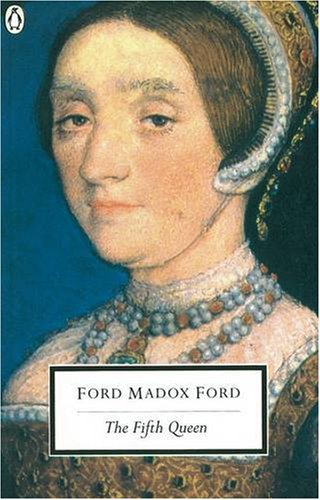
The Fifth Queen by Ford Madox Ford

During the time that had ensued between January and that month of March, it had been proved to Katharine Howard how well Throckmorton, the spy, voiced the men folk of their day. He had left her alone, but she seemed to feel his presence in all the air. He passed her in corridors, and she knew from his very silence that he was carrying on a fumbling game with her uncle Norfolk, and with Gardiner of Winchester. He had not induced her to play his game--but he seemed to have made her see that every man else in the world was playing a game like his. It was not, precisely, any more a world of black and white that she saw, but a world of men who did one thing in order that something very different might happen a long time afterwards.

Ford Madox Ford is always good for a misleading title, so it may surprise no one that in The Fifth Queen Kataerine Howard, who will succeed Anne of Cleves as the wife of Henry VIII, never quite makes it to the throne in this, the first in Ford's trilogy. Instead it depicts something not unlike the beginning of the historical Katharine's relationship with Henry. It is true that she was first a lady-in-waiting in the King's court, but in the service of Queen Anne, not the King's daughter, Mary, and it isn't likely to be true that Henry chanced upon her on the palace grounds riding a mule and, dazzled by her beauty and wit, impressed her into that service. Nor was the historical Katharine a virulent Catholic bitterly opposed to Thomas Cromwell, the Protestant standard-bearer and Lord of the Privy Seal:

The face of a queen looked down just above his head with her eyes wide open as if she were amazed, thrusting her head from a cloud.

'Why, I have outlived three queens,' he said to himself, and his round face resignedly despised his world and his times. He had forgotten what anxiety felt like because the world was so people with blunderers and timid fools full of hatred.


Cromwell sees in Katharine an opportunity to plant a spy in the Catholic Mary's service. Katharine refuses, but quickly finds herself embroiled in the shadowy sectarian conflict that rages beyond the King's notice. She withstands the threats and manipulations not only of Cromwell and his spies but Bishop Gardiner, the country's leading Catholic, who she had idolized. She struggles to maintain her honor and honesty against the moralizing of men like Throckmorton, who may or may not be double dealing against Cromwell:

'How shall you decide what is vileness, or where will you find a virtuous man?' he asked. 'Maybe you will find some among the bones of your old Romans. Yet your Seneca, in his day, did play the villain. Or maybe some at the Court of Mahound, I know not, for I was never there. But here is a goodly world, with prizes for them that can take them...'


Katharine soon learns that everyone is after these "prizes"--that is, except the King, who seeks only the prize of her company. Henry is the most intriguing and magnetic character here: impulsive and irascible, yet truly interested in the pursuit of "right doctrine," a notion lost on men like Cromwell and Gardiner, whose beliefs seem to serve only their ambitions. Perhaps his position as king affords him that right, but it is also a position he uses to lift Katharine out of harm's way at the book's finale, realizing keenly that she is a kindred soul.

But The Fifth Queen seems ultimately like a chronicle of lost opportunities. One wonders why Ford saw the need to transmogrify the historical Katharine into a Catholic stalwart if the religious issues were going to be glossed over. The idea of a Renaissance spy novel sounds great, but the intrigue is a muddle. Everything is a muddle, actually; as an early attempt by Ford to achieve an "impressionist" style, which reproduces the world as it is experienced and seen, The Fifth Queen succeeds mostly in making the particulars of action and location very unclear. Its greatest successes are in its population of minor characters, like the womanizing teacher Magister Udal, or the aged but infamous knight Sir Rochford.

On the other hand, as the first book in a trilogy, this can only amount to a half-finished opinion. I have faith in the abilities of Ford, who is capable of sneaking up on you unawares in a way that few authors are, so I hope for more from The Privy Seal and The Fifth Queen Crowned.