Showing posts with label Cherokee. Show all posts

Thursday, January 15, 2026

Two Novels by Brandon Hobson

How do you lose a child to gun violence and expect to return to a normal way of life? This was the question I struggled with the most. My son was a victim. The officer who shot him--now retired--lived in our town, and there were many sleepless nights when I wanted to drive to his house and kill him myself. I wanted to hit him as hard as I could, so that he could feel pain. Yes, yes, I have always known grief is difficult and that forgiveness takes many years. I still haven't learned to completely forgive. I could only put it in the will of the Great Spirit.

I have reread Brandon Hobson's excellent novel, The Removed, so that I might teach it in the spring. I think--or hope--that it will hit the sweet spot for students: a book that is challenging in ideas, sometimes in prose, but mostly is made up of a kind of plain but sophisticated everyday language. It resonates, too, with topics that are on the mind of students today, like police violence, which it places in the context of the larger history of Indian Removal and dispossession. The story centers on the Echota family, whose son Ray-Ray was shot a decade prior by a cop. They take in a young foster boy, Wyatt, whose eerie similarity to Ray-Ray seems to reverse father Ernest's creeping Alzheimer's. Another son, Edgar, is lost in a fantastical "Darkening Land" of addiction and suicide, and where a sinister friend threatens to turn him into the bounty for an Indian-hunting game. What will students make, I wonder, of the book's mixture of realism and fantasy, and its refusal to cohere into something logical and explainable?

One thing I had a greater appreciation of this time around is the way that Hobson weaves the various timelines and narratives together. There are four third person narrators--mother Maria, sister Sonja, Edgar, and the legendary Cherokee rebel Tsala--and the story of each is punctured with visions and epiphanies in which the others seem to break through. This complicates, for example, the story of Wyatt, whom we are otherwise willing to believe is only strangely similar to the dead Ray-Ray. But when Wyatt's stories prove to have a kind of oracular insight, it becomes clear that we must take seriously the belief that Wyatt is Ray-Ray resurrected. I can already hear the students now--Well, is he?--but the answer, of course, is that he is and he isn't, that Hobson gives us a kind of Schrodinger's cat whose waveform threatens to collapse if you look too closely. This matters because the novel wants to give us models of resurrection and return that are larger than the realm of the materially possible. What "the removed" search for is not a literal return to Cherokee homelands--not in this book anyway--but some other kind of restitution or redemption that is not one-for-one. The last image of the book, with the family gathered for a memorial bonfire, watching a mysterious figure approach, underlines this nicely: is it Edgar? Wyatt? Tsala? Or somehow Ray-Ray himself? Yes, Hobson suggests, yes, yes, and yes.


The instances when Milton would wake in the middle of the night feeling like he was suffering in a bed of putrefaction, his dreams digested and visible as the glow of the school in flames, he could smell the sour gunpowder and dead bodies lying in pools of blood, their foreheads marked with the number of the beast while the rest of the students cried out in a panic, yet all he could hear were the voices of the dead buried in the land all around, rising out of their graves and asking him for an account of his decision to shoot and kill, and for the remainder of the night his sleep was restless and uneasy, full of their shrieking voices and hollow moans, because he worried about bearing the weight of all that guilt. In his notebook for English class, Milton had written down the following quote from Shakespeare: "Suspicion always haunts the guilty mind."

Hobson's new novel, The Devil is a Southpaw, opens with a note that the author has received a manuscript in the mail from a former classmate, or cellmate, having both been institutionalized in a juvenile detention facility long ago. The manuscript, which makes up the bulk of the book itself--very 19th century--is a novel with the same name by Milton Muleborn, and it draws on those experiences at the facility, which it describes as a kind of phantasmagoria of demons, witches, and sinister captors. Much of the novel focuses on Matthew Echota (the same last name as the characters of The Removed), a fellow student-inmate who, we're told, is the most intelligent and talented of them all, a gift for which he is sometimes praised by the prison guards, and sometimes isolated and brutally tortured. We intuit quickly that the author, Milton, is and has always been deeply jealous of Matthew, who it seems not only has a kind of artistic genius that Milton lacks or feels himself to lack, but who also had been dating his ex-girlfriend. Milton's jealousy and enmity toward Matthew is of the kind that only very similar people can share--both are sensitive, artistic, writerly souls trapped inside the harshness of the juvenile detention center--to the extent that part of me wondered if the two wouldn't prove to be the same person in the end.

Milton's detention center is a strange and frightening place, where a mysterious woman paints skulls at night and a freakish Dr. Strangelove type rules with an iron fist. Its cruelty verges on the fantastical, and the swamp that surrounds it seems to be filled with creatures and spirits. Parts of it, of course, are recognizable, drawn no doubt from the same experiences supporting troubled youth that inform The Removed and Where the Dead Sit Talking: the rancid food and forced isolation, the stultifying effects of institutionalization of childhood creativity. But in Milton's telling, these aspects become heightened into pure dreamland horror: the novel moves toward a shared escape, in which Matthew and Milton move through a literal underworld where they encounter, among other things, the spirit of Salvador Dali to guide them.

To me, the most interesting thing about The Devil is a Southpaw is the prose. I wonder how people will take Milton's Grand Guignol-isms, his general wordiness and clumsiness. To me, I thought this was all very recognizable. Though Milton is supposed to have written this novel as an adult, I recognized in it something I see often: the language of a talented and creative teenager who has limited control over his style and vocabulary. It's not supposed to be "bad," per se, but the language here is meant, perhaps, to show the fine degree of difference that separates the genius and talent of Matthew--who, as we learn, grows up to be an acclaimed but trouble painter--and the mere creativity of someone like Milton.

I can tell you that reading the prose of teenagers reorders your brain, and after a while you must take a break from it to regain clarity; I felt the same thing while reading The Devil is a Southpaw. It's a bold move, to write a book in prose that is ostensibly flawed in the same ways as its narrator. To me, the voice works as a reflection of Milton. What it means in the end for the novel as a whole is another matter--though Hobson make some gestures at other voices--a second half written by Milton in a more sober, reflective mode, and an interview with the adult Echota--but I walked away thinking that it all remained too claustrophobic in the end. There's really no getting around or outside of it--and maybe that's the point.

Saturday, January 25, 2025

Two Books about Cherokee Removal

Our grandfathers followed a stick to northern Georgia. It was an old migration. The Great Spirit led us here. How can the soldiers drive us from our land? Maybe it was because we worshiped the Earth instead of God, Reverend Mackenzie preached. Maybe it was because some of us had black slaves, Reverend Bushyhead said. Maybe it was because of gold and our cornfields, the men said.

Maybe the Great Spirit just calls us to the beyond where he lives. Maybe he's going to show us another world.

But who wants another world?

The Trail of Tears looms large in our memory as one of the country's greatest moral crimes: thousands upon thousands of Native Americans, uprooted from their homes in the Southeast, and forced to march for months to what is now Oklahoma. And yet, I think Diane Glancy's novel Pushing the Bear is the first time I've seen anyone try to show, in art, what the trail was like for those who underwent it, how they suffered to leave their homes behind, how they became sick and weak and died, how they had to hurriedly bury their own before being rushed off to the next unfamiliar place. Glancy's novel, which focuses on a group of Cherokee from North Carolina, takes a multivocal approach, trading first person narratives at a half-page clips. By taking a wide view, Glancy shows a fundamental diversity among the Cherokee, who brought with them their resentments and rivalries with other bands, who brought traditional religions and Christianity, who brought different ideas about how best to respond to the forced removal. It's not not a testament to the resilience of the human spirit, but the Cherokee of Pushing the Bear do not manage to come together in inspiring ways. A crisis, Glancy tells us, has a way of prying open all our divisions.

The two central voices of the novel are a married couple, Maritole and Knobowtee. Maritole loses everything and everyone on the trail, beginning with her cabin: she is allowed to return briefly to fetch a few items and finds, chillingly, a white family has already moved in. On the trail, she gives birth to a baby who dies, and then loses her mother and father; her brother fled to the woods and will never be seen again. When she needs Knobowtee the most, he abandons her, failing to provide any comfort or companionship. We learn that Knobowtee, a widower, has married Maritole for her farm, and now that Maritole no longer owns a farm, what is the foundation of their relationship? Maritole becomes close to a white soldier, who shows a puppyish interest in the Cherokee in their ways, but their relationship invites the scorn of the other Cherokee, driving her further to the margin of the march. "I gave him my life in the dark," Maritole says of her first sexual liaison with the soldier, "I let him feel my hurt. My wounds inside. I would always be cut in two. Part of me in North Carolina. Part of me in the new land. I held open my wounds for him to soothe."

It's Maritole who coins the title phrase: in periods of madness and distress, she feels as if she is pushing away a giant bear that nibbles at her. The bear is a symbol of the march itself, a beast that would devour her whole if she let it, and which requires constant effort and attention to push away, though of course, it always comes back. Over the course of the march, Maritole and the marchers begin to approach a zen-like resignation, not of defeat, but of openness to the possibility that their lives can be rebuilt anew. "Maybe that was the Great Spirit's lesson," one Cherokee writes, "I could receive and lose in the same breath. The burden the white man carried was that he didn't know the lesson yet." This, to me, may be the central truth of Pushing the Bear: that those who are unable to believe that history might work on them, rather than others, are in a dangerous place.


We are speakers of the dead, the drifters and messengers, the old and the young, lurking in the shadows of tall trees at night, passing through the walls of abandoned buildings and houses, concrete structures, stone walls and bridges. We are the ones watching from underwater, rising up like mist, spreading like a rainstorm, over fields and gardens and courtyards, flying over towers and rooftops and through the arched doorways of old buildings with spider cracks in their walls. We reveal ourselves to those who will look. It has been said we are illusions, nightmares and dreams, the disturbing and tense apparitions of the mind. We are always restless, carrying the dreams of children and the elderly, the tired and sick, the poor, the wounded. The removed.

Diane Glancy's Cherokee find themselves, at the end of the novel, facing a new life at Fort Gibson in modern-day Oklahoma. The characters in Brandon Hobson's The Removed may be their descendants, Cherokee living in an Eastern Oklahoma town called "Quah" (a lightly fictionalized version, one might guess, of the Cherokee capital of Tahlequah). As its name suggests, Hobson's novel asks the question: is Indian removal a historical process that is completed and over? Or does it live on, in some form or another, to today?

The Removed centers on the Echota family, whose name evokes the Treaty of New Echota, made between the United States and the Cherokee prior to the Trail of Tears. Sixteen years prior to The Removed, the eldest Echota brother, Ray-Ray, was shot and killed by a white police officer. In the present, we see through alternating first-person narratives--a method that recalls Pushing the Bear, though without Glancy's brisk switching--how the murder continues to effect each member of the family today. Mother Maria has agreed to serve as an emergency foster parent for a young Cherokee boy whose wisdom and sense of humor remind her of Ray-Ray. The boy, Wyatt, makes an even stronger impression on her husband Ernest, who becomes convinced that Wyatt really is Ray-Ray reincarnated, and it's hard to say he's wrong. The arrival of Wyatt reverses the symptoms of Alzheimer's in Ernest, who suddenly finds himself reconciled to his memories and whole for the first time in years. Daughter Sonja spends her time seducing a single father named Vin, a pursuit of singular and baffling obsessiveness that makes little sense--until it's revealed that Vin is the son of the cop who killed Ray-Ray.

The most interesting section, though, belongs to son Edgar, whose disillusionment and despair have led him into a life of addiction. Edgar imagines--or perhaps is--followed around by an aggressive "red fowl" whom he nursed as a chick and who has turned against him. A symbol of drug addiction, maybe? Edgar decides at the last minute to return home for a yearly bonfire in Ray-Ray's memory, but he finds himself waylaid with his friend Jackson in an eerie town known only as the "Darkening Land." Is this a real place, or a limbo-like place where, it's suggested, suicides live? Edgar's friend Jackson says he's making a video game about Jim Thorpe, and keeps wanting to capture Edgar's "Indian" likeness as a reference. This, we learn later, is a lie; Jackson has designed a video game that allows players to hunt Indians, and the line between the holograms who are the targets and real Indians like Edgar is frighteningly blurry. It's a bit of a groaner when we learn that Jackson's last name is Andrews--Jackson Andrews, get it?--but I think that, through the skillful creepiness of the setting, Hobson earns it.

How many ways can one be removed? Ray-Ray's death gives us one way. Addiction, provoked by poverty, might be another. There is a suggestion, too, that the foster system encourages a kind of removal; Hobson brought his longtime professional experience with the Oklahoma foster system to bear in his (excellent) novel Where the Dead Sit Talking, and does so again here. All of this suggests that Indian Removal is a process that plays out again and again, when Native Americans are ground out of the systems that identify them as dependents or threats. And yet, the novel gives us visions of reconciliation and restoration, too, in the arrival of Wyatt, the living memory, and in the way that Sonja is forced to abandon her quixotic and half-baked plan of revenge. The final voice threaded with Maria's, Edgar's, and Sonja's is that of Tsala, a 19th century Cherokee folk hero who fought against removal and saved the Eastern Band of Cherokee (and who appears briefly in Pushing the Bear as "Tsali"). Tsali, like Ray-Ray, was a martyr, but his spirit could not be conquered.

Tuesday, January 21, 2025

Maud's Line by Margaret Verble

Maud began to feel a growing hatred for who she was and where she lived. She was sick to death of dirt, sick of chickens, sick of guns and snakes, and, most of all, sick of dead bodies gnawed by animals. Her only chance for escape had been that bright blue canvas rocking her way. She cursed Booker out loud. She stormed at his character until she remembered he'd left her a letter. She just didn't know what it said. But that didn't really matter. He hadn't come back for their wedding. That told the words.

Maud Nail is a Cherokee woman living in Oklahoma during the Great Depression. She's just turned eighteen, and several of the local boys have their eye on her, but she's drawn to Booker, a traveling salesman whose bright blue wagon tokens a wider world. Booker is drawn to Maud in turn, but he has entered her life at a moment when many changes come in to complicate things. First, her father disappears, implicating himself in the murder of a pair of white farmers who have been known to have designs on the Nail allotment. Her brother Lovely has become what my relatives would call "touched," seeing visions of the dead, and Maud fears that the culprit might be a case of rabies, brought on by the carcass of a dead dog deposited in the house by the aforementioned farmers. One by one, the men in Maud's life leave, first her father, then Lovely, and then finally Booker, leaving her alone on her allotment to fend for herself, and to face the prospect of an unexpected pregnancy.

One interesting thing about Maud's Line is that it tells a story about Native life that is adjacent to a more familiar one, the killing of the Osage that's depicted in Killers of the Flower Moon. Verble makes a single off-hand reference to the Osage driving around in Cadillacs. Maud is Cherokee, not Osage, and her allotment holds no oil, and yet it is the target of white mischief all the same. The machinations of the white farmers are a backdrop to a much deeper story about individual determination, and--since, after all, they are quickly murdered--less integral to the story than I was first expecting. But the novel also presents a lot of interesting and subtle suggestions about the way that early 20th century Cherokee did and did not fit into the larger systems of white society that surrounded them. The disappearance of Maud's father and brother, for instance, seem to take place in a context in which itinerancy is more expected, and where her uncles are always "laying out," that is, shacking up at the house of their current love interest. There's a kind of fluidity and freedom in Maud's life that I suspect would seem unacceptable in white households of the time. When Booker leaves, it's because (he says) he struggles morally with the way she lies to protect her father from the sheriff, but I get the sense, too, that he is reacting to something in her way of life that is to him both unfamiliar and difficult to put into words.

Maud's Line is competently, briskly written; it is bracingly forward about violence and sex. There's a hardbitten realism to it--I expected, for example, that the murder of the white farmers would turn out to be a deeper mystery, but we learn in the end that Maud's father really was involved. Later (spoiler alert spoiler alert), Lovely commits suicide, forestalling any idea that the novel will be about pat reconciliations or restitutions. Still, in the end, Booker does come back, though perhaps a little dimmer in our eyes, and a little less the worldly traveler that we once saw him as. In the end, Maud leaves with Booker, headed to a life of motherhood in Oklahoma's version of the city, and to do this she must abandon her allotment, that portion of land afforded to her by her citizenship in the Cherokee nation. It's a moment of great ambiguity, and only possibly a happy ending.

Friday, January 26, 2024

Calling for a Blanket Dance by Oscar Hokeah

"Kiowas always wear red on the left," I told them. I wanted to teach them about their culture. I knew Turtle and Lila were always busy with work. I didn't know how much time the spent at the gourd dances.

"What color do Cherokees wear?" Ever asked.

"Cherokees don't have a color."

"Mom is not going to like that," Quinton aded.

"No, I mean in the gourd dances there are two colors. Red for Kiowa and blue for Comanche."

"My dad's a Comanche," Quinton said. He was almost to the end of his popsicle.

"Your dad is Kiowa and Comanche," I told Quinton.

"Do Mexicans have a color?" Ever asked.

"No, Mexicans don't have a color."

"How come I saw three colors on a big blanket at my house?" Ever asked. "Red, white, and green."

"That was a flag, Ever."

Ever Geimausaddle is like a lot of people growing up in Oklahoma, the crossroads of Indian culture in the United States: a mix of cultures. His mother Turtle is Kiowa and Cherokee and his father Everardo is Mexican. Though Everardo is an abusive brute, made bitter by a beating he receives at the hands of Mexican border agents, Ever himself has a large, rich extended family to support him during what turns out to be a coming of age made difficult by poverty, addiction, and violence. Calling for a Blanket Dance is a polyphonic novel, a collection of stories that capture a snapshot of Ever's life from childhood to adulthood, each one narrated by a different person in his life--mother, auntie, cousin, girlfriend, son.

The central story, to me, was the one narrated by Ever's most distant relative, Opbee--the niece of his grandfather Vincent. In this story, the title "blanket dance" is performed at a powwow for Ever and his family, in which they are surrounded by dancers, symbolizing the support of the larger community--who also toss cash onto their blanket. Later, Opbee realizes that a quilt she's purchased from Ever after the powwow is one knit by his grandmother Lena for her great-grandchild. Opbee travels around the area searching for the blankets, sold out of necessity, to re-purchase them and collect them so they can be returned to Ever and his children. There's a neat symbolism to the quilt, itself a woven object, and the act of "knitting up" committed by Opbee, who literally ties together the loose strands of Ever's life and gathers them back together. One of the strengths of Calling for a Blanket Dance is its insistence that all the strands of one's life and heritage are important. The passage above, from when Ever is a child, is pretty funny, but it also captures some of the difficulty of navigating the many facets of one's identity--Mexican, Kiowa, Cherokee, Comanche, each with its own gifts, and its demands.

Calling for a Blanket Dance is interested, too, in the ways young men grow up. Men like Ever's father Everardo and his grandfather Vincent never grow out of their destructive patterns, or, as in the case of Vincent, who gives up alcohol to late to save his health and his life, grow out of them too late. Ever, too, must fend off the allure of gang violence and drug addiction; his first wife, Lonnie, is ravaged by meth. Ever seeks a refuge in the army, but even this proves to be a false start; discharged, he returns home. Ultimately, it's fatherhood that saves him, first by adopting a troubled teen named Leander (whose casual and sarcastic voice is one of the novel's best artistic strokes) and then having children of his own.

Funnily, Calling for a Blanket Dance covers some of the same ground as Brandon Hobson's novel of the Oklahoma foster system, Where the Dead Sit Talking. But the comparison reveals the limitations of Calling for a Blanket Dance. When, in Hobson's novel, Sequoyah imagines grinding his thumb into the face of his sleeping roommate, we believe him; we are convinced that he may lash out in violence he cannot control. When Leander feels like lashing out, we are certain that social worker Ever's solution--"When you get angry, I want you to draw"--will help Leander channel his impulses into positive behavior. There's never any other narrative possibility; though marginal characters like Vincent and Lonnie may suffer, we are sure that Ever and his immediate family will be knit back into health and safety. When, in the final story, narrated at last by Ever, he camps out overnight waiting for a crack at a foreclosed house being distributed by the Cherokee Nation, is there any doubt that he'll receive one--or that, in a gesture toward the possibility of loss, that he'll be the last person in line to get one? Still, the many voices of Calling for a Blanket Dance are a difficult feat, and are what make it worth reading.

Saturday, January 20, 2024

Where the Dead Sit Talking by Brandon Hobson

No matter what, I could not bring myself to think of Rosemary any less. Little by little, the days were like thieves, stealing parts of me, including any courage I had to confront my feelings toward people: my growing interest in Rosemary, my hatred for Nora Drake, my friendship with George. At night I began to think more and more about my mother, as her court hearing grew closer. I worried about her release. I worried about her remaining locked up. And I worried the days were taking my feelings, how the more I thought about everyone, the more dead I felt inside.

Sequoyah is fifteen years old, Cherokee, caught up in the faceless indifference of the foster system. His mother is in prison, perhaps up for parole soon, but in the meantime he's been placed with the Troutts, a well-meaning couple who live out in the sticks of rural Oklahoma. Life with the Troutts, at least, is better than life in juvenile detention, or some of the other foster homes that Sequoyah has been in and out of. He finds a friend in George, another foster kid who prefers to write messages than to speak, and who clearly has some kind of autism. But it's the Troutts' third foster kid, an older girl named Rosemary, who really captivates Sequoyah. Like him, she's Cherokee, she's disaffected, she's not like other kids. "I feel a weird connection to you," she tells him. "I mean like you're a lost soul from a thousand years ago who's here to deliver something to me."

Maybe that sounds heartwarming, or worse, banal, but it's not. What Rosemary and Sequoyah really have in common is that they've both been deeply damaged by troubling childhoods, and they are both strange, dark, and prone to antisocial behavior and violent thoughts. We come to understand that people are actually afraid of Sequoyah; when George wakes up bleeding from his mouth during a bad sleepwalking spell, he assumes that it's Sequoyah that has hit him in his sleep. When Rosemary's girlfriend (perhaps in both senses) Nora tells her that the way Sequoyah looks at Rosemary is creepy, are we sure that she's wrong? Sequoyah's affection for Rosemary is both a desire to be with her and a desire to be her; he sneaks into her room when she's not around and wears her clothes. Rosemary, for her part, steals money and things and disappears for days; she gives and then cruelly retracts her affection for Sequoyah and talks openly of suicide.

What I liked best about Where the Dead Sit Talking, I think, is that Hobson manages to make Sequoyah and Rosemary poignantly empathetic, rather than repulsive or frightening. We see quite easily how they've been shaped by their difficult circumstances; Sequoyah literally bears scars on his face from an episode of his mother's negligence. As teenagers, they feel real; in the afterword, Hobson talks about how the book was inspired by children he knew working in Oklahoma's foster system. In fact, one of my biggest reactions to Where the Dead Sit Talking was jealousy: I've been working on my own book about disaffected teens, and I wish I had Hobson's talent for detail. Time and time again Hobson has Sequoyah, Rosemary, George, or even some rando at their shared school, do or say something that I bookmarked to steal--or, I should say, for inspiration.

Where the Dead Sit Talking is a grim book. It's narrated by a slightly older Sequoyah, looking back at this transformative experience in his life. We know from the beginning that things haven't gotten better for him; the book's first line is "I have been unhappy for many years now." Sometimes he'll interrupt the narrative to let us know how a particular character dies: "on October 12, 1999 of mysterious causes," or, "who later died on January 19, 2003 of strangulation." These asides are never justified or explained; we're not meant to think something as gruesome and manipulative as that Sequoyah has become a serial killer or anything. But he is someone who grew up surrounded by loss and death, who sees death. On a narrative level, Where the Dead Sits Talking avoids overarching narratives in favor of something more vignette-like. When climactic things happen--the one moment of grand violence in the novel is the one moment that feels a little off--they both grow out of and interrupt the persistent ebb and flow of hope and despair that characterize the life of a foster child like Sequoyah.

This is the fourth year in a row that I have dedicated January to reading books by Native American authors, and Where the Dead Sits Talking is one of the most rewarding discoveries from the experience. Sequoyah's Cherokee identity isn't exactly central to the narrative, but neither is it incidental. Looking back, I was struck by his desire to be like his "great-grandfather," who saw spirits in every thing. It's not such a big leap from there to a teenager who yearns for the mystical experience of a soulmate like Rosemary: "My great-grandfather claimed to have met a beautiful spirit woman... Her eyes were fire. She held my great-grandfather's gaze, kissed his hands, and fell into a long, deep sleep with him." Perhaps we are invited to see a connection between the kinds of displacement that the Cherokee suffered and the displacement that kids in the foster system suffer. Maybe not. But at the very least, Hobson reminds us that displacement--alienation, isolation, and loss--have many forms, and each is more enduring than we might hope to believe.

Monday, August 29, 2022

Even As We Breathe by Annette Saunooke Clapsaddle

I had certainly seen my fair share of animal bones, either happening upon them in the woods or excavating them from a fresh hunt. Something felt different about this one. I couldn't quite place it. Maybe it was because it was in Asheville, an environment I assumed was devoid of elemental remnants such as discarded bones, castoff feathers, and rock faces that scowl like relatives. There was brick and concrete and glass and steel in Asheville, for certain--anything else seemed misplaced. The bone, in such a tangible state, reminded me of home and what I loved about home--the simplicity of knowing what each day held and the certainty that people said what they meant and meant what they said. There were no flashy distractions, but there was strength, there was resolve, and they were foundational. I knew exactly where I stood and when to stand there. I had wanted so badly to fit into the shine of Asheville, but it never seemed to fit me.

The Qualla Boundary of the Eastern Band of Cherokee isn't really a reservation, which refers to a piece of land set aside by the government for Indians; it's a piece of land that was never truly ceded to the United States. The Cherokee who live there are living in a place where they can trace their lineage back dozens of generations, unlike those Cherokee who were forced to move to Oklahoma during the Trail of Tears, where there was no history, no roots. Cowney Sequoyah is a young Cherokee man who has taken a position as a groundskeeper at the Grove Park Inn in nearby Asheville during World War II. He travels there along with Essie, a Cherokee girl taking a position of maid, and with whom Cowney falls desperately in love. But at the hotel he faces fierce prejudice from his coworkers, and from the soldiers who are bivouacked there, guarding what has become an ad hoc jail for prisoners of war.

Even As We Breathe is made up of several strands: there's Cowney's mooning for Essie, who has spurned him for an Italian prisoner of war. There's a human bone that Cowney finds while groundskeeping, and a missing Japanese girl whose disappearance--when put beside the mysterious bone--puts Cowney at suspicion. The investigation into the girl's disappearance is what gives the book much of its energy, even though the situation is clearly and clumsily contrived: as Cowney points out, only stupidity--and bigotry--could draw a connection between a polished human bone and a recently missing girl. There's also a plot, which perhaps makes up the novel's true soul, about Cowney coming to understand his dead father's exploits in World War I, and the nature of his death, which is kept a secret by Cowney's cruel and bitter uncle, Bud.

There's rich material here, and a few lost opportunities. There's a connection drawn between the racism faced by Cowney in Asheville and a racism, not much discussed, that his father faced during his own wartime experiences. And Clapsaddle draws a contrast between the ritzy "jazz city" of Asheville (somewhat undermined by the hotel's use as a prison camp) and the deeper, more natural relationship Cowney has with the land of his forefathers. But the prisoners of war are narrative nonentities; the missing Japanese girl and Essie's Italian lover are more or less plot devices that never get a perspective, or even dialogue, of their own, and the possibility of further entanglements--for instance, Bud's suggestion that Cowney try to sell bear gallbladder (?) to the captured Japanese--never bear fruit.

I say this is a missed opportunity because there's an interesting parallel to be drawn between the otherness of Cowney and Essie and the foreign prisoners, who are called "guests" with a kind of grim irony. Clapsaddle plays the mystery of Cowney's father's death as a kind of personal awakening for Cowney, at the expense of any richer understanding of the role of Native Americans in the U.S. military. What does it mean, for instance, that Cowney, born with a lame foot, is overlooked by the military machine that drafted, then destroyed, his father? I thought the narrative's focus on overt acts of racism, like the ticket teller who refuses to admit Cowney to the movies, prevented it from exploring this history in richer detail, or at least in a less muddled way.

But I got a lot of pleasure out of the setting of the novel, which is an area I love and know well--from which I just got back, actually. I appreciated how Even As We Breathe allowed me to see these places from new angles, new perspectives, and to learn a bit of history--like the Grove Park's use as a prison camp--that I had never known before. I've really appreciated the way that reading fiction by indigenous Americans has helped me to see the country in a new way, but this might be the first time that I've really been challenged to see a place that is important to me personally in this way.

Tuesday, January 12, 2021

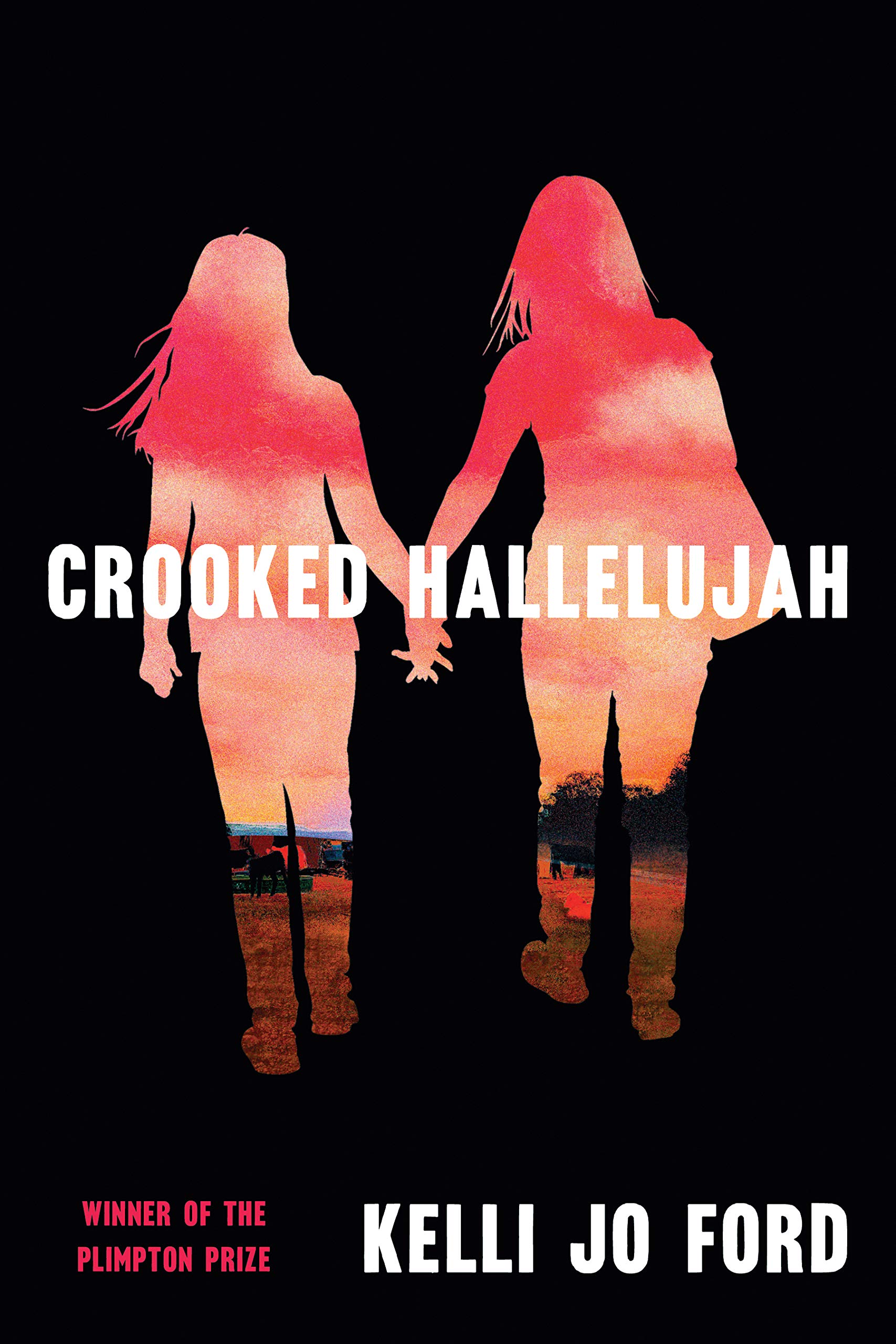
Crooked Hallelujah by Kelli Jo Ford

Granny held tightly to the roof outside the rolled-down window and muttered something in Cherokee that Justine couldn't understand. Lula's shouting only goaded John Joseph. He pressed the car faster up the big hill into town. The wind whipped in the windows, and Justine forgot for a minute what would happen when they got home and the real questions and the crying bean. She couldn't know how in a few months she'd be flooded with a crippling love for another human being that would wound he for the rest of her days, how her insides would be wiped clean, burdened, and saved by a kid who'd come kicking into this world with Justine's own blue eyes, a full head of black hair, and lips Justine would swear looked just like a rosebud. For now, that little car filled with three--almost four--generations flew. And when they dropped over the top of the hill, Justine threw her hands up, her mouth agape in wonder.

Justine lives in the Sequoyah Hills of Oklahoma with her mother Lula, a fanatic Pentecostal, and her grandmother, who keeps the old ways of her Cherokee upbringing alive. She's not allowed to bare her arms or legs, but that doesn't keep her from being victimized--it never does, does it--when she's raped by an older Choctaw man at the age of fifteen. Her daughter Reney grows up ping-ponging across the Red River between the oil-scarred fields of North Texas where Justine's cowboy husband Pitch lives, and Oklahoma's Indian Country, where--I'm sorry, but it's a cursed phrase to type--four generations of powerful women reside over one roof.

That's selling Crooked Hallelujah short: it's never glib, but I found it often stepped right up to the edge of cloying. To its credit, the novel is attentive to the ways that Lula's Holiness Church traumatizes Justine and Reney in turn, even as it holds that the power of love between mothers and daughters is sacrosanct. I was interested in the way charismatic Christianity colors the dynamic between these women, for good and bad, and veils in some way the connection to the Cherokee heritage represented by the aging Granny. A healthy respect for the ways of the heartland is at the heart of the novel, and not just the ranchers, cowboys, and oilhands: several key scenes take place at a Dairy Queen, and everyone seems to constantly be drinking Dr. Pepper.

But mostly I found Crooked Hallelujah to be too scattered to really enjoy: third-person narratives are interrupted by first-person ones, and I had a hard time telling Justine and Reney in these sections, and even sometimes Lula. But I absolutely did not want to be distracted by the first-person narratives of ancillary characters, even when, like Pitch's callous, aging father, they provide some of the novel's more challenging and interesting moments. I couldn't stand the section from the point of view of Justine's neighbor, a wayward young man who loses his mother before becoming fast friends with a lesbian couple who move in down the street. What's that about?

An even more baffling choice--although perhaps the best choice in the novel--comes at the end, when the novel suddenly becomes a work of dystopian fiction. The hyperrealism, the sentimentalism, give way to a vision of ecological collapse: the oil fields of North Texas where an older Justine is still living are beset by earthquakes, fires, horde of locusts. These things have their foreshadowing in more mundane catastrophes--a tornado and a brushfire--in the book's earlier chapters, but nothing prepared me for the final chapter, in which Reney and her new husband must decide whether to force Justine to leave her home, which has become the epicenter of the End of Days. Is it a testament to the power of love to overcome everything? No, it deserves more credit than that. But it does open up, at the last available moment, a possibility for what the novel might have been, a possibility I think I might have liked more.

Tuesday, December 17, 2019

Green Grass, Running Water by Thomas King

First Woman's garden.  That good woman makes a garden and she lives there with Ahdamn.  I don't know where he comes from.  Things like that happen, you know.

So there is that garden.  And there is First Woman and Ahdamn.  And everything is perfect.  And everything is beautiful.  And everything is boring.

So First Woman goes walking around with her head in the clouds, looking in the sky for things that are bent and need fixing.  So she doesn't see that tree.  So they bump into each other.

Pardon me, says that Tree, maybe you would like something to eat.

That would be nice, says First Woman, and all sorts of good things to eat fall out of that Tree.  Apples fall out.  Melons fall out.  Bananas fall out.  Hot dogs.  Fry bread, corn, potatoes.  Pizza.  Extra-crispy fried chicken.

Thank you, says First Woman, and she picks up all that food and brings it back to Ahdamn.


Four elderly Indians--like, hundreds of years old elderly--disappear from a hospital somewhere in the middle west of the United States.  They're on their way, it seems, to Alberta, where a cast of characters converges on the reserve town of Blossom: Lionel, a 40-year old man whose dreams had long been shattered by a series of anti-Native misfortunes; Charlie, grappling with his father's abandoning him to play stereotypical Indians in Hollywood; Alberta (yes, I know), who loves Lionel and Charlie but can't imagine either of them giving her the child she desires; Eli, Lionel's uncle, who has returned from a comfortable life in Toronto to reside in his mother's shack, preventing it from being destroyed by an already-built dam.  These characters are all Blackfoot Pikuni, Indians living out their lives with an uneasy relationship to their own Indian-ness.  The four elderly Houdinis bring them together to "fix" some small part of the world, meaning both the problem of the dam and the problems of these characters.

Along with this narrative, King gives four versions of Native creation myths.  Each features a different first-woman figure--First Woman, Changing Woman, Thought Woman, and Old Woman--each of whom is associated with one of the elderly Indians, who seem to be telling these stories along with the trickster Coyote.  These stories are satirical and syncretic; they pull together not only different indigenous traditions but also the Bible, Moby Dick, westerns, and other Anglo cultural staples.  (This may explain why the old men are named Lone Ranger, Ishmael, Robinson Crusoe, and Hawkeye.)  These stories are often clever and funny, riffing broadly on the allusions they mash together, and they are meant to represent an indigenous worldview imagining its own relationship to the land and community in the midst of interference from settler colonialism.

Green Grass, Running Water zips along so breathlessly that you almost miss the cleverness of the way the four old men bridge the real world and the mythical or legendary one.  It also enables you to miss the thinness of the "real" story, and how it struggles to come together in a way that feels satisfactory or complete.  The best of these stories belongs to Lionel, whose pratfalls and misfortunes seem like a slapstick version of an Erdrich character--I particularly liked the detail that, as a teenager, Lionel accidentally got put on a plane to Toronto by a hospital nurse thinking he was supposed to have a heart transplant rather than a tonsillectomy.  (Although the error was fixed in time, his "heart trouble" prevents him from finding meaningful employment!)  It's the right kind of humor: broad and genial but also somehow sharp and funny, and the novel could have used more of it.  I found that the tone of the creation stories, which feature Coyote endlessly quipping like Kimmy Gibbler, ultimately wore thin, and that the "real" narrative didn't supply enough to balance it out.