Saturday, January 21, 2012

Tractatus Logico-Philosophicus by Ludwig Wittgenstein

The world is everything that is the case.

I am fascinated by philosophy, even though I’m barely qualified to read it, let alone write about it. Last year, I tackled Kierkegaard’s Fear and Trembling; this year, inspired by David Foster Wallace’s The Broom of the System, I decided to try some Wittgenstein. Wittgenstein has a reputation for being amongst the most difficult of philosophers, second only, perhaps, to Heidigger, and I suspect this is because his philosophy works at such a base level.

Indeed, the primary contribution of the Tracatus is the idea of Logical Atomism which says essentially that all logical statements can be broken down into tiny parts, and then those parts broken down further until at last they reach their “atomic” level, wherein they are recognizable as self-evident tautologies, which Wittgenstein calls propositions. These propositions require no proofs, or, rather, they prove themselves—they are both the statement of a fact and the evidence of said fact. They are self-contained, and by combining these atomic facts, we can construct a logical model that describes the world.

Of course, it doesn’t end there. Wittgenstein is careful to point out that having a model that describes the world does not mean that the model is an accurate representation of the world as a whole; rather, it means that the model is one way to describe the world, and this tells us something about the world itself. If we were to discover another model that could describe the world more accurately, this too would tell us something about the world—but the world itself remains essentially unknowable.

This doesn’t mean, however, that Wittgenstein is a relativist. He takes great pains to point this out:
At the basis of the whole modern view of the world lies the illusion that the so-called laws of nature are the explanations of natural phenomena. So people stop short at natural laws as something unassailable, as did the ancients at God and Fate. And they are both right and wrong. but the ancients were clearer, in so far as they recognized one clear terminus, whereas the modern system makes it appear as though everything were explained. The world is independent of my will. Even if everything we wished were to happen, this would only be, so to speak, a favour of fate, for there is no logical connexion between will and world, which would guarantee this, and the assumed physical connexion itself we could not against will.
There’s a lot more to the Tracatus, which, even at a slim 80 pages, is quite an undertaking, but I don’t feel like I have a strong enough grasp on Wittgenstein’s big picture to go into much detail about it. That’s ok, though. If philosophy is a search for knowledge, a quest to understand the way the world works, then it seems to me that reading it without understanding it all is sort of the point. The key is not to dissect every word—it’s to learn a way of thinking, a method of inquiry that will slowly expose blind spots and blank slates, and to begin to see the world as a beautiful, mysterious place, capable of inexplicable moments of epiphany and complexity. It’s a way of staying humble, of realizing that there is so much that is unknowable, and so much yet to know.

Whereof one cannot speak, thereof one must be silent.

Tuesday, January 17, 2012

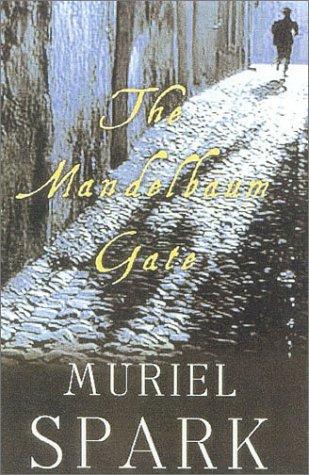
The Mandelbaum Gate by Muriel Spark

Arabs lived in the shelter of the eighteenth-century ruined fortresses, and even now in the years of the establishment of Israel, burning with its mixture of religion, hygiene, and applied sociology, the poor Arabs still hung their washing on the battlements, so that it fluttered all along the antique sea-front, innocent of the offence it was committing in the eyes of the seekers of beautiful sights and spiritual sensations, who had come all the way from the twentieth century, due west of Acre. Indeed, the washing draped out on the historic walls was a sign or progress, enlightenment, and industry, as it had been from time immemorial; it betokened a settlement and a society with a sense of tomorrow, even if it was only tomorrow's clean shirt, as against the shifty tent-dwelling communities of the wilderness; and however murky the cave-like homes along the shore, nad however indolent the occupants, they were one up on the Bedouin, at least in their own eyes if not in the sight of the tourist cameras which photographed the Bedouin shepherds continually but deplored the hung-out washing at Acre.

The Mandelbaum Gate is Muriel Spark's longest book (at a whopping 320+ pages), and bears few of her trademarks. It is surprisingly compassionate toward its protagonists, short on death and tragedy, though the subject matter might have easily invoked Spark's more violent tendencies, and at times borders on florid (the above passage is two sentences!).

But then again, its protagonist, Barbara Vaughan, is the most like Spark of all heroines, so perhaps it's unsurprising that Spark felt kindly disposed toward her, and her attention captured for longer. Like Spark, Vaughan is a half-Jewish, half-Protestant convert to Catholicism. The setting is Jerusalem, 1961, a city separated into an Arab and a Jewish half by the title gate, which is closely guarded and travel restricted. Barbara's fiance, an archaeologist, is working on the Arab side of the border, and Barbara undertakes to pass through, knowing that her Jewish blood puts her at danger even though she is a British citizen.

Such a premise threatens to devolve into a very Graham Greene-like spy caper, but Spark slyly buries the most espionage-like elements into b-plots and isolated moments. Instead, Barbara lingers at the Christian shrines in Jordan, disguised as an Arab woman, catches scarlet fever, and lingers in a sick bed--in short, there is simply too much lingering for The Mandelbaum Gate to qualify as a caper of any kind.

Instead, what Spark delivers is an uncharacteristically deft exploration of the multifarious perspectives on the Holy Land. One of my favorite passages is the one above, which describes the way that the residents of Acre struggle to maintain a present existence against the expectation of tourists and pilgrims, whose in their faith paradoxically seek to deaden and ossify the shrines they visit. In another passage, a collection of friars at the Church of the Holy Sepulchre look on in horror as a visiting priest cautions his congregation against trusting the claims of every shrine:

The three friars gazed at the priest as with one gaze. They had known it. The incipient defroque was undermining the Holy Land, as he went on to enumerate for practical purposes the shrines which his pilgrimage might well skip and the dubiety of their origins, their thoughts went to their brethren, the custodians of the Holy Land to whom these places were their whole heart and life; tears came to the eyes of the eldest friar as he thought of the venerable Franciscan, well past ninety, who kept the house where Our Lady was conceived by St. Joachim and St. Anne, and who had wanted nothing for himself all his life but to show it to the pilgrims and pray with them as they came, and collect alms for the poor of the place, and die there on that spot.


Again we are faced with the essential oxymoron created when the word Holy collides with Land; without a doubt the priest is the more literally correct, but his neatly ordered faith leaves no room for the lives of those that still live in Israel--or, as the Arabs in the book call it, Occupied Palestine.

In a broad sense, the Mandelbaum Gate itself provides a symbol of this conundrum, illustrating the difficulty of moving from one's own perspective into another's:

He followed the ancient walls of the city and Temple, past the gates of historic meaning, sealed and barred against Israel--the Zion Gate, Dung Gate, Jaffa Gate, New Gate. Then St. Stephen's Gate opened within the Old City to another medieval maze of streets--Damascus Gate, that gate of the Lord's triumphal entry into Jerusalem on Palm Sunday, and HErod's Gate. He walked round the city until at last, fumbling in his pocket for his diplomatic pass, he came to the Mandelbaum Gate, hardly a gate at all, but a piece of street between Jerusalem and Jerusalem, flanked by two huts, and called by that name because a house at the other end once belonged to a Mr. Mandelbaum.


But then again, the Mandelbaum Gate carries a different symbolic charge for each character. For the Arab Abdul Ramdez, the gate is the division of his family, as it separates him from his beloved sister, Suzi. For the normally staid English diplomat, Freddy Hamilton, who helps Barbara pass through into Jordan against his character, it is the inaccessible wall that prevents him from recovering his memories of the pilgrimage, through which he seems to inhabit some sort of fugue state. For Barbara, it is the artificial barrier between her Jewish self and Gentile self, that if only it were opened, may provide a total sense of identity:

She had thought then, but who am I?
I am who I am.
Yes, but who am I?


Spark is both canny and blasphemous enough to note the echo of Jehovah's words in Exodus, "I am that I am." If Barbara, made in God's image, cannot get a picture of herself, what then of God? The Holy Land is fractured, Spark maintains, because our view of God is fractured. Just as uncharacteristically, Spark ends the book optimistically, in the passage just above, as Freddy wanders through Jerusalem looking at the gates. Most are shuttered, but the Mandelbaum remains--the only entry way from one side of Jerusalem to the other--and it seems very small and mean, "flanked by two huts," and perhaps even comic. Can such a barrier really be insuperable?

Monday, January 16, 2012

Father, Son, and Holy Spirit: Relationships, Roles, and Relevance by Bruce A. Ware


Dr. Ware has written a deep, yet readable book that examines the relationships, roles, and relevance within the Trinity. This is the first book about the Trinity that I have read that deals so extensively with the roles of each member of the Godhead and the application it has for our own lives. I disagreed with a few of his application points, but all-in-all, I agreed with most of what I read. If you’re looking for a deeply theological work or a historical book that traces the roots of Trinitarian theology, this is not the book for you. It does, however, give a brief historical overview of Trinitarian theology and in laymen’s language address how each member of the Godhead relate to each other and how that applies to our lives, marriages, and ministries.

Thursday, January 12, 2012

Rashomon and Other Stories by Ryunosuke Akutagawa


It turns out my understanding of Rashomon, based on watching maybe five minutes of the Akira Kurosawa film, once, comes from a completely different Ryunosuke Akutagawa story.  The whole idea of the Rashomon effect, that we can't get a true depiction of an event from just hearsay because people are prone to subjectivity in recollection, is based on a short story called "In a Grove," and doesn't appear once in the story "Rashomon."  Kurosawa just mashed the two together for the purpose of the movie ("Rashomon" is the setting, "In a Grove" is the plot).

The Rashomon was the enormous gate (126 feet wide by 26 feet tall by 75 feet deep) that led into Kyoto when it was the capital of Japan, between 700 and 1200 AD.  At the time of the story it's fallen into complete disrepair, and what happens there is emblematic of the terrible state of the country.  It serves mostly as a shelter for thieves and murderers, and respectable citizens only visit it as a place to dump their dead.  The story, surprisingly short, follows a recently discharged samurai's servant (turns out samurai are not immune to recessions, apologies to anyone who followed my advice in 2008) waiting out a storm under the Rashomon gate and writhing in indecision.  One moment he's determined to remain virtuous, even if it means starving in a ditch; the next he's resigned himself to becoming a thief to survive.  I don't know if "Rashomon" became so famous because of the film or because it's such a perfect example of his writing, at least in the five other story in this book.  Akutagawa's protagonists misreport something they witnessed, waver between moral extremes, and manage to trick so many people that they become convinced that their own lies are true.  They change their point of view constantly and murder loved ones to protect their name, but seem to remain sure of their moral integrity.

His bio says that he was driven by his opposition to stupidity, greed and corruption, but shied away from the 'easy social criticism' popularized by his contemporaries in the early 20th century.  Instead he lets the psychological fluidity and insecurity of his characters criticize for him, showing how malleable a person's sense of morality can be if they let themselves be driven by greed or fear, or even a wish to avoid offending someone.  Parts of it reminded me of Dubliners, if Joyce had stopped short of the moments of epiphany that characterize some of the better stories, like "The Dead."  Akutagawa has his characters torturing themselves with their insecurities and lack of conviction, changing their mind incessantly and at the slightest influence.

They're beautiful stories, too, with little snippets of reverence for the natural world that sound more like Zen poetry than veiled social criticism.  Maybe meant to be a contrast between the impermanent, shifting world of humanity and the solid, defined world of nature, maybe just meant to be pretty, worth reading either way.

EDIT: CHRIS BOUGHT ME THIS BOOK FOR CHRISTMAS.


Tuesday, January 10, 2012

Pride and Prejudice by Jane Austen

I said long long ago that I preferred Emma to Pride and Prejudice by a hair, but having just re-read the latter, I think that I must be mistaken--surely Pride and Prejudice is one of the most perfect books ever written. (You will excuse me as I slip into something of a panegyric; I don't think I can help it.) Every moment, every character, every word seems perfectly shaped and in place. Certainly I can think of few other books that compel me to read them so strongly. This is the (I think) fourth time I've read Pride and Prejudice, but every time, I find myself in a bitter disposition doing anything else but reading it, because something about it draws you to its conclusion. The ultimate joke, I think, in a book constructed from jokes is that when the climax comes, it's reported secondhand:

Elizabeth feeling all the more than common awkwardness and anxiety of his situation now forced herself to speak; and and immediately, though not very fluently, gave him to understand that her sentiments had undergone so material a change, since the period to which he alluded, as to make her receive with gratitude and pleasure his present assurances. The happiness which this reply produced was such as he had probably never felt before; and he expressed himself on the occasion as sensibly and as warmly as a man violently in love can be supposed to do.


This is hilarious, and nasty. After priming the reader for a final declaration of love from Darcy and an acceptance of marriage from Elizabeth, Austen drops the dialogue and essentially cuts to black, no kiss, no knee, nothing. Just "[she] gave him to understand that her sentiments had undergone so material a change, since the period to which he alluded...," which is as funny as any of the ironic digs at Mr. Collins or William Lucas.

Not that you would be able to find much of that ironic sense in any of your ersatz Austen sequels, or even much in the (excellent) Joe Wright film, for which the love story outshines all other elements of the novel. But people insist on misunderstanding this book, even--or especially--its biggest fans. Why is it that the most irony-deficient people seem to love this book? How can it inspire such crippling sincerity as this?

LinkIn fact, the more I think about it, I wonder if Pride and Prejudice doesn't merely use irony as its modality, but its theme as well. It is, in a sense, a book about irony, that gap between perception and reality. Elizabeth is only able to find happiness with Darcy once she learns to balance public perception of him against his true character; it is a lesson she learns with Wickham in reverse. Mrs. Bennet jeopardizes her daughters' chances of marriage by being deficient in manners, which are a kind of irony, proudly bellowing what she perceives to be true at inopportune moments, unaware that saying what you do not mean, and meaning what you do not say, can both be a kind of social currency. For her part, Jane allows herself to be beguiled by Caroline Bingley because she cannot perceive the irony, or insincerity, of others. On the other hand, there is Mr. Bennet, so removed from the world by way of his ironic veil that he cannot grasp the danger of Lydia's Brighton trip, which serves as the prelude to a misbegotten elopement.

Or I could be completely full of shit. In any case, I love this book.

Sunday, January 8, 2012

Matilda by Roald Dahl

Ah, 2012. A new year in which to start strong and eventually fall off on my reviews. Last year, I didn't review over half of my books, and I'm regretting that now, since that means there is no review of The BFG, my literary introduction to the bizarre and sometimes cruel world of Roald Dahl.

Dahl's universe operates in extremes, largely populated by grotesques and beauties. Matilda's ignorant, crooked family and the kid-hating, shotputting teacher Ms Trunchbull fall in the former category, while Matilda and her teacher Ms Honey fall in the latter--but I'm getting ahead of myself.

Matilda is an extremely precocious little girl, growing up in a family that doesn't value intelligence and force-feeds television to her 24 hours a day (and, as an aside, Dahl apparently REALLY hated TV, to judge from this and Mike Teevee in Willy Wonka). Matilda, four, seeks asylum in books, and by the time she starts school, has read all sorts of things--Dickens, Steinbeck, Hemingway, C.S. Lewis. When she finally goes to school, she finds a sympathizer in the saintly-but-weak Ms. Honey, and an antagonizer in the cruel, abusive Ms. Trumbull.

Dahl presents Ms. Trumbull as an exaggerated monster who picks children up by their hair and hurls them out windows, but in spite of her absurdity, Ms. Trumbull is a wonderfully dark, wicked creation--entirely unambiguous and virtually unassailable. As Matilda says, when asked why parents never complain:

"Never do anything by halves if you want to get away with it. Be outrageous. Go the whole hog. Make sure everything you do is so completely crazy it's unbelievable. No parent is going to believe this pigtail story, not in a million years. Mine wouldn't. They'd call me a liar."

Spoilers.

Matilda eventually discovers that she has special powers, never given a name in the book but which are clearly some form of telekinesis, and, using them, she's able to overthrow Ms. Trumbull, help Ms. Honey and, eventually, even find a new family. It's childish wish fulfillment, but it's handled in such a way that any child would relate to--surely everyone reading this has tried moving something simply by staring at it, and, on an even more universal level, every person feels that they are special in ways that those around them don't understand, a theme also present in The BFG and Willy Wonka. Matilda's victory may come by supernatural means, but the scaffolding upon which it is built is natural and universal.

p.s. Quentin Blake's illustrations, both in this and The BFG are fantastic and perfectly established Dahl's mood before I read a word.

Saturday, January 7, 2012

Empire of the Summer Moon by S.C. Gwynne

Subtitled: "Quanah Parker and the Rise and Fall of the Comanches, the most Powerful Indian Tribe in American History." This was an extremely riveting account of a very significant period in American history that I knew basically nothing about. Am I the only one?

Pre-colonization, the Comanche tribe was living what Gwynne calls a stone-age existence, scratching out their survival mostly by foraging, falling victim to neighboring tribes with more complex culture, technology and religious rites. Post-colonization, as the invading Spanish managed to lose entire herds of horses to the wilderness, they transformed themselves with fierce determination into an unrivaled force, building their warrior culture around their almost superhuman skill on horseback.

Boys were given their first horse at age two or three, and within a few years were expected to perform small tricks, like picking up an object from the ground while riding. This little trick gets progressively more challenging until adulthood, at which point they could approach a fallen comrade, pick him up, and put him on the back of their horse without breaking stride. They were known to drop to the side of their horses when passing an enemy, with just one heel hooked over the back of the animal, and could release between ten and twenty arrows from beneath its neck before their opponent could reload their cumbersome ball and powder guns. This incredible discipline allowed them to master the art of mounted warfare apparently better than anyone before or since, and stop the advancing line of settlement in western Texas for over 150 years, at times even reversing it.
A large portion of the book is devoted to extremely graphic descriptions of the kind of brutality the Comanche inflicted on their enemies, rival tribes and white settlers alike. The mutilation, rape and murder of white settlers by Comanche bands was widely published (and often exaggerated) in Texas, drumming up anti-Indian sentiment to a fever pitch. Gwynne's timeline of the different militia groups and federal dispatches that tried and failed to solve the "Indian problem" gets muddled and confusing (how many unsuccessful military engagements am I supposed to keep track of?), but engaging nonetheless. He presents the Texas Rangers as a filthy, ragtag band of bloodthirsty adventure-seeking young men who proved the most successful opponent to the Comanches until the federal military managed to subdue them completely in the late 19th century (SPOILER ALERT).

Quanah Parker starts as something of a side story that Gwynne keeps returning to, and eventually takes center stage as the leader of one of the last free bands of Comanches that managed to resist the reservation, the Quahadis. His story is emblematic of the American west at the time: his mother, captured by a Comanche war band at age 9, was adopted into the tribe as an equal. She married a minor war chief, had two sons, and was forcibly returned to white society after her band was attacked by General So-and-so's latest expedition. She spent the rest of her life trying to return to them. Quanah went on to rally the remaining Comanche bands to form a resistance movement that managed to route the federals for a while but, surprisingly, surrendered when he realized it was hopeless. He went on to become a strong proponent of his tribe's assimilation, becoming the first principal chief of the Comanche tribe.

I'm rambling, but it's hard to know where to stop. The entire book is completely engaging, and manages to stay relatively impartial throughout. I don't know if I expected this going into it, but there's no clear picture of who held the moral high ground throughout, and Gwynne gives as much attention to the bloodlust and brutality of the Comanches as he does to the groups of settlers who would strike down Comanche women and children on revenge raids. There are moments of tenderness and humanity on both sides, and the clearest picture I can take away from such a complex history is that these were two cultures doing everything they could to preserve their ultimately irreconcilable ways of life.


Friday, January 6, 2012

The Man Who Knew Too Much by G. K. Chesterton

"I am too tangled up in the whole thing, you see, and I was certainly never born to set it right."

I pulled this book off a bookshelf at my girlfriend's parents house, thinking that it might have been the basis for the Alfred Hitchcock movie with the same title. The author's name was not displayed on the side. I was delightfully surprised to see that it was a Chesterton book, and one that I had not heard of. I quickly stuffed it down the back of my pants.

As I suspected upon discovering its author, this book has no connection to the Alfred Hitchcock movie, other than the title. It is a collection of 8 detective stories set in the early 20th century. The title refers to Horne Fisher, a man who is burdened with private knowledge of public figures in England, due to the fact that he is so well connected. Fisher's intimate knowledge of the lives and motivations of members of Britain's upper class allows him to understand what is really going on, and what it ultimately kept from the public.

Accompanying Fisher in these stories is his friend Harold March--they meet in the first story. March is a journalist whose focus appears to be matters of politics. March does not figure heavily into the stories. However, his presence provides the opportunity for Fisher to voice some of the paradoxes he is facing as a result of what he know. Fisher knows who is guilty, but he also knows the motives behind their actions. And there are reasons why these persons cannot be brought to justice--at least in the traditional sense. Inherent to these stories, is a lack of justice. This is the fundamental difference between these stories and Chesterton's Father Brown mysteries.

While there is not a strict chronology to these stories, there is an overall arc to the collection, beginning with Fisher meeting March in the first story. They should definitely be read in the order.

Wednesday, January 4, 2012

This Side of Paradise by F. Scott Fitzgerald

He was in an eddy again, a deep, lethargic gulf, without desire to work or write, love or dissipate. For the first time in his life he rather longed for death to roll over his generation, obliterating their petty fevers and struggles and exultations. His youth seemed never so vanished as now in the contrast between the utter loneliness of this visit and that riotous, joyful party of four years before. Things that had been the merest commonplaces of his life then, deep sleep, the sense of beauty around him, all desire, had flown away and the gaps they left were filled only with the great listlessness of his disillusion.

This Side of Paradise
was Fitzgerald's first novel, published at the age of (dammit) 23. It has the unsurprising kitchen-sink quality common to a first-time novelist who wants to try everything, and flits from narrative to poetry to drama with wild abandon. Among other things, it comprises a short play, several bad lyrical poems, an elegiacal one in the Celtic style, and several letters. In one of them, Amory Blaine's friend Tom tells him, "As for the well-known Amory, he would write immortal literature if he were sure enough about anything to risk telling any one else about it."

Also unsurprisingly, Amory, the young proto-writer and disaffected Princeton man, is a stand-in for the young Fitzgerald, as Stephan Dedalus was for James Joyce five years prior. Fitzgerald shares Amory's anxiety about have nothing certain to say, and so the novel becomes about him--"I know myself," Amory cries in the last line of the book, "but that is all!"--and the ecumenical style becomes a way of compensating. Like Portrait of the Artist, Paradise reads as a sort of legend of its own creation, but the key to Joyce's achievement was an otherworldly confidence in the quality of the book, not an otherworldly confidence in the quality of the author.

Paradise is at its best in the straightforward narrative mode, which begins as a satirical portrait of Amory as a precocious and quite insufferable child. My favorite line is this, describing Monsignor Darcy, a priest and friend of Amory's mother:

He was intensely ritualistic, startlingly dramatic, loved the idea of God enough to be celibate, and rather liked his neighbor.


Darcy proves to be a wise man and a stalwart friend to Amory, but the brilliant understatement of "[he] rather liked his neighbor" never fades, as does his confidence that he and Amory are of a special class. (This is a view that the author clearly shares, and perhaps he is borne out by history.)

The satire drops out as Amory grows, and becomes more lyrical as he becomes more lyrical, but the poetry he writes is largely forgettable. The prose is more successful:

Often they swam and as Amory floated lazily in the water he shut his mind to all thoughts except those of hazy soap-bubble lands where the sun splattered through wind-drunk trees. How could any one possibly think or worry, or do anything except splash and dive and loll there on the edge of time while the flower months failed. Let the days move over--sadness and memory and pain recurred outside, and here, once more, before he went on to meet them he wanted to drift and be young.


And:

Only far inside his soul a little fire leaped and cried that something was pulling down, trying to get him inside a door and slam it behind him. After that door was slammed there would be only footfalls and white buildings in the moonlight, and perhaps he would be one of the footfalls.


But then there's a strange interlude where the Devil appears, some more bad poems, and a centerpiece where Amory's brief, tempestuous relationship with a girl named Rosalind is written as a stage play. The meaning of this is gut-wrenchingly obvious (she's histrionic, like an actress) and Rosalind and the playlet itself battle each other to determine which can be less interesting. The momentum of the book never recovers, and for some reason, even when Amory meets more interesting people (one girl rides her horse off a cliff to prove she doesn't believe in God!) he still yearns for Rosalind. Worst of all, where the climax should be, Fitzgerald provides a lengthy discussion about socialism with a complete stranger, and then the novel sort of limps off to die in a New Jersey ditch.

One of the strangest things about Paradise is that World War I is almost completely absent. Fitzgerald calls attention to how little Amory thinks of the war beginning as a high school student by limiting his notice of it to a half-page chapter. Then, when Amory goes off to fight in it, Fitzgerald provides--an act break. The Amory that returns is not markedly different. I'm pretty sure that Fitzgerald did not fight in WWI, but he felt it necessary that his alter ego did. And yet, he felt it not worthy--or too daunting?--to include. I wonder why.

Sunday, January 1, 2012

Top Ten 2011

2011 is over; 2012 is here! This year promises to be even more difficult than the last, since the Mayan spaceships are supposed to arrive in late December, meaning we'll have one fewer weak to get to 50. But don't let that stop you--we would love to add contributors to our blog! You don't have to reach 50, you just have to love books and enjoy writing about them. If you're interested, e-mail me at misterchilton at gmail.com.

Here are the top ten books I read this year. This is a fairly skewed list, since I'm not counting either re-reads (like Brideshead Revisited) or stuff like Shakespeare, which is great, but not very interesting to put on a list because everyone already knows it's awesome.


10.) Lucky Jim by Kingsley Amis -- I think of this dark satire of academia every time I work on my graduate school applications. Bonus fact: It was a favorite novel of the late great Christopher Hitchens.

9.) Sons and Lovers by D. H. Lawrence -- I liked this much more than Lady Chatterley's Lover. Both are gorgeously written, but my memory of Chatterley was that its vision of love seems remarkably shallow. Sons and Lovers, on the other hand, matches Lawrence's prose to an appropriately metaphysical vision.

8.) Moby Dick by Herman Melville -- What can be said about Moby Dick? Its size, its universality, its grandeur all serve to obviate commentary. They also obviate a lot of the good will and humor that are built up in the opening chapters, creating an object of awe, rather than an object of love.

7.) The Red and the Black by Stendhal -- "More like the red and the bleak." -- Stephen Brent Waggoner

6.) The Adventures of Augie March by Saul Bellow -- As close as I think I've seen to "The Great American Novel," thanks to its illimitable energy, adventure, and melting-pot approach to prose. It makes me want to be a better "Columbus of the near-at-hand."

5.) The House of Mirth by Edith Wharton -- My students have been complaining that all of Shakespeare's plays end tragically. (Coincidentally, they read nothing but tragedies.) I would like to spend a semester and just teach this, Ethan Frome, and The Age of Innocence and then see how they feel.

4.) Far from the Madding Crowd by Thomas Hardy -- Now that I think back on what I've read this year, I think that Far from the Madding Crowd reminds me most of Moby Dick, purely in the sense that it reading it is to be overwhelmed by the knowledge Hardy summons to his fingertips. That, along with sympathetic characters and a believable plot, were what I thought were most missing from The Mayor of Casterbridge.

3.) A Passage to India by E. M. Forster -- Don't be fooled--this isn't really a novel about Anglo-Indian relations in the early 20th century. What it is, however, I find much more difficult to say.
Link
2.) Wuthering Heights by Emily Bronte -- I only pretended to read this in high school, and now I regret it. Very few characters are as intense as Heathcliff, and very few books are as intense as Wuthering Heights, which at times wavers between a Gus Van Sant movie and a snuff film.

1.) Parade's End (1 2 3 4) by Ford Madox Ford -- Maybe it's cheating to include the whole tetralogy here, but I wanted to save room for a few other books on my list. Parade's End is the best example I have ever seen of what Ford called literary impressionism, the reproduction of life as it is lived--in A Man Could Stand Up--, he spends twenty pages describing a spot on a wall!--and ever since then even great works of literature that attempt similar things have seemed to me disingenuous. I am skeptical, but optimistic, that the upcoming HBO adaptation will be successful. BUT in case you're wondering, Some Do Not... (1) > A Man Could Stand Up-- (3) > No More Parades (2) > The Last Post (4).


Happy New Year!