Wednesday, May 30, 2007

A Scanner Darkly by Philip K. Dick

Philip K. Dick's A Scanner Darkly is set in a future dystopia (1994), but it's very different from other dystopic literature I've read: instead of being concerned with a sweeping new vision of a future society, it's concerned with smaller, more personal issues. In it, a government agent named Fred is assigned to infiltrate the heirarchy of the drug world, and in his disguise as run-of-the-mill druggie Bob Arctor he becomes addicted to a mysterious drug known as Substance D.

The thing about Substance D, however, is that it dissolves the corpus callosum, the bridge between the two hemispheres of your brain and can result in the development of two different personas. Because not even Fred's superior's are allowed to know his secret identity as Bob Arctor, Fred is assigned to spy on himself. At first what is a mildly comic result of Dick's police state becomes a bizarre scenario in which Fred and Bob separate, and neither realizes that they're the same person. The title is a reference to the Bible, which refers to seeing oneself "through a mirror darkly," as Fred/Bob surveys his own life through a "scanner," which is basically a glorified surveillance camera, unable to look upon himself completely.

Supposedly, writing this book was agonizing for Dick, who based much of it upon his own experiences as a drug addict. The dialogue in the book between Bob and his drug-buddies is both surreal and sincere, reflecting a genuine but skewed view on reality that wavers between comedy and tragedy. The destruction of Fred/Bob's mind is heartbreaking, and given extra force by the epilogue, in which Dick dedicates the book to all of his friends who died or were permanently damaged by drug use--including himself, listed with the rest, as having severe pancreatic damage due to his addictions.

This novel is probably the most stirring rejection of drug use that I've ever read. Somewhat peculiarly, the Times 100 Greatest Books of the 20th Century list only includes Ubik from Dick's extensive corpus, instead of one of his more popular novels like this one, The Man in the High Castle, or Do Androids Dream of Electric Sheep?, but I can't imagine any of his books being more genuine or affecting than this one.

Sunday, May 27, 2007

Harry Potter and the Chamber of Secrets by J.K. Rowling

2 out of 7! I'm really enjoying this... What a nerd I am.

He could run, and no one would ever know he had been there. But he couldn't just leave them lying here.... He had to get help.... Would anyone believe he hadn't had anything to do with this?

Harry is one year older and, according to Rowling, must be able to handle slightly darker and slightly more sophisticated plot lines -- a trend through the years. The darkness in this installment comes from Harry's identity crisis. The Heir of Slytherin has opened the Chamber of Secrets, which means that the monster within will begin attacking all students who are not pure-blooded wizards (only about half the school). When student after student gets Petrified, and Harry accidentally reveals he can speak Parseltongue (snake language, a rare gift that Slytherin himself possessed), students begin to suspect Harry to be the Heir himself. Although Harry knows this isn't true, the rumors do get to him, and he questions himself. He possesses strange similiarities to Slytherin and to Voldemort himself, and the Sorting Hat did say he would be great in Slytherin House. Although this aspect was still interesting in the book, I think the movie did a much better job at portraying how an entire school turning against Harry can cause distress -- the emotions came through better on-screen. I hate saying that because I usually champion books over films, but whatever.

And speaking of movies, the second film was also directed by Chris Columbus, so the film and book are virtually identical. That made for another interesting read.

I won't go deeply into Harry Potter predictions because I doubt many of you care, but for those of you who do, consider this: In the Half-Blood Prince, we find that Voldemort has split his soul into various Horcruxes in order to stay alive. Harry's charge for the Deathly Hallows, the last novel, is obviously to find and destroy all the Horcruxes so he can therefore destroy Voldemort. In the Chamber of Secrets, Dumbledore explains Harry's similarities with Voldemort:
"Unless I'm much mistaken, he transferred some of his own powers to you the night he gave you that scar. Not something he intended to do, I'm sure..."
"Voldemort put a bit of himself in me?" Harry said, thunderstruck.
"It certainly seems so."
Ominous, I should say. Though Dumbledore does say at some point in the Half-Blood Prince that he believes Voldemort made a Horcrux for each important/significant murder he committed, and as he failed to murder Harry, he wouldn't be one. But who knows? Okay, enough of my nerdiness until the next post.

Wednesday, May 23, 2007

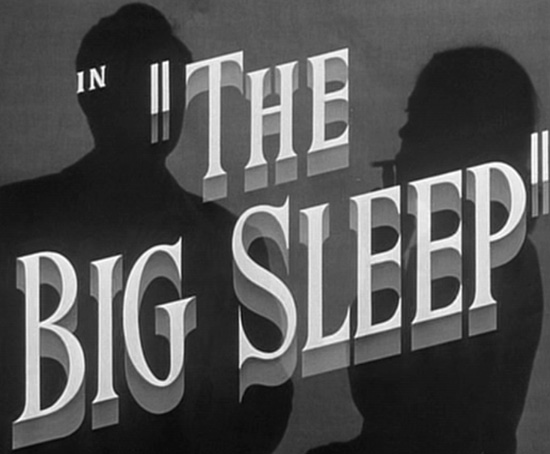
The Big Sleep by Raymond Chandler

Here I am, halfway through the Fifty Books Project. I rule over all of your asses. Consider yourself pwned.

Raymond Chandler's The Big Sleep is pretty much the prototype for hard-boiled detective fiction, taking elements from earlier crime and detective novels and combining them into a genre that seems as common as whitebread to us today. As a result, this, his most famous novel, can seem a bit uninspired at times; if an author wrote this today he would be deservedly accused of writing a very narrow and unimaginative novel. But The Big Sleep was written almost seventy years ago. While some of the tropes have become familiar to us--the uncertainty of who is on whose side, the frank depiction of violence and organized (and disorganized) crime, candid sex--this novel is pretty much where they began.

What The Big Sleep does have is Philip Marlowe, who is as definitive for his kind of character as The Big Sleep is for its genre. In it, Marlowe, a private investigator, is hired to investigate a fairly unspectacular blackmailing scheme for a retired general that ends up uncovering the connections between the general's daughters and a number of seedy underworld characters including casino-owner and extortion magnate Eddie Mars. Marlowe's approach is more about attitude than fantastic sleuthing and Chandler goes to great lengths to do away with the idea of a private investigator outsmarting the police at every turn. His cynical, acerbic, wisecracking personality has often been copied (cf. every detective show ever) but never reproduced.

All in all, unless you're superaware of The Big Sleep's literary/historical value, it comes across as enlightening as a beach read, for the most part. Bonus trivia: The Coen Brothers' Big Lebowski is loosely based on this novel--but only very, very, very, very loosely.

Tuesday, May 22, 2007

Harry Potter and the Sorcerer's Stone by J.K. Rowling

Get yourself prepared for the entire Harry Potter series. I've already read 1-6, but I'm re-reading them. Why? Because I'm a big nerd. I figure I can read them all now and be finished by the time the seventh and final book comes out in July, and then I'll have read them all in order at one go. Sounds great, doesn't it?

[Baby] Harry Potter rolled over inside his blankets without waking up. One small hand closed on the letter beside him and he slept on, not knowing he was special, not knowing he was famous... He couldn't know that at this very moment, people meeting in secret all over the country were holding up their glasses and saying in hushed voices: "To Harry Potter -- the boy who lived!"

Now that I know the future of Harry Potter and how dark the series gets toward the end, it was interesting to go back to the beginning. Harry and his friends -- and the book's style in general -- all seem so innocent. It's also interesting to note how identical the first book and the first movie are: Chris Columbus, who directed the first and second films, was a huge Harry Potter fan and made sure to include every little detail in his movies. There are even lines of dialogue that are identical, which made it a bit odd to read -- I could hear the characters' voices in my head.

One of my favorite things about this series are all the little unrelated details that Rowling adds into her stories. She includes all sorts of things that don't matter to the plotline at all, but still make a big difference in the story. Short one-sentence descriptions pop up all over the place. For example, right in the middle of the part where the kids figure out that the stone will be stolen that night -- a very serious, dark part of the story, Rowling writes: "They wandered down to the lake and flopped under a tree. The Weasley twins and Lee Jordan were tickling the tentacles of a giant squid, which was basking in the warm shallows." I think these sorts of additions lend to what makes the Harry Potter world come alive, and how it feels so real when you read or watch the movies. The details make the story.

Overall: A+

Thursday, May 17, 2007

At Swim-Two-Birds by Flann O'Brien

I'm a little ashamed that it's over two weeks into the month of May and I have completed exactly one book. Part of that is having just finished exams, but part of it also that the book I have chosen, Flann O'Brien's At Swim-Two- Birds, is not exactly "light reading." It is, in fact, just the opposite.

Here is something similar to a summary: A college student in Dublin is writing a novel. His novel is about a man named Dermot Trellis, who himself is writing a novel. The idea held by both the student and his character is that it is unnecessary to create characters when you can use the ones that exist in the corpus of literature, so Trellis' novel (and by extension the student's, and by extension O'Brien's) is filled with strange characters: cowboys, fairies, and denizens of Irish myth like a pooka (demon) and the legendary hero Finn MacCool, which sounds like a mascot for a family seafood restaurant. But the characters won't stay put and they drug Trellis so that he'll stay asleep and they can do what they please instead of doing what he tells them to do by writing.

So, yeah. The story of the college student is told, but mixed in with it are pieces of his novel as well as whatever excerpts the student feels necessary to include, like a lengthy translation of the legend of Finn MacCool or selections from (probably fictitious) books meant to explicate on given concepts. Structurally, the whole thing is messy, and stylistically it's purposefully formalized and stiff, but humorously so, in a way. I can't on good conscience recommend this to anyone without a certain warped kind of taste, but just beholding it produces in me a certain kind of awe. It lacks a certain sense of direction, but that too is on purpose it seems, and in a way reflects on the character of the student, who constantly avoids doing any real schoolwork.

This is one of those books that you're not sure whether you love or hate. If you're a big Joyce fan, you might enjoy it, because it's as difficult and twice as Irish. Maybe I should just say, "approach with caution."

Wednesday, May 16, 2007

Tuesdays with Morrie by Mitch Albom

This book has received much attention since its release in 1997. In the past ten years, it has become so famous it has even been made into a play. That's probably the reason I didn't really want to read it in the first place. But when I found it in a stack of books after my sister cleaned out her closet, I decided to give it a shot. For a full review, see Carlton's review.

The last class of my old professor's life took place once a week, in his home, by a window in the study where he could watch a small hibiscus plant shed its pink flowers. The class met on Tuesdays. No books were required. The subject was the meaning of life. It was taught from experience.

I really liked this book. It was mushy-gushy and all touchy-feely, which is usually not my style. But for some reason, it worked. I think that's probably the point, as it seems like the author had a similar experience with Morrie, who is mushy-gushy by nature. Morrie, his old college professor, spent years trying to make Mitch cry and be more in touch with his feelings. The lessons Morrie gives via Mitch are simple enough, yet for some reason are Big Issues that the average person can't seem to resolve. When he says "learn to forgive yourself and others" or "accept the past as past," that seems simple enough, but when you stop to think about it, it's a problem many of us have. I guess that's what I like most about this book: the prose is simple, the lessons are simple, but if you let yourself, you can end up thinking about really complex and deep philosophies. And wow, I can't believe I used the word 'philosophy' in a positive context.

Overall: A

Sunday, May 13, 2007

Black Swan Green by David Mitchell

Cloud Atlas was one of the best books I read last year. Not having been familiar with David Mitchell beforehand, I was surprised and impressed by the Russian-doll storylines and the diversity of writing styles and characters it encompassed. I'd heard virtually nothing about Black Swan Green before purchasing it, and that might have been a good thing, since it's nothing at all like Cloud Atlas.


The blurbs on the back cover compare it to Catcher in the Rye, but I think Lord of the Flies would be a more apt comparison, minus Flies' bleak ending. Coming-of-age stories and kids-are-cruel stories are a dime a dozen, but rarely does one create such a believable world as Black Swan Green. There's almost nothing in the book that rings false. It's not over the top, and it's not particularly symbolic. It's a lighthearted but sobering reminder than being a kid isn't the easiest thing in the world. Its structure is fairly standard, although there is something of a minor revelation at the end that ties together the book, which plays something like a series of loosely connected vignettes.


The other pleasant surprise of Black Swan Green, besides its overall quality, was the expansion of the story of Robert Frobisher, a character from the best story in Cloud Atlas. Such an inclusion could have been jarring, since the books are so different in tone and context, but it works wonderfully, dovetailing nicely with Cloud Atlas if you've read it, and playing as just another sideplot if you haven't.


This is a good book.

The Screwtape Letters by C.S. Lewis

The second Lewis book to appear on my list this year is the only one of his major works I hadn't read at all. Possibly his most famous work, Letters traces the correspondence between Screwtape, a high-ranking demonic official, and his young nephew, Wormwood, as Wormwood attempts to distract a new Christian from the faith in all possible ways.


I read this as devotional literature, but it also works quite well as a satire or just a generally comical novel. Lewis' wit is on full display here, as Screwtape chides Wormwood for each failure and attempts to give him advice on how to proceed. My copy of the book has been misplaced, but the tactics that Screwtape advises Wormwood to use will be familiar to any Christian, and, while reading through, there were several times when it was nice to think, “Oh, so I'm not the only person who has a problem with that.”


Wormwood ultimately fails in his task to distract the young unnamed Christian, who (SPOILER) dies fighting World War II. The last section of the book is Lewis' “sequel” to Letters, Screwtape Proposes a Toast. It's more of a lengthy essay than a novella, ubt it addresses several aspects that had come to light since the publication of the initial novel. I know this review doesn't do it justice, but Screwtape Letters is one of the best books I've read this year, and I'd highly recommend it. Also, John Cleese reads the audiobook. Just saying.

Vernon God Little by DBC Pierre

I'll tell you a learning: knife-turners like my ole lady actually spend their waking hours connecting shit into a humongous web, just like spiders. It's true. They take every word in the fucken universe, and index it back to your knife. In the end it doesn't matter what words you say, you feel it on your blade.

This is a pretty good book. If you want a full review, you should see Chris' post on it. For the most part, I agree with him anyway. It was pretty messed and it made me feel bad. But I guess a lot of good literature throughout history (my professor told me never to say 'through history,' so I'm saying it on purpose -- stickin' it to the man) shares both of those qualities. So in short, I liked the book, and it's worth reading, though I did find it a little long.

Overall Grade: B-

Friday, May 11, 2007

Watership Down by Richard Adams

I adore this story, but mostly the writing is incredibly soothing. I do believe enough has been said on this book, so read on reviews.