Showing posts with label detective. Show all posts

Tuesday, March 2, 2010

The Name of the Rose by Umberto Eco

In the beginning was the Word and the Word was with God, and the Word was God. This was beginning with God and the duty of every faithful monk would be to repeat every day with chanting humility the one never-changing event whose incontrovertible truth can be asserted. But we see now through a glass darkly, and the truth, before it is revealed to all, face to face, we see in fragments (alas, how illegible) in the error of the world, so we must spell out its faithful signals even when they seem obscure to us and as if amalgamated with a will wholly bent on evil.

The Name of the Rose
is an intimidating book to review. Not merely because of its erudition, which is considerable, but because of its theme: the value of the written word and its ability to translate knowledge and wisdom. It poses tough questions about what we seek in books and what they offer to us, and in that sense becomes about itself, making any review by necessity incomplete and simple in comparison.

Wait, you say, might it not be said (by Umberto Eco, even) that all books are essentially about themselves? And thus we return, like the labyrinth that lies at the heart of In the Name of the Rose, to where we began. No excuses, then.

The year is 1327 and the Catholic church is on the precipice of the crisis known as the Great Schism. The Pope has moved to Avignon, and faces the enmity of the Holy Roman Emperor, the only peer he has in Europe. The church is--much in defiance of popular notions of Medieval history--deeply fragmented, into monastic orders and heretical sects, and the line between is not so clear. It is in this climate that an English monk named William of Baskerville comes to an unnamed abbey in northern Italy to facilitate a meeting between the Pope's representatives and a group of Franciscans supported by the Emperor. But as soon as William arrives he is set to another task--investigating the death of a young monk who may have been thrown from the high walls of the abbey.

Deaths multiply: Another brother is found beaten to death and dumped in a vat of pig's blood. A third is poisoned, and still another has his head bashed in. The murders seem to have something to do with the abbey's clandestine library, a massive labyrinth closed to all but the librarian and his assistant. William and his assistant, Adso of Melk--the book's interpreter--determine through keen investigating and deductive reasoning that the conflict in the abbey revolves around a strange book, but what it is, and who wants it, and who wants it to remain concealed, is the mystery.

The Name of the Rose has the swiftness and intensity of a good pulp detective story, but it is also a book deeply concerned with weightier matters. Eco fills much of the book with lengthy debates on heresy and proper theology that dominated the religious and political landscape of the day. Amazingly, these sections are almost as gripping and fascinating as the underlying mystery. Yet, the book remains playful--after all, William of Baskerville's name is undoubtedly a not-so-sly allusion to Sherlock Holmes.

Eco is a semiotician by profession; he writes about signs and symbols and the process of their interpretation. The Name of the Rose, then, is a meditation on how we interpret--how we interpret a text, as William does when he breaks a secret code based on the symbols of the zodiac, and as the reader does in reading the book itself; how we interpret the symbols of the world around us, as William and Adso do in unraveling the mystery; not least how we interpret the will of God. I would not like to spoil the events of the novel, but I will say that William's process--unlike the archetypal Holmesian detective--is not flawless, but flawed and messy. So it is with us, who see through a mirror, darkly.

I can't recommend this book enough. Eco coined the term opera aperta, the "open work" that is the most rewarding because it offers the most possible interpretations and meanings. Perhaps because of this, The Name of the Rose seems to appeal to all sorts of readers, from lovers of thrillers to medievalists and in between.

Saturday, February 28, 2009

The Hound of the Baskervilles by Sir Arthur Conan Doyle

Perhaps no fictional character has been as diluted by their own popularity as Sherlock Holmes. Fictional detectives of all stripes--OCD Monk, Shawn Spencer from Psych, Lieutenant Columbo, Hercule Pirot--crib from Holmes's bag of tricks. Even the deerstalker cap and pipe, rarely mentioned in the stories themselves, have become iconic, indicating mystery when they appear in silhouette on the spine of a book.


With that in mind, why even read The Hound of the Baskervilles? Not only is it a story about Sherlock Holmes, familiar to everyone from your grandmother to your niece, it may be the defining story. The title at least has passed into popular parlance, just like the name of its protagonist. That's why those reading it for the first time might be a little surprised at what they find.


Holmes, as written by Sir Arthur Conan Doyle, is no do-gooder saint. He's an egotistical, arrogant, cocaine-abusing, opium-smoking, lying misanthrope, far from the good-hearted detectives built ostensibly in his mold. He treats his partner and only friend, Dr. Watson, with a mixture of condescension and concern, has no problem with breaking the law to solve his cases, and, really, just doesn't think of the children. However, it's not in spite of his flaws but because of them that Holmes is such an enjoyable creation. He is completely without superstition and without the slightest doubt in his abilities.


The Hound of the Baskervilles is one of only four Sherlock Holmes novels written by Doyle. Holmes is called into the case by a doctor drawn into a strange case. Charles Baskerville, wealthy landowner, is found dead without a mark on his body, thought to have been felled by a giant black Hell hound who haunts the family. Holmes takes the case, but, unable to go himself, he sends Watson to investigate and report back. Hound stands out from the short stories because Holmes himself is absent from large parts the novel, and the reader is given unfiltered information from Watson's letters back to Holmes. The end of the story, where Holmes captures the criminal and explains his methods is satisfying on a visceral level. Almost nothing is left unanswered, and the plotlines fit like a puzzle. It just works.


That, ultimately, is why reading Sherlock Holmes is still worthwhile. In spite of the doppelgangers, Holmes himself still stands alone, an idiosyncratic literary creation that is often imitated but never duplicated. This year sees the release of two movies based on Sherlock Holmes, one a comedy and one a complete reinvention, starring a gay, karate-kid Sherlock, but for those interested in Sherlock Holmes, the original stories are the place to start.


Bonus: Word Cloud!

Wednesday, May 23, 2007

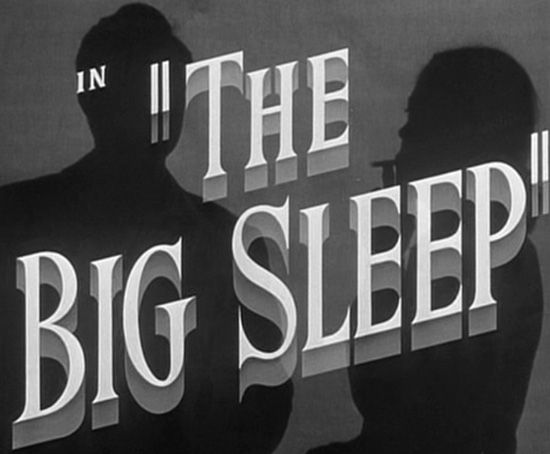
The Big Sleep by Raymond Chandler

Here I am, halfway through the Fifty Books Project. I rule over all of your asses. Consider yourself pwned.

Raymond Chandler's The Big Sleep is pretty much the prototype for hard-boiled detective fiction, taking elements from earlier crime and detective novels and combining them into a genre that seems as common as whitebread to us today. As a result, this, his most famous novel, can seem a bit uninspired at times; if an author wrote this today he would be deservedly accused of writing a very narrow and unimaginative novel. But The Big Sleep was written almost seventy years ago. While some of the tropes have become familiar to us--the uncertainty of who is on whose side, the frank depiction of violence and organized (and disorganized) crime, candid sex--this novel is pretty much where they began.

What The Big Sleep does have is Philip Marlowe, who is as definitive for his kind of character as The Big Sleep is for its genre. In it, Marlowe, a private investigator, is hired to investigate a fairly unspectacular blackmailing scheme for a retired general that ends up uncovering the connections between the general's daughters and a number of seedy underworld characters including casino-owner and extortion magnate Eddie Mars. Marlowe's approach is more about attitude than fantastic sleuthing and Chandler goes to great lengths to do away with the idea of a private investigator outsmarting the police at every turn. His cynical, acerbic, wisecracking personality has often been copied (cf. every detective show ever) but never reproduced.

All in all, unless you're superaware of The Big Sleep's literary/historical value, it comes across as enlightening as a beach read, for the most part. Bonus trivia: The Coen Brothers' Big Lebowski is loosely based on this novel--but only very, very, very, very loosely.