Showing posts with label Emily Bronte. Show all posts

Tuesday, October 14, 2025

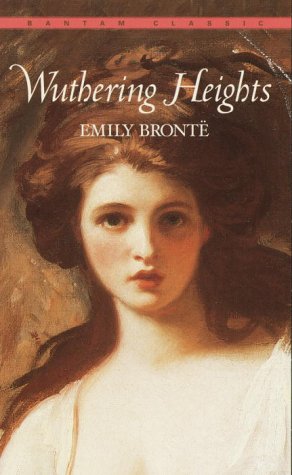
Wuthering Heights by Emily Bronte

'I wouldn't be you for a kingdom, then!' Catherine declared emphatically -- and she seemed to speak sincerely. 'Nelly, help me to convince her of her madness. Tell her what Heathcliff is -- an unreclaimed creature, without refinement -- without cultivation; an arid wilderness of furze and whinstone. I'd have soon put that little canary into the park on a winter's day as recommend you to bestow your heart on him! It's deplorable ignorance of his character, child, and nothing else, which makes that dream enter your head. Pray don't imagine that he conceals depths of benevolence and affection beneath a stern exterior. He's not a rough diamond -- a pearl-containing oyster of a rustic; he's a fierce, pitiless, wolfish man.'

It's been fourteen long years since I last touched Wuthering Heights. I decided to reread it in advance of the new adaptation, whose trailer makes it look like a an upstairs-downstairs forbidden sex romp. Maybe it'll be good (I doubt it), but one thing it isn't is sexy. In fact, the stormy love between Heathcliff and Catherine seems to me, even moreso on this reading, to be entirely sexless. Cathy and Heathcliff both describe themselves, again and again, as the same soul occupying two different bodies, which is to say that embodiment is, in Wuthering Heights, a kind of challenge or trap. It's no wonder, perhaps, that people are always getting sick or injured and dying before their time, starting with Hindley's wife/Hareton's mother and continuing all the way to, spoiler alert, Heathcliff himself. The closest that Heathcliff gets to Catherine physically seems to me to be the moment that he digs up her grave to embrace her and accidentally, as he says, releases her ghost.

This disembodiment, perhaps, explains why Catherine is so willing to overlook, as no one else seems to be, Heathcliff's racial coloring and ambiguous heritage. You often hear people say that Heathcliff is supposed to be Black (making Jacob Elordi all wrong for the part), but it's clear to me that Heathcliff's background is meant to be much murkier than that; part of his tragedy is that he is racially ambiguous and thus there is no social place for him at Wuthering Heights, Thrushcross Grange, or anywhere else. He's described as Romani or a "Lascar," but this ambivalence is underlined by the way in which the elder Earnshaw shows up with him in tow from a trip to London as if he's simply materialized; no explanation is given. Nature vs. nurture is an unsettled question in Wuthering Heights: is Heathcliff's savageness meant to be racially constituted? Or does the novel suggest that he is a nasty piece of work because he's othered by the vindictive Hindley? Heathcliff's viciousness is, I feel strongly, too overwhelming to be the product of socialization; I trust Catherine when she says there is no oyster inside the pearl. Then again, perhaps that viciousness is natural, and thus preferable to the viciousness of someone like Hindley, dolled up and justified by his greater social standing. And on top of that, Heathcliff's little experiment turning Hindley's son Hareton into a kind of carbon copy of himself--brutish and resentful--seems so successful, at least until the coda, that perhaps the book really does believe that one is primarily the product of their social environment.

I don't think this book was as pleasurable for me the second time around, mostly just because I knew what was coming--it is a book that thrives on melodrama and shock, of the best kind--but I remain in awe of it. It's really a book that pulls no punches; people say the most out of pocket shit to each other on every page. It's almost like watching a really pulpy reality TV show. What I did come away with on this re-read was an appreciation for the second half, which I expect to be more or less cut out of the movie. Heathcliff's desire for vengeance is so strong, like his love, that it survives even Hindley, his tormentor: what is the point, I wondered this time, of pursuing Hindley's heir and house after Hindley himself has been drinking himself to a miserable death for more than a decade? I found myself interested now in the story of Cathy, Hareton, and Linton, who are all trying desperately to escape the shape that the despot Heathcliff would pound them into. It seemed to me this time around that this is where the "real" story lies, despite the popular image of the novel as consisting mainly of Heathcliff and Catherine's romance. By the end, young Cathy and Hareton seem like true survivors of a kind of natural storm that killed just about everyone else, and it's their romance that seems like a normal human one.

Sunday, September 30, 2018

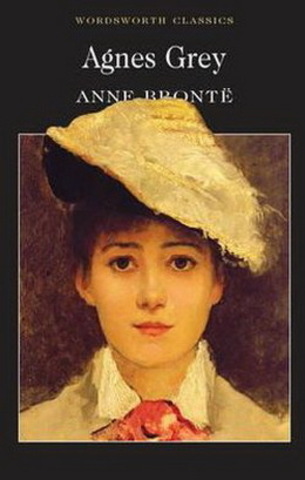
Agnes Grey by Anne Bronte

Already, I seemed to feel my intellect deteriorating, my heart petrifying, my soul contracting; and I trembled lest my very moral perceptions should become deadened, my distinctions of right and wrong confounded, and all my better faculties be sunk, at last, beneath the baneful influence of such a mode of life.  The gross vapours of earth were gathering around m,e and closing in upon my inward heaven; and thus it was that Mr Weston rose at length upon me, appearing like the morning-star in my horizon, to save me from the fear of utter darkness; and I rejoiced that I had now a subject for contemplation, that was above me, not beneath.

My favorite depiction of teaching is in D. H. Lawrence's The Rainbow: the sensitive Ursula takes a job as a schoolteacher only to find herself pressed between the needs of students, parents, and administrators.  The pressure acts on her geologically, transforms her into something she doesn't want to be, and she quits because she can't accept the transformation.  Anne Bronte's Agnes Grey, about a young woman who becomes a governess, understands that pressure, too, though she's far too  sure of herself to give into its transformative powers:

But either the children were so incorrigible, the parents so unreasonable, or myself so mistaken in my views, or so unable to carry them out, that my best intentions and most strenuous efforts seemed productive of no better result than sport to the children, dissatisfaction to their parents, and torment to myself.

Agnes first takes a job with a family whose children are avowed troublemakers, and whose character is perpetuated by their parents, who foist responsibility for their actions onto Agnes.  (There's a familiar dynamic for you.)  They set her papers on fire, throw them out the window, then escape when she goes to retrieve them.  The little boy has captured a nest of baby birds and is saving them to torture; Agnes smashes them with a rock in a stone-hearted act of kindness, much to the boy's displeasure.  Agnes loses the job, because the job itself is impossible; in fact, Agnes has served her purpose exquisitely, which is to serve as a convenient scapegoat for both children and parent.

Her second job is much better, but comes with its own difficulties.  Her charges are two women, both a little older than the monsters in her previous gig: Matilda, a stubborn tomboy, and Rosemary, a shameless flirt.  Agnes tries her best to rein in Rosemary's tendency to play with the hearts of local men, whose hopes she inflames, then discards.  When Rosemary sets her sight on Mr. Weston, the kindhearted local sexton, Agnes suffers silently and represses the love she feels for him.

But Weston is too wise and generous not to see through Rosemary's attempts at flirtation.  Rosemary herself comes to a bad end, married to a man she chooses for social status rather than character.  Agnes, though humbler, is wiser, and though both her love and Mr. Weston's is slow to kindle, it seems inevitable.  The love affair, like the one in Persuasion, happens at a distance through a kind of subatomic force.  Unlike the one in Persuasion, though, it's a little boring; since Rosemary is no real threat, the only barriers to it are time and a tedious reticence to express their feelings that both Agnes and Weston share.  It's Rosemary, actually, venal and thoughtless Rosemary, who is the most interesting character in the novel.  Her wealth and beauty allow her to flout social sense with impunity, and even though we're convinced that Agnes' slow and steady practicality is wiser, Rosemary's just a lot more fun.

Being a governess, like being a teacher, was a job reserved for young, unmarried women with little wealth.  Agnes Grey shows how soul-squeezing it can be, especially for those who are of stiff moral fiber and deep sensitivity.  But in the end, marriage comes for Agnes, to rescue her from labor, without the menacing threat of a loss of independence.  Weston reminds me of St. John Rivers from Charlotte's Jane Eyre in many ways, but perhaps the way St. John himself, as a good and generous man who offers stability and a shared service to God.  Jane considers that and rejects it, returns to the wildness and strangeness of a life with Mr. Rochester; for Agnes, and seemingly for Anne, that kind of bourgeois piety is both safety and success.

Saturday, July 23, 2011

Wuthering Heights by Emily Bronte

Wuthering Heights is awful. I don't mean, of course, that it is bad, but that the experience of it is like being caught in a vice, so rife it is with cruelty and horror. The petty tribulations that Jane Eyre's family put her through do not compare, nor do the benign torments of Mr. Rochester, to what Heathcliff perpetrates in Wuthering Heights. My memory of him from pretending to read this book in high school was that he was a sort of Byronic anti-hero, devoted to his soulmate Catherine Earnshaw despite attempts to tear them apart, but that is only a partial--and thus very mistaken--perspective.

Heathcliff enters the novel mysteriously, a gypsy urchin brought home by Catherine's father. Heathcliff is his only name (and it matches the windswept, bleak terrain of the Earnshaw estate, Wuthering Heights). He and Catherine form an instant bond, and when their father dies, Catherine's cruel brother Hindley contrives to keep them apart, debasing Heathcliff as a servant, and the difference in their social station drives Catherine to marry the handsome, effete Edgar Linton. Yet, Catherine maintains that she and Heathcliff are so connected to one another that they share a soul:

"This is nothing," cried she; "I was only going to say that heaven did not seem to be my home; and I broke my heart with weeping to come back to earth, and the angels were so angry that they flung me out, into the middle of the heath on the top of Wuthering Heights, where I woke sobbing for joy. That will do to explain my secret, as well as the other. I've no more business to marry Edgar Linton than I have to be in heaven; and if the wicked man in there had not brought Heathcliff so low; I shouldn't have thought of it. It would degrade me to marry Heathcliff, now; so he shall never know how I love him; and that, not be cause he's handsome, Nelly, but because he's more myself than I am. Whatever our souls are made of, his and mine are the same, and Linton's is as different as a moonbeam from lightning, or frost from fire.


Separated from Cathy, Heathcliff vows to wreak havoc on the external forces he perceives to be at fault, namely Hindley Earnshaw and Edgar Linton. He doesn't dare while Catherine is alive, but the tensions between Heathcliff and Edgar push her into madness and illness, and when she dies his cruelty becomes extreme:

He seized, and thrust her from the room; and returned muttering, "I have no pity! I have no pity! The more the worms writhe, the more I yearn to crush out their entrails! It is a moral teething, and I grind with greater energy, in proportion to the increase of pain.


The second half of the book--the better half, I think, though not the one that seems to be best remembered--details Heathcliff's revenge. He becomes a tenant at Wuthering Heights, knowing that the near-mad Hindley would not refuse his money, and swindles him out of the property by buying up the mortgage to support Hindley's alcoholism. He marries Edgar's sister Isabella, whom he hates and abuses, and fathers a sickly, irritable son, Linton Heathcliff, whom he contrives to marry Cathy and Edgar's daughter, Catherine. Knowing that Linton will die young--and doing his part to help!--and that Edgar's home Thrushcross Grange will pass to him, Heathcliff becomes the owner of both of his rivals' estates.

It is difficult to describe how cruelly Heathcliff goes about this. He cares about no one but the dead Catherine, and terrorizes everyone else, including his own wife and son. And yet Heathcliff and Catherine's relationship is the most spiritually powerful thing in the entire novel. Attempts to cast Heathcliff's actions in a moral--specifically, Christian--light nearly always come off as weak, and God never seems nearly as powerful as Heathcliff. As the young Heathcliff says to his nurse Nelly, "God won't have the satisfaction that I shall" when Hindley is punished. It is difficult to call Heathcliff a villain because the moral and spiritual compass of Wuthering Heights is centered, like everything else, on his relationship with Catherine.

In the end, the only thing that saves the two houses from utter destruction is a sort of spiritual elevation that Heathcliff experiences, whereby he feels himself closer to Catherine, and therefore also to death, and disinterested in what remains of an earthly world:

"It is a poor conclusion, is it not," he observed, having brooded a while on the scene he had just witnessed. "An absurd termination to my violent exertions? I get levers and mattocks to demolish the two houses, and train myself to be capable of working like Hercules, and when everything is ready, and in my power, I find the will to lift a slate off either roof has vanished! My old enemies have not beaten me--now would be the precise time to revenge myself on their representatives--I could do it; and none could hinder me--But where is the use? I don't care for striking, I can't take the trouble to raise my hand!"


This is horrible, but it is right: We could imagine the entire territory of the novel being wiped off the face of the earth by a sweep of Heathcliff's hand, but the same intensity of love that sparked his anger calls him away from it.

Wuthering Heights endures because it is like a funhouse mirror toward our most worn ideas about romantic love: It leads us toward destiny; it elevates us spiritually; it is more powerful than what surrounds it; it will survive despite all obstacles. Here, in the earthly realm at least, all these things are true, but they make no one happy, not even Cathy and Heathcliff.

Tuesday, January 4, 2011

The Things That Matter by Edward Mendelson

In the process of applying to graduate school, I have been seized by a fear--perhaps one I should not detail too thoroughly in this, a public forum--a fear that I am entering into a world of obscurism and arcana, the kind of universe that inspired the late Dennis Dutton's yearly bad writing contest. For this reason I have gravitated toward critics like Harold Bloom, James Wood, and Edward Mendelson, a Columbia professor of English who in The Things That Matter writes:

[Novels]were not written to be read objectively or dispassionately, as if by some nonhuman intelligence, and they can be understood most fully if they are interpreted and understood from a personal point of view, not only from historical, thematic, or analytical perspectives. A reader who identifies with the characters in a novel is not reacting in a naive way that ought to be outgrown or transcended, but is performing one of the central acts of literary understanding.


Mendelson divides The Things That Matter into seven parts, each corresponding to the Seven Ages of Man. Each age is embodied by a book; for Mendelson, Frankenstein becomes a novel about birth, Wuthering Heights about childhood, Jane Eyre, adolescence; Middlemarch, marriage. Love, parenthood, and "the future" are given to three novels of Virginia Woolf's: Mrs. Dalloway, To the Lighthouse, and Between the Acts, respectively.

This works better than it probably should. Mendelson is a thoughtful and--if this is a thing that can be said--a creative reader, seeing in novels what I had not imagined. He has the kind of wisdom that sees wisdom, and I found myself moved by several thoughts. Who would have thought that Frankenstein--which I disliked--had such subtleties as this, in an explanation of Victor's fascination with alchemy:

Magic is different from modern science in two crucial ways. First, magic promises results that are spectacularly vast in comparison with the amount of effort that goes into them, and, second, only exceptional individuals can wield magical powers. The words of a magical spell can be spoken as easily as any ordinary words, but when spoken by the right person, they cause earthquakes and thunders... Part of the appeal of the alchemist's magic is that it claims to give you something for nothing, provided that you are special enough to deserve it. (A similar fantasy of getting something for nothing seems to be behind the idea of "magic" in the realm of human relations: the husband or wife who complains that "the magic has gone out of my marriage" is perhaps disappointed at no longer being given something for nothing.)


Or this, about Jane Eyre and Mr. Rochester:

Jane Eyre and Edward Rochester have each endured loneliness and solitude in order to arrive at this point, because in the world perceived by Charlotte Bronte all roads to the gardens of intimacy lead through deserts of solitude, and no one can attain intimacy who has not accepted loneliness.


I certainly do not agree with everything that Mendelson says. He makes a bold claim in his introduction that our foremost novelist of the past two centuries is Virginia Woolf, and that our sacred cows--specifically, Eliot, Yeats, and Joyce--are exalted by the assumption that pattern and myth are superior to human emotion and psychology. It is easy to appreciate the underlying sentiment, which appeals to the non-professional reader and forsakes the academic, but understates the ways in which pattern and myth anchor and organize human spirits and personalities. Nor does Mendelson quite believe it, I think, as he spends quite a bit of the section on Mrs. Dalloway explaining how it is patterned after Ulysses--itself patterned after The Odyssey.

But The Things That Matter rekindles my excitement for graduate work. Writers like Mendelson (and Bloom, and Wood) maintain, like the keeper of the vestal flame, the vitality of literature, and leave good maps for those who might follow them.