Showing posts sorted by relevance for query titus andronicus. Sort by date Show all posts

Thursday, January 20, 2011

Titus Andronicus by William Shakespeare

Why, there they are both, baked in that pie;
Whereof their mother daintily hath fed,
Eating the flesh that she herself hath bred.
'Tis true, 'tis true; witness my knife's sharp point.


So, apparently Titus Andronicus is pretty much universally considered Shakespeare’s worst play. Even Harold Bloom, Bard booster extraordinaire, says the play can’t be taken seriously, and must be read as satire if anything at all is to be gotten from it at all; other critics attack its extreme—sometimes comically so—violence; still others point to the less than nuanced characters, none of which are really worth cheering for, as the play’s biggest weakness. And, I have to admit, on one level, it’s hard to disagree. Apart from Aaron, who’s certainly one of the most despicable villains in all of Shakespeare, most of the players are notable mainly for the gruesome ways in which they die. There are no “Alas, poor Yorick” moments, the poetry is spare, and the genuine emotion is thin—I felt revulsion more strongly than anything else while reading Titus Andronicus.

So, the story: Titus is returning from battle, bearing with him Tamora, Queen of the Goths and her sons, one of which he commands to be mutilated, in spite of Tamora’s pleas for mercy. This act of butchery sets off the whole play, most of which is taken up with Tamora’s revenge, which she plans with Aaron, her Moorish lover, and Titus’s response. You know the drill; it’s a Shakespearean tragedy—everyone dies, pretty much.

The thing is, while the criticisms of Titus Andronicus are basically true, they don’t make it a bad play. For Shakespeare, the man who gave us Hamlet, Lear, Macbeth, and scads of literature’s most famous characters, it’s definitely lower-tier. As an entertainment, though, it’s not bad. It’s grotesquely funny, fast-moving, and, as mentioned, Aaron is basically evil personified. It’s not going to change your life, but it’ll probably pass an afternoon, and, at the end (SPOILER) a mother’s sons are served to her in pies. Shakespeare knows pulp.

Thursday, January 3, 2013

Three Plays by Shakespeare

I read three plays by Shakespeare which I have not before reviewed on this site for a class last year.  Here are my brief thoughts on each of them, from the one I liked the least to the one I liked the most:

Titus Andronicus: I couldn't stop thinking about Titus when I saw Django Unchained last week.  Both are revenge narratives--the revenge aspect of Django I won't go into needlessly here (you can read the plot summary on IMDB) but Titus gets his revenge on the Goth queen Tamora, her Moorish companion Aaron, and her sons Chiron and Demetrius, who have raped Titus' daughter Lavinia and killed his step-brother with the aid of the other two.  Shakespeare plumbs the sordid depths of folklore and myth to cobble this plot together, but he feels compelled to outdo his sources: Like in the story of Philomel, the brothers rip out Lavinia's tongue so that she cannot identify them as the perpetrators, but for good measure they cut her hands off as well.

Since Tamora is seeking revenge in turn for Titus' sacrifice of her son as a prisoner of war, it is possible Shakespeare is making some commentary on the cyclical, all-devouring nature of revenge.  Yet, it seems plain that the greatest joy of seeing Titus performed is to watch the brutality of each escalating incident of vengeance, which I think reduces the power of that commentary.  It reminds me too much of Django, which I thought was entertaining but fundamentally shallow.  It is a rare Shakespearean play where the fun is in the spectacle, not the language, which is really devoid of anything interest except for what comes out of the mouth of Aaron, more eloquent than his Roman masters.  Here he is determined to protect the child he has with Tamora from Chiron and Demetrius, though the child's skin tone gives reveals their intimacy:

What, what, ye sanguine, shallow-hearted boys,
Ye whitelimed walls, ye alehouse painted signs,
Coal-black is better than another hue,
In that it scorns to bear another hue;
For all the water in the ocean
Can never turn the swan's black legs to white
Though she lave them hourly in the flood.

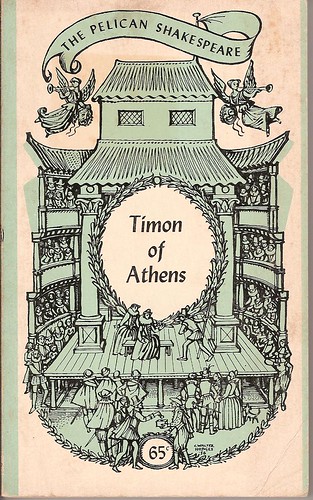
Timon of Athens: I am convinced by those who contend this play is not finished; it was never performed, and it has a strange raggedness.  That's a shame, because it's really fascinating.  Timon is a wealthy patron in Athens, noted for his generosity, but when he finally runs into debt he finds that all of his former "friends" have abandoned him.  Disgusted, he leaves Athens in self-exile and wanders around the forest heaping scorn on all mankind.

Timon's about-face is too exaggerated and compressed to be convincing; he never quite becomes a human being.  Yet, his long rants against Athens and all of humanity are a lot of fun, and some of Shakespeare's most bitter and ornate poetry.  I particularly like when Timon, digging for roots to sustain himself, accidentally digs up the last thing he wants--gold:

What is here?
Gold?  Yellow, glittering, precious gold?
No, gods, I am no idle votarist:
Roots, you clear heavens.  Thus much of this will make
Black white, foul fair, wrong wright,
Base noble, old young, coward valiant.  Why this, what, this,  you gods?  Why, this
Will lug your priests and servants frm your sides,
Pluck stout men's pillows from below their heads.
This yellow slave
Will knit and break religions, bless th'accursed,
Make the hoar leprosy adored, place thieves,
And give them title, knee, and approbation
With senators on the bench.

A Midsummer Night's Dream: I have been saying for years that the freshmen where I teach should read A Midsummer Night's Dream instead of Romeo and Juliet.  They read one tragedy a year, and come away with the idea that all Shakespeare is murder, suicide and madness.  (Plus, Romeo and Juliet is 30-40% penis jokes.)  Midsummer, on the other hand, is a lot of fun, and what's more, it's the only play of Shakespeare's that I would actually call funny.  The inept play the Mechanicals put on for the noble characters at the play's end never fails to crack me up in its badness:

BOTTOM [as Pyramus]: Thus die I: thus, thus, thus.
[He stabs himself]
Now am I dead,
Now am I fled,
My soul is in the sky.
Tongue, lose thy light;
Moon, take thy flight.
Now die, die, die, die, die.

I'm actually laughing as I write this.  Although, maybe my freshmen wouldn't really get the humor--they might think this is the most moving passage in the play, and post it on their tumblrs.  Of course, Midsummer also offers the really fantastic scenes where Puck transforms Bottom's head into that of an ass, and then gives the Fairy Queen Titania a potion which makes her fall in love with him.  People have been doing cheap transformation scenes for hundreds of years, and they're always the same: Michael J. Fox stares into the mirror, his hair, nails and teeth start to grow, and he screams.  OH NO, I'M A TEEN WOLF.  Shakespeare, five hundred years ago, gave us the most original and amusing take on transformation scenes; Bottom just rolls with it, unfazed by it all, not noticing he's changed, and not being in the least shocked that a Fairy Queen wants to get her bone on with him.  The rest of the scattershot plot is all great, but it's the Bottom scenes that really elevate this, for me, to one of Shakespeare's greatest works.

EDIT: I accidentally wrote that Tamora's sons kill Lavinia, when in fact they only rape and mutilate her.  Titus himself kills Lavinia, in fact, out of either shame or an overflow of vengeful feelings.

Saturday, December 30, 2006

Brent's Books 2011

50.5 Young Goodman Brown
Nathaniel Hawthorne

50. Light in August
William Faulkner

49. Paying For It
Chester Brown

48. Fun Home
Alison Bleidel

47. The Pigman
Paul Zindel

46. A Series of Unfortunate Events: The Bad Beginning
Lemony Snicket

45. The BFG
Roald Dahl

44. Mrs Dalloway
Virginia Woolf

43. Child of God
Cormac McCarthy

42. Macbeth
William Shakespeare

41. Concrete Island
J. G. Ballard

40. Gilgamesh
Translation by Stephen Mitchell

39. Othello
William Shakespeare

38. Candyland
Ed McBain / Evan Hunter

37. Girl with Curious Hair
David Foster Wallace

36. The Haunting of Hill House
Shirley Jackson

35. Adam Bede
George Eliot

34. Zadig
Voltaire

33. The Mugger
Ed McBain

32. Amusing Ourselves to Death
Neil Postman

31. ??
??

30. When The Shooting Stops, The Cutting Begins
Ralph Rosenblum

29. At the Mountains of Madness
H. P. Lovecraft

28. Stardust
Neil Gaiman

27. Carry On, Jeeves
P. G. Wodehouse

26. The Anthologist
Nicholson Baker

25. Reality and Dreams
Muriel Spark

24. Treasure Island
Robert Louis Stephenson

23. A Doll's House
Henrik Ibsen

22. The Magus
John Fowles

21. Street Gang

20. Alas, Babylon
Pat Frank

19. Molloy
Samuel Beckett

18. Snow Crash
Neil Stephenson

17. Catch-22
Joseph Heller

16. Hamlet
William Shakespeare

15. Agnes Grey
Anne Bronte

14. The Remains of the Day
Kazuo Ishiguro

13. Ella Minnow Pea
Mark Dunn

12. Jane Eyre
Charlotte Bronte

11. Mister Wonderful
Daniel Clowes

10. A Swiftly Tilting Planet
Madeline L'Engle

9. The Napoleon of Notting Hill
G. K. Chesterton

8. Brideshead Revisited
Evelyn Waugh

7. House of Mirth
Edith Wharton

6. Through the Looking Glass
Lewis Carroll

5. The Hunger Games
Suzanne Collins

4. Rebecca
Daphne du Maurier

3. Titus Andronicus
William Shakespeare

2. Waiting for Godot
Samuel Beckett

1. Gulliver's Travels
Jonathan Swift

Thursday, January 23, 2014

The Revenger's Tragedy by Thomas Middleton

...in which I take three weeks to get around to reviewing my final book from 2013.

The Revenger's Tragedy is a Shakespeare-era play by Thomas Middleton, and like pretty much all drama from that period--with a few exceptions (Volpone?)--it's a reminder of just how great Shakespeare was.  As a revenge tragedy, I might take it over Titus Andronicus, but it's a far cry from that other Shakespearean revenge play--I'm forgetting the name now...

Anyway, the plot is incredibly convoluted: Vindici is determined to revenge himself on Duke for poisoning his beloved before the play begins.  The Duke's son Lussurioso takes the disguised Vindici on as a pandar who will seduce Vindici's sister (remember, he's in disguise), providing him the perfect opportunity for vengeance.  A side plot involves the Duke's bastard, who is having an affair with his wife, and his stepsons, one of whom is accused of a brutal rape.  They have names like "Spurio" and "Ambitioso" and "Supervacuo" that help you keep them apart.  If you guessed that they all die in the end, you are correct.

The Revenger's Tragedy isn't very profound, but it is gleefully over the top.  I really enjoyed this scene, where Vindici dresses up the skull of his beloved in fine jewels and a fancy dress.  The skull's jaw is laced with poison so that Vindici can present it to Lussurioso as his sister:

HIPPOLITO
Brother, y'ave spoke that right.
Is this the form that living shone so bright?

VINDICI
The very same;
And now methinks I [could] e'en chide myself
For doting on her beauty, tho' her death
Shall be reveng'd after no common action.
Does the silkworm expend her yellow labours
For thee? For thee does she undo herself?
Are lordships sold to maintain ladyships
For the poor benefit of a bewitching minute?
Why does yon fellow falsify highways
And put his life between the judge's lips
To refine such a thing, keeps horse and men
To beat their valours for her?
Surely we're all mad people, and they
Whom we think are, are not; we mistake those:
'Tis we are mad in sense, they but in clothes. 

Hey, man!  That's no way to talk to your girlfriend!  The whole play, in fact, is steeped in pretty stark misogyny.  Vindici makes a lot of really bold pronouncements about the treachery of women that I'm pretty sure we're supposed to take at face value even though this is a story about a bunch of men who murder each other.

Once the play reached its final act (spoiler: a lot of people get stabbed) it became pretty tedious.  However, if you're interested, there's a recent film version starring Eddie Izzard and Christopher Eccleston that's probably a more fun two hours than the ones you'd spend reading the play.

Saturday, December 21, 2024

Pericles, Prince of Tyre by William Shakespeare

PERICLES:

O Helicanus, strike me, honour'd sir;
Give me a gash, put me to present pain;
Lest this great sea of joys rushing upon me
O'erbear the shores of my mortality,
And drown me with their sweetness. O, come hither,
Thou that beget'st him that did thee beget;
Thou that wast born at sea, buried at Tarsus,
And found at sea again! O Helicanus,
Down on thy knees, thank the holy gods as loud
As thunder threatens us: this is Marina.

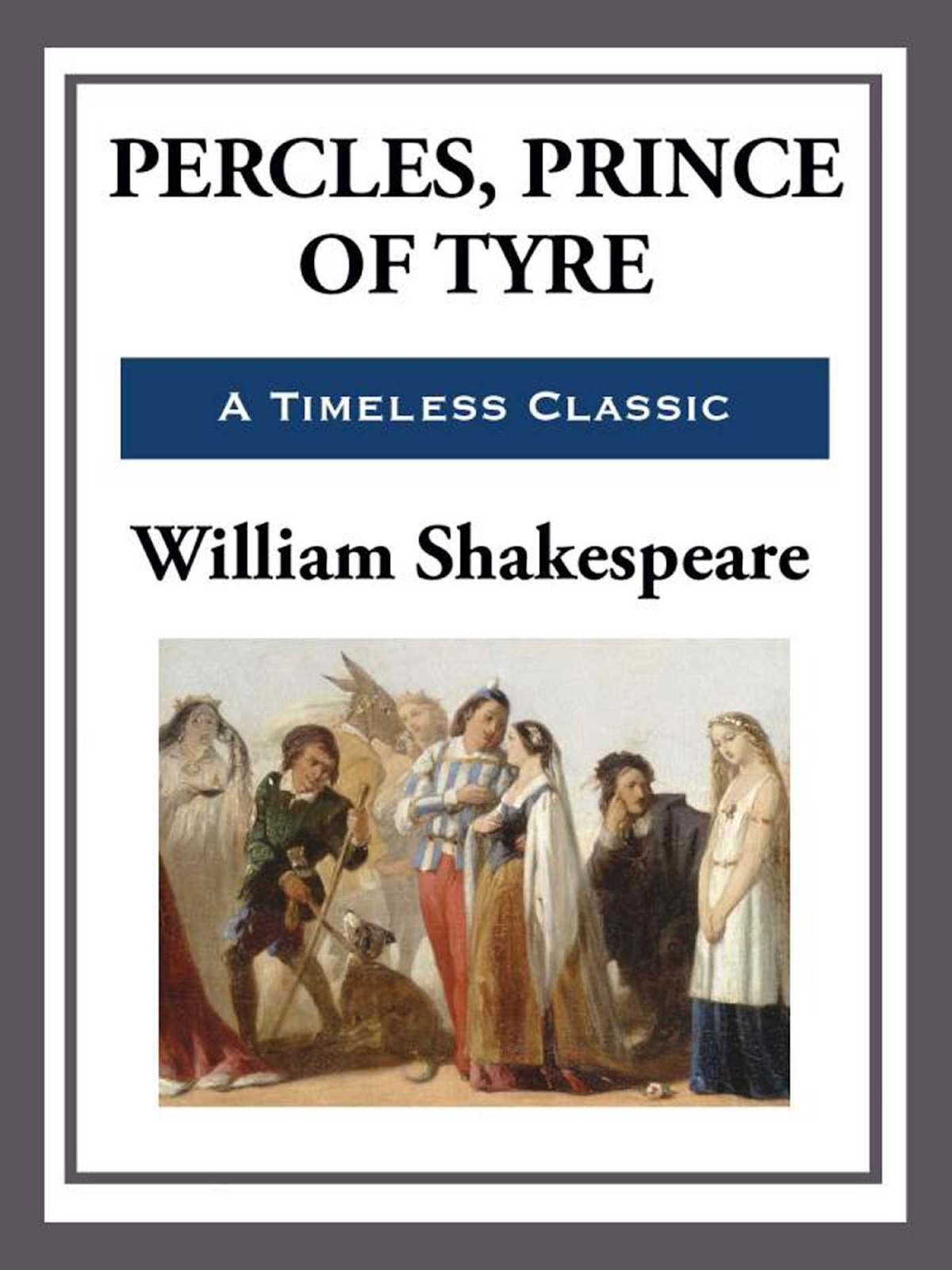
Pericles, Prince of Tyre is in that grab-bag of lesser Shakespeare plays, rarely performed, rarely read, except among the real Bard-heads. It's easy to see why: it's largely unsatisfying, an unfocused series of episodic melodramas that never quite seems to add up to a real play. It was one of the firt of Shakespeare's plays to be considered a collaboration (in this case, with John Fletcher), and it shows. And yet, it's easy to imagine its strangeness working on the stage, where costumes and sets might play up its oddities, and the exotic ports that the Prince of Tyre calls upon might come alive.

The story goes something like this: Pericles attempts to win the hand of a princess by solving a riddle; when he realizes that the princess is in an incestuous relationship with her father, he is forced to flee the king's vengeance. In a port of refuge, he joins a tournament for the hand of another princess, which he wins, securing the hand of the beautiful Thaisa. But when Thaisa dies in childbirth at sea, he has her tearfully buried overboard and his daughter Marina put in safekeeping with (yes, another) king Cleon. Cleon and his jealous wife try to kill Marina, but she is kidnapped by pirates and sold into a brothel, where her virtue converts her customers to chastity--much to the chagrin of her bawd. Cleon tells Pericles that Marina has died, and he gets really upset, until he finds Marina again, where she has been rescued by the local governor. Then, in a dream, Diana tells him to go to her temple, where he finds Thaisa, having been resurrected by a sorcerer and made a priestess. It's really quite a happy ending.

Pericles is among those plays that seem unclassifiable--are they a history? a tragedy? a comedy?--but to me, it clearly forms a trio with Timon of Athens and Titus Andronicus, a trio of plays that use the characters and settings of ancient literature to create a kind of elevated reality or fantasy world. When Pericles joins the contest for the hand of Thaisa, he is reminiscent of Odysseus, playing games and contests in foreign lands for favor of foreign kings. There are other similarities: the shape of Pericles is dictated by the Wheel of Fortune, the rapid rise and fall of luck and disaster, and this structure, to me, seems to share a lot with the forms of ancient literature. And of course, the happy ending--perhaps the happiest ending in all of Shakespeare's play--is reminiscent of Odysseus' return to Penelope.

One of the things I liked best about Pericles was actually the part that Shakespeare likely didn't write: the creepy opening where Pericles solves the riddle of king Antiochus's incest. Antiochus stresses to Pericles that all who have tried to solve the riddle have failed, and the punishment for failure is death. Pericles--invoking another Greek story, Oedipus and the Sphinx--is smitten and courageous enough to try anyway, but as soon as he reads it--like, instantly--he realizes that Antiochus has hidden his dirty secret inside the riddle, more or less in plain sight:

I am no viper, yet I feed
On mother's flesh which did me breed.
I sought a husband, in which labour
I found that kindness in a father:
He's father, son, and husband mild;
I mother, wife, and yet his child.
How they may be, and yet in two,
As you will live, resolve it you.

I thought this was one of the more interesting scenes in the play, the way Antiochus both reveals and does not reveal his deed. There's something here about the fragile justifications we set up around ourselves, not exactly denying what we are unable to deny, but couching it in such a way that we soothe our own conscience and hide it from others. Of course, it's all very stupid; he should have just made a riddle about something else. It also, especially in the hands of a brave director, brings unsettling layers to the recognition scene, in which Pericles and his daughter Marina have their reunion. After all, Marina has been plucked from the brothel from the governor, who came first as a customer, and is now perhaps not entirely reformed by her virtue; he offers her to the distraught Pericles because he thinks their experiences will draw them together. It's not un-erotic, is all I'm saying.

So, Pericles is not my favorite. And yet, I think if someone were to stage it, I'd go see it, and with more excitement than even some of the plays which I like better. 

Wednesday, January 4, 2006

Christopher's Books 2012

55. VALIS
by Philip K. Dick
54. Middlemarch
by George Eliot
53. Flesh of My Flesh
by Kaja Silverman
52. Titus Andronicus
by William Shakespeare
51. Timon of Athens
by William Shakespeare
50. A Midsummer Night's Dream
by William Shakespeare
49. Faust
by Johann Wolfgang von Goethe
48. Flight Behavior
by Barbara Kingsolver
47. The Merry Wives of Windsor
by William Shakespeare
46. The Last Temptation of Christ
by Nikos Kazantzakis
45. Henry VI, Part Two
by William Shakespeare
44. The Fifth Queen Crowned
by Ford Madox Ford
43. The Comedy of Errors
by William Shakespeare
42. Literary Theory: An Introduction
by Terry Eagleton
41. Do Androids Dream of Electric Sheep?
by Philip K. Dick
40. Introductory Lectures on Aesthetics
by Georg Wilhelm Friedrich Hegel
39. The Namesake
by Jhumpa Lahiri
38. The Century
by Alain Badiou
37. The Cockatoos
by Patrick White
36. Call it Sleep
by Henry Roth
35. The Birth of Tragedy
by Friedrich Nietzsche
34. Sabbath's Theater
by Philip Roth
33. The Theory of the Novel
by Georg Lukacs
32. The Lost Books of the Odyssey
by Zachary Mason
31. Offshore
by Penelope Fitzgerald
30. Measure for Measure
by William Shakespeare
29. Anna Karenina
by Leo Tolstoy
28. The Confessions of Nat Turner
by William Styron
27. The Crying of Lot 49
by Thomas Pynchon
26. Privy Seal
by Ford Madox Ford
25. Summer
by Edith Wharton
24. Troilus and Cressida
by William Shakespeare
23. The Shakespeare Wars
by Ron Rosenbaum
22. Northanger Abbey
by Jane Austen
21. Miss Lonelyhearts
by Nathanael West
20. Henry IV, Part Two
by William Shakespeare
19. Jude the Obscure
by Thomas Hardy
18. The Heart is a Lonely Hunter
by Carson McCullers
17. The Chosen
by Chaim Potok
16. Housekeeping
by Marilynne Robinson
15. Baudolino
by Umberto Eco
14. Never Let Me Go
by Kazuo Ishiguro
13. The Fifth Queen
by Ford Madox Ford
12. The Blue Flower
by Penelope Fitzgerald
11. Sister Carrie
by Theodore Dreiser
10. Their Eyes Were Watching God
by Zora Neale Hurston
9. Watership Down
by Richard Adams
8. Black Boy
by Richard Wright
7. Untimely Matter in the Time of Shakespeare
by Jonathan Gil Harris
6. Richard III
by William Shakespeare
5. Coriolanus
by William Shakespeare
4. Twelfth Night
by William Shakespeare
3. The Mandelbaum Gate
by Muriel Spark
2. Pride and Prejudice
by Jane Austen1. This Side of Paradise
by F. Scott Fitzgerald