Friday, September 30, 2011

19 Cloud Atlas-David Mitchell

David Mitchell uses a variety of genres to portray 6 amazing story lines: diary, epistolary, mystery novel, memoir, interview, and a sort of third person limited storytelling. The variety of forms reminds me of Melville’s efforts at stylistic variety in Moby Dick. Yeah, I’ll make that comparison, deal with it.

The birthmarks on the shoulders are part of a motif connecting the stories. I found it subtle, but I understand how one could find it unnecessary. There are other gems of transitional bliss inside each story, either preceding or following. The structure is important to note; one half of each story is told in chronological order starting in the 1800’s. The sixth story takes place in a future when mankind has returned to its hunter-gatherer roots; this story is told in its entirety. The reverse order of stories unfolds as we return to the 1800’s.

“The Pacific Journal of Patrick Ewing” provides the experience of a San Francisco notary in route home from assignment. Pious and inexperienced, he contracts a sickness and a doctor friend makes efforts to preserve his life. The opening journal entry finds Doctor Goose searching for teeth on the beach (brilliant). The “eat or be eaten” theme, and the baseness of mankind are introduced subtly.

“Letters from Zedelghem” gives us a 25 year-old composer in 1931, Robert Frobisher. RF writes letters to his friend (and possible lover) Rufus Sixsmith in London. RF sends him mail from Belgium, but ended up there as a result of being down on his luck, and games of chance were the cause. As he fled his creditors in England, he decides on a whim to offer his skills at musical notation to a famous yet retired composer. Love, loss, and humor, particularly the upper class ironies Jane Austen would love, should be enjoyed here. “Her laughter spurts through a blowhole in the top of her head and sprays all over the morning.”

“The Luisa Rey Mystery” brings death to the forefront. The dangers of a nuclear power plant are revealed by the Sixsmith report, yes the same Sixsmith that received Frobisher’s letters. Keeping all parties quiet takes some murder. A page-turner, and the one story I was upset about having to wait 200 pages to learn the second half. “Power, time, gravity, love. The forces that really kick ass are all invisible.” p.396

“The Ghastly Ordeal of Timothy Cavendish” is the dud of the group. Connection to the Luisa Rey mystery comes through his being an editor. Somehow he gets locked away in a convalescence home. More is being said about the nature of society not respecting septuagenarians. Meh.

“Orison of Somni-451” is fucking awesome. This is a clone future in a Korea rife with genetic engineering. Movies are dubbed disneys, smart phones are sonys, and clones don’t have souls. Except for one Somni-451. She is used by a rebellion to prove the immorality of cloning. She is being interviewed before being put to death for her part in trying to overthrow the system.

“Sloosha’s Crossin’ an’ ev’rythin’ after” is the story of Zachary Bailey, a native of Hawaii, the Big I. His experience as a goat herder gets interesting as his pagan god-fearing society allows a visiting anthropologist to stay for several months. Zachary is cautious of her “smart” but begins to trust her after she shares her knowledge of the world before “The Fall.” Dialectically challenging, the violent and peaceful societies on the islands would give any historian an education in atrociology.

Many of these stories could be worthwhile as novellas, but together they speak to the apocalyptic future that our way of life has in store. This has definitely moved to #1 on my list for the year. At 500 pages it was surprisingly quick, but the depths of thought ranged from life and death, philosophy to humor, and conscience to responsibility.

Sunday, September 4, 2011

18 Wittgenstein’s Mistress-David Markson


There is no better way of keeping sane and free from anxiety than by being mad.” -Leonardo
Allow me to introduce you to the crazy intelligent Kate: as unreliable a narrator as you’ll ever find. She begins her story by acknowledging her search for another living being (the cover holds the first sentence of the novel). Believing she is alone in the world she tells her story of living in museums around the world, traveling to the battlegrounds of ancient Greece, and revisiting locations of personal history. Along the way she leaves messages in the hope that somebody else exists.
The problem for the reader: is she the only living woman, or is she mad? The writing style is stream-of-consciousness, and it’s as good as Joyce on crack. She is sitting at a typewriter, over the span of several months, writing an autobiography. Where a day’s worth of writing ends you have to be told by Kate. She offers that she was mad during many moments of her solitary journey, but her honesty seduces the reader to trust what she is writing now. Much of her surroundings appear tangible: clothes dried in the sun, a jar to fetch water from a stream, a canoe, the beach, and the forest. Many of the objects she describes in her house must be real, an atlas, a painting, and half empty bookshelves:
“There is space. Many of the shelves up here are half empty.
Although doubtless when I say they are half empty I should really be saying they are half filled, since presumably they were totally empty before somebody half filled them.
Then again it is not impossible that they were once filled completely, becoming half empty only when somebody removed half of the books to the basement. I find this second possibility less likely than the first, although it is not utterly beyond consideration.”
These philosophical questions pepper the novel, but Kate seems to have an answer for each of them, and you start to trust and understand her point of view. Logical impossibilities that she answers in her madness:  
“Once, when I was listening to myself read the Greek plays out loud, certain of the lines sounded as if they had been written under the influence of William Shakespeare. One had to be quite perplexed as to how Aeschylus or Euripides might have read Shakespeare...Finally it occurred to me that the translator had no doubt read Shakespeare.”
Her actions also seem quite realistic. She travels around the world in any car that still has gas and a working battery. Early in her search she carries baggage and objects, transferring them each time a car runs out of gas. At one point she drops hundreds of tennis balls down The Spanish Steps. Sounds fun, but  she stops carrying things and begins leaving things, forgetting.
Kate makes countless classic allusions to Greek dramas, the Iliad, and the Odyssey. More of her allusions are to artists and paintings: Van Gogh, Vermeer, Michelangelo, Da Vinci, Picasso, De Kooning, Magritte, and El Greco. The facts she presents, alongside possible encounters of individuals that lived in the same town during the same time periods, lose value as she tries to connect the lives of masters, apprentices, students, and offspring. At many points you think she is just showing off her knowledge of obscure details about artists, the name of Rembrandt’s cat for example. But she can’t remember the name of her own cat, and obviously “one does not name a seagull.”
She claims to have lived in the Met, the Tate, and the Louvre. While in these museums she burned frames of paintings to keep warm, but also hung her own paintings between the masters. Kate clearly has knowledge of art history, but she offers small truisms that you believe until you can no longer trust her sanity. The reader’s trust turns to sympathy. And with that sympathy you question everything she says. Kate has some facts, but they are not remembered accurately. According to Kate the following was said by Leonardo, sadly, it was not:
There is no better way of keeping sane and free from anxiety than by being mad.” -Michelangelo  

p.s. What happened to 10-17? number 9 was read so long ago and the post so horrible...I'll try to keep up. 

Saturday, September 3, 2011

09-St. Lucy’s Home for Girls Raised by Wolves-Karen Russell

I saw Karen Russell have a conversation with Wells Tower a few months ago at the NY Public Library. I went because I read the review of her new novel Swamplandia and was intrigued. I bought her collection of short stories, one of which was expanded for her acclaimed novel. Karen is 29. She is one of the New Yorker magazine’s 20 under 40 and she is trying really hard to be someone else: Kelly Link. I love the fantasy realism of Kelly Link. Karen Russell writes in a way that feigns originality, but falls way short, and hits too hard on the southern child narrator. The short stories are soft, easy reads. And I usually like that about short stories. This collection grabbed me twice, the title story and the one that became the novel. I do not recommend this collection. And I won’t be reading Swamplandia.

Nine Stories by J. D. Salinger

I assigned Nine Stories as the summer reading for my upcoming AP English course. Students respond well to Catcher in the Rye, I reasoned, and might respond well to Salinger's other work, and a set of short stories, as easily portioned as it is, might take some of the burden of summer reading away. Whether or not those things are true--well, I'll tell you that in a few days when I find out how many of them completed the assignment.

Nine Stories remains as I remembered it: a collection of plain-spoken, yet acutely detailed, accounts of human interactions. I am still mostly baffled at "Just Before the War with the Eskimos" (What is it about Ginnie's interaction with Selena's brother that makes her go back on her demand to be paid for the cab fare?), mostly bored by "Pretty Mouth and Green My Eyes," and heartbroken by "Uncle Wiggily in Connecticut" and "The Laughing Man," which probably are the best offerings here.

I was less absorbed in "Teddy" than I was the first time around--when you know for sure what's coming, that Teddy accurately predicts his own death, his long, plodding conversation about the nature of reincarnation saps the story of its dramatic thrust. The most rewarding to re-read--that is, the one that seemed richer for offering things I had missed the first time around--was "De Daumier-Smith's Blue Period," about a young artist who fakes his way into teaching at an art correspondence school.

The narrator--a nineteen-boy who is decidedly not the Parisienne De Daumier-Smith, friend of Picasso--takes the job out of boredom, or listlessness, or maybe is simply trying to get away from the stepfather he has to bum around with now that his mother has died. His students are irredeemably bad--not necessarily without talent, but puerile, or pornographic, or both. But one, a Catholic nun in Toronto, piques his interest, and he writes her a very personal letter asking her if he could mentor her as a painter.

What the narrator finds, perhaps without looking, is a kind of religious epiphany. Sister Irma's painting is a scene of Christ's crucifixion, and he experiences it as a secular vision. There is something unmistakably modern in his awe; it is the reaction of a world for whom artistic revelation has usurped religious revelation, who cherishes the symbol because it is more palpable than the murky truth to which it refers. It is easy to point out the tone-deafness of his letter to Irma--he asks, credulously, if being a nun is "satisfactory, in a spiritual way," and privately imagines that she is a young girl he might rescue from her vows--but it is also achingly sincere. This quasi-spirituality is so powerful that it gives Salinger a chance to try out some rare poetic flourishes:

Just before I feel asleep, the moaning sound came again through the wall from the Yoshotos' bedroom. I pictured both Yoshotos coming to me in the morning and asking me, begging me, to hear their secret problem out, to the last, terrible detail. I saw exactly how it would be. I would sit down between them at the kitchen table and listen to each of them. I would listen, listen, listen, and with my head in my hands--till finally, unable to stand it any longer, I would reach down into Mme. Yoshoto's throat, take up her heart in my hand and warm it as I would a bird. Then, when all was put right, I would show Sister Irma's work to the Yoshotos, and they would share my joy.


But it is Sister Irma's parish priest that writes back, withdrawing her from the school. The worldly nature of the narrator's epiphany has not enabled him to make a real connection or a real communication, as is often the case with more religious epiphanies. An agnostic, he fashions the nun into a goddess-figure, who then acts, like a goddess, inscrutably.

But the moment that elevates the story happens at the end, and is something I do not think I totally understood when I read it a couple years ago. The narrator, having dressed up in a tuxedo for dinner and then having changed his mind, watches a girl undress a mannequin in a store window:

She was changing the truss on the wooden dummy. As I came up to the show window, she had evidently just taken off the old truss; it was under her left arm (her right "profile" was toward me), and she was lacing up the new one on the dummy. I stood watching her, fascinated, till suddenly she sensed, then saw that she was being watched. I quickly smiled--to show her that this was a non-hostile figure in the tuxedo in the twilight on the other side of the glass--but it did no good. The girl's confusion was out of all normal proportion. She blushed, she dropped the removed truss, she stepped back on a stack of irrigation basins--and her feet went from under her.


The narrator calls this his "Experience," and has to steady himself against the glass. Clearly, this epiphanic moment has usurped the last one--but why? I think it is because he senses the girl's great bafflement at seeing him, tuxdedoed, outside her shop window, and that in some way she is experiencing an epiphany of her own, an inscrutable spiritual vision. For him, it is not the experience of the vision, but the embodiment of it, that truly satisfies, being the god-figure instead of the saint.

He writes in his diary, "I am giving Sister Irma her freedom to follow her own destiny. Everyone is a nun." This is not quite right; one must be a god to grant freedom to a nun, and though everyone is in some respect a nun, I think Salinger is suggesting that everyone is a little bit more than that. Or, rather, that nuns and the god for whom the toil are not entities as separate as one might have thought.

Saturday, August 27, 2011

The Anthologist by Nicholson Baker

The tongue is a rhyming fool. It wants to rhyme because that’s how it stores what it knows. It’s got a detailed checklist of muscle moves for every consonant and vowel and diphthong and fricative and flap and plosive. Pull, relax, twitch, curl, touch.... Rhyme taught us to talk.

I came into The Anthologist with a chip on my shoulder. The only other book I’ve read of Baker’s is The Fermata, which was awful. I’ve been reading reviews of his newest book, House of Holes, and it sounds equally stupid. But, on the other hand, I read about The Anthologist years ago, before I knew who Baker was, and was fascinated by its central conceit: that a man, hired to write an introduction for a poetry anthology, would be unable to write it without digressing over and over again. This was before I read Pale Fire, or heard of Tristam Shandy, but the idea still held appeal. Plus, it was short.

So I am happy and somewhat surprised to say that I really enjoyed this book, even though my mental comparison to Pale Fire was way off. Where the latter is a chess puzzle, The Anthologist is a diary (unsurprising) and a light, enjoyable primer on poetry (unexpected). There is a story here, about the titular anthologist and part-time poet, Paul, pining for his long-time girlfriend, Roz, who left him over his inability to finish the introduction, but while it’s the primary narrative spring, the gears that turn around it are more interesting. What’s effective though, is how the relationship narrative actually lends weight to the technical talk surrounding it. It feels surprisingly organic, and even though the writing isn’t amazing, it is sometimes funny and never embarrassing.

This might seem like damning with faint praise, but I don’t see it that way. The Anthologist feels like a beach read for the serious reader, and there’s nothing wrong with that, but I still don’t think I’m going to be picking up House of Holes.

Reality and Dreams by Muriel Spark

She had married him for his looks which were admittedly star quality; but marriage was not a film; Cora was not a director; she had cast him in the role of a husband and he was hopeless at it. In screenplays the husband has a script to go by. Johnny had next to none.

The only other Spark book I’ve read, The Prime of Miss Jean Brodie, did not in any way prepare me for this slim volume. Strangely, it reminded me much more of late-era Don DeLillo: it is similarly dispassionate, features a lot of stylized dialog, and even the plotline reminded me a lot of DeLillo’s Point Omega. It is, however, much colder and crueler than that; no one does distant like Muriel Spark.

The story follows Tom Richards, a film auteur whose entire live revolves around his film career. Not only does he spend most of his time either on the film set or working on his scripts, he sees the world as a giant set itself. He wonders, more than once, if the world is just a dream God is having, and it isn’t hard to see why the question fascinates him—in his mind, the world is a dream in his head. The story begins after Tom has a fall from a crane while shooting a difficult shot, which brings his family together. The family consists of Claire, his sort-of, open-relationship wife, Cora, his child from an earlier marriage, about whom Tom nurses some disturbingly romantic feelings, and Marigold, Tom and Claire’s daughter, who no one else in the family really understands or likes.

Redundancy is a recurring theme in the book, both the American and British sense. American, in the sense that all the characters feel redundant to one another—Tom’s stream of young actresses are ultimately made redundant by Claire; Marigold is born redundant, since Cora already exists—and British in the sense that everyone seems to be losing their jobs, to such an extent that Marigold decides to make a documentary about redundancy. At some point in the novel, Marigold disappears, and, since this seems to be one of the few Spark books that has a mystery at its center, I won’t spoil what eventually happens. I will say that this is where the book most closely reminded me of Point Omega—in both novels, a strange girl disappears and no one seems especially miffed. Here, though, the reasons no one really cares are spelled out, and boy, are they cold. It’s hard not to see some parallels with Spark’s own life—as covered here—and her estrangement from her own child.

Everything ultimately explodes in violence, according to the blurb on the back, although “explode” is probably a bit strong. Instead, things fall into a not-so-nice cyclical arc. Things get a little muddled thematically, but Reality and Dreams is a funny, nasty, thoughtful piece of work.

Thursday, August 25, 2011

Far Away Home by Susan Denning


She had no strength to stay awake and bid the disappointing year goodbye.

I picked it up on a lark (cheap on kindle, good reviews), and while it started strong by the end it was only disappointing. Far Away Home tells the story of Aislynn, a teenager from New York in the late 1860s who moves west to fully realize her independence after her father dies. According to blurbs on Amazon, Denning put in a lot of effort to make sure her book was historically accurate, which allowed her to paint vivid portrayals of the characters and settings that I appreciated. The first quarter or so of the book was especially good. Denning brings the characters to life through several moving scenes, at least at first. But then, about when Aislynn heads west, the book starts to unravel. Gone is the depth of all the characters except our protagonist, and she becomes uneven. Whereas I was moved by Aislynn's neighbor/love interest's recollection of Aislynn's mother's death (when Aislynn's mother doesn't even actually appear in the book), when one of the main characters dies towards the end I could only muster up a hearty, "Eh." I find a good rule of thumb when evaluating books is that if you start rooting for the protagonist to die in the end because they are annoying, the book has become boring, or both, then it's not a great book. Also, Denning drops the ball on the conclusion; Where she was probably going for meaningful and hopeful, she ended up with my-editor-needs-a-final-draft-by-wednesday-shit-how-am-I-going-to-finish-this-oh-well-here-goes-nothing...

Also, Denning doesn't do a good job of making the conflict matter. For example, at one point a couple that Aislynn befriends on the trip out West tips over in their covered wagon and drowns as Aislynn looks on. And at this point if I wrote one more sentence I'd have equaled the amount of time that Denning spends on this presumably traumatizing event.

I could go on, but hopefully no one else will read this book, so I'll leave it at that.

Sunday, August 21, 2011

Pincher Martin by William Golding

He was struggling in every direction, he was the centre of the writhing and kicking knot of his own body. There was no up or down, no light and no air. He felt his mouth open of itself and the shrieked word burst out.

"Help!"

William Golding loves shipwrecks. His most famous book, Lord of the Flies, is a sort of social parable about a group of children stranded on a deserted island. Pincher Martin is what you might call an anti-social parable, about one man stranded on a desert rock in the middle of the Atlantic, fighting for survival and against sickness, madness, and dissolution.

The beginning of the book is, for me at least, almost inscrutable, a chronicle of sheer impressionistic and sensory experience that is frequently difficult to follow:

The pattern was white and black but mostly white. It existed in two layers, one behind the other, one for each eye. He thought nothing, did nothing while the pattern changed a trifle and made little noises. The hardnesses under his cheek began to insist. They passed through pressure to a burning without heat, to a localized pain. They became vicious in their insistence like the nag of an aching tooth. They began to pull him back into himself and organize him again as a single being.


Once "organize[d]... again as a single being," the story becomes more lucid: Christopher Martin, a navy officer and professional actor, has been stranded on a rock because his ship was struck by a German u-boat. In the feverish sensory assault of the wreck and its aftereffects, Christopher nearly loses himself, his personality subsumed by pure feeling. Throughout his ordeal of survival, he fears a return to this state of fragmentation, which he imagines as a kind of madness brought about by isolation. He imposes civilization on his rock, naming its various features, and tries to employ his mental faculties to prop up his own sanity:

He spoke out loud, using the voice hoarsely and with a kind of astonishment.

"Christopher Hadley Martin. Martin. Chris. I am what I always was!"

All at once it seemed to him that he came out of his curious isolation inside the globe of his head and was extended normally through his limbs. He lived again on the surface of his eyes, he was out in the air...

He looked at the quiet sea.

"I don't claim to be a hero. But I've got health and education and intelligence. I'll beat you."


Through flashbacks--which Golding suggests are the symptoms of the coming madness Christopher tries to resist--we learn that in his former life Christopher was something of an asshole. He tries to rape a girl, Mary, "the Mary who carried, poised on her two little feet, a treasure of demoniac and musky attractiveness that was all the more terrible because she was almost unconscious of it." When he learns that Mary has become engaged to his best friend, Nathaniel, he tries to murder him. He is, as an actor, fit to play Greed in the old morality plays:

"This painted bastard here takes anything he can lay his hands on. Not food, Chris, that's far too simple. He takes the best part, the best seat, the most money, the best notice, the best woman. He was born with his mouth and his flies open and both hands out to grab. He's a cosmic case of the bugger who gets his penny and someone else's bun."


Christopher's will to survive, then, is nothing but a greed for life, a manifestation of his own entitled feeling of primacy extended even over death, which threatens to dissolve the self. But in the manner of the Greek tragedian who unwittingly fashions his own demise, it is his self which threatens to devour him. In a really horrifying moment (which might have been more horrifying if I hadn't read about it already, so--spoiler alert) Chris realizes that the rock he's been set on is a perfect copy of one of his own teeth:

His tongue was remembering. It pried into the gap between the teeth and re-created the old, aching shape. It touched the rough edge of the cliff, traced the slope down, trench after aching trench, down towards the smooth surface... just above the fum--understood what was so hauntingly familiar and painful about an isolated and decaying rock in the middle of the sea.


This is the realization that launches him into full madness, or perhaps the realization that he is mad already. His greed for existence cannot stop the "black lightning" that ends the novel by tearing the universe apart, and finally dissolving him in death. Like the beginning of the book, this end part is something of a slog, phantasmagorical and anti-sensory, but unlike the beginning it seems like an earned slog, and it is terrifying even when inscrutable.

Sunday, August 14, 2011

Doctor Fischer of Geneva, or The Bomb Party by Graham Greene

I think I used to detest Doctor Fischer more than any other man I have known just as I loved his daughter more than any other woman. What a strange thing that she and I ever came to meet, leave alone to marry.

Both James Wood and Gabriel Josipovici have invoked Graham Greene as a sort of bogeyman of realism, terrorizing the modern consciousness with his inert prose. Waugh accused him of lacking a "specifically literary style at all." It is true that Greene is no great experimentalist, but I have always thought these charges were trumped up, and inadequately appreciative of some of the more startling bits of The Power and the Glory or The Heart of the Matter, among others. But Greene put out a lot of work in his life, and I think it might be fair to say that much of it is inconsistent, and it may be accurate even to say that some of it is lazy.

Doctor Fischer of Geneva, or The Bomb Party is a remarkably weak Greene novel, mostly because it relies, crutchlike, on a rather brilliant premise. The protagonist, Alf Jones, marries a wonderful woman many years his junior, and comes to find out that her father, Doctor Fischer, is a wealthy psychopath who likes to throw parties where he humiliates a set of cronies. These cronies--his daughter, Anna-Luise, calls them the Toads--put up with the Doctor's savagery because at the end of each party they receive a ridiculously extravagant present. Fischer channels all of his genius until these humiliations:

"Of course you don't know what Mr. Kips looks like."

"I do. I saw him when I tried to see your father the first time."

"Then you know he's bent almost double. Something wrong with his spine."

"Yes. I thought he looked like the number seven."

"He hired a well-known writer for children and a very good cartoonist and between them they produced a kind of strip-cartoon book called The Adventures of Mr. Kips in Search of a Dollar. He gave me an advance copy. I didn't know there was a real Mr. Kips and I found the book very funny and very cruel. Mr. Kips in the book was always bent double and always seeing coins people had dropped on the pavement... The book--I suppose most children are cruel--became a popular success. There were many reprints."


And yet, Mr. Kips comes faithfully to every one of Doctor Fischer's party, in the promise of receiving an eighteen-karat gold lighter or a piece of expensive jewelry. Doctor Fischer's wealth gives him great power, and Greene's narrator is always pausing to note that Fischer is, in his own way, like God. In what should be a really striking moment, Jones is waiting for his wife at a ski lodge when he discovers that she has been in an accident. The waiter at the lodge, not knowing what has happened, is angry at Jones for reserving and abandoning his table:

The waiter was more surly than ever. He told me, "You reserved this table for lunch. I have had to turn away customers.

"There's one customer you'll never see again," I told him back, and I threw a fifty-centime piece on the table which fell on the floor. Then I waited by the door to see if he would pick it up. He did and I felt ashamed. But if it had been in my power I would have revenged myself for what had happened on all the world--like Doctor Fischer, I thought, just like Doctor Fischer. I heard the scream of the ambulance and I returned to the ski lift.


Yes, there is a nice symmetry here when Jones--having just parted the side of his dying wife!--waits to see if the waiter will endure the humiliation that Jones, in his despair, wants to inflict. But must we have it explained to us so plainly? Do we need awkward little bon mots like these?:

"He didn't invite your to a party?"

"No."

"Thank God for that."

"Thank Doctor Fischer," I said, "or is it the same thing?"


Many of the book's flaws are redeemed by the last scene, in which Doctor Fischer throws one last party. Each guest gets to pick out a Christmas cracker, all of which save one contain a check for two million francs. The last contains a bomb. Fischer's cynicism tells him that his guests will endure the enormous personal risk for the money, and he is right, except in the case of Jones, who, ravaged by his wife's death, seeks out the cracker with the bomb in it.

This is rich stuff, but it is only a small part of a short book that seems wrought with too little care. The most interesting part about it may be the way that it ends, on a note that is uncharacteristic in that it is both rather upbeat and insistently agnostic:

Evil was as dead as a dog, and why should goodness have more immortality than evil? There was no longer any reason to follow Anna-Luise if it was only into nothingness. As long as I lived, I could at least remember her. I had two snapshots of her and a note in her hand written to make an appointment before we lived together; there was the chair which she used to sit in, and the kitchen where she had jangled the plates before we bought the machine. All those were like the relics of bone they keep in Roman Catholic churches. Once as I boiled myself an egg for my supper, I heard myself repeating a line which I had heard spoken by a priest at the midnight Mass at Saint Maurice: "As often as your do these things you shall do them in memory of me." Death was no longer an answer--it was an irrelevance.


Doctor Fischer was one of Greene's final novels. Are these words an insight into a man whose long attachment to his faith had waned, or lost power, for whom death and what comes after had become an irrelevance? And is it possible that the weakness of the novel is not unrelated?

Perhaps not. More likely it is Greene's long tendency to slip into pulpiness that, in his best works, is overcrowded by his talents. Greene himself made the distinction between his more literary works and "entertainments," though it is unclear which Doctor Fischer is meant to be. If you're looking for a masterpiece lurking in Greene's minor works, though, I'd suggest skipping Doctor Fischer and going for A Burnt-Out Case.

Saturday, August 13, 2011

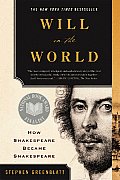
Will in the World by Stephen Greenblatt

Toward the end of Will in the World, Stephen Greenblatt relates a story about Shakespeare's dealings as a property owner. When a set of wealthy landowners threatened to enclose a large area of land, some Shakespeare's, essentially transforming common land into private property, he protested the move, as it would have staunched the income he received from the tenants. Having reached a protective agreement with the landowners, however, Shakespeare quite non-heroically dropped his protest--even though the enclosure still promised to evict and impoverish many farmers. "It is not a terrible story," Greenblatt writes, "but it is not uplifting either. It is merely and disagreeably ordinary."

Merely and disagreeable ordinary--this phrase perfectly encapsulates the problem of Greenblatt's method. That is, Shakespeare's life is not particularly thrilling. While Christopher Marlowe was being assassinated by fellow spies in faked bar fights, Shakespeare quietly spent his days turning himself into a shrewd businessman, writing two or three plays a year, and avoiding his wife and children. The details we have of his life, which are extremely few, are strikingly banal.

The result is that Greenblatt's book is composed primarily of conjecture. Shakespeare may have done or seen this, if he was in this place or did that thing, and isn't it possible that that experience is reflected, here, in Much Ado About Nothing?

Shakespeare's plays then combine, on the one hand, an overall diffidence in depicting marriages and, on the other hand, the image of a kind of nightmare in the two marriages [in Hamlet and Macbeth] they do depict with some care. It is difficult not to read his works in the context of his decision to live for most of a long marriage away from his wife. Perhaps, for whatever reason, Shakespeare feared to be taken in fully by his spouse or by anyone else; perhaps he could not let anyone so completely in; or perhaps he simply made a disastrous mistake, when he was eighteen, and had to live with the consequences as a husband and a writer... And perhaps, beyond these, he told himself, in imagining Hamlet and Macbeth, Othello and The Winter's Tale, that marital intimacy is dangerous, and the very dream is a threat.


This makes for a remarkably readable and interesting biography, but what are the chances that even the most careful reader of Shakespeare--the most aloof of all writers--can sketch the map of his interiority, as Greenblatt pretends that he can do? He reminds us over and over again that this is, at best, guesswork, but that doesn't make it any more trustworthy.

Some of the surmises here seem innocent enough--it seems probable that the mobs in Julius Caesar and Coriolanus show Shakespeare's familiarity with, and suspicion of, similar occurrences in London. Some of it seems dangerous, like the long story about the show trial of Elizabeth I's once-Jewish adviser Dr. Ruy Lopez, which suggests to Greenblatt a wariness about public anti-Semitism that informs The Merchant of Venice.

Will in the World can be compelling, and convincing, and as far as biographies of Shakespeare go, it's probably the best that we're going to get. But the method of cherry-picking passages from the plays and matching them to biographical possibilities makes me deeply uneasy, not least because it is the method that leads a whole host of otherwise reasonable people to believe that Shakespeare's plays were written by Edward de Vere, the Earl of Oxford.

It probably isn't Greenblatt's fault. It is ours, who crave to see the man "behind the plays," and who want Shakespeare to be as interesting as Marlowe or Greene or Kyd. Shakespeare's texts are so compelling, it seems inconceivable that he could be "merely and disagreeably ordinary," but that may be a fact we shall all have to accept.