Showing posts with label immigration. Show all posts

Sunday, April 2, 2023

Signs Preceding the End of the World by Yuri Herrera

We are to blame for this destruction, we who don't speak your tongue and don't know how to keep quiet either. We who didn't come by boat, who dirty up your doorsteps with our dust, who break your barbed wire. We who came to take your jobs, who dream of wiping your shit, who long to work all hour. We who fill your shiny clean streets with the smell of food, who brought you violence you'd never known, who deliver your dope, who deserve to be chained by neck and feet. We who are happy to die for you, what else could we do? We, the one who are waiting for who knows what. We, the dark, the short, the greasy, the shifty, the fat, the anemic. We the barbarians.

Makina must travel from her home in Mexico over the U.S. border to bring a message from her mother to her brother, who crossed before her. To bring it she must ingratiate herself among Mexico's criminal underground, asking favors from men with names like Mr. Aitch and Mr. Double-U and Mr. Q. They will help her make arrangements with the coyote, the man who assists crossers over the border, but of course they also want something of their own to go with her.

Why do so many cross the border? What are they looking for, and what will they do to get there? When they arrive, what happens to them? Mexican novelist Yuri Herrera's Signs Preceding the End of the World approaches these questions with the sensibility of a poet, perhaps one who has recently ingested peyote. The novel's hallucinogenic methods reflect the metaphor that lurks beneath the story: the traveler to the underworld. Makina is like Odysseus, searching in Hades for the shade who will tell him where home can be found. In the novel's opening scene, a mysterious sinkhole opens up in the ground before her, and though she's saved, we understand that her journey across the border is another descent into something strange and subterranean. And like some ancient travelers to the underworld, the greatest risk is that she won't be able to find her way back.

When Makina arrives in the U.S., she discovers that her brother has disappeared. She hears a rumor that he has entered the domestic service of a white military family; tracking down the family's son she discovers her brother himself, having taken the son's place to save him from war. He's a walking metaphor for the requirements and perils of crossing the border: he is indispensable but invisible; more chillingly, he has been transformed into someone else. He refuses to come back with her, and in the end, Makina finds herself in a strange waiting room where new names and identities are being parceled out. Will she, too, be changed by the crossing?

Like Aura Xilonen's The Gringo Champion, another--but very different--novel about migrants crossing the border, the translator must have had fun with this one. In the translator's note, Lisa Dillman discusses the neologism jarchar, a word Herrera adapts from an Arabic term for "to leave." Dillman chooses to translate the word as verse, and suddenly a whole host of new meanings open up in the novel: not just leaving, but crossing, as in transverse. But there are intimations, too, of changing, of conversion and reversion, of turning, and of course, of the poetic "verse." When briefly captured by the border police, Makina grabs a cop's notebook and writes the prose poem above, which he reads aloud. For Herrera (and Dillman), the act of crossing becomes a kind of writing, a story or poem written in deed. Can what is written be unwritten?

Tuesday, June 28, 2022

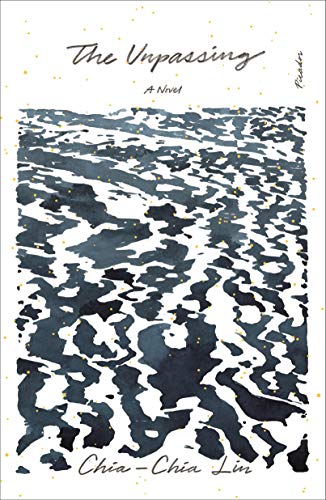
The Unpassing by Chia-Chia Lin

"You can't do anything," I said. He looked at me, surprised. I had never spoken like this to him before, but I found that it was easy. The words were already formed and only had to be released. "You sure know how to talk, I said, "about the things you'll never do." I snatched the whole cold urn. "You wanted to leave her here, didn't you?"

I held the urn with two rigid hands as we stared at each other. He did not move. I dropped the lid to the mud and pulled out the dusty bag. It was knotted but came undone easily. It was intolerable to me that she had been kept inside this plastic; I hadn't known until now. My father watched as I held the bag by a corner and, with a hard flick, dumped everything out. I didn't want her in the water, I didn't want her washed away. I wanted her mired. Stuck here. The mudflats were hungry. They would take her, and they would keep her.

Let's read some books about Alaska.

Ten-year old Gavin lives with his family in the outskirts of Anchorage. His mother and father are immigrants from Taiwan, trying to piece together a life for their four children. When Gavin comes down with a dangerous case of meningitis, he falls into a coma for a week. When he comes out of it, he discovers that he has passed the illness onto his little sister Ruby, who has not survived. Ruby's death destabilizes the family, tearing them apart: His younger brother Natty continuously searches for the sister he's been told is "lost"; his older sister Pei-Pei starts calling herself "Paige" and distancing herself from her Taiwanese family. Mom becomes more cruel, Dad more aloof; in his distraction he botches the installation of a well, which poisons another young boy, and the family finds themselves on the brink of starvation.

One thing I liked about The Unpassing is how well it evokes a sense of place. Anchorage is not Denali. Though it's ringed by mountains, the city itself and its environs lie in a lowland bowl on the precipice of huge mudflats. It feels hemmed in and on the edge of some wildness; a quality that The Unpassing uses to great effect. I had a small kick of joy out of following their journey--when they are evicted from their house--down through Portage Glacier and the Kenai Peninsula, places I remember from visiting long ago. And the particular racial and cultural dynamics of being Taiwanese in this place are subtly wrought. It's never fully stated, but Lin gives the reader the sense that the father's racial identity marks him as an outsider in the legal case against him. As the mother describes it to Gavin, walking into the courtroom she recognizes that this place is not "for them," and that by walking in they have already lost.

The Unpassing is, perhaps at its heart, a story about repression: no one in the family is able to confront what has happened to Ruby, because they don't know how to talk to each other about it. Gavin is shocked to learn from his sister that Ruby's ashes are still in the house--he didn't even know she'd been cremated--and later, he slips away with his father to scatter them on the mudflats without the mother's knowledge. The shame and anger possessed by mother and father are buried deep behind spiky, resentful dialogue that is one of the novel's greatest strengths. But there's a sense that perhaps these things are buried too deeply: Gavin struggles with his own guilt over passing the meningitis to his sister, but for a first person narrative, we get remarkably little of Gavin's feelings, which are buried as deep, if not deeper, as his mother and father's. As a result, when the guilt does emerge, it can seem narratively incongruous: Where has this been the whole time?

The Unpassing both thrives on and suffers from a kind of prose style that is associated, in my mind, with MFA programs (and the Iowa Writers' Workshop, of which Lin is an alum) specifically. The language itself is crisp, crystalline, and the detail especially sharp. But the story gets easily lost in the detail, and the larger structure of the narrative, how the pieces fit together, gets obscured. Take, for example, a scene where Gavin's mother takes them to a cheap-o department store in Anchorage to replace their clothes, where Gavin gets in a fight with his siblings. There is a great subtlety here--we come to understand mom's penny-pinching as a reaction to their poverty--but no sense of whether things are different now than they were before Ruby died, or how Gavin feels about it. And at times I yearned for a more authentic ten-year old voice, or perhaps a more developed sense that an adult Gavin is speaking back through time.

Still, I enjoyed The Unpassing. Its cryptic and subtle qualities are its most frustrating, but also its most engaging. It's also just an honest story about a side of the United States that has not been seen, which rarely or never gets told, and which it tells with faithfulness and precision.

Thursday, January 13, 2022

The God Who Sees by Karen Gonzales

It’s uncomfortable, and maybe even frightening, for many of us to consider having porous borders, especially in a time when terrorism abounds around the globe. Yet Christians are not called to value the false sense of security created by closed borders and walls. We are called to trust in God and to love our neighbors, particularly our neighbors in need. Closed borders in North America are not directed toward an existing threat of invasion by a foreign army but toward poor economic immigrants seeking opportunities and toward refugees fleeing for their very lives. Hardened borders are designed to prevent the movement of the world’s poor—a people whom God says Christians should care for and not harm.

I grew up in a small town in Indiana that was approximately half Mexican by the time I was a teenager. Many, maybe most, of the immigrants were undocumented, and talking to my friends in that group, it was always surprising, almost unbelievable, how much difference their nationality (and legal status) made in day to day life. Everything from attending school, to getting a job, to getting a driver's license was a minefield, full of mistakes waiting to explode lives if they were made.

One night, an officer followed a friend of mine, brought into the US covertly when he was only six, as he drove home from work, finally pulling him over for going too slowly. When the officer discovered he was undocumented, it set into motion a sequence of events that led to an awful choice: either go to jail, or agree to deportation with no possibility of re-entry for at least 8 years. He chose the latter, leaving behind his family, his friends, and the country he'd spent most of his life in. He was 21.

The God Who Sees is full of stories like this, both explicitly narrated and present in the statistics about deportation, immigration, racism, numbers that represent lives that all too often jerked around like marionettes because they lack a green card, or have a parent who crossed the border illegally. And, because this is a work of Christian theology and memoir, Jesus-followers, the vast majority in the US, loom large behind the facts and figures--who's making these laws, wrecking these lives, ignoring these people in favor of nationalism and fear?

I loved the structure, which alternates between theological ruminations on the stories of immigrants and outsiders in the biblical narratives--Hagar, Abraham, Ruth, Joseph-and memoir, structured around the sacraments of the Catholic church--baptism, communion, confirmation, anointing, and reconciliation. Though not Catholic herself, the sacramental structure serves a dual purpose, illustrating both the integration of the sacred into her life and providing signposts as her story of immigration--hers and her family's--unfolds. Personal growth is entwined with the complexity mutating relationships with her mother, her abuela, and God. Gonzales refuses to give easy answers or to separate the systemic oppression her family experiences from her own spiritual journey, and the result is a story of faith and change that moves holistically from numbers to names and back again. I love the title--the God who sees is the name given by Hagar, the first person in the Torah to name God--and I finished the book thinking of all the people we fail to see every day, the people we leave behind, who are not left by God.

The last 30 or so pages are something I've never seen before, a series of short vignettes enumerating ways people, Christian and not, can be involved in ending unjust treatment of immigrants, ranging from scripts for calling your reps to how-tos for getting involved with volunteering and visiting imprisoned refugees. It's a practical step I'd like to see become more commonplace in books intended to provoke a response.

Monday, August 25, 2014

The Woman Warrior by Maxine Hong Kingston

The round moon cakes and round doorways, the round tables of graduated sizes that fit one roundness inside another, round windows and rice bowls--these talismans had lost their power to warn this family of the law: a family must be whole, faithfully keeping the descent line by having sons to feed the old and the dead, who in turn look after the family.  The villagers came to show my aunt and her lover-in-hiding a broken house.  The villagers were speeding up the circling of events because she was too shortsighted to see that her infidelity had already harmed the village, that waves of consequences would return unpredictably, sometimes in disguises, as now, to hurt her.  This roundness had to be made coin-sized so that she would see its circumference: punish her at the birth of her baby.

Maxine Hong Kingston's The Woman Warrior is, like Tim O'Brien's The Things They Carried a set of interconnected stories, and also a book I'm supposed to teach in my eleventh-grade American Lit class this year.  They are similar, too, in the way that they say all plots are either "a fish out of water" or "a stranger comes to town."  That old canard is really too clever by half: whether you're the fish or the stranger depends on your perspective.  O'Brien's soldiers are all fish, in a world that they fear and cannot understand, but the characters of Kingston's memoir are strangers, grappling with the transition from China to America over many generations.

Kingston structures the stories in a way that is both chronological and relational: The first story, "No Name Woman," is about a Chinese aunt who committed suicide whom Kingston never met, the next about her mother and father, and so on until the final story, about Kingston's own experiences as a Chinese-American in California.  "No Name Woman" is the most famous, I think, because it's the only one I had read before.  It's a remarkable story, about a woman whose house is destroyed by her neighbors in a small Chinese town because she has become pregnant out of wedlock.  The baby is a product of rape, but no one knows this, and it wouldn't matter; the instability of the family and community that a fatherless child represents is, for the villagers, reason enough to enact a harsh punishment.  When the woman drowns herself and her baby, Kingston remains equivocal:

Carrying the baby to the well shows loving.  Otherwise abandon it.  Turn its face into the mud.  Mothers who love their children take them along.  It was probably a girl; there is some hope of forgiveness for boys.

What impresses me about Woman Warrior is its complexity.  We are horrified by the actions of the villagers in "No Name Woman," and Kingston doesn't ask us to excuse them, but she does ask us to understand them in a way that is difficult.  It also enables her to depict such an act of cruelty as deeply ingrained within rural Chinese culture, and at the same time write a story like "At the Western Palace," which depicts the tragic consequences when that culture is lost or abandoned.  In that story, Kingston's aunt (this time on her mother's side) comes to America after decades of separation from her husband, who immigrated long ago.  But her husband is married to another woman, and in California, the rights she would have as a "first wife" over her rival are not, cannot be honored.  There's some great humor in this story, mostly Kingston's mother's absurd encouragements to her sister--she imagines her walking in the husbands house, and declaring the children he had with his second wife to be her own, as would have been in the case, it seems in China--but the depiction of this aunt, for whom there really is no place in this new existence, is deeply sad.

About half of my students are East Asian, and most of these are Chinese-American, many from first-generation families.  I'm a little bit fearful to read this book with them--am I supposed to educate them on the finer points of Chinese culture?--but excited to see how they connect with these stories.