Showing posts with label Harlem. Show all posts

Friday, September 23, 2022

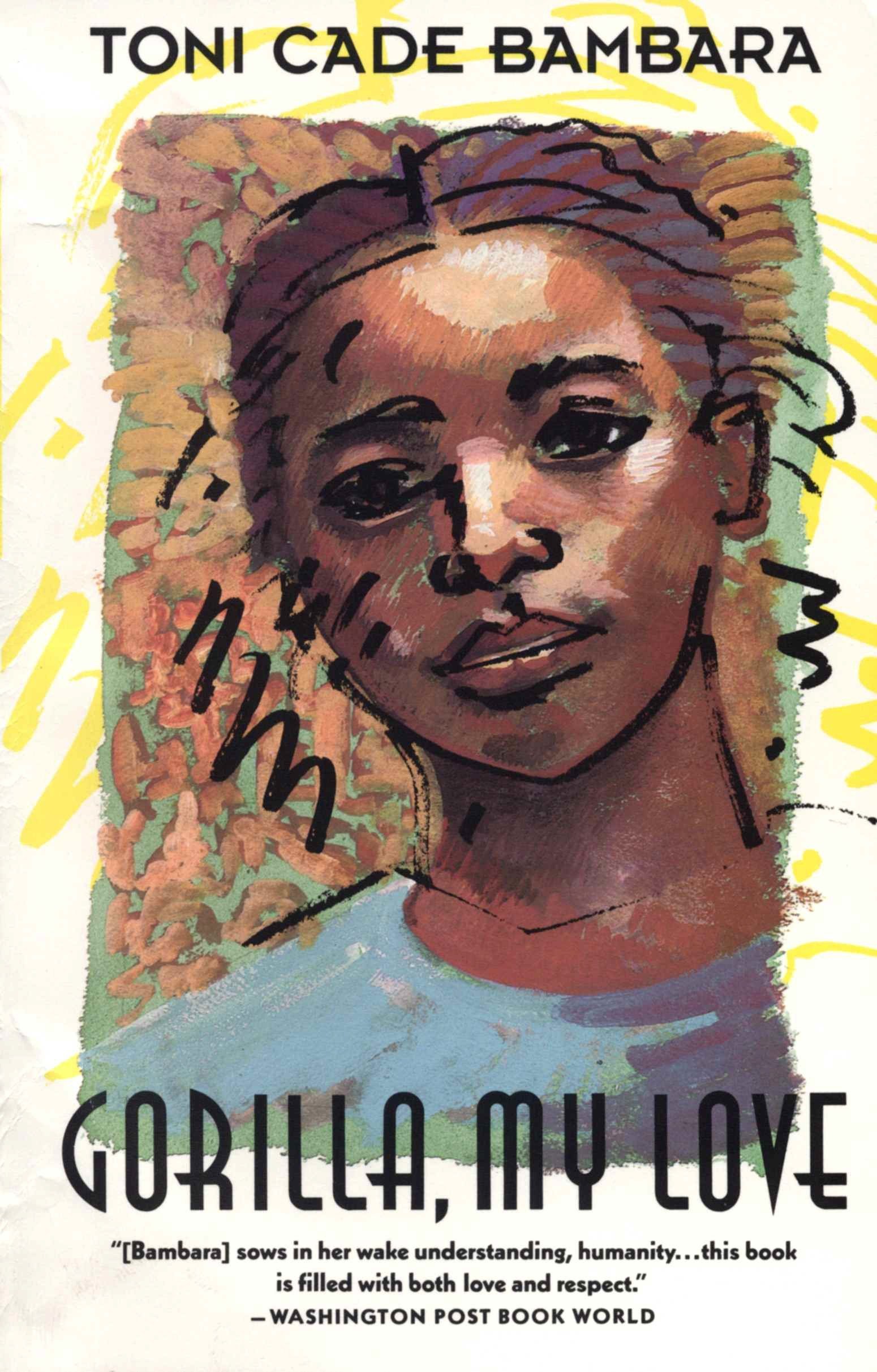
Gorilla, My Love by Toni Cade Bambara

Back in the days when everyone was old and stupid or young and foolish and me and Sugar were the only ones just right, this lady moved on our block with nappy hair and proper speech and no makeup. And quite naturally we laughed at her, laughed the way we did at the junk man who went about his business like he was some big-time president and his sorry-ass horse his secretary. And we kinda hated her too, hated the way we did the winos who cluttered up our parks and pissed on our handball walls and stank up our hallways and stairs so you couldn't halfway play hide-and-seek without a goddamn gas mask. Miss Moore was her name. The only woman on the block with no first name. And she was black as hell, cept for her feet, which were fish-white and spooky.

Toni Cade Bambara's story "The Lesson" is one of my favorites to teach. I use it in my fiction writing class to talk about voice, the particular quality of language inherent to identity and community. In "The Lesson," a girl named Sylvia is taken, along with a group of her friends, from Harlem to F. A. O. Schwarz, where the neighborhood busybody Miss Moore shows them the expensive sailboats and paperweights that rich people can buy for the cost of what their own parents make in a year. "The lesson" Miss Moore teaches is about social class, a hierarchy on which Sylvia and her friends are toward the bottom, but there is another, more implicit lesson she's teaching: that to transcend social class, one must act right, even talk right, like the college-educated Miss Moore. Sylvia feels betrayed when her friend Sugar parrots Miss Moore's words back to her: "This is not much of a democracy if you ask me." For her part, Sylvia refuses to trade in the voice of her narration, which is feisty, slangy, and recognizably black.

I find Sylvia's resolve admirable. And I think what is amazing about "The Lesson" is that it shares that resolve. Bambara mines the language of her own Harlem upbringing, and refuses to dull the edges to make it more respectable, or even publishable. When it was published in 1972, the dominant voice of the literary short story was still that of Updike and O'Hara, and though it's easier to imagine a book written in a voice like this one today, I can't think of any. "The Lesson," along with many of the other stories in Bambara's collection Gorilla, My Love, stands alone, a testament to believing in one's own voice--and the voice of one's community and place--despite the pressures of a dominant literary culture.

But as many times as I'd taught "The Lesson," I'd never read the whole collection all the way through. I was really delighted to read "Sweet Town," another masterpiece of voice, but a different voice entirely. Kit, the narrator of "Sweet Town," is one of those teenagers who uses a vocabulary beyond their capability. I know this kind of teen well. Some of them do it to impress, but many of them do it for the same reason that Kit does: because they are entranced by the world of words, and believe that elevated words can create an elevated life. But Kit, like the teenagers I know, often misuse such words, and the resulting voice is touching and comic: "And then one day, having romped my soul through the spectrum of sunny colors, I dashed up to her apartment to escape the heat and found a letter from her which eternally elated my to the heart of bursture and generally endeared her to me forever." One can easily imagine the English teacher coming along with their red pen, crossing through words like "bursture," writing question marks next to "eternally," and ripping out the heart of that fantastic sentence.

Like "The Lesson," "Sweet Town" is a story that doesn't just use voice, but is about voice. When B. J., Kit's quasi-boyfriend, tells her that he is leaving town with a friend that Kit hates, she loses control of that  voice:

I would have liked to have said, "Apollo, we are the only beautiful people in the world. And because our genes are so great, our kid can't help but burst through the skin into cosmic significance." I wanted to say, "You will bear in mind that I am great, brilliant, talented, good-looking, and am going to college at fifteen. I have the most interesting complexes ever, and despite Freud and Darwin I have made a healthy adjustment as an earthworm." But I didn't tell him this. Instead, I revealed that petty, small, mean side of me by saying "Eddie is a shithead."

Gorilla, My Love contains a small handful of such masterpieces, bristling with sharp characters, and most of all, powerful voices. In addition to "Sweet Town" and my old favorite "The Lesson," I really loved "Mississippi Ham Rider," about a black woman helping a white Alan Lomax-like record producer trying to convince aging southern bluesmen to record their music for posterity. The power of that story comes from the gray area the narrator occupies between the bluesman "Rider" and the producer, a space of identity between them that seems to expand and contract, as if to squeeze her out of it, at will. Many of the best stories are from the perspective of children, like the bitter sexual awakening of "The Basement" or the terrific title story, about a young girl dead set on making the adults of the world keep even their idlest of promises. Stories from children's perspectives are common, but I think it's rare to see a storyteller who can find the inherent nobility and dignity in childhood, especially in a way that doesn't veer into cutesiness.

The one misstep in the collection, I thought, was "The Survivor," a story about a pregnant actress, traveling to the home of her doula mother to give birth, still struggling with the car crash death of her abusive husband, who had been her director. "The Survivor" is the story most like Bambara's lovely but messy novel The Salt-Eaters, with its erratic time jumps, italicized sections, and slippages between reality and dreams. The Salt-Eaters works because it lets you jump in and ride the flow of it, but there's no space in a story like "The Survivor" to let such tricks run their course. Similar themes are explored much better in a story like "The Johnson Girls," about a large family of sisters who quibble over what exactly is owed to one of their boyfriends, and how to bring him to heel.

Gorilla, My Love convinced me that Bambara is something of an unsung master of the short story. I'd go so far as to say the stories in this collection are like an uptown version of Grace Paley's downtown masterpieces. Not everything in Gorilla, My Love stands out as strongly as "Sweet Town," "The Lesson," or "Gorilla, My Love," but even the mid-tier stories are powerful character portraits, stories that speak from a deep and authentic place.

Saturday, February 28, 2015

Mumbo Jumbo by Ishmael Reed

The foolish Wallflower Order hadn't learned a damned thing.  They thought that by fumigating the Place Congo in the 1890s when people were doing the Bamboula the Chacta the Babouille the Counjaille the Juba the Congo and the VooDoo that this would put an end to it.  That it was merely a fad.  But they did not understand that the Jes Grew epidemic was unlike physical plagues.  Actually Jes Grew was an anti-plague.  Some plagues caused the body to waste away; the Jes Grew enlivened the host.  Other plagues were accompanied by bad air (malaria).  Jes Grew victims said that the air was clear as they had ever seen it and that there was the aroma of roses and perfumes which had never before enticed their nostrils.  Some plagues arise from decomposing animals, but Jes Grew is as electric as life and is characterized by ebullience and ecstasy.  Terrible plagues were due to the wrath of God; but Jes Grew is the delight of the gods.

The back of my copy of Mumbo Jumbo cites Harold Bloom as including the novel in his "five hundred most significant books of the Western Canon."  That's hilarious, and certainly wasn't written by Ishmael Reed, who exhibits a pretty jaundiced opinion of the "Western Canon" throughout Mumbo Jumbo.  In fact, one of the most entertaining things about this novel is its gleeful iconoclasm, the way it smashes up the sacred cows of Western art, music, and religion as Eurocentric bullshit:

Outstanding in the collection is the figure of of a monkey-like Portuguese explorer, carved by an Angolan.  He is obviously juiced and is sitting on a barrel.  What side-splitting, bellyaching satriical ways these ancient craftsmen brought to their art!  The African race had quite a sense of humor.  In North America, under Christianity, many of them had been reduced to glumness, depression, surliness, cynicism, malice without artfulness, and their intellectuals, in American, only appreciated heavy, serious works.  ('Tis the cause, Desdemona.)  They'd really fallen in love with tragedy.  Their plays were about bitter, raging members of the "nuclear family," and their counterpart in art was exemplified by the contorted, grimacing, painful social-realist face... For LaBas, anyone who couldn't titter a bit was not Afro but most likely a Christian connoting blood, death, and impaled emaciated Jew in excruciation.

Mumbo Jumbo explores the common idea that the supremacy of Western Art is subconsciously a way of perpetuating racial and cultural superiority by making the subconscious conscious.  Reed imagines a world order literally protected by secret Teutonic orders like the Wallflower Order and the Knights Templar, who work to subvert black culture and protect Eurocentricism.

This world order is threatened by the appearance of the Jes Grew (as in, it "jes grew" out of nowhere), a dance craze that Reed describes alternately as a cultural movement, an infectious plague, and a mystical VooDoo force.  The secret societies work to stamp out the Jes Grew but are opposed by a ragtag group of black Harlemites including the proprietor of the VooDoo Mumbo Jumbo Kathedral, PaPa LaBas and his friends Berbelang and Black Herman, and even, quite hilariously, the secretly part-black president of the United States, Warren Harding.

Reed comes awfully close to suggesting that whites can't be trusted.  All of them in this novel are villainous or treacherous or both, and they have names like Biff Musclewhite and Thor Wintergreen and Hinkle Von Vampton.  Their machinations are fun but fairly incomprehensible--among other things, they try to recruit a "talking android" who will discredit black culture from the inside and search for a secret book which gives the Jes Grew its power, or something.  A military revolution in Haiti is somehow connected.  It's not always quite clear whether Reed recognizes how shaggy and silly the whole plot is, but the book elides the distinction between the silly and the serious.  After all, you wouldn't want to be the kind of reader who couldn't "titter a bit."

Tuesday, April 22, 2008

Live and Let Die by Ian Fleming

Last year my friend and fellow history grad student wrote a paper about James Bond. I think it was for a class that dealt with British Empire, but I'm not sure. She read On Her Majesty's Secret Service because it was the only book in which Bond was married, From Russia with Love because it dealt with the Middle East, and Live and Let Die because it focused on Harlem and Jamaica. She concluded that beyond the obvious chauvinism, these books often had an undercurrent of xenophobia and homophobia...and even ophidiophobia. Actually, that last one may have been from her paper on Indiana Jones. Apparently she has a thing for adventurous men.

Last year I read Casino Royale, the first of the Bond series, and completely agreed with Maribeth about Bond's chauvinistic tendencies. Casino Royale was alright, nothing great. Live and Let Die, the second of the series, was much better in plot and style, and the chauvinism was not so abrasive. However, it appears that Fleming simply traded in one ism for another. Bond is not overtly racist in the book, but some of the descriptions and subtleties of language make it easy to level the charge at Fleming. At best, he was woefully ignorant about issues of race.

Let me try to quickly summarize the plot...
The British government suspects that someone has found the treasure of Bloody Morgan, a 17th Century pirate whose actions were sanctioned by the Crown because he mostly attached Spanish ships off the coast of Jamaica. A few months before Bond became involved, gold coins started turning up in Harlem. M tells Bond that they are fairly certain a mysterious Mr Big is involved with the smuggling of these coins. Bond is assigned to work with the CIA and the FBI on the case, beginning in Harlem and ending in Jamaica. His goal is to find and recover the treasure, which Britain sees as rightly theirs.

The way that Fleming depicts Harlem is amusing. It's as if he believed the black community to be completely monolithic. They all are under the thumb of Mr Big. Everyone does his bidding, above all else. And the reason for this: they think he is the zombie of Baron Samedi the Chief of the Legion of the Dead, according to Jamaican island lore. The incredibly misguided assumption is that most blacks who live in Harlem are from Jamaica, or at least believe in its spiritual practices. Of course, neither were true. Fleming's descriptions often evoke exoticism and notions of otherness. He refers to "the secret voodoo language" known only by these people and the "sixth sense of fish, of birds, of negroes." Issues such as these fall squarely into the "uninformed" category. But some of Fleming's other statements cannot be judged so lightly. Describing a bar in Harlem, he writes, "It was hot and the air was thick with smoke and the sweet, feral smell of two hundred negro bodies." Fleming likes to put the word "sweet" in unsavory situations. In Casino Royale, he wrote, "And now [Bond] knew that she was profoundly, excitingly sensual, but that the conquest of her body, because of the central privacy in her, would each time have the sweet tang of rape." At a later point in Live and Let Die, Fleming refers to some black villains as "clumsy black apes."

Besides what are very likely some of Fleming's personal shortcomings showing through in his work, his writing is fairly good. It improved dramatically from Casino Royale. And the Bond of the books is a much more interesting character than the Bond of the big screen. He has doubts, fears, pains, and experiences heartbreak. He is not simply some flippant cad. One passage that I thought was particularly good was the thoughts of Bond as he flew in a small plane to Jamaica. He was realizing just how fragile life is, how much his existence hinges on others. Bond thinks,

You are linked to the ground mechanic's careless fingers in Nassau just as you are linked to the weak head of the little man in the family saloon who mistakes the red light for the green and meets you head-on, for the first and last time, as you are motoring quietly home from some private sin. There's nothing to do about it. You start to die the moment you are born. The whole of life is cutting through the pack with death. So take it easy. Light a cigarette and be grateful you are still alive as you suck the smoke deep into your lungs. Your stars have already let you come quite a long way since you left your mother's womb and whimpered at the cold air of the world. Perhaps they'll even let you get to Jamaica tonight.

Despite some of its problems, Live and Let Die can be appreciated for its action and suspense. Fleming does a great job with both.

_______________________________

As a sidenote, this book is leaps and bounds better than the movie (surprise, surprise). Live and Let Die was the first Bond movie starring Roger Moore, who ushered in the stupid, campy era of Bond. The movie fluctuates between laughably bad and just plain bad. There are only two good things about it: Jane Seymour and the Paul McCartney & Wings song. Best Bond song ever.