Tuesday, July 10, 2007

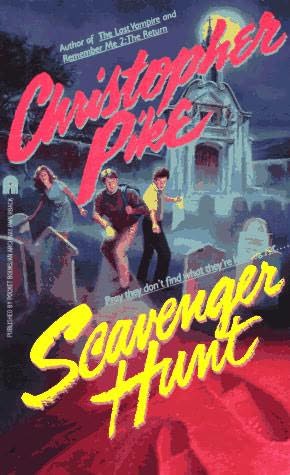
Scavenger Hunt by Christopher Pike

Scavenger Hunt is, at its core, a tale about the human condition. As the characters in the novel battle their own demons, we are encouraged to look inside ourselves identify our own, and then to vicariously face them along with our heroes in the book. As Carl slowly drifts away from his never-to-requited feelings for Cessy, Tracie's character arc is a direct counterpoint, following her character as a series of horrific misadventures slowly pull them together. Rick, a promising young child with a disease that is slowly killing him, nevertheless represents the eventual triumph of the human condition, recalling Stephen, the first Christian martyr in his unflinching and hopeful outlook even as * spoiler * his flesh and bones are dissolved in a pool of acid. * end spoiler *


Anyway, I read this book in about an hour and can't remember hardly anything about it. It's great. Seek it out.

Monday, July 9, 2007

Kaffir Boy by Mark Mathabane

Kaffir is a derogatory term in South Africa roughly equivalent to... you know. I mean you know, lots of black rappers use it in songs to refer somewhat affectionately to other black people. Shit, here. But that's how Mark Mathabane grew up, as a "Kaffir" Johannesburg's biggest slum, Alexandra. His childhood, clothed in rags and terrorized by constant police raids, sounds more like something out of Elie Wiesel's memoirs than Harriet Tubman's. Maybe I can't make a comparison like that, but either way Apartheid was more appalling than I thought.

Obviously he makes it out. I don't think I'm giving away anything there. If you couldn't figure that out, this book might be a little advanced for you. But the way he gets out was surprising. His self taught English helped, but that wasn't the reason he made it, nor his perfect school record. It was Aurthur Ashe's footsteps that led him to America.

The ending is abrupt and somewhat unsatisfying, but Mathabane's story of growing up flushes out the racial tensions that make the book worth reading. He shows how white Afrikaners feared the natives, how blacks from the city were different than those in the tribal reserves, why some blacks hated other blacks, and pretty much every other dynamic you can think of. If you know nothing about black South Africa this is a perfect starting point.

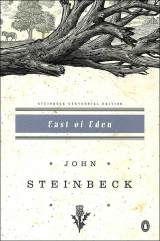
East of Eden by John Steinbeck

"When I said Cathy was a monster, it seemed to me that it was so. Now, I have bent close with a glass over the small print of her and reread the footnotes, and I wonder if it was true. The trouble is that since we cannot not know what she wanted, we will never know whether or not she got it.If ran than running toward something, she ran away from something, we cannot tell whether or not she escaped."

East of Eden is the story of two families in the Salinas Valley, the Hamiltons and the Trasks, and their seemingly inevitable reenactment of the biblical story of Cain and Abel. Steinbeck is perhaps best known for the ultra-realism of The Grapes of Wrath, which makes East of Eden, with its grand themes and supernatural allusions, a tough read for some fans (Just check the Amazon reviews for proof). Still, although I loved Grapes and consider that it is probably an objectively better book, East of Eden's mythical scope and archtypical characters drew me in even more.


The first half of the book tells the story of Adam and Charles Trask, and the second tells the story of Cal and Aron, their sons. There's a woman of course, in the form of Cathy Ames, one of the most vile characters (or creatures, as Steinbeck refers to her) in all of literature. Still, even in her, Steinbeck manages to inject the tiniest elements of humanity, although it's just enough to make her cruelty seem even more loathsome.


The theme of the story hinges on a difficult-to-translate word in Gensis 4, where the story of Cain and Abel is found in the Bible, a word that is determined to mean “thou mayest,” and the entire book is about choices. In spite of their circumstances, everyone in East of Eden decides their own fate by the choices they make, whether for good or for evil. It's a point examined again and again, sometimes subtly, as in the main storyline, and sometimes a bit ham-fistedly, as in the monologues by Adam's manservant, the somewhat stereotypical Chinaman Lee. The occasional didacticism is the main downfall of East of Eden, although to me, it just added to the mythical nature of the whole story. And, that's all I have to say about that.


Oh, one more thing. If you've seen the movie, you should be aware that it only covers roughly a third of the book. The part it leaves out would never make it into a PG rated film.

Lolita by Vladimir Nabokov

Lolita, light of my life, fire of my loins. My sin, my soul. Lo-lee-ta: the tip of the tongue taking a trip of three steps down the palate to tap, at three, on the teeth. Lo. Lee. Ta.

She was Lo, plain Lo, in the morning, standing four feet ten in one sock. She was Lola in slacks. She was Dolly at school. She was Dolores on the dotted line. But in my arms she was always Lolita.


I remember listening to the song "Westfall" by Okkervil River once in the car with my mother, a song about a teenage boy who murders a pair of girls. My mother's response was, "Ew, who would want to listen to a song about something like that?," and I expect a lot of people unfamiliar with the reputation (or familiar with it) of Lolita have a similar reaction: Who would want to read a book about a child molester, much less one written in the first person? But that, I think, is the magic of Lolita. There is a great movie The Woodsman, in which Kevin Bacon plays a child molester released after his prison term, struggling to survive though the world is unsurprisingly hostile to him. That movie accomplished the difficult task of making the viewer sympathize with a child molester, Lolita goes one step further and asks the reader to empathize with a child molester, to occupy his own frame of mind and try to understand him. It's vile and disgusting to be sure, and not exactly appealing, but satisfying in the fact that it gives the reader a great insight into sin, madness, and evil.

I could say a lot about Lolita, but since we're all going to read it, the only other thing I'll say is that as far as judging the book simply by its prose, Nabokov is one of the best writers I've ever read, I think, and English not even his first (or second) language. It's been said that he's one of the best writers of the 20th Century in both English and Russian, and that's quite impressive.

Finally, an interesting thought from Nabokov's afterword:

[The publishing companies'] refusal to buy the book was based not on my treatment of the theme but on the theme itself, for there are at least three themes which are utterly taboo as far as most American publishers are concerned. The two others are: a Negro-White marriage which is a complete and glorious success resulting in lots of children and granchildren; and the total atheist who lives a happy and useful life, and dies in his sleep at the age of 106.

Sunday, July 8, 2007

War and Peace, by Leo Tolstoy

So, I've been stuck without writing a review for quite a while because I was intimidated by the prospect of reviewing what is quite possibly the most notoriously long novel ever written, War and Peace.


According to Tolstoy, War and Peace isn't actually a novel. I'm not sure exactly what his criteria was, and I can't say that I entirely agree with him. In my estimation, War and Peace is definitely a novel, albiet an epic, sprawling one with a cast that numbers in the hundreds. Supposedly, there are over 200 significant characters in the novel, including Czar Alexander and Napoleon himself. The estimate isn't difficult to believe, considering that, in one of the appendices, all characters with lengthy story arcs are listed, and that list includes over 70. When you lump in the supporting characters, War and Peace probably has more characters in it than this blog has readers.


War and Peace may be the best known book that no one knows anything about. Except for Woody Allen's summation (“I sped read War and peace in 15 minutes. It involves Russia”), I knew nothing about it either. After actually reading it though, it's easy to see why no one knows much about it. Whereas most books can be succintly summarized in a few words, War and Peace defies such capsulization. Boiling a book with no main character, no main plotline, and numerous philosophical digressions down to a paragraph isn't easy, but here goes. War and Peace is about Napoleon's failed attempt to conquer Russia, and how the war affects individuals in the nation, from nobles, to soldiers, to servants. As a description, the above is accurate, but it in no way captures the scope of the novel.


The stories of the characters in the book, from the fickle Natasha to the haughty Prince Andrey to the compassionate but searching Pierre to the meglomaniacal Napoleon, all intertwine in unexpected and sometimes inconsequential ways. Characters will appear in scenes together who do not know each other. Sometimes the actions of one character will affect another one without his knowing. Much like the real world, the lives of the characters are influenced by people they will never even know. Think Short Cuts with a larger cast, and you'll have an idea.


The writing itself surprised me. In a book that's over 1400 pages long, you'd expect that the writing would be padded with page-long descriptions of trees or long-winded statements about the minutae of a meal, but War and Peace never falls into this trap. The writing (and the translation) is sometimes beautifully rendered, but it rarely slips into the sort of self-indulgent tangents that pad out works by authors of modern bricks, like Tom Clancy and Stephen King. Virtually everything serves a purpose, and it makes War and Peace move along at a much faster clip than you'd expect.


All said, it's certainly one of the best novels I've ever read. If I had to make a complaint, it would be that the last 50 pages are Tolstoy's thoughts on the war, and, while they're interesting, they would have been better served as an appendix. After reading 1350 pages about these people, having the last 50 pages talking about military theory is a bit of an anticlimax. Still, it does litle to diminish the power of the book, and it was well worth the time it took to read it.

Good Omens by Neil Gaiman and Terry Pratchett

So I've been on vacation the last two weeks, or "vacay" as the kids say. I've got four more books under my belt and four more reviews to write. This one's my second--actually, the only other--birthday present (thanks, Kelly).

Good Omens is older than I thought it was at first. I read Neil Gaiman's Anansi Boys, which was published in 2005, and really enjoyed it, but this was a lot different. He wrote the introduction to The Ultimate Hitchhiker's Guide to the Galaxy, and made it very clear that he's got a thing for Douglas Adams. Reading Good Omens, you can kind of tell. A lot of it feels like it's in the same style. The writing is clever, but the plot feels a little bit haphazard, like all the loose ends were tied together at the last minute, no matter how much of a stretch they needed.

I read somewhere that it was written as a loose parody on the movie The Omen, but, not having seen the movie, I felt like it was more of a spoof on the apocalypse in general. Events are set in motion to usher in the reign of the Antichrist and the great war between Heaven and Hell, but problems keep popping up. What really sets things in motion is that someone (a member of the Chattering Order of Satanic nuns) misplaces the baby Antichrist, who ends up growing into a normal boy with some serious persuasive abilities. The two characters who I thought would be most important actually ended up fading to the background for the most part by about the middle of the book, so it was hard to feel much interest towards them when they popped back up at the end. The demon Crowley and the angel Aziraphale, having been on Earth since it began, decide that they kind of like it here, and do what they can do thwart the oncoming end of said planet. A lot of other subplots show up for a few pages, then disappear, then take on more importance towards the end.

It was a fun read, but I had the same problems with it that I did with The Hitchhiker's Guide to the Galaxy series. A lot of it seem kind of haphazard, characters and plots added for no apparent reason, just kind of made the book seem to busy. However, there are two covers you can choose from, so it's got that going for it:

Thursday, July 5, 2007

A Prayer for Owen Meany by John Irving

This book was recommended to me by my boss, after I described Catcher in the Rye to her. Since she had never read Catcher, I am not sure what made her think that I would like this book. In actuality the two books do not have much in common, except that they are both written like a memoir or diary — essentially the main character is telling you a story about his past. I guess the books do have two things in common: I thoroughly enjoyed both of them, and each author created a character that was completely unforgettable. Moral of the story, my boss was right. That must be why she gets paid the big bucks.

Much like Salinger’s Holden Caulfield, Owen Meany is forever burned into my brain, maybe even to a greater degree than Caulfield. Although the story is told through the eyes of Johnny Wheelwright, Owen Meany, who is friends with Wheelwright, is truly the main character of the book. He is hilariously funny — intentionally and unintentionally — unbelievably smart, but all the while mysterious. In truth Owen Meany is full of mystery. Why is he less than five feet tall as a senior in high school? Why does his voice always sound as if he is screaming his words? What happened at his Catholic church that caused him to hate them so? What exactly does he know about the future? Maybe more importantly: What does he think he knows about the future?

This is the first book by John Irving that I have read. I have been told by many that it is his best. Irving does an excellent job of creating characters and situations that linger with you long after you have closed the book. (I just closed the book about twelve hours ago, but I thought that phrase sounded nice.) He creates a realistic world, one that seems familiar. But there is something slightly off about this place, namely Owen Meany. I never knew anyone like Owen Meany growing up. I hesitate to say that I wish I did.

This book has instantly become one of my favorites, easily in my top five. I highly recommend it.

Check out Brent’s review of this book.

Wednesday, July 4, 2007

The Two Towers by JRR Tolkien

Here it is, as promised, the second book in the Lord of the Rings series. At the end of the last book we left just as Frodo and Sam decided to spare the other travelers in the company and go to Mordor alone, and so this book is divided in half: the first part deals with Aragorn, Gimli, Legolas, Merry, and Pippin after Sam and Frodo leave, and the second part deals with Sam and Frodo on the road to Mordor. Merry and Pippin are kidnapped by Orcs and get mixed up with some tree-people called Ents. Aragorn, Gimli, and Legolas search for the abducted hobbits, meet Gandalf (who has come back to life and is more powerful), and then the whole troop gets involved with the defense of the Hornburg, the fortress of Rohan, against the army of Isengard, which is ruled by the traitor wizard Saruman, and then take Isengard itself with the help of the Ents. As for Sam and Frodo, they meet Gollum who agrees to guide them to Mordor, but is very sneaky, and along the way they meet Faramir, Boromir's nobler brother, and then fight a giant spider. Whew.

I'm not sure what to say about this one--I'd say it's about at the same level as the first one, but the characters are a little more fleshed out. The bits with Gollum are pretty interesting, but the movies are so similar I find that I already know a lot of what's going to happen before it happens. However, I don't remember much about the third movie, so maybe the third book will be new and interesting for me.

Tuesday, July 3, 2007

Harry Potter and the Order of the Phoenix by J.K. Rowling

This time around is a special review, per request of Carlton. Because it in its very nature is one giant spoiler, the text is hidden. You can view it by clicking on the title of this post.


GOOD:
Harry Potter
Ron Weasley
Hermione Granger
Headmaster Albus Dumbledore
Professor Minerva McGonagall
Rubeus Hagrid
The Weasley Family (-1)
The Members of the D. A. (-1)
Remus Lupin
Alastor "Mad-Eye" Moody
Nymphadora Tonks
Various other members of the Order

BAD:
Professor Dolores Umbridge
The Minister of Magic, Cornelius Fudge, and many of his Ministry supporters (not that they're Dark; it's just that they have a grand time making Hogwarts a terrible place and Harry miserable)
Lord Voldemort
Peter Pettigrew
The growing list of Death Eaters
The Black Family, except Sirius
Percy Weasley
Marietta Edgecombe of the D. A.

DEAD:
Sirius Black

AS YET UNKNOWN:
Severus Snape

Sunday, July 1, 2007

A Modest Proposal

Here's an idea: Every now and then, we could all read the same book for shits and giggles. Then we could have an open thread to discuss it, like a real book club or some shit. I thought we could all start with Lolita, since a number of Fifty Bookers have expressed desire in reading that. Plus, you know--pedophilia.

What do you think?