Showing posts with label Will Cather. Show all posts

Saturday, April 30, 2022

One of Ours by Willa Cather

When Ernest left, Claude walked as far as the Yoeders' place with him, and came back across the snow-drifted fields, under the frosty brilliance of the winter stars. As he looked up at them, he felt more than ever that they must have something to do with the fate of nations, and with the incomprehensible things that were happening in the world. In the ordered universe there must be some mind that read the riddle of this one unhappy planet, that knew what was forming in the dark eclipse of this hour. A question hung in the air; over all this quiet land about him, over him, over his mother, even. He was afraid for his country, as he had been that night on the State House steps in Denver, when this war had been undreamed of, hidden in the womb of time.

Claude Wheeler is a desperate man. He takes over his father's Nebraska farm, but day-to-day existence seems intolerable to him. He's an idealist, but no ideal seems worth his devotion; he wants badly to admire someone, but the grand scope of the Nebraska plains no longer seems to admit any real greatness. He thinks momentarily that he has found a purpose in life by marrying his sweetheart Enid, but her kind of idealism doesn't match his own. She leaves him at home while she goes to temperance marches; eventually, after several bitter disputes, she leaves him to go take care of her missionary sister in China, an environment for which she has been training all her life. Only when the United States enters World War I does Claude find a stage commensurate with the moral and aesthetic greatness he desires, and he becomes a lieutenant on the French front.

This is the, what--fifth?--book of Cather's I've read. For the first time I think I'm coming to understand that Cather is a deeply conservative writer, perhaps the greatest conservative writer that the United States has ever produced. In The Death of the Archbishop, it's the bolstering of the national mythmaking of the frontier--for example, the whitewashing of an anti-indigenous marauder like Kit Carson. In A Lost Lady, it's the inherently conservative sense of a despoiled golden age, and the diminished state of modern life. Those elements are here, too, but alongside the glorification of war as a way of self-actualization:

The sound of the guns had from the first been pleasant to him, had given him a feeling of confidence and safety; tonight he knew why. What they said was, that men could still die for an idea; and would burn all they had made to keep their dreams. He knew the future of the world was safe; the careful planners would never be able to put it into a strait-jacket,--cunning and prudence would never have it to themselves.

It's almost stunning to read the phrase "men could still die for an idea" and realize it's meant to be a good thing! I suspect that World War II supplanted World War I in our public memory, and allowed the notion that World War I was largely a bloody and pointless waste to find purchase. But of course Cather is writing in 1922, well before World War II and when World War I was simply known as "The Great War," and so the scale of the war becomes a magnet for those conservative ideals. Claude, living after the age of the great frontier, inherits a West full of bankers and clerks; the European front becomes for him a new frontier, on which he can becomes his best self, a leader of men and a self-sacrificer. When--spoiler alert--Claude is killed in the trenches at the novel's end, while leading his men in a desperate and doomed hold on an important position, we are asked to read it not as a waste of a life that might have blossomed in other ways, but as the proper culmination of a life that has finally found a reason for being.

All this is to say: the ethics of this book are kind of fucked up? And maybe the ethics all of Cather's books? But she's such a great writer that it's easy to forget all of that, and the prose so pointedly blonde that when she turns out one of her evocative phrases ("this war had been undreamed of, hidden in the womb of time") it's enough to take your breath away. One of Ours proves that Cather is as good at describing the French countryside as she is the Nebraska plains. One of the most subtly powerful moments comes when the Nebraska soldiers, riding in a train across the north of France, spot the familiar cottonwoods that dot the riversides of their farmland homes, which allows them both to see a new value in those things they have taken for granted, and to cement a kind of kinship with the foreign world they have been enlisted, like a noble dream, to protect.

Saturday, July 24, 2021

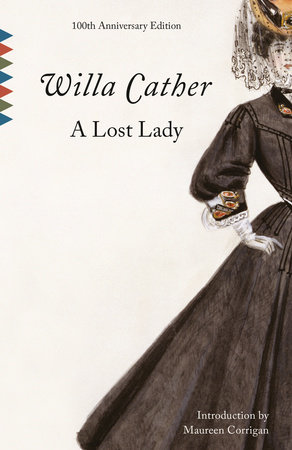
A Lost Lady by Willa Cather

Long, long afterward, when Niel did not know whether Mrs. Forrester were living or dead, if her image flashed into his mind, it came with a brightness of dark eyes, her pale triangular cheeks with long earrings, and her many-coloured laugh. When he was dull, dull and tired of everything, he used to think that if he could hear that long-lost lady laugh again, he could be gay.

Niel is a poor boy, a homesteader's son, when he becomes enchanted with the wife of the railroad magnate Captain Forrester. Beautiful, elegant, educated--and of course, rich--Mrs. Forrester becomes an embodiment of all that is sweet and good about the Nebraska outpost of Sweet Water they both call home. Over years, he becomes more and more attached to the Forresters, lingering behind when his own father gives up on his dreams of farming to study law with the Forresters' patronage. But slowly, Niel's ardor for Ms. Forrester becomes disenchanted, as when, having come from the pond with freshly picked prairie flowers, he hears the caddish Frank Ellinger inside Mrs. Forrester's room. He deduces--correctly--that the two are having an affair, and the realization shatters his beliefs: "This day saw the end of that admiration and loyalty that had been like a bloom on his existence. He could never recapture it. It was gone, like the morning freshness of the flowers."

Time is unkind to the Forresters. Captain Forrester is bankrupted by a failing bank, though we learn that his bankruptcy is partially attributed to the fact that he, in his largesse, backed the many small investors with his own money, essentially giving up his own riches so that hundreds would survive. He suffers a series of strokes, leaving Mrs. Forrester to become his caretaker. Money dwindles, and so does their stature, until Mrs. Forrester is compelled to seek investments with shady criminals without her husband's knowledge. The Forresters--both of them--are a representation of the Great West, settled by men of genius and daring, but which in later generations has fallen prey to vicious speculators:

"Because," he roused himself from his abstraction and looked about the company, "because a thing that is dreamed of in the way I mean, is already an accomplished fact. All our great West has been developed from such dreams; the homesteader's and the prospector's and the contractor's. We dreamed the railroads across the mountains, just as I dreamed my place on the Sweet Water. All these things will be everyday facts to the coming generation, but to us--" Captain Forrester ended with a sort of grunt. Something forbidding had come into his voice, the lonely, defiant note that is so often heard in the voices of old Indians.

This is, in all fairness to wonderful Willa, bullshit. The original homesteaders and railroad-builders of the American West might have had a kind of bravery their successors didn't, but it's not hard to see that Cather is engaged in a kind of active myth-making that papers over the atrocities westward expansion required. Note the subtle association of Captain Forrester with the "old Indians" who no longer recognize their homelands, which steps quietly over the question of where the Indians went, who sent them there, and how the railroads that Forrester himself helped to build were involved. Cather's attempts to taxonomize the different generations of pioneers certainly obscures how the covered wagons opened up the trails that became the railroads, and how the railroads brought the prospectors in. On the other hand, there's no shortage of writers who engage in the mythmaking of America, and few of them are as persuasive or skillful as Cather is. 

Into the vacuum left by the noble pioneers like Captain Forrester rush lawyers like Ivy Peters, the novel's villain. When Niel and Ivy are boys, Ivy shocks Niel by--in a moment as viscerally horrible as anything I have ever read--catching a woodpecker and gouging its eyes out, laughing as it flaps helplessly in painful darkness. The new Nebraska suits Ivy, and he becomes rich, even buying much of the Forresters' land. He turns the beautiful pond into a wheatfield, not merely for the profit, but because it represents something beautiful over which he now has power, and wants to eradicate. Ivy is one of those "who had never dared anything, never risked anything. They would drink up the mirage, dispel the morning freshness, root out the great brooding spirit of freedom, the generous, easy life of the great land-holders. The space, the colour, the princely carelessness of the pioneer they would destroy and cut up into profitable bits, as the match factory splinters the primeval forest." Tragically, it's Ivy to whom Mrs. Forrester turns with her want of money, further disenchanting poor Niel.

It's hard to love A Lost Lady as one loves O Pioneers! or My Antonia. For one, it's focused on the downfall of the very rich, rather than the striving of the very poor. Yet, those books are made for love and admiration; this one is designed to produce mostly revulsion. Thinking back upon those pioneer novels makes me more sympathetic, actually, to A Lost Lady, which wants me to believe that something noble that was born out in the West has been irrevocably lost.