And beneath Cornwall, beyond and beneath this whole realm of England,
beneath the sodden marches of Wales and the rough territory of the Scots
border, there is another landscape; there is a buried empire, where he fears
his commissioners cannot reach. Who will swear the hobs and bogarts who
lie in the hedges and in hollow trees, and the wild men who hide in the
woods? Who will swear the saints in their niches, and the spirits that
cluster at holy wells rustling like fallen leaves, and the miscarried infants
dug into unconsecrated ground: all those unseen dead who hover in winter around
forges and village hearths, trying to warm their bare bones? For they too
are his countrymen: the generations of the uncounted dead, breathing through
the living, stealing their light from them, the bloodless ghosts of lord and
knave, nun and whore, the ghosts of priest and friar who feed on living
England, and suck the substance from the future.
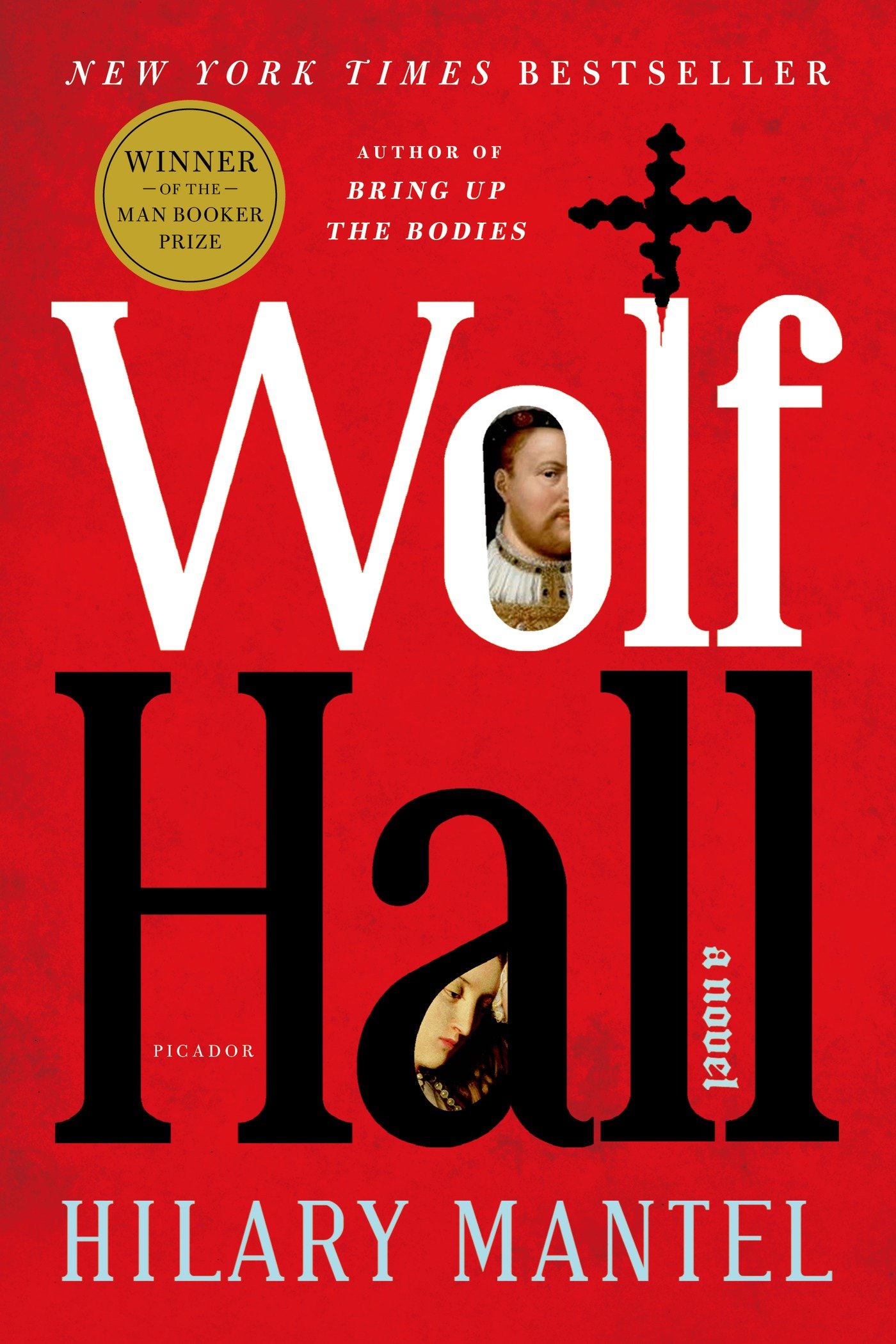
In Ford Madox Ford's The Fifth Queen, Thomas Cromwell, Henry VIII's
chief advisor, is a shrewd, conniving man who works tirelessly to discredit and
destroy Catholics in England. In Hilary
Mantel’s Wolf Hall, Cromwell is
equally shrewd and cunning, but with a golden heart to boot. Ford’s Cromwell is a self-serving Machiavel;
Mantel’s grieves for his dead wife and children, serves his king out of loyalty
and perhaps love, and feels remorse for Thomas More’s public execution.
Unfortunately, Mantel’s Cromwell is also pretty dull. She works hard to rehabilitate his image, but
why? Why, for instance, does Mantel feel
the need to provide for Cromwell no fewer than four different “son” characters
to act out his fatherly wisdom on? Why
do we need to know that he had an abusive father? Ford’s vision of Cromwell makes sense in
light of his Catholic dogmatism, but what is it that Mantel wants to say about
the Reformation, or God, or human beings?
Maybe there are answers to these questions, but the book is such a
muddle that it hardly seems worth trying to pry them out. (The passage I quoted above is, I think, one
really nice exception to that muddle-ness.)
Part of what makes Wolf Hall such
a difficult experience is its insistence on historical completeness. The bare bones of Cromwell’s story are pretty
fascinating: His intimacy with his predecessor, Cardinal Wolsey, hounded out of
office by Henry for failure to procure a divorce from Catherine of Aragon. His role in the break from Rome and the
establishment of Anne Boleyn as queen.
His struggle with More over the Oath of Succession, and the hand he has
in his execution. But these moments get
lost in a torrent of historical minutiae and a superflux of historical
characters. The cast is so enormous that
Mantel provides a reference table in the front in case you forget who is Thomas
Wolsey and who is Thomas Wriothesley and who is Thomas Audley. (Also, cracking jokes about how the world
seems to be made up of people named Thomas doesn’t make it any clearer.) I understand the rationale behind being
faithful to history, but this is a novel, and not a textbook; so many of these
people occupy such similar niches that deciphering the plot can be
maddening. Mantel’s writing is
accomplished, but trying to differentiate all these characters through voice
and description is a task only Shakespeare or Dickens could tackle.
So there’s six hundred pages of that, and then you realize: There are two sequels. This story’s only a third of the way
done! Who, outside of the most devoted
early modernist, has the energy to pick up the next novel, Bringing Up the Bodies, after making it through Wolf Hall?
Not I. Which is a shame,
because like a lot of people, I think the story of Henry VIII’s life is fascinating. Maybe I’ll just start watching The Tudors instead.
Sunday, November 17, 2013
Saturday, November 16, 2013
The Letters of Abelard and Heloise
Heloise went on to the risks I should run in bringing her back, and argued that the name of friend [amica] instead of wife would be dearer to her and more honourable for me--only love freely given should keep me for her, not the constriction of a marriage tie, and if we had to be parted for a time, we should find the joy of being together all the sweeter the rarer our meetings were. But at last she saw that her attempts to persuade or dissuade me were making no impression on my foolish obstinacy, and she could not bear to offend me; so amidst deep sighs and tears she ended in these words: 'We shall both be destroyed. All that is left us is suffering as great as our love has been.' In this, as the whole world knows, she showed herself a true prophet.
It used to be that Abelard and Heloise were as famous as Romeo and Juliet as paragons of doomed love. I guess that we prefer our love stories to be secular ones these days, but that's a shame, because the story of these two is so shocking and heartbreaking that it's hard to believe that it is true, and that we are fortunate enough to have these letters that passed between them.
Abelard begins by recounting the story of his life in a document called the Historia Calamitatum: The History of My Calamities. He tells of how he was once a famous philosopher and logician, renowned but arrogant. He carries on an affair with a young girl named Heloise, who became pregnant. They marry in secret, and he hides her away in a convent, but her family, incensed at the scandal, breaks into his room late one night and castrates him. Humiliated and disgraced, his disfigurement causes him to devote his life to Christ, and he becomes a monk.
Heloise, now a nun and a renowned writer in her own right, reads the Historia Calamitatum and writes a letter to her estranged husband, whom she has not seen in years. What follows is a series of letters between the two, reflecting on what they have lost, each trying--and often, it seems, failing--to find solace in their religious communities and duties. Heloise's letters are amazingly raw, and give a portrait of a woman still heartbroken over the loss of Abelard:
Years later, Heloise confesses that she still yearns for Abelard sexually, that she cannot repent of their actions because she still wants to possess him in a way that is no longer physically possible:
In turn, Abelard tries to make Heloise see their sufferings as a gift. He has come to see his disfigurement as a blessing:
It's startlingly strange to be able to pry into the intimate lives of two people who lived 900 years ago and see how profound their suffering is. The later letters are considerably duller, as they concern Abelard's prescription of a rule for nuns (like the Benedictine rule that governs monks) at Heloise's request, but it is certainly more interesting with the subtext of their long and bitter history.
Abelard died first, and legend has it that when Heloise died, they opened up his tomb so that they could place her body in it, and his skeleton reached out and embraced her. Your move, Shakespeare.
It used to be that Abelard and Heloise were as famous as Romeo and Juliet as paragons of doomed love. I guess that we prefer our love stories to be secular ones these days, but that's a shame, because the story of these two is so shocking and heartbreaking that it's hard to believe that it is true, and that we are fortunate enough to have these letters that passed between them.
Abelard begins by recounting the story of his life in a document called the Historia Calamitatum: The History of My Calamities. He tells of how he was once a famous philosopher and logician, renowned but arrogant. He carries on an affair with a young girl named Heloise, who became pregnant. They marry in secret, and he hides her away in a convent, but her family, incensed at the scandal, breaks into his room late one night and castrates him. Humiliated and disgraced, his disfigurement causes him to devote his life to Christ, and he becomes a monk.
Heloise, now a nun and a renowned writer in her own right, reads the Historia Calamitatum and writes a letter to her estranged husband, whom she has not seen in years. What follows is a series of letters between the two, reflecting on what they have lost, each trying--and often, it seems, failing--to find solace in their religious communities and duties. Heloise's letters are amazingly raw, and give a portrait of a woman still heartbroken over the loss of Abelard:
You know, beloved, as everyone knows, how much I have lost in you, how at one wretched stroke of fortune that supreme act of flagrant treachery robbed me of my very self in robbing me of you; and how my sorrow for my loss is nothing compared with what I feel for the manner in which I lost you... God knows I never sought anything in you except yourself; I wanted simply you, nothing of yours. I looked for no marriage-bond, no marriage portion, and it was not my own pleasures and wishes I sought to gratify, as you well know, but yours... God is my witness that if Augustus, Emperor of the whole world, thought fit to honour me with marriage and conferred all the earth on me to possess for ever, it would be dearer and more honourable to me to be called not his Empress but your whore.
Years later, Heloise confesses that she still yearns for Abelard sexually, that she cannot repent of their actions because she still wants to possess him in a way that is no longer physically possible:
Even during the celebration of the Mass, when our prayers should be purer, lewd visions of those pleasures take such a hold on my unhappy soul that my thoughts are on their wantonness instead of on my prayers. I should be groaning over the sins that I have committed, but I can only sigh for what I have lost. Everything we did and also the times and places where we did it are stamped on my heart along with your image, so that I live through them all again with you. Even in sleep I know no respite.
In turn, Abelard tries to make Heloise see their sufferings as a gift. He has come to see his disfigurement as a blessing:
And so it was wholly just and merciful, although by means of the supreme treachery of your uncle, for me to be reduced in that part of my body was the seat of lust and sole reason for those desires, so that I could increase in many ways; in order that his member should justly be punished for all its wrongdoing in us, expiate in suffering the sins committed for its amusement and cut me off from the slough of filth in which I had been wholly immersed in mind as in body.
It's startlingly strange to be able to pry into the intimate lives of two people who lived 900 years ago and see how profound their suffering is. The later letters are considerably duller, as they concern Abelard's prescription of a rule for nuns (like the Benedictine rule that governs monks) at Heloise's request, but it is certainly more interesting with the subtext of their long and bitter history.
Abelard died first, and legend has it that when Heloise died, they opened up his tomb so that they could place her body in it, and his skeleton reached out and embraced her. Your move, Shakespeare.
Roundup (Me, desperately trying to catch up)
The Life-Partner of Frankenstein by Batton Lash
"From what I heard, the county clerk was rendered speechless . . . He had never before seen people like these before . . . A strange pair who only wanted the same benefits and recognition that the state gives to any 'normal . . . .'"
Batton Lash has written an entire comic series about Alanna Wolff and Jeff Byrd, counselors of the macabre. They are attorneys who represent supernatural creatures (one might even say, creatures of the night). In this adventure, Wolff and Byrd represent Frankenstein and Lady Frankenstein, who want to get married. The townsfolk (complete with pitchforks and torches), believe that such a marriage would be an (gasp!) abomination. This is an extremely subtle metaphor for gay marriage. So subtle, in fact, that I almost missed it during my first reading.
Not really. To be fair, Lash is not trying to be subtle. The comic is full of the most obvious criticisms of arguments against gay marriage (including the scene where the heterosexual, married couple is depicted as being unhappily married). By the end, Frankenstein and his bride, Freda are given the right to be married. Everyone lives happily ever after.
All in all, a fun, quick read.
“Clare, I want to tell you, again, I love you. Our love has been the thread through the labyrinth, the net under the high-wire walker, the only real thing in this strange life of mine that I could ever trust. Tonight I feel that my love for you has more density in this world than I do, myself: as though it could linger on after me and surround you, keep you, hold you.”
I was expecting this book to be a tacky romance. I was only partly right. Niffenegger's playing with non-linear narrative works well: we get non-chronological puzzle pieces at different points in the novel and it is only in later parts of the book that we see where the pieces fit. This adds a level of complexity to the novel that makes it a better novel. My favorite aspect of this novel was the impending sense of doom that Niffenegger hints at early on. We know for a long time that something bad is going to happen; we watch as the protagonists know too.
William Shakespeare's Star Wars: Verily, A New Hope by Ian Doescher
The desp'rate hour is now upon us--please,
I beg thee, Sir. O help me, Obi-Wan
Kenobi, help. Thou art mine only hope.
Every now and again someone has a simple but brilliant idea. An idea that really should have occurred to someone long, long ago, but, alas, has not. Ian Doescher has done a favor to humanity by having, and executing, a much needed idea. So, now we have, Shakespeare's Star Wars. Same story, now with more Shakespearean iambic pentameter. We are a better society, now.
Substantively: the book is well executed. The prose is faithful to Shakespeare; the plot is faithful to Star Wars. Admittedly, the novelty of the idea wears a little thin by the end. But, it's so much fun, I didn't care. I desperately want to see a stage production.
William Shakespeare's Star Wars: Verily, A New Hope by Ian Doescher
The desp'rate hour is now upon us--please,I beg thee, Sir. O help me, Obi-Wan
Kenobi, help. Thou art mine only hope.
Every now and again someone has a simple but brilliant idea. An idea that really should have occurred to someone long, long ago, but, alas, has not. Ian Doescher has done a favor to humanity by having, and executing, a much needed idea. So, now we have, Shakespeare's Star Wars. Same story, now with more Shakespearean iambic pentameter. We are a better society, now.
Substantively: the book is well executed. The prose is faithful to Shakespeare; the plot is faithful to Star Wars. Admittedly, the novelty of the idea wears a little thin by the end. But, it's so much fun, I didn't care. I desperately want to see a stage production.
Friday, November 1, 2013
Telegraph Avenue by Michael Chabon
Telegraph Avenue feels a lot like Chabon’s attempt to write a Dickens or Tolstoy novel. Although it takes place exclusively in Oakland, it has an epic, world-weary quality to it, as its characters pass in and out of each others’ lives through fate or coincidence. There’s a plot, mainly circling around the music store owned by Archy Stallings, a black man, and Nat Jaffe, a Jewish one, and a lot of subplots, the most interesting of which revolves around Luther Stallings, Archy’s father, a washed-up blaxploitation actor trying to finance a new film and reconnect with his very estranged son--but it doesn’t feel like Chabon is primarily interested in turning the narrative cogs. He’s clearly world-building here, trying to make a character of Oakland the same way Joyce did of Dublin in Ulysses, an acknowledged influence on Telegraph Avenue.
That said, a book with a meandering main plot needs to keep its focus on its most interesting characters, and Chabon sometimes does, sometimes doesn’t. It’s good when he’s spending time with Julie Jaffe, Nat Jaffe’s gay son, and Titus Joyner, Archy Stallings’ illegitimate offspring, and when he’s showing Gwen, Archy’s wife, and her partner, Aviva, Nat’s wife, running their midwifery business, and when we’re with Luther Stallings, as mentioned earlier. Archy and Nat, on the other hand, never clicked with me, and although the fate of their record store is the linchpin for much of the books denouement, it never carried much weight. I don’t want to be hard on Telegraph Avenue, because I enjoyed it. At times, though, it felt like a 250 page novel trapped inside a 600 page tome.
There was one other thing that bothered me about the novel, and that is that, at times, it feels like Chabon is engaging in cultural appropriation for the novelty of it. Things like the black folks in the waiting room at the hospital saying, “Oh shit!’ when a confrontation occurs, or the extensive digressions, from Gwen’s mouth, about being black in America, or the unbelievably bad section told from Senator Barack Obama's point of view. It’s not that Chabon shouldn’t have written about these things (well, maybe the Obama POV should've been cut), just that they sometimes felt like they could have been handled better, more realistically, more sensitively... differently, at least. This isn't something that usually bothers me in novels, but I couldn't get away from it here, even if I can't quite articulate why.
There are moments of transcendence here--Chabon is a very good prose stylist most of the time. I particularly liked a section in the middle which self-consciously emulates the Penelope section of Ulysses, covering the entire town and all the ongoing plotlines in one, long sentence. Ironically it's here, where things should feel most excessive, that they feel most controlled, and that Chabon seems to wrest control of his book away from digressions and toward the main event. It's just too bad those moments are separated by so many pages.
Labels:
blaxploitation,
consumerism,
jazz,
Jewish,
Michael Chabon,
midwifery,
race,
telegraph avenue
Thursday, October 17, 2013
The Shining by Stephen King

He did see. He has been too easy with them. Husbands and fathers did have certain responsibilities. Father Knows Best. They did not understand.
I read The Shining years and years ago (I've always loved King's novels, but I probably read most during high school, this one included), and in preparation for Doctor Sleep, the newly released sequel, I figured I'd read it again. It did not disappoint. I can't say it's one of my favorite by King, but it's still great. In his story about the Torrance family, Jack, Wendy and Danny, King creates the feeling of claustrophobia, desolation and depression while slowly ratcheting up the intensity.
I'm sure everyone knows the basic plot at this point: Jack gets the job as the caretaker of a resort outside of Boulder when it closes for the winter. His son, Danny, has some kind of psychic powers (the eponymous "shining"), which allow him to see the future and communicate telepathically. Unfortunately for the Torrances, this power attracts the attention of the hotel itself, which is basically haunted. The hotel uses Jack to get to Danny by slowly driving him insane. Lots of scary stuff goes down before the climactic end (which, by the way, is different and better than the end of the movie).
What I notice and found interesting this time around was why Jack was so vulnerable. The Torrances ended up snowed in at a deserted hotel in the first place because Jack lost his teaching job after hitting a student. Before that incident he had struggled with his raging alcoholism that at one point contributed to him losing his temper and breaking Danny's arm. Still, Jack and Wendy's relationship had been improving since Jack quit drinking and it seemed like this job would be the beginning of the family's second act. However, they live in a time when the man was very much expected to be the provider for his family. Wendy defers to Jack not just because he's an abusive terror, but because he's the man and it's the late 70s. When the hotel's shenanigans start to escalate, the clear right move is to get Danny the hell out of there, but Jack resists, even going so far as to sabotage the snowmobile, cutting them off from the outside world. Sure, the nefarious influence of the hotel plays a big role in this decision, but he's vulnerable to its thrall because he is afraid that if he gives up the caretaker job he won't be able to provide for his family. He doesn't even consider that Wendy could try to find a job to supplement his income, and she doesn't bring it up either.
His growing delusions and insanity are fed by his insecurity and inability to live up to the ideal of the patriarch. The hotel turns him against his family, but this is how it manifests: "What it really came down to, he supposed, was their lack of trust in him. Their failure to believe that he knew what was best for them and how to get it." The ghosts of the hotel continue to stroke his ego, convincing him that he's "management material" and that it's him it wants, not Danny. It's not until Danny makes him realize that Danny is the hotel's intended prize that he snaps out of it just long enough to avert disaster.
As the economy stalled and women entered the workforce during this era, this bitterness and frustration must have felt very familiar to many men. A perceived inability to provide for one's family became more than a present, practical problem; it became a threat the men's entire identity and their conceptions of themselves as men. Just another way the patriarchy negatively affects men as well as women.
Beyond that interesting aspect, it's still a great book, and I look forward to sinking my teeth into Doctor Sleep.
Tuesday, October 15, 2013
The Life of Christina of Markyate by Anonymous
'Tell me, Beorhtred, and may God have mercy on you, if another were to come and take me away from you and marry me, what would you do?'
He replied, 'I wouldn't put up with it for a moment as long as I lived. I would kill him with my own hands if there was no other way of keeping you.'
To this she replied, 'Beware then of wanting to take to yourself the Bride of Christ, lest in anger he slay you.'
First of all, if you're anything like me, every time you look at the name "Christina of Markyate," you want to read it as "Christina of Mary Kate," as if this were an 11th century account of some Olsen twin associate. I f only that were so. In truth--or according to this account at least--Christina was the daughter of nobles in early Norman England who objected to her arranged marriage to a lout named Beorhtred. (Another misreading: that really ought to be "Betrothed," right?) She argued that she could not marry Beorhtred because she was literally married to Christ already.
Persecuted by her parents ("In the end she swore that she would not care who deflowered her daughter, provided that in some way this could be arranged") and Beorhtred, a hermit monk helps Christina by allowing her to live in a cell only a few inches wide for, like, years. When everyone finally calms down and she's permitted to leave, she takes up the monastic life, impressing everyone with her spirituality and having visions, some of which border on the sexually explicit.
I found a couple of things interesting about Christina's story. First, the anonymous author is believed to have been a monk at the parish of St. Albans, where Christina lived, and this would-be hagiography is to some extent a transparent attempt to bestow sainthood on Christina, thereby making St. Albans an important site of pilgrimage. That attempt fails (for reasons I'm not familiar with) and so The Life of Christina of Markyate is interesting as an unsuccessful attempt at persuasion. Second, I'm really fascinated by the way Christina's "spiritual" marriage precludes and overshadows any "earthly" one. Here (as well as in the next book I'm going to review, the 12th C. letters of Abelard and Heloise) marriage and family are depicted as necessary evils, antithetical to a life of religious contemplation, and to be avoided if at all possible. How did we get from there to the "family values" ideal of modern American evangelism?
Anyway, the bottom line is this: Brent should name his next kid "Beorhtred."
He replied, 'I wouldn't put up with it for a moment as long as I lived. I would kill him with my own hands if there was no other way of keeping you.'
To this she replied, 'Beware then of wanting to take to yourself the Bride of Christ, lest in anger he slay you.'
First of all, if you're anything like me, every time you look at the name "Christina of Markyate," you want to read it as "Christina of Mary Kate," as if this were an 11th century account of some Olsen twin associate. I f only that were so. In truth--or according to this account at least--Christina was the daughter of nobles in early Norman England who objected to her arranged marriage to a lout named Beorhtred. (Another misreading: that really ought to be "Betrothed," right?) She argued that she could not marry Beorhtred because she was literally married to Christ already.
Persecuted by her parents ("In the end she swore that she would not care who deflowered her daughter, provided that in some way this could be arranged") and Beorhtred, a hermit monk helps Christina by allowing her to live in a cell only a few inches wide for, like, years. When everyone finally calms down and she's permitted to leave, she takes up the monastic life, impressing everyone with her spirituality and having visions, some of which border on the sexually explicit.
I found a couple of things interesting about Christina's story. First, the anonymous author is believed to have been a monk at the parish of St. Albans, where Christina lived, and this would-be hagiography is to some extent a transparent attempt to bestow sainthood on Christina, thereby making St. Albans an important site of pilgrimage. That attempt fails (for reasons I'm not familiar with) and so The Life of Christina of Markyate is interesting as an unsuccessful attempt at persuasion. Second, I'm really fascinated by the way Christina's "spiritual" marriage precludes and overshadows any "earthly" one. Here (as well as in the next book I'm going to review, the 12th C. letters of Abelard and Heloise) marriage and family are depicted as necessary evils, antithetical to a life of religious contemplation, and to be avoided if at all possible. How did we get from there to the "family values" ideal of modern American evangelism?
Anyway, the bottom line is this: Brent should name his next kid "Beorhtred."
Monday, October 14, 2013
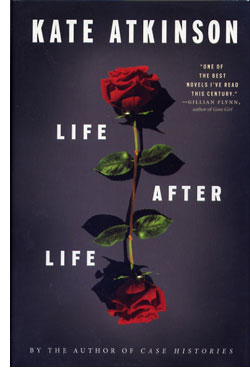
Life After Life by Kate Atkinson
She opened her arms to the black bat and they flew to each other, embracing in the air like long-lost souls. This is love, Ursula thought. And the practice of it makes it perfect.
But it doesn't make it perfect, according to Atkinson. In the end it's all rather pointless, I suppose. At least that's what I think the message ends up being from Life After Life, though I'm not sure Atkinson means it to be.
In Life After Life, we follow Urusla, an Englishwoman born in 1910 through...well...life after life. Ursula dies constantly in the book, in a variety of different ways (flu, bombing raids, domestic abuse, etc), but is reincarnated as herself each time. It's hard to tell if the first time she's born in the book is the first time she's born, but as she goes she picks up memories or flashes of her previous lives, like a strong deja vu. Sometimes she uses this to her advantage (after three or four times she finally figures out how to avoid the Spanish flu), but sometimes not. Sometimes her life turns out ok, but usually it doesn't. She deals with rape and domestic abuse over and over, and struggles with the expectations of being a woman in the first half of the 20th century (though Atkinson's addition of these elements seems to be more about setting the scene than any kind of social commentary).
But still, it all feels kind of pointless, because no matter the outcome, as soon as she dies she has to start all over again. The dreary lives are plenty dreary (and can be depressing as well), but the happy lives aren't that enjoyable because you know she'll probably end up dying in a bombed out building in London the next time anyway. Toward the end of the book, after having spent part of a previous lifetime being friends with Eva Braun and getting to know Hitler, she brings enough of her recall into the next life and tracks Adolf down in 1930, sacrificing herself to kill him before he gets started. I thought the book finally had some kind of closure, but turn the page and boom! here we go again! Ursula has to do it all over again, this time without the foresight to take out the fuhrer, with the war happening anyway.
So really, no matter what she does, it doesn't matter, because she'll forever be caught in an endless loop, repeating life after life after life.
But it doesn't make it perfect, according to Atkinson. In the end it's all rather pointless, I suppose. At least that's what I think the message ends up being from Life After Life, though I'm not sure Atkinson means it to be.
In Life After Life, we follow Urusla, an Englishwoman born in 1910 through...well...life after life. Ursula dies constantly in the book, in a variety of different ways (flu, bombing raids, domestic abuse, etc), but is reincarnated as herself each time. It's hard to tell if the first time she's born in the book is the first time she's born, but as she goes she picks up memories or flashes of her previous lives, like a strong deja vu. Sometimes she uses this to her advantage (after three or four times she finally figures out how to avoid the Spanish flu), but sometimes not. Sometimes her life turns out ok, but usually it doesn't. She deals with rape and domestic abuse over and over, and struggles with the expectations of being a woman in the first half of the 20th century (though Atkinson's addition of these elements seems to be more about setting the scene than any kind of social commentary).
But still, it all feels kind of pointless, because no matter the outcome, as soon as she dies she has to start all over again. The dreary lives are plenty dreary (and can be depressing as well), but the happy lives aren't that enjoyable because you know she'll probably end up dying in a bombed out building in London the next time anyway. Toward the end of the book, after having spent part of a previous lifetime being friends with Eva Braun and getting to know Hitler, she brings enough of her recall into the next life and tracks Adolf down in 1930, sacrificing herself to kill him before he gets started. I thought the book finally had some kind of closure, but turn the page and boom! here we go again! Ursula has to do it all over again, this time without the foresight to take out the fuhrer, with the war happening anyway.
So really, no matter what she does, it doesn't matter, because she'll forever be caught in an endless loop, repeating life after life after life.
The Death and Life of Great American Cities by Jane Jacobs
But what we have to express in expressing our cities is not to be scorned. Their intricate order--a manifestation of the freedom of countless numbers of people to make and carry out countless plans--is in many ways a great wonder. We ought not to be reluctant to make this living collection of interdependent uses, this freedom, this life, more understandable for what it is, nor so unaware that we do not now what it is.
I live in a pretty vibrant neighborhood. If you've ever watched HBO's Girls, you've seen it--a densely populated collection of vinyl-siding houses interspersed with gritty warehouse and factory buildings that, for the most part, have been transformed into luxury loft spaces, artist's studios, and artisanal pickle companies. There's a lot of young people and a lot of bars to service them, although it retains its old identity as a middle-class Polish neighborhood. This vibrancy, of course, comes with consequences--skyrocketing rents, for one. But also it has become prey for real estate developers wanting to cash in on the neighborhood's success by clearing out vast tracts of space for monstrosities like this one, called Greenpoint Landing:
Jane Jacobs died a few years ago, just before the boom that made such a development possible, but in 2005 she wrote a letter to Mayor Bloomberg responding to a similar plan centering around the old Domino Sugar factory in neighboring Williamsburg that simply and eloquently decried this kind of project. Reading this letter--it was blown up and framed in a neigborhood coffee shop--made me want to read Jacobs' book The Death and Life of Great American Cities because I thought it might help me understand what's happening in my backyard, and maybe provide expression to the mute unease that I feel about it.
The central argument of Death and Life is that city planning--the way cities are physically designed and put together--has a tremendous impact on vibrancy and quality of life. Jacobs is highly critical of the faddish trends of mid-century city planning, which advocated low-density communities with tons of open green space built on cleared land--which you may witness in the rendering above. What good neighborhoods need to become vibrant, Jacobs argues, is four things: A mix of primary uses, small blocks, old buildings, and high densities.
Jacobs' explanation of these "generators of diversity" is so lucid, so persuasive, that I felt almost embarrassed not to see them as common sense before reading them. Take the need for old buildings: Without them, Jacobs argues, where will fledgeling businesses find rents low enough to support them? A quick scan of any major city shows this to be absolutely true; into new buildings go the Starbucks and Subways, while entrepreneurs seek out older storefronts or unconventional spaces, not only for their charm but because they have to. What businesses are going to be crowded out by the full-scale clearing of the warehouses that occupy the site of the future Greenpoint Landing?
The other generators of diversity seem equally obvious, once Jacobs explains them: Areas that rely too heavily on single primary uses, like the financial district of lower Manhattan, are dead, dull places because they only have foot traffic at very specific times of the day; there are no good restaurants in the financial district because they would have to survive on lunch business alone. Parks in these areas become breeding grounds for crime because there are huge swaths of time in which they are essentially unoccupied. The need for small blocks seems silly, but it too makes sense; long city blocks are economic dead zones because they discourage pedestrian traffic.
Part of the fun of reading Death and Life is that it provides an interesting picture of what American cities looked like at mid-century. For example, while we often read about how Detroit's woes derive from the collapse of the American automobile industry, apparently it's always been kind of a hellscape:
But it's also fascinating to see what's changed. Who knew that posh Riverside Drive was once "plagued by trouble?" More fascinating still is to hear Jacobs' perspective on Brooklyn, decades before its economic renaissance:
Jacobs deserves credit for her prescience here; north and west Brooklyn are all "diversity" and "liveliness" now, and, from what I can tell, precisely because it followed her advice. But Jacobs also warns against the prospect of too-rapid development that eats itself, infusing areas with what she calls "cataclysmic" money, crowding out slow, healthy development that retains the qualities that made such development possible in the first place. I can't think of a better example of that kind of mistake than Greenpoint Landing. Let's hope this idea dies the horrible, fiery death that it deserves.
I live in a pretty vibrant neighborhood. If you've ever watched HBO's Girls, you've seen it--a densely populated collection of vinyl-siding houses interspersed with gritty warehouse and factory buildings that, for the most part, have been transformed into luxury loft spaces, artist's studios, and artisanal pickle companies. There's a lot of young people and a lot of bars to service them, although it retains its old identity as a middle-class Polish neighborhood. This vibrancy, of course, comes with consequences--skyrocketing rents, for one. But also it has become prey for real estate developers wanting to cash in on the neighborhood's success by clearing out vast tracts of space for monstrosities like this one, called Greenpoint Landing:
Jane Jacobs died a few years ago, just before the boom that made such a development possible, but in 2005 she wrote a letter to Mayor Bloomberg responding to a similar plan centering around the old Domino Sugar factory in neighboring Williamsburg that simply and eloquently decried this kind of project. Reading this letter--it was blown up and framed in a neigborhood coffee shop--made me want to read Jacobs' book The Death and Life of Great American Cities because I thought it might help me understand what's happening in my backyard, and maybe provide expression to the mute unease that I feel about it.
The central argument of Death and Life is that city planning--the way cities are physically designed and put together--has a tremendous impact on vibrancy and quality of life. Jacobs is highly critical of the faddish trends of mid-century city planning, which advocated low-density communities with tons of open green space built on cleared land--which you may witness in the rendering above. What good neighborhoods need to become vibrant, Jacobs argues, is four things: A mix of primary uses, small blocks, old buildings, and high densities.
Jacobs' explanation of these "generators of diversity" is so lucid, so persuasive, that I felt almost embarrassed not to see them as common sense before reading them. Take the need for old buildings: Without them, Jacobs argues, where will fledgeling businesses find rents low enough to support them? A quick scan of any major city shows this to be absolutely true; into new buildings go the Starbucks and Subways, while entrepreneurs seek out older storefronts or unconventional spaces, not only for their charm but because they have to. What businesses are going to be crowded out by the full-scale clearing of the warehouses that occupy the site of the future Greenpoint Landing?
The other generators of diversity seem equally obvious, once Jacobs explains them: Areas that rely too heavily on single primary uses, like the financial district of lower Manhattan, are dead, dull places because they only have foot traffic at very specific times of the day; there are no good restaurants in the financial district because they would have to survive on lunch business alone. Parks in these areas become breeding grounds for crime because there are huge swaths of time in which they are essentially unoccupied. The need for small blocks seems silly, but it too makes sense; long city blocks are economic dead zones because they discourage pedestrian traffic.
Part of the fun of reading Death and Life is that it provides an interesting picture of what American cities looked like at mid-century. For example, while we often read about how Detroit's woes derive from the collapse of the American automobile industry, apparently it's always been kind of a hellscape:
Virtually all of urban Detroit is as weak on vitality and diversity as the Bronx. It is ring superimposed upon ring of failed gray belts. Even Detroit's downtown itself cannot produce a respectable amount of diversity. It is dispirited and dull, and almost deserted by seven o'clock of an evening.
But it's also fascinating to see what's changed. Who knew that posh Riverside Drive was once "plagued by trouble?" More fascinating still is to hear Jacobs' perspective on Brooklyn, decades before its economic renaissance:
If Brooklyn, New York, as an example, is ever to cultivate the quantity of diversity and degree of attraction and liveliness it needs, it must take maximum economic advantage of combinations of residence and work. Without these primary combinations, in effective and concentrated proportions, it is hard to see how Brooklyn can begin to catalyze its potential for secondary diversity.
Jacobs deserves credit for her prescience here; north and west Brooklyn are all "diversity" and "liveliness" now, and, from what I can tell, precisely because it followed her advice. But Jacobs also warns against the prospect of too-rapid development that eats itself, infusing areas with what she calls "cataclysmic" money, crowding out slow, healthy development that retains the qualities that made such development possible in the first place. I can't think of a better example of that kind of mistake than Greenpoint Landing. Let's hope this idea dies the horrible, fiery death that it deserves.
Sunday, October 6, 2013
The Radetzky March by Joseph Roth
They all felt that he had summoned Death. Death hovered over them, and they were completely unfamiliar with the feeling. They had been born in peacetime and become officers in peaceful drills and maneuvers. They had no idea that several years later every last one of them, with no exception, would encounter death. Their ears were not sharp enough to catch the whirring gears of the great hidden mills that were already grinding out the Great War. A white winterly peace reigned in the small garrison. And black and red, death fluttered over them in the twilight of the small black room.
When the Kaiser Franz Joseph I is very young, he is saved from enemy fire at the Battle of Solferino by a young Slovene peasant officer whom he elevates to a Barony in honor of his service. Thus begins the von Trotta dynasty, whose heyday is brief and whose decline mirrors that of the Austro-Hungarian Empire itself, already withered and irrelevant before the outbreak of World War I. The Radetzky March begins with the Battle of Solferino, but its focus is on that Trotta's grandson, Carl Joseph, a lieutenant in the Kaiser's army.
Carl Joseph is an unexceptional soldier and a sensitive young man who slowly unravels over the course of the novel. The military is his birthright, but one which he has difficulty being equal to:
Carl Joseph is beset by disasters, some of which are his own making: Alcoholism, gambling debts--and a weak willingness to cover others' gambling debts--but also the death of his only close friend in an honor duel. The duel itself is a symbol of an old order of prestige that is rapidly passing away, one in which Carl Joseph cannot fit in, but one which threatens to destroy him as it destroys itself.
The Radetzky March is notable for its thorough depictions of Kaiser Franz Joseph, including long passages of the Kaiser's thoughts. (FYI: Franz Ferdinand, whose assassination sparks WWI, is Franz Joseph's nephew and presumptive heir.) These passages, which depict the Kaiser as a complex man approaching senility, are the best in the book, I think:
Contrast Franz Joseph's serene prescience with the anxious uncertainty of Carl Joseph and the soldiers in the first passage, the "patrolling soldiers" of the Kaiser's imagination to whom he assigns a kind of power. I doubt very much that this is a historical depiction of Franz Joseph I, but it is compelling one that underscores the great chasm between the perspectives of the powerful and those marked for the trenches.
When the Kaiser Franz Joseph I is very young, he is saved from enemy fire at the Battle of Solferino by a young Slovene peasant officer whom he elevates to a Barony in honor of his service. Thus begins the von Trotta dynasty, whose heyday is brief and whose decline mirrors that of the Austro-Hungarian Empire itself, already withered and irrelevant before the outbreak of World War I. The Radetzky March begins with the Battle of Solferino, but its focus is on that Trotta's grandson, Carl Joseph, a lieutenant in the Kaiser's army.
Carl Joseph is an unexceptional soldier and a sensitive young man who slowly unravels over the course of the novel. The military is his birthright, but one which he has difficulty being equal to:
For once, Lieutenant Trotta was rebelling against the military laws that ruled his life. He had obeyed since earliest boyhood. And he wanted to stop obeying. He had no idea what freedom meant, but he sensed that it was as different from a furlough as war is from maneuvers. This comparison flashed into his mind because he was a soldier--and because war is the soldier's freedom.
Carl Joseph is beset by disasters, some of which are his own making: Alcoholism, gambling debts--and a weak willingness to cover others' gambling debts--but also the death of his only close friend in an honor duel. The duel itself is a symbol of an old order of prestige that is rapidly passing away, one in which Carl Joseph cannot fit in, but one which threatens to destroy him as it destroys itself.
The Radetzky March is notable for its thorough depictions of Kaiser Franz Joseph, including long passages of the Kaiser's thoughts. (FYI: Franz Ferdinand, whose assassination sparks WWI, is Franz Joseph's nephew and presumptive heir.) These passages, which depict the Kaiser as a complex man approaching senility, are the best in the book, I think:
The night was blue and round and vast and full of stars. The Kaiser stood at the window, thin and old in a white nightshirt, and felt very tiny in the face of the immense night. The least of his soldiers, who could patrol in front of the tents, was more powerful than he. The least of his soldiers! And he was the Supreme Commander in Chief! Every soldier, swearing by God the Almighty, pledged his allegiance to Kaiser Franz Joseph I. He was a majesty by the grace of God, and he believed in God the Almighty, who hid behind the gold-starred blue of the heavens, the Almighty--inconceivable! It was. It was His stars that shone up there in the sky, and it was His sky that arched over the earth, and He had allocated a portion of the earth, namely the Austro-Hungarian monarchy, to Franz Joseph I. And Franz Joseph was a thin old man, standing at the open window and fearing that his guards might surprise him at any moment.
Contrast Franz Joseph's serene prescience with the anxious uncertainty of Carl Joseph and the soldiers in the first passage, the "patrolling soldiers" of the Kaiser's imagination to whom he assigns a kind of power. I doubt very much that this is a historical depiction of Franz Joseph I, but it is compelling one that underscores the great chasm between the perspectives of the powerful and those marked for the trenches.
Labels:
Austria,
Joseph Roth,
The Radetzky March,
world war i
Sunday, September 29, 2013
Making Our Democracy Work: A Judge's View by Stephen Breyer
![]() |
| Oh, the places you'll go with a practical approach to judicial interpretation. |
Thus, the Court can and should take account of purposes and consequences, of institutional competences and relationships, of the values that underlie institutional collaboration, and of the need to assert constitutional limits.
...
Similarly, the expressive values underlying the Eighth Amendment's prohibition of "cruel and unusual punishments" suggest that today the amendment would prohibit flogging even if many eighteenth-century Americans thought flogging was neither cruel nor unusual.
Breyer's book is a prolonged attempt to respond to originalism. Should judges merely construe the words of the text, or should they consider other factors? Are judges logicians or are they problem-solvers?
Under Breyer's view, they are problem-solvers; as problem-solvers, they should answer legal questions under a practical approach, taking into consideration legislative intent, the purposes and goals behind a statute, and the respective roles of different institutions within the government. Why should we consider legislative intent? Because the intent behind the law is valid interpretive evidence. For example:
Does a friend who says 'all bicycle shops carry water bottles' mean to include secondhand bicycle shops? Context revealing a speaker's purposes, not a dictionary that explains a word's meaning, provides the necessary help here. Sam's mother tells him, 'Go to the store and buy some ice cream, flour, fruit, and anything else you want." It is context, not a dictionary, that will help us learn whether Sam's mother has given him permission to buy fifteen comic books.
I find this analysis to be pretty compelling. Language is complicated, and our understanding of it is not limited to dictionary definitions. When we interpret what a speaker is saying, we do not rely only on the plain-meanings of his words, we also rely on contextual clues. And, though we may not necessarily assume an author's intent is absolutely determinative, we nonetheless pay attention to what he was trying to say. So it is that we do care that Heidegger was a Nazi when we read Being and Time, though we do not necessarily assume that Being and Time is a Nazi text.
Breyer also places much emphasis on the respective roles of different institutions within our Constitutional scheme. Administrative offices are thought to possess a special expertise; so, they're entitled to a degree of deference in their fields (who knows more about the environment, the Environmental Protection Agency or an Article III judge?).
Unfortunately, I read this book 6 months ago, so my recall...is not great. I'll conclude with this: Breyer's book is aimed more for a general audience (where Scalia's is aimed more for a legal/academic audience); nonetheless, I found Breyer's argument to be more convincing. Still, Breyer's analysis lacks the persuasive punch of Scalia's. I mention this last point because, insofar as we need a liberal judicial theory to counter-balance originalism, Breyer's theory is insufficient. It doesn't have the rhetorical simplicity of originalism.
Subscribe to:
Posts (Atom)