Thursday, September 11, 2008

The Tao Te Ching by Lao Tzu


Last night, I was looking for something short to read and came across the Tao Te Ching. It's only a little over 100 pages long, and most of the pages are only about half-full, plus it has the added benefit of being the primary text for Taoism and an influential one on other Eastern religions, including Buddhism. 

The introductory material by the translator mentioned that the Tao Te Ching is sometimes considered to be the wisest book ever written, and that, within it, an answer can be found for any problem life may present. It's a weighty burden for a mere 100 pages, but, upon my reading, I can see how it's true to an extent. The guidelines given in the Tao Te Ching are very general, and focus exclusively on change within the individual. There are a lot of passages that sound like you'd expect ancient Eastern wisdom to sound:

True words aren't eloquent;
eloquent words aren't true.
Wise men don't need to prove their point;
men who need to prove their point aren't wise.
True words seem paradoxical.

While much of the wisdom contained in the Tao is immensely practical, I can't help thinking that a literal interpretation of some of it would lead to a life of apathy and carelessness. For example:
Other people are bright;
I alone am dark.
Other people are sharper;
I alone am dull.


Other people have a purpose;
I alone don't know.
I drift like a wave on the ocean,
I blow as aimless as the wind. 

 
The lifestyle the Tao seems to suggest is one of letting the world pass you by, refusing to be either happy or sad about anything that happens because it's all transitory and pointless. The hope is that Tao, the road of life, will eventually lead you to its best end. In some ways, this mirrors the systems of most of the world's other religions, Christianity included, but the command to inaction makes aspects Taoism seem like a philosophy without a point. There are passages that are difficult, like the following:
Throw away holiness and wisdom,
and people will be a hundred times happier.
Throw away morality and justice,
and people will do the right thing.
Throw away industry and profit,
and there won't be any thieves. 

 
I'd be interested in seeing commentary on this, because the conclusions in the above statements don't seem to logically follow the hypotheses. People are happier without wisdom? They are more likely to do the right thing if there is no justice? It doesn't seem to mesh for me, but in spite of these misgivings, the Tao Ching was interesting, with some beautiful poetry at certain points, and well worth reading. I just don't think I'd call it the wisest book ever written.

The Tale of Despereaux by Kate DiCamillo

Movies with mice played a large part in my formative years, from The Rescuers to The Secret of Nimh (based on Mrs. Frisby and the Rats of NIMH) to An American Tail to The Great Mouse Detective. To this day, I find all of these movies highly watchable. When I was a wee thing, my grandma used to make up stories about a character she created called Johnny Mouse. Johnny Mouse (he must be referred to by his full name) was sly and cunning and always outsmarting cats and the people who laid out traps for him. I am telling you all this to explain that when I see a book such as The Tale of Despereaux, it is hard for me to resist.

DiCamillo has crafted a perfectly little fairytale. In the world that she created, mice can talk with humans, but they choose not to. They fear that any interaction with humans will end badly. So they scurry about from wall to wall. Despereaux, an alarmingly undersized mouse with alarmingly oversized ears, was born with his eyes wide open. His parents knew right away that something was different about Despereaux. Instead of nibbling at the bindings and pages of books in the castle library, he sat at the open books reading them, committing their stories to memory. When Despereaux breaks the cardinal rule and actually talks to the princess and her father, he is banished to the dungeon by the mouse elders. There is no assumption that he will live down there, but that he will be eaten by the rats who rule the dark places of the castle. Upon being deposited in the dungeon, Despereaux befriends the jailer and uncovers a plot to kidnap the princess.

The story is narrated beautifully, laden with many direct addresses to the reader. Such as, "Reader, do you know that there is nothing more beautiful in this world than the sound of someone you love calling your name. Nothing." The story is told from different angles and through the eyes of a few different characters that live in the castle.

While on its surface the book is about a tiny, needle-wielding mouse who saves a princess, it is also a lesson about love and forgiveness, and other complicated matters of the heart. Skip The Alchemist and read The Tale of Despereaux.

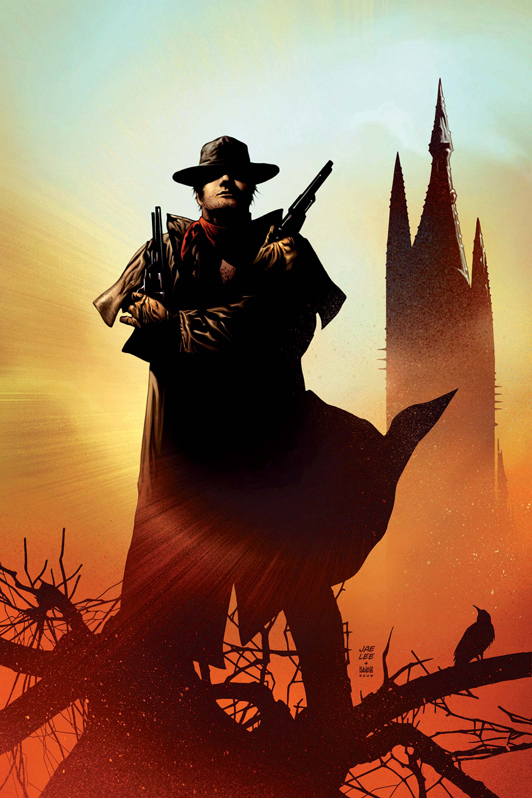
The Dark Tower by Stephen King

The man in black fled across the desert, and the gunslinger followed.

Ka is a wheel.”

This review contains lots of spoilers, like all my others. I doubt anyone here is planning to read this whole series, but I'll try to split my thoughts into spoiler and spoiler-free sections.

The Dark Tower is Stephen King's self-proclaimed opus. Starting with The Gunslinger, written in 1978 and ending with The Dark Tower, published in 2004, it spans nearly his entire writing career and expands outward from the seven books of the series into the Stephen King universe. Novels as diverse as It, Hearts in Atlantis, and The Stand have ties back to The Dark Tower, and it was this interconnectedness (along with some meta-narrative which I'll discuss later) that initially inspired me to pick up The Gunslinger and give the series a try.

The premise is simple: Roland Dechain,the last gunslinger of Eld, a town for whom time has “moved on,” is on an obsessive quest to reach The Dark Tower, the center of the whole world, a pillar to which everything else is tied. Even Roland himself is unsure of his exact motivation, except that it is the driving force of his life. He is willing to (and has) sacrificed friends, family, health, love, and peace for his quest. As the series progresses, Roland forms his ka-tet, a group of gunslingers, made up of Eddie, a former heroin addict from modern day New York, Susannah, a wealthy, black, double amputee from the 1930s, Jake, a 12 year-old boy from 80's era new York, and Oy, a billy-bumbler doglike creature from Midworld, Roland's own world.

Throughout its seven volumes, the series cycles through a number of genres: The minimalistic Western of The Gunslinger, the more familiar horror/thriller setting of The Wastelands and The Drawing of the Three, Romance in The Wizard and the Glass, Adventure in Wolves of the Calla, crap in Song of Susannah, and a mishmash of all of the above with some self-referential postmodern meta-fiction thrown in. Because of this and the sometimes long periods between books, the series is of varying quality, and the variance in style means that readers may love some (The Wizard and the Glass) while hating others (Song of Susannah). For me, it meant the highs were high, and the lows were particularly low.

This is where the spoilers begin.

The Dark Tower, the book this review actually focuses on, is the last in the series, published only a few months after Song of Susannah, the penultimate volume. Song of Susannah was a mess, a meandering, dull mishmash of the cast wandering around doing nothing, focused on the schizophrenic pyscho-babble of Susannah, easily the worst and most annoying member of the ka-tet. If Song of Susannah had been, say, book 3 instead of book 6, I'm not sure I would have completed the series. As it was, I put off The Dark Tower for several months, not relishing the thought of 1000 more pages of King demolishing the story I'd enjoyed up until the previous book.

In summation, for anyone who's morbidly curious but wants to stop reading, The Dark Tower is a massive improvement on Song of Susannah. Unfortunately, being better than Song is only half the battle. In spite of having an actual plot and quite a few well-done scenes, The Dark Tower falters by ending several plotlines (one of them dating back to The Stand) with incoherent, out-of-left-field whimpers. For example, Mordred, the long-prophesied bastard son of Susannah and Roland by way of a demonic artificial insemination, spends most of The Dark Tower stalking Roland and his party, only to attack them when he's nearly dead and be killed by, no kidding, Oy, the little dog-like creature in the ka-tet. Mordred might be the second weakest link in the entire book, since he's also King's agent to pull off another on the books major faux pas, the death of Martin, a villain King has used as the embodiment of evil throughout his universe for decades. He's dispatched rather ignominiously (but fairly grotesquely) by Mordred who is, as mentioned, killed by a glorified raccoon.

A lot of readers were upset when King wrote himself into Song of Susannah, and those readers won't find much to like in parts of this book either. King is back, this time with a much larger role. Full disclosure though, the meta narrative with King was the only bright point in Song of Susannah for me, and I think it works here as well. Since King has posited that the Dark Tower is the center of the universe in all of his books, even those that don't reference it, it makes perfect sense that Stephen King the author would appear in the series. For the most part, fictionalized King is a bit of a bumbler, and, except for a couple bits of false modesty (including a less-than-subtle dig at critics who see him as nothing more than a schlock peddler), his character fits right into the narrative.

However, although fictional King sits just fine with me, real-life King decides to pull an ill-conceived trick several times during the book, speaking in the first person directly to the reader (“Now, dear reader, you're probably wondering where this disembodied voice is coming from...”). It happens several times throughout The Dark Tower, and it's always sort of annoying. For the most part, I overlooked it, because a) the entire book reads like King is trying to turn his series into some sort of post-modern mobius strip and b) most of the digressions were very short and easy to skim. However, at the very end of the book, directly before (SPOILER!) Roland reaches the Tower, King takes several pages to tell the reader to stop reading. Yes, that's right. He writes that the point of the quest isn't the destination but the journey, which is true as far as it goes, but a journey has to be heading somewhere. Whether King actually expected readers to take his advice or not, the interlude is intensely condescending and slows the narrative to a stop right before the ultimate denouement.

Strangely, the ending itself isn't bad at all, and although it made a lot of readers angry (just check out the Amazon reviews), it's surprisingly moving and seems like a logical way for this epic journey to end. Given King's tendency to write good books with bad endings, I was pleasantly surprised.

So, if I had it to do over again, would I still read The Dark Tower? Probably. The first four books are probably among the best work King has done, and I even enjoyed Wolves of the Calla. Song of Susannah was a major misstep though, and The Dark Tower run so hot-and-cold that the book itself can't help but be seen as a disappointment. Still, there is some truth to what King says about the journey being the point, and I'm not disappointed in the series as a whole. I just don't know if I'd recommend it.

Wednesday, September 10, 2008

The Assault on Reason by Al Gore

Should we amend all of the test books in America to explain to school children that what has been taught for more than two centuries about checks and balances in no longer valid? Should we teach them instead that the United States Congress and the Courts are merely advisory groups that make suggestions to the President on what the laws should be, but that the President is all powerful and now has the final say on everything? Should we teach them that we are a government of men, not laws? Should we teach them that we used to be a democracy but now only pretend to be?

The above quote should get you a little fired up. Now I know that all the blame for the inflation of the executive branch of our government can not be laid at the feet of the current resident of the White House, but this administration has increased the power of the executive more than any administration in recent history. However, Gore does not just use this book to attack Bush. He discusses a wide range of topics that directly influence American politics and life. The book is chalked full of quotes to further bolster the case that Gore is making. The man is well read.

He begins the book by addressing the loss of public interest in democracy, the general lack of public knowledge about our nation's history and system of government. If you don't take ownership of your history, you run the risk of your future being stolen out from under you. Gore details the change that came with television taking the role of primary source of information away from the printed press. The printing press allowed people without wealth, such as Thomas Paine, to contribute to public discourse, and even, as is the case with Paine, change the course of history. An extremely lucid and thought-provoking chapter.

This is easily the most important book that I have read this year (I am currently reading Dianetics, so watch out Assault on Reason!). It helped me solidify some of the ideas that I already had about the current administration and the current state of politics. The detailed description of the imprisonment of "enemy combatants" was eye-opening. If Bush labels anyone, even an U.S. citizen, an "enemy combatant" than that person can be imprisoned for an indefinite amount of time, without being told what crime they are being accused of. That should make any American citizen worth their salt livid, if not that, than at least a little nervous. As to the "enemy combatants" who are not U.S. citizens (the majority of those being held), I personally I feel that if you were serious about spreading democracy, you would start with Article One of the Constitution. This quote sums up my feelings quite nicely:
"Israel's highest court was asked to balance the rights of individual prisoners against dire threats to the security of its people. Here's what the court declared, 'This is the destiny of democracy. It's not all means are acceptable to it, and not all practices employed by its enemy are open before it. Although democracy must often fight with one hand tied behind its back, it nonetheless has the upper hand. Preserving the rule of law and recognition of an individual's liberty constitutes and important component in its understanding of security. At the end of the day they strengthen its spirit and allow it to overcome its difficulties.'"

I cannot do justice to the many important topics Gore addresses in this book. I would advise you to read it. It did not take me long to finish. I will leave you with this quote:
"The accretion of dangerous power does not come in a day. It does come, however slowly, from the generative force of unchecked disregard of the restrictions that fence in even the most disinterested assertion of authority."

Sunday, September 7, 2008

Brighton Rock by Graham Greene

Though Graham Greene is known best for his books which take place in exotic locales--the scorched earth of Mexico, the jungles of Africa--here is a book which is so fundamentally British that the American reader cannot make sense of it without the notes at the end. First, there is the tradition that British newspapers had of sponsoring "treasure hunts" at seaside resorts, in which a certain reporter (with published photograph) places cards around town that are worth ten shillings if returned, and an even bigger prize awaiting those who find and confront him directly. Second, there is the explanation of the term "Brighton rock"--which actually refers to a long, hard stick of candy sold at seaside resort towns, in which the name of the town is etched all the way through the candy so that it appears on the end no matter where you bite it. The former provides the basis for the plot; the latter provides the basis for the theme.

The book opens on Hale, who is said reporter, on the beat in Brighton, but as the book's first line reports, "Hale knew, before he had been in Brighton three hours, that they meant to murder him." Hale, it seems, had some part in organizing the assassination of a Brighton gang leader named Kite at the behest of another gang.

But this is not Hale's story; true to his word, he is dead within a few pages. The true protagonist is his murderer, a boy named Pinkie who has assumed authority of Kite's gang. Pinkie has the misfortune of learning that moments before his murder, Hale--who, like Pinkie, operates in a state of severe and perpetual loneliness--made a local friend named Ida Arnold, who becomes suspicious when she finds out about Hale's death. Suddenly, Pinkie is supremely aware of the witnesses that could damn him: Spicer, the gangster whom Pinkie charged with distributing the newspaper cards after Hale's death to provide their alibi, and Rose, a young waitress who saw Spicer--and not Hale--leave one of the cards at her restaurant.

Greene has a uniquely bifurcated corpus of work. Brighton Rock is usually grouped with his "Catholic novels," along with The Power and the Glory and The End of the Affair, but also a series of mystery and espionage novels such as The Quiet American and Our Man in Havana. Most of Brighton Rock reads like the latter, as Ida and Pinkie play a sort of cat-and-mouse game regarding Hale's murder that involves gang warfare and internecine violence.

But the book's final third is it's strongest, in which the focus falls almost completely away from Ida and onto Pinkie, who has charmed Rose into falling in love with him and, to his disgust, offered to marry her so that she might not be able to testify against him. It is here that the themes which lurk under the surface of the novel's bulk bubble up into the air. As much as Pinkie despises Rose, they share a similar outlook as self-identified "Romans," or Catholics. To Pinkie, who even Rose admits is explicitly evil, there is nothing so disgusting as a woman like Ida, who cannot be reduced to either good or evil because she is not Catholic. Greene presents us with axes of good vs. evil and right vs. wrong that do not coincide; Pinkie thinks that he must be right to be a Catholic but he has thrown his hat in with evil because it is a much realer presence to him than good. There is a shade of Gnosticism to this novel; what Pinkie and Rose value is the knowledge of God but not the adherence to His will. And what are we to make of a sympathetic character like Rose anyway, who damns herself willingly out of love? Here is a passage:

'I know one thing you don't[,' said Ida]. I know the difference between Right and Wrong. They didn't teach you that at school.'

Rose didn't answer; the woman was quite right: the two words mean nothing to her. Their taste was extinguished by stronger foods Good and Evil. The woman could tell her nothing she didn't know about these she knew by tests as clear as mathematics that Pinkie was evil what did it matter in that case whether he was right or wrong?

As in The Power and the Glory, Greene shows that he understands the complex question of religious ethics better than anyone. If we are to choose between the benign non-religiosity of Ida and the willful evil of Pinkie's religion, what must we choose? I do not think that Greene stoops so low as to answer this question, but in the epilogue of Rose's confession, he writes that a priest says to her, "a Catholic is more capable of evil than anyone. I think perhaps -- because we believe in Him -- we are more in touch with the devil than other people." How refreshing to read Greene in this day and age, when so many use their religious persuasions as a synonym for their moral character!

Brent has told me that he began Brighton Rock but that it could not capture his interest. I will second his assertion that it is a book that begins slowly--but I felt the same way about The Power and the Glory as well. But of course it stands to reason that before we can plumb the depths of man's capability for evil, we must spend some time understanding what he appears to be on the surface. Greene paints Brighton in gaudy, pastel colors, the colors of candy. But while there is an innocence to the Londoners who visit Brighton in the summer, the locals, like Pinkie, seem fraught with the disease of sin and evil. In the final chapters we see Pinkie and Rose take a trip to local Peacehaven, where Pinkie is planning to commit one of the most gruesome acts I can think of from a literary villain, and we are asked to wonder, at what point did we leave behind that innocent, whimiscal town? But herein lies the significance of the title: No matter how far you bite down, it's still Brighton. This, I believe, is a reminder that no matter how deeply you look into Pinkie's soul to find some reassurance that he is a monster made by God from some foreign mold, he is as thoroughly and corruptibly human as we.

Hey Nostradamus! by Douglas Coupland


"Hey Nostradamus! Did you predict that once we found the Promised Land we'd all start offing each other? And did you predict that once we found the Promised Land, it would be the final Promised Land, and there'd never be another one again?"

Douglas Coupland was recommend to me by one of my bookworm friends several months ago. I was told to read JPod but because it was not at the library when I went to find a beach book to take with me to Wilmington, so I ended up grabbing the only book they had by Coupland, which was was Hey Nostradamus!

Hey Nostradamus! is a book in four parts. Each section of the book has a different narrator, but all of our narrators are connected through the high school shooting that kills our first narrator, Cheryl. At the time of her death Cheryl is newly (secretly) married to one of our other narrators, Jason. The majority of the book after her section deals with Jason later on in life and how the shooting changed his relationship with his family and cut him off from the rest of the world after having the trauma of being wrongly accused of involvement in the incident added to the grief that came from losing his wife. The last two narrators are the woman he ends up with romantically in his late twenties and his estranged father.

This book examines Christianity and people struggling with their faith in a way that makes religion out to be a negative and detrimental thing. For example, Jason comes from a strict Christian household and will not have sex before marriage, which is the main motivation for the young couple flying to the States from Canada with fake IDs to get married in Las Vegas. While it’s evident that Jason cares for Cheryl, their marriage is still centered around lust and has very little to do with love. This is just one of the many scenarios in which Coupland’s characters are obeying what they know of religious doctrines but doing so for the wrong reasons. Beyond that, most of the secondary characters in the novels are pious flakes that harass Jason into falling from faith. They’re all in a group called Youth Alive that parodies familiar groups like Young Life for young believers. Jason's father, Reg, is a cold hearted man that uses the Bible to bully people into submitting to his wants and beliefs in a way that's manipulative and abusive... and clearly not indicative of the way someone that had Christian love in their heart would treat the people around them.

There were other reasons that I did not like this novel as much as I could have despite the potential that made me hopeful in the first chapter. There are so many strange, seemingly irrelevant plot twists (tipped off psychics, drugged up adventures where neither the narrator or reader know what’s going on, a mysterious Russian hit man that comes out of nowhere, and a disappearance…) that the novel never ties itself together enough for the novel to be anything other than frustrating. At the end, I had no sense of closure.

I would not have finished it, but when my friend and her boyfriend kept wandering off at the beach and leaving me with their mutual friend Jamie that I hadn’t met until we got there, we decided to kill time by passing it back and forth so that we could read it out loud together. When we decided that we might want to see one another again after the trip was over we used finishing the book as an excuse to meet at a coffee shop near my house several times. I have Coupland to thank for the relationship that I’m in, but other than that, I’m not a huge fan.

Coupland is also a sculptor and a blogger for the New York Times.


Celine by Brock Cole


"'Show a little maturity,' he said, which I've doped out to mean: Pass all your courses, avoid detection in all crimes and misdemeanors, don't get pregnant."

If I'm having a bad day you can usually find me curled up in my bed with one of my favorite YA fiction books. When I was registering for this semester's English classes I was thrilled to find that a class on teaching adolescent literature was being offered and signed up for it before I even read the class descriptions for anything else.

The first book that we've been assigned is Celine, a complete and total disappointment. With all of the quality novels there are out there today for youths I was surprised that my professor started out the semester with something so dull and lack luster. The writing is passable but the plot is so flat that there was nothing to redeem the novel. You could see the small plot twist coming from the second chapter and the one small bit that showed the promise of something interesting miraculously creeping into the book vanished as soon as it appeared. In this class we're suppose to examine the significance of the books we read and decide whether or not we would include them in our curriculum. I can see why an English teacher might use Celine in a freshman classroom because it doesn't have any real controversy and would be safer than something like Catcher In the Rye while still addressing all of the important topics like alienation and coming of age, but I would much rather have a few parents call and complain than bore the students I'm trying to reach to tears.

The plot is basically this: Celine has been moved around from family member to family member because the adults in her life are too self centered to raise a teenage girl. When we find our young narrator her professor father is off teaching in Europe and she's living with her stepmother, who is only six years older than her and completely indifferent. Celine turns to excessive amounts of television for comfort and lives vicariously through the characters on her screen because she has no one to do much substantial interacting with. Outside of the home, Celine fits into the young, tortured artist stereotype. She's talented but her peers use her instead of befriend her and once she realizes she's being socially shat on she sulks home to make paintings that magnify her flaws so that she can understand just what it is that's wrong with her, one being called Celine Beast. The majority of the novel is centered around her friendship with a young latch key kid named Jake that lives in her apartment complex and depends on her to fill the parental role left void by his negligent parents who are fighting their way through a messy separation. Celine's parents keep pressing the idea that Celine needs to work on becoming more mature on her throughout the novel and through her relationship with Jake she stumbles into the maturity they don't think she's capable of when they're not watching. The messiest the novel gets is where Celine is having strange fantasies about a relationship with Jake's father and she finds out that the reason Jake's parents are getting divorced is that his father is having an affair with the art teacher Celine idolizes.

Also, the cover makes it look like the 80s vomited all over it.

What Now? by Ann Patchett


"What now is not just a panic-stricken question tossed out into a dark unknown. What now can also be our joy. It is a declaration of possibility, of promise, of chance. It acknowledges that our future is open, that we may well do more than anyone expected of us, that at every point in our development we are still striving to grow."

I'm a senior this year and everyone keeps asking me these dreadful questions that I can't dodge well enough. What are you going to do after you graduate? Have you taken the GRE yet? Where are you applying to graduate school? Are you still applying to Teach for America? They never stop. The questions that bother me the most are the presumptuous questions because what if I'm not applying to graduate school? There's no way to answer that without the both of us feeling sheepish.

Every night I'm online doing hypothetical Monster job searches and asking strangers on message boards what they did with their English degrees after they graduated. It's nerve wracking.

Up until What Now? I had never read anything by Patchett. I found her when I was reading through commencement speeches for inspiration after exhausting the job search engines. (Salman Rushdie is a personal favorite if you're into that kind of thing.) After giving a commencement speech at Sarah Lawrence she decided to extend her speech into a book. Finally, someone else who started out wanting to write was going to give me an answer with some meat about the What now? question. It didn't hurt, of course, that this woman just happened to be an award winning author with an MFA from the Iowa Writer's Workshop and not another disgruntled barista working at Starbucks at thirty. This is not to say that Patchett didn't have times where she struggled, either. For a while she was waitressing, wondering why she was working at T.G.I. Friday's with a masters degree.

This book is a grown up Oh, The Places You Will Go. It's better than whiskey or deep breathing exercises or even a plate of carb heavy comfort food, which happens to be the ultimate test, just so you know. She made me feel like the world was alright again, even if it was only until I snapped back to reality and remembered that I'm at Appalachian and not Sarah Lawrence.

It's a tiny book with only 96 pages where her writing shares space with black and white pictures of women winding through mazes and men in business suites staring at road signs, ect. That might have been part of the book's charm for me... I like little books. With all the time it takes to obsess there isn't as much time for reading texts that aren't required.

Thursday, September 4, 2008

London Fields by Martin Amis

Keith didn't look like a murderer. He looked like a murderer's dog. (No disrespect to Keith's dog Clive, who had signed on well before the fact, and whom Keith didn't in the least resemble anyway.)... And murder? The eyes -- was there enough blood in them for that? Not now, not yet. He had the talent, somewhere, but he would need the murderee to bring it out. Soon, he would find the lady.

Or she would find him.

Like Prince before him, Martin Amis of the 80's was thinking about 1999. His 1989 novel London Fields opens up on London a decade in the future, paralyzed by fear of the coming apocalypse. Such dread is something that we can recognize, nineteen years later. After all, we have lived through the turn-the-calendar-and-the-world-ends hysteria of Y2K and the anxious atmosphere surrounding the late fall of 2001, when the old world seems really to have passed away. Amis has a knack for slipping details into his books--which are filled to the bursting point with details--which seem relatively inconsequential at first mention but will become vital to the plot. His doomsday is no different: Somewhere around page 200, the reader begins to wonder what all this business with the health problems of the President's wife and the vague environmental catastrophe of "dead clouds" is really doing in the narrative if Amis isn't going to explain it, and then, around page 400, boom. The world actually begins into implode.

But what Amis calls the "big thing" is essentially shoved into the background for the book's length. "The little thing," the thing which interests us, is the story of Nicola Six, a calculating sexpot who is attempting to engineer her own death by murder. Our narrator identifies the murderer as one Keith Talent, a West London lowlife cobbled together from the grotesqueries of British tabloids, a part-time cheat and full-time serial adulterer whose greatest ambition is to become a darts champion. Nicola is fascinating in her way, but she is too inhumanly precise to attract any sympathy; it is Keith who is the greatest creation of London Fields: His multicultural stable of women, his persistent obsession with the strategies of darts (there are few), his awkward cockney brutishness. The third player in Nicola's game is Guy Clinch (A Dickensian name if there ever was one), a dull and restless man whose defining characteristic is his wealth. It is Nicola's attempt, it seems, to play the two off of each other, until one--and of course, not the one we are supposed to expect--has the means and the motive to off her.

Of course, as the narrator tells us, "...a cross has four points. Not three." The fourth point is the narrator himself, British-American novelist Samson Young, who casts himself as a semi-neutral observer in the affairs of Nicola Six. Young is dying and the book he is writing about Nicola is to be his last opus, though unlike Nicola he has no choice about the matter. Whether the world has options left is still to be determined.

But the plot of London Fields could scarcely give you the impression of what it's like to read it. Amis, like other modern writers I can think of (I'm looking at you, Franzen) is a maximalist, whose circuitous phrasing hits several points and then doubles back and hits them again. But unlike his peers, Amis' style is often like traveling through someone's lower intestine: bloated, labyrinthine, and filthy. Here's an extended passage I love from chapter eleven, "The Concordance of Nicola Six's Kisses":

In the concordance of Nicola Six's kisses there were many subheads and subsections, many genres and phyla -- chapter and verse, cross- references, multiple citations. The lips were broad and malleably tremulous, the tongue was long and powerful and as sharp-pronged as a sting. That mouth was a deep source, a deep source of lies and kisses. Some of the kisses the mouth dispensed were evanescent, unrecallable, the waft or echo of a passing butterfly (or its ghost, hovering in the wrong dimension). Others were searching and detailed as a periodontal review: you came out from under them entirely plaque-free. The Rosebud, the Dry Application, Anybody's, Clash of the Incisors, Repulsion, the Turning Diesel, Mouthwash, the Tonsillectomy, Lady Macbeth, the Readied Pussy, Youth, the Needer, the Gobbler, the Deliquescent Virgin. Named like a new line of cocktails or the transient brands of Keith's perfumes: Scandal, Outrage... Named like the dolls and toys -- the rumour and voodoo -- of an only child.


Has being a slut ever been so attractive? This passage alone shows how strong Amis' style can be, from the repetition of "a deep source"--a ploy that Amis uses often but almost undetectably, as if his novel exists in that half-realm between literature and conversation--to the striking, Nabokovian bit about the butterfly's ghost. And the names--those names! Funny, yes, but so full of meaning. Can you imagine a "Lady Macbeth" kiss? If you cannot, I put to you that perhaps you have not kissed enough women (ahem, Brooke and Liz). But the reason the list really pops is number ten, "the Readied Pussy." At first, in its overt sexuality, it is jarring as a member of a list that began so subtly playful--as if we have passed from the drawing room into Nicola's bedroom. Crass it may be, but there is no denying that it evokes the sensation of a particular kiss that could never be called anything else, not only because of the singularity of its purpose, but also (if I may be so crude as to point this out) because it evokes the physical similarity between two parts of the body.

But I could talk about the way that Amis writes for Harry Potter lengths. But style alone does not a book make (or hardly at all, if you're B.R. Myers), and I cannot help but feel that London Fields ultimately cannot support the weight of Amis' world-construct. The links that we are asked to make--between those who would become the designers of their own demise--are ultimately too thin. That Keith overshadows Nicola as a point of interest is to the book's demerit, as it seems to believe that she is its focus; perhaps we have had our share of devious femmes fatale.

But worst of all is the ending, which gets the "big thing" right--Amis' cultivation of inexorable dread in the face of unknown forces rivals White Noise, in places--but the "little thing" so wrong. Amis seems to believe he has pulled an O. Henry on us, but any reasonably savvy reader will know that when we are presented with two suspects the perpetrator will ultimately turn out to be a third. He is too preoccupied with pulling off this non-twist that he fails to tell us why it is happening--or furthermore, what exactly Nicola is so damn depressed about in the first place, and why she doesn't just go commit suicide by cop like any normal person too chicken to pull the trigger. The scheme exists ultimately to be a scheme, and its coda is less The Sixth Sense than The Village.

I had little expectation that London Fields could match the blackly comedic pathos of Money, but I was hoping that Amis could deliver a plot as tightly conceived and self-contained as that one. Though he does not succeed, there are enough disturbingly beautiful moments in London Fields in which to lose yourself. Like that forementioned journey through the lower intestine, it's a strange and fascinating ride--until you get to the end.

Angels and Demons by Dan Brown

"I don't mind suspending disbelief if a story is well written and ANGELS AND DEMONS fit nicely in that category. What makes Dan Brown's books spectacular (in my humble opinion) is the attention to detail and the research that he incorporates into his stories. I was fascinated by Brown's telling of the secrets of the Vatican and the Illuminati and the parts played by Galileo and Bernini." -Fascinated Reader on Amazon

I don't really understand the comment above, however I don't really understand why this book, and Brown's books in general, have people so upset. It isn't like someone who actually knows something about history is writing a shocking story revealing the truth about the church.

So, the book is not accurate, not well written, uses far to many adjectives, and tries to make up for its lack by throwing in lots of twists. It was fun to read though, sort of like watching Mystery Science Theater. I'm pretty sure the bad guy was bad enough without adding his perverted sex life to the story. The major weaknesses of the book are plot implausibilities, and a multitude of factual mistakes, which make claims of the substantial knowledge that can be gleaned from this "well-researched" book both astonishing and sad.

Spoilers: (This book has so many twists it makes your head spin)

Harvard symbology professor Robert Langdon finds himself at CERN, a Swiss nuclear research facility, where a scientist has been murdered by someone in the Illuminati. Some antimatter was taken, and is reported to be in the Vatican. Langdon joins the dead scientist's daughter, Vittoria, on a mad dash through some of Rome's most famous landmarks in an effort to find it before the Vatican is leveled.

As one Amazon Customer put it, "Let me tell you this: NOTHING is as it seems, and NOBDY is safe from suspicion. I was absolutely convinced that one character was involved in the conspiracy and BOY was I WRONG."

Overall, I think Brown may want to invest some of that money he is making now into a good editor.