Showing posts with label theology. Show all posts

Sunday, March 24, 2024

Reading Genesis by Marilynne Robinson

I have dwelt on this sequence of stories, one after another, exploring the ways in which the faithfulness of God is manifest in the world of fallen humankind. This kind of interpretation might seem ingenious and little more if there were not essential truths lying behind it. The first of these is that these divine likenesses among whom we live are of the highest interest and value to God. We have been given the coin of wealth to barter among ourselves for the things we need or want. We assign worth to persons, consciously or not, and then to prestige and property and ease, all the things that compete so successfully with the claims of justice and righteousness, kindness, and respect, which would follow from a true belief that anyone we encounter is an image of God. and the second is that we do not know how to judge or where to blame because events are working themselves out at another scale and toward other purposes more than we can begin to grasp.

I had the good fortune to be able to see Marilynne Robinson speak about her now book, Reading Genesis, at the New York Public Library last week. Robinson is, to me, a living avatar of wisdom. She looks wise, with her leonine gray hair and bearing; she sounds wise, with her quiet and well-measured statements. Reading Genesis, which might be described as a work of theology, seems to me a part of that old and forgotten tradition called wisdom literature, of which Robinson herself perhaps is the last and greatest living practitioner.

Robinson begins by observing that it is trendy to pick Genesis apart. A common viewpoint holds that it is the work of many authors, and that each author's particular political or cultural agenda can be traced in the text. In this way, the text is deconstructed and falls apart; it is a text at odds with itself. So the first thing that Robinson does that is quietly radical--in our times at least--is to read Genesis as a single text, with themes and ideas that animate it from beginning to end. For me, too, this was rather radical, because even growing up in the evangelical church, I don't think I was ever asked to read Genesis, or any book, from beginning to end. I know all the stories here, but seeing them laid out as a single narrative made me understand that I'd been missing something fundamental by dealing with them piecemeal.

What does animate Genesis? For Robinson, it is that fundamental truth which lies at the heart of scripture: that human beings are at the heart of creation. Robinson makes much of comparisons with Babylonian and other Near Eastern literature, like Gilgamesh, many of which have been taken as the "sources" from which Genesis stories, like the flood and the tower of Babel, have been borrowed. But Robinson points out that in these stories, the gods have a tense, inimical relationship with human beings, whose sacrifices they must have in order to eat. The God of Genesis, of course, does not eat; he does not need human beings, yet he created them and the world for their purpose and enjoyment. Genesis is a creation story, and one that places mankind at the center of everything. It's a story that unfolds in the lives of very ordinary people, shepherds like Abraham, Isaac, Joseph; it's through these humble people that God will create a chosen lineage, and through this lineage with which he communes with the entire world. (She asserts also that the family trees of Genesis clearly show that Gentiles are more closely related to the chosen people than one might think; in Genesis, we are all neighbors.)

The other big theme that animates Genesis for Robinson is mercy. She takes exception to the image of the raging, vengeful Old Testament God, and the belief common even among Christians that the God of the New Testament is somehow a different character. Look, for example, at the story of Cain: God spares Cain's life for the killing of his brother, and the famous "mark" that is placed upon his forehead is not actually one of shame, but a kind of protection; it demonstrates that wherever Cain goes he is to be protected from those who wish to slay him for his misdeeds. Cain is the ancestor of the human race, and by saving him from what he deserves--punishment for his murder of Abel--a greater purpose is worked. Robinson notes that this kind of story is told over and over again; characters in Genesis are made to suffer far less than we might think they deserve: Noah, Isaac, the brothers of Joseph.

I often wonder who Robinson writes for. Her firm Calvinism puts her out of step with most of the secular world, and her understanding of scripture certainly doesn't seem to fit in with that of Christian America; I can't imagine Reading Genesis on an endcap at Lifeway, if Lifeway still exists. And yet, the room at NYPL was packed with people who came to enjoy her wisdom. She speaks to some much deeper need in us, I think, to understand the way in which we ourselves are part of a universe that has only become stranger and less familiar in the age of the Big Bang. 

Sunday, February 13, 2022

The Tao Te Ching by Lao Tzu (trans. Brian Browne Walker)

Thirty spokes meet in a hollowed-out wheel;
the wheel won't work without the hole.
A vessel is molded form solid clay;
its inner emptiness makes it useful.
To make a room, you have to cut doors and windows;
without openings, a place isn't livable.
To make use of what is here,
you must make use of what is not.


I first read the Tao in 2008, after which I wrote what is easily the most embarrassing review on this entire blog. Lines like "[t]he lifestyle the Tao seems to suggest is one of letting the world pass you by, refusing to be either happy or sad about anything that happens because it's all transitory and pointless" abound; clearly what the world needed was a review of one of its oldest religious texts by a 24-year-old religious tourist who needed something short to read.

Now, at 38(!) and hopefully wiser, I was planning to delete the review when Chris recommended I reread and re-review the Tao. I'd been planning to read it again for some time, so I did, and what a different a decade makes. In the intervening 12 years, I've completely reworked my own faith and become an amateur but ardent reader of philosophical and theological texts. The Tao this felt wise, relevant, sometimes mystifying, but never passive or pointless. The interplay of the various verses(?) in the Tao is essential and instructive, and most of the issues I had on a first reading would've been resolved if I'd approached the text carefully and thoughtfully.

Taken as a whole, the Tao presents a view of the world, and a way of being in it, that seems immensely practical, if sometimes difficult. It emphasizes engagement and radical resistance not by being alienated but by being detached and refusing to absolutize the systems and labels we create to justify our lives. In 2008, I objected to this:

Throw away holiness and wisdom,
and people will be a hundred times happier.
Throw away morality and justice,
and people will do the right thing.
Throw away industry and profit,
and there won't be any thieves.


But reading the text again, it's hard to understand why I couldn't see the clear couplings with verses like this, which could've been written in 1982, 1996, or 2016:

When people lose sight of the Tao,
codes of morality and justice are created.
When cleverness and strategies are in use,
hypocrites are everywhere.
When families forego natural harmony,
parents becomes pious and children become dutiful.
When the nation is reigned by darkness,
patriotic advisors abound.


There's still plenty I don't understand; the Tao has inspired meditation and exegesis for centuries. But I was heartened to be able to see the wisdom, even if my context obscures my view. In Too Loud a Solitude, Bohumil Hrabal describes a vision of Jesus and Lao Tzu appearing before him. Jesus is the young rabble-rouser, bursting with revolution and dreams; Tzu, ancient, has had those illusions stripped away and emanates an essential solidity, an awareness of the world as it is, not as a dream of what could be. Tzu's detachment isn't read as passivity but rather a radical acceptance that rejects physical and metaphysical violence in interest of self-divestment, to ends greater than one's own self or causes. As such, he finds peace in chaos:

The sage is as chaotic a muddy torrent.
Why "chaotic as a muddy torrent?"
Because clarity is learned by being
patient in the presence of chaos.
Tolorating disarray, remaining at rest,
gradually one learns to allows the muddy water
to settle and proper responses to reveal themselves.


Makes sense to me.

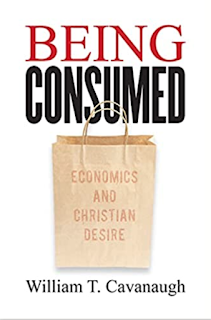
Being Consumed: Economics and Christian Desire by William T. Kavanaugh

I actually bought this book thinking it was written by John F. Kavanaugh, who wrote the excellent Following Christ in a Consumer Society. I was wrong (the last names aren't even spelled the same) but I think the mistake was understandable, given the similar themes and titles. But where John comes at consumerism from the perspective of idolatry and aggregation of goods, William takes almost the opposite tack: the thrust of his argument is that American consumerism isn't really about hoarding--rather it's about the process of consumption itself. I was frequently reminded of the old Christmas bromide that the wait for the gifts is better than opening them:

In consumer culture, we plunge ever more deeply into the world of things. Dissatisfaction and fulfillment cease to be opposites, for pleasure is not in possessing objects, but in their pursuit. The dynamic is not that of inordiate attachment to material things, but an irony and detatchment from all things.


This isn't a healthy detatchment as is taught in ascetic Christianity and Buddhism. Rather it's a detatchment more akin to Marx's alienation--we are alienated from the products (and people) we consume because we lack a real desire to possess the object at all. Far from being a people that keep things forever, Americans are instead increasingly familiar with the idea of planned obsolescence and disposability. And even if corporations weren't in on the grift, who really wants to be using last year's iPhone?

Kavanaugh structures the book around four paradoxical  concepts undergirding consumerism: freedom/unfreedom, detatchment/attachment, global/local, and scarcity/abundance. Each one is treated in a few pages and is then contrasted with a spiritual practice or theological concept: positive freedom via Augustine,  Christian community, Balthassar's "concrete universal", and the Eucharist.

Every chapter is worthwhile: Augustine's concepts of  "freedom to" counterpoints beautifully with Thomas Friedman's "freedom from"; persistent Christian community as an antidote to the consume/replace cycle of consumerism; the Eucharist as a model of abundance (one is reminded of Gerald Manly Hopkins "for all this nature is never spent"). The only contrast that didn't fully work for me was the "concrete universal", which I suspect I didn't fully understand. But that chapter also introduced a concept that I know I'll be thinking about for some times, that most attempts to globalize things--products, "diversity", religion--are actually a way of homogenizing them and stripping them of what is unique:

The mobility and universalization of transnational corporations has had a profound effect on culture. It is possible to drive from one coast of the United States to the other and eat the same food, stay at the same motel, shop at the same mall, hear the same music on the radio, hear the news delivered in the same accent, see the same cars, see the same clothes, and hear the same narrow range of political opinions all the way from Florida to Oregon, from California to Maine... I have heard "Disco Duck" in Yugoslavia and eaten at a Pizza Hut in Chile.

A diversity program where the skin tones are different but the culture stays the same; religions where a God of some sort is a constant but truth claims must be restricted to the most anodyne and agreeable, and steakhouses with identical menus but different copyrighted names for the dishes: as Hank Hill would say, "you're not making [the world] better, you're making [the world] worse. Ultimately such flattening erases any edges that can be picked at to escape the suffocating homogeneity of the modern world, and with no loose ends to pull, what is there to do but consume, replace, consume?

The most effective theological move in the book is the Eucharist--the infinite yet distinct body of Christ--as a model of abundance, one that doesn't simply state that abundance is an achievable state for some but actually overthrows the idea of scarcity altogether. I was strongly persuaded by the argument that Kavanaugh puts forth, that scarcity is manufactured to produce need and stimulate the borderline-metaphysical market:

It is not simply that the market encourages an erotic attachment toward things, not persons. It is that the market story establishes a fundamentally individualistic view of the human person. The idea of scarcity  assumes that the normal condition for the communication of goods it through trade: to get something, one must  relinquish someting else. The idea of scarcity implies that goods are not held in common, that the consumption of goods is essentially a private experience. The idea of scarcity establishes the view that no one has enough.

"The idea of scarcity establishes the view that no one has enough." What a powerful statement, and what an indictment of a nation where most of the populace lay claim to "life more abundant" while simultaneously affirming the sacred nature of  commerce, the divine right of billionaire oligarchs, the destruction of the literal planet to drive endless growth (but only for the few) and the essential rightness of a world where millions starve while we consume more and more and more.

Thursday, March 5, 2020

The Quest for the Historical Satan by Miguel A. De La Torre and Albert Hernandez

In a very real way, the search for the historical Satan is an attempt to justify God's grace while legitimizing the reality and presence of evil in human history.  At least this seems to be what was occurring with the birth and development of Satan in the legends of pre-Christian mythology and across the pages of the Jewish, Christian, and Islamic sacred texts and Scriptures.  It appears that the development of Satan was, to a certain extent, trying to save God form appearing as the source of evil that is so much a part of the reality of human suffering and death.  The Scriptures attempt to convince us that God is still worthy of our worship despite the presence of evil, even though the most troubling conclusion derived from the Judeo-Christian biblical text is the discovery of a God who is the cause and author of all that is good--and all that is evil.

For Miguel De La Torre and Albert Hernandez, the authors of The Quest for the Historical Satan, the nature of Satan is inextricably tied up with the biggest question about God: if God is both omnipotent and perfectly good, why does evil exist?  Pre-Christian Jewish texts seem to have no problem casting God in a dubious light, as when he encourages Abraham to kill Isaac.  A "Satan" appears in the book of Job, of course, but his relationship to God is awfully ambiguous; is he an agent of God or an adversary?  And if he's an adversary, why is God so willing to do what he suggests and torture poor Job?

In The Quest for Historical Satan, De La Torre and Hernandez trace the growth of the Satan figure over centuries.  When Christian thought begins to demand God's perfect goodness, they argue, conceptions of Satan change.  The story of Lucifer, the fallen angel, gets assimilated into the story of Satan because it allows us to understand how evil comes about, not from God himself, but from a rebellious angel who works to undo God's beneficence and grace.  And yet, this understanding of Satan is troublesome, too.  If Satan is so powerful, a kind of foil to God himself, doesn't Christianity stretch the definition of monotheism?

The authors' history of Satan through the years is as predictable as it is bleak.  Time after time, this version of Satan, with slight ideological and theological emendations, is used as a representation of the political and cultural other.  It begins with the Church Fathers, claiming their opponents are not just heretics but inspired literally by the devil.  In the hands of medieval Christians, Satan becomes a Jew, then a Muslim; in the hands of explorers, the rites of Native Americans become Satanic.  There's a whole thing about witches in Puritan Massachusetts you might have heard about.  Throughout it all, De La Torre and Hernandez stress the continuing development of an ideology that associates Satan with "pure evil," an observation that seems somehow too commonplace and dreary to fully appreciate its implications.

The most interesting part of The Quest for the Historical Satan comes after the authors are done questing: they offer, in place of the popular conception of Satan as an antagonist of God who represents pure evil, an understanding of Satan as a kind of trickster figure, like Coyote or Br'er Rabbit.  Like those legendary figures, Satan uses deception to spur the complacent to reassess their own beliefs and habits--look what happens to Job when Satan convinces God to trick him, after all.  This reimagining of Satan comes from the context of a liberation theology, and fashions a Satan that serves as a goad for powerful and self-righteous people.  I'm not sure I buy it, but it sure is interesting and bold--and a hell of a lot better than the way we think about Satan now, and have been for centuries.

Friday, January 3, 2020

Thinking About God by Dorothee Solle

One of the catastrophic consequences of capitalism is what it does to rich people at the heart of this economic system by reducing humanity to the individual.  One an see how American commercialism presents all items as being 'quite personal to you', even if millions of them exist.  Your initials must be on your T-shirt, on your ball-point pen, on your bag--and on your Jesus.  He too is quite personal to you.  The spirit of commercial culture is also alive in this religion: for fundamentalism, which is massively effective, Jesus is 'my quite personal Saviour', and really no more can be said about that.  The confession of 'Jesus Christ--my personal saviour' brings no hope to those whom our system condemns to die of famine.  It is a pious statement which is quite indifferent to the poor and completely lacking in hope for all of us.  In the light of this individualistic reduction we must put the question of Christ 'for us today' in the age and place in which we live.

A friend of mine once said that one of the things that surprised him the most about me is that I go to church.  I won't lie and say people say that stuff to me all the time; most people even in lefty Brooklyn still keep religion away from the dinner table.  But I'm sure he's not the only one to be surprised by it, and there are times that I'm surprised by it myself.

Why is that?  Why is religion--and specifically, Christianity--such an antiquated piece of the furniture of life?  Dorothee Solle, in her book Thinking About God, writes about all the people she has known that have discovered, late in life, a form of Christianity that does not resemble the one they grew out of as children, a kind of poisoned orthodoxy that is reduced to claims of obedience and authority.  She calls these the "unholy Trinity," the "authority of the father, the state and of order," and it's hard not to recognize in those three nouns much (all?) that is wrong with the world.  Who would want to be associated with all that except masochists, Jesuits, and tradwives?

Living in 2020 (holy shit), in New York City, I think my friends understand that the orthodox mode of Christianity is not the only one.  There are alternatives, as Solle illustrates, grown out of the Reformation and Enlightenment, which might be called "liberal" Christianity.  Liberal Christianity embraces reason, historicity, and the separation of the church and state.  When pressed, most secular American probably look more kindly on it, but with a mix of bemusement and perplexity.  It's not as bad as the alternative, they might say, but what exactly is the point of it?  Even growing up in an evangelical Christian church, this is the kind of Christianity I professed, but more and more it seems rather feckless, insisting on engaging a secular world on secular terms that hardly seem commensurate with Christ's insistence that he is not "of the world."

But in Thinking About God, Solle separates from these two a third theological understanding, which she calls "radical," but which is really the liberation theology developed by Latin American, black, and feminist theologians in the 20th century.  The first few chapters of the book focus on big topics--creation, sin, grace--in theology through each of these three lenses--orthodox, liberal, radical--although her method reminds me of Terry Eagleton's approach to literary criticism, who lays out all the options without hiding that he thinks Marxist criticism is the only approach that really works.  For Solle, radical theology is the only way of thinking capable of speaking to who Christ is "for us today," and for the most part, I agree.

One example of Solle's that sticks with me is her exposition on the story of the Virgin Mary.  To orthodox traditions like Catholicism, the story of the virgin birth is literal and meaningful because it is miracle: it signifies the miraculous nature of Christ and elevates Mary to an exalted place by virtue of God's favor.  To liberal traditions, the virgin birth presents a problem: it is not attested for in every Gospel, and furthermore, its suggestion of the primal importance of obedience (Mary obeys God's messenger without complaint) is a little icky.  A little textual criticism, poof, voila, it's thrown out.  It doesn't matter.  And indeed, in the evangelical church I grew up in, the virgin birth was of very minor importance.  But to radical traditions, what matters about Mary is that she is a woman, a refugee, and poor, an oppressed person three times over; her special place in the Gospel story is a representation of the special place of oppressed people in God's eyes.

This is one of the important tenets of liberation theology: only theology which comes out of oppressed communities can have any validity.   The "personal savior" of liberal theology, which reduces everything--grace, sin, Jesus, whatever--to the individual not only fails to account for the state of the world, it fails to account for much of what goes on in the Bible.  Only the ideologies of the powerful could spend so much time trying to get around Jesus' love for lepers, prostitutes, and beggars, or the simple insistence that a rich man has just as much chance entering the Kingdom of God as a camel does passing through the eye of a needle.  

The differences between orthodox/liberal theologies and radical ones aren't small ones--they aren't merely reduced to a greater interest in the poor.  The cross, as in James Cone's work, becomes not a site of mystical sacrifice so much as a symbol of God's identification with the sufferers of the world and against the powers and institutions which, like the Roman state, inflict suffering.  The word "heaven" barely appears in Solle; the kingdom of God is moved to the here and now.  The latter parts of the book expound on the tenets of radical liberation theology for which there are no ideological analogs in other traditions: feminist theology, Black liberation theology, and the theology of peace.

I wasn't sure what to say to my friend.  I never am when people ask me about this stuff.  I know that there is no possible answer in orthodox or liberal theology that would make any sense at all.  But when I think about the rottenness of the world right now--its bloodthirstiness, its hatred of the poor, of women, of marginalized peoples of all kinds--I start to think that liberation theology is the answer to more questions than these.  If nothing else, as Solle describes so articulately here, it's the difference between an unfeeling theology which cares only about life after death, or the state of the hidden soul, and one which insists on the wholesale transformation of a bloody and poisonous culture.

Sunday, May 27, 2018

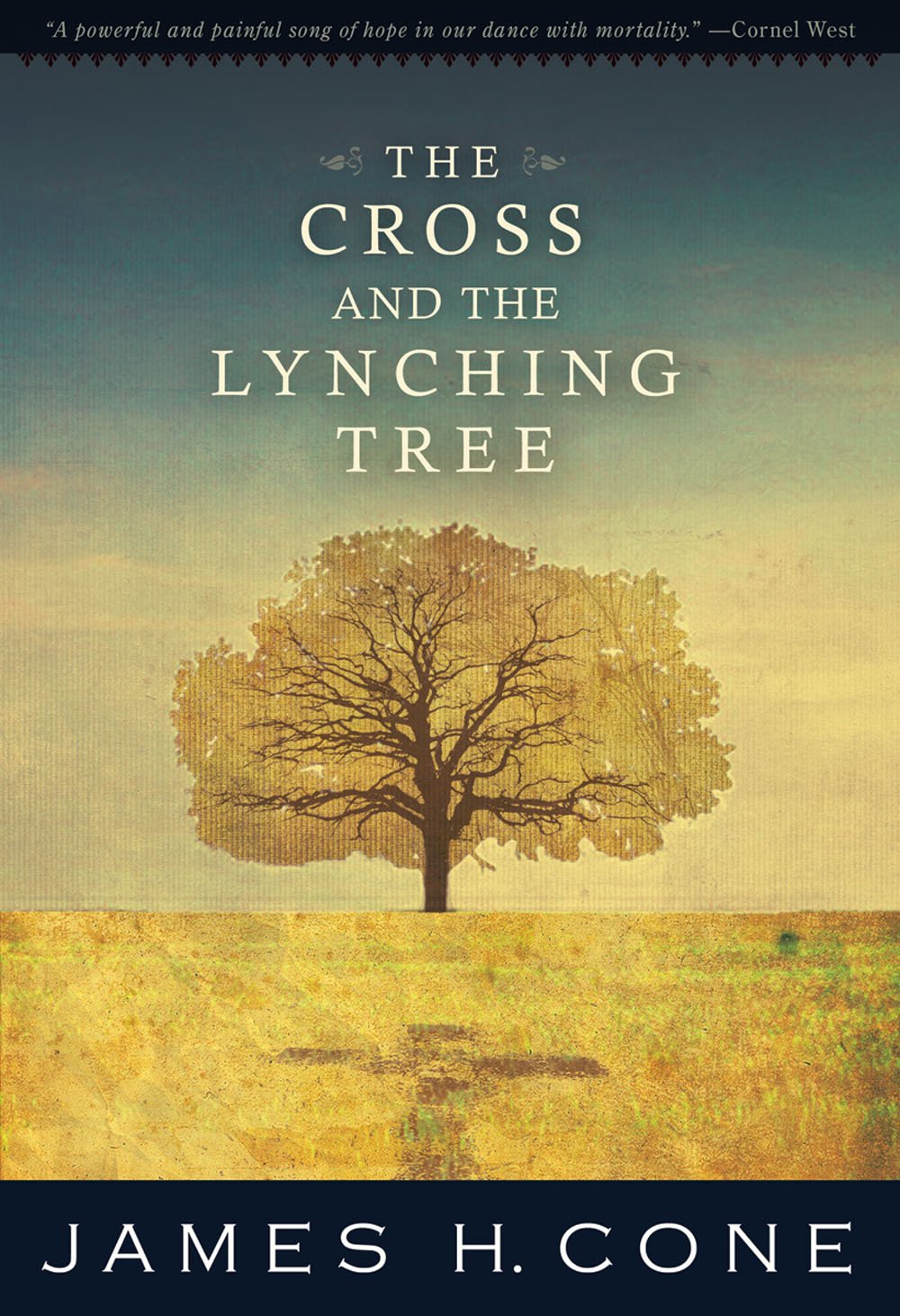
The Cross and the Lynching Tree by James H. Cone

Because God was present with Jesus on the cross and thereby refused to let Satan and death have the last word about his meaning, God was also present at every lynching in the United States.  God saw what whites did to innocent and helpless blacks and claimed their suffering as God's own.  God transformed lynched black bodies into the recrucified body of Christ.  Every time a white mob lynched a black person, they lynched Jesus.  The lynching tree is the cross in America.  When American Christians realize they can meet Jesus only in the crucified bodies in our midst, they will encounter the real scandal of the cross.

The central thesis of James Cone's The Cross and the Lynching Tree is exceedingly simple: the symbol in American life that resembles the cross of Christianity most closely is the tree on which thousands of black men and women were lynched.  Cone repeats this simple observation over and over again, if only to make the point that it is obvious, and he shouldn't have to keep saying it.  With it comes a sobering and challenging truth: that white Christianity has had to work extremely hard over the past few centuries to ignore this fact, and build a version of white Christianity that is inured from grappling with its own role in perpetuating atrocity.  How can it be that the people in those old souvenir photos of brutal lynchings would call themselves Christians, when they are reenacting the bloody work of the crucifiers?

This was a difficult read.  I'd like to think I have a kind of objective distance from the evangelical tradition I grew up in, but The Cross and the Lynching Tree made me think about the model of sin and salvation that it promulgated in a new light.  I was taught to believe in a narrow version of sin that existed only between individual people.  I might sin against my wife through adultery, or against a friend by lying to them, but confession and forgiveness might lead to reconciliation.  There was no sense of sin on a social, structural, or national scale--or of Martin Luther King's assertion that justice is what love looks like on a social scale.  There was plenty of charity and hard work, but never a sense that it was necessary in order to atone and correct for structural inequalities perpetuated by the white church in other ways.  Of course, neither did we think of ourselves as the white church.  We had members of color enough to avoid thinking of ourselves that way, but I think that an honest reckoning would situate those traditions in a history of whiteness.  Like Pilate we wash our hands of it.

I'm no theologian.  Brent can probably give you a better sense of how this book is situated in the debates about theology in the 20th century than I can.  I get the sense that Cone, a distinguished theologian at Union Seminary, has chosen to write in a mode where pure theology is minimized.  There is an intriguing suggestion that the cross is not, as I was taught to think about it, the location of a functional salvation but a pure symbol that represents God's alignment with the suffering of the marginalized and oppressed.  (Such a reading would be a deep and brutal indictment of, among other things, mansion-owning hucksters like Joel Osteen.)  Yet that seems only lightly developed or defended to me.

Instead, Cone offers a series of chapters each in a different mode: a historical account of lynching (almost too difficult to recap in any meaningful way), a theological challenge to Reinhold Niebuhr as emblematic of white passivism, a straight-up biography of Martin Luther King, Jr.  My favorite was a chapter of literary exegesis that traces the connection between the cross and the lynching tree in the work of black poets, artists, and musicians.  "It takes a powerful imagination, grounded in historical experience, to uncover the great mysteries of black life," Cone writes.  To him the truest theologians and prophets are poets.  Another chapter approaches womanist critics by meditating on the importance of women in the story of those who suffered lynching and those who attacked it.

The only thing that I wanted more of was a sense of the here and now.  How does the lynching attitude, the dehumanizing of black bodies and lives, inform our understanding of police brutality today?  Cone spares a final chapter to sketch these ideas--"The lynching of black America is taking place in the criminal justice system where nearly one-third of black men between the ages of eighteen and twenty-eight are in prisons, jails, on parole, or waiting for their day in court"--but the absence of the symbolic lynching tree means this section lacks the force and power of what precedes it.  Perhaps we will never be able to fix the problems in our policing and our criminal justice system without having a reckoning first about the despicable history of lynching.

Thursday, January 18, 2018

The Color Purple by Alice Walker

I remember one time you said your life made you feel so ashamed you couldn’t even talk about it to God, you had to write it, bad as you thought your writing was. Well, now I know what you meant. And whether God will read letters or no, I know you will go on writing them; which is guidance enough for me.

Initially, I wasn't that impressed with The Color Purple. I reached the midpoint and was discussing it with Chris, and I mentioned that it seemed to be covering ground too similar to other books I'd read recently--Beloved and Homegoing--without catching me in the same way. He observed that I'd probably read many other books on the same topics without complaint, but was kind enough not say "try harder". However, I did, and ultimately came to appreciate The Color Purple on its own, somewhat unusal terms.

So, to kick things off, there are a few unusual things about the book that set it apart. It's in epistolary form, with about half the book being letters from the main character, Celie, to God and about half being from (minor spoiler) her younger sister, Nettie, who disappears early on but reappears later to pick up the other half of the narrative.

The story itself is broken into two pieces: the first half of the book is primarily letters by Celie, describing her life in the Jim Crow south; the second half is dominated, though not monopolized, by letters from Nettie, who has connected with a family of black missionaries headed to Africa under a white-owned missions organization.

Celie's letters are written in dialect, but never in a way which overwhelmed me--I'm not a huge fan of dialect--and it provides a nice ironiic syslistic distinction between Celie's tales, in which white people hardly appear, and Nettie's, in which the white missionaries make only token appearances but whose presence is felt even in the much more "proper" way Nettie learns to speak.

Nettie's story covers a lot of similar ground as Things Fall Apart, but from the perspective of the missionaries. It was interesting and at times quite sad--colonialism was a real bitch--but the emotional heft of the story belongs to Celie and her emotional, spiritual, and romantic awakening. But I did want to include this excerpt, which resonated with me regarding the way that our unconcious nationalism can easily breed resentment toward those who don't accept what we think they need to hear:

The Africans never asked us to come, you know. There’s no use blaming them if we feel unwelcome. It’s worse than unwelcome, said Samuel. The Africans don’t even see us. They don’t even recognize us as the brothers and sisters they sold. Oh, Samuel, I said. Don’t. But you know, he had started to cry. Oh Nettie, he said. That’s the heart of it, don’t you see. We love them. We try every way we can to show that love. But they reject us. They never even listen to how we’ve suffered. And if they listen they say stupid things. Why don’t you speak our language? they ask. Why can’t you remember the old ways? Why aren’t you happy in America, if everyone there drives motorcars?

Which brings me to the other thing I didn't know about this book: it is, in large part, a lesbian romance. Or rather, Celie seems to be a lesbian while her lover, Shug, is bisexual. Their friendship develops so naturally into a physical romance that it almost happens without notice. There's certainly no fanfare or any particular fuss made about it, in Celie's mind or by those around her.

Finally though, The Color Purple is a deeply spiritual book, although it takes pains to demonstrate that it's not a pamphlet of colonial Christianity. The libertine Shug turns out to be the novels spiritual center, in spite of Celie's letters to God. At one point, Celie is faced with a tragedy that undermines her faith:

What God do for me? I ast. She say, Celie! Like she shock. He gave you life, good health, and a good woman that love you to death. Yeah, I say, and he give me a lynched daddy, a crazy mama, a lowdown dog of a step pa and a sister I probably won’t ever see again. Anyhow, I say, the God I been praying and writing to is a man. And act just like all the other mens I know. Trifling, forgitful and lowdown. She say, Miss Celie, You better hush. God might hear you. Let ’im hear me, I say. If he ever listened to poor colored women the world would be a different place, I can tell you. She talk and she talk, trying to budge me way from blasphemy. But I blaspheme much as I want to.

But Shug is there to give this lovely speech:

I is a sinner, say Shug. Cause I was born. I don’t deny it. But once you find out what’s out there waiting for us, what else can you be? Sinners have more good times, I say. You know why? she ast. Cause you ain’t all the time worrying bout God, I say. Naw, that ain’t it, she say. Us worry bout God a lot. But once us feel loved by God, us do the best us can to please him with what us like. You telling me God love you, and you ain’t never done nothing for him? I mean, not go to church, sing in the choir, feed the preacher and all like that? But if God love me, Celie, I don’t have to do all that. Unless I want to. There’s a lot of other things I can do that I speck God likes.

I would like to write at more length about the treatment of God and spirituality in the book, but honestly, I don't feel qualified. Much of Walker's theology seems rooted in animism and pantheism, but she ties such a lovely bow on it that I'm not compelled to critique or dissect it. Celie's spiritual journey is something beautiful, as far as I can tell, and it doesn't need me whitemansplaining it.

So sometimes, I guess it's true that books require some extra work, not just on an intellectual level, but on a personal one as well. I feel as though recentering my focus on The Color Purple helped me root out some unconcious racist assumptions in myself--and if that's not a good takeaway from a book, I don't know what it. Also, the end made me cry.

Sunday, May 30, 2010

The Weight of Glory by C. S. Lewis

The difference between this situation [forgiving your fellow man] and the one in which you are asking for God’s forgiveness is this. In our own case we accept excuses too easily; in others, we do not accept them easily enough. As regards my own sins it is a safe bet that the excuses are not really so good as I think; as regards other men’s sins against me it is a safe bet that the excuses are better than I think.

C. S. Lewis is my favorite writer. Like John Updike according to the blurb on the back of my copy of The Weight of Glory, “I read Lewis for comfort and pleasure many years ago, and a glance into the books revives my old admiration.” Everything I desire in non-fiction is present in Lewis’s essays: a consistent but not overbearing authorial voice, a dry sense of humor, and the thoughts of a mind sharp enough to generate thought whether you agree with them or not.

The Weight of Glory is a collection of essays, some of which are adapted from radio addresses Lewis delivered throughout his life. They touch on some the subjects you might expect from Lewis: theology, mythology, Christianity, and some you may not, such as cliques and war. Although it’s true that all these essays end up tying into bigger theological concerns, the smoothness and logic with which Lewis lays out his arguments ought to be an inspiration for Kierkegaards everywhere.

The titular essay concerns itself with the afterlife and the Christian’s response to it. It’s quite powerful and moving, one of the best he ever wrote, and yet the shortest essay in the book, one titled “Forgiveness” was the most impactful on me, saying more in a scant 5 pages than many authors can say in an entire book. The excerpt that opens this review comes from it, and seems to me to be wonderful advice to keep in mind whether you’re a Christian or not.