Showing posts with label addiction. Show all posts

Sunday, December 14, 2014

Confessions of an English Opium-Eater and Other Writings by Thomas de Quincey

Here was a panacea -- a pharmakon nepenthes -- for all human woes: here was the secret of happiness, about which philosophers had disputed for so many ages, at once discovered: happiness might be bought for a penny, and carried in the waistcoast pocket: portable ecstacies might be had corked up in a pint bottle: and peace of mind could be sent down in gallons by the mail coach.

De Quincey's memoir Confessions of an English Opium-Eater is separated into sections called "The Pleasures of Opium" and "The Pains of Opium," interwoven with biographical passages that describe the poverty and homelessness that led him to seek comfort in opium.  But it's hard to shake the impression that the pleasures outweigh the pains--often de Quincey's description of the opium experience seems to foretell the pro-hallucinatory rhetoric of the 1960's.  "I sometimes seemed to have live for 70 or 100 years in one night," he writes, "nay, sometimes had feelings representative of a millenium passed in that time, or however, of a duration far beyond the limits of any human experience."  But when shit gets bad, shit gets bad:

But now that which I call the tyranny of the human face began to unfold itself.  Perhaps some part of my London might be answerable for this.  Be that as it may, now it was that upon the rocking waters of the ocean the human face began to appear: the sea appeared paved with innumerable faces, upturned to the heavens: faces, imploring, wrathful, despairing, surged upwards by the thousands, by myriads, by generations, by centuries: -- my agitations was infinite, -- my mind tossed -- and surged with the ocean.

De Quincey's descriptions of his opium dreams are intricate, harrowing, and often grotesque.  I wanted more of them.  I think I hadn't expected the extensive autobiographical stuff that dominates the first section--mostly about de Quincey's endless drifting through London--and so it was difficult to adjust that expectation.  I really just wanted to the get to the opium.

I think I enjoyed the appended writings a little more for that reason.  One is a collection of essays and scraps of memoir called Suspiria Profundis, and one a short meditation on the English Mail-Coach, which apparently doubled as a kind of hired long-distance transportation.  I especially liked a brief piece from Suspiria Profundis called "Savannah-la-Mar," which uses the image of a drowned Jamaican city to meditate on the passage of time and its relationship to God.

Apparently The Confessions lead a bunch of people to actually become addicted to opium.  It didn't have that effect on me, but maybe I didn't read it closely enough.  How about you, Liz?

Tuesday, July 23, 2013

White Out by Michael W. Clune

"Wishes begin in white. Jesus is white Madonna is white. The queen is white. The moon is white. The white tops are white. A picture starts out as a white space. A white space is a picture of the future. The future poses, the camera snaps, the picture is pure white. In Baltimore that summer the best heroin was sold in little glass vials with white stoppers. White tops."

White Out is a memoir about drug addiction, specifically heroin. In the first chapter, "Memory Disease," Clune describes the strong grip heroin had on him and its deleterious effects. But he does so through conversations, gritty characters, and grim scenes.

Throughout the book, it is rare that Clune's writing is overtly didactic. He chooses rather to rely on the reader to draw conclusions from the stories he presents. That's really what they are: stories. Because while White Out is a memoir, it reads like a novel. At numerous points, I was reminded of scenes from HBO's The Wire, which was also set in Baltimore. The people Clune introduces the reader to seem almost too tragic to be real: Henry who lost an arm after passing out on top of it in a heroin-induced sleep; the people trying to get clean that he meets at various clinics; and Clune himself, perhaps the most tragic.

Clune eventually gets clean. I imagine it would be impossible to write a publishable book while addicted to heroin. He credits his sobriety to "the machine"--to the habits he formed in the early days of his recovery. Habits like meditation, going to NA meetings, and making lists for himself. But besides making to-do lists each night for the following day, Clune says he does not think about the future. The future, in all of it whiteness.

Monday, February 16, 2009

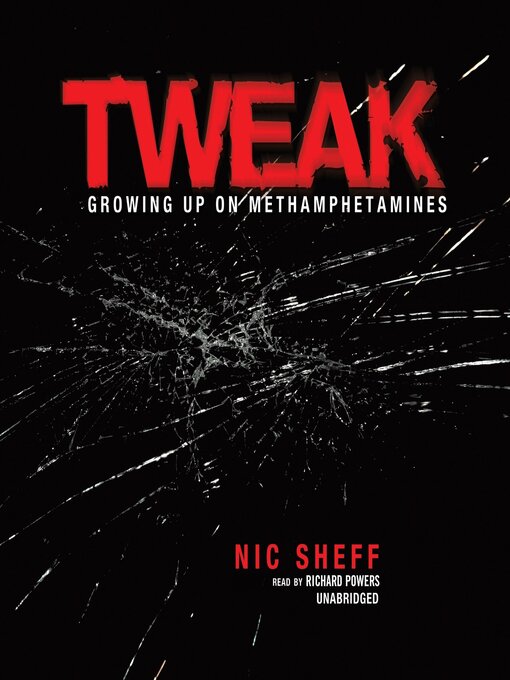
Tweak by Nic Sheff

I'd been sober exactly eighteen months on April 1st, just two days ago. I'd made so much progress. My life was suddenly working, you know? I had a steady job at a rehab in Malibu. I'd gotten back all these things I'd lost - car, apartment, my relationship with my family. It'd seemed like, after countless rehabs and sober livings, I had finally beaten my drug problem. And yet there I was, standing on Haight Street, drunk on Stoli and stoned on Ambien, which I'd stolen from the med room at that rehab.

Honestly, I was as surprised by my own actions as anyone else.

"Tweak: Growing up on Methamphetamines" is author Nic Sheff's memoirs of his last two relapses into drug abuse. Nic is the son of David Sheff, the "Beautiful Boy" in the title of the elder Sheff's own memoir. When I reviewed that book, I mentioned that I planned on reading Nic's version of the events. I'm glad I did, but I'm happy that I waited a few weeks, rather than read the two books as the companion volumes that so many critics are making them out to be.

Tweak starts with the first of Nic's most recent relapses. Nic doesn't spend a lot of time ruminating on the whys of each relapse episode. He doesn't really get very introspective until the end of the book, when a dual diagnosis (mental illness and addiction) rehab center helps him get to the root of the psychological basis for his addictions. For most of the book, Nic just details the horrors of his present, and even the relative bleakness of his year of sobriety in between his two latest relapses.

One thing I found interesting was Nic's pervasive feelings of worthlessness and his need to use others for his own self-validation. He particularly falls into this with his relationships. Each of Nic's relapses coincides with a relationship. In the first, he meets up with and dates old friend and recovering addict Lauren only after his relapse, causing her to relapse as well. The two spend a drug fueled month holed up in her parents' home why they are away, alternately shooting up mixtures of meth and heroin or having sex. It takes getting away from Lauren for Nic to achieve sobriety after that month, only after stealing from parents' and friends' homes and dealing meth with a street kid named Gack for money. Although Nic and Lauren profess to love one another, Nic notes that he has never spent time with Lauren sober. This relationship and relapse seem minor compared with the second Nic details.

While sober, Nic is consumed by feelings of depression, mania, and worthlessness. He writes about considering going back to Lauren, reasoning, "I know she had problems, but at least I had a girlfriend. So far I haven't met anyone that I could possibly have a relationship with. That is a big thing for me. I've always felt sort of worthless if I didn't have a girlfriend."

Throughout the book, Nic writes about episodes of his life from when he was younger, or from other relapses. He describes letting gay men have sex with him for money to buy drugs, and stealing cancer medication and needles from his girlfriend's mom's house to get high. He describes his "unconventional" childhood, being toted around with his single dad to movie previews, parties and around San Francisco. He describes being a little boy and running into his dad's bedroom one morning to find a naked woman in bed too. This was the late 1980s in San Francisco and precocious Nic's first worry is that his dad will catch AIDs. It is only after his dad shows him with a condom and a banana how he is protecting himself that Nic feels better. Nic writes that, "My dad used to tell that story to his friends like it was really funny and cool," subtly digging at his unsheltered upbringing.

The second half of Tweak is dominated by Nic's latest relapse, spurred in part by his relationship with Zelda, the love of his life. Zelda ("Z" from Beautiful Boy) is 15 years older than Nic, divorced and Hollywood royalty. Nic feels validated just by being with her and their friends, a group of writers, actors and other Hollywood elite. He is so defined by these relationships that at his last rehab, he is put on a "no name-dropping" contract so he can no longer use his connections to brag. Zelda is pretty damaged, the product of many failed relationships and a drug addicted mother who committed suicide by hanging herself.

Nic and Zelda become completely codependent on one another and the book becomes a twisted drug-addled love story towards the end. They find themselves getting engaged while high one night, selling their possessions for drug money, and fighting constantly while strung out and psychotic from meth, Suboxone, heroin, coke, crack, benzos (it's a product of my sheltered upbringing that I don't even know what those are...Nic doesn't elaborate), and various other prescription drugs. Nic finally bottoms out when he gets stuck in a psychotic break in his own mother's garage while trying to break into her house and steal a computer. His parents offer him a last chance: rehab or they press charges and he goes to jail.

Nic reluctantly chooses rehab, and in the process learns more about his underlying need for validation, his connections between sex and self-validation, his underlying diagnosis of bipolar disorder and his tendencies towards codependent relationships. He writes in Tweak's final chapters that he is finally listening to his feelings and beginning to grieve for the time he has lost and the experiences he has put himself through. The book ends on a hopeful note, despite his parents' reluctance to fully believe in his sobriety, having been through rehab so often with him.

Nic's story was more critical of his parents and upbringing than I would have thought going into it. He describes his ruined relationship with stepmother Karen and his dislike of his stepfather Todd, who he doesn't feel treats his mom well. He describes his dad as his best friend and hero in one breath and denounces his over exposed childhood in another. He writes that the long distance dual-custody arrangement put him directly in the middle of his parents' bickering and that they constantly subjected him to their tirades against one another. At the same time, he recognizes that what he has put his parents through during his relapses far surpasses any anger he feels towards them.

This was a very graphic book, typical of the addiction and recovery memoirs I've read, both YA and adult (Go Ask Alice, Smack, Million Little Pieces). Nic spares no detail in describing his drug-fueled marathon sex with Lauren and Zelda; an orgy he participated in as a sex worker; a festering wound from a dirty needle that abscessed and nearly caused him to lose his arm; the struggle to find a vein that hasn't collapsed in the middle of his relapses. It's definitely an interesting and quick read. I'm glad I read it, because David Sheff presents himself as a bit of a martyr in "Beautiful Boy." Tweak allows us to see the struggle on the other side. I'm not excusing anything Nic does (he doesn't ask readers to), but it is interesting to read about the influences Nic was exposed to growing up.

Tuesday, January 27, 2009

Beautiful Boy by David Sheff

In his suicide note, Kurt Cobain wrote, "It's better to burn out than to fade away." He was quoting a Neil Young song about Johnny Rotten of the Sex Pistols. When I was twenty-four, I interviewed John Lennon. I asked him about this sentiment, one that pervades rock and roll. He took strong, outraged exception to it. "It's better to fade away like an old soldier than to burn out," he said. "I worship the people who survive. I'll take the living and the healthy."

The living and the healthy.

I do not know if my son can be one of them.


The full title of David Sheff's memoir is "Beautiful Boy: A Father's Journey Through His Son's Addiction." It's a pretty awesome book, and unusual because I haven't read a book about addiction from the view of a parent before this. There are a lot of former-addict memoirs out there (James Frey, Anthony Kiedis, the anonymous author of "Go Ask Alice") and while poignant and touching, the genre is starting to feel a bit tired. I think my disillusionment started with the whole "A Million Little Pieces" debacle (Oprah said she felt "really duped." Me too Oprah. Me too.)

Anyway, back to Beautiful Boy. Call me voyeuristic, but I enjoy memoirs and biographies (even fake ones; see my review of "American Wife") above all other forms of literature. I also really like the A&E show "Intervention." Put those two things together and you have this book. I knew I was going to like it and I did. What surprised me was the quality of the writing. This wasn't some random parent struggling to give his son's disease justice. This was a writer struggling to give his son's disease justice. Sheff was distinguished for his writing career before this best-seller's release. He had the privilege of writing one of the last interviews with John Lennon, when he asked the musician the question above.

Beautiful Boy is a story about addiction, but Sheff didn't want that to be his son's entire story. So he starts at the beginning of Nic's life, and spins a tale of a precocious, creative, adorable child growing up in Northern California amid the chaos of his parents' divorce and an imperfect joint custody agreement that spans several hundred miles. Nic seems like a pretty terrific kid all the way up through high school. He shares a special relationship with his dad, and welcomes a new stepmom and, in time, baby siblings. All the while, Sheff paints a portrait of an extraordinarily sensitive and caring child.

Nic is a friend to everyone. He experiments with alcohol and pot at an early age but after some initial concern, his dad dismisses the incidents as normal teenage experimentation. Sheff himself had a colorful adolescence with regard to drugs, so he is inclined to be forgiving. Later, his openness with Nic about his past will be one of the many things Sheff blames himself for.

It is not until Nic's senior year of high that his behavior and experimentation turn seriously harmful. While he does manage to graduate, Nic spends most of the year in a haze of smoke, and tries hard drugs for the first time the night of graduation. In college, Nic discovers meth, which he says is like finding something he's been looking for his whole life. "When I tried it for the first time, that was that," he says.

Nic's battle with drug and alcohol addiction, particularly to the pernicious methamphetamine, takes over the second half of Sheff's book. In and out of rehab, homeless on the streets, stealing from his own parents and grandparents, Nic is constantly attended by his addiction and his father's love. In the second half of Beautiful Boy, Sheff takes on a more introspective tone, as he turns inward to deal with what he calls his addiction to his son's addiction. Sheff realizes that he is so preoccupied with his son's disease that he's neglecting his wife, his other children and his own mental health. After a lot of family therapy, Al-Anon and his own life-threatening illness, Sheff ends the book on a cautiously optimistic note: Nic, despite several relapses, is sober for the time being.

I really appreciated the author's interesting writing style when reading this book. It kind of made me feel like I was drinking in this family's saga, rather than just reading words off a page. I'd confidently recommend this book to lit snobs just as often as story lovers like myself. Interestingly, Nic has written a YA memoir too, called "Tweak: Growing Up on Methamphetamines." I haven't decided if I'm going to read Nic's memoir yet, but if I do, you'll see it on here.