It was so bright, brighter than he remembered. The sun, having sucked away the blue from the sky, loitered there in a white heaven, menacing Lotus, torturing its landscape. but failing, failing, constantly failing to silence it: children still laughed, ran, shouted their games; women sang in their backyards while pinning wet sheets on clotheslines; occasionally a soprano was joined by a neighboring alto or tenor just passing by. "Take me to the water Take me to the water. Take me to the water. To be baptized." Frank had not been on this dirt road since 1949, nor had he stepped on the wooden planks covering the rain's washed-out places. There were no sidewalks, but every front yard and backyard sported flowers protecting vegetables from disease and predators--marigolds, nasturtiums, dahlias. Crimson, purple, pink, and China blue. Had these trees always been this deep, deep green?
Out on the west coast, Korean War vet Frank Money gets a note saying that his sister Cee, still in their hometown of Lotus, Georgia, is in danger. Frank swore that he would never go back to Lotus, but his love and concern for Cee draws him back, and he embarks on a cross-country train trip to save her from the ambiguous threat. A dissociative outburst has placed him in a psych ward, and so he goes without money (or shoes), depending on the kindness of strangers and navigating the complexities of segregation. Back in Lotus, Cee has taken a job with a eugenicist who is using her for grotesque uterine experiments.
Frank Money has a pretty Toni Morrisonesque name, and this is a pretty Toni Morrisonesque novel. Like Milkman's journey to his ancestral Southern home in Song of Solomon, Frank's journey is a variation on The Odyssey, and the contours are clear from the jump: Frank will finally get home, but not without facing some real weirdness on the way, and his rescue of Cee will help him reintegrate into his home and perhaps heal himself where he's been scarred by the horrors of war. But too often Home feels like the outline of a Toni Morrison that's never been fully developed. Its 140 pages (with big font) are too tight to really give the impression that Frank's journey home is an undertaking, rather than a mere symbol, and Morrison's penchant for giving every minor character a turn in the narrative spotlight means the two protagonists get crowded quickly to the corners. The classic elements of her other novels are all there, the weirdnesses--Frank's vision of the world draining of color, a mysterious apparation in a zoot suit--but they hang too heavily on the slight narrative.
The most interesting thing about Home are the interstitial chapters narrated by Frank himself. Morrison loves to play around with point of view (The Bluest Eye, in particular, shifts between first and third person), but the sudden realization that Frank is writing to the author herself is a welcome and worthy surprise. He admits to her that the story he's writing is not quite an accurate one, that the narrative she gives of his time in war--from where, or whom?--minimizes his own culpability in the atrocities there. That's an inspired choice, and it makes me wish there had been a more effective novel shaped around it.
Showing posts with label Home. Show all posts
Thursday, May 2, 2019
Home by Toni Morrison
Labels:
georgia,
Home,
toni morrison
Monday, August 18, 2014
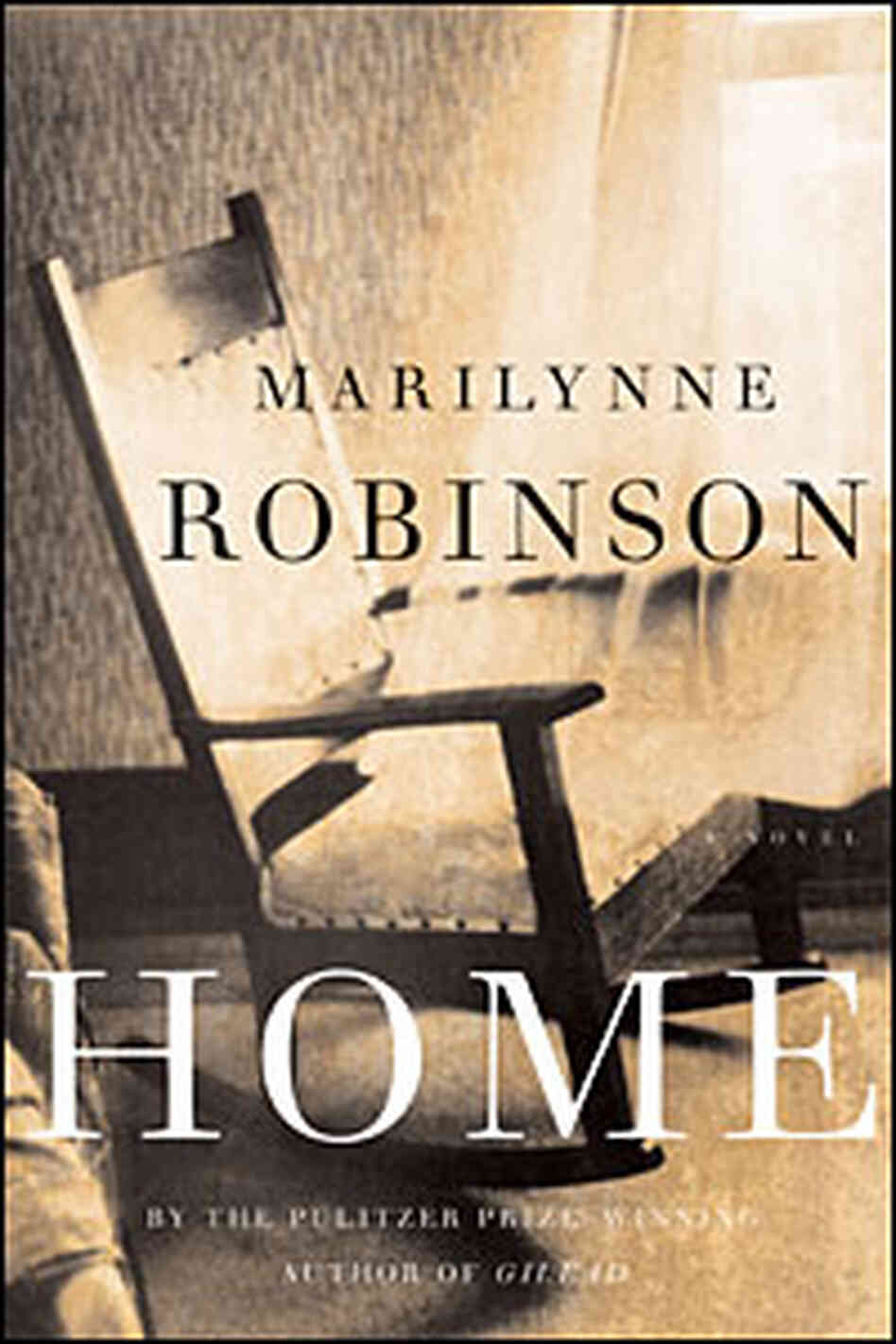
Home by Marilynne Robinson
What does it mean to come home? Glory had always thought home would be a house less cluttered and ungainly than this one, in a town larger than Gilead, or a city, where someone would be her intimate friend and the father of her children, of whom she would have no more than three. Then she could learn what her own tastes were, within the limits of their means, of course. She would not take one stick of furniture from her father's house, since none of it would be comprehensible in those spare, sunlit rooms. The walnut furbelows and carved draperies and pilasters, the inlaid urns and flowers. Who had thought of putting actual feet on chairs and sideboards, actual paws and talons?
She had dreamed of a real home for herself and the babies, and the fiance, a home very different from this good and blessed and fustian and oppressive tabernacle of Boughton probity and kind intent. She knew, she had known for years, that she would never open a door on that home, never cross that threshold, never scoop up a pretty child and set it on her hip and feel it lean into her breast and eye the world from her arms with the complacency of utter trust. Ah well.
Until my recent road trip, I had never been to those corn-strewn centers of the American Heartland: Kansas, Nebraska, Iowa. I decided that I would only take with me books that took place in those states that were new to me, to immerse myself in them twice over. I brought Willa Cather's O Pioneers, which I did not read, and two books that take place in Iowa: Jane Smiley's A Thousand Acres and Marilynne Robinson's Home. I was reading the latter when we drove through the southwest corner of Iowa on our way to Omaha from Kansas City. We were there for only about five minutes before entering Nebraska. Ah well.
Home tells the same story as Robinson's amazing novel, Gilead: Jack, the alcoholic black sheep of the Boughton family, comes home at last, carrying the burden of his estrangement from his wife in St. Louis, who is black. But instead of telling the story through a first-person narrative, as with the Boughton's friend and neighbor Reverend Ames in Gilead, Home uses the third person, focused on Jack's sister Glory, who has herself recently "come home." But Ames' voice and reflection were the strength of Gilead, and their absence drains the story of what was most appealing. Glory, while sensitively and carefully rendered as a character, cannot make up the lack.
I'm not sure what the point of this novel is. Gilead is the Abraham story, I suppose--the old man blessed with a child late in life, concerned with what kind of inheritance and legacy he will leave. Home offers the prodigal son story that is ancillary in Gilead, the main focus instead of a B-plot. And yet, outside of the (pretty vanilla) relationship between Jack and Glory, Home fails to offer any fresh viewpoint on what's already been told. The most interesting gap in Gilead--the relationship between Jack and his wife in the racially charged St. Louis of the 1950's (sad to say that it seems not much has changed on that front)--remains a gap.
Robinson's writing is characteristically stellar, but the humble Heartland nature of the story bleeds into the prose, which is lacking in the kind of show-stopping pyrotechnics of Housekeeping and, to a lesser extent, Gilead. Ultimately, however, it's a frustrating read, unsatisfying and unnecessary. The good news is that Robinson's newest novel, which is about Reverend Ames' wife Lila, comes out in October. Her character is so mysterious and lightly sketched in these novels that a whole book about her should be illuminating in the way that Home wants and fails to be.
Labels:
Home,
Iowa,
Marilynne Robinson
Subscribe to:
Posts (Atom)