Showing posts with label French literature. Show all posts

Friday, March 20, 2020

The Plague by Albert Camus

In this respect our townsfolk were like everybody else, wrapped up in themselves; in other words they were humanists: they disbelieved in pestilences.  A pestilence isn't a thing made to man's measure; therefore we tell ourselves that pestilence is a mere bogy of the mind, a bad dream that will pas away.  But it doesn't always pass away and, from one bad dream to another, it is men who pass away, and the humanists first of all, because they haven't taken their precautions.  Our townsfolk were not more to blame than others; they forgot to be modest, that was all, and thought that everything still was possible for them; which presupposed that pestilences were impossible.  They went on doing business, arranged for journeys, and formed views.  How should they have given a thought to anything like plague, which rules out any future, cancels journeys, silences the exchange of views.  They fancied themselves free, and no one will ever be free so long as there are pestilences.

Why did I do this to myself?  If I were being self-congratulatory, I might say that I read The Plague during a global pandemic because I have decided to face facts, and look the enemy in the eye.  But that's not true; I've stopped looking at Twitter because I can't take the news at the moment.  Maybe there's something pacifying about reading about a fictional plague, one that unfolds over the pace of 200 pages, and doesn't have to be lived through at the agonizing rate of a day at a time.  Maybe it's just a kind of grim joke I decided to play on myself.

In Camus' novel, the place is Oran, a French Algerian port, and the plague is the plague.  It begins, as the plague does, with rats: first a couple of rats dying in the streets, then dozens, then hundreds, then thousands.  The rats unleash the bubonic plague on the people of Oran, in isolated instances at first, and then, again, by dozens, hundreds, thousands.  Soon Oran finds itself shut off from the outside world as plague rampages through it, separating lovers, family, and incarcerating those inside.

Oran is not the world.  That's the first big difference between The Plague and the coronavirus; there's no sense at the moment that other places have it better, and if you could just be elsewhere, everything would be all right.  But the sense of exile, of being cut off, doesn't that describe what we're all going through with extreme social distancing?  Thank goodness we have more, these days, than telegrams.  In a hundred other little ways, The Plague is spot-on about the dynamics of the pandemic, from the bureaucratic slowness and ineptitude which is formed by an unwillingness to admit the truth:

Then, after sweeping the other members of the committee with a friendly glance, he said that he knew quite well it was plague and, needless to say, he also knew that, were this to be officially admitted, the authorities would be compelled to take very drastic steps.  This was, of course, the explanation of his colleagues' reluctance to face the facts and, if it would ease their minds, he was quite prepared to say it wasn't plague.

To the enervating mystery of when things will get back to normal:

It is noteworthy that our townspeople very quickly desisted, even in public, from a habit one might have expected them to form--that of trying to figure out the probable duration of their exile.  The reason was this: when the most pessimistic had fixed it at, say, six months; when they had drunk in advance the dregs of bitterness of those six black months, and painfully screwed up their courage to the sticking-place, straining all their remaining energy to endure valiantly the long ordeal of all those weeks and days--when they had done this, some friend they met, an article in a newspaper, a vague suspicion, or a flash of foresight would suggest that, after all, there was no reason why the epidemic shouldn't last more than six months; why not a year, or even more?

Even to the way an epidemic exacerbates the injustice of society and falls hardest on those like prisoners:
"I should tell you, however, that they're thinking of using the prisoners in the jails for what we call the 'heavy work.'"
"I'd rather free men were employed." 
"So would I.  But might I ask why you feel like that?" 
"I loathe men's being condemned to death."

But I'll say this: the focus of The Plague is not really on the dying or the beleaguered, but on a small group of people, led by Dr. Bernard Rieux, who risk their lives to help Oran through the plague.  Rieux tells those who volunteer with him that they stand a one in three chance of surviving, if they assist in what are called "sanitary squads," but each of them comes to realize the work as a kind of human duty.  You can't read about Rieux without thinking about the thousands of doctors, nurses, and yes, grocery store workers who are putting their lives at risk every day to combat the coronavirus.  In the end, The Plague is a very human and humane book; it sees self-sacrifice and community as the heart of what is best about people.  As one of Rieux's friends and associates, Tarrou, says, "What's natural is the microbe.  All the rest--health, integrity, purity (if you like)--is a product of the human will, of a vigilance that must never falter."

Late in the book, the inept magistrate M. Othon, who spends weeks in a horrid isolation camp, decides upon his release to return there in order to help it run.  Pestilence, Camus says, offers the opportunity for human beings to become better and wiser, if we'll take it.  Ultimately, the lesson of the novel is that "there are more things to admire in men than despise."  Maybe I'm grasping at any kind of straw, but I closed the novel with at least a little bit of that kind of hope.

Saturday, July 1, 2017

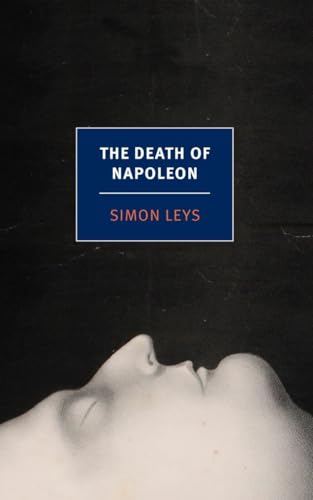
The Death of Napoleon by Simon Leys

As he bore a vague resemblance to the Emperor, the sailors on board the Hermann-Augustus Stoeffer had nicknamed him Napoleon.  And so, for convenience, that is what we shall call him.

Besides, he was Napoleon.

It's the mid-19th century and Napoleon has escaped from his exile on St. Helena, leaving behind a lookalike.  He's planning to return to France under the name Eugene with the help of a complex network of supporters.  On the ship where he's disguised as a sailor, his peers nickname him Napoleon because of his resemblance to the emperor, but the Emperor's most devoted followers on the ship are taken aback that anyone could compare this clumsy and ugly little man to their idol.

Simon Leys' small and funny novel explores the nature of identity.  Who is Napoleon, if he's walking around disguised as someone else?  Is he still Napoleon, or is Napoleon really defined by the uniform, and the adulation of his followers?

At the very moment, it was an obscure army sergeant who was cast in the role of the wounded eagle, of the solitary prisoner, of the tragic exile, while the true Emperor existed only as a vision of the future.  Between the persona he had shed, and the one he had not yet created, he was no one.  For a time, Eugene would have to fill this blank interval with his mediocre existence; he had no right to a destiny of his own; at most he could be granted inglorious little misfortunes and a few petty pleasures.

The ship is blown off course and Napoleon enters Europe without his network of supporters to help him reclaim his identity.  He visits the battlefield at Waterloo, where every inn advertises, "Napoleon slept here," and fraudsters try to regale him with their first-hand accounts of the "battle."  He makes it to Paris, but instead of starting a revolution, becomes attached to the widow of an old fruiterer.  The Paris sections of the novel produce two great, funny moments: One is when a jealous rival traps Napoleon in a mental hospital where everyone thinks they're Napoleon.  The second is when Napoleon rediscovers his strategic skill and charisma, only to use it in service of selling the widow's stock of melons:

1. The time factor
The heat wave which we are now experiencing does not, on the face of it, favor our campaign, since it makes the melons ripen quickly.  In reality, it also contains an element that could benefit us, one we should exploit to the full, and that is the thirst it creates in the townspeople.  If we act swiftly there is nothing to stop us form turning these weather conditions to our advantage.  Indeed, swiftness of action will allow us to make use of the inherent advantages of the situation (i.e., the increased thirst of potential customers), and to avoid the harmful effects (progressive stock loss through spoilage).

Napoleon's melon-strategy is funny, but also sad in the way that all mock-heroics are sad.  Do grand actions have to take place over a grand scale?  Could every successful fruiterer be, in his way, a Napoleon?  Is every Napoleon at heart no more admirable than a successful fruiterer?  These are old, old questions, but Leys manages to imbue them with a fresh sense of humor and a simple pathos that makes The Death of Napoleon affecting.

Thursday, June 13, 2013

The Lost Estate by Alain-Fournier

Often, later, when he was falling asleep after trying desperately to recall that lovely, vanished face, he would dream that he saw rows of women like her going by, one with a hat like hers, another with her slightly stooping manner; yet another had her candid expression, another her slender waist, and another her blue eyes; but none of these was ever the tall young woman.

When Augustine Meaulnes first arrives at his new school in France's snowy, rustic Sologne region, his classmates nickname him "Le Grand Meaulnes," the epithet referring not only to his height but the size and grandeur of his personality.  In fact, is the title of the work in French, and though Fitzgerald borrowed the double-sense for his own The Great Gatsby, no English word quite approximates it (or so I'm told), which has led many to use a different title.  Here, translator Robin Buss shifts the focus from the Great Meaulnes himself to the object of his great desires: The Lost Estate.

"The Lost Estate" is a place, but it is also a moment, a state of being; the place and time that shines most brightly in your memory that you spend the rest of your life trying to return to.  (Do you have a place like this?  I certainly do.)  Meaulnes' "Lost Estate" is a country house he discovers after he skips school, borrows a horse and carriage, gets irretrievably lost.  It is a beautiful, half-ruined mansion full of strange and friendly characters in historic dress; they have gathered there for a wedding and welcome Meaulnes into the festivities with open arms.  He meets a girl there, Yvonne de Galais, the sister of the groom, and falls deeply in love with her, but when the wedding is abruptly called off and Meaulnes ushered back to his ordinary life, he pledges his life to finding both the house and the girl again.

The story is told from the point of view of Meaulnes' friend, Francois Seurel, but Fournier saves the most haunting and elegiac bits for Meaulnes himself.  Here he is, having tracked Yvonne to Paris, where he sits outside the window where he has been told she lives:

I still go past that window.  I am still waiting, without the slightest hope, out of pure madness.  At the end of these cold autumn Sundays, just as night is falling, I cannot bear to go back home and close the shutters on my windows, without returning there, to that icy street.

I am like the madwoman in Saint-Agathe who would come out of her front door all the time and, shading her eyes, look towards the station to see if her dead son was coming home.

Sitting on the bench, shivering, miserable, I like to imagine that someone will gently take my arm... I should look around and she woulkd be there.  'I'm a bit late,' she would say, simply.  And all the sorrow and the madness fade away.  We go into our house.  Her furs are icy cold and her veil is damp.  She brings in the taste of the mist with her from outside, and while she is going over to the fire, I can see her frosty blonde hair and her fine profile with its sweet lines bending over the flames...
It seems as if Fournier is setting us up for a story about the dangers of obsession and the cynical impossibility of recapturing one's youth, but The Lost Estate moves continuously in directions that defied my expectations.  Though it hinges on a laughably improbable plot, Meaulnes does find--and marry--Yvonne.  Yet shortly after she becomes pregnant, he leaves again, pursuing shadowy obligations that, in the interests of not spoiling the novel, I'll leave unremarked on.  Ultimately, Meaulnes is caught between adolescent romanticism and the pragmatic moralities of adulthood; what is so remarkable about the book is the way it manages to suggest that, while not without some sadness and loss, there is a space in life for each of these.  The fulfillment of Meaulnes' yearning becomes tragic, but not hollow, and The Lost Estate shows us that while the joys of our youth may be altered, fleeting, and strange, yet they are not inaccessible.

Tuesday, January 11, 2011

The Red and the Black by Stendhal

No one knows the source of the Nile, Julien said to himself. It hasn't been granted to mortal eyes to see the king of rivers in the state of a simple stream: thus no human eye shall see Julien weak, first and foremost because he isn't.

Julien Sorel is a man of great ambition. He is a carpenter's son, but longs to distinguish himself among the upper classes, like his hero Napoleon once did. Napoleon's route--the military--is no longer available to him in 1830, but perhaps a life of distinction in the clergy will be equally good. Like all egoists, the endgame matters little; while he would have preferred the red coat the black will do. And like all social climbers, he harbors a deep and bitter antipathy toward the social classes through which he wants to rise.

At the very beginning of the novel he manages to procure a job as a tutor for the children of the mayor, M. de Renal, based on the merit of having memorized the entire Latin New Testament. But Julien has no religious sentiment; he cultivates what he calls hypocrisy, an outward expression of piety and orthodoxy that belies his disgust. And yet, Julien is a poor hypocrite: his education is too limited, and he is too impulsive. When he begins to suspect that M. de Renal's wife has fallen in love with him, he considers it his "duty" to seduce her--a Napoleonic conquest--but, in a manner not unlike the way that a Catholic sacrament transmutes the heart, his outward actions of affection compel him too toward love. The principle struggle of The Red and the Black is the surface vs. the interior, and despite Julien's cultivation of hypocrisy this struggle affects him most strongly because his rivals in the nobility have little of his inward depth. He permits himself to internalize such frauds, as when his friends try to legitimize his newfound wealth by spreading a rumor of noble parentage:

Could it really be possible, he wondered, that I might be the natural son of some great lord driven into exile in our mountains by the terrible Napoleon? This idea seemed less improbable to him with every passing moment... My hatred for my father would be proof of it... I shouldn't be a monster anymore!


The Red and the Black, strangely, offers two iterations of the same story: After being forced to leave Mme. de Renal, Julien is hired as a secretary to a Parisian nobleman, M. de la Mole, whose daughter Mathilde becomes Julien's mistress. Such repetition allows us to see clearly how Julien grows, and becomes more adept at playing the games of the upper class, but his rage grows with him. When, for a second time, it becomes clear to Julien that society will not suffer both his ambition and his love, he rejects society in an act of shocking violence.

I won't spoil anything, but I will say that I was impressed with the simple admiration with which Stendhal treats Julien's actions. They are an anachronism, Napoleonic in their way, and they are strangely redemptive. Julien refuses to play a rigged game, and as such he frees himself from time, and from society. By banishing his hypocrisy, he is freed unto himself.

Two things frustrated me about The Red and the Black: The first is that it is replete with very topical references to French politics of 1830, and the appendix in the back is not very illuminating. The second is that Julien is remarkably fickle, and much of the second book is consumed by Julien falling in and out of love with Mathilde, who alternately falls in and out love with him. A sense of absurdity redeems this, though, and I admit that it seems to accurately map our propensity to change our minds about love. The Red and the Black is called the first psychological novel, and its depiction of Julien's inward thoughts is especially fine, including what I would call an early form of stream-of-consciousness. That psychological detail is what makes the novel so rewarding, and I will concede that when Julien is at his most frustrating, he is at his most human.